
Reviewed · MUSEUMS
IRA Troubles Conflict Private Tour Museum Graves Murals and Political Analysis
The most striking part of this Belfast tour is its firmly Republican viewpoint. You move through Falls Road, Clonard, Ballymurphy, Milltown Cemetery, and the Shankill while your guide explains how the Troubles developed and how the conflict still shapes the city.
I like the access to a private Irish Republican museum, plus the chance to ask questions in a small, private setting. I also like the use of personal experience: guides such as Barry, Paula, and Joe have described growing up during the conflict, which can make the political story feel immediate rather than textbook.
The main consideration is simple: this is not designed as a neutral, two-sided account. It discusses Loyalist and British involvement, but it tells the story through Irish Republican history. If you want equal weight for Unionist arguments, book a separate balanced political tour as well.
Key points to know before booking
- A Republican account of the Troubles: The tour focuses on Irish nationalism, the IRA, Republican prisoners, hunger strikes, and the peace process.
- Rare museum access: The Eileen Hickey Irish Republican History Museum is not usually open to the public and may include contact with former prisoners.
- Fourteen compact stops: Expect murals, peace walls, memorial gardens, Milltown Cemetery, Clonard Monastery, Divis Tower, and Ballymurphy.
- Private transport and flexible conversation: Your guide drives, handles navigation, and can adjust the emphasis to your questions.
- Personal stories matter here: Barry, Paula, Joe, Brendan, Kieran, and Ciarán are among the guides named in feedback about the experience.
- Allow three focused hours: The schedule moves quickly, with several stops lasting only five to fifteen minutes.
Why this tour feels different from a standard Belfast mural tour
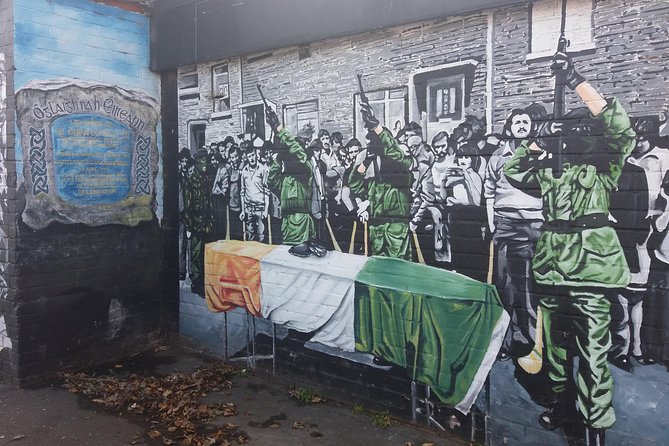
Many Belfast tours show murals and peace walls as visual symbols. This one tries to explain the ideas, loyalties, and memories behind them. You are not simply taking photographs beside a painted wall. You are hearing why the wall was built, who painted the murals, and how the communities around it remember the same events in very different ways.
The tour is also built around private transportation. That matters in Belfast, where the stops are spread across West Belfast and several areas can be awkward to connect by public transport in a short visit. Your driver takes care of the route while you watch the streets and continue the conversation.
The private format is useful if you have a long list of questions. You can ask about the IRA, Loyalist paramilitaries, the hunger strikes, British security policy, the peace process, or current politics without waiting for a large group to catch up.
Guides vary, but the names most often associated with the experience include Barry, Paula, Joe, Brendan, Ciarán, and Kieran. Barry is described as having studied Irish history at Queen’s University Belfast. Paula and Joe are noted for personal stories from Belfast. Ciarán has been praised for his local connections and for making photo stops easy.
More museums and galleries in Belfast:
- Belfast Titanic Museum and Sighseeing Tour
★ 4.5 · 59 reviews - Liverpool: Liverpool Football Club Museum and Stadium Tour
★ 4.8 · 10,764 reviews - Tower of London and Crown Jewels Exhibition Ticket
★ 4.5 · 6,677 reviews
Divis Street and the Falls Road: starting with the Republican story
The tour begins around the International Mural Wall on Divis Street before moving through the Falls Road area. This is the right place to begin because the murals give you a visual outline of the political argument.
Expect murals linked to Irish nationalism, anti-war themes, international struggles, Republican prisoners, and the memory of those killed during the conflict. The guide explains how ex-prisoners helped shape the mural tradition and how the images connect to older ideas of Irish resistance.
The first stop is brief, listed at about ten minutes. Do not expect a long walk or a museum-style presentation here. The value comes from the explanation supplied by the guide, who sets up the larger story before the vehicle moves on.
The Falls Road is presented as the heart of Republican Belfast. You will hear about the events of 1969, the growth of the Provisional IRA, the role of local battalions, and the political changes that led toward the peace process. The account is openly sympathetic to the Republican interpretation, so listen for what is being emphasized and keep in mind that another tour could frame the same events differently.
Peace walls and Shankill Road: seeing the divide from both sides
The peace walls are one of Belfast’s most unsettling sights because they remain part of daily life. They separate mainly Republican and Nationalist Catholic areas from mainly Loyalist and Unionist Protestant districts.
The tour visits both sides of a peace wall. You can write your name or a message of peace, a small gesture that can feel awkward beside a large barrier built to prevent violence. That contrast is part of the point. The walls were meant to be temporary, yet many stayed in place because residents considered them effective protection.
One of the best-known walls separates the Falls Road and Shankill Road areas. The barrier runs for roughly 800 metres and reaches several levels. Some sections have gates that can still be closed, a reminder that Belfast’s division is not only a historic display for visitors.
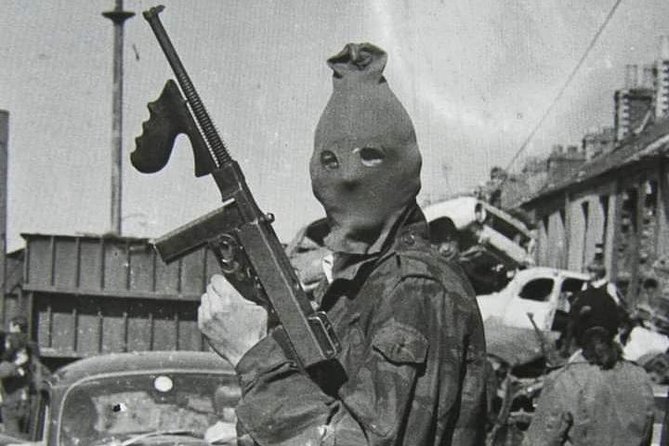
The Shankill Road stop adds the Loyalist side of the physical story, though still within a Republican-focused tour. You will see murals linked to the UDA, UFF, and UVF, often showing masked men, weapons, memorial symbols, and Unionist themes.
This section is valuable because it prevents the tour from showing only one neighborhood. The drawback is that the discussion of Loyalism may not receive the same depth as the discussion of Republicanism. That imbalance is intentional and should guide your expectations.
Clonard Martyrs Memorial Garden and Bombay Street
The Clonard area gives the tour some of its most emotional stops. The Martyrs Memorial Garden commemorates Republican volunteers, civilians, and prisoners from the Greater Clonard area across several decades.
The garden includes black iron gates, a rising phoenix, Celtic crosses, memorial plaques, lists of names, benches, and references to the four provinces of Ireland. The central memorial remembers members of C Company, Second Battalion, Belfast Brigade, along with civilians killed during the conflict.
The wording throughout the garden reflects a strong Republican view of sacrifice, resistance, and Irish unity. It does not try to soften the language. You will see how memorial spaces can preserve political beliefs as well as personal grief.
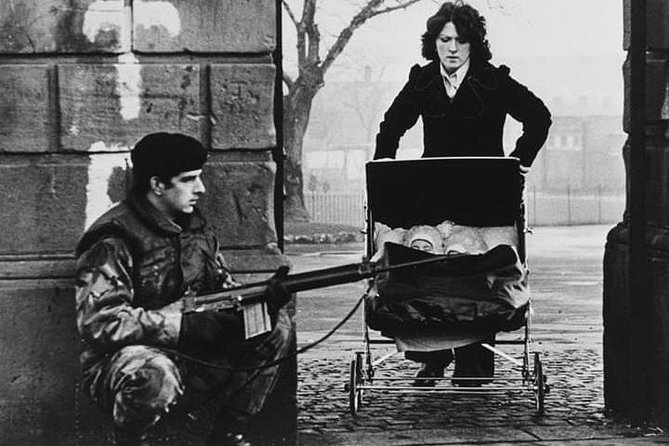
The guide also explains the 1969 violence around Bombay Street. Loyalist attacks forced Catholic families from their homes, and whole sections of the street were burned. This area is where the first peace walls appeared after sectarian riots, making the memorial garden and the nearby barriers part of the same story.
The stop is listed at about 30 minutes, longer than many of the mural visits. That is helpful because there is a lot to read. If you have mobility concerns, ask the operator for practical details before booking, since the supplied tour information does not specify walking distances or ground conditions.
A few more things to do in Belfast worth a look
- Private Black Taxi Belfast City Tour
★ 5.0 · 2,188 reviews - 2 Hour Private Belfast Taxi Cab Tour of Troubles & Peace walls
★ 5.0 · 240 reviews - Private Political History & Murals Tour Belfast
★ 5.0 · 182 reviews - Giants Causeway & Antrim Coast Private Tour
★ 5.0 · 176 reviews
Milltown Cemetery and the Republican plots
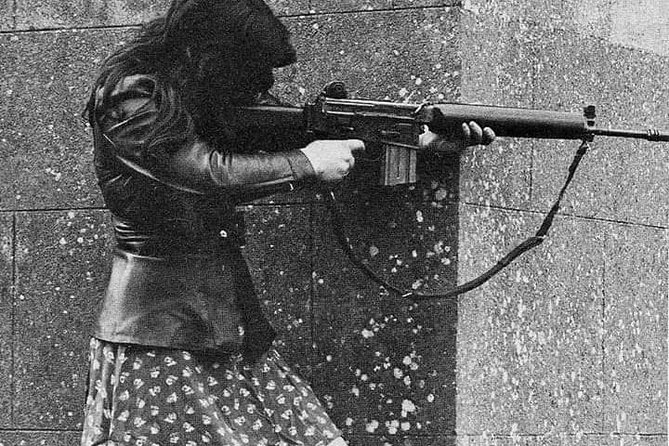
Milltown Cemetery is one of the most important stops for understanding Republican memory in Belfast. The tour visits the Republican plots and the graves maintained by the National Graves Association, Belfast.
The cemetery includes graves of IRA volunteers killed in the 1920s, during the Northern Campaign in the 1940s, and in later conflicts. The Republican plots contain memorial markers and the red hand symbol. The New Republican Plot includes 77 IRA volunteers, including Máiread Farrell.
The most famous grave is that of Bobby Sands, who died after 66 days on hunger strike in 1981 while serving a sentence at the Maze prison. He had been elected as a Member of Parliament during the hunger strike, a fact that helps explain why his death became an international political event.
You will spend about 25 minutes here. That is enough for an introduction, though one person felt the cemetery took too much of the three-hour tour. I can understand both views. If your interest is the hunger strikes and Republican memorial culture, this may be the emotional center of the day. If you mainly want murals and street politics, the time may feel long.
One useful detail is the guide’s willingness to help with personal requests. A guide has stopped at a flower shop so a visitor could place flowers on a family grave. That kind of small adjustment is easier on a private tour than on a large bus.
Bobby Sands, hunger strikes, and the Garden of Remembrance
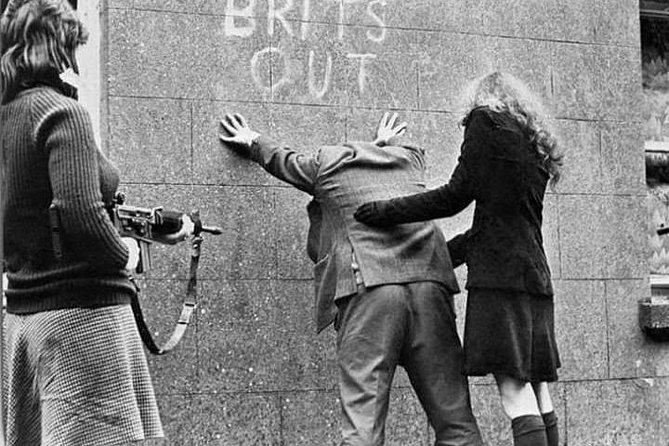
The tour visits more than one Bobby Sands site, including the familiar mural and his resting place in Milltown Cemetery. You will hear about the blanket protest, the dirty protest, and the 1981 hunger strike.
The subject is politically charged and emotionally heavy. The Republican account treats the prisoners as political activists and martyrs rather than ordinary criminals. The British government’s position and the arguments of Unionists receive less attention, so you should not treat the presentation as a complete account of every side.
The Garden of Remembrance connected with D Company of the Second Battalion, Belfast Brigade, adds another layer. The Belfast Brigade was divided into battalions covering areas such as the Falls, Clonard, Ballymurphy, Ardoyne, the New Lodge, the Markets, and Short Strand.
The guide explains how local geography shaped the organization of the Provisional IRA. You are not just hearing a list of names. You are seeing how streets, interfaces, housing districts, and military patrols affected daily life.
The tour also points out memorials to hunger strikers and sites linked to the Battle of the Falls in 1970 and the Falls Road violence of 1920. Some stops last only ten or fifteen minutes, so keep your camera ready and expect explanations beside the vehicle rather than long walks.
The private Irish Republican History Museum
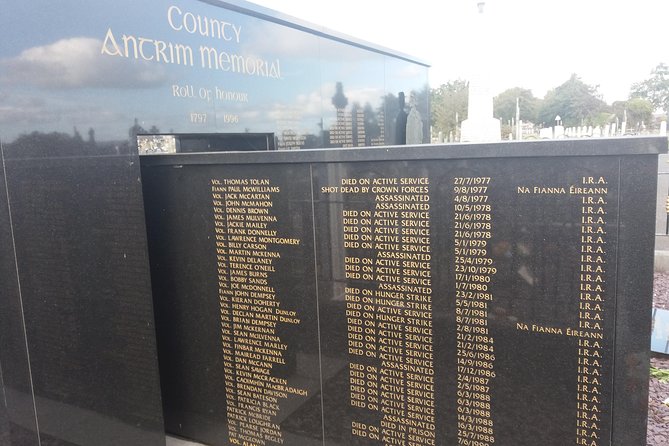
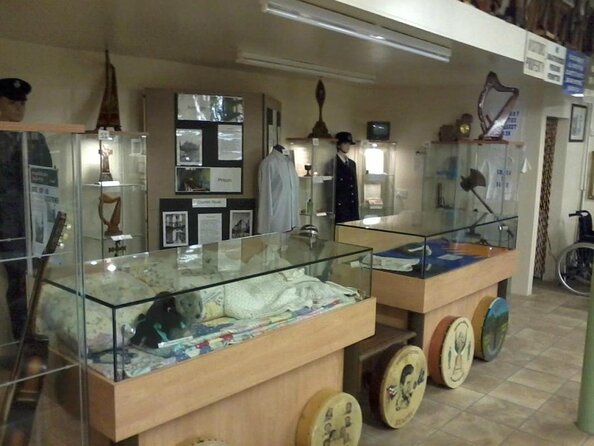
For many people, the museum is the reason to choose this particular tour. It is described as a private collection focused on resistance to British rule, Irish Republican history, prisoners, and the conflict in Northern Ireland.
The museum normally opens only from 10 a.m. to 2 p.m., Tuesday through Saturday. If it is closed, the guide substitutes a visit around Ballymurphy. Confirm the opening arrangements when booking, especially if your schedule falls outside those hours.
The museum may include the chance to meet former prisoners who can discuss their experiences. That personal connection can give you details that do not appear on a standard city tour, but it also means the presentation is likely to be strongly shaped by Republican memory.
You may also see and handle plastic and rubber bullets used by British forces. This is a tangible detail that helps explain the force used during street disorder and security operations. It is one of the moments when the conflict becomes physical rather than abstract.
The museum visit lasts about 25 minutes. That is not enough for an exhaustive collection, but it works as a compact supplement to the streets and memorials. Ask questions. The private setting is most useful when you use it as a conversation rather than simply moving from object to object.
Clonard Monastery and the work of peace
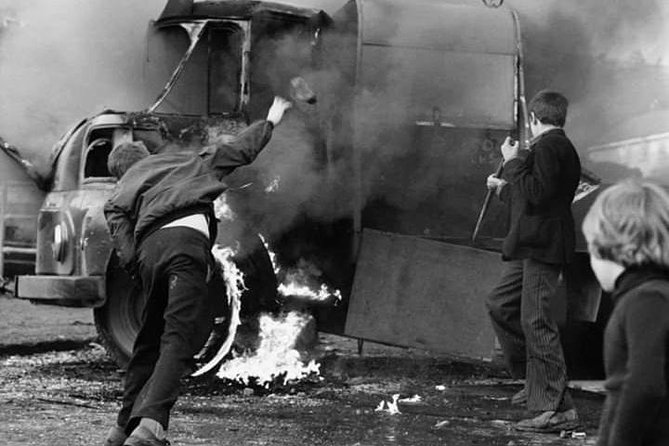
Clonard Monastery brings in a different strand of the story. The Redemptorist monastery sits near the interface between the Falls Road and Shankill Road areas and was close to the violence around Bombay Street in 1969.
Priests from the monastery worked to protect local residents and later helped with peace efforts. The site is linked with Fathers Alec Reid and Gerry Reynolds, two Catholic clergy who played important roles in dialogue during the conflict.
This stop is short, about ten minutes, but it widens the tour beyond armed groups and memorials. It shows that religious figures, local residents, and intermediaries also shaped the route toward peace.
The tour does not turn the monastery into a quiet escape from politics. Instead, it shows how close the religious community was to the interface and how difficult peace work could be in a divided neighborhood.
Ballymurphy, Divis Tower, and the final drive
The vehicle continues through Republican areas including Ballymurphy and Divis. You will see murals connected with the Great Famine, local volunteers, Jim Bryson, and the weapon known as Big Louie.
At Divis Tower, the guide points out the former British Army sniper and observation position, which remained in use until 2005. You will also hear about the first two victims of the Troubles and see associated names and murals.
These stops are short, often five minutes. They work best as a moving overview rather than a full visit. You may photograph from the vehicle or during a quick stop, but the guide’s commentary is the main reason to include them.
The final views of the largest peace wall bring the tour back to its central theme. The conflict has ended as an armed campaign, but the walls, gates, memorials, and political paintings show that the past is still present in the city.
Price, transport, and who gets good value
The cost is $255.50 per person for about three hours. That is a serious price for a short city tour, but it includes private transportation, hotel pickup from the central meeting point, a private guide, the museum visit when available, Milltown Cemetery, and a route that covers a lot of West Belfast in limited time.
The value improves if you are a couple or small group that would otherwise pay for several separate experiences. You are also paying for local access, a private vehicle, and the freedom to ask questions without a fixed group script.
Central pickup is offered from the Leonardo Hotel. Other locations may cost extra, including some central sights, Lanyon train station, Belfast cruise ship pickup, and drop-off. Airport pickup is not offered. A luxury Mercedes V-Class upgrade may be available for an additional £25, while cruise ship pickup and drop-off cost £25 each way.
The tour is offered in English, with an air-conditioned vehicle and mobile ticketing. If you are arriving by ship, confirm the pickup charge before booking. The tour is private, so only your group participates, but the size of the vehicle and the maximum group size are not specified.
A free cancellation option is available if you cancel at least 24 hours before the start time. Changes or cancellations inside that window are not accepted for a refund.
Should you book this Belfast Troubles tour?
Book it if you want a personal, Republican account of Belfast and prefer serious political discussion to a light sightseeing drive. It suits readers of Irish history, visitors with family connections, and anyone who wants to see the murals, memorials, cemetery, and museum in one tightly planned outing.
I would especially consider it if you have only a short stay in Belfast. The tour covers Falls Road, Shankill Road, Clonard, Milltown Cemetery, Ballymurphy, Divis, and the peace walls without making you arrange several taxis or buses.
Do not book it expecting a neutral presentation. One of the clearest criticisms is also the most useful warning: the tour may not give enough space to Loyalist arguments or British policy. If balance matters most, pair this with a tour that presents both communities in equal detail.
For an authentic look at Republican Belfast, the private museum and personal guide stories make this a strong choice. Go ready to listen carefully, ask direct questions, and accept that the city’s past is still argued over.
FAQ
How long does the tour last?
The tour lasts approximately three hours.
What viewpoint does the tour present?
It presents the history of the Troubles and Irish Republicanism from an Irish Republican perspective. Loyalist and British involvement is discussed within that framework.
Is hotel pickup included?
Free pickup is offered from the central meeting location at the Leonardo Hotel. Other pickup points may involve extra charges, and airport pickup is not offered.
Is the Irish Republican History Museum always open?
No. The museum is normally open from 10 a.m. to 2 p.m., Tuesday through Saturday. If it is closed, the tour substitutes a visit around Ballymurphy.
Is the tour private?
Yes. Only your group participates, and private transportation is included.
What is the cancellation policy?
You can cancel for a full refund up to 24 hours before the experience starts. Cancellations or changes made less than 24 hours before the start time are not accepted for a refund.
Just added in Belfast
- World Famous Belfast City Centre Black Cab/Taxi Tour 2 Hours★ 4.5 · 177 reviews
- The Troubles and iconic award winning taxi 2hr private cab tour★ 5.0 · 28 reviews
- Black Taxi Tour and Crumlin Road Gaol tour Combo★ 5.0 · 170 reviews
- Belfast Music and Street Art Small Group Guided Experience★ 4.5 · 62 reviews
- 2 hours Belfast Original Drivers The Troubles Black Taxi Tour★ 5.0 · 227 reviews
- Private Shore Excursion From Belfast Cruise Terminal★ 5.0 · 26 reviews
- Iconic Belfast Black Cab Tour★ 5.0 · 449 reviews
- Black Taxi Mural “Tour Like A Local”★ 5.0 · 125 reviews
Museums, compared.
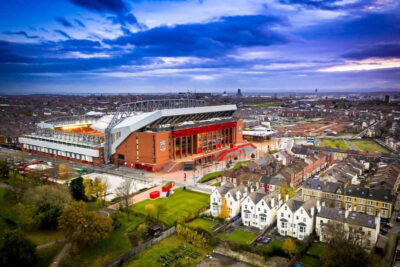
Liverpool Football Club Museum and Stadium Tour
Read our review →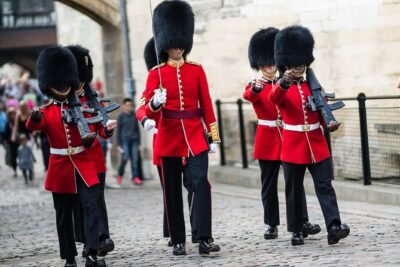
Tower of London and Crown Jewels Exhibition Ticket
Read our review →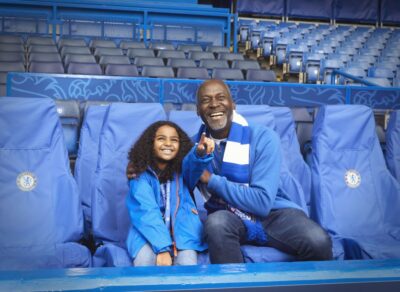
Chelsea Football Club Stadium and Museum Tour
Read our review →

Browse the lists this tour appears in