
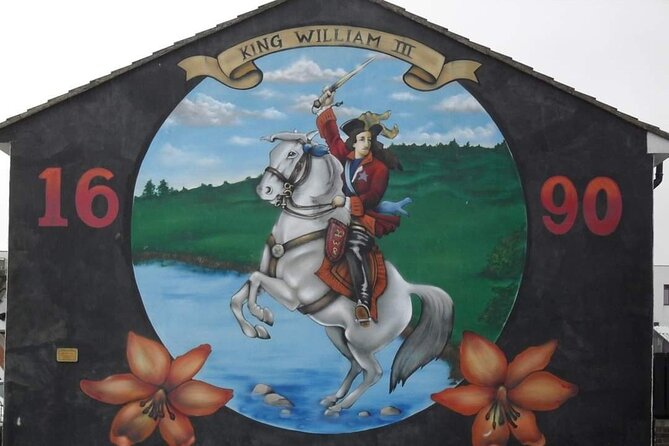
Reviewed · HISTORICAL TOURS
Private Political History & Murals Tour Belfast
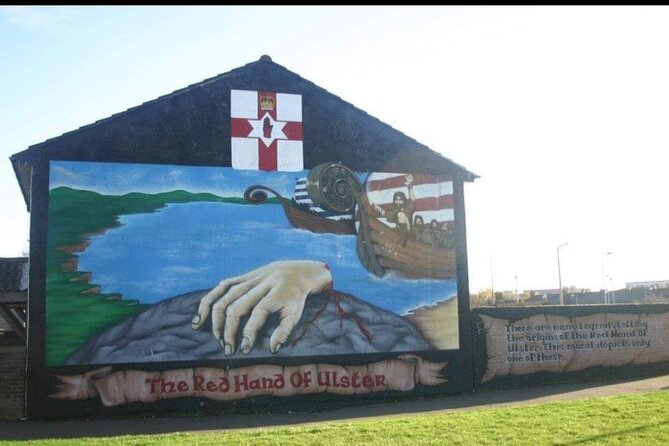
Belfast’s murals are not just colorful walls. They are public statements about identity, loss, loyalty, resistance, and peace. This private tour links the best-known sites with the personal stories behind them, from the Peace Wall to the Republican murals of Falls Road.
I like the small private format, which lets you ask direct questions instead of listening to a fixed script. I also like the local perspective offered by guides such as Sean, Brendan, Brian, and Thomas, several of whom grew up during The Troubles and can explain how the conflict affected ordinary families.
The main drawback is the short running time. At about 90 minutes to 1 hour 45 minutes, you get a sharp introduction rather than a full study of Belfast’s past. Also, the vehicle should be confirmed before booking, since the experience is described as private transportation in an air-conditioned vehicle, while some descriptions refer to a black cab.
Key points to know before booking
- The Peace Wall is the emotional center: You can get out, walk beside it, and leave a message for future generations.
- Shankill Road and Falls Road are treated separately: The tour explains Loyalist and Republican views without pretending the conflict had one simple cause.
- Local guides make the difference: Sean, Brendan, Brian, Thomas, Michael, Michel, and Dan are among the guides praised for clear answers and personal insight.
- Crumlin Road Gaol is an outside stop: You see the old prison and courthouse but do not go inside on this tour.
- A private vehicle saves time: You move between neighborhoods without the delays and fixed pace of a large bus.
- The price is fair for a private group: At $76.39 per person, value depends on your group size and how much you want to ask.
Why Belfast’s murals need context
You can walk past Belfast’s murals on your own and take striking photographs. You will understand far more if someone explains who painted them, which neighborhoods they represent, and why certain faces, flags, and dates matter.
The Troubles were not an old, distant conflict. The tour deals with events from the 1960s onward, including paramilitary activity, imprisonment, hunger strikes, community division, and the long movement toward peace. Several guides are praised for having lived through that era, which can give the presentation a human scale that a guidebook cannot provide.
I value the tour’s basic route because it moves between two communities rather than showing only one side. You begin at a barrier built to separate neighborhoods, then visit Shankill Road and Falls Road. That order helps you see how geography and politics remain closely linked in Belfast.
You should also expect an emotional subject. The tour can be funny at moments because local guides often use warmth and dry humor, but the stories include death, imprisonment, grief, and unresolved political feeling. Go with an open mind, and ask questions respectfully.
A few more things to do in Belfast worth a look
- A History of Terror – Belfast City Centre Walking Tour
★ 5.0 · 2,883 reviews - Belfast Political/history/troubles private taxi/cab tour
★ 5.0 · 69 reviews - London Small Group Tour of Historical Pubs
★ 5.0 · 10,422 reviews
The Peace Wall: Belfast’s most visible dividing line
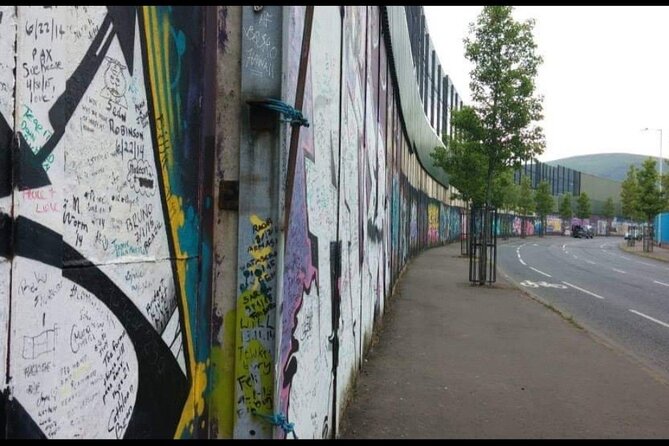
The Peace Wall is the briefest planned stop, at about 10 minutes, but it may be the one you remember most. You have an opportunity to leave the vehicle, walk beside the wall, and learn why it was built.
You can also write a good luck message for future generations. That small act gives the stop a personal quality. You are not simply looking at a political landmark. You are adding your own note to a place connected with separation, fear, and hopes for a better future.
The wall can feel uncomfortable, and that is part of its meaning. It is a physical reminder that peace has not erased every division. One account describes it as a living voice for people affected by conflict around the world. You do not need to share that exact view to understand why the wall carries such weight.
The short visit is both a strength and a limitation. It keeps the tour moving, but you will not have a long period for quiet reflection or extensive photography. If this is the stop you most want to explore, use your time well and ask your guide to explain the local context before moving on.
Shankill Road and Loyalist Belfast
The tour spends about 40 minutes around Shankill Road, giving you much more time than at the Peace Wall. Here you learn about Loyalist paramilitaries, local residents, and events during The Troubles.
The key value is context. Political murals can look like bold street art when viewed quickly. Your guide explains the symbols and the communities behind them, helping you see that these images are tied to identity and memory rather than decoration alone.
A good guide should also explain the difference between a paramilitary organization and the wider population of the neighborhood. The route is designed to discuss both the groups involved and the people who lived through the conflict. That distinction matters, since ordinary residents often carried the burden of violence and division without controlling the political forces around them.
The guide’s approach will shape this part of the experience. Sean is often praised for answering detailed questions and connecting the past with broader political issues. Brendan is described as warm, funny, and respectful toward everyone affected. Brian is praised for patience, especially when visitors ask repeated or difficult questions.
You may hear a perspective that feels strongly rooted in the guide’s own background. That can be useful, since Belfast’s past is best understood through lived experience, but no single tour can provide every political viewpoint. If balance matters to you, listen closely, ask clear questions, and remember that this is a local interpretation rather than a neutral classroom lecture.
Falls Road and the Bobby Sands mural
The Falls Road section also lasts about 40 minutes and focuses on Republican paramilitaries, the reasons given for their uprising, local residents, and events during The Troubles. The Bobby Sands mural is the best-known visual point on this part of the route.
Bobby Sands became an important Republican figure during the hunger strike, and the mural has come to represent much more than one person. Your guide explains the political setting and the reasons supporters viewed the Republican campaign as a struggle for national identity and political change.
This is where the tour’s two-sided route is particularly useful. You have already heard about Loyalist communities on Shankill Road. On Falls Road, you encounter a different tradition of identity and memory. The tour does not reduce either side to a simple label, at least in its stated purpose, and you can use the private setting to ask how local people understood the events at the time.
Several guides are praised for explaining the period to visitors who arrive with very little background. That matters because the terminology can be confusing. You may hear about Republicans, Loyalists, British identity, Irish identity, paramilitary groups, imprisonment, and the peace process in a short period. A guide who pauses for questions can make the difference between a meaningful visit and a blur of names.
The mural is also a natural photo stop, but photography should not be the main purpose of this section. The images represent real political commitments and painful memories. Take your pictures, but give the explanations equal attention.
Same city, a very different afternoon:
- Titanic Belfast Entrance Ticket: Titanic Visitor Experience Including SS Nomadic
★ 4.5 · 3,698 reviews - Cab Tours Belfast Famous Black Taxi Tours
★ 5.0 · 3,633 reviews - Game of Thrones and Giant’s Causeway Full-Day Tour from Belfast
★ 5.0 · 2,291 reviews - Private Black Taxi Belfast City Tour
★ 5.0 · 2,188 reviews
Crumlin Road Gaol from the outside
The final listed stop is a short drive-by at Crumlin Road Gaol and the old courthouse. You do not enter the prison during this experience.
The stop connects the street-level political story with the institutions that held and sentenced many people involved in The Troubles. Seeing the prison from outside gives you a sense of place, but it is only a brief visual introduction. If you want a full prison visit, you would need to arrange a separate experience.
I like the inclusion of this stop because it rounds out the story. The tour is not limited to murals and walls. It also points to the legal and prison system that shaped the lives of many people involved in the conflict. Still, keep your expectations realistic. Five minutes is enough for an explanation and a look from the vehicle, not an in-depth visit.
What the private vehicle adds
Private transportation is the tour’s practical advantage. You move between the Peace Wall, Shankill Road, Falls Road, and Crumlin Road without organizing taxis or trying to work out the route yourself.
An air-conditioned vehicle is useful in Belfast’s changeable weather. You can also get some shelter between walking stops, which matters if rain arrives. One guide accommodated a group in pouring rain, showing why a vehicle-based tour can be easier than a long outdoor walk.
The experience ends back at the meeting point, listed as Ten Square Hotel at 10 Donegall Square South. Pickup is offered from locations in Belfast and farther afield, but a pickup more than 1 kilometer from Belfast City Hall may bring a small fee based on the taxi fare, starting from £10 for the pickup rather than per person. The operator is supposed to confirm this with you.
Pay attention to the vehicle description when you book. The tour information specifies a private, air-conditioned vehicle. Several accounts refer to a black cab, but one unhappy customer specifically expected a black taxi and found a different vehicle. If the cab itself is important to you, confirm it in advance rather than assuming it is guaranteed.
Guide quality and the importance of asking questions
The strongest part of this experience is the guide. Sean receives repeated praise for his grasp of the political background, his ability to answer questions, and his personal connection to the period. Brendan is described as warm, entertaining, and respectful. Brian is praised for his patience and clear explanations, while Thomas is described as an excellent guide for visitors who want a serious account of Belfast’s past.
Michael, Michel, and Dan are also named in positive accounts. Michael is described as funny and full of local stories. Dan is praised for his passion for Northern Ireland. These details matter because the route itself is fairly compact. The person in the vehicle determines how much meaning you take from each stop.
Use the private format well. Ask about words you do not understand. Ask how the conflict affected daily life. Ask what changed after the peace process and what remains unsettled. You will get more from the experience if you treat it as a conversation, not just a sightseeing transfer.
There is one clear warning about guide quality. One account found the presentation biased and difficult to understand because of the guide’s accent. That is not a reason to dismiss the tour, but it is a reminder that a local perspective can feel personal and that accents may be challenging for some listeners.
Is $76.39 a fair price?
At $76.39 per person, this is not the cheapest way to see Belfast’s murals. The value depends heavily on your group size.
For one person, the price buys a private vehicle, a local guide, and a focused route through four politically important places. For two or three people, the cost can compare well with arranging separate transportation and trying to interpret the murals without help. For a larger group, the private format becomes more attractive because everyone can ask questions and stay together.
There are no admission charges for the listed stops, but that does not make the tour poor value. You are paying for time, transport, interpretation, and access to a guide who can explain sensitive material in person. The short duration also keeps the cost and physical demand lower than a longer walking tour.
I would not book it mainly for the Crumlin Road Gaol stop, since you only see the outside. Book it for the paired visits to Shankill Road and Falls Road, the Peace Wall, and the chance to ask questions in a private setting.
Who should book this Belfast tour?
I would recommend it to first-time visitors who want a clear introduction to Belfast’s political past without committing half a day. It also suits families and mixed-age groups, since the vehicle limits walking and the guide can adjust the discussion to your questions.
It is a strong choice if you have limited knowledge of The Troubles. Several accounts describe arriving with little background and leaving with a better grasp of the events and their emotional impact. It also works for people who already know the basics but want a local voice and a chance to ask detailed questions.
You may want something longer if you prefer museums, archival detail, or extended time at each site. Visitors who dislike personal political interpretation should also think carefully before booking. This is not a detached audio guide. The experience depends on conversation and the guide’s own understanding of Belfast.
Most people can participate, and service animals are allowed. Confirmation is provided at booking, and free cancellation is available until 24 hours before the start time. If poor weather causes cancellation, you are offered another date or a full refund.
Should you book it?
Book this tour if you want Belfast’s murals explained by a local guide, prefer private transport, and value honest conversation over a polished but distant presentation. The Peace Wall, Shankill Road, Falls Road, and Bobby Sands mural give you a useful route through the city’s divided memories.
Skip it if you need a full Crumlin Road Gaol visit, a long walking tour, or a guaranteed black taxi. Before paying, confirm your pickup point and vehicle type. For most visitors, the strongest reason to go is the guide’s ability to connect public murals with personal stories, making 90 minutes feel like a serious introduction to Belfast’s past.
FAQ
How long does the private political history tour last?
The experience lasts approximately 1 hour 30 minutes to 1 hour 45 minutes.
Where does the tour start?
The listed meeting point is Ten Square Hotel, 10 Donegall Square South, Belfast BT1 5JD.
Does the tour include pickup?
Yes. Pickup is offered from locations in Belfast and farther afield. A small fee based on taxi fare may apply if the pickup point is more than 1 kilometer from Belfast City Hall.
Is the tour private?
Yes. Only your group participates in the activity.
What language is the tour offered in?
The tour is offered in English.
Do you enter Crumlin Road Gaol?
No. The tour only drives by the old prison and courthouse. Entry to the jail is not included.
Can I cancel for a full refund?
Yes. You must cancel at least 24 hours before the experience start time for a full refund. If poor weather cancels the experience, you are offered another date or a full refund.
Just added in Belfast
- World Famous Belfast City Centre Black Cab/Taxi Tour 2 Hours★ 4.5 · 177 reviews
- Black Taxi Tour and Crumlin Road Gaol tour Combo★ 5.0 · 170 reviews
- The Troubles and iconic award winning taxi 2hr private cab tour★ 5.0 · 28 reviews
- Belfast Music and Street Art Small Group Guided Experience★ 4.5 · 62 reviews
- 2 hours Belfast Original Drivers The Troubles Black Taxi Tour★ 5.0 · 227 reviews
- Private Shore Excursion From Belfast Cruise Terminal★ 5.0 · 26 reviews
- Iconic Belfast Black Cab Tour★ 5.0 · 449 reviews
- Black Taxi Mural “Tour Like A Local”★ 5.0 · 125 reviews
Historical Tours, compared.
A History of Terror – Belfast City Centre Walking Tour
Read our review →
Old Town Walking Tour History and Tales in Edinburgh
Read our review →
Shadows of York: Ghost Walk and Horrible History.
Read our review →
Multi-Sensory Small-Group Historic Vaults Tour in Edinburgh
Read our review →
Browse the lists this tour appears in