
Reviewed · TOURS IN NORTHERN IRELAND
Iconic Belfast Black Cab Tour
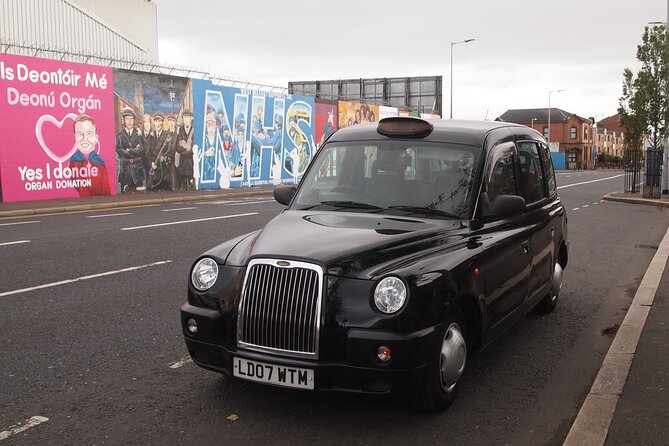
Belfast’s political murals are not museum pieces behind glass. They are painted across working streets, beside homes, shops, flags, and the barriers that once divided neighborhoods. This private black cab tour takes you into that living story, with stops at Divis Street, the Peace Wall, Bobby Sands’ mural, and Shankill Road.
I like two things right away: you get a one-party cab, so the conversation can follow your questions, and guide Hugh Jordan is praised for giving a balanced account without pushing a personal view. The main consideration is that the tour focuses on the Troubles and can feel emotional, especially at memorials and the Peace Wall.
Key points to know before booking
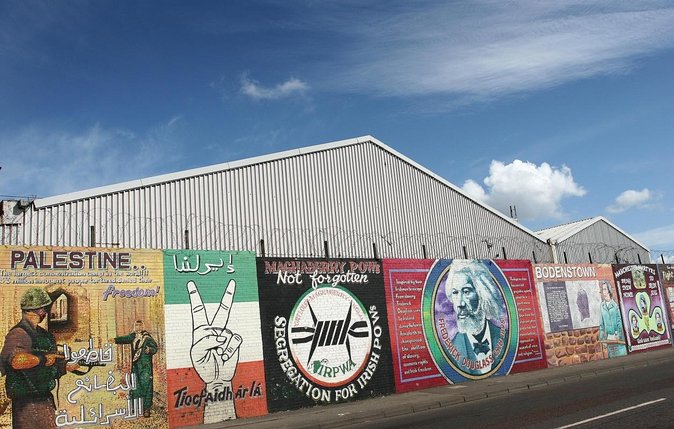
- See both sides of Belfast’s divide: The route includes nationalist areas around Divis Street and the Bobby Sands mural, then crosses to the Unionist murals of Shankill Road.
- Private for up to two people: The $97.05 price is per group, not per person, making it about $48.53 each if two people book together.
- Hugh Jordan leads the tour: Expect clear explanations, personal stories, questions, and occasional humor alongside the difficult subject matter.
- You can sign the Peace Wall: There is time to stop at the Belfast Interface and leave your name if you wish.
- Allow more than the listed stop time: The five stops add up to about 55 minutes, while the full experience lasts roughly 90 minutes, leaving time for driving and discussion.
- Check pickup before paying: Selected city-centre hotels and meeting points are included, but Titanic Quarter, Queen’s Quarter, the airport, port, and several hotels are excluded.
Why this cab tour helps you understand Belfast
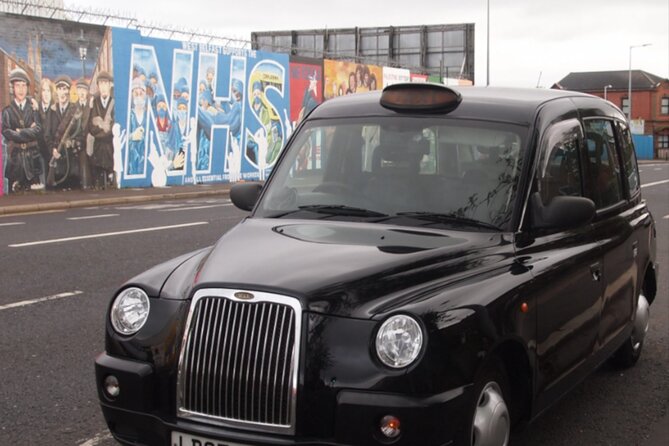
The quickest way to misunderstand Belfast is to treat the murals as simple street art. They are political statements, memorials, warnings, and markers of identity. A black cab gives you something a walking tour often cannot: the ability to connect several neighborhoods in a short time while your driver explains what you are seeing.
This matters because the story changes from one street to the next. Divis Street and the Falls area carry a strong nationalist and republican identity. Shankill Road presents a Unionist and loyalist identity. The Peace Wall sits between communities that remain physically close but are still separated by memory, politics, and tradition.
The tour does not pretend that one side owns the whole story. Hugh Jordan is repeatedly praised for presenting the Troubles in a nonpartisan way, explaining what happened while avoiding pressure to accept his own politics. That approach is especially useful if you know little about Northern Ireland or have only seen Belfast through headlines.
You should expect a serious subject, but not a grim lecture from start to finish. Hugh’s style includes questions, anecdotes, and humor. That mix helps keep the 90-minute outing human and approachable, even when the subject turns painful.
Other tours people book in Belfast:
- Titanic Belfast Entrance Ticket: Titanic Visitor Experience Including SS Nomadic
★ 4.5 · 3,698 reviews - Cab Tours Belfast Famous Black Taxi Tours
★ 5.0 · 3,633 reviews - A History of Terror – Belfast City Centre Walking Tour
★ 5.0 · 2,883 reviews
Starting at Divis Street and Divis Tower
The tour begins in west Belfast at Divis Street, with Divis Tower as an early landmark. This is a useful place to begin because it puts you in a neighborhood rather than easing you into the subject with a general city sightseeing circuit.
Your guide sets the scene here, explaining the local character and the events that shaped the area. The scheduled stop is about 10 minutes, enough to get out, look around, and ask questions without turning the visit into a long walk.
Divis Street also helps you see how close the political history is to ordinary city life. You are not viewing a distant battlefield. You are moving through streets where residents live and where symbols remain part of the local setting.
If you want a broad introduction to Belfast architecture, shopping, or the Titanic story, this is not that tour. Its purpose is narrower and more focused. For anyone who wants to understand the Troubles through places and images, that focus is a strength.
Reading the International Mural Wall
The next stop is the International Mural Wall on Divis Street, where local and international murals appear together. The 10-minute stop gives you a chance to look at the changing subjects and political messages rather than simply photographing one famous image.
This section is valuable because it shows that Belfast’s mural tradition is not limited to local events. Some works connect the city’s political struggles with causes and conflicts elsewhere. Hugh explains the meaning behind what you see, so the stop becomes more than a quick picture break.
I would pay attention to the difference between murals that honor people, murals that make a political claim, and murals that build community identity. The paintings can look bold and colorful, but the stories behind them are often personal and divisive.
The short stop also sets expectations for the rest of the tour. You are not being asked to admire the artwork without context. You are being shown how public walls became a way for communities to tell their own version of events.
Standing at the Peace Wall
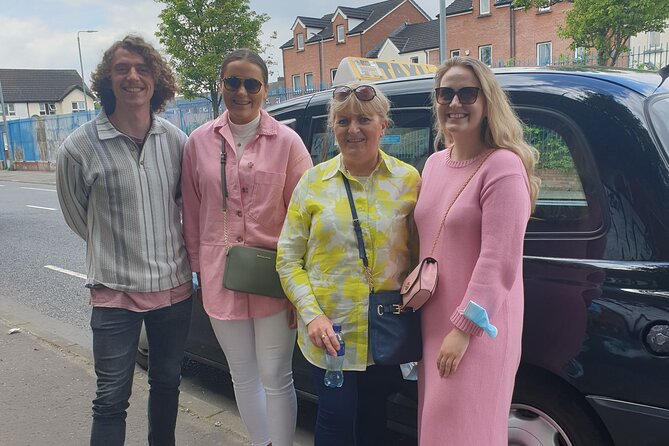
The Peace Wall is likely to be the most memorable stop for many people. The Belfast Interface separates communities that experienced years of violence, and the wall remains a powerful sign that the conflict has not simply vanished because open fighting ended.
You have about 10 minutes here. If you wish, you can sign your name on the wall. That small act can feel surprisingly personal, but it is worth treating the place with respect. The wall is not just a photo backdrop. It represents fear, loss, separation, and the difficult work of living alongside people with a different political identity.
The stop is also a good chance to ask about the present situation. The tour explains that Belfast has changed, but that divisions and unrest have not disappeared completely. You get a more useful picture by holding both facts together: daily life is calmer, yet the physical and emotional marks remain.
Do not expect a long walk along the wall or a full political seminar. The stop is short, and the value comes from the setting, the guide’s explanation, and your own response to the place.
Same city, a very different afternoon:
- Game of Thrones and Giant’s Causeway Full-Day Tour from Belfast
★ 5.0 · 2,291 reviews - Private Black Taxi Belfast City Tour
★ 5.0 · 2,188 reviews - City Sightseeing Belfast Hop-On Hop-Off Bus Tour
★ 4.5 · 2,012 reviews - Giants Causeway & Castles Tour from Belfast: Guided tour
★ 5.0 · 1,432 reviews
Bobby Sands and the Hunger Strike Memorial
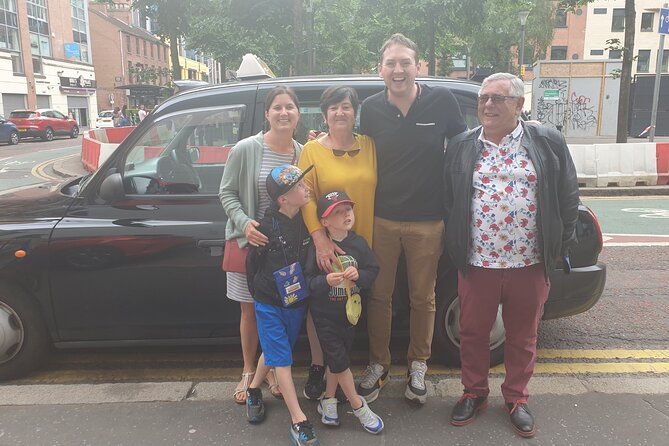
The Bobby Sands mural is at a Sinn Féin building and includes a Hunger Strike Memorial. This is one of the most politically charged points on the route, and it may also be the place where the human cost of the Troubles feels closest.
Bobby Sands became an important republican figure after dying during the 1981 hunger strike. The memorial connects the mural to a wider story of imprisonment, protest, political identity, and the British government’s response. Your guide explains the context rather than expecting you to arrive with a detailed understanding of it.
The scheduled stop is about 10 minutes. That is enough to view the mural and memorial, hear the main account, and raise questions. It is not enough to cover every argument surrounding the hunger strike, so keep your expectations realistic.
I appreciate that this stop is paired with Shankill Road later in the route. Seeing only republican symbols can leave you with a one-sided picture. Moving between the two communities lets you compare how each remembers its dead, presents its cause, and marks its territory.
Crossing to Shankill Road
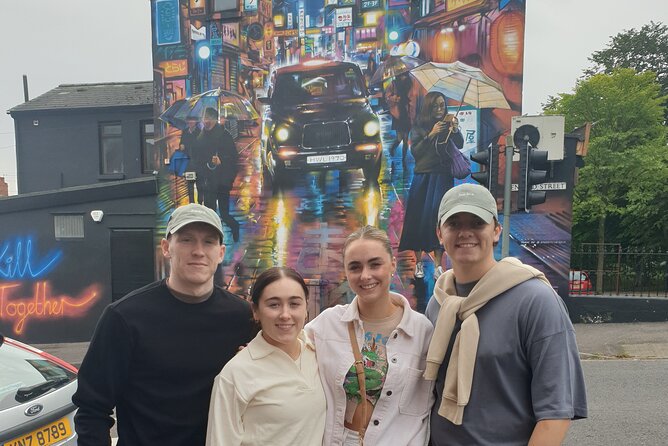
Shankill Road brings the Unionist and loyalist side of Belfast’s story into view. The stop lasts about 15 minutes, making it the longest scheduled stop and giving you more time to examine the iconic political and cultural murals.
The visual change matters. Flags, symbols, and memorials communicate a different political identity from the one you saw around Divis Street and the Bobby Sands mural. Hugh explains the background and helps place the images in the wider conflict rather than presenting them as isolated works.
This is where the route earns its value as a balanced tour. You are not simply hearing an account of one neighborhood. You are seeing how opposing communities use public art and street markers to preserve memory and express loyalty.
The contrast can be striking, but try not to reduce it to a tidy two-sided story. The Troubles involved changing alliances, different forms of violence, political disagreements, and people whose personal lives did not fit neatly into a label. A good guide can make that complexity understandable without turning the tour into an argument, and Hugh’s approach is described as careful and factual.
A cab ride that leaves room for questions
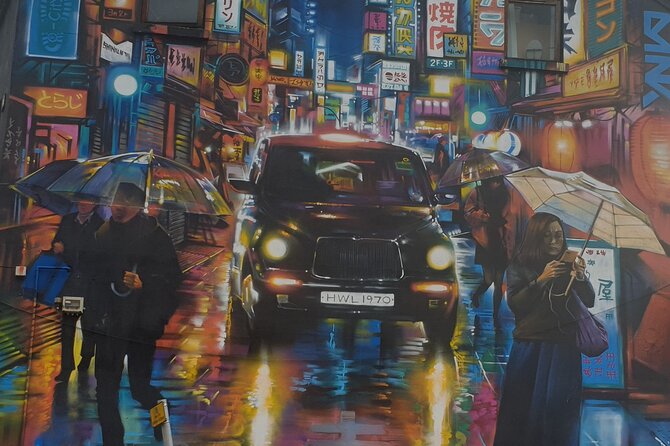
A private cab changes the tone of the experience. You are not standing in a large group trying to hear a guide over traffic. You can ask about a mural, pause on a point you do not understand, or connect the story to something you have read.
The tour is for your party alone, with a maximum of two people at the listed price. That is a very different experience from a large group outing. It also means the cost needs to be judged as a private activity rather than a standard per-person sightseeing ticket.
At $97.05 per group, two people pay roughly $48.53 each. For an hour and a half with a private vehicle, several stops, and a guide focused on one subject, that is a fair price if the Troubles are a main reason you are visiting Belfast. It is less attractive if you want a general introduction to every part of the city.
The cab also limits walking, which helps if you prefer to cover ground without spending the whole time on foot. You still get out at the main stops, but the vehicle connects them efficiently.
What the guide’s style adds
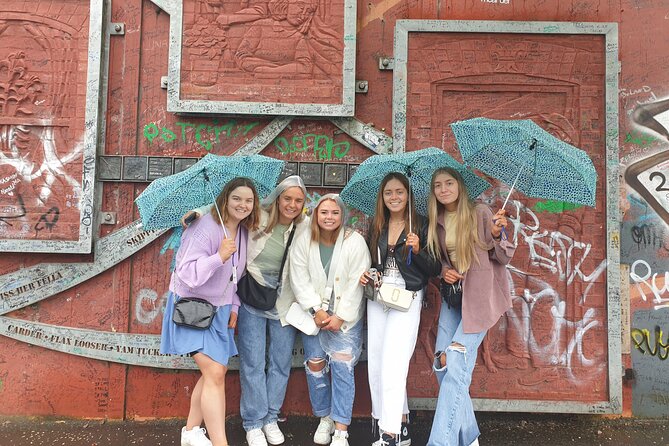
Hugh Jordan is the named experience provider and guide associated with the tour. His strongest quality is not theatrical performance. It is the ability to explain a complicated and sensitive subject in plain language while keeping the conversation open.
The descriptions of his guiding style emphasize a nonbiased approach, personal experience, clear answers, and a good sense of humor. One useful feature is that he asks questions at points during the tour, rather than delivering one uninterrupted speech. That gives you a chance to test your understanding as you go.
His own connection to Belfast also adds a human layer. You may hear personal anecdotes alongside the wider account of the conflict. Those stories can make the places feel immediate, though you should still remember that any guide offers one perspective, even when trying to be fair.
A good approach is to listen for facts, ask direct questions, and avoid treating the tour as a debate to be won. You will get more from the experience if you allow room for uncertainty and competing memories.
Pickup rules can affect the value
Inner-city pickup is included, but it is not available from every hotel. The tour uses selected hotels and prominent meeting points, and you are asked to meet outside the hotel or chosen location.
If you do not select a hotel, the default meeting point is the Leonardo Hotel on Great Victoria Street. You can change the pickup point by text up to 30 minutes before the tour begins, but only listed points qualify.
Several locations are excluded. The tour does not provide pickup from the port, airport, Titanic Belfast, Titanic Quarter, Queen’s Quarter hotels, or hotels more than half a mile from the city centre unless specifically listed. Examples of excluded hotels include the Crowne Plaza, Holiday Inn Express, Ibis Queens House, Premier Inn Titanic, Chamber by Warren, Malone, Tara Lodge, and The Gregory.
This rule is not a minor footnote. A pickup that sounds convenient may not apply to your accommodation. Check the available meeting points before booking, and allow enough time to reach yours. The operator’s reason is practical: the short tour is meant to spend its time in the neighborhoods, not driving across Belfast to collect and return passengers.
Who should book this experience?
I would choose this tour if you want to understand Belfast through the Troubles, murals, memorials, and local identity. It suits first-time visitors who want a clear introduction, as well as people who already know something about Northern Ireland and want to see the places connected with the story.
It is also a good fit for families or mixed-age groups. The private format allows the guide to adjust the pace and answer questions, and the cab reduces the amount of walking. The listed participation guidance says most people can take part, and service animals are allowed.
You should have a good level of English, since the value rests on spoken explanation. The listing also notes hearing difficulties, but it does not provide specific information about amplification or other arrangements, so contact the provider if that affects you.
I would not choose it as your only Belfast sightseeing tour if your main interests are the Titanic, maritime history, museums, food, or grand civic buildings. The route is tightly centered on west Belfast and the political story. That is exactly why it works, but it is not a general city tour.
Practical timing and cancellation
The full experience lasts about 90 minutes. The stops themselves total roughly 55 minutes, with the remaining time used for driving between areas and talking in the cab. If you need to be somewhere immediately afterward, leave extra time rather than planning a tight connection.
The tour is offered in English and includes a mobile ticket. Confirmation is provided when you book. Free cancellation is available up to 24 hours before the scheduled start time, while cancellations or changes made less than 24 hours before the start are not accepted for a refund.
Should you book the Iconic Belfast Black Cab Tour?
Book it if you want a focused, private look at Belfast’s divided past and present. The route is well chosen: Divis Street, the International Mural Wall, the Peace Wall, Bobby Sands’ mural, and Shankill Road give you several distinct points of view in one compact outing.
The strongest reason to choose it is Hugh Jordan’s reported balance, clear storytelling, personal anecdotes, and willingness to answer questions. The main caution is emotional weight. This is not light sightseeing, and the murals are tied to real loss and continuing disagreement.
For two people staying near an approved city-centre pickup point, the price is reasonable for a private cab and guide. Check the pickup location, allow 90 minutes, and book this as a history and culture experience rather than a broad Belfast tour. If that matches what you want, it is a worthwhile use of your time.
FAQ
How long does the Iconic Belfast Black Cab Tour last?
The tour lasts approximately 1 hour and 30 minutes.
How much does the tour cost?
The listed price is $97.05 per group of up to two people.
Is the tour private?
Yes. Only your own group participates, with a maximum of two people at the listed group price.
Which places does the tour visit?
The route includes Divis Street and Divis Tower, the International Mural Wall on Divis Street, the Peace Wall, the Bobby Sands mural and Hunger Strike Memorial, and Shankill Road.
Can I sign the Peace Wall?
Yes. You may sign your name at the Peace Wall if you wish.
Is pickup included?
Inner-city pickup is included from selected hotels and prominent meeting points. Pickup is not included from the port, airport, Titanic Belfast, Titanic Quarter, Queen’s Quarter hotels, or locations more than half a mile from the city centre unless listed.
Where do I meet if my hotel is not listed?
If you have not selected a hotel, the meeting point is outside the Leonardo Hotel on Great Victoria Street.
What is the cancellation policy?
You can cancel up to 24 hours before the experience starts for a full refund. Cancellations or changes made less than 24 hours before the start time are not accepted.
Just added in Belfast
- World Famous Belfast City Centre Black Cab/Taxi Tour 2 Hours★ 4.5 · 177 reviews
- Black Taxi Tour and Crumlin Road Gaol tour Combo★ 5.0 · 170 reviews
- The Troubles and iconic award winning taxi 2hr private cab tour★ 5.0 · 28 reviews
- 2 hours Belfast Original Drivers The Troubles Black Taxi Tour★ 5.0 · 227 reviews
- Belfast Music and Street Art Small Group Guided Experience★ 4.5 · 62 reviews
- Private Shore Excursion From Belfast Cruise Terminal★ 5.0 · 26 reviews
- Black Taxi Mural “Tour Like A Local”★ 5.0 · 125 reviews
- Shore Excursion from Belfast: Including Giants Causeway and Belfast City.★ 4.0 · 192 reviews
Tours in Northern Ireland, compared.
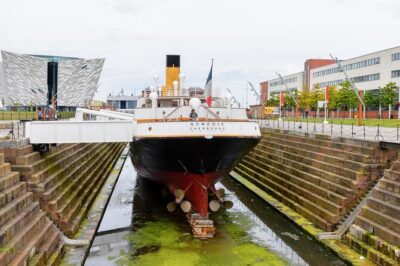
Titanic Belfast Entrance Ticket: Titanic Visitor Experience Including SS Nomadic
Read our review →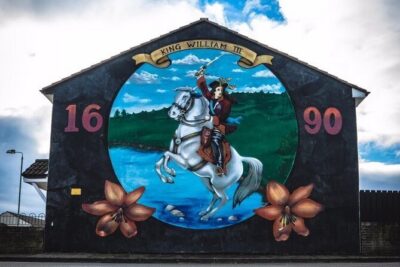
A History of Terror – Belfast City Centre Walking Tour
Read our review →
Game of Thrones and Giant’s Causeway Full-Day Tour from Belfast
Read our review →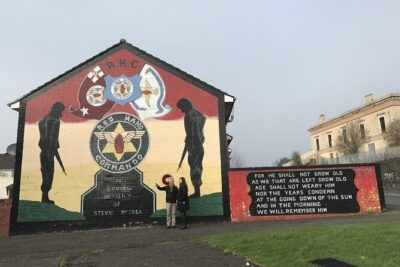
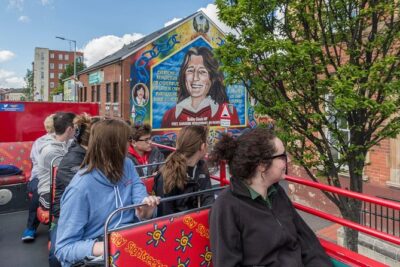
City Sightseeing Belfast Hop-On Hop-Off Bus Tour
Read our review →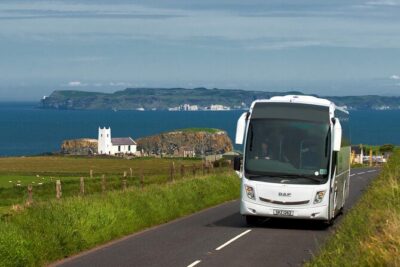
Giants Causeway & Castles Tour from Belfast: Guided tour
Read our review →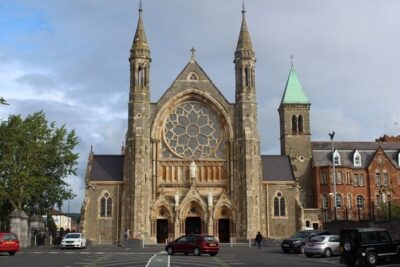
Browse the lists this tour appears in