
Reviewed · MUSEUMS
London: British Museum with Expert Guide.
The British Museum can feel like several museums at once, and this 80-minute guided route gives you a clear path through its greatest hits. You will meet certified guide Strabo by the stone lions at the Montague Place entrance, then move from the Rosetta Stone and Egyptian mummies to Greek sculpture, Assyrian reliefs, and the Lewis Chessmen.
I like the sharp focus on famous objects and the guide’s use of humor, which helps the history stay lively rather than turn into a lecture. I also like that you can remain in the museum afterward and explore on your own. The main drawback is the short running time: 80 minutes is enough for highlights, not a full look at one of the world’s largest collections.
Key points to know before booking
- The Rosetta Stone leads the story: Learn how one carved object helped scholars read ancient Egyptian hieroglyphs.
- The route covers several civilisations: Egyptian, Greek, Assyrian, and medieval Viking-related objects all feature.
- Strabo keeps the pace accessible: The guide is described as friendly, funny, clear, and ready to answer questions.
- The focus is on major exhibits: This suits a first visit better than someone wanting quiet time in lesser-known galleries.
- You can stay afterward: The guided portion ends back at the meeting point, leaving you free to browse the collection and gift shop.
- The price is modest for a guided introduction: At $20.20 per person, you are paying for direction and explanation, not just entry into a vast building.
Why a guided visit helps at the British Museum
The British Museum is free to wander through in many circumstances, but its size can work against you. You can spend a long time walking between galleries and still miss the objects that give the museum its strongest sense of purpose.
A guide changes that. Instead of trying to decide which room to enter next, you follow a planned route built around objects with a clear story. The Rosetta Stone explains a breakthrough in reading ancient Egyptian writing. The mummies and coffins show how beliefs about death shaped art and ritual. The Parthenon sculptures point to the artistic ambition of ancient Greece.
That structure matters. You are not simply looking at old objects in glass cases. You are being shown how writing, religion, royal power, warfare, and daily life appear in material form.
This tour also keeps the information at a manageable level. Strabo is praised for explaining key exhibits without burying the group under facts, while still answering questions with ease. That balance is useful in a museum where every case can invite a long explanation.
More Museum Tours in London:
- Tower of London and Crown Jewels Exhibition Ticket
★ 4.5 · 6,677 reviews - London: Chelsea Football Club Stadium and Museum Tour
★ 4.8 · 4,576 reviews - Chelsea FC Stadium Tours and Museum
★ 5.0 · 1,908 reviews
Meeting at the Montague Place stone lions
The meeting point is outside the Montague Place entrance, by the two stone lions. The British Museum has two entrances, so this detail matters. Go to Montague Place rather than simply heading toward the first doorway you see.
The tour begins and ends at the museum, which keeps the plan simple. You do not need to arrange transport between separate sites, and the final return to the meeting point makes it easy to continue exploring afterward.
Check the available starting times before you book. The tour lasts 80 minutes, but the exact departure time depends on the date and availability. Arrive with enough time to find the correct entrance and the lions, especially if you are fitting this into a larger day in central London.
The activity is offered in English with a live guide. It is wheelchair accessible, though some museum areas may be more difficult to navigate than others. If you use a wheelchair, allow extra patience for crowded or less convenient sections of the building.
The Rosetta Stone and the first great breakthrough
The Rosetta Stone is the natural opening point for this kind of visit. Its importance is not just its appearance. It helped scholars understand ancient Egyptian hieroglyphs by presenting the same text in different forms of writing.
A guide can turn that fact into a much clearer lesson. You will hear how a single object connected languages and gave researchers a way to read inscriptions that had remained a mystery for centuries. The stone becomes a doorway into the wider Egyptian collection.
This is one of the tour’s strongest choices because it teaches you how museums can preserve not only objects, but also the evidence needed to interpret them. Look closely at the stone, but pay equal attention to the explanation. The value is in understanding why this particular slab changed the study of ancient Egypt.
The stop also sets the tone for the rest of the tour. You are shown an object, then given the key idea that makes it memorable. That approach works well if you are new to ancient history or visiting with teenagers who might not want a long academic talk.
Egyptian mummies, coffins, and life after death
The Egyptian section moves from writing to belief. You will see mummies and coffins while learning about ideas surrounding death and the afterlife.
The subject can easily become a list of dates and royal names. A good guide instead helps you notice what the objects reveal about Egyptian priorities. Mummification was not simply a strange technical process. It was linked to religious ideas and to the hope that the dead could continue into another form of existence.
The collection’s strength is its range. Mummies show the physical side of preservation, while coffins and related objects communicate status, symbolism, and ritual. You will get an introduction rather than a complete study of Egyptian funerary culture, but the guided context gives you a better reason to look closely.
This section may be especially useful for families. One of the strongest comments about the tour noted that the explanations worked for a youngest teenage member as well as adults. The guide’s humor and plain speaking help keep a serious subject approachable.
More museums and galleries in London:
- London: British Museum Guided Tour
★ 4.3 · 1,182 reviews - Official tickets: Moco Modern & Contemporary Art Museum
★ 4.5 · 1,157 reviews - British Museum London Guided Tour Semi-Private 8ppl Max
★ 5.0 · 984 reviews - London: Jack the Ripper Museum Tickets
★ 4.2 · 894 reviews
Greek sculpture from the Parthenon
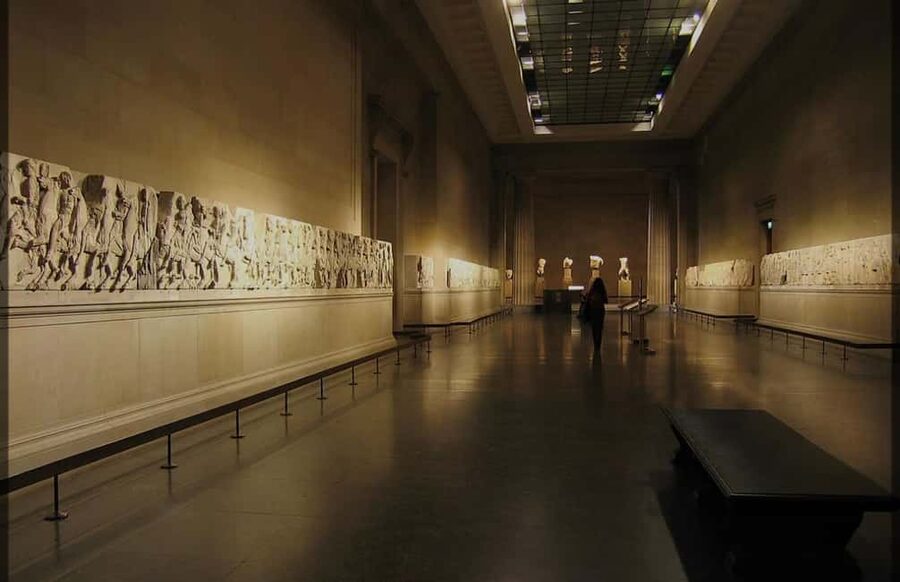
The next major stop is the group of sculptures commonly called the Elgin Marbles, also described here as the Parthenon Sculptures. Created in the 5th century BCE, they depict scenes connected with Greek mythology and the design of the Parthenon in Athens.
You will see why these works are so important to the image of ancient Greece. The figures and carved details give you a sense of the scale and ambition of the building they came from. A guide can also help you notice the artistic choices that are easy to miss when you are looking from a distance.
The sculptures are a good place to pause and compare art with architecture. These were not made as isolated gallery pieces. They belonged to a larger setting, and the tour can help you picture their original role without requiring you to know much about Greek history beforehand.
The stop is also a reminder of the museum’s huge range. In a short walk, you move from Egyptian writing and burial customs to Greek myth and public art. That variety is exciting, but it is also why an 80-minute visit must remain selective.
Assyrian lion hunts and royal power
The Assyrian lion hunt reliefs provide a different mood. These carvings show the power of the Assyrian court through scenes of royal hunting, animals, movement, and controlled violence.
Look at the detail in the lions. The reliefs are not only records of a hunt. They also present the ruler as powerful, brave, and able to control the natural world. A guide’s explanation gives you the political message behind the images, so the carvings become more than impressive stone decoration.
This is one of the stops where a short tour can be particularly helpful. You might notice the animals first, but the wider story concerns kingship and the way rulers wanted to be seen. The guide connects the visual drama to the society that produced it.
The Assyrian section also adds welcome variety to the route. Egypt and Greece often dominate first-time museum plans, while Assyria can receive less attention. Here, it earns a place among the main stops because the reliefs are visually powerful and easy to appreciate even if you know little about the empire.
The Lewis Chessmen and a medieval change of pace
The Lewis Chessmen take the tour into the medieval period. These intricately carved pieces were found on the Isle of Lewis in Scotland and are associated with Viking culture.
After the large-scale sculpture and royal reliefs, the chess pieces offer something smaller and more personal. You can study the expressions and individual forms, then consider how a game set can tell you about status, craft, trade, and leisure.
The pieces are memorable because they feel approachable. You do not need a specialist background to understand the appeal of a carved chess figure with a distinct character. The guide adds the historical setting and explains why the set matters beyond its novelty.
Including the Lewis Chessmen also keeps the tour from becoming only a parade of ancient empires. You see that the museum’s collection reaches across periods and places, from Egypt and Greece to medieval Scotland.
What the guide adds to the experience
The strongest feature of this activity is the live explanation. The guide is described as professional, friendly, funny, and enthusiastic, with enough command of the material to handle questions as they arise.
That makes a difference in a museum where labels cannot always provide the whole picture. You can ask about an object that catches your eye, request a little more detail, or connect one gallery to the next. The guide also helps set the pace, which prevents the group from spending too long on the first famous object and rushing through everything else.
Strabo is named as the experience provider and guide in the available information. One particularly useful feature is the ability to focus on the exhibits that interest your group, including the Rosetta Stone, Egyptian objects, and Aztec material. The core route highlights major works, but questions can help shape the conversation.
Do not expect a private, highly specialised seminar on one civilisation. This is a broad introduction. Its strength is clarity, pace, and selection.
What happens after the 80-minute route
The guided portion ends back at the meeting point, but your museum visit does not have to end there. You can stay and look through the collection at your own pace.
This is important for value. The tour gives you a framework, then lets you choose what deserves more time. If the Egyptian rooms catch your attention, you can return to them. If the Assyrian reliefs make you curious, you can spend longer with them instead of following a fixed group schedule.
You can also visit the gift shop, which carries books, souvenirs, and replicas. A museum book can be a useful way to continue the visit, especially after the guide has given you a list of objects worth remembering.
Photography is allowed, but flash photography is prohibited. Food and drinks are not allowed inside the exhibition rooms, so plan to eat before or after the gallery visit rather than carrying refreshments through the displays.
Is $20.20 good value?
At $20.20 per person, the tour is reasonably priced for a guided introduction to a museum of this scale. You are paying for a live English-speaking guide, a planned route, and explanations that help you get more from the major exhibits.
The value is strongest if this is your first British Museum visit, if your time in London is limited, or if you prefer a guide to make the decisions for you. It is also useful for families and mixed-age groups because the tone is reported to be clear and entertaining rather than overly formal.
The value is less obvious if you already know the museum well or prefer to wander alone. You will cover only selected highlights in 80 minutes, and the tour may leave you wanting more time with individual galleries.
Cancellation is flexible: you can cancel up to 24 hours before the activity for a full refund. You can also reserve now and pay later, which helps if your London plans are still shifting.
Who should book this British Museum tour?
I would choose this tour for a first visit, a short stay, or a family group that wants a strong introduction without spending half a day trying to navigate the building. It is also a good fit if you like asking questions and want historical context rather than silent viewing.
It may suit you especially well if you want to see the Rosetta Stone, mummies, Parthenon sculptures, Assyrian reliefs, and Lewis Chessmen in one planned visit. The mix gives you a broad view of the museum’s main themes.
I would think twice if your priority is a slow, detailed study of one collection. The tour moves across several civilisations, so its appeal is range rather than depth.
Should you book it?
Book this experience if you want a friendly guide, a clear route, and the museum’s best-known objects in a compact 80-minute visit. Strabo’s approachable style, humor, and willingness to answer questions add real value to a building that can otherwise feel overwhelming.
Skip it if you already have a firm plan and prefer complete independence. For most first-time visitors, though, $20.20 is a sensible price for getting oriented quickly, learning why the objects matter, and then staying on to explore the British Museum at your own pace.
FAQ
Where does the tour meet?
Meet outside the Montague Place entrance to the British Museum, by the two stone lions.
Does the activity use both museum entrances?
The museum has two entrances, but the meeting point for this activity is specifically the Montague Place entrance.
How long does the guided tour last?
The guided tour lasts 80 minutes. Check availability for the starting times offered on your chosen date.
What language is the tour in?
The live tour guide speaks English.
Who provides the experience?
The experience provider and named guide is Strabo.
Which objects are included in the route?
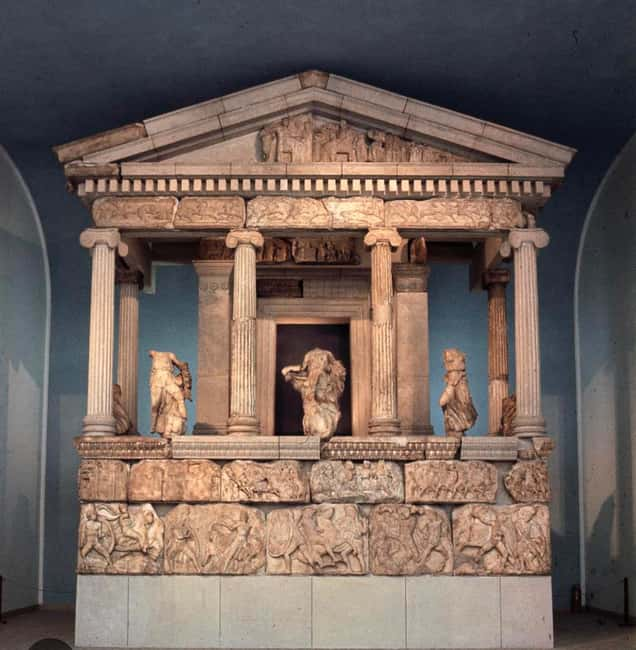
The tour includes the Rosetta Stone, Egyptian mummies and coffins, Parthenon sculptures also known as the Elgin Marbles, Assyrian lion hunt reliefs, and the Lewis Chessmen.
Can I stay in the museum after the tour?
Yes. After the guided portion ends back at the meeting point, you can continue exploring the museum collection at your own pace.
Is the British Museum wheelchair accessible?
The museum is wheelchair accessible, although some areas may be more difficult to navigate.
Can I take photographs inside?
Photography is allowed, but flash photography is prohibited.
Can I bring food or drinks into the galleries?
Food and drinks are not allowed inside the exhibition rooms.
What happens if I need to cancel?
You can cancel up to 24 hours in advance for a full refund. You can also reserve now and pay later.
Just added in London
- Westminster and National Gallery 3.5-Hour Tour in Italian★ 4.9 · 28 reviews
- London: Full Day Tower, St. Paul’s, Cruise & Eye Experience★ 4.6 · 168 reviews
- British Museum & Camden Town – Private Tour in Italian★ 4.8 · 26 reviews
- London: Westminster Abbey Guided Tour★ 4.5 · 445 reviews
- London: Medieval History Walking Tour from The Tower★ 4.9 · 318 reviews
- The Original London Street Art Tour (French)★ 4.9 · 64 reviews
- German London : The Ultimate Walking tour★ 4.8 · 400 reviews
- London: Royal Hampton Court Guided Tour with Afternoon Tea★ 5.0 · 67 reviews
Museums, compared.

Liverpool Football Club Museum and Stadium Tour
Read our review →
Tower of London and Crown Jewels Exhibition Ticket
Read our review →
Chelsea Football Club Stadium and Museum Tour
Read our review →


Browse the lists this tour appears in