
Reviewed · JACK THE RIPPER TOURS
London: Jack the Ripper Museum Tickets
Jack the Ripper Museum takes you into the dark heart of Whitechapel in 1888, using six floors of recreated rooms, crime scenes, police evidence, sound effects, and Victorian objects. You move from Mitre Square to the police station, then into the private world of the suspected killer and the cramped rooms of his victims.
I like the museum’s attention to the women who were murdered, not just the mystery of the killer. I also like the way the audio, walls covered with information, letters, and carefully arranged rooms give the visit a strong sense of place.
The main drawback is size. This is a small museum, and some people will finish in 45 minutes. The morgue includes actual autopsy photographs, so the final section can be upsetting and is not a good fit for everyone.
Key points to know before you go
- Six floors in a compact East End building: Expect a self-guided walk through themed rooms rather than a large national museum.
- Mitre Square brought to life: See a waxwork recreation of P. C. Watkins discovering Catherine Eddowes’s body.
- A recreated Whitechapel Police Station: Examine crime boards, letters, newspapers, and police equipment linked to the investigation.
- Mary Jane Kelly’s attic room: Learn about the daily lives of the murdered women through photographs and modest personal belongings.
- A graphic morgue display: Actual autopsy images and reports make the final room suitable only for visitors comfortable with disturbing material.
- Easy to fit into a London day: The museum is at 12 Cable Street, near Tower Gateway, Tower Hill, and Aldgate East.
Entering 1888 Whitechapel at 12 Cable Street
The museum is at 12 Cable Street, in London’s East End. From the outside, the building can look more like an ordinary house than a major attraction, which gives the entrance a slightly theatrical surprise. Once inside, the rooms lead you through a grim chapter of Victorian London.
This is not a guided walking tour through present-day Whitechapel. Your ticket covers admission to the museum, and the main visit is a self-guided route through the displays. That freedom is useful because you can stop to read the wall panels, listen to the audio, and spend extra time in the rooms that interest you.
The route is arranged over six floors. You will not be covering a large distance, but you will use stairs and move through a series of compact spaces. The layout helps create a house-like feeling, although it also means the museum can feel crowded if several people pause in the same room.
Plan on about 45 minutes if you move briskly. If you read the information carefully and study the displays, 90 minutes is more realistic. One visitor spent around an hour and a half, while others finished in about 45 minutes. I would allow an hour, with extra time if you have a serious interest in the case.
More Museum Tours in London:
- Tower of London and Crown Jewels Exhibition Ticket
★ 4.5 · 6,677 reviews - London: Chelsea Football Club Stadium and Museum Tour
★ 4.8 · 4,576 reviews - Chelsea FC Stadium Tours and Museum
★ 5.0 · 1,908 reviews
Mitre Square and the discovery of Catherine Eddowes
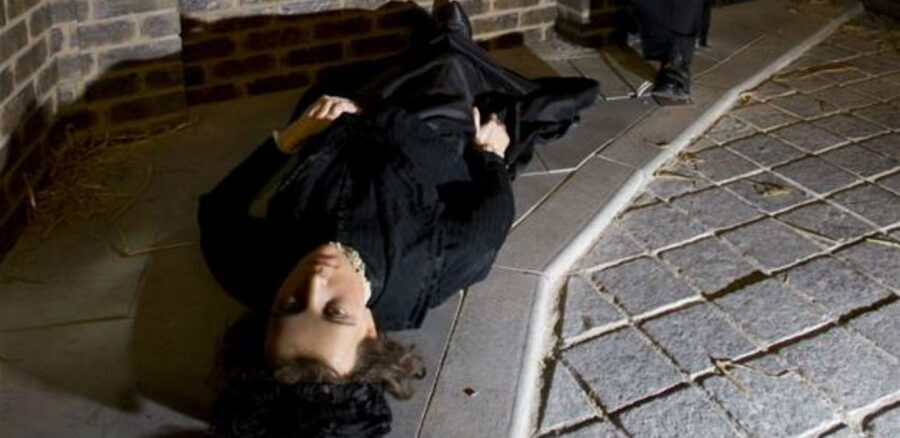
One of the first major scenes is a recreation of Mitre Square. The display shows P. C. Watkins discovering Catherine Eddowes’s body, with wax figures arranged to create a realistic and disturbing tableau.
This room is designed to make the crime feel immediate. You are not simply reading a date and a name on a panel. You are seeing the police officer, the body, and the setting presented together, with sound and lighting helping to create the mood.
That theatrical approach will work well for anyone interested in crime history or horror. It may feel too staged if you prefer museums built around original documents and quiet interpretation. The museum uses recreated scenes because the murders happened more than a century ago, but the effect can still be intense.
Take your time with the information around the scene. The case is often reduced to a famous name and a list of gruesome details. Here, the displays give you a better sense of the investigation and the setting in which the killings took place.
Inside Jack the Ripper’s imagined sitting room
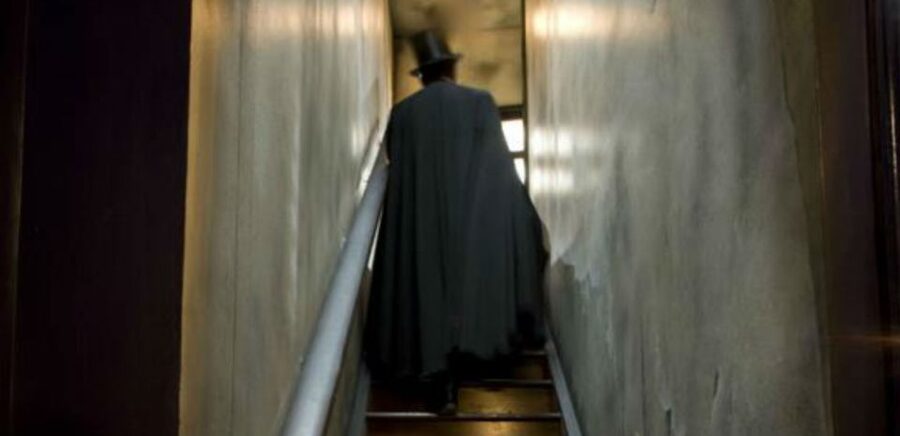
The next room presents a version of Jack the Ripper’s sitting room. It includes medical instruments, books, maps, letters, and Victorian objects connected to the case.
The room is built around the question of who the murderer might have been. Jack the Ripper was never identified with certainty, so the museum cannot give you a definitive answer. Instead, it presents clues, suspects, and objects that reflect the continuing mystery.
A particularly striking item is a drawing of a woman’s body on a metal bed, signed in red ink and associated with Walter Sickert, one of the suspects discussed in the case. The display treats it as a major piece of Ripper memorabilia, but you should remember that association with a suspect is not the same as proof of guilt.
I like this room because it moves away from the crime scenes and shows how the mystery grew. Books, maps, letters, and instruments suggest the mix of medical knowledge, police work, rumor, and public fascination that surrounded the investigation.
The atmosphere is deliberately unsettling. If you enjoy historical mysteries, you will probably spend time studying the objects and trying to connect them to the suspects. If you want a strictly academic museum, the staged sitting room may feel more like a theatrical interpretation than a formal archive.
Whitechapel Police Station and the evidence boards
The recreated Whitechapel Police Station is one of the museum’s strongest sections. Whitechapel Station was presented as the center of the police investigation, and the room is arranged with crime scene boards, newspaper reports, letters, and police artifacts.
Here you can inspect the From Hell and Dear Boss letters, two of the most famous documents linked to the Ripper case. The museum also displays original newspapers and police material, giving you a sense of how the killings were reported and investigated at the time.
The equipment linked to P. C. Watkins is especially memorable. His whistle, notebook, handcuffs, and truncheon are displayed together. The whistle matters because it was used to call for help after he discovered the body in Mitre Square. Small objects like these make the police response feel more human and immediate.
This room is a good pause point for reading. The crime boards can take longer than expected, especially if you want to follow the names, dates, and theories. The museum presents the evidence in a way that keeps the mystery alive, but it is worth separating historical documents from later speculation.
Staff members named Jasony and George are associated with particularly helpful explanations and engaging presentations. The standard experience remains self-guided, so do not assume a personal guide is included with every admission. If a staff member is available to answer questions, take advantage of it.
Other dark-history walks in London:
- London: The Original Jack the Ripper Walking Tour
★ 4.7 · 7,833 reviews - London Jack the Ripper Guided Tour with Ripper-Vision
★ 4.5 · 4,840 reviews - London: Jack the Ripper Small Group Tour
★ 4.7 · 3,159 reviews - London Jack The Ripper Guided Walking Tour
★ 5.0 · 3,131 reviews
Mary Jane Kelly’s attic bedroom
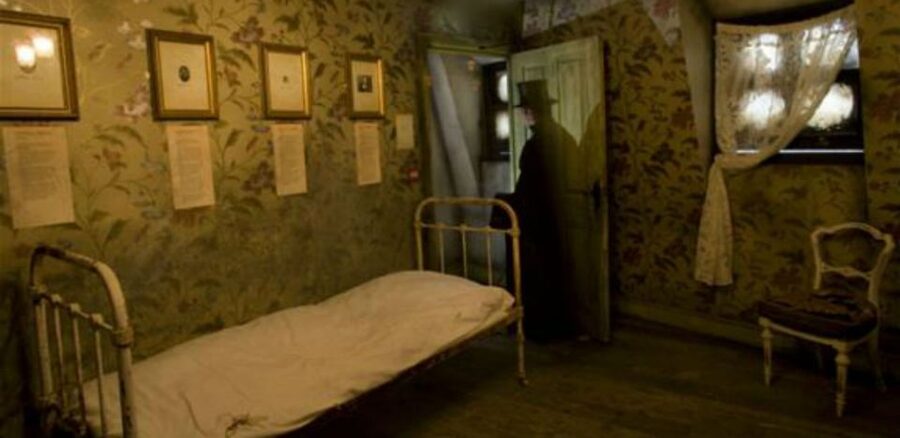
The attic contains a recreation of Mary Jane Kelly’s bedroom, connected with the most horrific murder in the case. It is a more personal room than the police station and crime scenes.
You will see a metal-framed bed with a straw mattress, boots, bonnets, photographs of women and their families, and other modest possessions. These details show how poor Victorian East End women lived, rather than treating them only as names in a murder story.
The room’s strength is its shift in tone. The police room asks you to examine evidence. The attic asks you to think about the people who lived in these rooms, worked, struggled, and had families before their deaths.
Audio adds to the atmosphere. A woman singing through a speaker in the attic is especially haunting. The sound is not merely background decoration. It makes the room feel more intimate, and it can leave a stronger impression than another printed panel.
I appreciate this focus on the victims. Many attractions built around famous criminals can turn the killer into the main character. This museum still uses the Ripper’s name to draw you in, but the attic makes room for the women’s stories and circumstances.
The room is also a reminder that the murders took place in a real community. The victims were not characters in a mystery game. They were women with family connections and everyday belongings, living in a poor part of London during a difficult period.
The morgue and the most graphic displays
The final major section is the morgue. Here you can read reports about the murders and study actual autopsy photographs connected with the nine women identified in the museum’s presentation.
This is the point where you should decide how much you want to see. The photographs are graphic, and the subject is handled in a grim, direct way. If you are sensitive to medical images, you can spend less time here or skip the room.
The morgue gives the museum its strongest historical weight, but it is also where the experience can become uncomfortable. Some people will value the direct evidence and the chance to understand the severity of the crimes. Others will feel that the photographs cross a line from education into spectacle.
I would not bring young children without first considering their tolerance for frightening scenes and disturbing images. The museum can appeal to children who enjoy horror or true crime, but the autopsy material is not suitable for every child. The attraction does not become less serious simply because some rooms use wax figures and theatrical effects.
Sound, walls, and the museum’s atmosphere
The museum relies heavily on mood. Audio plays in several rooms, and the sound in the attic is especially effective. Other displays use dim interiors, wax figures, old-fashioned furnishings, and walls crowded with information.
The walls are more than decoration. They help connect the rooms, moving you from the crimes to the police response, the suspects, and the women’s lives. If you want to understand the story in sequence, read the panels rather than rushing from one dramatic scene to the next.
The museum is atmospheric without needing a large footprint. That is an advantage in one sense. You can see the main sections during a short London visit, then continue to nearby sights in the Tower Hill and East End area.
It is also the source of one of the museum’s limitations. The rooms are small, and the route can feel compact compared with a major museum. You are paying for a focused theatrical experience, not a full day of galleries.
Is $18.86 good value?
At about $18.86 per person, the ticket is reasonably priced if you are interested in Jack the Ripper, Victorian London, true crime, or horror attractions. The visit does not take an entire day, but it can fill a useful hour between other London plans.
The value depends on how you like museums. If you read every display, listen to the audio, and spend time examining the police evidence, the ticket can feel worthwhile. If you expect a large collection of original artifacts or a long guided tour, you may find the price less appealing.
The museum combines original material, reproductions, wax figures, room sets, and written interpretation. That blend creates a memorable experience, but it also means you should not treat every object as an original item from 1888. The display about Walter Sickert, the police artifacts, newspapers, and letters are particularly important to examine carefully.
The ability to take your time helps. You are not pushed through a fixed one-hour show, and you can return to a display if you missed a detail. That makes the ticket a better fit for curious visitors than for anyone looking only for a quick photograph.
Getting there and fitting it into your London day
The museum is near Tower Gateway, Tower Hill, and Aldgate East stations. Transportation is not included, so you will make your own way to 12 Cable Street.
The location works well with a day focused on the Tower of London, the East End, or the City of London. Because the museum is small, you can place it between larger attractions rather than planning an entire day around it.
The activity ends back at the museum. There is no transportation element and no onward tour included. Check the available starting times when booking, since the ticket is valid for one day rather than for a multi-day period.
The museum closes on Christmas Day. A person accompanying a disabled visitor receives free admission, which is useful to know when planning the visit. If your schedule may change, cancellation is available up to 24 hours in advance for a full refund, and you can reserve now and pay later.
Who will enjoy this museum most?
I would recommend it to adults and older children who enjoy crime history, Victorian London, horror settings, or unsolved mysteries. It also suits visitors who want a short attraction with a strong atmosphere rather than a large collection spread across many rooms.
History-minded visitors should come ready to question the presentation. The museum is designed to tell a dramatic story, so some rooms are theatrical and some clues are tied to long-running theories. Read the evidence, notice the distinction between objects and recreations, and keep in mind that the murderer was never conclusively identified.
It is less suitable for anyone who dislikes graphic medical photographs, wax crime scenes, or dark subject matter. The final morgue room is not a mild historical display, and the overall mood remains grim from beginning to end.
The museum can work for families, but I would use your judgment. Some children may enjoy the interactive rooms and unusual setting, while others may find the mannequins, murder scenes, and autopsy photographs frightening.
Should you book the Jack the Ripper Museum?
Book it if you want a compact, atmospheric look at the 1888 murders and are comfortable with graphic material. The strongest parts are the Whitechapel Police Station, the victim-focused attic room, the sound design, and the small police objects that make the investigation feel real.
Skip it if you want a conventional museum with a large collection, long guided commentary, or a full-day program. At $18.86, it offers fair value for an hour or so of focused history and theatrical storytelling, especially when paired with other sights near Tower Hill and the East End.
My practical advice is to allow at least an hour, read the walls carefully, and decide in advance whether you want to enter the morgue. The museum is small, but its best rooms reward a slow visit.
FAQ
Where is the Jack the Ripper Museum?
The museum is at 12 Cable Street, London E1 8JG, in Greater London.
Which stations are near the museum?
The nearest Underground and train stations are Tower Gateway, Tower Hill, and Aldgate East.
How long is the visit?
The ticket is valid for one day. The museum itself can take about 45 minutes if you move quickly, or around 90 minutes if you read the displays carefully.
Is the visit guided?
The main experience is a self-guided visit through the museum. Staff members, including Jasony and George, are associated with helpful presentations and explanations, but a personal guide is not listed as part of the admission ticket.
Does the museum include graphic material?
Yes. The morgue contains actual autopsy photographs and reports about the murders. Recreated crime scenes and wax figures are also part of the visit.
Is transportation included?
No. You are responsible for getting to and from 12 Cable Street.
Can I cancel my booking?
You can cancel up to 24 hours in advance for a full refund. The reserve now and pay later option lets you book without paying immediately.
More museums in London
- London: British Museum Guided Tour
★ 4.3 · 1,182 reviews - Official tickets: Moco Modern & Contemporary Art Museum
★ 4.5 · 1,157 reviews - British Museum London Guided Tour Semi-Private 8ppl Max
★ 5.0 · 984 reviews - London: Tour of the British Museum
★ 4.1 · 678 reviews
Just added in London
- James Bond Shooting Locations 2-Hour Walking Tour of London★ 4.7 · 332 reviews
- Camden Pub Crawl in London★ 5.0 · 238 reviews
- Eating London: Twilight Soho VIP Food & Drinks Tour★ 5.0 · 590 reviews
- Heathrow Airport to Central London Private Transfers★ 4.5 · 402 reviews
- London Pub Crawl★ 5.0 · 247 reviews
- Highlights of Royal London Bike Tour including Hyde Park★ 5.0 · 543 reviews
- Shared Arrival Transfer London Airport to Hotel Accommodation★ 4.0 · 446 reviews
- Sherlock: The Official Live Game★ 4.5 · 460 reviews
Jack the Ripper Tours, compared.

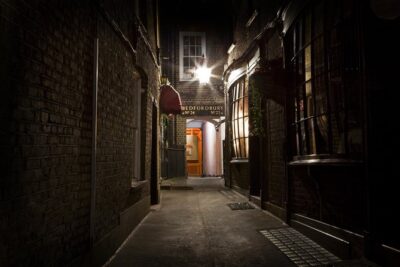
London Jack the Ripper Guided Tour with Ripper-Vision
Read our review →

German Language : Original Jack the Ripper Tour
Read our review →
Jack the Ripper Walking Tour – Ripper Vision Tours
Read our review →
Ultimate Jack the Ripper : Guided Tour of London
Read our review →
Browse the lists this tour appears in