
Reviewed · WALKING TOURS
London: Medieval History Walking Tour from The Tower
London’s medieval story comes alive on the pavement between the Tower of London and St Paul’s Cathedral. In two hours, you cross Tower Bridge, follow the Thames past HMS Belfast and Shakespeare’s Globe, and hear how power, trade, religion, and ordinary life shaped the city. Mick Priestley leads the walk with the sort of detail that turns old stones into human stories.
I especially like two things here: the route links major sights with places many first-time visitors miss, and the guide uses historical photographs to show what buildings and figures looked like in earlier centuries. The main drawback is simple: this is a long, information-packed walk, so you may wish for more time at individual stops.
- Tower Hill to St Paul’s: A compact route through London’s Roman, medieval, Tudor, and modern past.
- Tower Bridge on foot: Hear how the famous bridge was designed and built while crossing it.
- Unusual South Bank stops: Winchester Palace, the Golden Hinde, Borough Market, and Southwark Cathedral add depth beyond the usual postcard sights.
- A guide who welcomes questions: Mick Priestley is praised for detailed answers, humor, clear speaking, and a steady pace.
- Good value at $24: You see a large cluster of central London sights without paying separate admission fees.
- Come prepared: Wear comfortable shoes and clothing for rain or shine.
Why this Thames-side walk works so well
I like London tours that explain how places fit together, rather than dropping you beside one famous building after another. This one follows a natural line from the Tower of London to St Paul’s, using the river as the connecting thread.
That matters because the Thames is not just scenery. It helped London trade, defend itself, move people, receive news, and grow into a major city. Along the way, you hear about rulers and religious institutions, but also markets, theatres, ships, bridges, and the people who worked beside the water.
The route covers a lot in two hours. You will not enter the Tower of London, HMS Belfast, Shakespeare’s Globe, Southwark Cathedral, or St Paul’s Cathedral as part of the walk. Instead, the guide explains what you are seeing from outside and helps you decide which places deserve a later visit.
Starting beneath the Tower’s walls
Meet outside the western exit of Tower Hill tube station, near Trinity Square, The Citizen M Hotel, and the Tower Hill Tram burger van. Your guide carries a flagpole with a flag, which makes the meeting point easier to spot in a busy part of London.
The Tower of London gives the tour a fitting start. Founded nearly a thousand years ago, it has served as a fortress, royal residence, prison, and place of execution. You learn how the Tower fitted into the growth of London and why this spot beside the river mattered so much.
The walk does not replace a visit inside the Tower. If you want the Crown Jewels, the ravens, and the interior displays, plan a separate visit. The advantage here is that you gain context before deciding how much time to spend inside.
More Walking Tours in London:
- Magical London: Harry Potter Guided Walking Tour
★ 4.7 · 22,044 reviews - London: The Original Jack the Ripper Walking Tour
★ 4.7 · 7,833 reviews - Tour for Muggles The Ultimate Harry Potter Walking Tour in London
★ 5.0 · 4,684 reviews
Crossing Tower Bridge and meeting the river
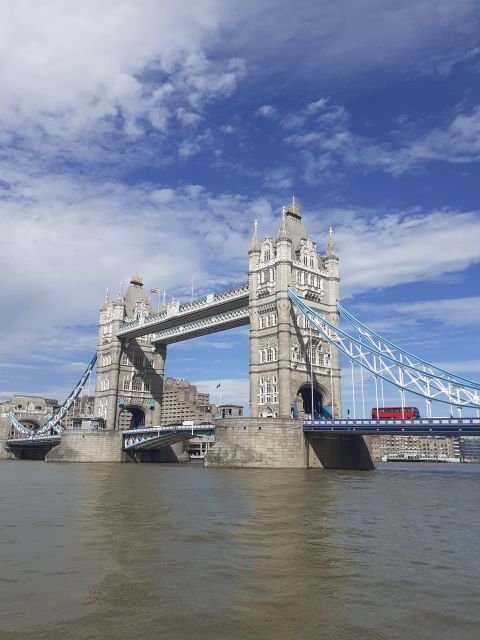
Tower Bridge is one of London’s most photographed sights, but the crossing is better when you understand the problem it solved. The city needed a bridge farther downstream from London Bridge, yet it also needed to keep the river open to ships.
As you walk across, the guide explains how the bridge was built and why its lifting design was important. The views are useful, too. You can look along the Thames toward the City, the Tower, and the South Bank, while seeing how old and new London sit side by side.
This is a walking tour, not a bridge exhibition visit. You will learn about Tower Bridge from the public crossing, but admission to the upper walkways and engine rooms is not part of the experience.
HMS Belfast and the modern river
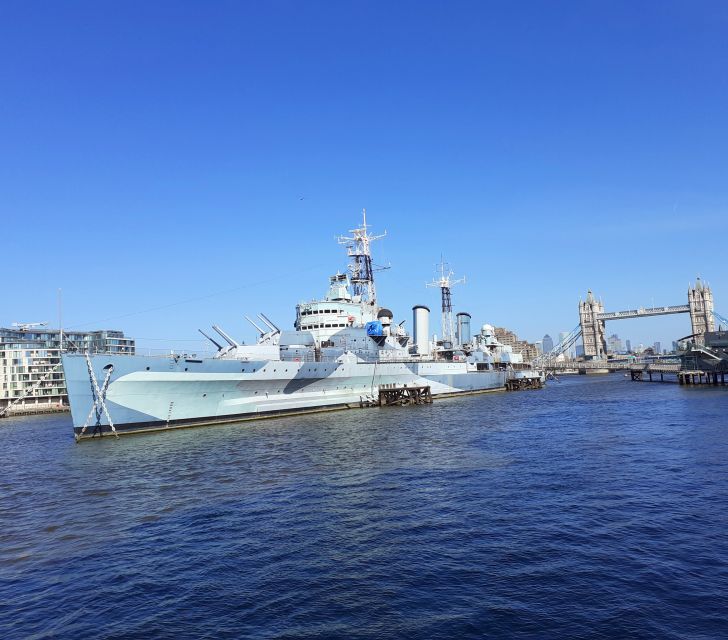
The large grey shape of HMS Belfast brings the story into the 20th century. This Royal Navy cruiser took part in the D-Day landings during the Second World War, giving the riverfront a direct link to one of the defining events of modern European history.
The ship is impressive even from outside, and the guide places it within the wider story of the Thames as a working and military river. If the vessel catches your interest, you can return for a separate museum visit. The walking tour gives you the reason to notice it, rather than spending time touring its decks.
London Bridge and the market quarter
The route continues toward London Bridge, a place where crossings, trade, and settlement have shaped the city for centuries. The bridge you see today is modern, but the site carries a long story of movement across the Thames.
Nearby Borough Market adds a useful change of pace. This is not simply another old building. It represents London as a place where food, commerce, and people meet. The guide connects the market area to the wider life of Southwark, which for centuries sat just beyond the City of London’s formal control.
You pass through a part of London that can be busy, so stay close enough to hear the guide. One benefit of the route is that the history continues while you walk, rather than stopping only at grand monuments.
More walks around London:
- London Jack The Ripper Guided Walking Tour
★ 5.0 · 3,131 reviews - London: Harry Potter Movies Walking Tour (Kids Go Free)
★ 4.7 · 3,071 reviews - Changing of the Guard Guided Walking Tour in London
★ 5.0 · 1,793 reviews - London: The Great British Rock and Roll Music Walking Tour
★ 4.9 · 1,783 reviews
Southwark Cathedral and Winchester Palace
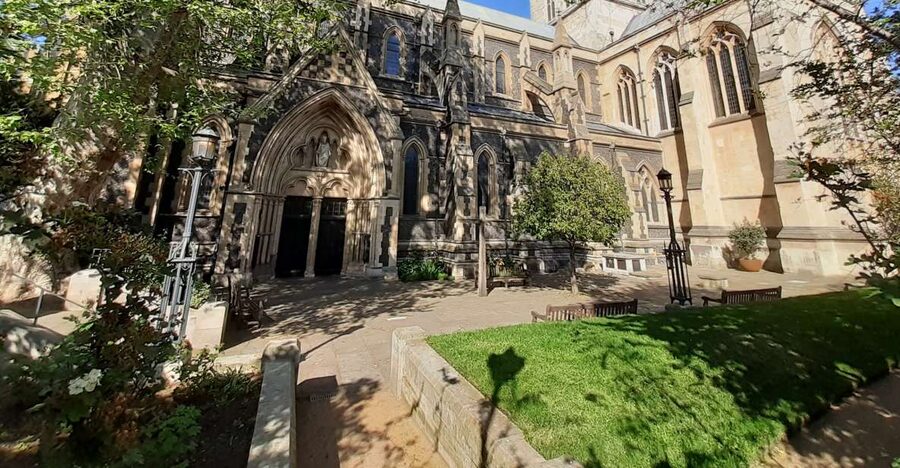
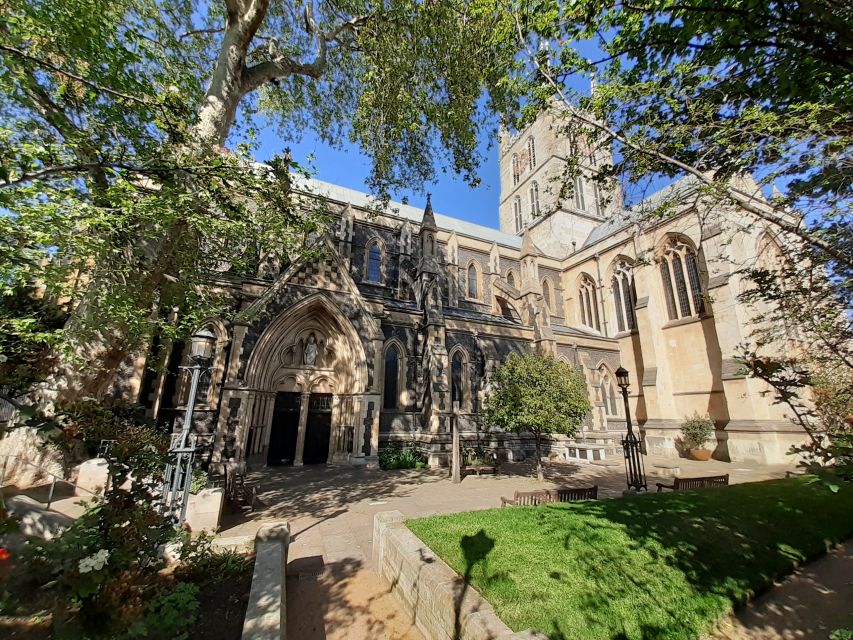
Southwark Cathedral brings religious history into focus. The current building dates in part to the 15th century, and its position near the river reflects how important Southwark became as a gateway into London.
The cathedral is also a reminder that medieval London was not one uniform place. The City, the river crossings, the markets, and Southwark each had their own roles and interests. Mick’s approach is to connect these places to politics, religion, trade, and daily life rather than treating them as isolated sights.
The remains of 12th-century Winchester Palace are one of the route’s most worthwhile lesser-known stops. The palace was linked to the bishops of Winchester and shows how powerful churchmen maintained an important base in London.
You see only surviving fragments, not a complete palace. That is precisely why a guide helps. Without explanation, the ruins can be easy to pass. With context, they point to the wealth and influence once concentrated along this stretch of the Thames.
The Golden Hinde and life on the water
The Golden Hinde is a full-size replica of Sir Francis Drake’s ship. It offers a glimpse into the age of voyages, privateering, and England’s expanding maritime ambitions.
The ship is another stop that benefits from an explanation. It is not medieval in the same way as Winchester Palace, but it helps show how London’s relationship with the river changed over time. The route moves from bishops and medieval authority toward exploration, shipping, and national power.
As with the other museums and historic buildings, the tour passes the ship rather than taking you aboard. If you want to explore the interior, allow time after the walk or on another day.
Shakespeare’s Globe and the South Bank stage
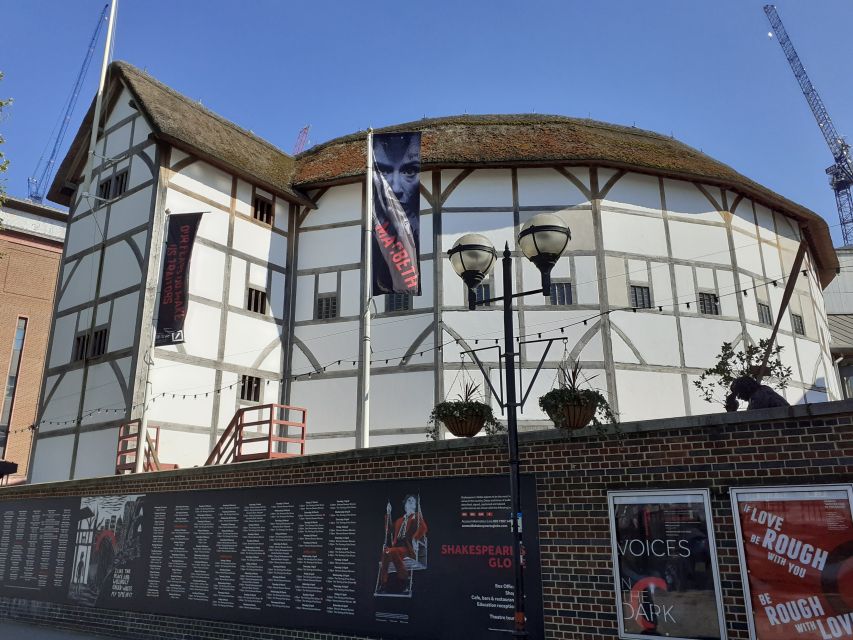
Shakespeare’s Globe is one of the best-known sights on the South Bank, and the walk places it within the social world of early modern London. The theatre’s position outside the City’s strict boundaries was part of what made the South Bank attractive for entertainment.
You hear about Shakespeare’s connection to this area and see the riverside theatre from outside. The stop works well because it links architecture with people: actors, playgoers, merchants, and city authorities all had a part in the story.
Do not expect a performance or a full theatre visit during the two-hour tour. Think of this as a useful introduction. If Shakespeare is a main reason for your trip, use the stop to plan a separate Globe exhibition or performance.
Millennium Bridge and the final approach to St Paul’s
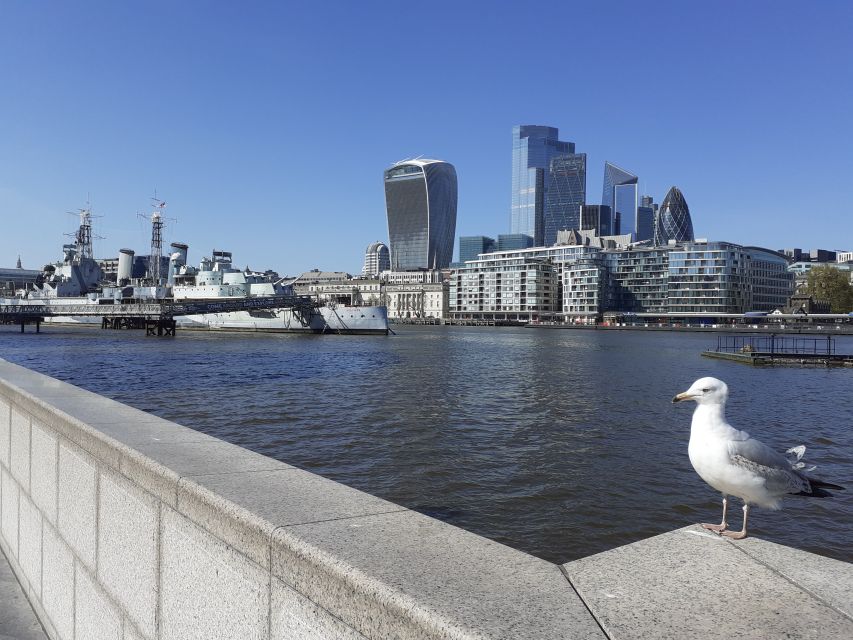
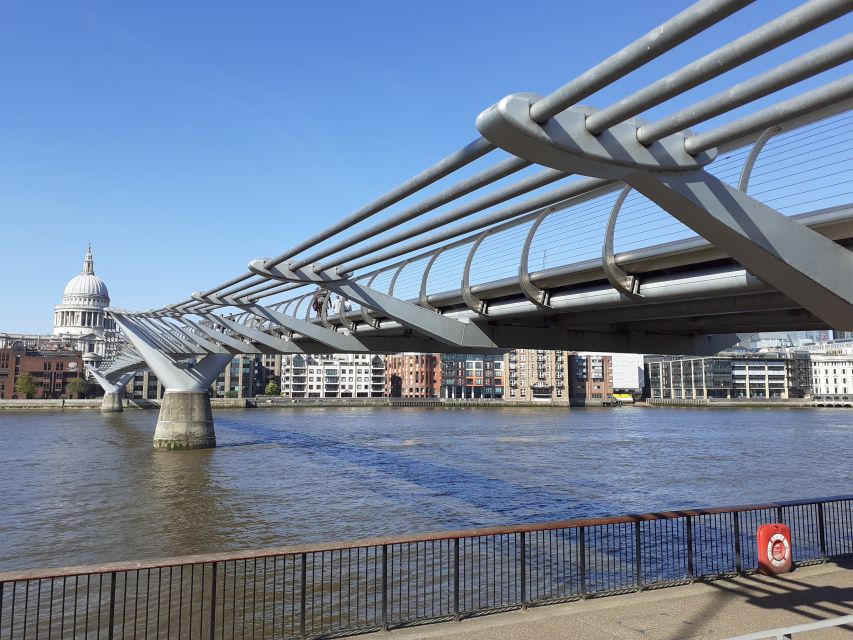
The Millennium Bridge shifts the view from old London to the present day. Its pedestrian route across the Thames leads toward St Paul’s Cathedral and gives you a clear look at the City skyline.
The bridge is also a strong photo stop. From here, the river, Tate Modern area, and St Paul’s create one of London’s most recognisable urban views. The guide points out how the modern crossing fits into an area shaped by centuries of earlier bridges and river traffic.
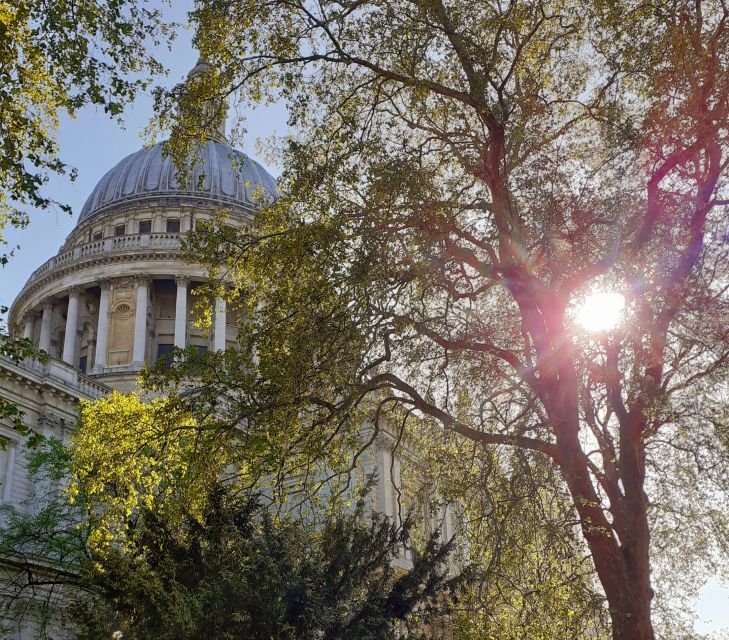
The walk finishes near St Paul’s Cathedral, around EC4M 8AD. St Paul’s is the grand closing sight, but the route does not include entry. You finish with enough orientation to return for the cathedral, its interior, and its views if you have time.
The guide’s style and the value of the storytelling
The guide is identified as Mick Priestley, though some booking details and personal feedback use Mick, Mike, or Michael. His strongest quality is depth. He can handle questions about politics, religion, buildings, daily life, and the links between different periods of London’s past.
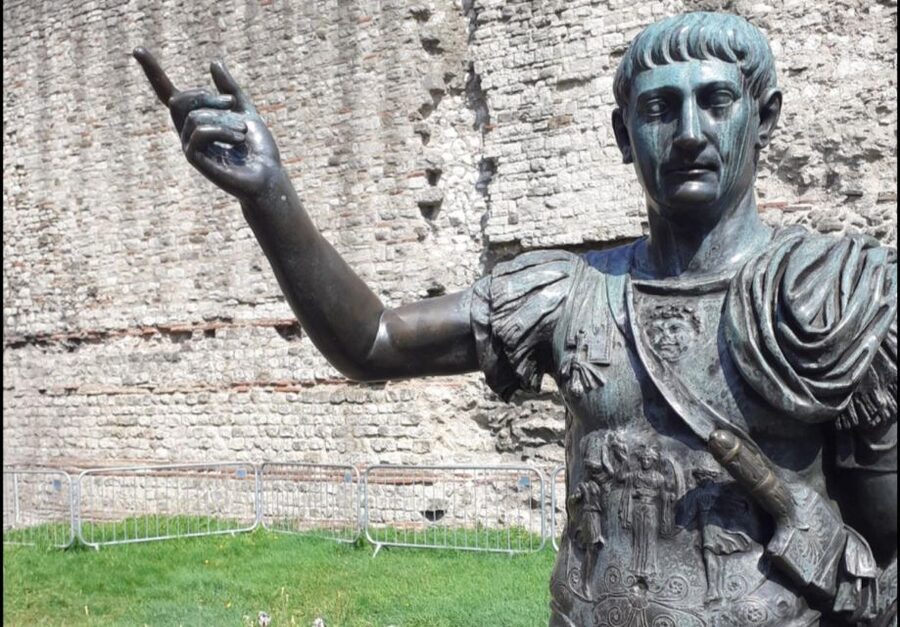
That is useful if you already know the headline facts. Instead of hearing only that a building is old, you can ask why it was built, who used it, and what changed around it. The guide also carries a portfolio of historic images, including archival views of buildings and pictures of historical figures. This helps you compare the present street with the earlier city.
The tone is not purely academic. The guide is also described as funny, theatrical, friendly, and relaxed. That balance matters on a walking tour. Two hours of dates and names can become tiring, but a clear story and occasional humor keep the group moving.
The pace is adjusted so people can keep up, including families and visitors walking in warm weather. Still, the distance is substantial, and the walk includes plenty of standing while the guide speaks. If you are physically able to walk or stand for two hours, the route should be manageable, but comfortable shoes are essential.
What $24 gets you
At $24 per person, this is strong value for a central London experience. You see the Tower of London, Tower Bridge, HMS Belfast, London Bridge, Borough Market, Southwark Cathedral, Winchester Palace, the Golden Hinde, Shakespeare’s Globe, Millennium Bridge, and St Paul’s Cathedral in one guided route.
The price does not include admissions, meals, or transport after the meeting point. That keeps the cost low, but you should budget separately if you want to enter the Tower, HMS Belfast, the Globe, or St Paul’s.
I would treat the tour as an orientation and history walk, not as a substitute for London’s major paid attractions. Its value comes from the connections between places. You get a clear plan for exploring the area on your own later.
Who should book this walk
I would choose this tour if you enjoy history, architecture, city stories, or walking through London with a local focus. It suits first-time visitors who want a strong introduction, and it also works for repeat visitors who have seen the famous sights but missed Winchester Palace, the Golden Hinde, or the smaller details around Southwark.
It is especially useful for anyone interested in medieval London. The route also reaches Roman-era context, Tudor and Elizabethan theatre, Second World War naval history, and modern London, so the focus is broader than the title might suggest.
Families can take part, and the guide is used to keeping a group together. Children who enjoy stories about kings, ships, theatres, and old buildings may get more from this than from a bus tour. On the other hand, very young children who dislike walking or standing may find the two hours long.
The tour is wheelchair accessible according to the activity details. Because it takes place outdoors and runs in all weather, check your own comfort with the route, time outside, and pace before booking.
Practical tips for making the most of it
Book a start time that leaves room afterward. The walk finishes near St Paul’s, so you can continue into the City, visit the cathedral, or return toward the river.
Wear shoes made for steady city walking. Bring weather-appropriate clothing and be ready for rain, since the tour runs rain or shine. London’s riverfront can feel exposed, so a waterproof layer is more useful than relying on a pleasant forecast.
Arrive at the Tower Hill meeting point a little early. Look for the guide’s flagpole outside the western tube exit, rather than heading toward the Tower entrance.
Keep your questions ready. The guide’s ability to answer detailed questions is one of the best reasons to choose a live tour over an audio guide. If you are curious about a building, person, or period, ask while you are there.
Should you book the Medieval History Walking Tour?
Book it if you want a lively explanation of London’s past and are happy to cover a lot of ground. At $24, it gives you an efficient introduction to one of the city’s best sightseeing corridors, with enough lesser-known stops to keep the route fresh for repeat visitors.
Skip it if you want long visits inside the Tower, HMS Belfast, the Globe, or St Paul’s. Those attractions need their own time. For everyone else, this is a smart way to connect them, understand the riverfront, and leave with a better sense of where to explore next.
FAQ
Where does the Medieval History Walking Tour start?
The tour starts outside the western exit of Tower Hill tube station, near Trinity Square, The Citizen M Hotel, and the Tower Hill Tram burger van. The guide carries a flagpole with a flag.
Where does the tour finish?
The walk finishes near St Paul’s Cathedral in the area identified by the postcode EC4M 8AD.
How long does the tour last?
The stated duration is two hours. One booking account noted that the guide ran slightly over, but you should plan for at least the full two-hour period.
Is the tour offered in English?
Yes. The live tour guide speaks English, and English is the listed tour language.
Does the tour run in bad weather?
Yes. The walk takes place in all weather, rain or shine. Bring suitable clothing and comfortable shoes.
Is the tour wheelchair accessible?
Yes, the activity is listed as wheelchair accessible. It is still a two-hour outdoor walking tour with time spent walking and standing.
More Historical Tours in London
- London Small Group Tour of Historical Pubs
★ 5.0 · 10,422 reviews - Soho Music & Historic Pubs Tour
★ 5.0 · 1,993 reviews - London: Historic Pubs of Central London Walking Tour
★ 4.9 · 1,065 reviews - London: Soho Music and Historic Pubs Walking Tour
★ 4.9 · 836 reviews
Just added in London
- Westminster and National Gallery 3.5-Hour Tour in Italian★ 4.9 · 28 reviews
- London: Full Day Tower, St. Paul’s, Cruise & Eye Experience★ 4.6 · 168 reviews
- British Museum & Camden Town – Private Tour in Italian★ 4.8 · 26 reviews
- London: Westminster Abbey Guided Tour★ 4.5 · 445 reviews
- The Original London Street Art Tour (French)★ 4.9 · 64 reviews
- German London : The Ultimate Walking tour★ 4.8 · 400 reviews
- London: The Shard Entry Ticket with Champagne★ 4.5 · 147 reviews
- London: Royal Hampton Court Guided Tour with Afternoon Tea★ 5.0 · 67 reviews
Walking Tours, compared.

Magical London: Harry Potter Guided Walking Tour
Read our review →
Underground Vaults Walking Tour in Edinburgh Old Town
Read our review →
Oxford University Walking Tour With University Alumni Guide
Read our review →
Edinburgh Castle: Guided Walking Tour with Entry Ticket
Read our review →
Edinburgh Castle Guided Walking Tour in English
Read our review →
Tour for Muggles The Ultimate Harry Potter Walking Tour in London
Read our review →
University and City Walking Tour with Alumni Guide
Read our review →Browse the lists this tour appears in