

Reviewed · JACK THE RIPPER TOURS
German Language : Original Jack the Ripper Tour
Jack the Ripper’s 1888 murders still cling to the lanes of East London, and this two-hour walking tour puts you near the places linked to the case. You’ll follow the evidence through Whitechapel, compare old photographs with today’s streets, and hear why the killer has never been identified with certainty.
I like the way the tour brings in the victims and everyday life of Victorian Whitechapel, rather than treating the case as a simple guessing game. I also like the old images used by guides such as Bettina, which help you see how much the neighborhood has changed. The main drawback is that the tour contains graphic details and visual material, and some people may want more active participation, such as maps, questions, or a stronger staged mystery.
Key points to know before you book
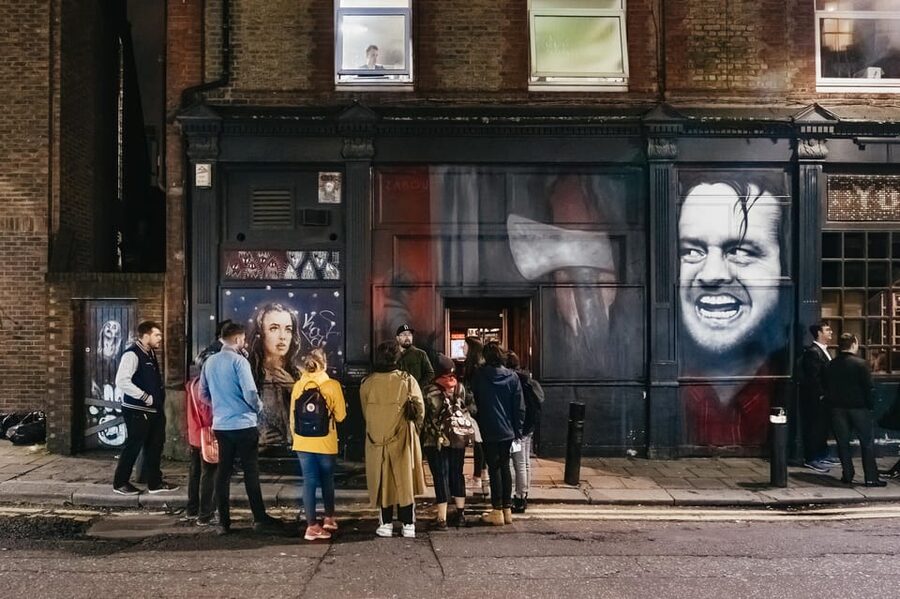
- Real East End locations: Walk past Mitre Square, the Ten Bells Pub, Brick Lane, Christ Church, and Spitalfields Market.
- A case with no final answer: Hear competing theories about the suspects and examine photographic evidence without a forced solution.
- Strong Victorian context: Learn about poverty, policing, street life, and the cultural world that helped shape Sherlock Holmes.
- German-language option: Tours are offered in German, English, Spanish, Italian, and French, with guides including Bettina and Sara on some German departures.
- Good value at $24: Two hours of guided sightseeing in central London costs less than many short museum visits, though food and drinks are not included.
- Outdoor and weather-dependent: Wear suitable clothing and comfortable shoes. Paths are generally manageable, but surfaces vary.
Following the case from Altab Ali Park
Your meeting point is the west entrance to Altab Ali Park, beside the large iron arch at the corner of White Church Lane and Whitechapel High Street. Look for the guide holding a blue flag. Aldgate East is the closest Underground station.
This starting point works well because you are already in the heart of Whitechapel, not in a classroom several streets away from the case. The park itself gives you a moment to get your bearings before the guide begins the story. I recommend arriving early, since Whitechapel High Street is busy and the entrance can be easy to miss.
The walk begins by placing the murders in their setting. In 1888, Whitechapel was an impoverished district, and the guide explains more about daily life, working conditions, crowded housing, and the social pressures of Victorian London. That background matters. Without it, the case can feel like a string of spooky addresses. With it, you begin to understand why the victims were vulnerable and why the police investigation was so difficult.
The tone is serious but not academic. You will hear true accounts of the victims, the investigation, and the suspects, along with questions that remain open. Why did the killer choose Whitechapel? How close did the police come to an arrest? Where was evidence found? The guide uses these questions to keep the walk moving.
Because the tour includes graphic details and visual material, it is not a good fit for young children or anyone who prefers a light sightseeing walk. Anyone under 18 must be accompanied by an adult.
Other dark-history walks in London:
- London: The Original Jack the Ripper Walking Tour
★ 4.7 · 7,833 reviews - London Jack the Ripper Guided Tour with Ripper-Vision
★ 4.5 · 4,840 reviews - London: Jack the Ripper Small Group Tour
★ 4.7 · 3,159 reviews
Whitechapel streets and the old photographs
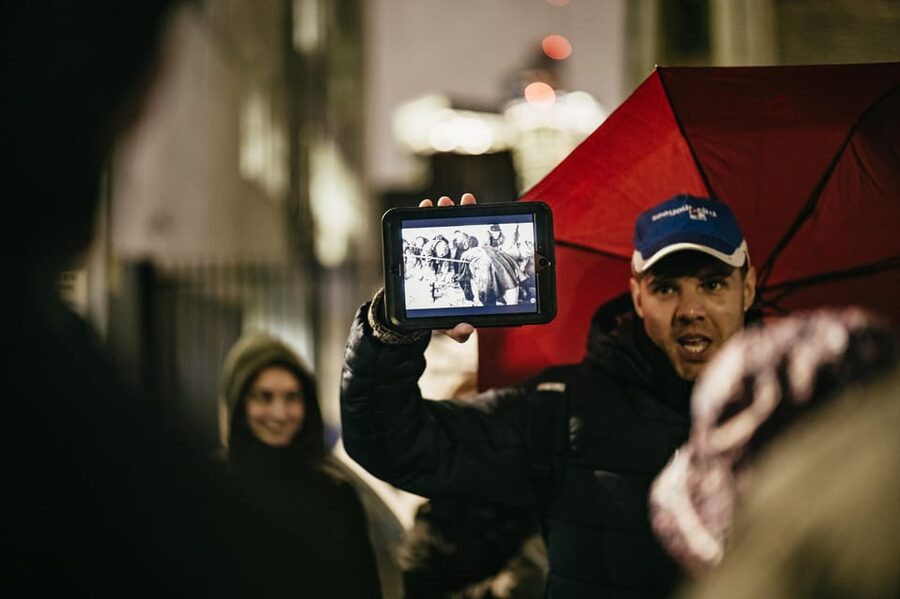
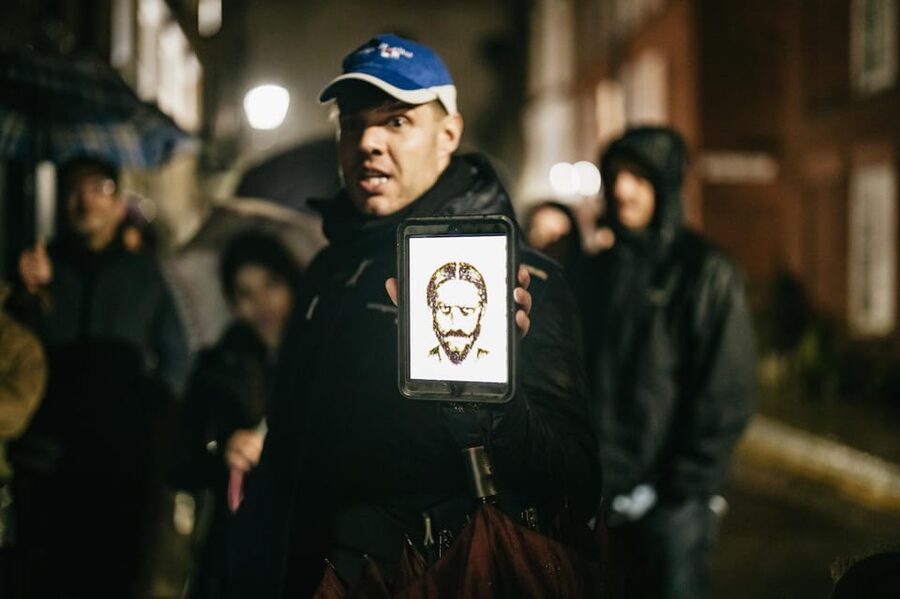
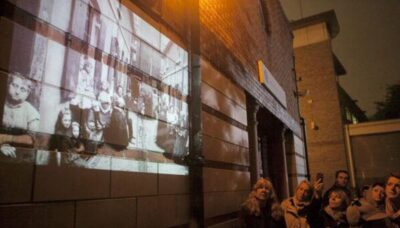
One of the best features is the use of historical photographs. Bettina, one of the German-speaking guides, has been praised for bringing images of the old neighborhood and comparing them with the streets you see now. Sara has also received strong praise for explaining the story clearly.
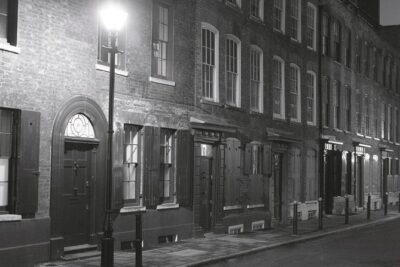
That visual comparison gives the tour more weight than a simple spoken account. Modern East London has shops, traffic, restaurants, and renovated buildings. Old photographs help you picture the lanes, walls, and street patterns that shaped the investigation. You may not see every 1888 building still intact, but the photographs help connect the present street to the past.
The guide also discusses the police work and the evidence tied to the case. You may assess photographs and hear how certain suspects became part of the story. Since the murders remain unsolved, the tour can present theories without pretending that one has been proven.
I appreciate that balance. Jack the Ripper has generated so much fiction, rumor, and sensational material that a careful guide needs to separate known facts from speculation. The experience is most useful when you listen for that distinction. Some details are documented, some are theories, and some grew stronger through decades of newspaper coverage and popular culture.
One limitation is that the tour does not promise a formal role-playing game or a fully structured detective challenge. You are invited to think about the suspects and evidence, but the exact level of audience participation depends on the guide and the group. If you want to be actively called on throughout the walk, ask yourself if a standard guided tour will be enough.
Christ Church and the Victorian city around it
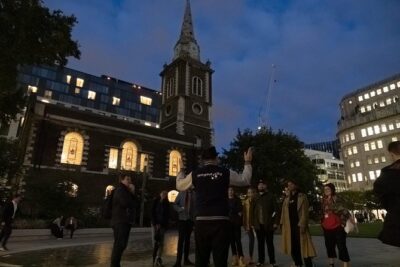
The route passes Christ Church, one of the area’s notable landmarks. This stop helps place the crimes within the larger setting of Victorian London, where churches, markets, pubs, shops, and narrow streets sat close together.
The church is also useful for understanding the contrast between public respectability and private hardship. The tour is not only about where crimes happened. It also looks at the social world around those locations, including class divisions and the way poor residents were viewed by the authorities and the press.
The supplied route information calls this stop Christ Church Chelsea, although the walk itself takes place in East London. Your guide will provide the on-site explanation, and the church is best treated as part of the neighborhood story rather than a separate sightseeing visit.
The experience does not include entry into attractions. You are seeing locations from public streets, so the value comes from the guide’s interpretation rather than from interiors or exhibits. That keeps the price down and lets the walk cover more ground.
Spitalfields Market and Brick Lane
Spitalfields Market gives the walk a welcome change of pace. It is one of East London’s most recognizable public places, and its presence helps you connect the historic case with the area you see today.
The market is not simply a photo stop. It shows how East London has changed from the 19th century to the present. You will hear about the older neighborhood while standing in a district now known for food, shopping, and street life. Depending on the time and day, the surrounding area may be busy, so keep close to the guide and listen carefully near traffic.
Brick Lane adds another layer. Today it is one of the East End’s best-known streets, but the tour uses it to discuss the area’s past and the changing communities that have shaped it. This is where the walk feels most like a broader London history tour rather than a narrow crime story.
I like this part because it gives you something useful after the tour. You can return to Brick Lane or Spitalfields Market later for food and browsing, though those purchases are not part of the experience. The guide does not provide food or drinks, so plan those separately.
Same city, a very different afternoon:
- From London: Harry Potter Warner Bros Studio Tour
★ 4.7 · 26,588 reviews - Magical London: Harry Potter Guided Walking Tour
★ 4.7 · 22,044 reviews - London: Madame Tussauds London
★ 4.6 · 20,915 reviews - Stonehenge, Windsor Castle, and Bath from London
★ 4.5 · 18,662 reviews
Mitre Square and the evidence trail
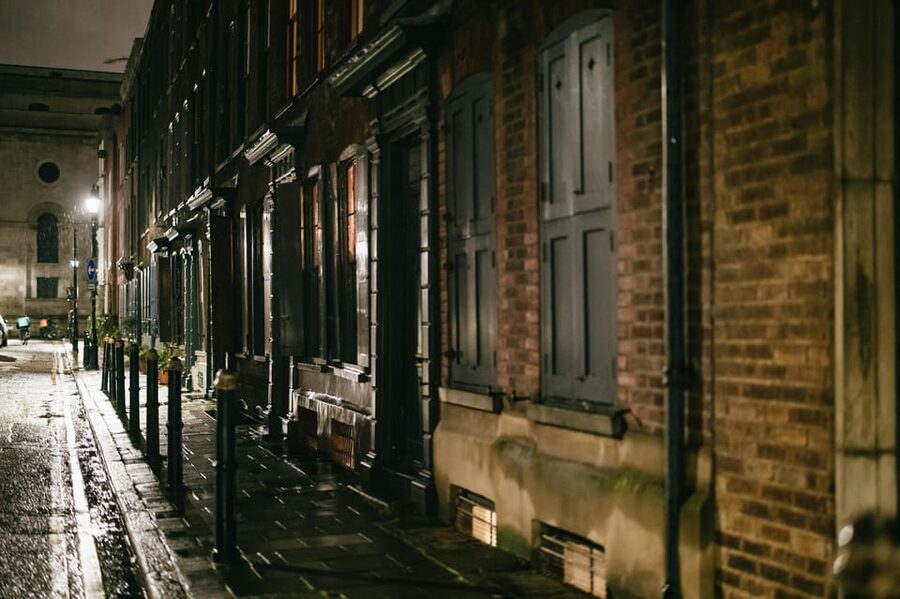
Mitre Square is one of the most important stops on the walk. Here, the guide explains the location’s connection to the murders and discusses where evidence was discovered.
The stop works best when you focus on geography. The guide helps you consider the surrounding streets, the route through the neighborhood, and the practical problems faced by investigators. A location that looks ordinary today can take on a different meaning once you understand its place in the case.
You will also hear how difficult it was to investigate serious crimes in Victorian London. Communication, policing methods, medical knowledge, and newspaper reporting were all different from today. The guide uses the case to show how those limits affected the search for the killer.
Do not expect a preserved crime scene in the modern sense. The walk takes place in a changing urban district, and much of the physical setting has been altered. The interest lies in the explanation, old images, and connection to the known evidence.
Petticoat Lane and the Ten Bells Pub
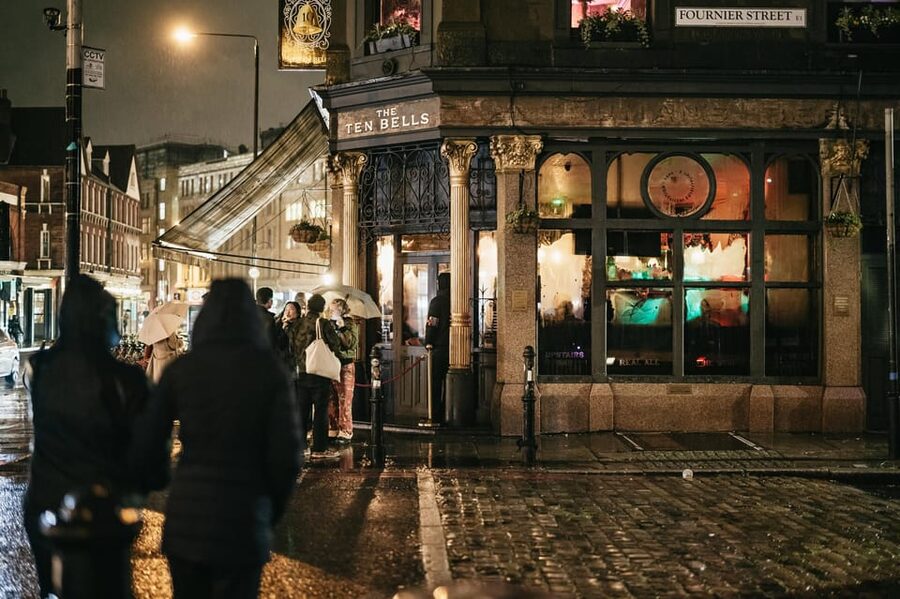
Petticoat Lane is another stop where the tour broadens beyond the murders. The street helps explain the commercial and working life of the East End. It also gives you another chance to compare the modern neighborhood with the Victorian setting described by the guide.
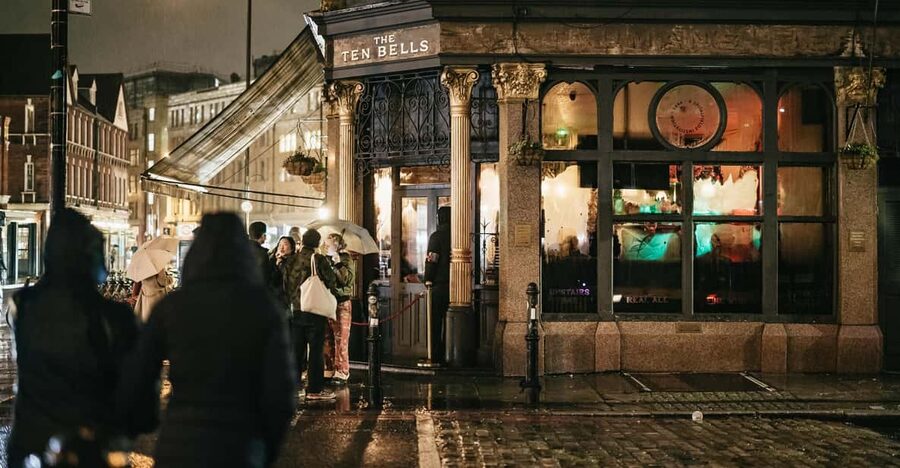
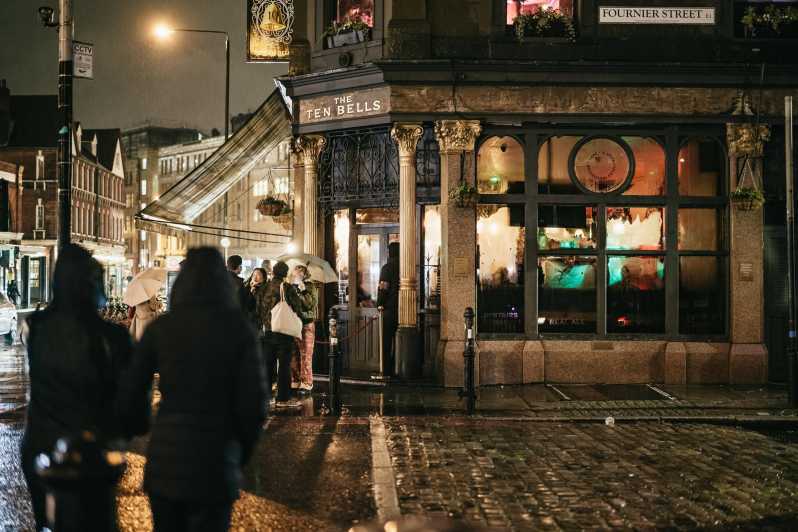
The finish is near the Ten Bells Pub in Spitalfields. The pub has a strong connection to the Jack the Ripper story and is one of the most recognizable names on the route. It is a fitting place to end, since it brings together the case, the neighborhood, and the myths that grew around them.
The route information says the Ten Bells is passed during the walk and is also the finishing point. Treat it as an exterior landmark unless your guide tells you otherwise. The tour itself does not include drinks or a pub visit, so you can decide afterward if you want to stop nearby.
Ending here is practical. You are close to Spitalfields Market, Brick Lane, and other East End streets that are easy to explore on your own. I would plan a little extra time after the tour instead of rushing straight back to the Underground.
Sherlock Holmes and the wider culture of crime
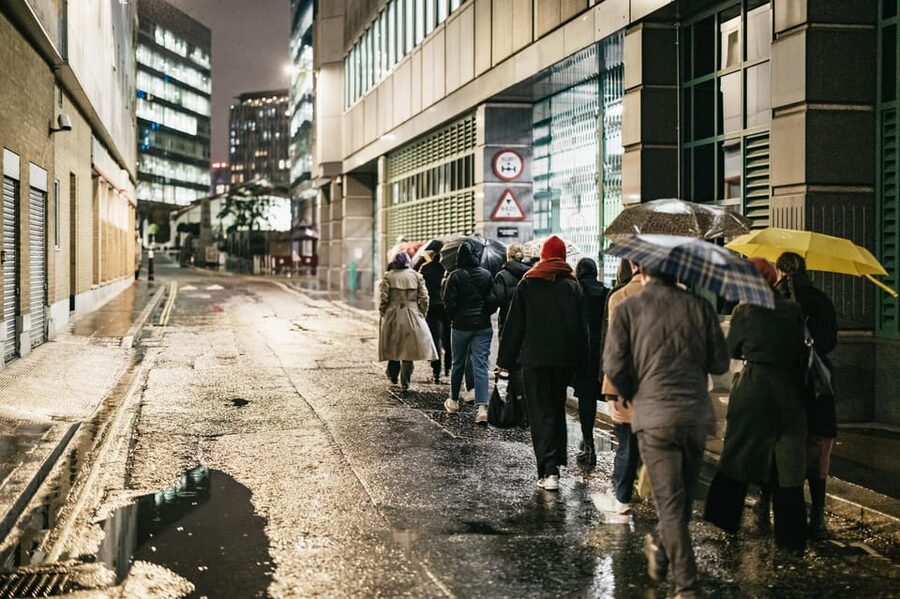
A useful part of the walk is its discussion of Sherlock Holmes and the Victorian culture that shaped the character. This gives you more than a list of crimes. It explains how London’s fears about anonymous killers, urban poverty, forensic evidence, and newspaper reporting fed popular fiction.
The connection is not that Sherlock Holmes solved the Jack the Ripper case. Rather, the guide explains the shared cultural setting: a city fascinated by investigation, scientific clues, hidden identities, and crimes committed in crowded urban districts.
This section will appeal to you if you enjoy literature as much as true crime. It also helps explain why the Jack the Ripper story has lasted so long. The case became part of a wider public fascination with detectives, suspects, clues, and the idea that one final piece of evidence might solve everything.
What the $24 price gets you
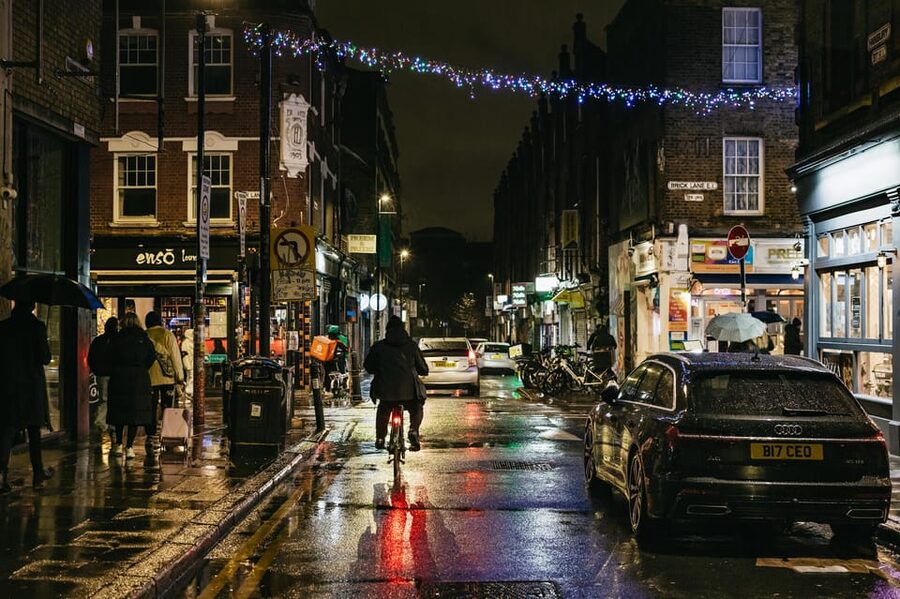
At $24 per person, this is a fair deal for two hours of guided walking in central London. You are paying for a specialist guide, a planned route, historical images, and a clear narrative through several East End locations.
The price is especially reasonable if you already want to visit Brick Lane or Spitalfields Market. The tour adds context to places you might otherwise pass without understanding. It also saves you the work of researching the crime scenes and plotting them on a map.
The value is lower if you want museum-style displays, indoor access, refreshments, or a private tour. None of those are included. You should also budget for food and drinks separately.
The experience is available in German, English, Spanish, Italian, and French. Language choice matters here because the tour depends on detail, tone, and careful distinctions between fact and theory. If German is your preferred language, recent departures have included Bettina and Sara, but the guide can vary.
Comfort, access, and the best time to go
The entire experience takes place outdoors. Wear a waterproof layer if rain is possible, and choose shoes that can handle uneven public paths. There are no stairs or many steep inclines, but the condition of sidewalks varies.
The tour is listed as wheelchair accessible, though anyone with limited mobility should be aware of changing path surfaces. Whitechapel is an active urban area, so street crossings and crowds can affect the pace.
The walk lasts two hours, which is long enough to cover the main locations without taking up a full day. Since starting times vary, check availability when booking. You can cancel up to 24 hours ahead for a full refund, and the reserve-now, pay-later option lets you keep your plans flexible.
The best audience is an adult or older teenager who enjoys true crime, London history, and outdoor sightseeing. It also suits first-time visitors who want a guided introduction to Whitechapel, though you should not expect a general tour of every major East London attraction.
Should you book the Original Jack the Ripper Tour?
Book it if you want a focused walk through real East End locations, clear historical context, and a case that still leaves room for debate. The old photographs, victim-focused storytelling, and stops at Mitre Square and the Ten Bells give the two hours a strong sense of place.
Think twice if you dislike graphic material, want a fully interactive mystery game, or prefer indoor attractions. The tour is also less useful in poor weather if you are not comfortable standing and walking outside.
For $24, I consider it a good-value choice for curious adults, crime-history fans, and visitors already planning time around Brick Lane or Spitalfields. Choose your language carefully, arrive at Altab Ali Park with weather-ready clothing, and leave time afterward for the East End streets around the finish.
FAQ
How long does the Jack the Ripper tour last?
The walking tour lasts two hours.
How much does the tour cost?
The listed price is $24 per person.
Where does the tour begin?
Meet at the west entrance to Altab Ali Park, beside the large iron arch on the corner of White Church Lane and Whitechapel High Street.
How do I identify the guide?
The guide will be holding a blue flag.
Which Underground station is closest?
Aldgate East Station is the nearest Underground station.
What languages are available?
The tour is offered in German, English, Spanish, Italian, and French.
Where does the tour finish?
The walk finishes at the Ten Bells Pub in Spitalfields.
What locations are included on the route?
The route includes Whitechapel, the Ten Bells area, Christ Church, Mitre Square, Brick Lane, Spitalfields Market, and Petticoat Lane.
Is the tour suitable for children?
Participants under 18 must be accompanied by an adult. The activity includes graphic details and visual content.
Is the tour wheelchair accessible?
The tour is listed as wheelchair accessible. There are no stairs or many inclines, but public paths have varying conditions, so people with limited mobility should take that into account.
Just added in London
- James Bond Shooting Locations 2-Hour Walking Tour of London★ 4.7 · 332 reviews
- Camden Pub Crawl in London★ 5.0 · 238 reviews
- Eating London: Twilight Soho VIP Food & Drinks Tour★ 5.0 · 590 reviews
- Heathrow Airport to Central London Private Transfers★ 4.5 · 402 reviews
- London Pub Crawl★ 5.0 · 247 reviews
- Highlights of Royal London Bike Tour including Hyde Park★ 5.0 · 543 reviews
- Shared Arrival Transfer London Airport to Hotel Accommodation★ 4.0 · 446 reviews
- Sherlock: The Official Live Game★ 4.5 · 460 reviews
Jack the Ripper Tours, compared.
London Jack the Ripper Guided Tour with Ripper-Vision
Read our review →
Jack the Ripper Walking Tour – Ripper Vision Tours
Read our review →
Ultimate Jack the Ripper : Guided Tour of London
Read our review →
Browse the lists this tour appears in