
Reviewed · MUSEUMS
London: British Museum Archaeology Course and Guided Tour
The most interesting part of this British Museum experience is its clear story of human civilization. Instead of rushing from one famous object to another, you follow a timeline from early human origins to the ancient empires and later cultures represented in the galleries. Egyptian hieroglyphs, Sumerian cuneiform, and the science of dating artifacts give the visit real substance.
I like the way the tour uses famous objects as stepping stones through a much larger story. I also like the hands-on touch: you get to play the Royal Game of Ur, a board game from ancient Mesopotamia whose rules were worked out by British Museum scholars. Archaeologist Rossa is praised for making a five-hour class lively enough for both adults and teenagers.
The main consideration is the length. Five and a half hours is a serious museum session, and much of it involves standing and listening, even though there are planned breaks. Bring water, wear comfortable shoes, and grab one of the museum’s folding stools if you prefer not to stand for long periods.
Key points to know before booking
- A human story rather than a quick highlights tour: The route links objects across galleries to explain how societies developed.
- Led by archaeologist Rossa: His talks focus on archaeology, interpretation, ancient languages, and the people behind major discoveries.
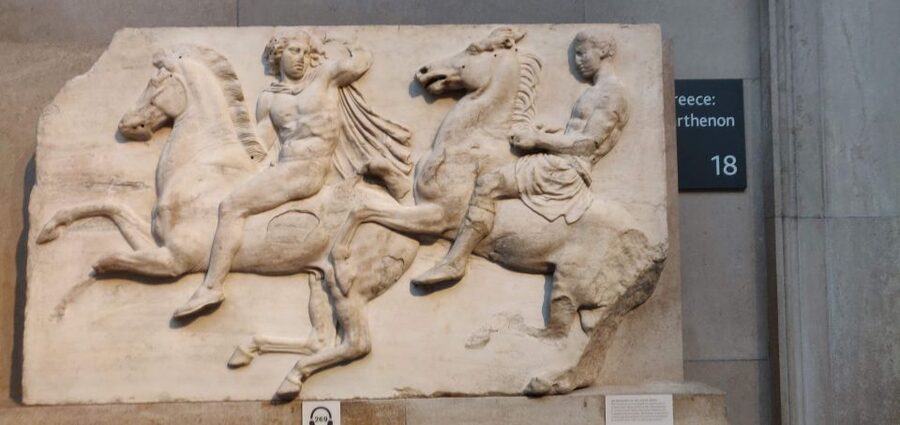
- Major British Museum sights included: See the Rosetta Stone, Parthenon Marbles, Sutton Hoo Helmet, Lewis Chessmen, and more.
- A useful family option: The material held the attention of children aged 13 in several bookings, with stories and games to break up the lecture format.
- Plan for a long day indoors: The tour lasts 5.5 hours, includes a break, and ends inside the British Museum.
- Good practical value at $81: Museum admission is free, so you are paying mainly for a specialist guide and a structured course.
Why this British Museum tour feels different
The British Museum can be hard to tackle on your own. Its galleries cover huge spans of time and place, and famous objects often sit among dozens of less familiar pieces. You can see the Rosetta Stone, walk past an Assyrian relief, and admire a Roman sculpture without understanding how those objects fit into the development of writing, cities, states, and empires.
This tour gives you that framework. You move through the museum as if following a long chain of questions: When did humans begin making tools? Why did the first cities appear? How did writing change government and trade? How can archaeologists tell how old an object is? What happens when an empire collapses?
That approach matters because the British Museum is not just a room full of beautiful things. It is a record of human choices, inventions, conflicts, beliefs, and daily life. The guide’s job is to connect those pieces so you can look at each display with a better sense of why it matters.
The experience is part guided tour and part archaeology course. You are not simply told what an object is. You learn how scholars interpret it, how ancient languages were decoded, and what evidence can reveal about people who left no written account.
More Museum Tours in London:
- Tower of London and Crown Jewels Exhibition Ticket
★ 4.5 · 6,677 reviews - London: Chelsea Football Club Stadium and Museum Tour
★ 4.8 · 4,576 reviews - Chelsea FC Stadium Tours and Museum
★ 5.0 · 1,908 reviews
Meeting at Russell Square and entering the museum
You meet outside Russell Square Station, where the guide holds an iPad displaying the local partner’s name. Arrive 10 minutes early. From the station, the group walks for about five minutes to the British Museum.
That short walk keeps the start simple. You do not need to navigate the museum’s large entrances while trying to find a guide. Once at the museum, the tour uses a separate entrance for the group, which helps avoid the main admission queue.
The British Museum itself offers free entry, but that does not make this an ordinary free visit. The $81 price covers the English-speaking archaeologist guide, the planned teaching, and the route through selected galleries. If you already know the museum well and prefer to wander alone, the price may feel high. If you want a clear plan and expert explanation, it is easier to justify.
Large bags and luggage are not allowed, so arrive with only what you need for the day. A small day pack has been acceptable on this experience, but the safest choice is to pack light. Bring water, since five hours indoors can feel tiring even when the subject is gripping.
From early humans to the first cities
The opening part traces human origins in Africa and the early Stone Age. You will encounter the tools and evidence that help archaeologists reconstruct life before written records. This is a useful beginning because it shows that archaeology is not only about temples, gold, and royal tombs.
The guide explains how small objects can reveal major changes in human behavior. A tool can point to planning, skill, movement, or new ways of using natural materials. You also get a sense of how much of early human history must be pieced together from incomplete evidence.
From there, the story moves toward Mesopotamia, where the first cities and one of the earliest writing systems developed. This is where the tour’s archaeology focus becomes especially useful. A display of clay tablets can seem quiet and modest beside the museum’s grand sculptures, but cuneiform changed how people recorded trade, laws, taxes, stories, and administration.
You learn how Sumerian cuneiform was deciphered and why written records alter the way we understand a society. The guide also explains the limits of those records. Writing often preserves the concerns of rulers, priests, and officials, while archaeology can offer clues about ordinary homes, food, tools, and work.
Egypt, Assyria, Greece, and Rome
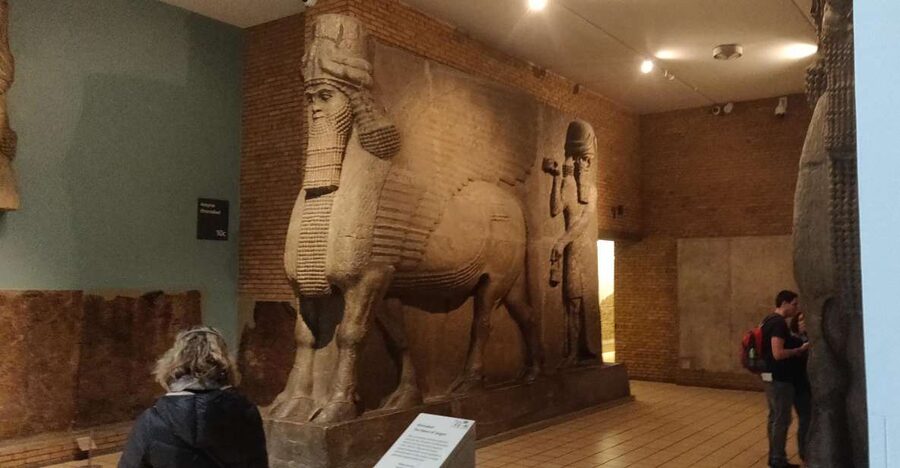
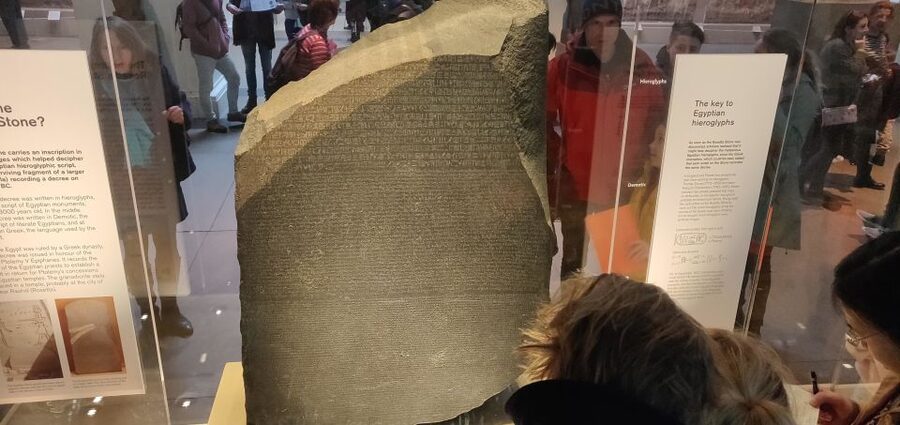
The Egyptian galleries provide some of the tour’s most recognizable sights. Hieroglyphs, monumental objects, and funerary material help explain how Egyptian society recorded belief and power. The Rosetta Stone is the obvious star, but its importance goes beyond appearance.
The stone helped scholars compare the same text in different writing systems. That comparison played a key part in deciphering Egyptian hieroglyphs. The result was not just the translation of an old script. It opened access to Egyptian names, records, religious texts, and political history.
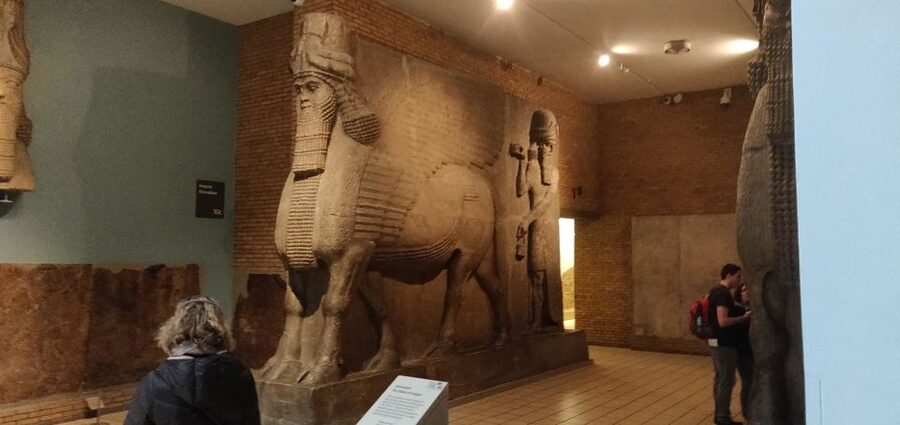
The tour then moves through Assyria and the great empires of the ancient Near East. Reliefs and palace objects show how rulers presented military success, royal authority, and control over distant lands. Here, the guide can help you read images that might otherwise look like a series of repeated figures and animals.
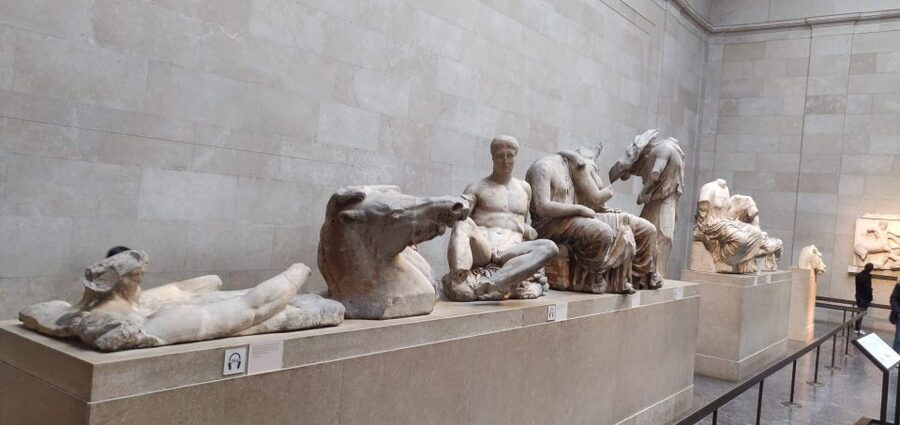
Ancient Greece and Rome bring another shift in art, politics, and public life. The Parthenon Marbles are among the museum’s most famous and debated objects. The tour identifies their place in Greek culture while also giving you the context to think about how they reached London and why their ownership remains contested.
That balance is important. The experience follows the discoveries and collecting history connected with the British Museum, but it does not require you to treat every acquisition as simple or heroic. The museum’s collections are tied to explorers, relic hunters, archaeologists, imperial power, and changing ideas about who has the right to remove and display the past.
More museums and galleries in London:
- London: British Museum Guided Tour
★ 4.3 · 1,182 reviews - Official tickets: Moco Modern & Contemporary Art Museum
★ 4.5 · 1,157 reviews - British Museum London Guided Tour Semi-Private 8ppl Max
★ 5.0 · 984 reviews - London: Jack the Ripper Museum Tickets
★ 4.2 · 894 reviews
Later galleries, from Vikings to the Aztecs
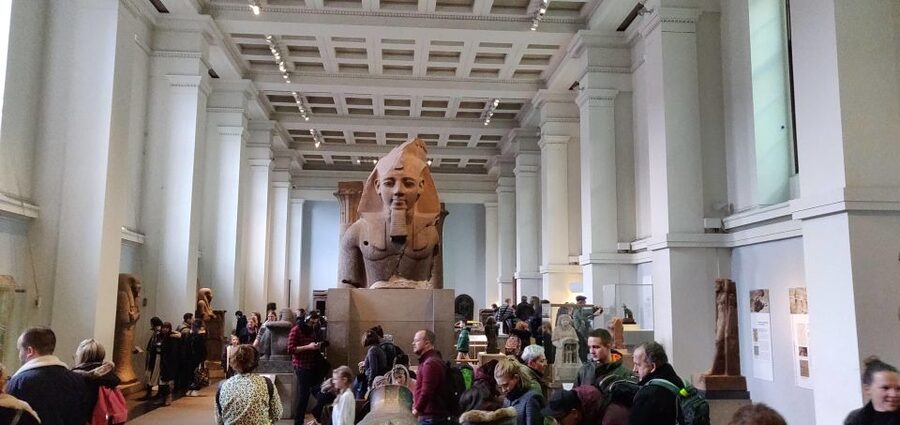
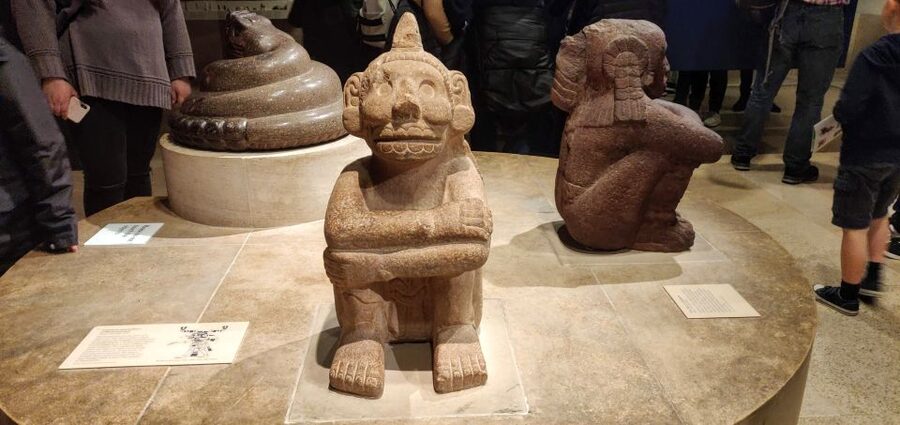
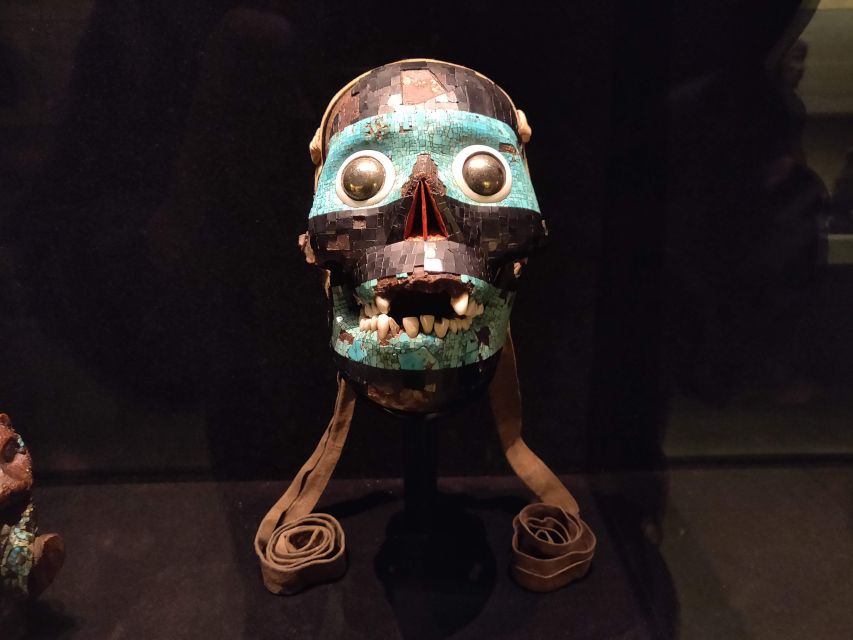
The route does not stop with Egypt, Greece, and Rome. You also visit galleries connected with the Vikings and the Aztecs, showing that the human story did not end with the classical empires.
The Sutton Hoo Helmet offers a window into early medieval England and the craftsmanship, burial customs, and political world associated with the site. The Lewis Chessmen bring a more personal scale to the museum. Their carved faces and individual expressions make it easy to imagine a game being played centuries ago, even though the original players are long gone.
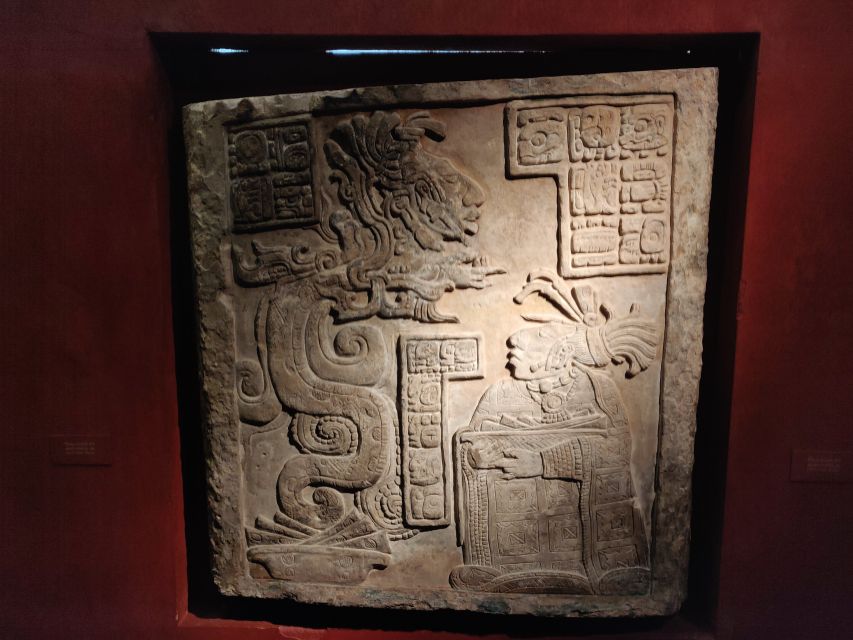
The Aztec material expands the geographical range again. That matters because a tour focused too heavily on Egypt and Greece can accidentally make world history seem like a short line leading toward Europe. Including cultures from the Americas gives you a wider view of different political systems, beliefs, art, and technologies.
You should not expect an exhaustive survey of every gallery. The museum is far too large for that in one day. Instead, the guide selects objects that support the central story of how people organize society, record information, create belief systems, and respond to change.
Playing the Royal Game of Ur
One of the most memorable breaks from conventional museum viewing is a chance to play the Royal Game of Ur. This board game originated in ancient Mesopotamia, and its rules were reconstructed by British Museum scholars.
The activity gives the course a welcome change of pace. After listening to explanations of writing, empires, and dating methods, you get to handle a recreation of something people actually did for entertainment. The game also reminds you that ancient societies were not made up only of kings, wars, and monuments. People played, competed, and passed time much as you do.
This is especially helpful for families. Children and teenagers may not retain every date or dynasty, but a game can make Mesopotamian culture feel concrete. The tour is still information-heavy, yet this interactive moment keeps it from becoming a long march of labels and lectures.
How archaeology turns objects into evidence
The final part focuses on the methods behind archaeology. You learn how ancient sites become buried, how layers build up, and why an object’s position can be as important as the object itself. A pot or tool removed without recording its location loses part of its meaning.
The guide also covers ways archaeologists date remains and artifacts. The point is not to turn you into a specialist in one afternoon. It is to show that dates are based on evidence, comparison, scientific testing, and interpretation rather than guesswork.
This section can change the way you look at the museum. Instead of asking only how old something is, you may start asking how its age was established, where it was found, what else was found nearby, and how confidently its purpose can be identified.
You also hear about discoveries and problems that remain unresolved. Archaeology rarely supplies a perfect answer. Objects can be damaged, moved, reused, or separated from their original setting. A good guide makes that uncertainty interesting rather than frustrating.
The five-and-a-half-hour pace
The experience lasts 5.5 hours, including a break of about 40 minutes. That is enough time to cover a broad arc of history, but it is not a casual museum stroll.
The pace works best if you enjoy listening and asking questions. Rossa has been praised for maintaining attention across the full session, including with 13-year-old participants. His approach mixes stories, facts, archaeology, folklore, and opportunities for questions rather than delivering a dry academic lecture.
Still, you should be realistic about your energy. The museum is large, and you may spend long stretches standing in galleries. One practical tip is to pick up a portable folding stool at the entrance. This small step can make a real difference for older adults or anyone who tires easily.
Bring lunch or plan to buy food at one of the museum’s outlets. A 40-minute break passes quickly, so do not count on having time for a long meal outside the museum. Since the tour ends at the British Museum, you can continue exploring afterward if you still have energy and the museum remains open, but that extra wandering is not built into the 5.5-hour schedule.
Who will get the most from this experience
I would choose this for a first British Museum visit if you want context rather than a simple list of famous objects. It is also a strong option for history students, archaeology fans, and parents looking for a serious but accessible activity with a teenager.
Families should note that the material is substantial. This is not a short children’s tour, and younger children may find the long format demanding. The Royal Game of Ur and the storytelling help, but the core experience remains a course about human civilization.
It also suits solo visitors who want someone to make decisions about where to go and what to notice. You will not need to spend your first hour studying the floor plan or choosing between dozens of galleries.
You may prefer a self-guided visit if you want to stop often, take photographs at your own pace, or focus on a narrow subject such as Egypt, Greece, or European art. This tour gives you breadth and interpretation, but less freedom to linger wherever you choose.
Is $81 good value?
At $81 per person, this is not the cheapest way to enter the British Museum, since general admission is free. The value comes from the specialist guide and the structure.
You receive 5.5 hours of guided teaching, access to selected major galleries, explanations of ancient writing, an introduction to dating methods, and a route that connects objects across thousands of years. A private lecture or specialist museum course can cost far more, while an audio guide will not respond to your questions or adjust its explanation for the group.
The price makes the most sense if you want to understand the collection rather than simply see it. If you are mainly interested in taking a few photos of the Rosetta Stone and Parthenon Marbles, you can visit without booking. If you want the museum to make sense as a record of human development, the guided format earns its keep.
Practical details that matter
The tour is conducted in English. Wheelchair users can take part, and the activity is described as suitable for people with limited mobility, though you should contact the provider in advance with special requirements.
Wear comfortable shoes. The museum walk and long indoor session make poor footwear an avoidable nuisance. Avoid bringing luggage or large bags, and arrive 10 minutes early at Russell Square Station.
Free cancellation is available up to 24 hours before the start time, and you can reserve now while paying later. The activity runs at set starting times, so check availability before building the rest of your London day around it.
Should you book the British Museum archaeology course?
Book it if you want a guided explanation of how human societies developed, not just a parade of famous museum objects. Rossa’s strong point is the combination of archaeology and storytelling, with enough detail to satisfy adults and enough interaction to keep many teenagers involved.
Skip it if you dislike long guided sessions or want complete control over every gallery stop. Also think twice if you have limited stamina and do not want to stand for extended periods, though a folding stool and the planned break can help.
For the right visitor, this is one of the better ways to make sense of the British Museum. You leave with more than a list of objects. You gain a method for looking at the collection, asking where evidence came from, how scholars reached their conclusions, and what remains unknown.
FAQ
Where does the tour begin?
Meet your guide outside Russell Square Station. The guide will hold an iPad showing the local partner’s name.
How early should I arrive?
Arrive 10 minutes before the scheduled start time.
How long does the experience last?
The experience lasts 5.5 hours, including a break.
Where does the tour finish?
The tour finishes inside the British Museum.
Is museum admission included?
The British Museum has free general admission. This activity includes entry through a separate entrance as part of the guided experience.
Is lunch included?
No. Lunch is not included. Bring a packed lunch or plan to buy food at one of the museum’s outlets during the break.
What language is the tour conducted in?
The live tour is conducted in English.
Can I bring luggage?
No. Luggage and large bags are not allowed. A small day pack may be accepted, but packing light is recommended.
Is the tour wheelchair accessible?
Yes. The activity is described as wheelchair accessible and suitable for people with limited mobility. Contact the provider in advance if you have special requirements.
Can I cancel the booking?
Yes. You can cancel up to 24 hours before the start time for a full refund. You can also reserve now and pay later.
Just added in London
- Westminster and National Gallery 3.5-Hour Tour in Italian★ 4.9 · 28 reviews
- London: Full Day Tower, St. Paul’s, Cruise & Eye Experience★ 4.6 · 168 reviews
- British Museum & Camden Town – Private Tour in Italian★ 4.8 · 26 reviews
- London: Westminster Abbey Guided Tour★ 4.5 · 445 reviews
- London: Medieval History Walking Tour from The Tower★ 4.9 · 318 reviews
- The Original London Street Art Tour (French)★ 4.9 · 64 reviews
- German London : The Ultimate Walking tour★ 4.8 · 400 reviews
- London: The Shard Entry Ticket with Champagne★ 4.5 · 147 reviews
Museums, compared.

Liverpool Football Club Museum and Stadium Tour
Read our review →
Tower of London and Crown Jewels Exhibition Ticket
Read our review →
Chelsea Football Club Stadium and Museum Tour
Read our review →

Browse the lists this tour appears in