
Reviewed · MUSEUMS
London: British Museum Tour with Archaeologist Guide
The British Museum can swallow a whole day and still leave you wondering what you actually saw. This 2.5-hour guided route brings order to the giant collection, pairing famous sights such as the Rosetta Stone and Parthenon Marbles with lesser-known objects that reward close attention.
I like two things right away: archaeologist Rossa Minogue brings strong storytelling to the displays, and the tour gives you historical context rather than a string of dates and labels. The main drawback is simple: the museum can be crowded, and a guide who explains a few objects at length may leave less time for browsing other galleries.
Key points at a glance
- Meet at Russell Square Station: Find the guide at the station entrance, holding a tablet marked Spirit of Discovery, then walk about five minutes to the museum.
- See major world treasures: The route includes the Rosetta Stone, Ramses II, Assyrian palace sculpture, the Parthenon Marbles, Moai statues, Lewis Chessmen, and Sutton Hoo.
- Learn through stories: Rossa connects objects to the people who made, found, collected, or studied them.
- Good for a first visit: The route tackles the museum’s scale by choosing important highlights rather than trying to cover every room.
- Useful for families: Several accounts describe children and teenagers staying engaged through the stories and questions.
- Plan for the crowds: The museum may be noisy and packed, so comfortable shoes, water, and an on-time arrival matter.
Why a guide helps inside the British Museum
The British Museum is free to enter for general admission, but this paid tour gives you something general admission cannot: a clear route and a specialist’s voice beside the objects. At $58 per person, you are paying for the archaeologist guide, museum entry arrangements, and the time saved by not wandering from gallery to gallery.
That matters here. The collection spans ancient Egypt, Assyria, Greece, Rome, the Americas, Easter Island, Anglo-Saxon England, and much more. Without a plan, you can spend twenty minutes in one room and still miss the objects that make a first visit memorable.
I like the way this tour treats the museum as a connected story rather than a series of isolated rooms. Rossa explains who made an object, how it was used, how it reached the museum, and what scholars still debate. That last point is important. Archaeology is not just a list of settled facts, and the best explanations leave room for mystery.
The focus is on a selection of major pieces. You will not see every gallery, and you should not expect a quiet, leisurely study of each civilization. Instead, you get a guided introduction that helps you understand what deserves a closer look when you return on your own.
More Museum Tours in London:
- Tower of London and Crown Jewels Exhibition Ticket
★ 4.5 · 6,677 reviews - London: Chelsea Football Club Stadium and Museum Tour
★ 4.8 · 4,576 reviews - Chelsea FC Stadium Tours and Museum
★ 5.0 · 1,908 reviews
Meeting at Russell Square and entering on time
The meeting point is the entrance of Russell Square Station. Your guide holds a tablet showing Spirit of Discovery, which gives you a clear visual marker in a busy part of London. From there, the group walks about five minutes to the British Museum.
The group leaves promptly at 9:45 a.m. to meet the museum’s entry slot. This is not a tour where arriving ten minutes late is a minor nuisance. If you are delayed, call the tour provider for directions, but the group cannot wait for late arrivals.
You will want comfortable shoes. The tour lasts two and a half hours and takes place on foot inside a large museum. Bring water, but leave large bags and luggage behind. Weapons and sharp objects are not allowed, and the museum’s security rules can slow you down if you arrive with items that should have stayed at your hotel.
The tour is wheelchair accessible. The language is English, and the guide leads the visit live rather than through an audio device.
The Rosetta Stone and ancient Egypt
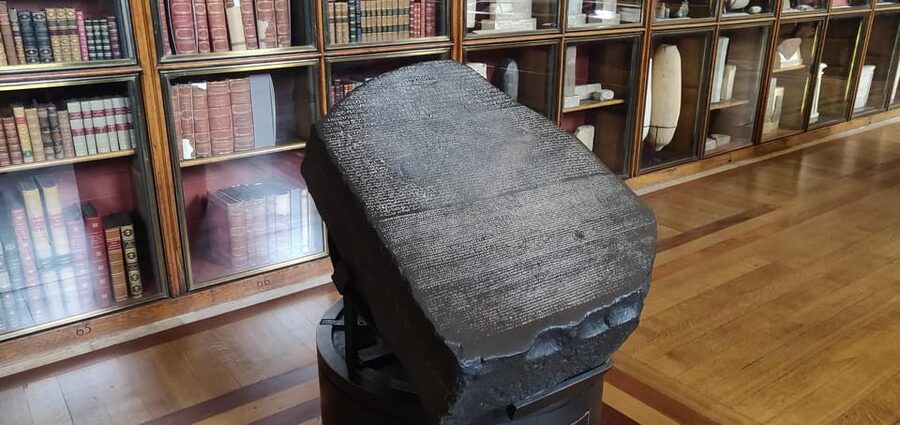
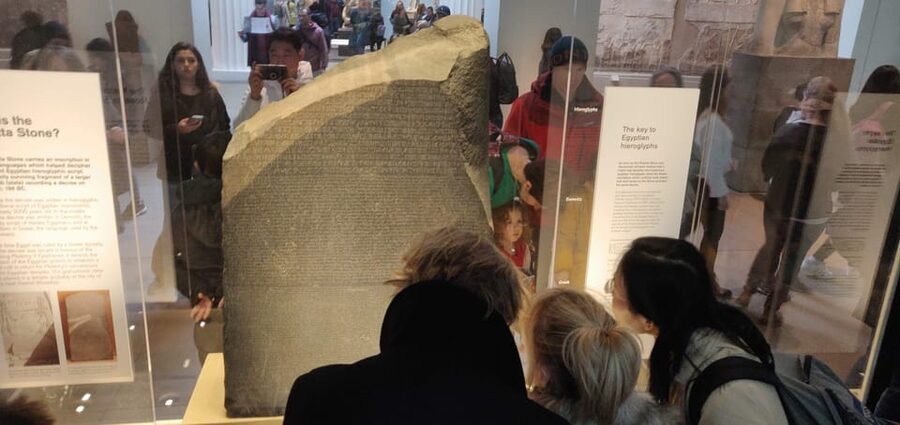
The Rosetta Stone is one of the natural anchors for a British Museum visit. Its importance is not mainly its size or appearance. The stone carries the same decree in three scripts, including hieroglyphs, which helped scholars work out how to read ancient Egyptian writing.
A good guide turns this from a familiar name into a practical story about comparison, language, and patient scholarship. You learn why the inscriptions mattered and how the stone changed the study of ancient Egypt.
The Egyptian section also brings you face to face with the colossal statue of Ramses II. A huge royal figure can seem self-explanatory, but the value of a guide is in explaining the power such a statue was meant to project, along with the political and religious setting around it.
You should expect the Egyptian material to be part of a wider route, not a full tour of every mummy, coffin, inscription, and statue. If Egypt is your main interest, take note of the rooms you pass through so you can return after the guided portion.
Assyrian palaces and the scale of empire
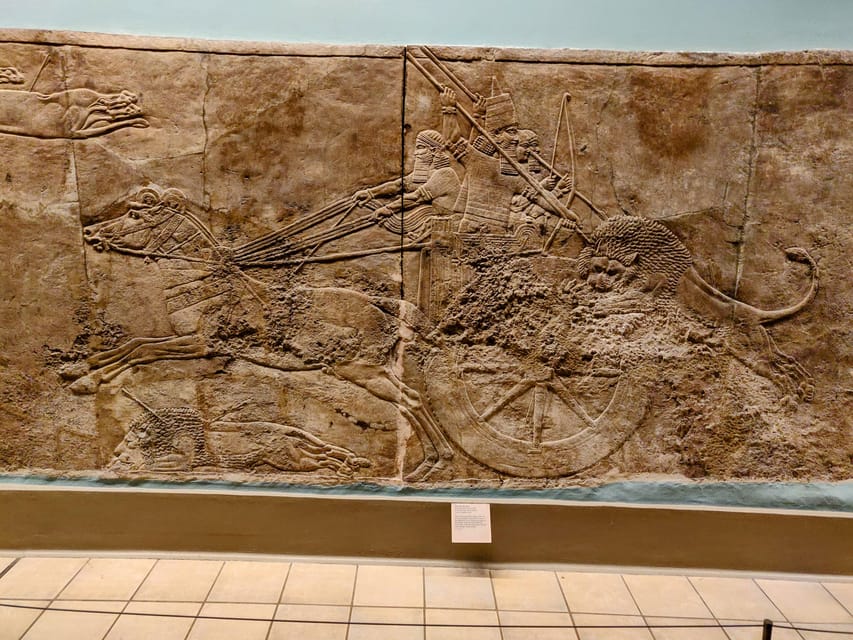
The Assyrian displays change the mood. Here, the impact comes from the size and detail of palace reliefs, along with the picture they give of royal authority and military power.
The tour includes the towering palace remains of the Assyrian Empire. These pieces can be hard to read at first glance. A guide helps you notice the carved figures, animals, battles, and formal scenes that turn stone slabs into a record of how a ruler wanted his kingdom seen.
I find this kind of stop especially useful in a museum tour because the objects are not small curiosities. They were made for architecture and public display. Seeing them in a gallery today requires some imagination, and Rossa’s explanations help connect the fragments to their original purpose.
The tradeoff is time. You may spend several minutes listening to one relief rather than sweeping through the full Assyrian collection. That is a fair exchange if you want meaning rather than a quick photograph.
More museums and galleries in London:
- London: British Museum Guided Tour
★ 4.3 · 1,182 reviews - Official tickets: Moco Modern & Contemporary Art Museum
★ 4.5 · 1,157 reviews - British Museum London Guided Tour Semi-Private 8ppl Max
★ 5.0 · 984 reviews - London: Jack the Ripper Museum Tickets
★ 4.2 · 894 reviews
The Parthenon Marbles and the questions they raise
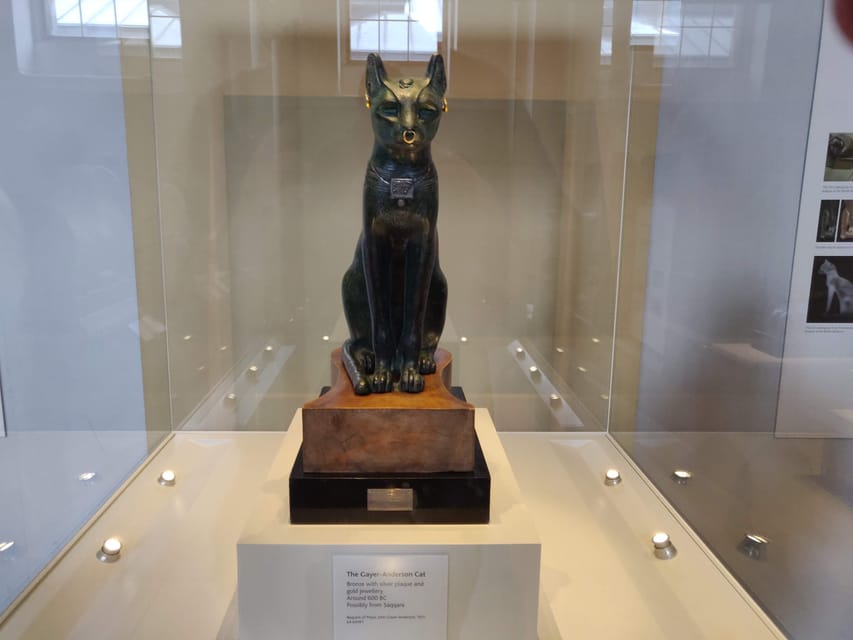
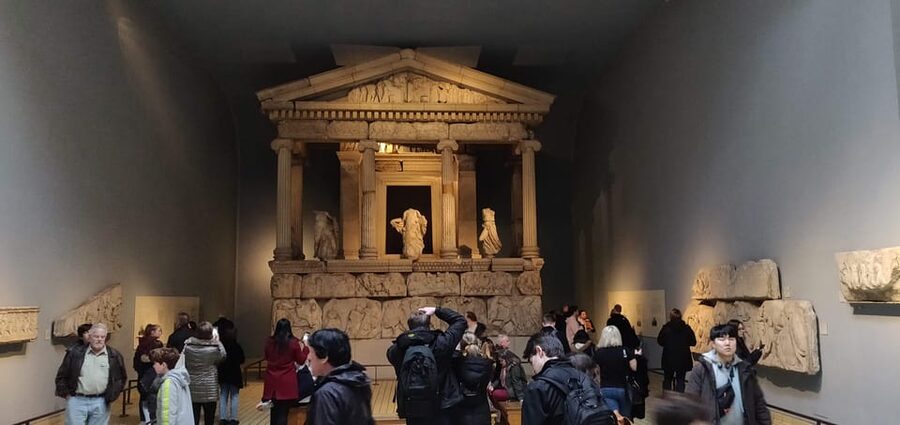
The Parthenon Marbles are among the museum’s best-known objects. They once formed part of the Parthenon in Athens and now appear in London as sculptures removed from their original setting.
A guide can explain the art, the building, and the journey of the sculptures to the museum. Just as important, this stop gives you a chance to consider the ongoing argument over ownership, removal, and the responsibilities of major museums.
The tour does not turn into a lecture on every side of the dispute, but the marbles are more than beautiful ancient carvings. Their presence raises real questions about cultural heritage and where historic objects should be displayed.
Expect crowds around this section. One account of the visit specifically noted that heavy visitor numbers made it harder to focus and move around. Rossa’s strong speaking voice helps, but you should still be ready to stand close to the group and pay attention in a noisy gallery.
The Lewis Chessmen and the Viking Age
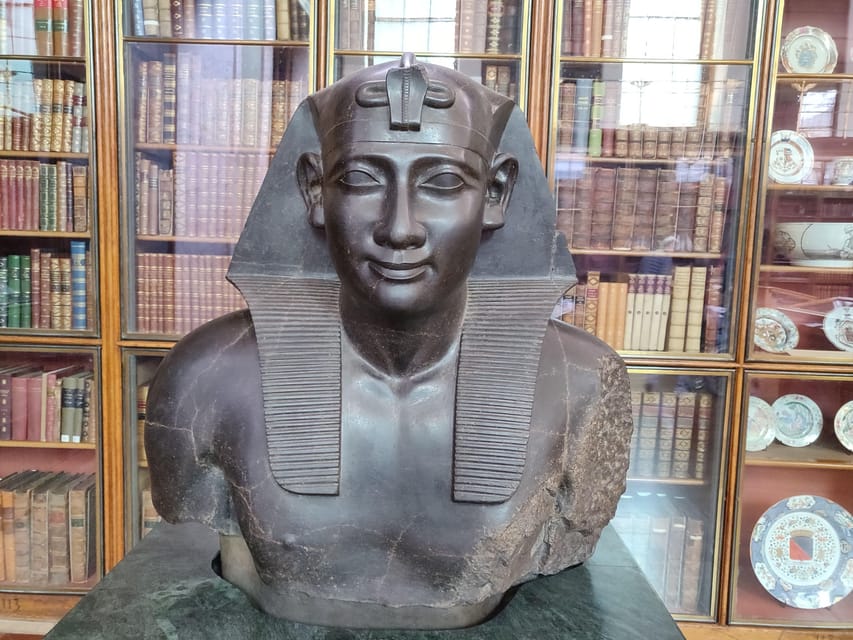
The Lewis Chessmen are a welcome change of scale. These small carved figures are easy to overlook beside monumental sculpture, yet they are among the museum’s most memorable objects.
The pieces offer a glimpse of medieval life, craft, play, trade, and status. Their faces and gestures make them unusually easy to connect with. You can imagine the people who handled them, even though much about their original use and journey remains uncertain.
This is one of the places where Rossa’s style seems especially well suited to the collection. The tour does not treat history as a parade of famous rulers. It gives attention to objects that reveal ordinary habits and human reactions, as well as grand political events.
If you are bringing children or teenagers, this section may help hold their attention. The chess pieces are instantly recognizable as objects people used, not just remote relics behind glass.
Sutton Hoo and King Raedwald
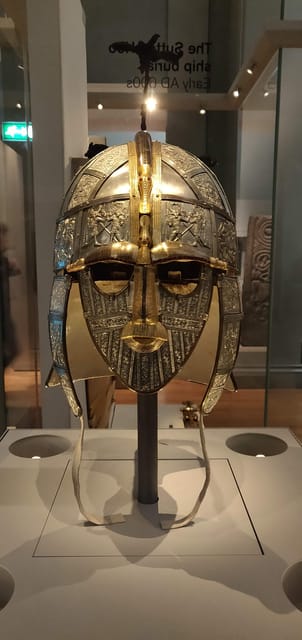
The Sutton Hoo hoard brings the tour into early medieval England. It is linked with the burial of a powerful figure often identified as King Raedwald, and it offers an extraordinary look at the world of Anglo-Saxon elites.
The objects include weapons, ornaments, and ceremonial items associated with the famous ship burial. Their value is not only in the gold and craftsmanship. Together, they suggest trade links, social rank, belief, and the way power was displayed in a period often reduced to the label Dark Ages.
This part of the visit is particularly strong for anyone interested in British history. The hoard connects a local English site with wider European networks, while also leaving room for questions about the person buried there and the meaning of the ceremony.
One of the tour’s strengths is the attention to discovery. You hear not only what the pieces are, but also about the people involved in finding and interpreting them. That human side makes archaeology easier to follow, especially when the object itself is visually complex.
Moai statues and the wider reach of the collection
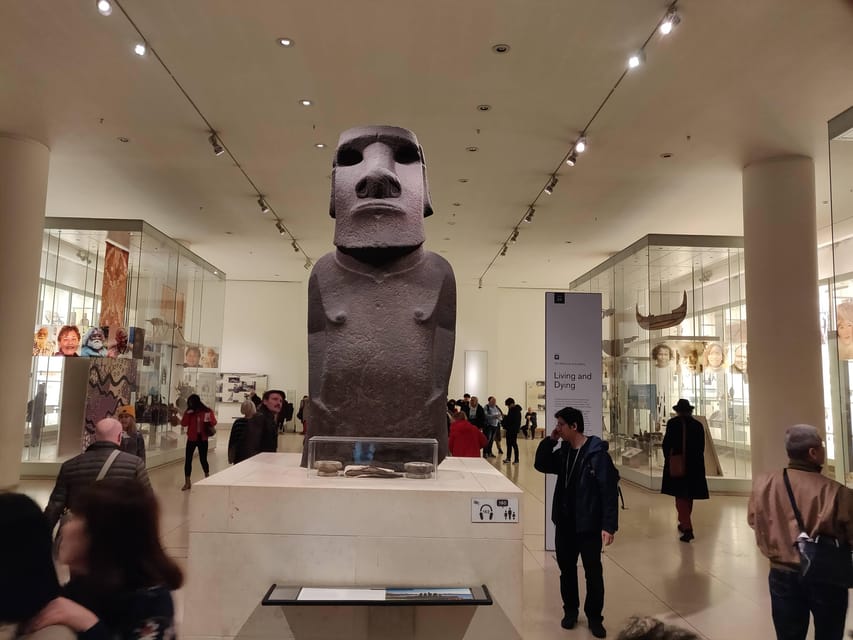
The Moai statues from Easter Island show how far the British Museum’s collection reaches. Their scale and simplified forms make them visually striking, but the important questions concern the society that created them, their original setting, and how they came to be displayed in London.
This stop broadens the tour beyond the civilizations most visitors expect to see. You move from Egypt and Assyria to the Pacific, then back to Europe and the Americas. The route makes clear that the museum is not only an ancient Greece and Egypt stop.
You should also recognize the limits of a short visit. Each object belongs to a large subject with its own language, politics, and debates. A two-and-a-half-hour route can introduce the key questions, but it cannot provide a complete account of every culture represented.
Aztec treasures and objects from the Americas
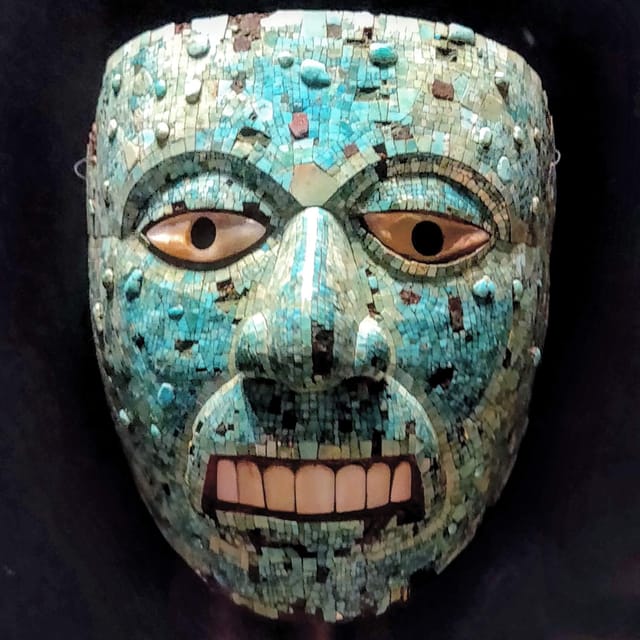
The tour also includes the crown jewels of the Aztec Empire. These objects provide another look at how authority, ceremony, and belief were expressed through materials and design.
This section helps balance the route. The British Museum’s headline objects are often associated with Egypt, Greece, and Rome, but the Americas collection adds a different set of histories and artistic traditions.
Pay attention to the guide’s comparisons. A strong museum tour does not claim that every civilization followed the same path. Instead, it helps you notice different ways people organized power, honored rulers, marked religious ideas, and created objects that survived them.
What the two and a half hours feel like
The pace is purposeful. You walk between galleries, stop for detailed explanations, and move on before one display takes over the entire morning. Several accounts praised the timing and pacing, while one noted that longer explanations sometimes meant fewer objects could be visited.
That is the central choice. If you want to see as many rooms as possible, this tour may feel slow. If you want a smaller number of important objects explained properly, the pace works well.
Rossa’s delivery is often described as lively, clear, and easy to hear. He uses stories about the objects and the people connected to them, and he welcomes questions. His use of an iPad and historical notes has also been noticed as a sign of careful preparation.
The museum itself remains a factor. Crowds, noise, and bottlenecks can interrupt the flow. You may need to stand close, listen carefully, and accept that a perfect view is not always possible. The guide can steer you through the congestion, but no tour can make a major London museum empty.
Value at $58 per person
At $58, this is not the cheapest way to enter the British Museum. General museum admission is free, so the price needs to earn its place through guidance and time saved.
For a first visit, I think the cost is reasonable if you would otherwise feel lost among the galleries. You get a specialist guide, a planned route, and a strong introduction to major objects that could take hours to locate and understand alone.
The value is also better for short London stays. If you have only one morning and want the Rosetta Stone, Parthenon Marbles, Sutton Hoo, and other headline pieces, a focused tour reduces the risk of spending your available time on the wrong rooms.
The price is less attractive if you already know the museum well, prefer to read at your own pace, or want to spend most of the day on one civilization. In that case, the tour may move you away from your chosen subject before you are ready.
The tour includes museum entry and the guided visit. Food and drinks are not included, so plan a snack or meal before or after, rather than expecting a break during the route.
Who should book this museum tour?
I would choose this tour for a first-time British Museum visitor, a family with older children, or anyone who wants the major pieces explained without spending an entire day inside.
It also suits history fans who enjoy questions about discovery, ownership, interpretation, and uncertain evidence. The tour gives you more than labels, while still leaving time afterward to return to galleries that caught your interest.
Families may find it useful because the guide’s stories make the objects easier to follow than a wall of dates. Teenagers who are not excited by museums may respond well to the Lewis Chessmen, treasure hoards, colossal statues, and tales of discovery.
I would hesitate if you dislike fixed timing or crowded galleries. The group must leave Russell Square promptly, and the museum can be noisy. You also need to accept that a guide’s favorite objects may not match your own.
Should you book it?
Book this tour if you want a clear first look at the British Museum and prefer a specialist to choose the route. The strongest reasons are Rossa’s storytelling, the mix of famous and less familiar objects, and the amount of context packed into two and a half hours.
Skip it if you want to wander freely, concentrate on one department, or spend a full day reading every label. For most first-time visitors with limited time, $58 buys useful direction and a far better sense of what you are looking at.
Free cancellation is available up to 24 hours before the tour, and you can reserve now and pay later. That flexibility helps, but the bigger decision is about style: guided focus or independent wandering.
FAQ
Where does the tour meet?
Your guide meets you at the entrance of Russell Square Station. The guide holds a tablet displaying Spirit of Discovery.
How long is the tour?
The guided British Museum visit lasts 2.5 hours.
How do I reach the British Museum from the meeting point?
The group walks from Russell Square Station to the British Museum. The walk takes about five minutes.
What time does the group leave Russell Square?
The group leaves promptly at 9:45 a.m. to meet the museum entry slot.
Is museum entry included?
Yes. Entry to the British Museum and the guided museum tour are included.
What language is the tour in?
The live tour is conducted in English.
Is the tour wheelchair accessible?
Yes, the activity is wheelchair accessible.
What should I bring, and what is not allowed?
Bring comfortable shoes and water. Weapons, sharp objects, luggage, and large bags are not allowed.
Just added in London
- 3-Day Stonehenge*, Glastonbury, Bath & the South West Coast Tour from London★ 4.5 · 32 reviews
- Private Guided Tour of Harry Potter Locations – English/ Italian★ 5.0 · 33 reviews
- 2 Hour Walking Tour from Buckingham Palace to Big Ben★ 5.0 · 32 reviews
- 30 Major London Attractions Walking Tour With Photos★ 4.5 · 51 reviews
- Private Tour London Highlights, entries Westminster Abbey, The Tower of London★ 5.0 · 93 reviews
- 007 Shadow Of Spectre★ 5.0 · 135 reviews
- Private Guided Tour of the British Museum – Tickets Included★ 5.0 · 193 reviews
- Bath, Avebury and Lacock Village Small-Group Day Tour from London★ 4.5 · 121 reviews
Museums, compared.

Liverpool Football Club Museum and Stadium Tour
Read our review →
Tower of London and Crown Jewels Exhibition Ticket
Read our review →
Chelsea Football Club Stadium and Museum Tour
Read our review →


Browse the lists this tour appears in