
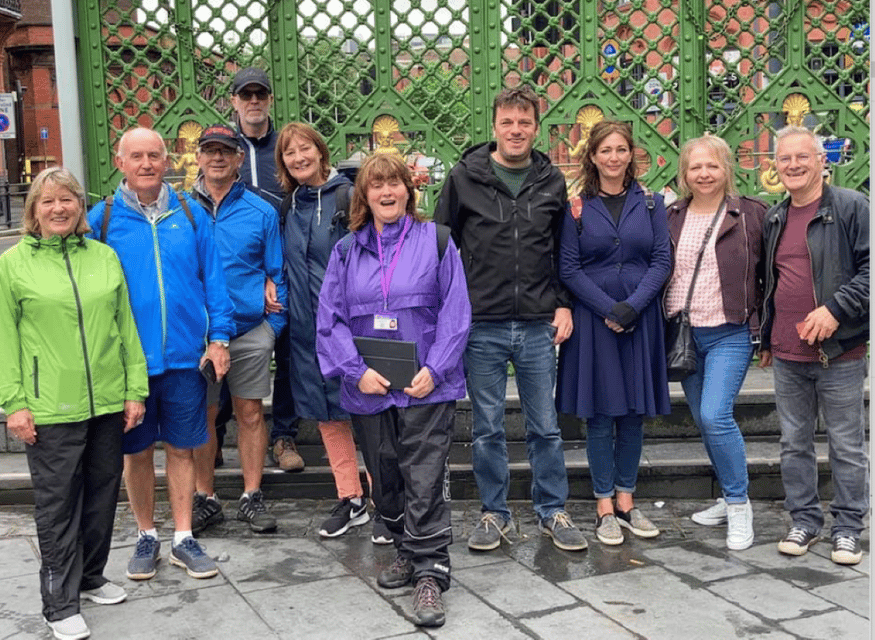
Reviewed · WALKING TOURS
Liverpool: Heritage, History & Culture Guided Walking Tour
Liverpool’s story is written across its docks, grand commercial buildings, music venues, and streets. This two-hour walking tour ties those pieces together, from the city’s medieval beginnings and maritime trade to the Beatles and today’s waterfront.
I like the route’s variety: you get the Royal Albert Dock and Three Graces, then shift to Mathew Street and the Cavern Quarter. I also like the guides’ personal approach. Mike, Allan, Pam, Karl, Carl, Colleen, and others are praised for clear storytelling, humor, and a willingness to answer questions. The main consideration is the pace and surface: you walk through busy areas and over cobbles, so comfortable shoes matter, and anyone with mobility concerns should check suitability before booking.
Key things to know before you book
- The route connects Liverpool’s big stories: maritime trade, the slave trade, civic power, architecture, and popular music all appear within two hours.
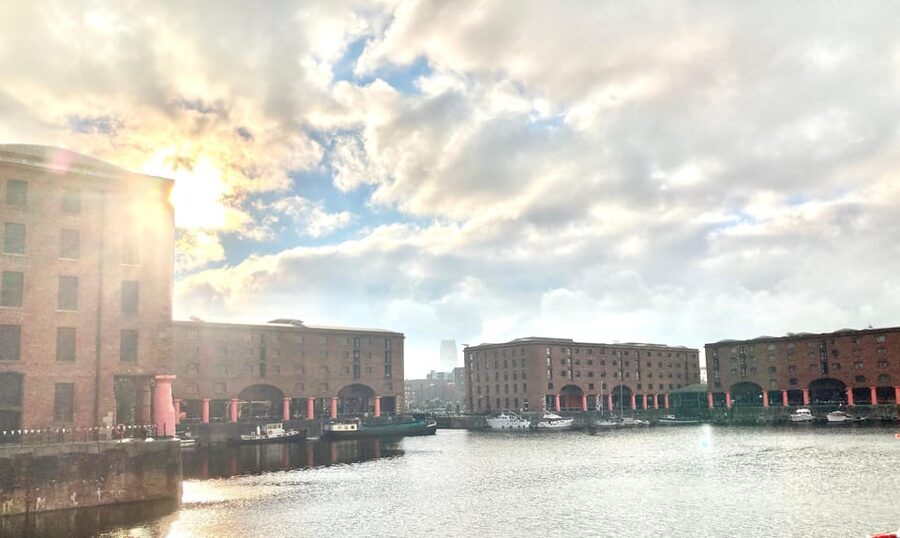
- The Royal Albert Dock gets a useful history lesson: you learn how the docks helped shape Liverpool and how Titanic stories became part of the city’s maritime identity.
- The Beatles stops are well placed: the route includes the Beatles Statue and Cavern Quarter, with time for photographs.
- Local guides make the difference: guides such as Mike D, Allan, Pam, Karl, and Colleen are known for adding anecdotes, opinions, and personal feeling.
- The meeting point is central: begin outside the Bluecoat Chambers on School Lane and finish at the Eleanor Rigby Statue.
- The tour is best as an introduction: it gives you a strong map of the city, but individual museums, docks, and music sites need separate time.
Why this Liverpool walking route works
A city tour can easily become a list of buildings. This one has a clearer thread. You begin with Liverpool’s growth, move toward the waterfront and its trading past, then return to the city center for music, civic buildings, and public monuments.
That sequence helps you understand Liverpool as more than a Beatles destination. The music is a major part of the experience, but it arrives after the tour has given you some sense of the city’s docks, commerce, politics, and difficult past.
You also get the benefit of a live English-speaking guide rather than an audio track. The strongest guide reports describe a loud, clear voice, lively delivery, and time for questions. That matters on a walking tour, where a good guide must keep a group moving while still making the stories easy to follow.
The experience is not designed as an exhaustive study of Liverpool. Two hours is enough for an overview, not a full treatment of the city’s involvement in the slave trade, the growth of its port, or the Beatles’ careers. Think of it as a well-organized first look that helps you choose where to spend the rest of your visit.
More Walking Tours in Liverpool:
- A Walk Through Time: History of Liverpool Walking Tour
★ 5.0 · 911 reviews - Liverpool Ghost Walking Tour
★ 5.0 · 862 reviews - Beatles Famous Walking Tour Of Liverpool- Fully Guided
★ 5.0 · 751 reviews
Starting at the Bluecoat on School Lane
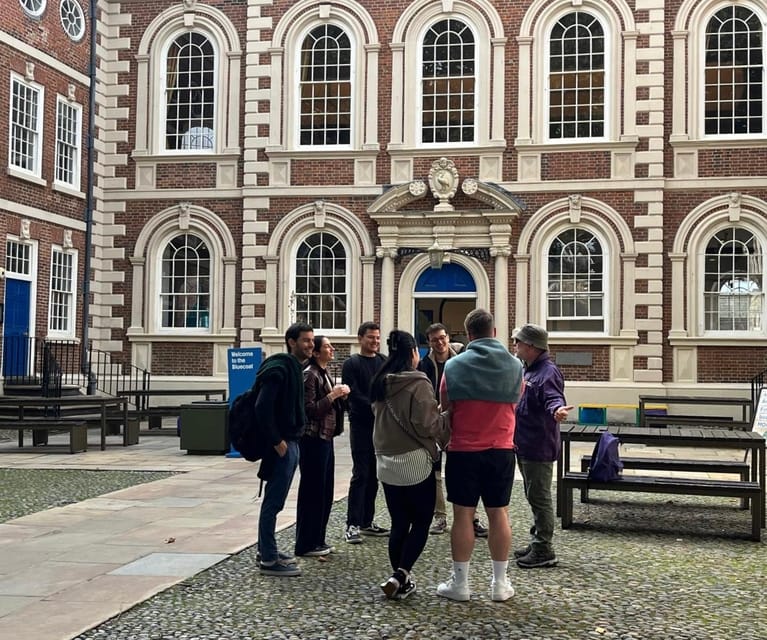
The meeting point is outside the black metal railings at the main front entrance to the Bluecoat Chambers grounds, at 8 School Lane. Look for Castle Fine Art opposite you. The supplied What3Words location is Soccer Trial Cuts.
This is a useful city-center starting point because the Bluecoat places you close to Liverpool’s older commercial core. You do not begin beside the docks, so the route can first establish how the center developed before leading you toward the waterfront.
The Bluecoat building opens from 10 a.m. Tuesday through Saturday and has a cafe and toilets inside. Those facilities are not part of the tour itself, but they can be handy before departure. The tour leaves from outside the front gates, so arrive with enough time to identify the entrance rather than waiting inside.
The first part covers Liverpool’s origins and development, including stories reaching back to the time of King John. Your guide may use the surrounding streets and buildings to explain how the city changed over time. This opening is valuable because later stops at the docks and grand offices make more sense once you have a basic sense of Liverpool’s growth.
Liverpool One and the changing city center
The route continues through Liverpool One, with about ten minutes of guided sightseeing. This gives you a look at the newer side of the city center and creates a useful contrast with the older buildings around it.
The tour does not treat Liverpool as a preserved museum. You see old and new architecture side by side, and the guide explains how the center has changed. That balance is one of the better features of the route. You are not shown only the postcard buildings, but also the modern city that grew around them.
This stop is brief, so do not expect a detailed architectural study or a long shopping break. The purpose is orientation. You are moving through the center toward the waterfront, with the guide pointing out how the city’s uses and appearance have shifted.
Royal Albert Dock and Liverpool’s maritime past
The Royal Albert Dock receives roughly 30 minutes, making it the longest stop on the route. That is sensible. It is one of Liverpool’s most important areas, both for its buildings and for the way it connects the city to global trade.
Here you learn about the first dry dock on the site and the part the docks played in Liverpool’s development. The tour also addresses maritime trade and Liverpool’s role in the slave trade. That is important context, and it keeps the city’s story from becoming a simple tale of commercial success.
You also hear how the Titanic story became part of Liverpool’s maritime identity. Liverpool was not the Titanic’s port of departure, but the ship was registered in the city, and its connections with the White Star Line made the disaster part of local memory. The guide uses this subject to connect Liverpool with the wider world of shipping, business, and migration.
The dock is a strong place for photographs. You may also see the large LIVERPOOL sign, whose colors change for seasons or events. It is an obvious selfie stop, but it also gives the tour a modern counterpoint to the brick warehouses and historic dock structures.
One limitation is that this is a guided visit rather than a museum tour. You will hear the story of the dock and its role in the city, but you are not given a long indoor visit to a particular attraction. If you want detailed exhibits, plan separate time around the Albert Dock after the walk.
More walks around Liverpool:
- Downtown Liverpool Walking Tour – In Spanish
★ 5.0 · 591 reviews - Best Of Liverpool Heritage, History & Culture Guided Walking Tour
★ 5.0 · 539 reviews - Liverpool: Beatles Highlights Walking Tour
★ 4.8 · 274 reviews - Tales from the Necropolis – A Ghost Walk Through St. James Cemetery
★ 5.0 · 263 reviews
The Beatles Statue and a quick photo stop
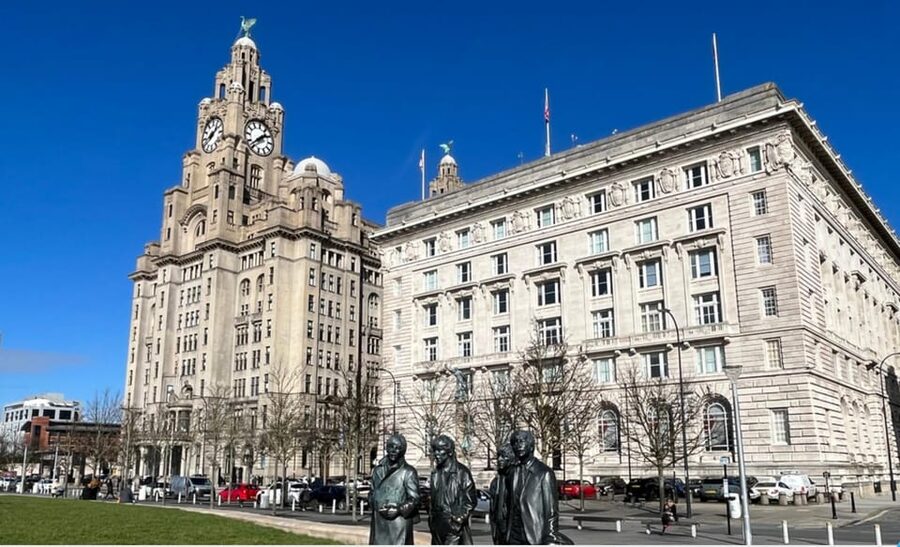
The Beatles Statue is the route’s clearest music landmark. Sculpted by Andrew Edwards, it gives you a chance to pose with the Fab Four near the waterfront.
This stop lasts about ten minutes. That is enough for a photograph and some background, but not enough for a full Beatles history lesson. The guide may place the band within Liverpool’s wider story, showing how local music became one of the city’s strongest international identities.
I like the placement here because the statue follows the dock section. You first see Liverpool as a port city tied to trade and shipping, then meet the cultural figures who made the city famous in a different way.
If the Beatles are your main reason for visiting, treat this as a starting point rather than the complete experience. The tour later reaches the Cavern Quarter, but you will not have an extended visit to the Cavern Club included in the price.
The Three Graces and the waterfront skyline
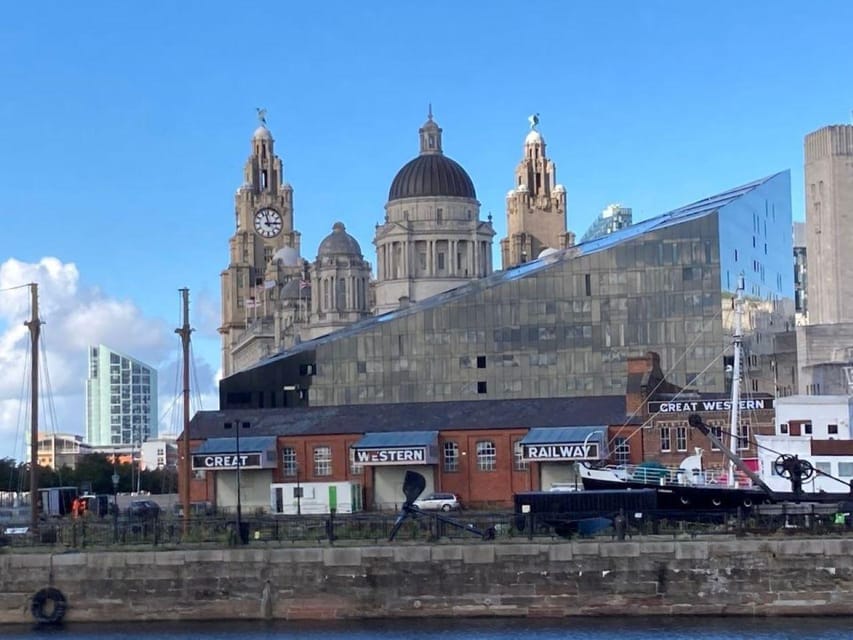
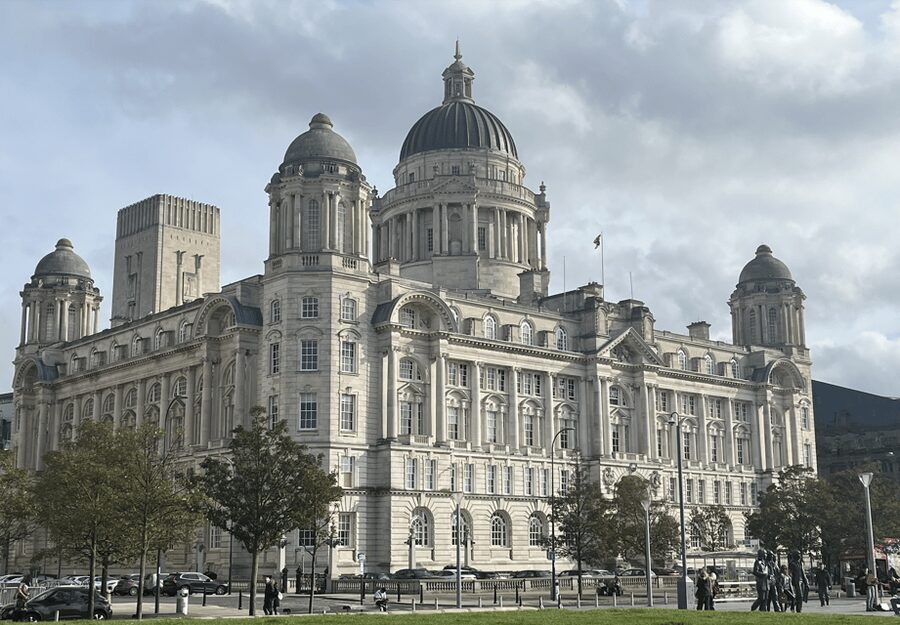
The Three Graces are among Liverpool’s most recognizable buildings: the Cunard Building, the Port of Liverpool Building, and the Liver Building. The route allows about 15 minutes for this group, including a photo stop and explanation of their Grade II listed status.
This is where the city’s commercial power becomes visible. These grand waterfront buildings reflect Liverpool’s links with shipping, trade, and international business. The guide helps you read them as more than an impressive row of facades.
The Liver Building is the best-known of the three, but the Cunard Building and Port of Liverpool Building give the group its full meaning. Together they show the scale and confidence of the port at the height of its influence.
The stop is short, so you will not get a room-by-room architectural tour. You do, however, get a useful explanation of why these buildings matter and a clear view for photographs. Listen for details about their different roles, since those distinctions are easy to miss when you are simply admiring the skyline.
Exchange Flags, Liverpool Castle, and the Town Hall
The route then turns back into the city center. At Derby Square, your guide explains that Liverpool Castle once occupied the area. The castle has disappeared, but an imposing monument to Queen Victoria now gives the square much of its visual weight.
This kind of stop is one reason a local guide adds value. Without explanation, Derby Square can seem like another open city space. With the story of the castle, you begin to see the layers beneath the modern streets.
You also pass Exchange Flags, a Grade II listed area whose buildings form a courtyard facing the Town Hall. The setting gives you another example of Liverpool’s civic and commercial architecture, this time away from the open waterfront.
The current Town Hall is Grade I listed and is regarded as one of the finest surviving 18th-century town halls in England. The guide also covers its predecessors, with a history reaching back to the 1500s. This is a helpful reminder that Liverpool’s public institutions are older than the grand dock buildings most visitors know.
The itinerary allows around ten minutes for this portion. You should expect an outdoor explanation and a look at the buildings, not a guaranteed interior visit. If seeing the Town Hall inside is important to you, ask about separate opening arrangements rather than assuming it is part of the walk.
Mathew Street and the Cavern Quarter
Mathew Street changes the mood. After civic buildings, docks, and monuments, you enter the Cavern Quarter, where Liverpool’s musical identity comes to the front.
The street is closely tied to the Cavern Club and The Beatles, as well as other musicians who helped make Liverpool famous. The guide places you in the footsteps of those music figures while explaining why this small area has such a large place in popular culture.
You have about 20 minutes here, including a photo stop. That is enough to look around and hear the main stories, but it does not include food, drinks, or a full venue visit. The route finishes at the Eleanor Rigby Statue, another Beatles-related landmark that keeps the music theme going.
Mathew Street can be crowded, and the surface may be uneven. Keep close enough to hear the guide, especially if the group is moving through a busy section. This is also where the tour may feel most appealing to music fans, but it remains a history walk rather than a dedicated Beatles tour.
The guide’s role in bringing the route together
The strongest part of this experience is the human delivery. A city’s history can feel dry when reduced to dates and building names. The guides add personal stories, humor, opinions, and surprising facts.
The guide team includes people such as Mike, Mike D, Allan, Alan, Pam, Karl, Carl, and Colleen. Their styles may differ, but the feedback points to a shared strength: they explain clearly, enjoy questions, and care about Liverpool. Some tours even run longer than planned when conversation is flowing, although you should regard the stated two hours as the proper expectation.
Pam is praised for mixing facts, opinion, humor, and short personal stories. Mike D is described as witty, warm, and able to share unexpected details. Allan is noted for keeping a steady pace while covering the planned material. Colleen is praised for being friendly and patient with a small group.
That variety is worth remembering. A walking tour depends heavily on the individual guide on duty, so your experience may have a different tone. The consistent pattern is an informed, engaging introduction rather than a scripted march from one photo stop to the next.
Is $31 good value for two hours?
At $31 per person, this is reasonably priced if you want an overview of central Liverpool with a live guide. You are paying for the route, local interpretation, and the chance to ask questions as you go. For a first visit, that can save time and help you plan later sightseeing.
The value is strongest when you treat the walk as a city orientation. You see the major waterfront buildings, hear about Liverpool’s difficult trading past, get Beatles landmarks, and learn where the Town Hall, Exchange Flags, Cavern Quarter, and Albert Dock fit together.
Food and drinks are not included. That is not a serious drawback for a two-hour city walk, but you should budget separately if you want a cafe stop or a drink around the dock or Cavern Quarter.
You are also not buying entry to museums or a long indoor visit. If you prefer spending two hours inside one attraction, this will feel too broad. If you want a guide to connect several parts of the city, the price is easier to justify.
Walking comfort, access, and what to bring
Wear comfortable shoes. The route is described as an easy walking tour, but you still pass over cobbles and through busy areas. Bring water and a camera, especially if you want photos at the Royal Albert Dock, Beatles Statue, Three Graces, and Cavern Quarter.
The information says the locations are accessible for strollers and wheelchairs, but it also warns that the group passes over uneven surfaces and lists the experience as unsuitable for people with mobility impairments and wheelchair users. That is a clear point to check with the provider before booking. The issue may be less about individual landmarks and more about keeping up with a group on crowded streets and cobbles.
Well-behaved dogs are welcome, though the same busy streets and uneven surfaces apply. The tour is in English, with a live local guide.
Free cancellation is available up to 24 hours before departure, and you can reserve now and pay later. Those terms are useful if your Liverpool plans are still shifting.
Who should book this Liverpool tour?
I would choose this walk for a first visit, a short city break, or a day when you want to get your bearings before visiting museums and historic sites on your own. It suits you if you like stories, architecture, music history, and a guide who can answer questions.
It is also a good fit if you want more than a Beatles photo tour. The route gives proper attention to the port, slavery and trade, civic buildings, and Liverpool’s changing city center.
I would be less likely to recommend it if you want a specialist Beatles experience, extensive museum time, or a slow architectural study. The two-hour route covers a lot, so individual stops are necessarily brief.
Should you book it?
Book this tour if you want a lively first look at Liverpool that combines the waterfront, civic center, and Beatles landmarks in one walk. The best reason to go is the guide-led storytelling, especially if you enjoy asking questions and hearing local anecdotes.
Skip it if uneven surfaces are a serious concern, or if you already know central Liverpool well and want a detailed visit inside one attraction. For most first-time visitors, though, $31 buys a useful map of the city and several strong leads for the rest of your stay.
FAQ
Where does the Liverpool walking tour begin?
The tour begins outside the black metal railings at the main front entrance to the Bluecoat Chambers grounds, 8 School Lane, Liverpool L1 3BX. Castle Fine Art is opposite the entrance. The What3Words location is Soccer Trial Cuts.
Where does the tour finish?
The tour finishes at the Eleanor Rigby Statue.
How long is the walking tour?
The tour lasts two hours. The route includes several short guided sightseeing sections and longer stops at the Royal Albert Dock, Cavern Quarter, and other major landmarks.
Is the tour conducted in English?
Yes. The tour has a live English-speaking local guide.
Is food or drink included?
No. Food and drink are not included, so bring water and plan separately for anything you want to eat or drink.
Is the tour suitable for wheelchair users?
The route includes accessible locations but also passes through busy areas and over uneven surfaces such as cobbles. The activity is listed as unsuitable for wheelchair users and people with mobility impairments, so contact the provider before booking if access is a concern.
More Historical Tours in Liverpool
- History Guided Tour of Liverpool and the Beatles
★ 5.0 · 408 reviews - Liverpool: Haunted History Guided City Tour
★ 4.9 · 404 reviews - Liverpool Hidden History and Dead House Evening Walking Tour
★ 5.0 · 200 reviews - Liverpool: A Walk Through Time: Full History Walking Tour
★ 4.8 · 184 reviews
Just added in Liverpool
- Fun, Flexible Treasure Hunt Around Liverpool with Cryptic Clues & Hidden Gems★ 5.0 · 141 reviews
- Beatles Ticket To Ride Half Day Tour Small Groups★ 5.0 · 60 reviews
- Half-Day Liverpool Electric Beatles Bike Tour★ 5.0 · 146 reviews
- Lake District from Liverpool including Lake Cruise★ 4.5 · 49 reviews
- Small-Group: Experience Local Food Tour in Liverpool★ 5.0 · 32 reviews
- Anfield Abseil with Free Entry to the LFC Museum★ 5.0 · 171 reviews
- Royal Liver Building 360 – Tower Tour and Experience★ 5.0 · 526 reviews
- Private Beatles Car Tour, Penny Lane, Strawberry Field & childhood homes★ 5.0 · 118 reviews
Walking Tours, compared.

Magical London: Harry Potter Guided Walking Tour
Read our review →
Underground Vaults Walking Tour in Edinburgh Old Town
Read our review →
Oxford University Walking Tour With University Alumni Guide
Read our review →
Edinburgh Castle: Guided Walking Tour with Entry Ticket
Read our review →
Edinburgh Castle Guided Walking Tour in English
Read our review →
Tour for Muggles The Ultimate Harry Potter Walking Tour in London
Read our review →
University and City Walking Tour with Alumni Guide
Read our review →Browse the lists this tour appears in