
Reviewed · WALKING TOURS
Liverpool: A Walk Through Time: Full History Walking Tour
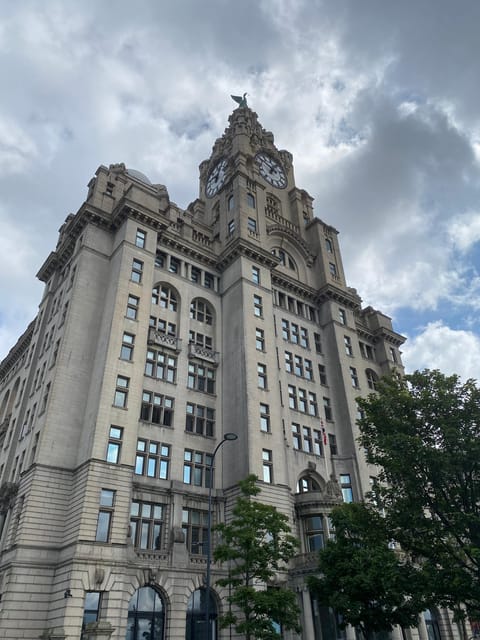
Liverpool’s story makes far more sense when you follow it on foot, from the Royal Liver Building through the old commercial center and down to the docks. This two-hour history walk links Liverpool’s medieval beginnings, maritime rise, imperial wealth, and modern identity in one clear route.
I like the way the tour connects buildings to larger events, and I like that the guide points out small architectural details you could easily miss. The second strength is the teaching. John, the guide most often named in the feedback, has a PhD in imperial and maritime history and explains complex subjects in plain language.
The main limitation is the pace. You cover a lot of ground and a very wide time span, from 1207 to the present day. If you want to enter several buildings or study one period in great depth, this is not that kind of tour.
Key points to know before you book
- Liverpool’s whole story in one route: Follow the city from medieval trading town to major port and second city of the British Empire.
- A guide with serious academic training: John has a PhD in imperial and maritime history, while Dave has also been praised for his academic background and storytelling.
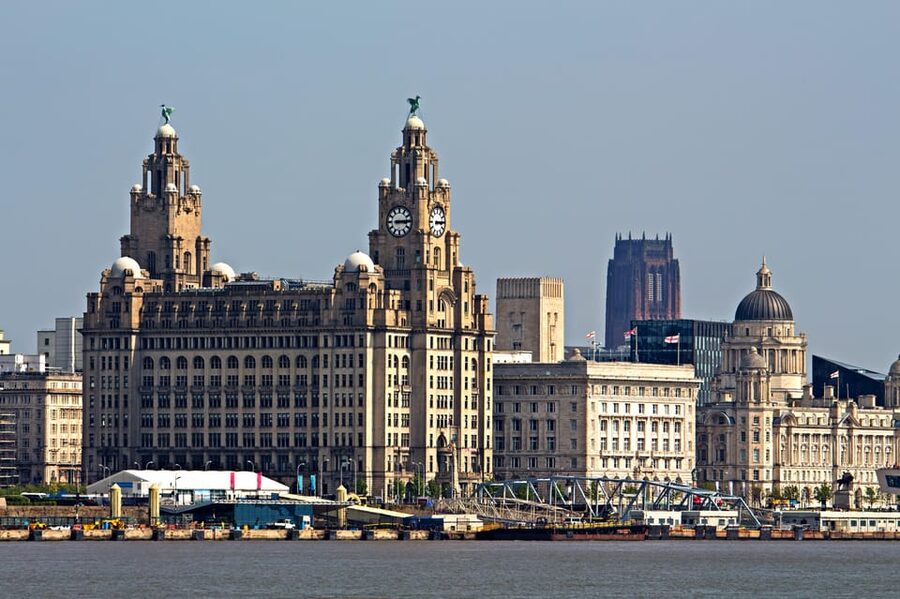
- A strong introduction to the waterfront: See the Royal Liver Building, the other Three Graces, the Old Dock, and Royal Albert Dock.
- Useful local advice included: Guides can suggest places to eat, including where to try scouse after the walk.
- A good value ticket: At $22 per person, the tour costs less than many paid attractions and gives you two hours of guided context.
- An outdoor experience: The route is wheelchair accessible, but you should dress for changing weather and expect to remain on your feet.
Liverpool’s story begins at the Liver Building
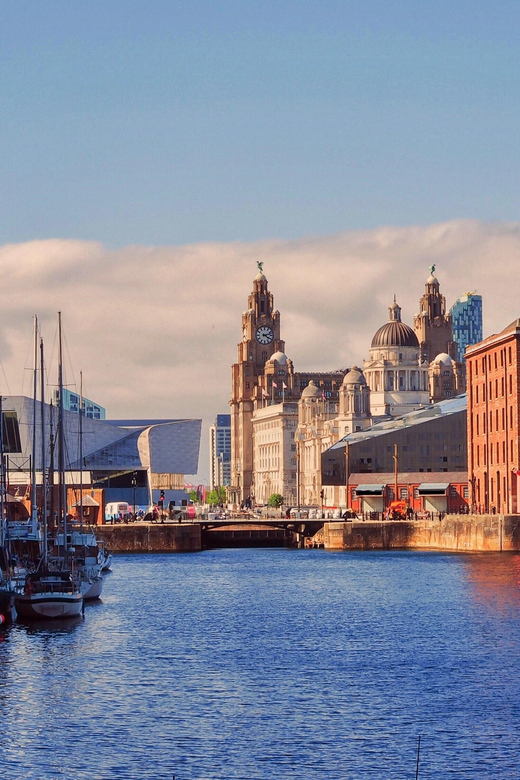
Meet your guide outside the entrance of the Royal Liver Building, at the black gate facing the river. This is an easy starting point because the building is one of Liverpool’s clearest visual markers, but take care to use the river-facing entrance rather than another doorway.
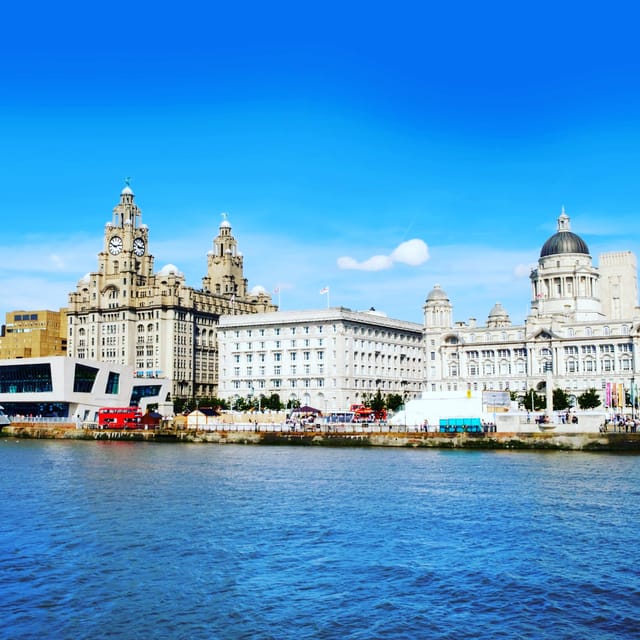
The Liver Building is part of Liverpool’s famous Three Graces, the group of grand waterfront buildings that also includes the Cunard Building and the Port of Liverpool Building. Your guide uses this setting to explain how Liverpool’s commercial power grew and why the waterfront became such an important symbol of the city.
I like starting here because you immediately get a sense of scale. You are not beginning with an abstract date or a long lecture. You are looking at the buildings that expressed Liverpool’s wealth, trade, and civic pride.
The opening section also sets up an important theme: Liverpool’s identity is much wider than music tourism. The Beatles are part of the city’s modern appeal, but this walk focuses on the port, architecture, trade, technology, religion, and political history that shaped the city long before the band appeared.
More Walking Tours in Liverpool:
- A Walk Through Time: History of Liverpool Walking Tour
★ 5.0 · 911 reviews - Liverpool Ghost Walking Tour
★ 5.0 · 862 reviews - Beatles Famous Walking Tour Of Liverpool- Fully Guided
★ 5.0 · 751 reviews
From medieval Liverpool to a world port
The central idea of the walk is change. Liverpool began as a small medieval settlement and developed into a major trading center. Your guide traces that growth from the founding period in 1207 through the expansion of the port and the city’s rise in the British Empire.
This is where an academically trained guide can make a real difference. Dates alone are hard to remember. The better approach is to link geography, new technology, trade, shipping, and civic ambition. That is the method used here, according to the detailed descriptions of the guiding style.
You should expect a broad historical outline rather than a specialist seminar. In two hours, the guide cannot explain every part of Liverpool’s past. Instead, you get a connected story that helps you understand why the city grew where it did and why the waterfront and commercial streets look the way they do.
The guide also makes space for questions. Several detailed accounts describe John answering questions fully and encouraging people to join in. That matters if you want more than a fixed speech, especially if you already know some Liverpool history and want to explore a particular point.
The Royal Liver Building and Liverpool Waterfront
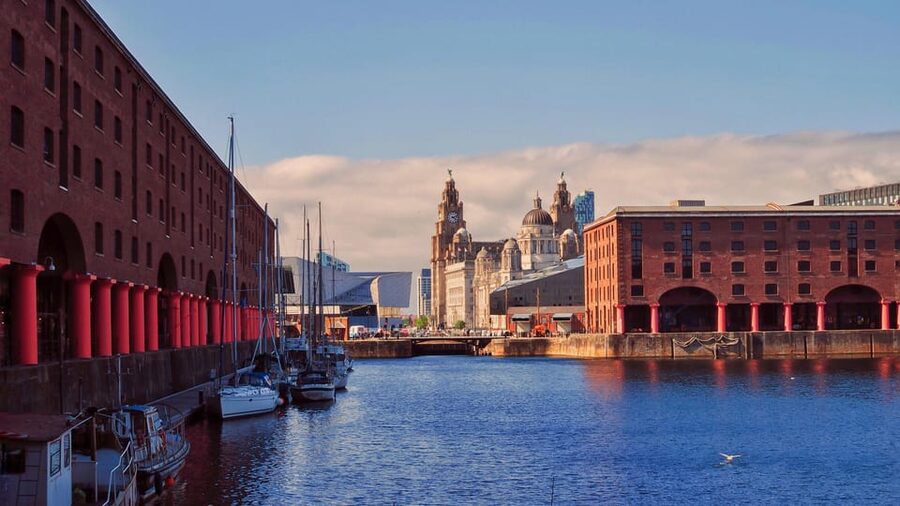
The waterfront section gives you some of Liverpool’s best-known views. The Royal Liver Building is the star, but your guide places it in a wider group of civic and commercial buildings rather than treating it as an isolated photo stop.
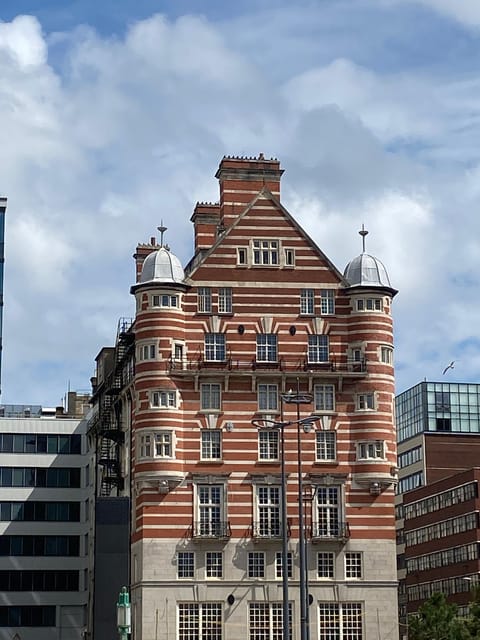
Look up as you walk. One useful feature of this tour is the attention to architectural details. You may find carvings, decorative features, and building choices that reveal how Liverpool wanted to present itself during its commercial peak.
The waterfront also helps explain the link between local prosperity and global trade. Liverpool’s growth affected more than the city itself. The port helped shape the economy of northern England and played a major role in Britain’s wider commercial system.
That subject needs careful handling. A port’s success can bring wealth, jobs, and impressive buildings, but it is also tied to difficult parts of imperial and maritime history. The tour’s academic focus makes it better suited to explaining those connections than a simple sightseeing walk.
There is no indication that you enter the Royal Liver Building as part of this experience. Think of this stop as an outdoor explanation of the building and its setting, with time to see it close up.
Liverpool Parish Church and the older city
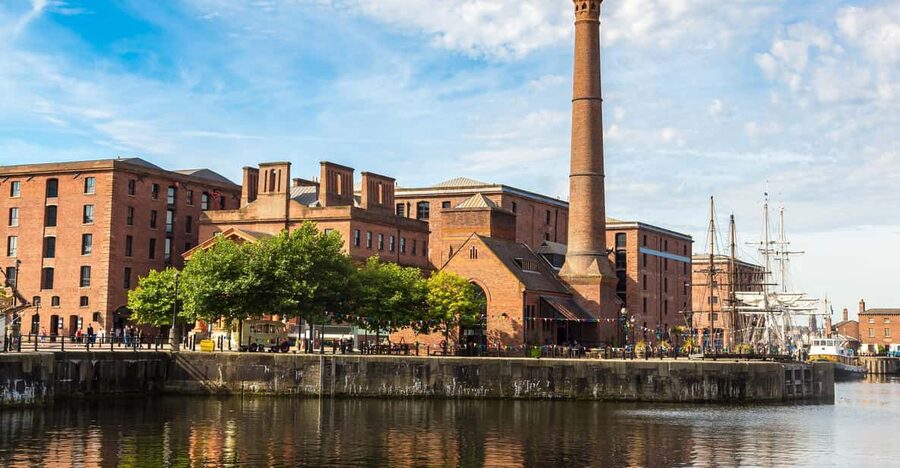
The route continues to Liverpool Parish Church, also known as Our Lady and Saint Nicholas, and its gardens. This stop shifts the mood from grand commercial architecture to the older religious and civic center of the city.
The church matters because it connects modern Liverpool to earlier generations. While the large waterfront buildings can make the city seem like a product of the industrial age, the parish church points back to the settlement that existed before Liverpool became a global port.
The nearby gardens offer a change of pace, although you should still expect the guide to keep the history moving. The stop is listed as a short guided section, so it is more about context and location than a long interior visit.
This is one of the places where the route’s structure works well. You move between old and new, religious and commercial, local and global. That contrast makes the growth of Liverpool easier to follow.
More walks around Liverpool:
- Downtown Liverpool Walking Tour – In Spanish
★ 5.0 · 591 reviews - Best Of Liverpool Heritage, History & Culture Guided Walking Tour
★ 5.0 · 539 reviews - Liverpool: Beatles Highlights Walking Tour
★ 4.8 · 274 reviews - Liverpool Hidden History and Dead House Evening Walking Tour
★ 5.0 · 200 reviews
Chapel Street and the Old Hall Chambers
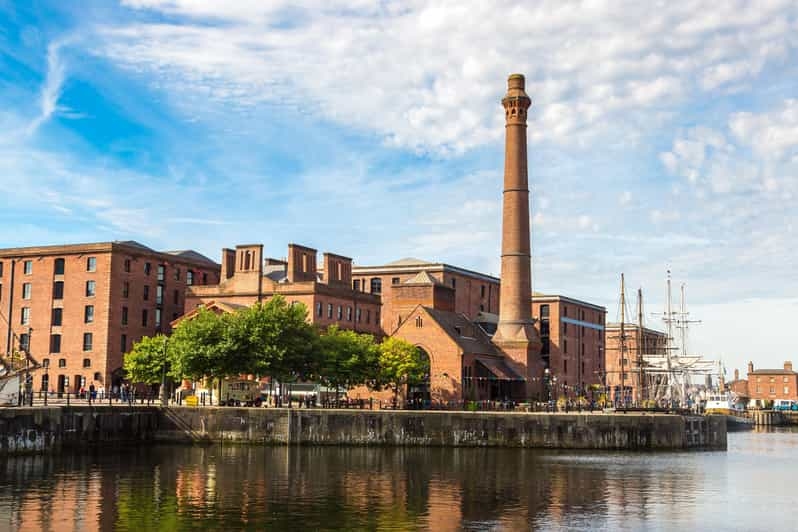
Chapel Street brings you into one of the older routes through the city. The tour also includes the Old Hall Chambers, another chance to see how Liverpool’s past survives in the built environment.
Your guide uses these places to add detail to the larger story. Liverpool’s development was not only about ships and docks. It also required offices, courts, religious institutions, housing, roads, and commercial buildings.
I find this part valuable because a city can be misunderstood if you only visit its headline attractions. A waterfront photograph shows Liverpool’s public face. Streets such as Chapel Street help you picture the working city behind that face.
The route is still fairly compact, so you will not get an extended architectural survey. What you do get is a reason to pay attention. After the tour, you may find yourself looking above shopfronts and doorways instead of walking past them.
Castle Street, the Town Hall, and Queen Victoria
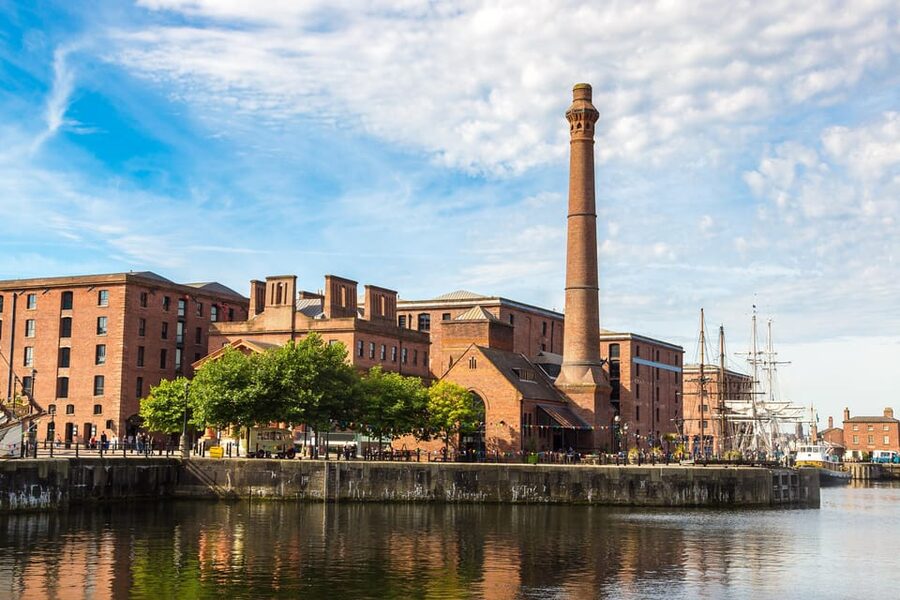
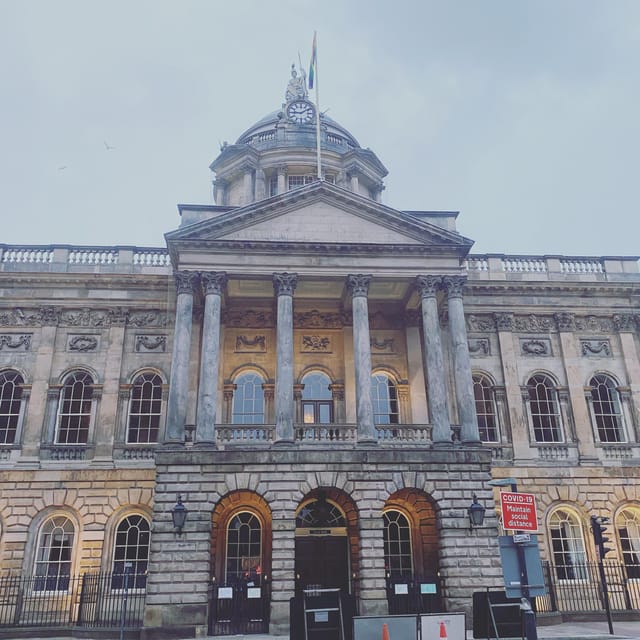
Castle Street is one of the strongest parts of the walk for understanding Liverpool’s civic center. The street leads toward the Town Hall and the Queen Victoria Monument, giving you a view of the city’s formal public side.
Here, the guide explains how Liverpool presented itself as a serious commercial and civic power. Grand streets and monuments were not just decoration. They showed confidence, wealth, and ambition.
The Town Hall also helps connect local government with port growth. As Liverpool became more important, the city needed institutions that could manage expansion and express its place in Britain.
Castle Street is the finishing point, which gives the tour a practical shape. You start at the river, move through the waterfront and central streets, and finish in a part of the city where you can continue on foot to shops, restaurants, or other sights.
The drawback is that the final stop is not the same as the meeting point. The distance is not presented as a problem, but you should note that you finish on Castle Street rather than returning to the Liver Building.
Liverpool ONE and the Old Dock
Liverpool ONE provides a modern contrast. The area represents the city’s present-day retail and leisure center, while the nearby Old Dock points to an earlier stage in the port’s development.
This pairing is useful. You see how a former working port has been adapted for modern city life, then hear why the older dock mattered to Liverpool’s commercial rise. The walk does not treat redevelopment as the whole story. It places the newer area beside the remains and memory of the older one.
The Old Dock is especially important because it gives physical meaning to the idea of Liverpool as a port city. Instead of hearing only about growth in the abstract, you can stand in a place tied to the practical business of bringing goods and ships into the city.
The Liverpool ONE section is brief, so do not expect a long shopping orientation. Its role is historical and comparative. It helps you see how the city has changed again in the modern period.
Royal Albert Dock and the return to the waterfront
Royal Albert Dock brings the route back toward the water and provides a strong closing chapter. Its warehouses and open spaces make it easier to imagine the scale of Liverpool’s maritime activity.
Your guide uses the dock to explain the city’s port history and later changes. The setting is visually strong, but the real value comes from knowing what you are looking at. Without context, an old dock can seem like an attractive row of renovated buildings. With context, it becomes part of the story of trade, labor, shipping, and urban change.
This is also a good place for photographs, though the tour remains a walking history lesson rather than a dedicated photo excursion. You may want to take pictures between explanations, but do not expect long unscheduled stops at every viewpoint.
The route is described as ending at Castle Street, even though the waterfront and Royal Liver Building appear late in the sequence. The exact flow may vary by guide and conditions, so listen for the guide’s directions at the start.
What the guiding is really like
The strongest feature is the guide’s delivery. The best accounts describe a warm, clear, and enthusiastic style, with dry humor and frequent invitations for questions. John is repeatedly singled out for making the past easy to follow without turning the walk into a dry classroom lesson.
You may be led by John or another guide such as Dave. The experience depends partly on who is assigned, but the guiding is presented as academically trained and locally focused.
I would choose this tour if you like history explained through cause and effect. You will hear how geography, trade, technology, and imperial connections affected Liverpool’s growth. You will also get recommendations for other places to visit and, in at least one case, a suggestion for where to try scouse after the walk.
The tour has also worked well for mixed ages. One account describes a teenager who began doubtful but became engaged because the guide connected events instead of listing isolated facts. That is a useful sign for families, though a child who dislikes walking or history may still find two hours demanding.
Clear speech is another practical strength. You are outdoors, often near roads and open waterfront spaces, so a guide who projects well makes a real difference. You should still stay close enough to hear, especially if the group is large.
Is two hours enough for Liverpool?
Two hours is enough for a strong first look, not enough for the whole city. The tour covers a huge period, from the medieval foundation to modern Liverpool, so the guide must move quickly between major ideas.
I like this length for a first morning or afternoon in town. It gives you a working map of the center and helps you choose what to explore later. You can then return to the waterfront, church, docks, or museums with a better understanding of why each place matters.
The tradeoff is limited detail. You will not receive a long treatment of every building, every period, or every difficult chapter in Liverpool’s past. If your main interest is one subject, such as maritime trade, imperial history, architecture, or local religion, you may want a more specialized experience afterward.
Wear comfortable shoes and prepare for outdoor conditions. The tour is wheelchair accessible, but a route through historic streets and waterfront areas can still be more comfortable with sensible clothing and a weatherproof layer.
Is $22 good value?
At $22 per person, I consider this good value if you want a guided introduction rather than simply a list of landmarks. The ticket includes the guide and walking tour, with no separate attraction admissions included.
The value comes from the connections. You could walk past the Three Graces, Old Dock, Royal Albert Dock, Town Hall, and Castle Street on your own, but you would miss much of the reason those places matter. A good explanation can turn a pleasant walk into a useful understanding of the city.
The tour is also a practical first-day choice. It covers enough ground to help you orient yourself, and the guide may point you toward local food and additional sights. At the end, you are in central Liverpool, not stranded at a remote attraction.
The strongest public rating is 4.8 from 184 reviews, with many detailed comments praising the guide’s clarity, enthusiasm, and command of local history. I would treat that as a strong signal, while still remembering that the quality of a walking tour depends on weather, group size, and the particular guide on duty.
Who should book this Liverpool history walk?
I would recommend it to first-time visitors, history fans, families with older children, and anyone who wants to understand Liverpool beyond its music reputation. It is also a good choice for people who enjoy asking questions rather than simply following a scripted sightseeing route.
You will get the most from it if you are willing to look up at buildings, listen for connections, and accept a broad survey. It suits a short city break especially well because it puts the main historic center into context in only two hours.
I would hesitate if you want interior visits, a slow architectural study, or a tour focused mainly on the Beatles. This walk includes no stated museum admissions and keeps its attention on the wider story of Liverpool.
Free cancellation is available up to 24 hours before the start, and you can reserve now and pay later. Starting times vary, so check availability before planning the rest of your day.
Should you book it?
Book this tour if you want Liverpool’s major sights tied into one understandable story. The guide’s academic background, clear delivery, and willingness to answer questions are the main reasons to choose it.
The tour does not try to show you everything. It gives you a fast, well-shaped introduction to the city’s medieval roots, maritime power, civic pride, imperial connections, and modern renewal. For $22, that is a sensible way to begin your time in Liverpool.
FAQ
Where does the tour start?
Meet your guide outside the entrance of the Royal Liver Building, at the black gate facing the river.
Where does the tour finish?
The tour finishes on Castle Street.
How long is the walking tour?
The tour lasts two hours.
What language is the tour conducted in?
The live tour is conducted in English.
Is the guide a local historian?
The experience is led by a local guide with academic training. John, one of the named guides, has a PhD in imperial and maritime history.
What places does the tour visit?
The route includes the Royal Liver Building, Liverpool Waterfront, Royal Albert Dock, Liverpool ONE, Liverpool Parish Church and its gardens, Chapel Street, Castle Street, the Town Hall area, the Old Hall Chambers, the Old Dock, and the Queen Victoria Monument.
Does the tour cover Liverpool’s entire history?
It provides a broad history of Liverpool from its medieval foundation in 1207 through its development as a major port and the city’s modern period.
Is the tour wheelchair accessible?
Yes, the activity is listed as wheelchair accessible.
Can I cancel for a refund?
Yes. You can cancel up to 24 hours in advance for a full refund.
Do I have to pay when I book?
No. The reserve-now, pay-later option lets you book without paying at the time of reservation.
More Historical Tours in Liverpool
- History Guided Tour of Liverpool and the Beatles
★ 5.0 · 408 reviews - Liverpool: Haunted History Guided City Tour
★ 4.9 · 404 reviews - Liverpool: St James’ Cemetery Historical Ghost Tour
★ 4.9 · 169 reviews - Liverpool: Heritage, History & Culture Guided Walking Tour
★ 4.9 · 52 reviews
Just added in Liverpool
- Best of Liverpool Sightseeing Tour by Private Taxi★ 5.0 · 41 reviews
- Liverpool Music Icons Tour with Nasher from Frankie Goes to Hollywood★ 5.0 · 39 reviews
- Liverpool: River Cruise & Sightseeing Bus Tour★ 4.5 · 495 reviews
- Reel Tours: Liverpool Film Location Walking Tour★ 5.0 · 188 reviews
- Best Of Liverpool Heritage, History & Culture Guided Walking Tour★ 5.0 · 539 reviews
- LIverpool beer or prosecco bike tour★ 5.0 · 146 reviews
- Liverpool with a Local: Walking Tour (10:30am)★ 5.0 · 80 reviews
- History Guided Tour of Liverpool and the Beatles★ 5.0 · 408 reviews
Walking Tours, compared.

Magical London: Harry Potter Guided Walking Tour
Read our review →
Underground Vaults Walking Tour in Edinburgh Old Town
Read our review →
Oxford University Walking Tour With University Alumni Guide
Read our review →
Edinburgh Castle: Guided Walking Tour with Entry Ticket
Read our review →
Edinburgh Castle Guided Walking Tour in English
Read our review →
Tour for Muggles The Ultimate Harry Potter Walking Tour in London
Read our review →
University and City Walking Tour with Alumni Guide
Read our review →Browse the lists this tour appears in