
Reviewed · GHOST AND VAULT TOURS
Liverpool: Haunted History Guided City Tour
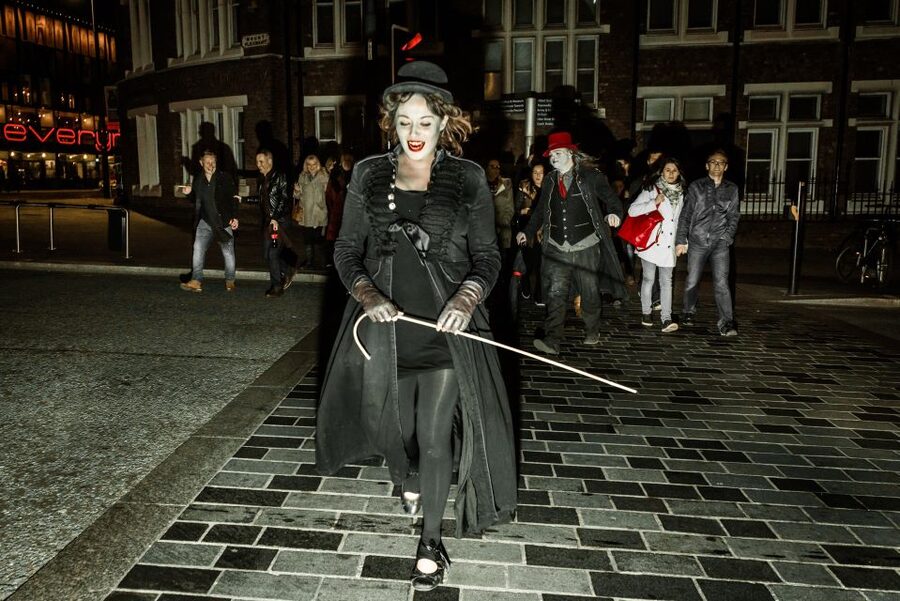
Liverpool’s dark side comes alive on Hope Street, where theatrical guides lead you from a famous pub to two great cathedrals, then into the old cemetery at St James’ Gardens. The tour mixes true local history with ghost stories, character acting, sound effects, and plenty of banter.
I like the strong sense of place: you walk through real streets tied to John Lennon, Rodney Street, the Wellington Rooms, and Liverpool’s two cathedrals. I also like the value. At $26 for 90 minutes, you get a guided city walk and a small evening show in one. The main caution is that this is more funny and theatrical than genuinely frightening, and the route is not suitable for wheelchair users.
The five details that shape the evening
- Two cathedrals on one short route: See the Metropolitan Cathedral and Liverpool Cathedral while learning the darker stories attached to Hope Street.
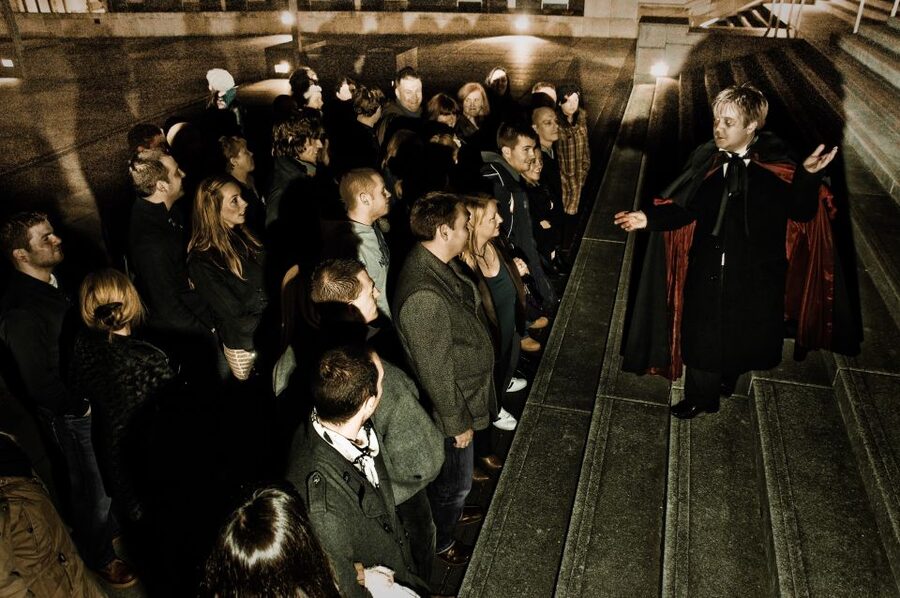
- A theatrical cast, not a standard guide: Characters such as Chilla Black, Meryl Creep, Chiller Black, and Indiana Bones bring jokes, acting, sound effects, and surprise moments.
- A cemetery finale: The walk ends at St James’ Gardens, where about 58,000 people are buried.
- Local stories beyond ghost lore: Hear about the Black Death, John Lennon’s former home, the Wellington Rooms, and Hitler’s brother hiding in Liverpool.
- Good rainy-night entertainment: The route continues in poor weather, so proper shoes and a waterproof layer matter.
- A social, interactive format: The guides involve the group, respond to passersby, and include solo visitors, families, and local residents.
Hope Street begins at the Philharmonic Pub
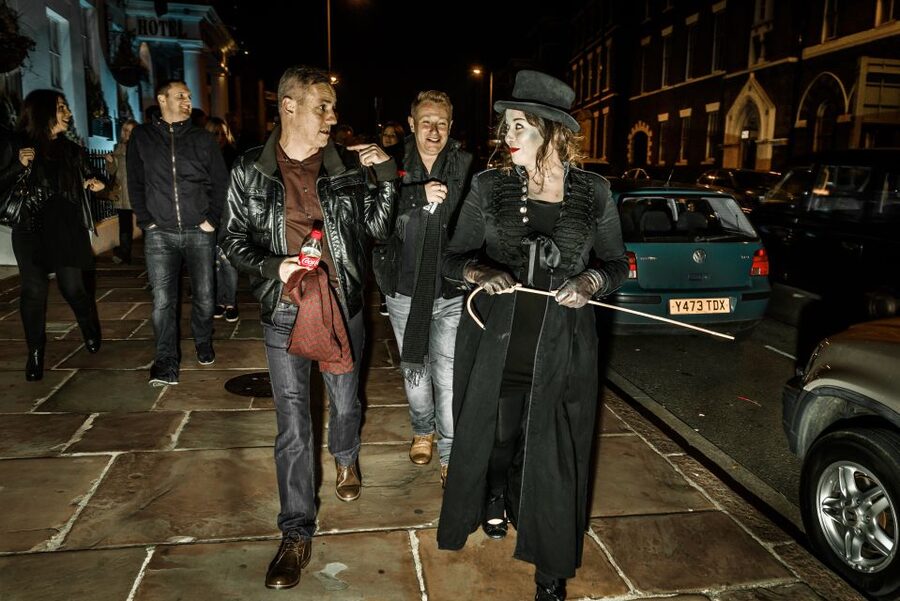
Your meeting point is outside the Philharmonic Dining Rooms, usually known simply as the Philharmonic Pub, on Hope Street. This is a fitting start. You are not gathering in a car park or outside a generic tour office. You begin beside one of Liverpool’s best-known old ale houses, in a part of the city already packed with music, theatre, grand buildings, and long memories.
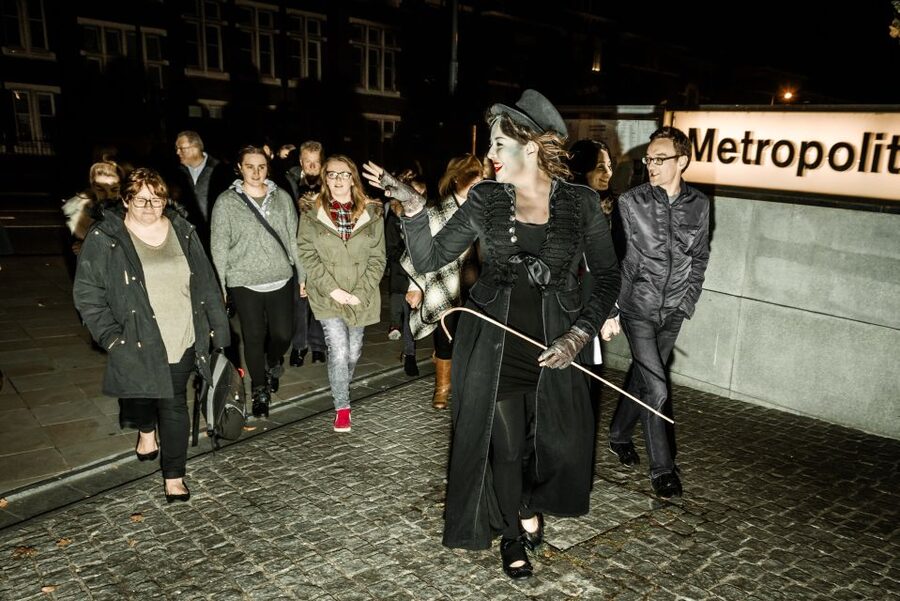
The guides set the tone quickly. The experience uses characters and full theatrical presentation, so you should expect performance rather than a quiet academic walk. Past guides have used names including Chilla Black, Meryl Creep, Chiller Black, and Indiana Bones. The exact cast can vary, but the basic approach is clear: the guides stay in character, tell stories with energy, and use comedy to make the darker material easier to enjoy.
That style suits Liverpool. The city’s humour is direct, warm, and quick with a comeback. The guides use that spirit to involve the group, remember where people come from, and react to people passing by. You are not expected to perform, but you may find yourself answering questions or joining the banter.
The meeting point is easy to recognize, but give yourself a little time to find it. Hope Street connects major landmarks, and the pub is close to the first part of the route. Wear shoes you can walk in for 90 minutes. High heels are not allowed, and uneven pavements, rain, and cemetery paths would make them a poor choice anyway.
More City Tours in Liverpool:
- Liverpool: “Blue Route” – City & Beatles Tour
★ 5.0 · 8,562 reviews - Liverpool: City & Beatles Tour with Live Guide & Live Music
★ 4.8 · 5,249 reviews - Liverpool City Sights Hop On Hop Off City Tour – 24hr Ticket
★ 4.5 · 2,555 reviews
Liverpool Metropolitan Cathedral brings the first shock of scale
The first major stop is Liverpool Metropolitan Cathedral. Its modern design gives the tour an early change of mood. Instead of beginning with a narrow lane or a theatrical jump scare, you meet one of the city’s most striking landmarks.
The cathedral helps place Liverpool in a broader story of faith, death, and public memory. The guides use the building as a backdrop for the darker side of the city, linking grand civic spaces with the people and events that shaped them. You get a proper look at one of Liverpool’s major buildings while the performance begins to build.
This is also a useful stop for anyone who has come to Liverpool mainly for music and football. The tour takes you into parts of the city that can be missed on a standard sightseeing walk. You are still close to the central area, but the subject matter changes the way you look at the streets.
The theatrical tone may not suit you if you want a quiet architectural tour. The guides are deliberately lively, and the jokes are part of the design. If you enjoy live performance, you will likely find the delivery more memorable than a list of dates and building names.
Wellington Rooms add a forgotten corner of Hope Street
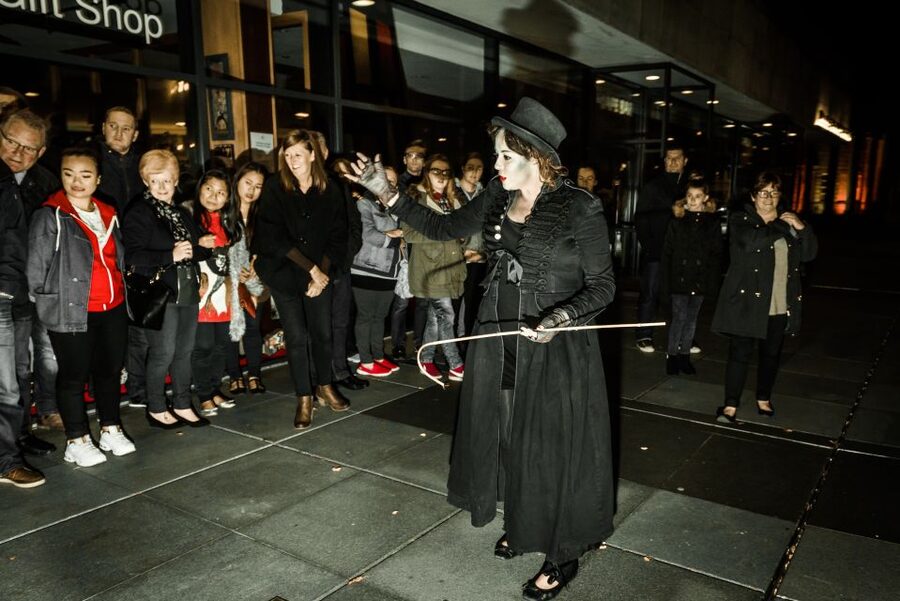
The walk continues to the Wellington Rooms. This stop gives the tour a different feel because it focuses on a building with a past that is easy to overlook while walking through the city.
The guides use the site to connect architecture with old Liverpool stories. Expect a mixture of historical detail and ghostly suggestion rather than a formal building inspection. The point is not simply to admire the structure. It is to think about the people who passed through it, the changing fortunes of the area, and the stories that survive after a building’s original purpose fades.
One of the tour’s strengths is this balance between famous landmarks and less obvious locations. You do not spend the whole 90 minutes hearing about places already printed on every tourist map. The Wellington Rooms and nearby streets help you see Hope Street as a historic route rather than just a road between two cathedrals.
Rodney Street connects grand homes with darker stories
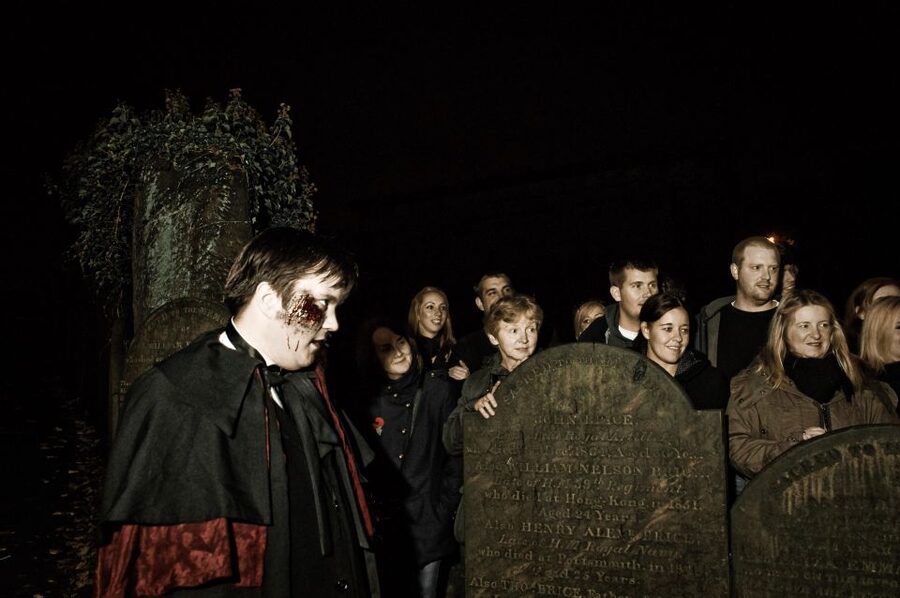
Rodney Street is another important section of the walk. Its conservation area gives you some of the route’s best architectural detail, with older buildings and a more residential character than the cathedral grounds.
Here the guides tell stories that link Liverpool’s physical streets with unusual personal histories. You will hear about the building where John Lennon lived for three years, a detail that adds a strong music connection to an otherwise ghost-focused walk. You will also hear about the place where Hitler’s brother hid to avoid conscription.
Those details make the route work for people who are not devoted ghost-story fans. I like that the tour does not rely only on spirits and scares. It uses local history, famous names, war-related stories, religion, disease, and old city life to create a fuller picture of Liverpool.
Rodney Street is also where the difference between a walking tour and a stage show becomes most obvious. The guides are actors as much as storytellers. They may pause for sound effects, adopt exaggerated voices, or play off the group. Several performances use two guides, and their back-and-forth gives the walk a quicker pace than a one-person talk.
Other after-dark walks in Liverpool:
- Liverpool Ghost Walking Tour
★ 5.0 · 862 reviews - Liverpool: St James’ Cemetery Historical Ghost Tour
★ 4.9 · 169 reviews - Liverpool Ghost Hunt: Paranormal Detective Self-Guided Game
★ 4.5 · 26 reviews - The World Famous Underground Ghost Tour
★ 4.5 · 9,272 reviews
Hope Street becomes the most haunted stretch
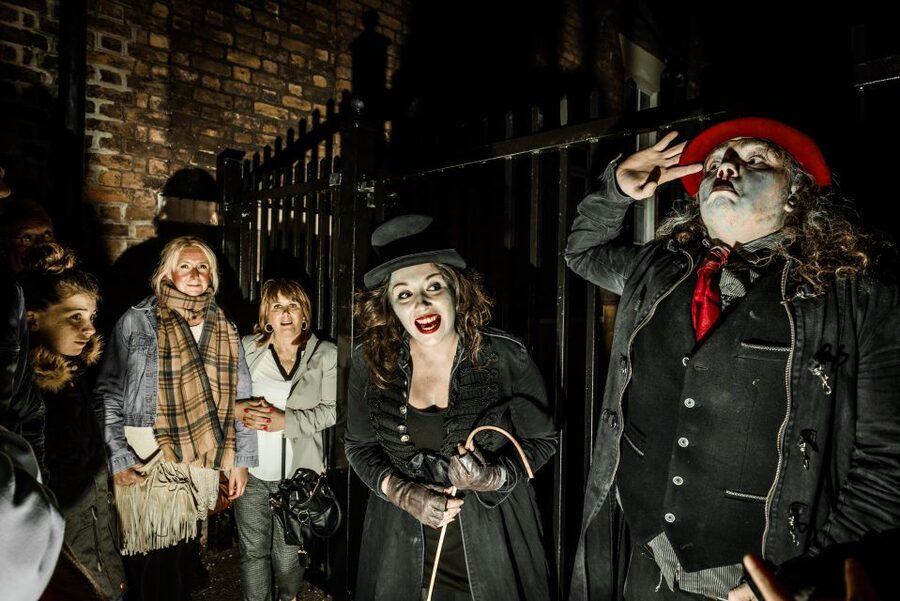
The route returns along Hope Street, described as the most haunted street in Northwest England. That claim is part of the tour’s setup, but the street itself does much of the work. With grand buildings, old institutions, and the two cathedrals nearby, it provides a suitably dramatic setting without needing elaborate props.
This is where you hear some of the tour’s best-known ghost material, including Liverpool’s most famous ghost story. The exact impact depends on the evening, the guide pairing, and your own tolerance for theatrical scares. Some moments are designed to make you jump. Others are played for laughs.
Do not book this expecting a relentlessly grim horror walk. The experience is often described as funnier than frightening, and that is an important point when deciding. The guides aim to make you laugh, keep you involved, and tell the stories clearly. The scares are part of a wider show, not the whole purpose.
The route is outdoors, so weather affects the mood. Rain can add atmosphere, but it can also make the pavement slippery and make it harder to hear. Bring weather-appropriate clothing. A hood or waterproof jacket is more useful than an umbrella, since you need to keep your hands free and stay close to the group.
Liverpool Cathedral gives the tour its grandest backdrop
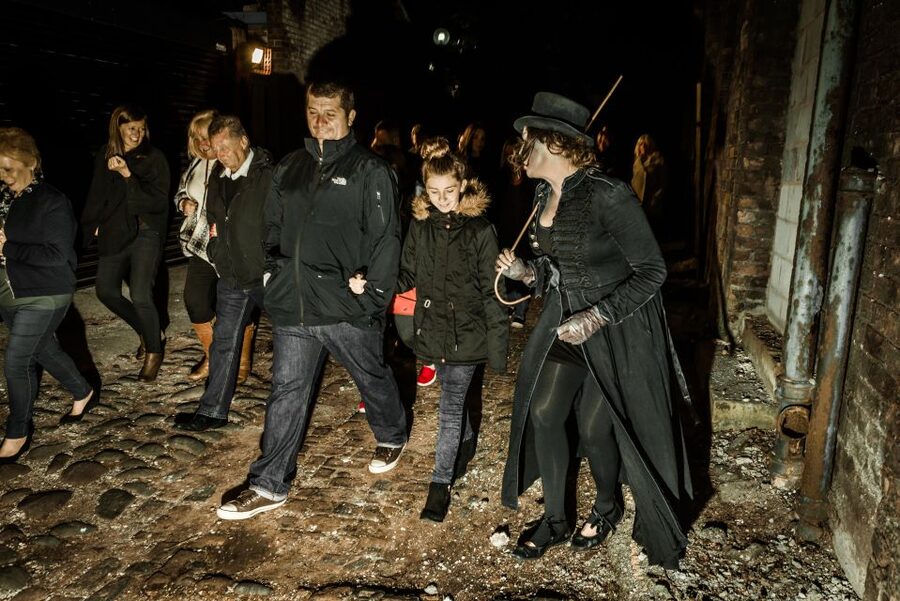
The Anglican Cathedral is the route’s largest and most dramatic landmark. Its Gothic design changes the mood again, especially as the tour moves toward the cemetery at its eastern end.
The cathedral matters for more than its appearance. It gives the guides a setting where stories about death, plague, burial, religion, and public memory feel tied to the place around you. You are not hearing ghost stories in an anonymous city square. You are walking beside one of Liverpool’s great religious buildings, on a route that has long been connected with the city’s dead.
The itinerary lists Liverpool Cathedral as a stop and as the finishing point, while the final cemetery section takes place in St James’ Gardens beside the cathedral. Treat the cathedral area as the end zone of the walk rather than expecting a return to the pub. The tour is one-way in feel, so plan the rest of your evening from Liverpool Cathedral.
If you want to explore the cathedral interior at length, this tour is not the right substitute for a dedicated cathedral visit. The focus is on the outdoor route, the storytelling, and the cemetery. Still, the cathedral gives you a memorable setting and helps the final part land with more weight.
St James’ Gardens closes the walk among 58,000 graves
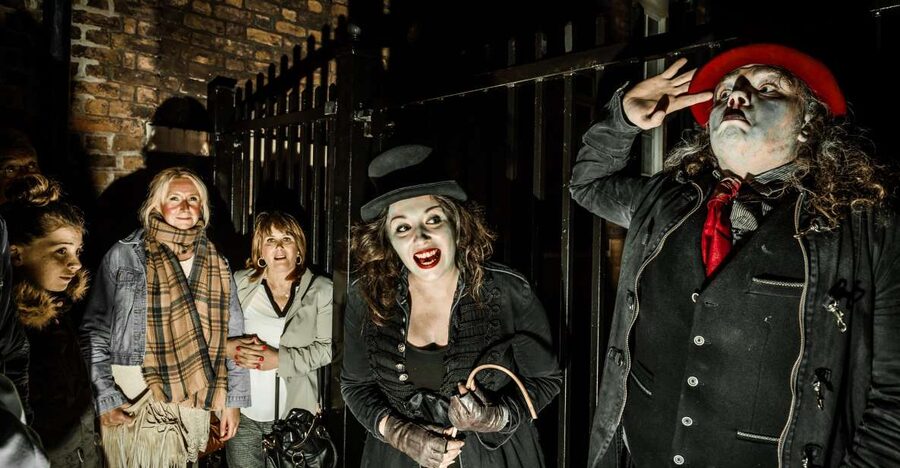
The final destination is St James’ Gardens, a former cemetery where about 58,000 souls are buried. This is the quietest and most atmospheric part of the experience. The path through the grounds gives the guides room to tell stories about Liverpool’s past, the Black Death, burial practices, and the people who lived through difficult periods.
The cemetery is a strong finish because it brings the tour back to real human history. Ghost stories can feel abstract when they are told in a busy street. Among old graves, the themes of disease, loss, and memory feel closer to the surface.
The guides may use coffins and personalized headstones as part of the theatrical presentation. These props add a visual touch without turning the walk into a full haunted-house attraction. The show remains rooted in the actual streets and cemetery around you.
This section may be less comfortable in bad weather. You are outside for the entire tour, and the cemetery setting can feel cold and damp after dark. Comfortable footwear and warm layers will make a real difference.
How theatrical is the experience?
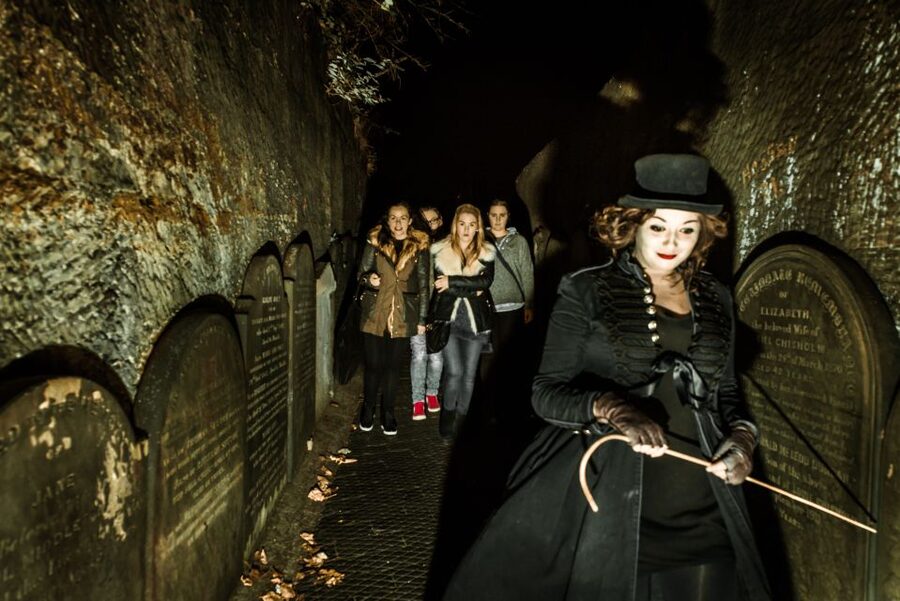
The strongest part of the tour is the acting. The guides stay in character for much of the walk, while still knowing when to break the mood for a joke or practical instruction. Their energy helps hold the group together, especially when people are standing outside in rain or waiting for a story to finish.
The two-guide format is particularly useful. One performer can tell the story while the other reacts, creates a distraction, or works the crowd. This gives the evening a rhythm closer to a small outdoor theatre performance than a standard city walk.
You can expect sound effects, sudden moments, crowd interaction, and playful exchanges with people passing on Hope Street. The guides also make an effort to keep everyone included and safe. That matters on a public street, where a group can spread out or lose sight of the performers.
The show is not polished in the formal theatre sense. Some of its charm comes from improvisation and from the way the guides respond to the people around them. If you prefer a fixed script and quiet delivery, this may feel too loud or playful. If you like character work and live comedy, it is a major reason to book.
Who will enjoy the tour most?
This is a good choice for:
- First-time Liverpool visitors who want a different introduction to the city.
- Repeat visitors who already know the central landmarks but want unusual stories.
- Families with older children who enjoy spooky themes and comedy.
- Couples and friends looking for a short evening activity.
- Solo visitors, since the guides actively involve the whole group.
- Local residents who want to see familiar streets in a new way.
The tour can work for children, but the material includes death, plague, graves, and ghosts. The supplied information includes families with children aged 10 and 11 and a 12-year-old, but every child is different. Use your own judgment.
It is less suitable if you want a serious historical lecture, a fully frightening horror event, or an accessible route for wheelchair users. Assistance dogs are allowed, but other pets are not.
Is $26 good value for 90 minutes?
At $26 per person, the price is fair for a 90-minute guided walk with live acting, props, two cathedrals, several historic streets, and a cemetery ending. You are paying for more than facts. You are also paying for the performance, preparation, timing, and interaction that turn a regular walk into an evening activity.
The value is strongest if you are already planning to visit Liverpool Cathedral or Hope Street. The tour gives you a reason to spend time in that area and adds stories you may not hear on a standard sightseeing route.
It is less attractive if you only want access to the cathedral interiors or a broad introduction to Liverpool. In that case, another city tour may cover more ground. This experience focuses tightly on Hope Street and the darker side of the city.
Free cancellation up to 24 hours before the start and the option to reserve now and pay later make it easier to fit into a changing itinerary. The tour is in English only, so you should be comfortable following fast spoken storytelling and jokes.
Practical advice before you go
Arrive at the Philharmonic Pub with comfortable shoes and clothing suited to the forecast. The route lasts 1.5 hours, and you will be outside throughout the walk.
Keep your group together. The guides work on public streets and may pause for crowd interaction, so the pace is not the same as a direct walk from one landmark to another.
Expect rain to change the mood, not cancel the fun. The performances continue in wet conditions, but clear hearing becomes more important. A waterproof jacket, warm layer, and shoes with good grip are the sensible combination.
The tour finishes at Liverpool Cathedral and St James’ Gardens, not back at the Philharmonic Pub. That makes it easy to continue your evening near the cathedral, but you should plan your route onward before the tour begins.
Should you book the Liverpool Haunted History Tour?
Book it if you want Liverpool history delivered with jokes, character acting, light scares, and a strong local setting. The combination of Hope Street, both cathedrals, Rodney Street, John Lennon’s former home, plague stories, and St James’ Gardens gives you plenty of substance beneath the spooky theme.
I would choose it for a first Liverpool weekend if you enjoy live performance and want something beyond the usual Beatles attractions. I would also recommend it to repeat visitors, since the route covers details that are easy to miss even after several trips to the city.
Skip it if you need a wheelchair-accessible route, dislike theatrical audience interaction, or want a genuinely terrifying night. For everyone else, the high 4.9 rating from 404 bookings makes sense: the tour’s real strength is the guides, who turn a short walk through familiar streets into an entertaining local show.
FAQ
Where does the Liverpool Haunted History Tour start?
It starts outside the Philharmonic Dining Rooms, also known as the Philharmonic Pub, on Hope Street in Liverpool.
Where does the tour finish?
The tour finishes at Liverpool Cathedral, with the final section taking place in St James’ Gardens.
How long does the tour last?
The tour lasts 1.5 hours.
How much does the tour cost?
The listed price is $26 per person.
What language is the tour in?
The live guided tour is conducted in English.
What landmarks does the tour visit?
The route includes Liverpool Metropolitan Cathedral, the Wellington Rooms, Rodney Street, Hope Street, Liverpool Cathedral, and St James’ Gardens.
Is the tour suitable for wheelchair users?
No. The tour is listed as not suitable for wheelchair users.
What should I bring?
Bring comfortable shoes and clothing suitable for the weather. High heels are not allowed.
Can I cancel the booking?
You can cancel up to 24 hours before the tour for a full refund. You can also reserve now and pay later.
More Historical Tours in Liverpool
- A Walk Through Time: History of Liverpool Walking Tour
★ 5.0 · 911 reviews - Best Of Liverpool Heritage, History & Culture Guided Walking Tour
★ 5.0 · 539 reviews - History Guided Tour of Liverpool and the Beatles
★ 5.0 · 408 reviews - Liverpool Hidden History and Dead House Evening Walking Tour
★ 5.0 · 200 reviews
Just added in Liverpool
- Best of Liverpool Sightseeing Tour by Private Taxi★ 5.0 · 41 reviews
- Liverpool Music Icons Tour with Nasher from Frankie Goes to Hollywood★ 5.0 · 39 reviews
- Liverpool: River Cruise & Sightseeing Bus Tour★ 4.5 · 495 reviews
- Reel Tours: Liverpool Film Location Walking Tour★ 5.0 · 188 reviews
- Best Of Liverpool Heritage, History & Culture Guided Walking Tour★ 5.0 · 539 reviews
- LIverpool beer or prosecco bike tour★ 5.0 · 146 reviews
- Liverpool with a Local: Walking Tour (10:30am)★ 5.0 · 80 reviews
- History Guided Tour of Liverpool and the Beatles★ 5.0 · 408 reviews
Ghost and Vault Tours, compared.
Underground Vaults Walking Tour in Edinburgh Old Town
Read our review →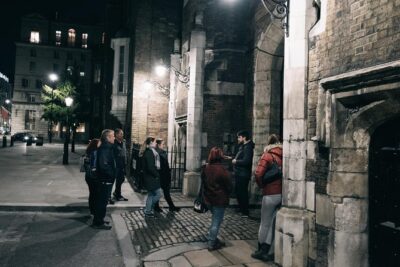
Ghost, Ghouls and Gallows Tour : Guided Tour with Boat Ride
Read our review →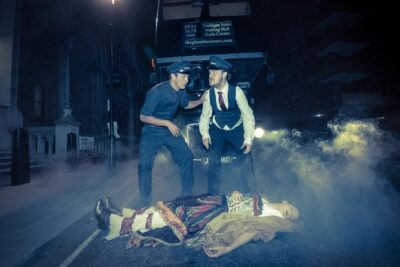
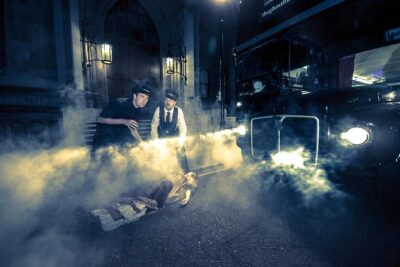
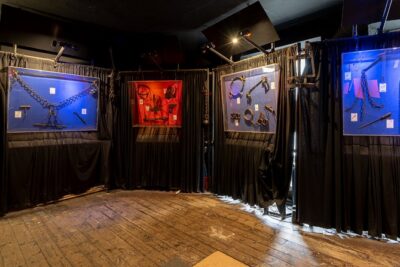
Multi-Sensory Haunted Underground Vaults Tour in Edinburgh
Read our review →Browse the lists this tour appears in