
Reviewed · WALKING TOURS
A Walk Through Time: History of Liverpool Walking Tour
Liverpool’s story comes into focus when you walk it in order, from the medieval settlement of 1207 to the docks that helped make this one of the world’s major ports. This tour connects the Three Graces, Old Dock, Castle Street, and Royal Albert Dock in one brisk route, with local historian John often leading the way.
I like the clear sense of cause and effect: the old church, town hall, cotton exchange, and docks are not isolated sights, but parts of one long story. I also like the honest treatment of Liverpool’s past, including its role in Atlantic trade and the transatlantic slave trade. The main drawback is pace. Nearly two hours of history is packed into a compact walk, and one guide has been noted for speaking quickly. Cold, wind, and traffic noise can also make listening harder.
Key points to know before you book
- Liverpool’s story unfolds in order: You move from the medieval town of 1207 to its Georgian growth, commercial power, and modern city center.
- The docks are the main theme: Old Dock and Royal Albert Dock explain how Liverpool became a global port.
- John is a frequent guide: He brings strong local knowledge, humor, and enthusiasm, while Julio has also led the walk.
- The tour faces Liverpool’s difficult past: Atlantic trade and slavery are treated as part of the city’s economic story, not skipped over.
- The route is mostly outdoors: Wear comfortable shoes and a warm layer, especially when wind comes off the Mersey.
- The group can reach 40 people: A smaller group is possible, but the experience is not guaranteed to be intimate.
Starting beneath the Three Graces
Meet at the Royal Liver Building on Pier Head, Liverpool’s most recognizable waterfront address. The building forms part of the Three Graces, along with the Cunard Building and the Port of Liverpool Building, so you begin with one of the city’s strongest visual introductions.
The opening talk lasts about 10 minutes. It sets up Liverpool’s waterfront, its maritime connections, and the way the city’s fortunes grew through ocean trade. You do not go inside the Royal Liver Building, and admission is not included, but the exterior gives the guide a useful stage for explaining Liverpool’s public image and commercial ambition.
I like this start because it puts you in the middle of the city’s grandest setting before moving into less obvious corners. Arrive ready to listen from the first minute. The waterfront can be noisy, and a clear position near the guide matters in a group that may contain as many as 40 people.
More Walking Tours in Liverpool:
- Liverpool Ghost Walking Tour
★ 5.0 · 862 reviews - Beatles Famous Walking Tour Of Liverpool- Fully Guided
★ 5.0 · 751 reviews - Downtown Liverpool Walking Tour – In Spanish
★ 5.0 · 591 reviews
Finding medieval Liverpool at the parish church gardens
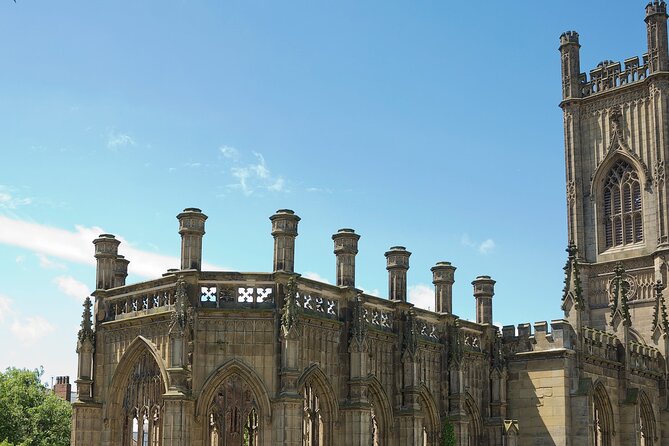
The walk crosses the Strand to Liverpool Parish Church Gardens, the site associated with the old St. Nicholas’ Church. This is where the tour reaches back to Liverpool’s medieval beginnings and the town’s creation in 1207.
The stop lasts about 15 minutes and is free. Its value is not a grand interior or a long museum visit. Instead, you get physical evidence of the early town and an explanation of why St. Nicholas, patron saint of sailors, was an apt name for a church in a port city.
This stop helps correct a common first impression. Liverpool can look like a Victorian and industrial city, but its story begins much earlier. If you want only famous buildings, this may feel understated. If you want to understand how the city started, it is one of the most useful stops.
Old Hall Street and the commercial rise
Old Hall Street carries the group toward Liverpool’s early civic and trading center. The route passes Grade I listed buildings and the former Cotton Exchange, where goods and commercial deals connected Liverpool to markets around the world.
The guide uses this section to explain how Liverpool grew after receiving its town charter and how its port became a major force in the cotton trade. By the late 18th century, Liverpool had overtaken London in that trade. The stop is only about 10 minutes, so expect a concentrated talk rather than time to inspect every building.
This is also where the tour addresses Liverpool’s involvement in Atlantic trade and the transatlantic slave trade. That subject is essential to understanding the city’s wealth, and the experience does not treat the past as a simple success story. You should expect serious material alongside the guide’s lighter local humor.
Liverpool Town Hall and Georgian power
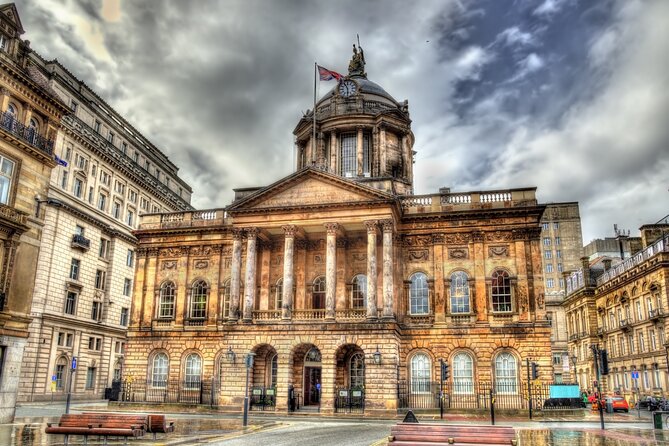
Liverpool Town Hall is another short stop, about 10 minutes. Built in 1749, it is presented as one of the finest surviving Georgian buildings in Britain and as a symbol of the city’s commercial confidence.
You do not receive admission to the building, so the focus is on the exterior and the story around it. The guide explains how Liverpool developed into a port city and center of commerce. This works well after Old Hall Street, since you can see how trade created the need for civic buildings that projected authority and wealth.
The town hall is easy to pass without much thought during an ordinary city walk. Here, the architectural detail becomes part of a larger explanation of who controlled the city and how its success was displayed.
More walks around Liverpool:
- Magical London: Harry Potter Guided Walking Tour
★ 4.7 · 22,044 reviews - Underground Vaults Walking Tour in Edinburgh Old Town
★ 4.5 · 8,506 reviews - London: The Original Jack the Ripper Walking Tour
★ 4.7 · 7,833 reviews - Oxford University Walking Tour With University Alumni Guide
★ 5.0 · 6,905 reviews
Castle Street, the lost castle, and the Queen Victoria Monument
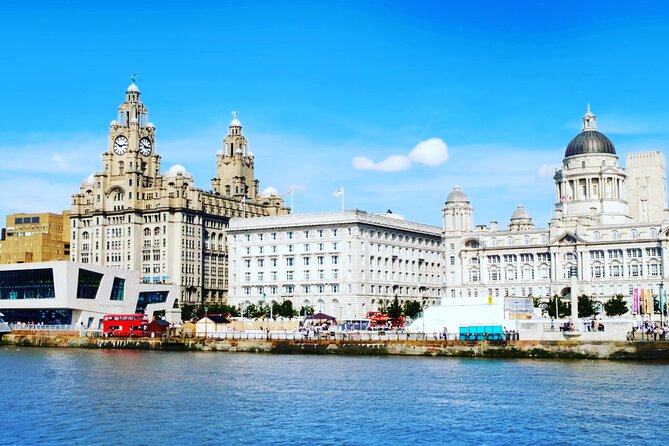
Castle Street provides one of the clearest visual changes along the route. Its buildings reflect Liverpool’s later development, while the name points back to Liverpool Castle and an earlier stage of the city’s story.
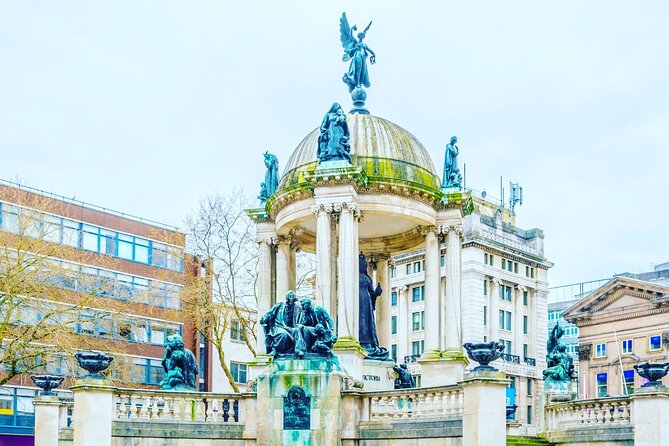
The walk spends about 15 minutes here, followed by about 10 minutes at the Queen Victoria Monument. Together, these stops explain Liverpool’s growth from a small medieval settlement into a major port by 1800.
The Queen Victoria Monument is also listed as the end point at One Derby Square, at the bottom of Castle Street. The route description also places a final talk about the Three Graces at the end, so I would confirm the exact finishing point on the day. Either location is central and useful for reaching Liverpool’s main sights.
Liverpool ONE and the city after the docks
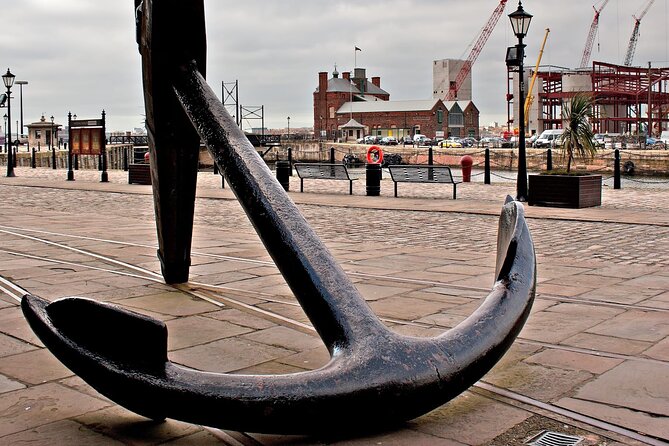
Liverpool ONE brings the walk into the present. This modern shopping and leisure district can feel very different from the old port buildings and Georgian streets, but that contrast is useful.
The guided section lasts about 10 minutes and covers the shopping destination, its stores, and its attractions. Do not expect a shopping trip or free time built into the tour. The purpose is to show how central Liverpool has been reshaped for modern city life.
I find this short passage valuable because it prevents the tour from becoming a museum piece about vanished commerce. Liverpool’s economy changed, and the city had to change with it. The modern streets make that point quickly.
The Old Dock, where Liverpool changed course
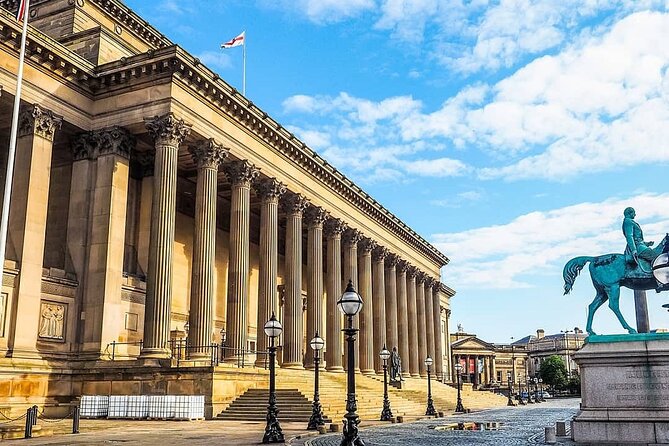
The Old Dock is one of the most important stops. Built in 1715, it was the first commercial wet dock on the planet. The guide explains how this dock allowed ships to load and unload more efficiently and helped Liverpool become one of the world’s leading ports.
The stop lasts about 10 minutes and is free. Much of the original structure is not presented as a vast open dock basin, so this is mainly an explanation stop. Pay close attention to how the guide links the dock’s design to Liverpool’s later port success.
This is the point where the tour’s earlier discussions of trade become easier to grasp. The medieval town and commercial streets laid the groundwork, but new dock technology gave Liverpool a major advantage. You leave with a clearer idea of how a practical engineering decision could reshape a city.
Royal Albert Dock and the 19th-century port
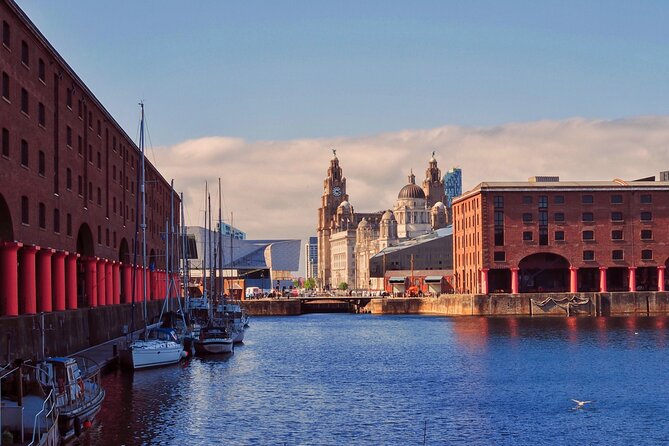
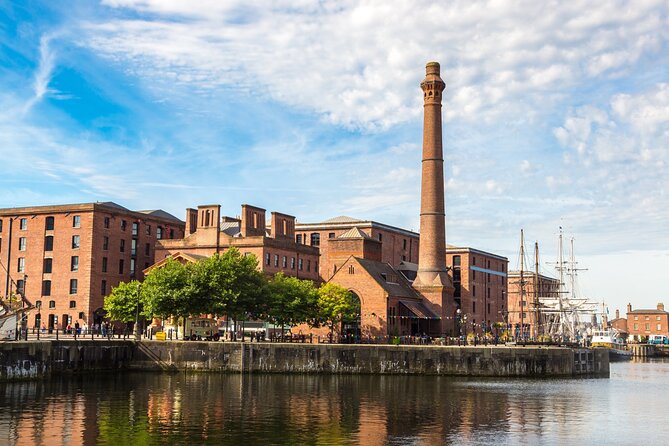
The route then reaches Royal Albert Dock, built in 1846. Its warehouses and waterfront setting offer a strong visual finish to the story of Liverpool’s 19th-century commercial power.
The talk covers the dock’s role in the center of Liverpool’s commerce and its connection to the First and Second World Wars. You get about 10 minutes here, enough for a focused account but not a full visit to the dock’s museums or galleries.
This is one of the best places to appreciate the scale of Liverpool’s port past. The buildings are imposing, but the guide gives them a practical purpose: they stored, moved, and protected goods that tied Liverpool to the wider world. The area is also a useful place to continue exploring after the walk.
The final look at the waterfront
The listed route returns to the Three Graces for a final five-minute talk about the waterfront. As noted, the separate meeting information places the end at the Queen Victoria Monument, so check the guide’s instructions before setting plans around the exact finish.
The final waterfront explanation ties together the buildings you saw at the start with the docks and trading streets along the way. It is a short close rather than a separate attraction visit. You should finish with a working outline of Liverpool’s development, not a long pause at each landmark.
What the guiding is like
John receives the strongest praise in the supplied material. His style is described as passionate, friendly, funny, and packed with facts. He has led walks in difficult weather while keeping the group engaged, and he is willing to answer questions. Julio has also been described as engaging and effective, particularly for giving people a useful base for the rest of their time in Liverpool.
The guide’s subject knowledge is the tour’s main strength. The content ranges from medieval origins to cotton, docks, civic buildings, maritime trade, and war. One local participant with decades of experience in the city still learned new details, which suggests the walk has more substance than a basic introductory stroll.
The trade-off is information density. One person found the guide too fast, and that is a fair concern. If you have hearing difficulty, stand near the front and ask the guide to repeat anything lost to traffic or wind. The walk is designed for most participants, but it is not a slow, quiet seminar.
Price, timing, and practical value
At $27.74 per person, the tour is good value if you want a history framework before exploring Liverpool on your own. In 1 hour and 50 minutes, it covers a wide area and several major landmarks without charging separate entry fees. The price does not include admission to the Royal Liver Building or Liverpool Town Hall, but neither building is treated as a full interior visit.
The tour is offered in English and uses a mobile ticket. It is near public transportation, service animals are allowed, and most people can take part. The maximum group size is 40, so do not book expecting a private guide. Smaller groups can happen, and one person specifically enjoyed the more personal feel of a small group, but the published limit is much larger.
The rating is 4.8 from 911 ratings, with 97 percent recommending the experience. That high score matches the tour’s clear strengths: a strong route, an engaging local guide, and unusually detailed coverage for a short city walk. The late cancellation reports are worth noting, however. Two people were told only 10 to 15 minutes before starting that the walk would not go ahead, including one person already at the meeting point. The operator provided a refund and an alternative date in those cases, but a last-minute cancellation can still disrupt a tightly planned day.
Free cancellation is available up to 24 hours before the start time. Changes or cancellations inside that window are not refundable, and poor weather may lead to a new date or a full refund. Liverpool’s waterfront is exposed, so bring a warm jacket and wear comfortable shoes.
Who should book this Liverpool walk?
I would choose this tour for a first visit, especially if you want to understand Liverpool beyond the Beatles. It suits anyone interested in port cities, architecture, trade, maritime history, or the forces that shaped modern Britain.
It is also a good choice for local residents who want a stronger sense of place. The content goes beyond dates and names, linking streets, docks, and buildings into one story. Families with older children may enjoy it, though the amount of historical detail and the brisk delivery may test younger attention spans.
I would skip it if you want a relaxed photo walk, long interior visits, or a small private group. The route is outdoor-focused, the group may be large, and the guide covers a lot in less than two hours.
Should you book it?
Book it if you want Liverpool explained rather than simply pointed out. The best parts are the medieval starting point, the candid account of Atlantic trade, and the Old Dock section, where the city’s rise becomes easy to follow.
Plan for wind, noise, and a fast stream of information. Stand close to the guide, wear a warm layer, and leave some flexibility in your schedule in case weather or an unexpected cancellation affects the walk. For about $28, this is a useful, well-priced introduction to the city’s port-driven story.
FAQ
Where does the tour start?
It starts at the Liver Building, Pier Head, Liverpool L3 1HU, UK.
Where does the tour end?
The meeting information gives the Queen Victoria Monument at One Derby Square, James Street, Liverpool L2 1AB, as the end point. The route description also includes a final stop at the Three Graces, so confirm the exact finishing point with the guide.
How long does the walking tour last?
The tour lasts approximately 1 hour and 50 minutes.
How much does the tour cost?
The listed price is $27.74 per person.
What language is the tour offered in?
The tour is offered in English.
Is the Royal Liver Building admission included?
No. The Royal Liver Building is visited from outside, and admission is not included.
Is Liverpool Town Hall admission included?
No. The tour discusses Liverpool Town Hall from the outside, and admission is not included.
How large can the group be?
The maximum group size is 40 people.
Can I cancel for a full refund?
Yes. You can cancel at least 24 hours before the start time for a full refund. Cancellations made less than 24 hours before the start time are not refundable.
More Historical Tours in Liverpool
- London Small Group Tour of Historical Pubs
★ 5.0 · 10,422 reviews - A History of Terror – Belfast City Centre Walking Tour
★ 5.0 · 2,883 reviews - Old Town Walking Tour History and Tales in Edinburgh
★ 5.0 · 2,168 reviews - Soho Music & Historic Pubs Tour
★ 5.0 · 1,993 reviews
Just added in Liverpool
- Downtown Liverpool Walking Tour – In Spanish★ 5.0 · 591 reviews
- Liverpool City Explorer 24 hour hop-on hop-off Bus Tour★ 4.6 · 584 reviews
- Liverpool: British Music Experience Ticket★ 4.7 · 686 reviews
- North Wales Adventure Sightseeing Day Trip from Liverpool★ 5.0 · 678 reviews
- Beatles Famous Walking Tour Of Liverpool- Fully Guided★ 5.0 · 751 reviews
- Ciy Explorer: Hop On Hop Off Liverpool Sightseeing Bus Tour★ 5.0 · 915 reviews
- Liverpool Ghost Walking Tour★ 5.0 · 862 reviews
- Liverpool: Beats Tours★ 4.5 · 799 reviews
Walking Tours, compared.

Magical London: Harry Potter Guided Walking Tour
Read our review →
Underground Vaults Walking Tour in Edinburgh Old Town
Read our review →
Oxford University Walking Tour With University Alumni Guide
Read our review →
Edinburgh Castle: Guided Walking Tour with Entry Ticket
Read our review →
Edinburgh Castle Guided Walking Tour in English
Read our review →
Tour for Muggles The Ultimate Harry Potter Walking Tour in London
Read our review →
University and City Walking Tour with Alumni Guide
Read our review →Browse the lists this tour appears in