
Reviewed · MUSEUMS
London: Natural History Museum Guided Tour
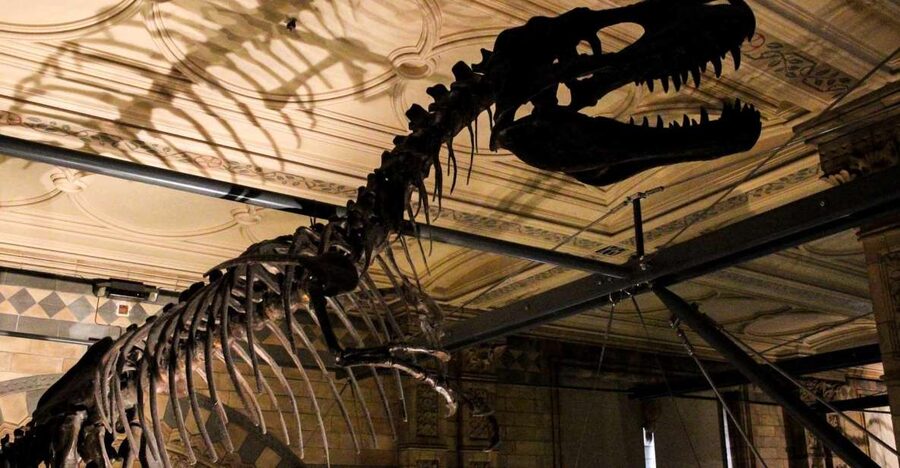
London’s Natural History Museum is the kind of place where you can walk in for one famous dinosaur and leave thinking about volcanoes, evolution, human ancestors, and a supposedly cursed gemstone. This 2.5-hour guided tour gives you a sensible route through a collection of 80 million specimens, with an art historian explaining why the major objects matter.
I like the focus on the museum’s best stories, especially the Dodo skeleton and rare Archaeopteryx. I also like the family-friendly guiding style reported from people who toured with Ivo, Matilda, Sacha, Luis, and Guy V. The main drawback is simple: two and a half hours can only sample a museum this large, and temporary exhibitions are not included.
Key points to know before booking
- See the museum’s headline objects: Iguanodon teeth, Sophie the Stegosaurus, a Dodo skeleton, Archaeopteryx, and a first edition of Darwin’s On the Origin of Species.
- Expect a story-led route: The tour moves from Earth’s beginnings toward human origins rather than treating the galleries as a random collection of displays.
- Good for families: Guides have been praised for keeping children aged 8, 11, 13, and 16 involved while still giving adults plenty to think about.
- Choose your group carefully: Private tours are available, while shared groups have a maximum of eight people and need at least two bookings to run.
- Pack light: Large bags, suitcases, and luggage are not allowed. A handbag or small, thin backpack is the safer choice.
- Allow extra museum time: The guided visit highlights key rooms, but you will need a separate visit or additional time for the exhibits not covered.
Why a guide helps in a museum this large
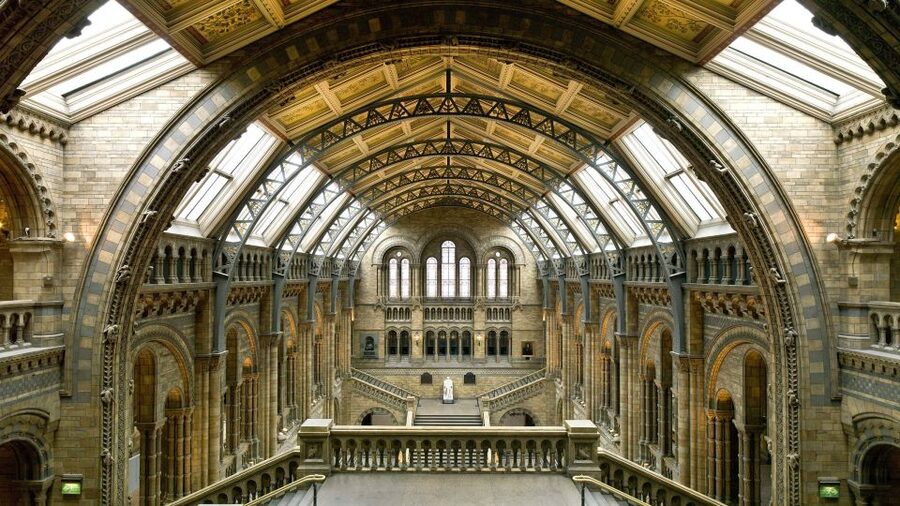
The Natural History Museum is not a place you can fully understand by wandering from label to label. Its displays cover a huge sweep of time and subject matter, and the most interesting objects are not always the largest ones.
A guide gives you a route and a reason to care. Instead of seeing a fossil as an old tooth in a case, you can connect it to the animals that once lived here and to the changing picture of how species developed. Instead of viewing the Pompeii casts as dramatic figures, you can place them within the sudden volcanic disaster that destroyed the city.
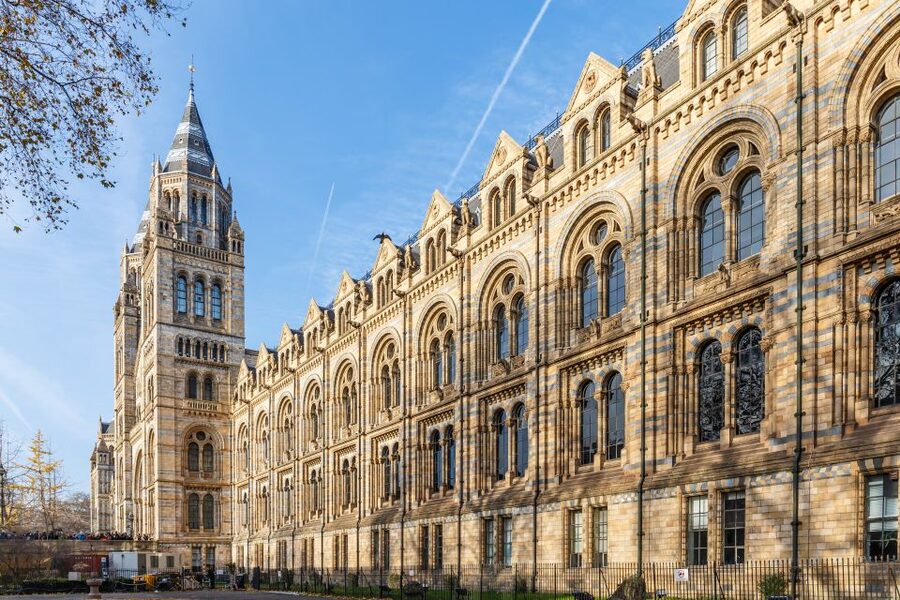
The tour is led in English by a professional art historian. That background is useful because the museum is not just a science display. The building, its objects, and the way they are presented all tell stories about how people have tried to classify the natural world.
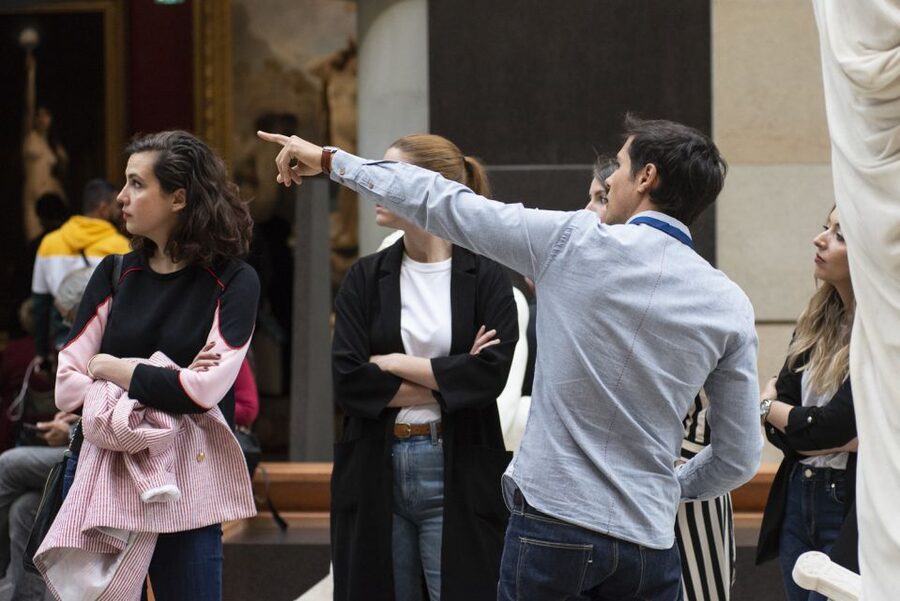
The strongest guiding style here seems to be conversational rather than lecture-like. Ivo has been praised for involving both adults and children and for using funny anecdotes without losing the larger scientific questions. Matilda has been noted for explaining major objects clearly to both a parent and a 13-year-old. Sacha’s calm manner and clear explanations have also made complex subjects easier to follow.
Your guide may be someone else, since names are not guaranteed. Still, the repeated pattern is useful: this tour suits you if you want interpretation, questions, and a clear path through the museum instead of simply receiving an entrance ticket.
More Museum Tours in London:
- Tower of London and Crown Jewels Exhibition Ticket
★ 4.5 · 6,677 reviews - London: Chelsea Football Club Stadium and Museum Tour
★ 4.8 · 4,576 reviews - Chelsea FC Stadium Tours and Museum
★ 5.0 · 1,908 reviews
The opening journey from Earth to human origins
The central idea is a journey through the history of life. You begin with the origins of Earth and move toward the arrival of our own species, using selected specimens to explain major changes along the way.
That structure gives the visit shape. You are not expected to remember every date or scientific term. Instead, you get a sequence of big ideas: ancient life, extinction, adaptation, evolution, natural disasters, and the human urge to make sense of nature.
The route takes you through a maze of galleries, but a guide helps you avoid spending the first hour deciding which direction to take. This matters even more on a first visit. The building contains far more than any short tour can cover, so a planned route protects your time.
There is some walking, though the activity describes it as a small amount. You should still wear sensible shoes and expect to remain on your feet for much of the 2.5 hours. If you want to study every label or stop for long photographs, the pace may feel brisk.
Iguanodon teeth and the evidence behind dinosaurs
The Iguanodon teeth offer a good example of how the tour turns a small object into a larger story. Teeth can reveal what an animal ate and how it lived, giving you a more practical connection to prehistoric creatures than a simple name on a timeline.
This is also where a guide can help younger visitors. Children often respond to teeth, claws, and giant bones before they care about scientific classification. A skilled explanation can use that first reaction to introduce the evidence scientists use to reconstruct extinct animals.
The museum also introduces Sophie the Stegosaurus, one of its memorable dinosaur characters. The appeal is obvious, but the object is more than a photo stop. It gives the tour a concrete way to discuss the animals that lived long before humans and the limits of what fossils can tell us.
If you are visiting with children, keep the family group together and encourage questions. Several guides, including Ivo, Guy V, and Anthony in past tours, have been especially good at making children feel included rather than asking them to listen quietly at the edge of an adult lecture.
Archaeopteryx and the changing story of evolution
The rare Archaeopteryx is one of the tour’s most important scientific highlights. It is often described as a link between dinosaurs and birds, though the useful lesson is broader than that label.
You get to consider how scientists compare fossils and living animals, and how new evidence can change old explanations. The object is valuable because it sits at the point where familiar categories become less tidy. Is it a dinosaur, a bird, or evidence of features shared by both? A guide can explain why those questions matter without turning the stop into a technical seminar.
This leads naturally to Darwin and a first edition of On the Origin of Species. Seeing the book gives evolutionary theory a physical setting. It reminds you that major scientific ideas were written, debated, and revised by people working with limited evidence compared with what researchers can examine today.
I like this pairing of fossil and book. One shows evidence in the ground, while the other shows a human attempt to interpret that evidence. If you have children or teenagers with you, it is a good place to connect museum displays with the larger questions taught in school.
More museums and galleries in London:
- London: British Museum Guided Tour
★ 4.3 · 1,182 reviews - Official tickets: Moco Modern & Contemporary Art Museum
★ 4.5 · 1,157 reviews - British Museum London Guided Tour Semi-Private 8ppl Max
★ 5.0 · 984 reviews - London: Jack the Ripper Museum Tickets
★ 4.2 · 894 reviews
The Dodo skeleton and extinction
The Dodo skeleton is another key stop. It brings extinction out of the realm of abstract numbers and gives it a recognizable form.
A Dodo can prompt questions about how species disappear, what human activity has to do with that process, and how much of the past can be recovered from remains. The tour does not need to turn the subject into a gloomy warning. The object is powerful because it makes the cost of losing a species easy to understand.
This is one of the points where the guide’s pacing matters. You can look closely at the skeleton, then move on before the tour gets bogged down in a single display. If extinction is a particular interest, make a note of the surrounding galleries and return after the guided route.
The shared group limit of eight is helpful here. A small party can usually gather around a display more easily than a large crowd, and children have a better chance of asking questions. A private option gives you still more control, especially if your family has very different ages and attention spans.
Pompeii casts and the force of a volcanic disaster
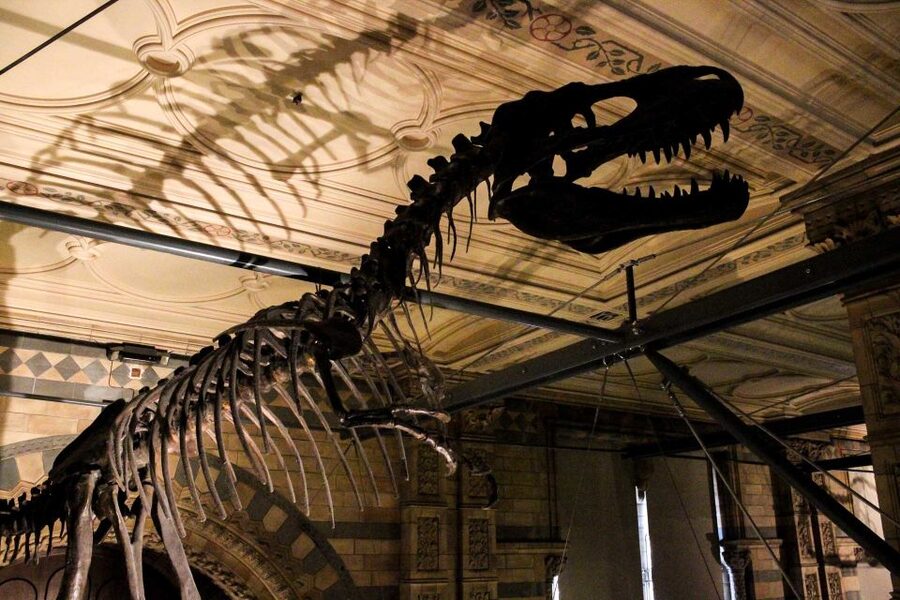
The Pompeii casts change the mood of the tour. These are casts of people caught in the volcanic disaster that destroyed Pompeii, and they bring sudden human drama into a visit otherwise filled with fossils and specimens.
The most useful way to view them is with care. They are not simply shocking objects. They show how quickly a natural event can overwhelm a settled community, while also raising questions about how archaeologists recover information from destruction.
The stop gives the tour a strong link between natural science and human civilization. You move from creatures preserved in ancient rock to people caught in a disaster that still shapes our understanding of Roman life.
Some parts of the museum may be busy, and security measures can create lines even when a tour includes skip-the-ticket-line access. Do not expect every moment to feel private or quiet. The guide can explain the display, but you may need patience when other museum visitors gather nearby.
The Cursed Amethyst and the Giant Sequoia slice
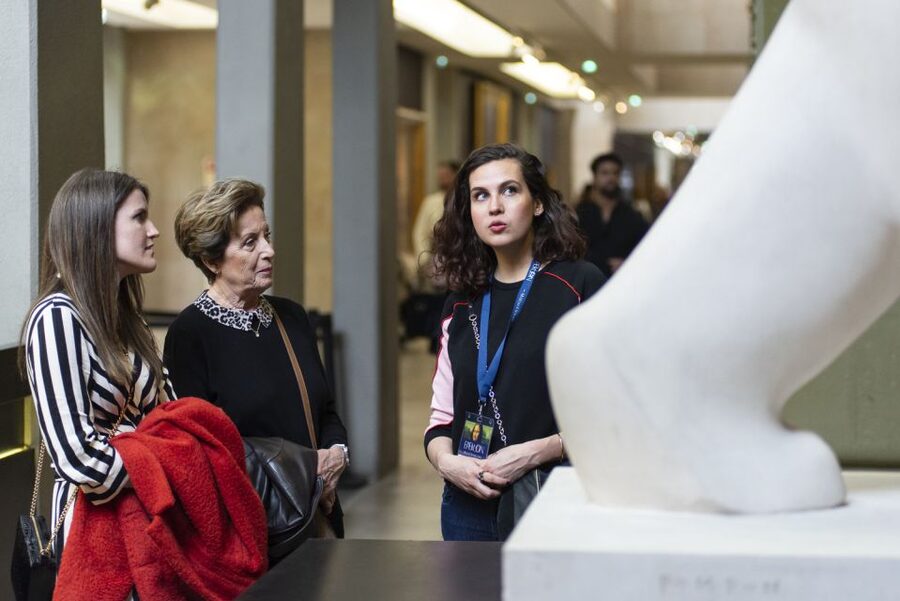
The Cursed Amethyst is the tour’s strange little change of pace. Its story adds mystery to a route that otherwise leans on fossils, geology, and evolution.
The appeal is not that you need to believe the curse. It is the chance to see how people attach legends and fears to natural objects. A guide can separate the physical qualities of the stone from the stories built around it, which makes the stop entertaining without treating folklore as fact.
Then comes the enormous slice of a Giant Sequoia tree. Its size gives you an immediate sense of age and scale. A fossil can feel impossibly distant, but a tree connects geological time to something more familiar: growth rings, wood, and a living organism.
These two displays work well together. One shows how humans create stories around objects, while the other shows nature’s own record of time. The tour is at its best when it shifts between wonder, evidence, and a little mystery.
What the 2.5-hour timing really gives you
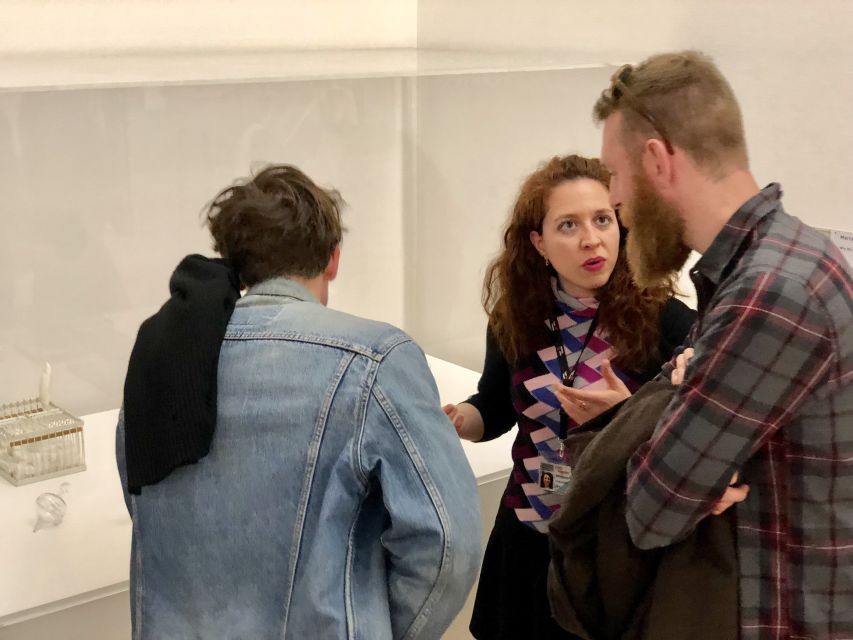
Two and a half hours is a useful compromise. It is long enough to cover the major highlights without asking most people to spend an entire day listening to explanations.
The time is especially suitable for a first visit. Families can get the big picture before attention starts to fade, and adults can return to favorite galleries afterward. Past bookings have included families of five and six, couples, and small groups who appreciated a clear route.
The limit is coverage. You will not see every gallery in detail, and temporary exhibitions are not included in the price. If you already know the museum well or want a specialist focus on one branch of science, ask yourself if a highlights tour is the right match.
For most first-time visitors, I would treat the tour as an orientation rather than a complete museum day. Plan to stay afterward if you want to revisit the Dodo, dinosaurs, or Darwin at your own speed.
Is $112 a fair price?
At $112 per person, this is not the cheapest way to enter the museum. You are paying for the guide, the planned route, and the chance to ask questions in a small or private setting.
The value is strongest for first-time visitors who would otherwise feel lost among the 80 million specimens. It is also strong for families. A good guide can adjust explanations for children and adults, which is hard to do when you are trying to manage the route yourself.
The price is less compelling if you are happy to wander, read labels, and spend many hours returning to displays on your own. You also need to remember that food, drinks, hotel transport, and temporary exhibitions are not included.
The shared group option is the sensible choice if you want guided context without paying for a fully private experience. The private option makes more sense for a family with a specific pace, a special interest, or a need for a wheelchair-accessible arrangement.
Practical details that can affect your visit
The meeting point changes according to the option you book, so check the exact instructions before leaving for the museum. Do not arrive with a suitcase or large day bag. Security allows handbags and small, thin backpacks, but large luggage is not permitted.
Bring a passport or ID card. Appropriate dress is required for entry into some sites on the tour, and museum management can occasionally close areas without advance warning. If opening is delayed by more than an hour, an alternative is provided, but a refund is not offered in that situation.
The tour is offered daily, with starting times depending on availability. Free cancellation is available up to 24 hours ahead, and you can reserve now and pay later, which helps if your London schedule is still changing.
Wheelchair tours can be arranged only on request and only as private tours. The general activity is not suitable for wheelchair users, so contact the provider before booking if access is important.
Who should book this Natural History Museum tour?
I would choose this tour if you are visiting the museum for the first time, want the main highlights, or are traveling with children who need a lively pace. It is particularly useful if you want explanations rather than a silent procession from one case to the next.
The family focus is a real strength. Guides such as Ivo, Matilda, Guy V, Sacha, and Luis have been praised for clear English, patient answers, humor, and the ability to keep young people involved. Luis has also guided in Spanish, though the advertised tour language is English.
I would skip it if you prefer hours of independent study, plan to focus only on a temporary exhibition, or already know the museum well. You should also think twice if your group cannot manage some walking or if carrying large bags is unavoidable.
Should you book it?
Book this guided visit if you want the Natural History Museum’s biggest ideas in a manageable route: dinosaurs, extinction, evolution, Pompeii, geology, and human origins. The Dodo, Archaeopteryx, Darwin’s first edition, and the Giant Sequoia slice give you plenty of memorable stops, while a good guide supplies the connections between them.
At $112, the tour is a premium choice, but its value is clearest when you are short on time or visiting with curious children. Use the 2.5-hour tour to get your bearings, then stay longer for the displays that catch your eye.
FAQ
How long does the Natural History Museum guided tour last?
The tour lasts 2.5 hours.
What language is the tour offered in?
The advertised tour language is English. Spanish guiding has also been available with Luis on some bookings, but English is the stated tour language.
What are the main sights covered?
The route includes Iguanodon teeth fossils, Sophie the Stegosaurus, a Dodo skeleton, Archaeopteryx, Pompeii casts, the Cursed Amethyst, a large Giant Sequoia slice, and a first edition of On the Origin of Species.
Is this a private tour or a shared group tour?
You can choose a private tour or a shared small-group tour. Shared groups have a maximum of eight people, and at least two people must book for the group tour to run.
Are temporary exhibitions included?
No. Temporary exhibitions are not included in this activity.
Can I bring luggage?
No. Large bags and suitcases are not allowed. Only handbags or small, thin backpacks can pass through museum security.
Is the tour suitable for wheelchair users?
The general activity is not suitable for wheelchair users. Wheelchair tours are available by request, but only as private tours.
More Historical Tours in London
- London Small Group Tour of Historical Pubs
★ 5.0 · 10,422 reviews - Soho Music & Historic Pubs Tour
★ 5.0 · 1,993 reviews - London: Historic Pubs of Central London Walking Tour
★ 4.9 · 1,065 reviews - London: Soho Music and Historic Pubs Walking Tour
★ 4.9 · 836 reviews
Just added in London
- 3-Day Stonehenge*, Glastonbury, Bath & the South West Coast Tour from London★ 4.5 · 32 reviews
- Private Guided Tour of Harry Potter Locations – English/ Italian★ 5.0 · 33 reviews
- Private Tour London Highlights, entries Westminster Abbey, The Tower of London★ 5.0 · 93 reviews
- 2 Hour Walking Tour from Buckingham Palace to Big Ben★ 5.0 · 32 reviews
- 30 Major London Attractions Walking Tour With Photos★ 4.5 · 51 reviews
- 007 Shadow Of Spectre★ 5.0 · 135 reviews
- Private Guided Tour of the British Museum – Tickets Included★ 5.0 · 193 reviews
- Bath, Avebury and Lacock Village Small-Group Day Tour from London★ 4.5 · 121 reviews
Museums, compared.

Liverpool Football Club Museum and Stadium Tour
Read our review →
Tower of London and Crown Jewels Exhibition Ticket
Read our review →
Chelsea Football Club Stadium and Museum Tour
Read our review →

Browse the lists this tour appears in