
Reviewed · WESTMINSTER AND BIG BEN TOURS
London: Westminster WW2 Tour & Churchill’s War Rooms Ticket
London’s wartime command center sits beneath the streets of Westminster, where Winston Churchill and his government planned Britain’s response to the German bombing campaigns. This tour links those preserved underground rooms with the places above ground where Britain’s wartime government worked.
I like the one-hour Westminster walk, which gives you useful context before entering the museum. I also like the preserved details inside the War Rooms, from the map rooms and telephone room to the signs showing the weather outside. The main drawback is that you are on your feet for much of the experience, and the underground museum can feel cramped when busy.
- Churchill’s wartime bunker: See the rooms where military plans, maps, communications, and government decisions were handled underground.
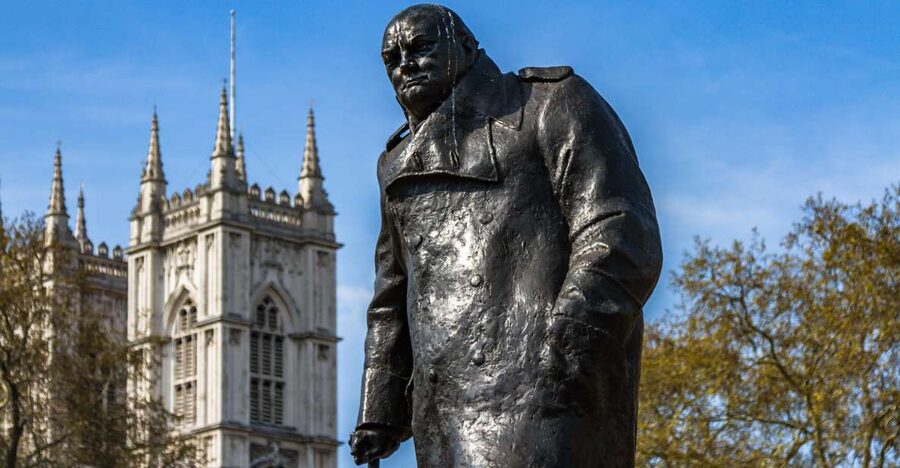
- A history walk before the museum: Visit the area around Big Ben, Parliament, Westminster Abbey, Downing Street, the Cenotaph, and Churchill’s statue.
- Governments in exile: Hear how European governments and monarchs operated from London after Germany overran their countries.
- Self-guided museum time: Your guide finishes at the War Rooms, then you explore independently with the museum’s audio guide.
- Original 1945 setting: The rooms were preserved as they were when the lights were switched off at the end of the war.
- Strong guide-led storytelling: Guides including Paul, Michael, Maggie, Lee, and Andy have brought humor, political detail, and clear historical explanation to the walking portion.
Why the Westminster walk makes the bunker easier to understand
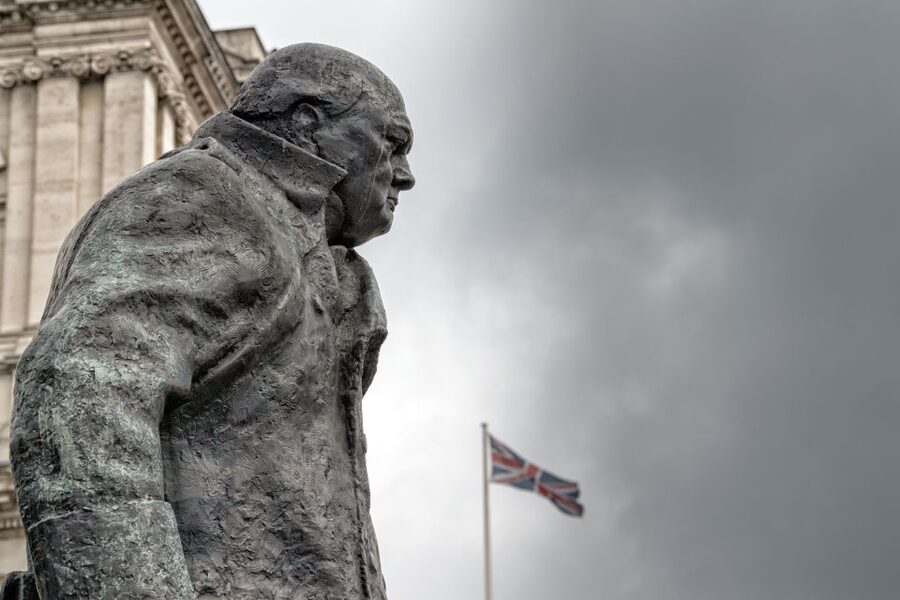
The Churchill War Rooms are powerful on their own, but the walking tour gives you a better sense of place. Before you head underground, you see the government buildings, memorials, and streets tied to Britain’s wartime story.
The meeting point is outside Westminster Station, at the top of the stairs by the statue of Boadicea on a chariot. It is not at the War Rooms, so allow time to find the correct exit. From the station, follow signs for Exit 2, Victoria Embankment.
The walking section lasts about an hour, although the full advertised experience is 2.5 hours. It begins around Westminster and ends at Churchill’s War Rooms. You use headsets during the walk, a useful touch on streets where traffic and crowds can make a guide hard to hear.
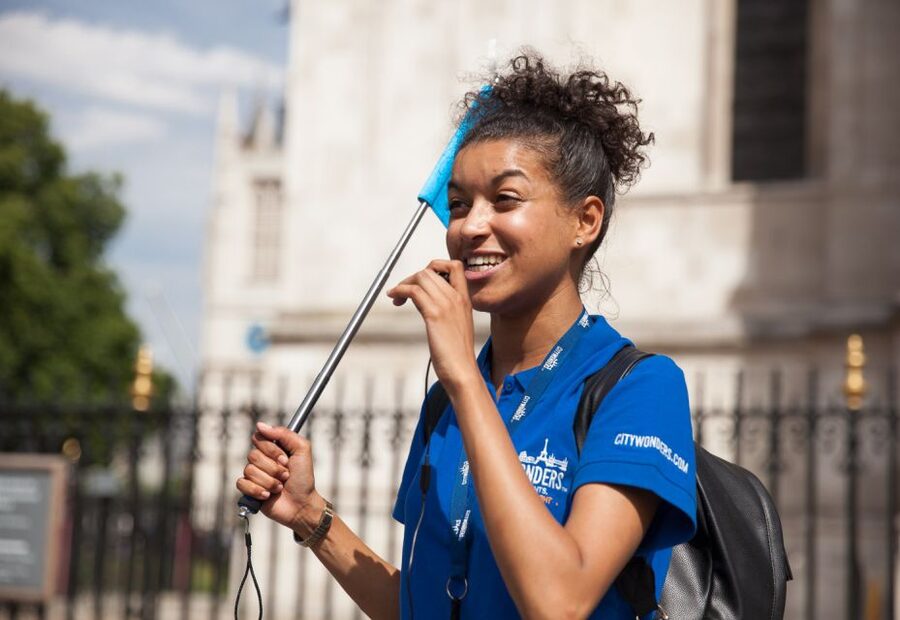
The guides bring different personalities to the route. Paul has been especially effective at combining Churchill’s private life with his public career. Michael has used humor and sharp historical detail to keep the walk moving. Maggie and Lee have also led engaging walks, with Lee adding useful context about Parliament and Westminster politics.
That variety matters because this is not a recorded sightseeing route. Your guide can answer questions, adjust the pace, and point out details that might otherwise pass unnoticed. On a hot day, one guide moved the group into shaded spots for explanations. On a rainy day, another kept the stops practical and made sure everyone could hear.
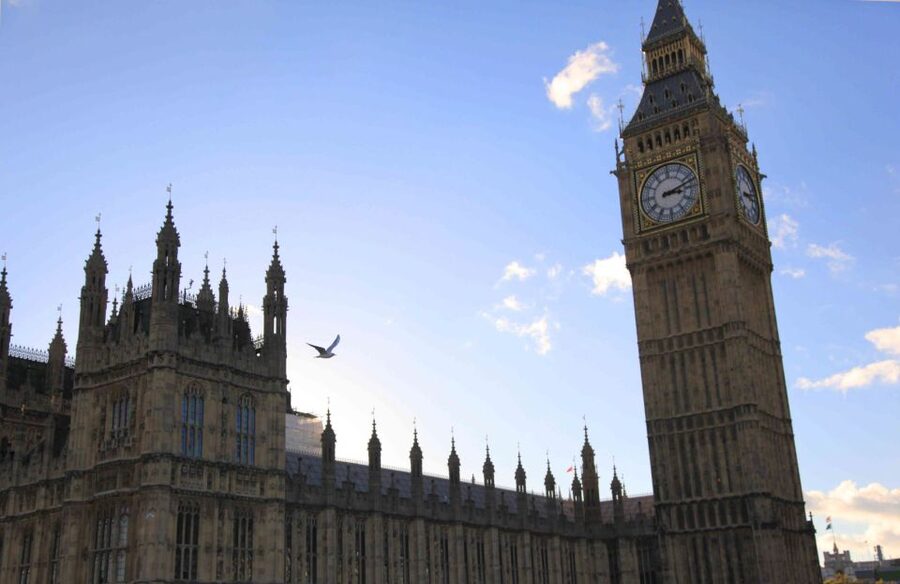
Big Ben, Parliament, and the wartime heart of Westminster
Big Ben is listed as a photo stop, not a long lecture point. You get time to take pictures and hear how the landmark fits into the wider setting of Westminster.
The Houses of Parliament receive similar treatment. You do not enter the building on this tour, but seeing it from outside helps explain the importance of the area during the war. This was the center of national government, close to the offices and underground rooms where urgent decisions were made.
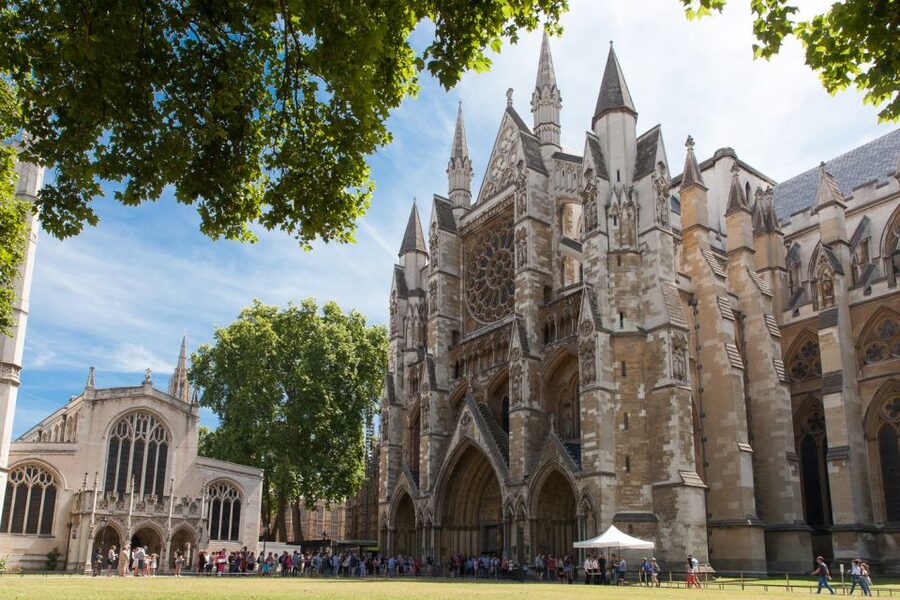
Westminster Abbey is also an exterior stop. The tour does not include entry, so you should not book it expecting an Abbey visit. Still, the stop adds a useful layer to the walk because you see one of London’s most important religious and royal sites alongside the political buildings.
The pace is fairly brisk, but the stops are short enough to keep the route moving toward the War Rooms. If you want lengthy time at every landmark, this is not the right format. If you want a focused introduction before a major museum visit, the balance works well.
More of political London:
- London: Westminster Abbey Entrance Ticket
★ 4.6 · 11,254 reviews - London: Westminster to Tower Bridge River Thames Cruise
★ 4.5 · 6,127 reviews - Westminster to Greenwich Sightseeing Thames Cruise in London
★ 4.5 · 2,969 reviews
Downing Street, Churchill, and the governments in exile
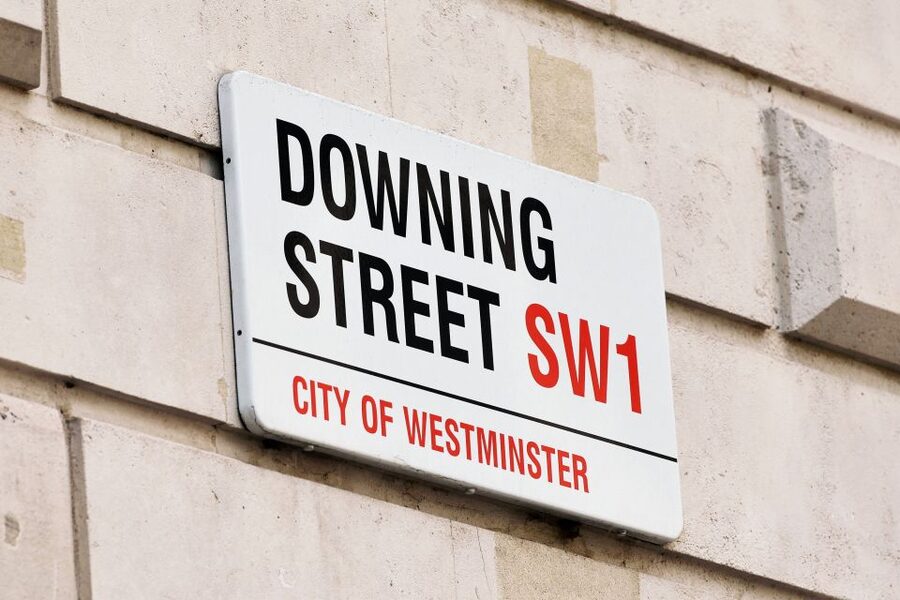
The stop at 10 Downing Street connects the modern office of the prime minister with Churchill’s wartime leadership. You see the original door that Churchill walked through after becoming prime minister, a small detail with real emotional weight.
The guide also explains how London became a base for governments and monarchs forced into exile as Germany took control of much of Europe. That story broadens the tour beyond Britain. London was not only managing its own war effort. It was also a place where displaced European leaders, diplomats, and officials continued political work.
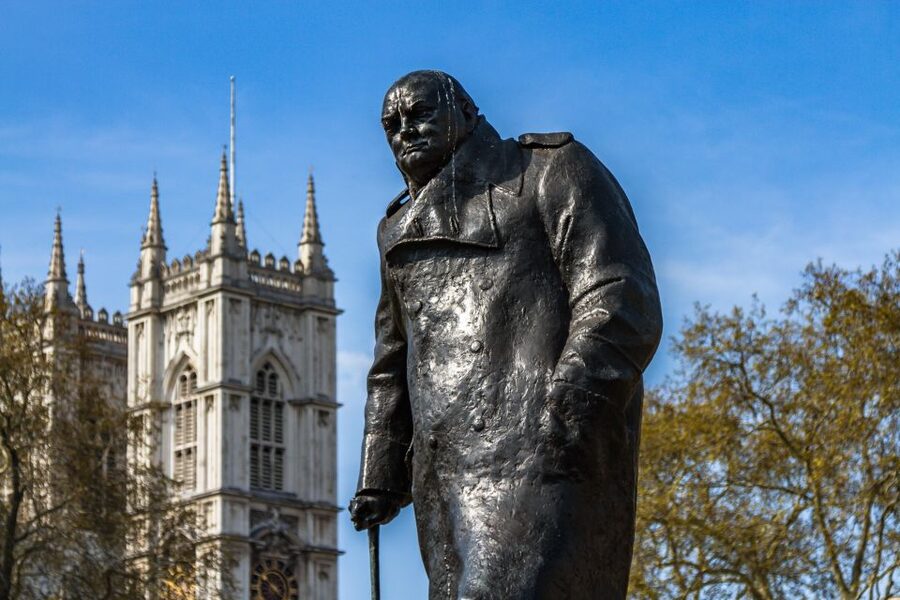
The tour includes Churchill’s statue and the Monument to the Women of World War II. These stops help move the story beyond famous men and military orders. The women’s monument points to the many civilian and service roles that supported Britain during the conflict.
The walk finishes at the Cenotaph, Britain’s primary national war memorial. It was built to remember the First World War, but it now carries a wider role in national remembrance. This is a fitting final outdoor stop before you enter the much more personal world of the underground rooms.
Some guides add extra moments when timing allows. One guide arranged a view of preparations for the changing of the guard at Wellington Barracks. That is not guaranteed, so treat it as a possible bonus rather than part of the promised route.
Entering Churchill’s underground War Rooms
At the end of the walk, your guide takes you to the entrance of Churchill’s War Rooms. The guide does not accompany you through the museum. Instead, you receive an audio guide and explore at your own pace.
This arrangement has a clear advantage: you are not forced to keep up with a group inside. You can spend more time in the rooms that interest you, pause for the recordings, and move through the museum at a comfortable speed.
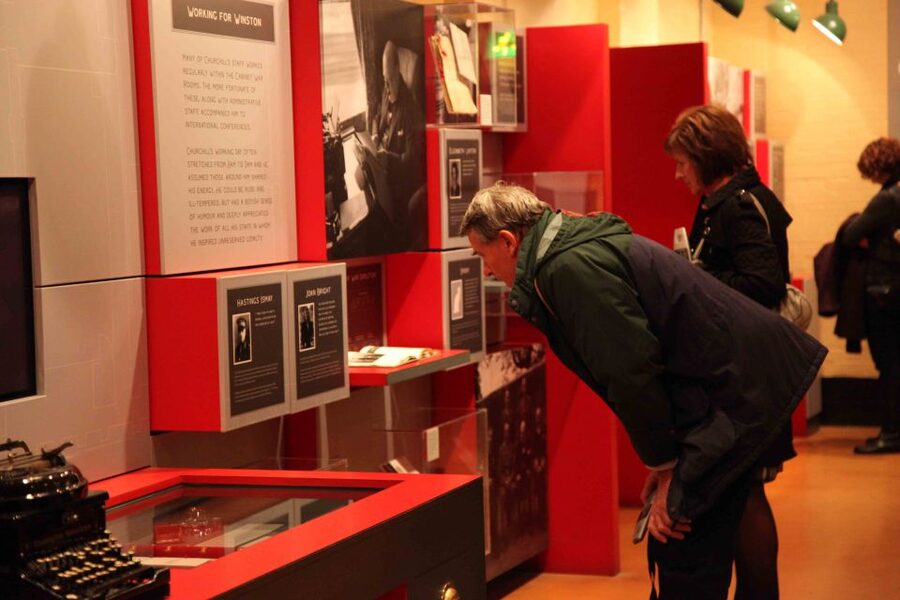
The War Rooms are a maze of underground offices and corridors. They were used by Churchill and his government during the German bombing campaigns, and they were preserved in the condition they were left in 1945. The rooms still show the working environment of the people who planned the war below London.
You see maps of military movements, communication areas, offices, and rooms used for top-secret conversations. The Transatlantic Telephone Room is particularly interesting because it was used for private talks between Churchill and President Roosevelt.
The museum also brings out the ordinary side of underground life. Staff worked in dark rooms for long periods, deciphered enemy communications, updated maps, and dealt with the basic needs of daily life. Churchill’s kitchen shows that even at the center of a global war, someone still had to manage meals and household routines.
One unusual detail is the use of primitive sun lamps. They helped staff receive enough vitamin D while spending so much time underground. Families of those working there often did not know what their relatives actually did. That secrecy gives the rooms a human dimension that a standard military museum can lack.
The Churchill Museum and his relationship with Roosevelt
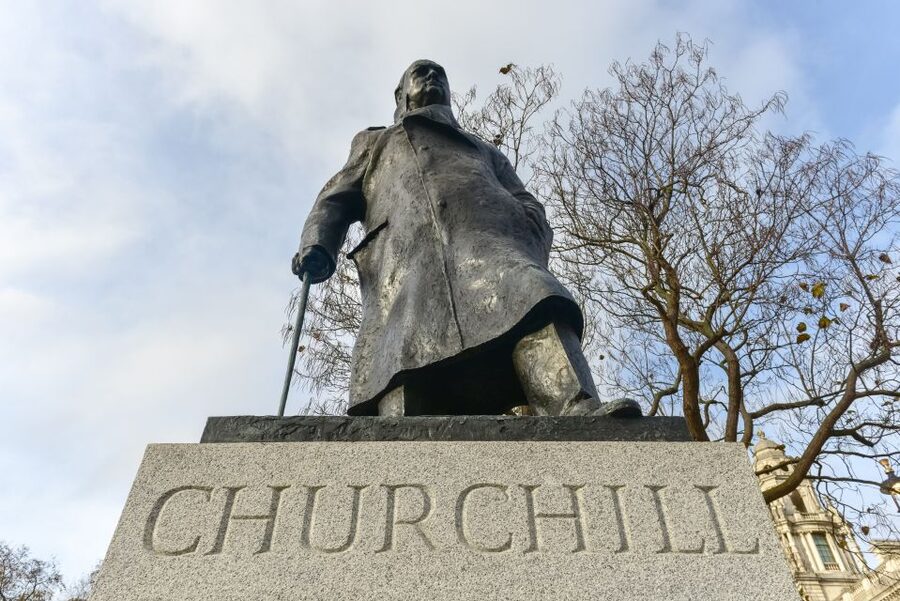
The Churchill Museum forms a major part of the visit. It follows Churchill’s public career and private life, including his relationship with his wife and his political development.
You hear authentic recordings of his wartime speeches. These are more effective in the War Rooms than they would be in a normal exhibition because you are standing in the setting where those speeches had practical purpose. Churchill’s words were not simply public performance. They helped maintain morale and communicate resolve during a dangerous period.
The museum also explores Churchill’s special relationship with Roosevelt. Their communication shaped the Allied war effort, and the Transatlantic Telephone Room gives that political connection a physical setting.
You should allow more than the basic 1.5 hours if you care about Churchill’s personal story or want time with the displays. The advertised visit inside is about an hour and a half, but you are not rushed out at that point. Some visitors have spent two hours or more inside, and one group remained until midafternoon after starting in the morning.
That flexibility is one of the tour’s best practical features. The walking portion has a set structure, while the museum lets you choose your own pace.
Other wartime history near London:
- Westminster 3 Hour Walking Tour and Visit of Churchill War Rooms
★ 5.0 · 967 reviews - WW2 London Walking Tour & Churchill War Rooms Entrance Ticket
★ 4.5 · 933 reviews - London in WW2 Walking Tour with Churchill War Rooms Visit
★ 5.0 · 721 reviews
What the audio guide does well, and where it can frustrate
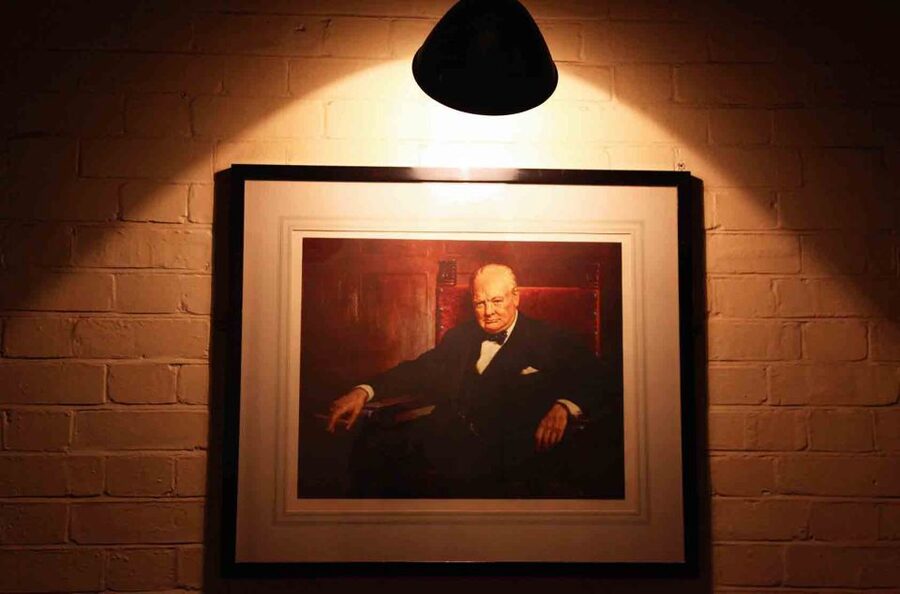
The audio guide gives you a steady flow of explanation as you move through the rooms. It covers the bunker, Churchill’s life, the military planning, the communications work, and the domestic details.
You should pay attention to where you are standing before starting each recording. One visitor found the device difficult to match to the correct room, and the underground layout can make that confusing. Take a moment to check the relevant track rather than rushing through the controls.
The museum can also feel crowded. The rooms are genuine working spaces, not large modern galleries, so narrow passages and small offices may fill quickly. This is part of the experience, but it can make it harder to stop for long periods.
The audio guide also means your experience inside is more independent than the outdoor walk. If you want a guide explaining every room in person, this format may disappoint. If you prefer to pause, replay information, or move on when a display does not interest you, the arrangement is more comfortable.
Is $59 good value?
At $59 per person, the price is more than a simple museum admission, but you are paying for two connected experiences: the Westminster walk and entry to Churchill’s War Rooms, including the reservation fee and audio guide.
The value depends on how you would otherwise spend your morning. A self-guided visit to the War Rooms gives you the main museum, but it does not give you the outdoor context, the route between the landmarks, or a live guide to explain the governments in exile and Churchill’s place in Westminster.
The tour is particularly worthwhile if you are visiting London for the first time or want the main Churchill story organized into one block. The guide helps connect buildings that can otherwise feel like separate sightseeing stops.
It is less useful if you already know Westminster well and mainly want to spend several hours inside the museum. In that case, a stand-alone War Rooms visit may give you more control. You would also avoid the one-hour walk and its fixed timing.
The strong value comes from the combination. You see the political center above ground, then the hidden command center below it. That change in setting gives the history a clear shape.
Timing, walking, and comfort
Wear comfortable shoes. You walk between several Westminster landmarks before entering the museum, and you remain on your feet for much of the experience.
The tour is not suitable for wheelchair users or people with mobility impairments. Baby strollers are not allowed. The underground rooms are also cramped in places, so anyone who dislikes tight corridors should think carefully before booking.
Bring clothing suited to London weather. The outdoor section continues in rain or heat, although guides have made efforts to find shade and keep groups comfortable. A sunny day makes the walk easier, but the War Rooms themselves remain underground and enclosed.
The headsets are helpful, especially near traffic. One group had trouble with the devices at first and solved it by changing the channel away and back. Check your equipment early so you do not miss the opening explanation.
The tour is offered in English with an English-speaking guide. Group and private options are available depending on the booking choice. Cancellation is free up to 24 hours before the start, and you can reserve now and pay later if you want to keep your plans flexible.
Who will get the most from this tour?
I would choose this for anyone with a serious interest in Churchill, World War II, political history, or London’s role in the conflict. It also works well for visitors who want more than photographs at Big Ben and Parliament.
The experience suits adults and older children who can follow political and military history. It is not designed as a playful family activity, and the subject is more serious than a standard sightseeing walk.
You should also book it if you like having a live guide at the start but prefer to explore museums alone. That combination is hard to get from a fully guided visit.
I would be more cautious if you need frequent seating, use a wheelchair, have limited mobility, or strongly dislike underground spaces. I would also think twice if your main goal is to enter Westminster Abbey, since the Abbey is only an exterior stop here.
Should you book the Westminster and Churchill War Rooms tour?
Book it if you want the War Rooms placed in their Westminster setting rather than treated as an isolated museum. The guides, including Paul, Michael, Maggie, Lee, and Andy, have brought humor and clear explanation to the outdoor section, while the preserved bunker and Churchill Museum provide the substance afterward.
The best plan is to allow extra time beyond the advertised 2.5 hours. The formal walking and museum schedule is shorter, but you can remain inside the War Rooms after the guide leaves. If you are interested in the maps, speeches, Roosevelt connection, or everyday life underground, you may want several additional hours.
Skip it in favor of a stand-alone museum ticket if you already know Westminster, want to avoid walking, or prefer to set your own start time. For most history-minded visitors, though, the $59 package gives a useful introduction above ground and a memorable, self-paced visit below it.
FAQ
Where does the tour begin?
Meet your English-speaking guide outside Westminster Station. Use Exit 2 for Victoria Embankment, then go up the stairs to street level. The group meets at the top of the stairs behind the statue of Boadicea on a chariot.
Does the tour begin at Churchill’s War Rooms?
No. The meeting point is outside Westminster Station, not at the Churchill War Rooms. The walking tour takes you from Westminster to the museum.
How long does the experience last?
The advertised duration is 2.5 hours. The walking tour lasts about one hour, followed by roughly 1.5 hours listed for the self-guided War Rooms visit. You can stay inside the War Rooms longer if you wish.
Is entry to Churchill’s War Rooms included?
Yes. The package includes the entry ticket, reservation fee, and audio guide for Churchill’s War Rooms.
Does the guide accompany me inside the War Rooms?
No. The guide leads the Westminster walking tour and takes you to the museum entrance. You then explore the War Rooms independently with the audio guide.
Is Westminster Abbey included?
No. Westminster Abbey is an exterior photo stop. Entry to the Abbey is not included.
What language is the tour in?
The live tour is in English, and the activity includes an English-speaking guide.
Is the tour suitable for wheelchair users?
No. The activity is not suitable for wheelchair users or people with mobility impairments. Baby strollers are also not allowed.
Can I cancel or pay later?
You can cancel up to 24 hours before the activity for a full refund. The reserve-now-and-pay-later option lets you book without paying immediately.
Just added in London
- James Bond Shooting Locations 2-Hour Walking Tour of London★ 4.7 · 332 reviews
- Camden Pub Crawl in London★ 5.0 · 238 reviews
- Eating London: Twilight Soho VIP Food & Drinks Tour★ 5.0 · 590 reviews
- Heathrow Airport to Central London Private Transfers★ 4.5 · 402 reviews
- London Pub Crawl★ 5.0 · 247 reviews
- Highlights of Royal London Bike Tour including Hyde Park★ 5.0 · 543 reviews
- Shared Arrival Transfer London Airport to Hotel Accommodation★ 4.0 · 446 reviews
- Sherlock: The Official Live Game★ 4.5 · 460 reviews
Westminster and Big Ben Tours, compared.
Westminster to Tower Bridge River Thames Cruise
Read our review →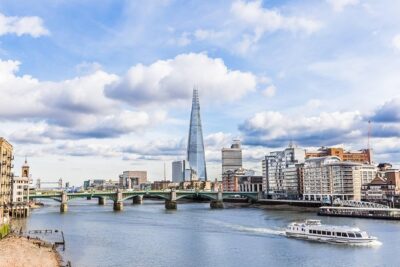
Westminster to Greenwich Sightseeing Thames Cruise in London
Read our review →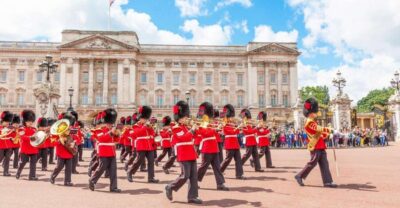
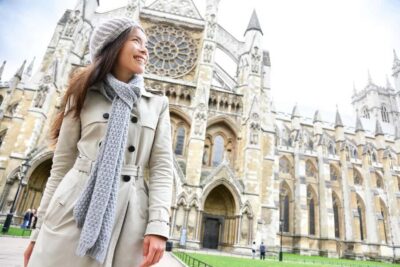
Westminster Abbey, Big Ben & Buckingham Guided Tour
Read our review →
Westminster Guided Walking Tour with Abbey Entry
Read our review →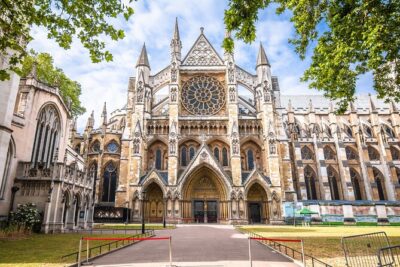
Walking Tour of London Westminster Abbey, Big Ben, Buckingham
Read our review →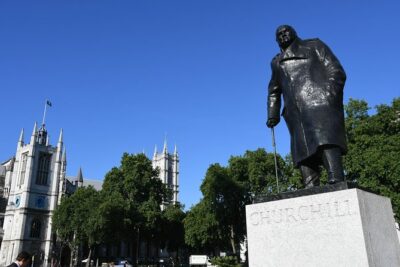
Westminster 3 Hour Walking Tour and Visit of Churchill War Rooms
Read our review →Browse the lists this tour appears in