
Reviewed · WARTIME AND CHURCHILL TOURS
London in WW2 Walking Tour with Churchill War Rooms Visit
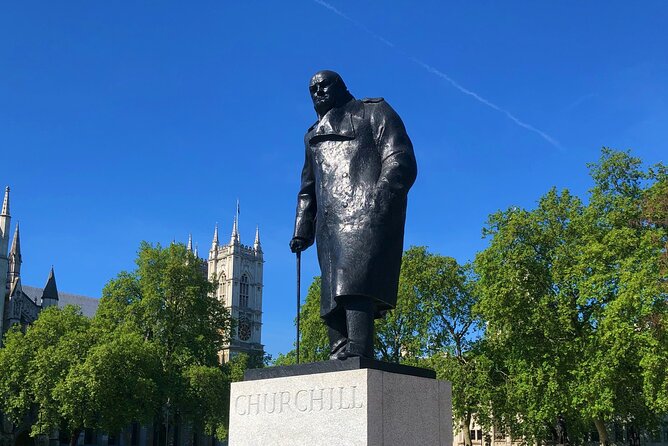
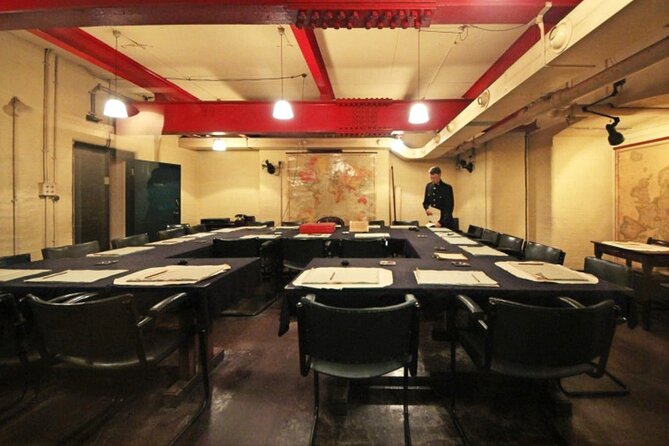
Churchill’s War Rooms are the heart of this experience. You walk through the underground offices where Britain’s wartime government worked under the threat of invasion, then continue at your own pace with an audio guide. The walk leading there gives the rooms useful context, tying Churchill and the war effort to the streets, monuments, and government buildings of Westminster.
I like the small group limit of 15, which gives a guide room to answer questions and adjust the pace. I also like the blend of outdoor history and indoor museum time: Parliament Square, Whitehall, and the Cenotaph give you a sense of place, while the included War Rooms admission saves you from arranging a separate visit.
The main consideration is timing. The tour lasts about three hours, but only roughly one hour is set aside for the War Rooms, and that section is self-guided. If you want to read every panel and spend serious time in the Churchill Museum, you may need to return on your own.
Key points before you book
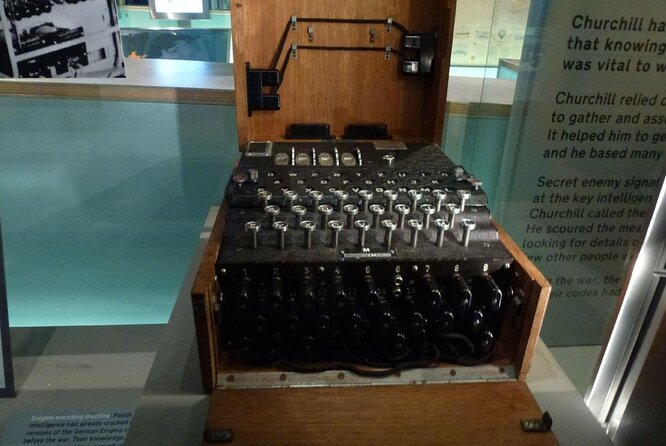
- The War Rooms ticket is included, along with an audio guide for the underground complex.
- The Westminster walk connects famous sights to wartime decisions, rather than treating them as ordinary photo stops.
- The group has no more than 15 people, a useful size for a walking tour in central London.
- The outdoor route takes about 90 minutes, according to the timing described by past participants.
- Guides such as Nathan, Babs, Jeremy, Paul, Francis, and Richard are praised for storytelling, humor, and strong knowledge of Churchill and World War II.
- Westminster Abbey is visited from outside only, and its entrance fee is not part of the tour.
Why the underground War Rooms make this tour worthwhile
The Churchill War Rooms are not a reconstruction built for atmosphere. They are the underground offices used by the British government during World War II, and the tight corridors and working spaces help explain the pressure behind wartime decisions.
You will see the complex after the walking portion, when the guide leaves you to use the audio guide and explore independently. That arrangement has a clear benefit: you can spend your time where your interests lie. If Churchill is your main focus, you can give the Churchill Museum more attention. If you prefer military planning, government operations, or the daily life of the staff, you can follow those sections at your own speed.
The drawback is that the stated War Rooms visit lasts about one hour. That is enough for a worthwhile first look, but it is not enough for every exhibit if you read closely. I would treat the tour as an introduction to the site, not as a complete museum day.
The audio guide helps you make sense of the winding complex without needing to stay beside the walking guide. It also means the final portion feels different from the first half. The outdoor section is social and conversational, while the War Rooms visit is quiet and self-directed.
More Walking Tours in London:
- Magical London: Harry Potter Guided Walking Tour
★ 4.7 · 22,044 reviews - London: The Original Jack the Ripper Walking Tour
★ 4.7 · 7,833 reviews - Tour for Muggles The Ultimate Harry Potter Walking Tour in London
★ 5.0 · 4,684 reviews
Starting at Westminster Bridge
The meeting point is by Boadicea and Her Daughters on Victoria Embankment, close to Westminster Bridge. The bridge is painted green to reflect its connection with the Houses of Commons, and it gives the tour an immediate link to Parliament.
This is a brief stop, listed at about five minutes, so you should not expect a long lecture beside the river. Instead, it sets the scene for London under attack. Bombs from World War II are still found in the Westminster area, a reminder that the war was not distant from the buildings you are about to see.
The location is also practical. It is near public transportation, and the meeting point is described as easy to find. Still, central London can be crowded, so arrive with enough time to locate the statue and gather before the group leaves.
Parliament and the silence of Big Ben
The Houses of Parliament are viewed from outside for about ten minutes. Here, the guide explains how Britain’s government responded as the threat from Nazi Germany grew and German aircraft crossed the skies over London.
The most useful part of this stop is the contrast between the building’s familiar public image and its wartime role. Parliament was not just a grand Gothic landmark. It was the center of government during a national emergency, with decisions being made under the risk of bombing and invasion.
The tour also refers to Big Ben going quiet. That detail helps you picture wartime London beyond the usual image of speeches and military maps. Landmarks had to be protected, daily routines changed, and even familiar sounds could disappear for security reasons.
You do not enter the Houses of Parliament, and admission is not included. That is worth knowing if you hoped for an interior visit. The stop works best as a short outdoor explanation before the group moves on.
Parliament Square and the meaning of its statues
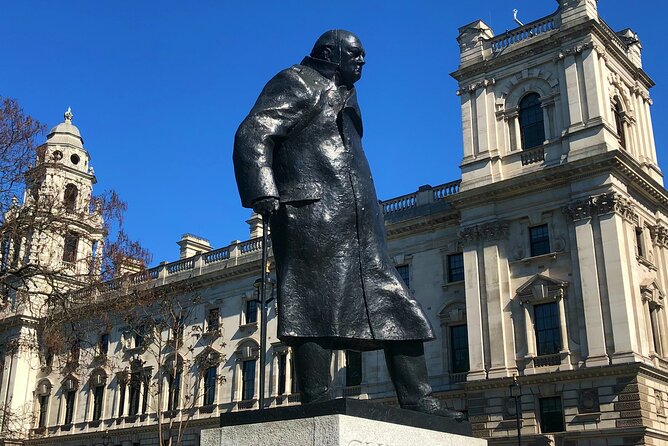
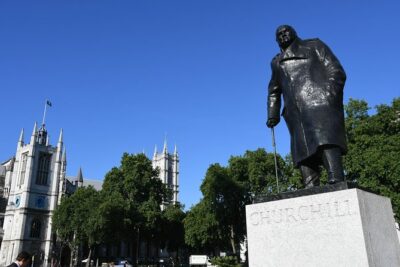
Parliament Square takes about ten minutes. Its statues include Mahatma Gandhi, Millicent Fawcett, and Abraham Lincoln, often known as Honest Abe. The guide uses these figures to discuss democracy and the values at stake during World War II.
This is one of the more thoughtful stops because it moves beyond military facts. The square is not simply a place for photographs. Its memorials raise questions about representation, civil rights, political leadership, and the systems Britain claimed to defend.
The connection to World War II is broad rather than tied to one specific event at the square. That may appeal to you if you want political and social context alongside battles and dates. If you prefer a tightly focused military tour, this portion may feel less direct.
Other wartime history near London:
- Westminster 3 Hour Walking Tour and Visit of Churchill War Rooms
★ 5.0 · 967 reviews - WW2 London Walking Tour & Churchill War Rooms Entrance Ticket
★ 4.5 · 933 reviews - London: Westminster WW2 Tour & Churchill’s War Rooms Ticket
★ 4.5 · 925 reviews
Westminster Abbey from the pavement
Westminster Abbey is another exterior stop, usually about ten minutes. You can admire the building from outside and hear how it fits into the wider story of Westminster, but the Abbey entrance is not included.
Keep this in mind when planning your day. The Abbey can require separate admission and additional time, so do not assume this tour gives you access to the interior. The brief stop is useful for orientation, especially if you have never visited the area, but it is not a substitute for an Abbey tour.
The sequence also keeps the walking route moving. You see one of London’s most important landmarks without adding a long interior visit before the War Rooms.
Whitehall, the Cenotaph, and women’s wartime service
Whitehall provides some of the strongest memorial stops on the route. It is home to the Ministry of Defence and played a central role in the government’s wartime story.
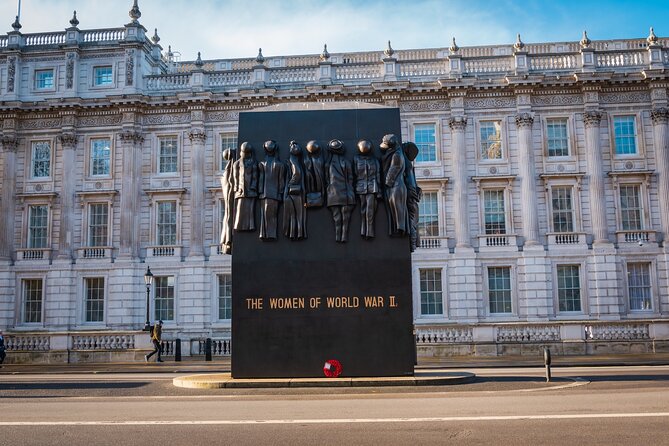
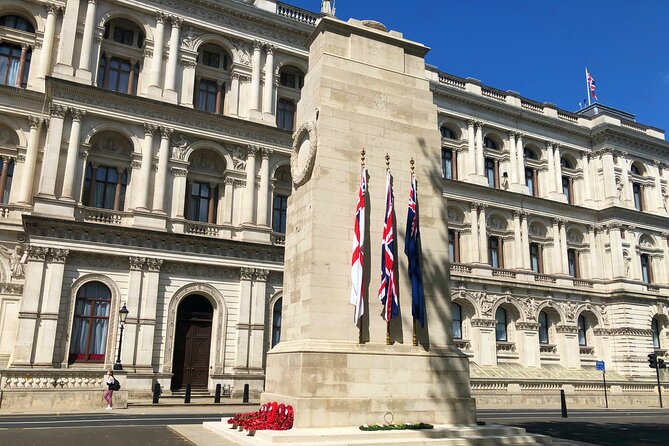
The Cenotaph is the best-known monument here, but the tour also includes the Women in World War II memorial. That pairing matters. It places the sacrifices of soldiers beside the work and losses of women who served in many different roles.
I value this part of the route because it gives the human cost of the war a physical setting. A good guide can explain what the monuments commemorate without turning them into a rushed list of names and dates. Francis, one of the guides associated with this experience, has been noted for explaining the memorials and adding personal stories, including a family connection to life during the war.
Whitehall is visited outside and admission is free. The stop takes about ten minutes, so the guide has to choose the details carefully. That makes the guide’s delivery especially important.
Horse Guards Parade and a change of atmosphere
Horse Guards Parade is another ten-minute outdoor stop. It offers a chance to photograph the mounted cavalry of the King’s Horseguards and is described as the official entrance to Buckingham Palace itself.
This section is less directly about World War II than the Parliament and Whitehall stops. It gives the route a welcome change of pace, linking wartime government to the ceremonial side of London. You may also appreciate the chance to pause, take photographs, and see one of the city’s recognizable military traditions.
If your main goal is a strict World War II walking route, this stop may feel like a slight detour. It remains relevant to the broader story of Britain’s armed forces and monarchy, but the connection is less immediate than at the Cenotaph or Parliament.
What the guides add to the experience
The quality of this tour depends heavily on the guide. The strongest descriptions of the experience point to guides who combine clear historical explanation with humor and personal detail.
Nathan is repeatedly singled out for his command of World War II history, Churchill, and London. He is also described as able to adjust his explanations to the group’s level of interest. Jeremy is praised for a funny, engaging delivery and careful explanations. Babs brings strong enthusiasm and has handled route changes when protests affected the streets.
Paul is described as warm, flexible, and especially good with private groups. Francis brings stories about Scotland Yard and family life during the war. Richard is associated with an engaging tour for a larger family group.
You cannot assume which guide you will receive when booking. Still, the pattern is useful: this is not designed as a silent march from one landmark to the next. You should expect a guide-led story, questions, anecdotes, and some humor. Several accounts also describe the guides as making an effort to include everyone and respond to the group’s interests.
That approach suits you if you enjoy history explained through people and places. It may suit teenagers especially well, since personal stories and light humor can make a serious subject easier to follow.
How the timing works in real terms
The advertised duration is about three hours. The listed stops add up to roughly one hour of short outdoor visits, followed by about one hour in the War Rooms. In practice, walking between the locations and moving the group into the museum account for the rest.
One account describes about 90 minutes with the guide before entering the War Rooms. That is a useful expectation. You are not getting three hours of continuous lecture, and you are not spending three full hours inside the underground complex.
The pace should be manageable for most people, since the route uses public streets and includes several short stops. Most people can participate, and service animals are allowed. Food and drinks are not included, so plan around the tour rather than expecting a meal break.
The tour ends at Churchill War Rooms on King Charles Street. After the guide sees you into the museum, the visit becomes self-guided. There is no hotel pickup or drop-off, so you must make your own way to the starting point and continue independently afterward.
Is the $104.02 price good value?
At $104.02 per person, this is not a budget walking tour. The value comes from combining a guided Westminster route with admission to Churchill’s War Rooms and an audio guide.
If you already plan to visit the War Rooms, compare the price with the cost and convenience of buying admission separately. The tour adds a local guide, a carefully chosen route, and a clear explanation of how the surrounding buildings relate to the war. That context is the main reason to pay more than a basic museum ticket.
The small group limit also matters. A maximum of 15 people is far more manageable than a large coach group, especially around Parliament Square and Whitehall. You have a better chance of hearing the guide and asking a question without holding up dozens of people.
The price is harder to justify if you want only the museum. In that case, a standalone visit gives you more control over your time. It is also less attractive if your schedule cannot spare roughly three hours or if you already know Westminster well.
Group discounts may be available, which could improve the value for families or larger parties. Private tours are also mentioned as an option, but the supplied price is for the standard per-person experience.
Who should book this Westminster history walk
I would choose this tour if you want a strong first introduction to Britain’s World War II story and do not want to build the route yourself. It suits first-time visitors who are already planning to see Parliament, Westminster Abbey, Whitehall, and the War Rooms.
It is also a good fit for families with older children and teenagers. The walk keeps changing location, and guides use anecdotes, humor, and personal stories rather than relying only on dates. The underground rooms then provide a physical place where the earlier explanations make sense.
History fans should book it with one limitation in mind: the War Rooms portion may feel short. If you want to study the museum in detail, plan a separate return visit if the ticket terms allow it, or reserve extra time elsewhere in your London schedule.
You should also be comfortable with an outdoor walking tour in central London. The stops are outside, and the group moves through busy Westminster streets. Wear practical shoes and check the meeting point carefully, since the tour does not include transportation or hotel collection.
Cancellation and booking details
You receive confirmation when booking, and free cancellation is available until at least 24 hours before the local start time. Changes or cancellations made within 24 hours are not accepted for a refund.
The experience requires a minimum number of participants. If that minimum is not reached and the tour is canceled, you are offered another date or experience, or a full refund.
Final verdict: a useful way to frame Churchill’s London
I would book this tour if you want the War Rooms to mean more than a standalone museum visit. The outdoor route gives you Parliament, memorials, and Whitehall before the underground offices show you where wartime decisions were carried out.
The best reason to choose it is the guide-led storytelling. Nathan, Babs, Jeremy, Paul, Francis, and Richard are associated with lively explanations, personal anecdotes, and strong command of the subject. The main weakness is limited time inside the War Rooms, especially for anyone who reads every display.
For a first World War II visit to London, the combination is persuasive. You get the setting above ground, the working rooms below it, and admission handled in one booking. If you want a slow museum day, book the War Rooms separately. If you want context, structure, and a personable guide, this tour is a sound choice.
FAQ
How long does the London in World War II walking tour last?
The experience lasts approximately three hours. The outdoor walking portion takes about 90 minutes, followed by entry to Churchill’s War Rooms and a self-guided visit.
Is entry to Churchill’s War Rooms included?
Yes. Admission to Churchill’s War Rooms is included, along with an audio guide for the museum complex.
Is Westminster Abbey included?
No. Westminster Abbey is visited from outside, and entrance admission is not included.
How large is the tour group?
The tour has a maximum of 15 travelers, allowing for a smaller group experience.
Where does the tour start?
The meeting point is at Boadicea and Her Daughters on Victoria Embankment, London SW1A 2JH, near Westminster Bridge.
Where does the tour end?
The guided portion ends at Churchill War Rooms on King Charles Street, London SW1A 2AQ. After the guide sees you into the War Rooms, you continue independently.
Is the tour offered in English?
Yes. The tour includes an English-speaking local guide, and the War Rooms visit includes an audio guide.
Can I cancel for a full refund?
Yes, if you cancel at least 24 hours before the experience start time. Cancellations or changes made less than 24 hours before the start are not refunded.
Just added in London
- Sherlock: The Official Live Game★ 4.5 · 460 reviews
- James Bond Shooting Locations 2-Hour Walking Tour of London★ 4.7 · 332 reviews
- Camden Pub Crawl in London★ 5.0 · 238 reviews
- Eating London: Twilight Soho VIP Food & Drinks Tour★ 5.0 · 590 reviews
- Heathrow Airport to Central London Private Transfers★ 4.5 · 402 reviews
- London Pub Crawl★ 5.0 · 247 reviews
- Highlights of Royal London Bike Tour including Hyde Park★ 5.0 · 543 reviews
- Shared Arrival Transfer London Airport to Hotel Accommodation★ 4.0 · 446 reviews
Wartime and Churchill Tours, compared.
Westminster 3 Hour Walking Tour and Visit of Churchill War Rooms
Read our review →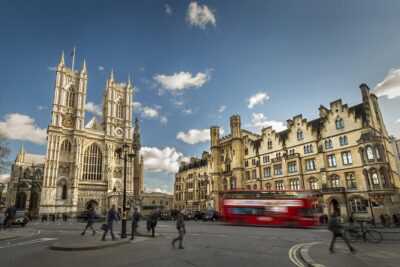
WW2 London Walking Tour & Churchill War Rooms Entrance Ticket
Read our review →
Westminster WW2 Tour & Churchill’s War Rooms Ticket
Read our review →Browse the lists this tour appears in