
Reviewed · WALKING TOURS
Best Of Liverpool Heritage, History & Culture Guided Walking Tour
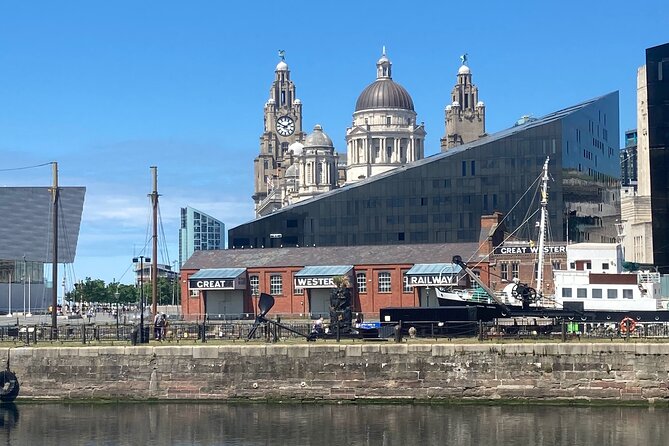
Liverpool’s story is much bigger than The Beatles. This walking tour links the old port, the Ropewalks, grand civic buildings, hidden corners, and the Cavern quarter into one useful first look at the city. You’ll walk from the Bluecoat to Mathew Street, with time to pause at the Royal Albert Dock, the Three Graces, and the Beatles Statue.
I like the local guide format, since guides such as Mike, Carl, Pam, Allan, Roy, and Paul bring different bits of Liverpool’s past to life with humor and personal knowledge. I also like the route’s range: you’ll see a converted Victorian jail, a buried dry dock, medieval traces, and the waterfront in one outing.
The main point to consider is pace and weather. You’ll be outside for more than two hours on cobbles and uneven surfaces, and the route can occasionally change. One person also found it hard to hear questions in the group, so staying close to the guide is wise.
Key points at a glance
- A strong first look at Liverpool: The route covers the city centre, Ropewalks, waterfront, civic quarter, and Mathew Street.
- More than a Beatles tour: You’ll hear about maritime trade, Titanic links, Liverpool Castle, the Second World War, and the city’s ties with the United States.
- Guides with distinct personalities: Mike, Carl, Pam, Allan, Roy, Paul, Rob, Chris, and others lead the walks, bringing local humor and personal recommendations.
- Useful photo stops: The Sailors Home Gateway, Royal Albert Dock, Beatles Statue, Three Graces, and LIVERPOOL sign all offer easy picture opportunities.
- A compact route with no hills or stairs: The walk is manageable for most people with moderate fitness, but cobbles and wet weather still call for sensible shoes.
- A good value city orientation: At $31.90, you pay for a guided overview rather than admission to attractions, making the tour most useful at the start of your stay.
Why this route works for a first visit
Liverpool can seem scattered at first. The shopping streets, waterfront, old commercial quarter, and Beatles landmarks do not all sit in one tidy cluster. This walk helps you connect them on foot, giving you a sense of distance and direction that a bus ride cannot provide.
The route lasts about two hours and 15 minutes and has a maximum group size of 20. That is small enough for a personal feel, though the experience will depend on where you walk in the group and how clearly you can hear. Some departures may be much smaller. On one outing, only three people joined the guide, creating something close to a private walk.
The strongest part of the experience is the range of subjects. You will not spend two hours hearing the same Beatles stories. The tour moves from Liverpool’s medieval roots and maritime trade to architecture, local personalities, music, and civic life. That makes it useful even if you already know the basics about the Fab Four.
More Walking Tours in Liverpool:
- A Walk Through Time: History of Liverpool Walking Tour
★ 5.0 · 911 reviews - Liverpool Ghost Walking Tour
★ 5.0 · 862 reviews - Beatles Famous Walking Tour Of Liverpool- Fully Guided
★ 5.0 · 751 reviews
Bluecoat and Liverpool Sailors Home Gateway
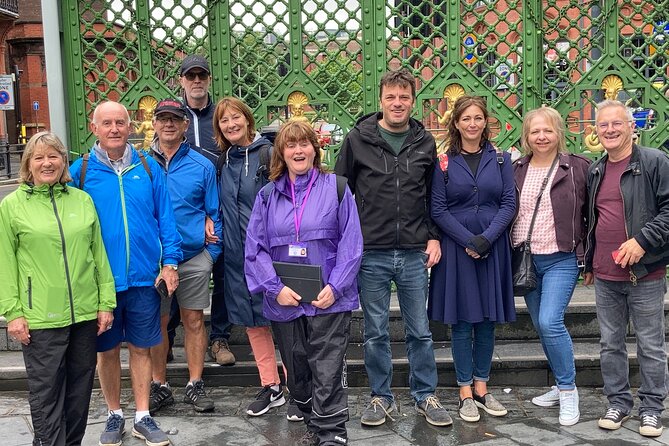
Meet the guide in front of the Bluecoat on School Lane. The building provides a central starting point and puts you close to several layers of Liverpool’s past before the walking has properly begun.
The first short stop is the Liverpool Sailors Home Gateway, a handsome monument tied to the city’s maritime community. It is also a practical early photo stop, thanks to the golden Liver bird. Your guide can use this point to explain how strongly Liverpool’s identity was shaped by sailors, ships, and port life.
This opening section is brief, so do not expect a museum visit or interior tour. Its value is in setting the theme. Liverpool was not simply a city with a dock beside it. Its working life, wealth, and connections abroad grew around the water.
Ropewalks and Campbell Square
At Henry Street, the tour enters the Ropewalks district. The name comes from rope-making for sailing ships, a trade that required long, straight spaces where ropes could be twisted and prepared. Today, the area feels urban and lively, but the name preserves a direct link to the port.
I like this stop because it shows how a street name can reveal the work that once happened there. It also helps you read Liverpool as a working city rather than a collection of grand façades.
The walk then turns toward Campbell Square and The Bridewell, a former Victorian jail converted for modern use. Depending on access, you may get a look at one of the original cells. That small detail gives the tour some texture. You are not only hearing about important buildings from the pavement. You may also get a glimpse of a place built for a very different purpose.
Access is not guaranteed, and the route can change for operational reasons. Think of the jail as an appealing possibility rather than a promised interior visit.
Thomas Steers Way and Liverpool’s buried docks
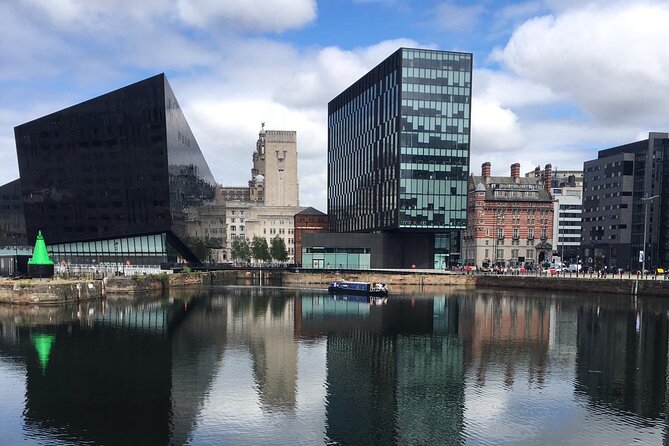
Thomas Steers Way occupies the site of Liverpool’s first dry dock. The large water fountain recalls the city’s maritime past, while a nearby porthole gives you a quick look toward the story beneath the modern city.
This is one of the more useful stops for understanding Liverpool’s physical change. Parts of the old port have been filled, covered, or rebuilt, so modern streets can hide the working docks that once shaped them. The oversized LIVERPOOL sign adds a lighter touch and makes an easy group photo. Its colors change with seasons and events.
The stop is short, but it gives you a chance to pause before the route reaches the waterfront. It also shows the tour’s mix of serious history and simple city sightseeing. You get context, then a good picture.
More walks around Liverpool:
- Downtown Liverpool Walking Tour – In Spanish
★ 5.0 · 591 reviews - Liverpool: Beatles Highlights Walking Tour
★ 4.8 · 274 reviews - Tales from the Necropolis – A Ghost Walk Through St. James Cemetery
★ 5.0 · 263 reviews - Liverpool Hidden History and Dead House Evening Walking Tour
★ 5.0 · 200 reviews
Royal Albert Dock and the Titanic connection
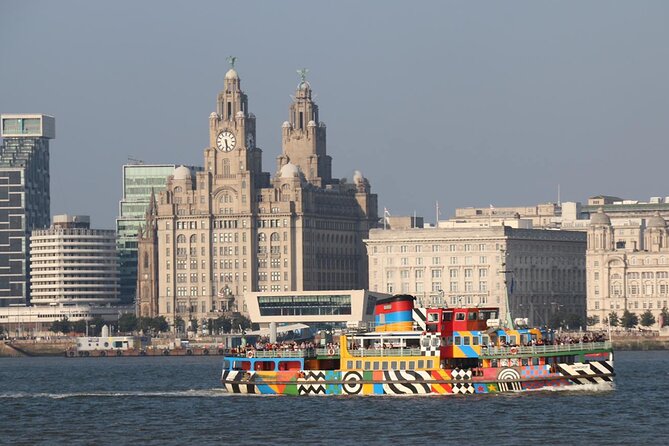
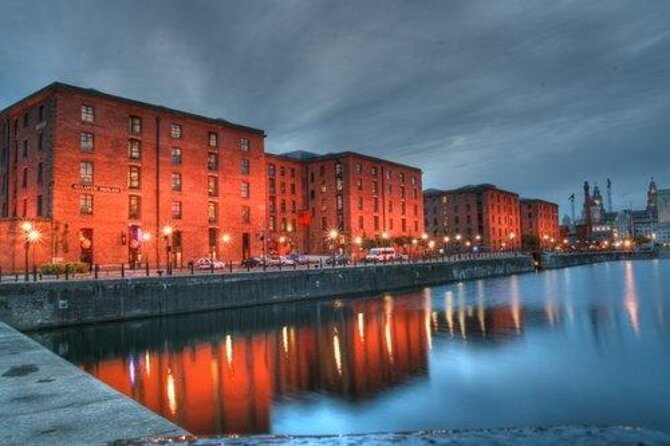
The Royal Albert Dock is the route’s longest stop, at about 20 minutes. Here you will see the old waterfront from close range and hear how the docks helped Liverpool grow.
The Titanic story is part of this section. Liverpool was deeply connected to the ship through the city’s maritime and company links, even though the vessel did not sail from Liverpool. Your guide can place that famous story within the wider port history instead of treating it as an isolated tragedy.
Look around as you walk. The dock combines older industrial buildings with newer architecture, giving you a clear sense of how the waterfront has been reused. You will also pass the bronze statue of Bill Fury, which has become a place of interest for his fans.
This part of the walk can be exposed to wind and rain. On a wet day, the waterfront may feel far less comfortable than the city streets. Bring water, but also check the forecast and wear a coat that can handle Liverpool weather.
The Beatles Statue and the road to the Three Graces
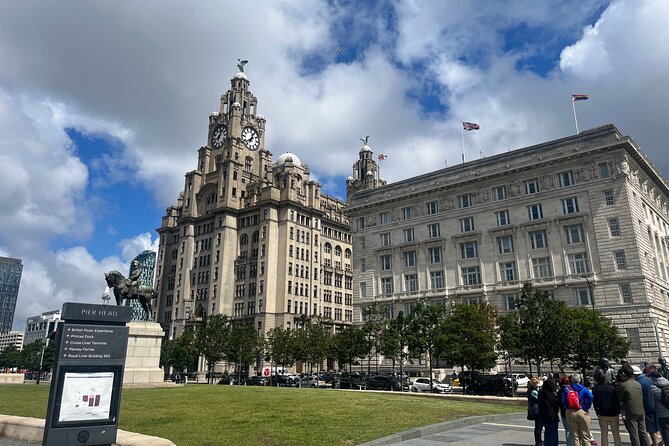
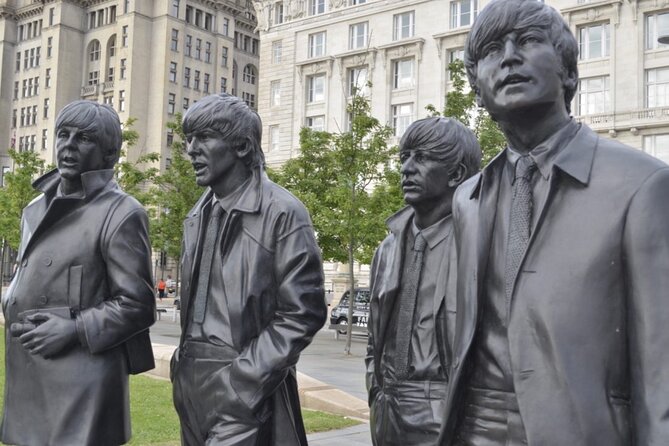
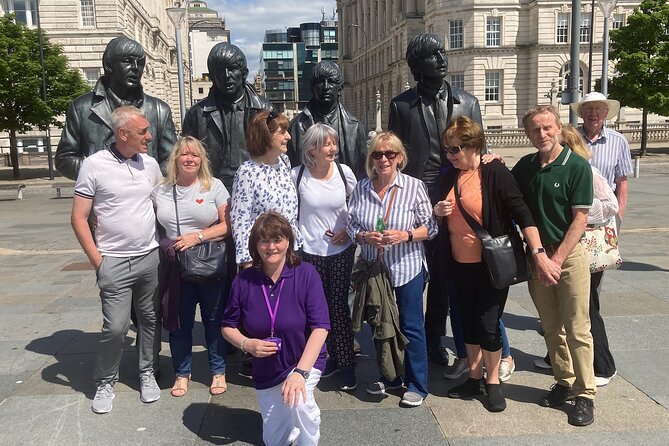
The Beatles Statue is an obvious highlight for music fans. Sculpted by Andrew Edwards, it gives you a chance to take a photo with the four musicians as the route moves along the waterfront.
The stop is short, around 10 minutes, so this is a photo and storytelling pause, not a full Beatles walking tour. If you want detailed coverage of the band’s childhood homes, recording career, or rise to fame, you will need a separate Beatles-focused walk. The tour ends near the Cavern quarter, and another Beatles tour is available as an add-on option.
From there, the route reaches the Three Graces: the Cunard Building, the Port of Liverpool Building, and the Liver Building. These Grade II listed buildings form one of the city’s most recognizable views. Your guide explains their roles in Liverpool’s commercial and maritime story, giving you more than a quick architecture lesson.
The Liver Building is also tied to the city’s famous Liver birds, known locally as Bertie and Bella. From this point, you can appreciate how the waterfront’s grand buildings projected Liverpool’s importance to the world.
Castle Street and Liverpool Town Hall
Castle Street shifts the mood from open waterfront to historic city centre. The street preserves a link with medieval Liverpool, while its fine buildings frame a route that feels more formal and civic.
The walk continues to Liverpool Town Hall, a Grade I listed building widely recognized as one of England’s finest surviving 18th-century town halls. Your guide also explains the earlier town halls that came before it, with a story reaching back to the 1500s.
You will not be touring the Town Hall’s interior on this experience, so the stop is about the exterior, setting, and stories. That is still useful. A guide can point out how the building fits into Liverpool’s old centre and why the city invested in such an imposing civic symbol.
Exchange Flags, Nelson, and Derby Square
Exchange Flags forms a courtyard facing the Town Hall. Its Grade II listed buildings have a history linked to commerce and the Second World War, adding another layer to the city’s story.
The courtyard also contains a large bronze monument to Nelson dating from the early 1800s. This stop is easy to miss if you explore alone, especially if you are focused on the waterfront or shopping streets. A guide gives you a reason to slow down and look.
At Derby Square, you hear about Liverpool Castle, which once occupied this area, and see the imposing monument to Queen Victoria. This is a good example of how the tour moves through a city that has been repeatedly rebuilt. The original castle is gone, but its place in Liverpool’s story remains.
The planned route includes Derby Square, though routes can occasionally be adjusted. One past outing did not include this stop, along with Mathew Street and the Eleanor Rigby statue, so ask the guide early if covering every listed point matters to you.
Ending in Mathew Street
The tour finishes at the entrance to Mathew Street, a convenient central location close to the Cavern Club and the Cavern quarter. This is a smart ending because you can continue exploring without arranging another ride.
The tour itself does not include food, drinks, or admission to the Cavern Club. You are free to explore the area afterward, or you can book a separate Beatles walk if you want more detailed music history.
Mathew Street is also a useful place to continue your day because the guide may suggest other things to see and do. Guides such as Mike, Paul, and Carl have been noted for offering practical recommendations for the rest of a Liverpool visit. Take a moment before leaving to ask about places that match your interests.
Guides, group size, and the feel of the walk
The guide can shape the experience as much as the route. Mike Dowling is known for an enthusiastic, witty delivery and for answering questions in detail. Carl brings a clear local perspective and a good sense of humor. Pam is especially strong on Liverpool’s past, while Allan uses photos and humor to support his stories.
Other named guides include Roy, Chris, Paul, Rob, Michael, and Matthew. Their styles will differ, but the common thread is a personal connection to Liverpool. You are not listening to a generic recorded script.
The group limit is 20 people. That keeps the walk from becoming unwieldy, but you should stay near the guide, especially at busy crossings and on noisy streets. One person found that earphones would have helped with questions from the back of the group. This is a fair practical point, so arrive ready to walk near the front if hearing is important to you.
Well-behaved dogs are welcome, and service animals are allowed. Children under 16 must be accompanied by a responsible adult.
Is $31.90 good value?
At $31.90 per person, I consider this good value if you want orientation, local stories, and a broad look at Liverpool in a short time. You are paying for a live guide who connects places that might otherwise feel unrelated.
The tour does not include entry to attractions, food, or drink. That keeps the price down, but it also means you should budget separately for anything you choose to visit afterward. The value is in the walking commentary and the time saved finding the main areas yourself.
It is especially useful if you have limited time. One participant with only a short stay found the route a practical way to see many landmarks quickly. I would book it near the start of a visit, then return to the Royal Albert Dock, Town Hall area, or Cavern quarter on your own.
Practical advice before you book
Wear comfortable shoes with good grip. The route has no hills or stairs, but cobbles and uneven surfaces can make a long walk tiring. Bring water, and prepare for wind or rain.
The experience requires moderate physical fitness. You will be outside for more than two hours, often in busy areas. If you need frequent seating or have difficulty walking on uneven ground, this may not be the right city tour for you.
The tour is offered in English and uses a mobile ticket. It begins at the Bluecoat, School Lane, and ends on Mathew Street. The route is near public transportation, making it easy to reach and simple to combine with other city plans.
Free cancellation is available up to 24 hours before the start time. Changes or cancellations made later are not accepted for a refund. The tour requires good weather, and if poor weather causes cancellation, you are offered another date or a full refund.
Who should book this Liverpool walk?
I would choose this tour for a first visit, a short stay, or a day when you want a clear introduction before exploring alone. It suits people who want Beatles landmarks but also want to understand the port, the old streets, and the city’s civic buildings.
It also works for returning visitors. One longtime Liverpool visitor learned new details about the city, including stories that reached back to its early development and international links. The route has enough local detail to reward someone who has already seen the main sights.
I would not book it if you want a slow museum visit, a dedicated Beatles tour, or a fully fixed route with guaranteed interior access. The walk is broad rather than deeply focused, and occasional changes are possible.
Final verdict
Book this tour if you want to get your bearings on foot and hear Liverpool explained by someone who cares about the city. The strongest features are the varied route, lively local guides, and balance between maritime history, architecture, civic landmarks, and Beatles culture.
At $31.90, it offers a useful first framework for the city. Bring sensible shoes, stay close enough to hear, and treat the Bridewell interior, exact route, and Beatles Statue access as subject to change. For most first-time visitors, the tour is a smart way to begin Liverpool before returning to your favorite corners at your own pace.
FAQ
Where does the tour begin?
The tour begins in front of the Bluecoat building on School Lane, Liverpool L1 3BX.
Where does the tour end?
It ends at the entrance to Mathew Street in Liverpool city centre, near the Cavern quarter and Cavern Club.
How long does the walking tour last?
The tour lasts approximately two hours and 15 minutes.
Is the Cavern Club included?
No. The tour ends near Mathew Street, where you can explore the Cavern quarter yourself. The tour does not include food, drinks, or attraction admission.
Is the tour suitable for children?
Children under 16 must be accompanied by a responsible adult.
Are dogs allowed?
Well-behaved dogs are welcome, and service animals are allowed. Keep in mind that the walk includes busy areas and takes more than two hours.
What should I wear and bring?
Wear comfortable, non-slip shoes because the route includes cobbles and uneven surfaces. Bring a bottle of water and dress for the weather.
More Historical Tours in Liverpool
- History Guided Tour of Liverpool and the Beatles
★ 5.0 · 408 reviews - Liverpool: Haunted History Guided City Tour
★ 4.9 · 404 reviews - Liverpool: A Walk Through Time: Full History Walking Tour
★ 4.8 · 184 reviews - Liverpool: St James’ Cemetery Historical Ghost Tour
★ 4.9 · 169 reviews
Just added in Liverpool
- Beatles Ticket To Ride Half Day Tour Small Groups★ 5.0 · 60 reviews
- Fun, Flexible Treasure Hunt Around Liverpool with Cryptic Clues & Hidden Gems★ 5.0 · 141 reviews
- Half-Day Liverpool Electric Beatles Bike Tour★ 5.0 · 146 reviews
- Lake District from Liverpool including Lake Cruise★ 4.5 · 49 reviews
- Small-Group: Experience Local Food Tour in Liverpool★ 5.0 · 32 reviews
- Private Beatles Car Tour, Penny Lane, Strawberry Field & childhood homes★ 5.0 · 118 reviews
- Anfield Abseil with Free Entry to the LFC Museum★ 5.0 · 171 reviews
- Royal Liver Building 360 – Tower Tour and Experience★ 5.0 · 526 reviews
Walking Tours, compared.

Magical London: Harry Potter Guided Walking Tour
Read our review →
Underground Vaults Walking Tour in Edinburgh Old Town
Read our review →
Oxford University Walking Tour With University Alumni Guide
Read our review →
Edinburgh Castle: Guided Walking Tour with Entry Ticket
Read our review →
Edinburgh Castle Guided Walking Tour in English
Read our review →
Tour for Muggles The Ultimate Harry Potter Walking Tour in London
Read our review →
University and City Walking Tour with Alumni Guide
Read our review →Browse the lists this tour appears in