
Reviewed · WALKING TOURS
A History of Terror – Belfast City Centre Walking Tour
Belfast’s shopping streets and nightlife quarter hide the scars of a recent conflict. This tour brings those stories into the open, taking you from City Hall to the Beacon of Hope while explaining how British and Irish politics, religion, policing, and daily life shaped The Troubles. Guides such as James, Anne, Mylie, and Róisín are praised for making difficult history clear, personal, and fair.
I like the carefully balanced approach, which gives you the political facts without turning the walk into a sensational horror show. I also like the personal accounts, including memories from guides who grew up during the conflict. The main drawback is that you spend more time standing and listening than walking, and some stories involve bombings and loss of life.
Key points to know before booking
- The tour covers 1.5 miles in about two and a half hours, with no hills or steps in Belfast city centre.
- The focus is The Troubles, but the guide first explains the older British and Irish relationship that led to the conflict.
- Personal stories are a major strength, with guides including James, Anne, Mylie, Róisín, and others bringing lived experience to the history.
- The Cathedral Quarter is viewed through two lenses, both as a regenerated cultural district and as a place marked by violence in the 1970s.
- Headsets are provided, an important help in a group of up to 25 people.
- The price is $36.06, reasonable if you want a focused history lesson and city orientation in one morning.
Why this Belfast walk matters
If you see only the polished centre of Belfast, you can miss how close the past still is. A café, shopping street, police station, or bar may look ordinary, yet each can connect to a major event from The Troubles.
This is not a general sightseeing walk with a few political facts added on. The route is built around places where violence, policing, public fear, and political change shaped ordinary life. You are not simply told that Belfast had a troubled past. You are shown where key events happened and how the city changed afterward.
The opening at Belfast City Hall sets the tone. Your guide explains the long relationship between Britain and Ireland, then shows how tensions erupted into violence in the late 1960s. That background matters. Without it, the later stories can seem like a confusing series of attacks and retaliations. With it, you get a clearer sense of the competing identities and political aims at work.
The best guides also make room for human stories. The tour is not only about institutions and dates. It touches on what it meant to grow up in Belfast during the conflict, how fear affected daily routines, and how people lived alongside violence. That personal element is one reason guides such as Anne, James, Mylie, and Róisín receive such strong praise.
More City Tours in Belfast:
- Private Black Taxi Belfast City Tour
★ 5.0 · 2,188 reviews - City Sightseeing Belfast Hop-On Hop-Off Bus Tour
★ 4.5 · 2,012 reviews - Belfast Eclectic Walking City Center Experience, The Marti Way
★ 5.0 · 348 reviews
City Hall: a clear start to a difficult subject
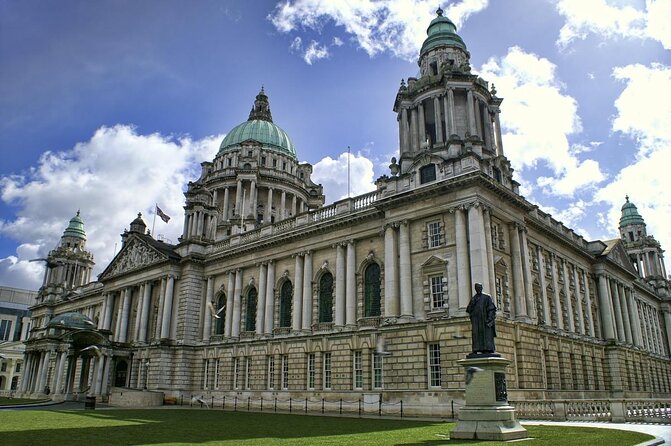
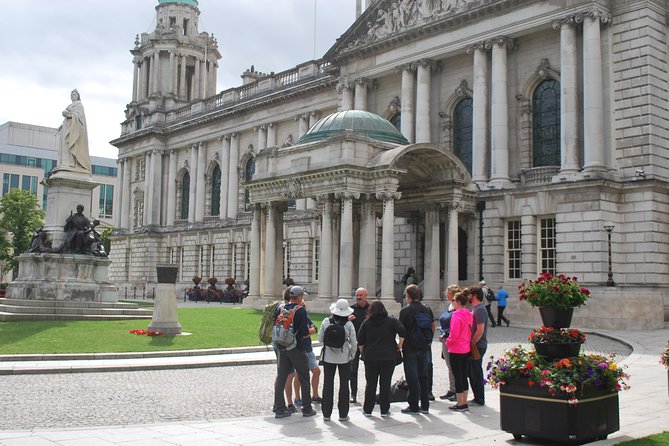
Meet at 10:30 a.m. in the grounds of Belfast City Hall. The location is easy to find, central, and close to public transport. It is also a useful place to begin because the guide can introduce both the city and the political history before the group moves into the streets.
Expect about 20 minutes here. You will hear why the relationship between British and Irish communities became so strained and how the modern Troubles began in the late 1960s.
This is a talk rather than a guided visit inside the building, and admission to the grounds is free. The advantage is that you get the necessary context right away. The tradeoff is that the first stop involves standing still, so comfortable shoes and suitable clothing matter even though the route itself is flat.
The tone is important. The subject is serious, but the guide’s job is to explain rather than provoke. The strongest accounts present both sides of the political divide and allow you to understand the facts before drawing your own conclusions.
Donegall Place and Castle Lane: ordinary streets, painful memories
From City Hall, the route reaches Donegall Place, now one of Belfast’s main shopping streets. The modern setting can make the past feel especially striking. People shop, buses move through the centre, and the street looks much like a commercial street in another British or Irish city.
Here, your guide explains a 1971 nightclub bombing, the tragic events that followed, and the creation of the Ring of Steel. You spend about 15 minutes at this stop. It is a useful reminder that the conflict was not confined to distant borders or isolated districts. It reached the heart of daily city life.
Castle Lane brings another account of life at the height of The Troubles. The street is now part of a pedestrian shopping area, but your guide uses it to explain an event that remains strongly remembered in Belfast.
These stops are valuable because they connect history to familiar surroundings. You do not need to imagine an abandoned battlefield. You are standing in places where people once worked, shopped, socialized, and tried to carry on with ordinary life.
The difficult part is emotional. Some stops concern explosions and deaths, and the guide does not soften that reality. If you prefer light sightseeing, this will not be the right city walk. If you want an honest account of Belfast, the seriousness is part of the point.
The Spirit of Belfast and the events of 1971
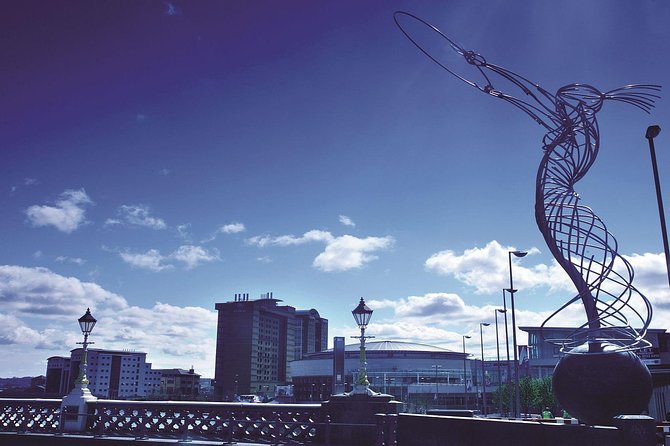
The Spirit of Belfast sculpture, known locally as the Onion Rings, provides the next pause. The artwork represents resilience, and the guide uses it to discuss a chain of events that began in a nearby bar in 1971.
You will hear how those events helped push Northern Ireland into a faster and more destructive cycle of violence. The stop lasts around 15 minutes, so expect another focused talk rather than a long period of free time.
This is one of the tour’s more effective contrasts. The public art suggests renewal, while the history beneath it recalls a period of fear and division. Belfast’s present cannot be understood without both parts.
The guide may also help you see why location matters. A public sculpture is not only something to photograph. In this context, it becomes a prompt to consider how the city remembers violence and presents itself today.
More Walking Tours in Belfast:
- Belfast Political Tour-Conflicting Stories Walking Tour
★ 4.5 · 459 reviews - Best of Belfast Walking Tour
★ 5.0 · 399 reviews
Cathedral Quarter: nightlife beside the road to peace
The walk then moves through the Cathedral Quarter, a regenerated part of central Belfast known for street art, bars, and nightspots. You spend about 20 minutes here hearing about major events and the beginnings of the path toward peace.
This section does more than show you a popular evening district. It helps explain the scale of change. Streets that now support culture and nightlife were once tied to a city under pressure from violence, security measures, and division.
The strongest guides connect the physical setting to personal memory. Róisín, Anne, James, and other guides are described as bringing strong personal feeling and clear storytelling to the subject. Some grew up during the Troubles or experienced that period directly, which can make the past feel less distant.
At the same time, personal experience can bring emotion and perspective. The tour’s stated aim is to remain neutral and present both sides. You should still listen actively, especially when the guide shares memories. A well-told personal story adds meaning, but it is not a replacement for the wider political context.
This is also a good point to notice the pace. The route covers a modest distance, but the stops are substantial. One person described the walk as more standing and listening than actual walking. If you want constant movement, you may find the format slow. If you want time to follow a complex subject, the pauses are useful.
Ann Street and policing after the peace agreement
At Ann Street, the group pauses beside Belfast’s largest police station. The guide explains how Northern Ireland was policed during The Troubles, how policing changed after the peace agreement, and how Brexit could affect the border question.
This section gives the walk a useful present-day angle. It does not leave you in the past or treat peace as a simple ending. Instead, it shows that political questions remain active, even though the city is far removed from the worst years of violence.
The police station also makes the subject tangible. Policing during the Troubles was not an abstract matter. It affected trust, safety, identity, and how different communities viewed the state. The guide’s explanation can help you understand why changes after the peace agreement mattered so much.
The mention of Brexit adds another layer, but do not expect a full seminar on current politics. The tour has limited time and covers many subjects. You will receive an outline of the possible impact on borders and the wider political situation, not every detail of the debate.
The Beacon of Hope and Belfast’s unfinished future
The tour ends at the Beacon of Hope beside the River Lagan on Oxford Street. The final stop lasts about 20 minutes and compares modern Belfast with one of the darkest days in its past.
The sculpture is a fitting place to finish. It represents resilience and regeneration, but the guide also discusses the fragile nature of peace and what may come next. That ending keeps the walk from becoming a simple before-and-after story. Belfast has changed greatly, yet the political and social questions connected to identity have not vanished.
From the Beacon of Hope, you are about a five-minute walk from City Hall. That makes the end point convenient if you need to return to the centre, continue sightseeing, or find lunch nearby.
I like that the final message is hopeful without pretending everything is settled. The tour asks you to compare the Belfast you see today with the city described earlier in the morning. The contrast gives the route an emotional shape: origins, violence, daily life under pressure, peace, and an uncertain future.
Guide style and the value of the headsets
The guide is the heart of this experience. The names most often associated with especially strong tours include James, Mylie, Anne, Róisín, Jim, Chris, Rory, and Rorey. The quality can vary from one departure to another, as with any guided activity, but the tour clearly depends on guides who can handle politics, grief, and personal memory with care.
The most praised qualities are clear storytelling, a neutral approach, strong command of the subject, and the ability to connect political events with individual lives. Mylie is praised for presenting both sides while adding a useful view of Belfast today. Anne is described as sharing memories of growing up during the Troubles. James is repeatedly noted for his energy, facts, and personal warmth.
Headsets are included so you can hear the guide clearly while walking. That is especially helpful in a group of up to 25 people. One poor experience involved a failed speaker and a guide who did not adjust well, so the equipment is not a minor detail. If the headset stops working, tell the guide quickly rather than trying to follow from the back.
The group size is not tiny, but 25 is manageable for a city walk. You may still need to move closer during stops, particularly if the street is noisy. The headsets make the route much easier to follow than a talk delivered only by voice.
Price, timing, and comfort
At $36.06 per person, this is not the cheapest way to see Belfast’s centre, but it offers more than basic orientation. You are paying for two and a half hours of structured explanation, a local guide, headsets, and access to a subject that can be difficult to understand from a casual visit.
The value is strongest if you are interested in modern political history. You get several key locations, a clear timeline, personal accounts, and a look at Belfast’s present-day regeneration. If your main goal is architecture, shopping, or general sightseeing, a broader city tour may suit you better.
The route is about 1.5 miles and Belfast city centre is flat, with no hills or steps. Most people can take part, but you will be on your feet for long periods. The practical issue is not strenuous walking. It is standing while listening.
The tour runs in all weather unless conditions cause cancellation. Bring a waterproof jacket for showers and warm clothing in winter. Comfortable footwear is still a good idea, even on a flat route. Service animals are allowed.
The minimum age is 12. That seems sensible given the subject matter. The tour includes violence, bombings, death, and political conflict, so parents should decide if the discussion suits younger teenagers.
You can cancel for a full refund up to 24 hours before the start time. Changes or cancellations inside 24 hours are not refunded. If poor weather cancels the activity, you are offered another date or a full refund.
Who should book this walk?
I would choose this tour early in a Belfast visit if you want the city’s modern history to shape everything else you see. It gives you a framework for understanding public art, police presence, political language, and the contrast between regenerated districts and memories of violence.
It suits adults and teenagers aged 12 or older who are willing to listen carefully. It is also a good choice for anyone who has heard only one side of the British and Irish story and wants a more balanced account.
You should think twice if you want a fast-moving walk with many interiors or photo stops. Most of the time is spent outside, listening. Weather can affect comfort, and the subject is often sad.
Should you book A History of Terror?
Book it if you want to understand Belfast beyond its pubs, murals, and attractive centre. The route is easy, the distance is modest, and the history is presented through real places rather than a string of disconnected dates.
The biggest reason to go is the human delivery. Guides such as James, Anne, Mylie, and Róisín bring clarity and personal memory to a complicated subject. The 99 percent recommendation rate and 5 out of 5 rating from 2,882 reviews reflect how consistently the experience works for people seeking a serious, balanced introduction.
Skip it if you are looking for a cheerful general tour or if discussions of political violence will make your visit uncomfortable. For everyone else, $36.06 buys a thoughtful morning, a useful introduction to Belfast, and a better understanding of how this city reached its present day.
FAQ
Where does the tour begin?
The tour begins at Belfast City Hall, Donegall Square North, Belfast BT1 5GS.
Where does the tour end?
It ends at the Beacon of Hope on Oxford Street, Belfast BT1 3NB. From there, it is about a five-minute walk back to City Hall.
What time does the tour start?
The start time is 10:30 a.m.
How long is the tour?
The experience lasts approximately two hours and 30 minutes.
How far do you walk?
The route covers about 1.5 miles. Belfast city centre is flat, with no hills or steps, though comfortable footwear is advised.
Is the tour suitable for children?
The minimum age is 12. Since the tour discusses violence, bombings, death, and The Troubles, parents should consider the subject matter before booking for younger teenagers.
What happens if the weather is poor?
The tour operates in all weather unless it is canceled because of poor conditions. Bring a waterproof jacket and warm clothing when needed. If the activity is canceled due to weather, you can choose another date or receive a full refund.
More Historical Tours in Belfast
- London Small Group Tour of Historical Pubs
★ 5.0 · 10,422 reviews - Old Town Walking Tour History and Tales in Edinburgh
★ 5.0 · 2,168 reviews - Soho Music & Historic Pubs Tour
★ 5.0 · 1,993 reviews - Old Town Historical and Underground Tour
★ 5.0 · 1,574 reviews
Just added in Belfast
- Best of Belfast Walking Tour★ 5.0 · 399 reviews
- Belfast Political Tour-Conflicting Stories Walking Tour★ 4.5 · 459 reviews
- Belfast Eclectic Walking City Center Experience, The Marti Way★ 5.0 · 348 reviews
- Guided Day Tour of Giant’s Causeway from Belfast by Comfortable Coach★ 5.0 · 740 reviews
- From Belfast: Game of Thrones, Iron Islands & Giant’s Causeway★ 5.0 · 923 reviews
- Belfast Troubles Tour: Walls and Bridges★ 5.0 · 853 reviews
- Belfast black taxi tours★ 5.0 · 1,166 reviews
- Belfast’s Political Mural Taxi Tour★ 5.0 · 1,180 reviews
Walking Tours, compared.

Magical London: Harry Potter Guided Walking Tour
Read our review →
Underground Vaults Walking Tour in Edinburgh Old Town
Read our review →
Oxford University Walking Tour With University Alumni Guide
Read our review →
Edinburgh Castle: Guided Walking Tour with Entry Ticket
Read our review →
Edinburgh Castle Guided Walking Tour in English
Read our review →
Tour for Muggles The Ultimate Harry Potter Walking Tour in London
Read our review →
University and City Walking Tour with Alumni Guide
Read our review →Browse the lists this tour appears in