
Reviewed · MUSEUMS
London: Royal Museums Greenwich Day Pass
The best part of this Greenwich pass is the mix of science, seafaring, and royal art packed into one historic district. You can put one foot east and one west at the Prime Meridian, then walk downhill to a famous 19th-century sailing ship and finish with galleries devoted to Britain’s maritime past.
I like the freedom to explore at your own speed, and I like that the pass includes the Royal Observatory and Cutty Sark while also opening the doors to the free Queen’s House and National Maritime Museum. The main catch is time: six hours sounds generous, but the hill, the large museums, and the 5 PM closing time can make it hard to see everything properly.
Key points to know before you go

- Stand on the Prime Meridian: Take the classic photograph with one foot in the eastern hemisphere and one in the western hemisphere.
- See Harrison’s groundbreaking clocks: The Royal Observatory explains how accurate timekeeping helped ships find their position at sea.
- Climb aboard Cutty Sark: Explore sailors’ quarters, the main deck, ship’s wheel, masts, and 11 miles of rigging.
- Allow for the uphill walk: Greenwich Park gives you fine views, but reaching the observatory requires a fairly demanding climb.
- Use the six hours carefully: The pass includes more than most people can see in detail during one visit.
- Bring patience for the audio guide: It is available in English, Spanish, Chinese, French, German, Italian, Portuguese, and Korean, but mobile signal and Wi-Fi can be weak.
Why this Greenwich day pass works
Greenwich gives you a rare combination of attractions that make sense together. The Royal Observatory explains how people measured time and navigated the seas. Cutty Sark shows the ship that carried goods across those seas. The National Maritime Museum then widens the story to exploration, trade, naval power, and ordinary life at sea.
You pay $40 per person for entry to the Royal Observatory and Cutty Sark. The Queen’s House and National Maritime Museum are free to enter, except for special exhibitions and guided tours. That means the price mainly rests on the two paid attractions, with the free museums adding useful value if you have the energy and time.
I would not treat this as a tightly scheduled guided tour. You make your own way to the Royal Observatory at Blackheath Avenue, then walk down through Greenwich toward Cutty Sark on King William Walk. The attractions are close enough to connect on foot, but the distance feels longer than it looks, especially after several hours inside museums.
The pass has a published duration of six hours, and all sites open at 10 AM and close at 5 PM, with last entry at 4 PM. Starting at 10 AM gives you the best chance of seeing the major highlights. Starting later turns the visit into a choice between depth and coverage.
More Museum Tours in London:
- Tower of London and Crown Jewels Exhibition Ticket
★ 4.5 · 6,677 reviews - London: Chelsea Football Club Stadium and Museum Tour
★ 4.8 · 4,576 reviews - Chelsea FC Stadium Tours and Museum
★ 5.0 · 1,908 reviews
Reaching the Royal Observatory through Greenwich Park
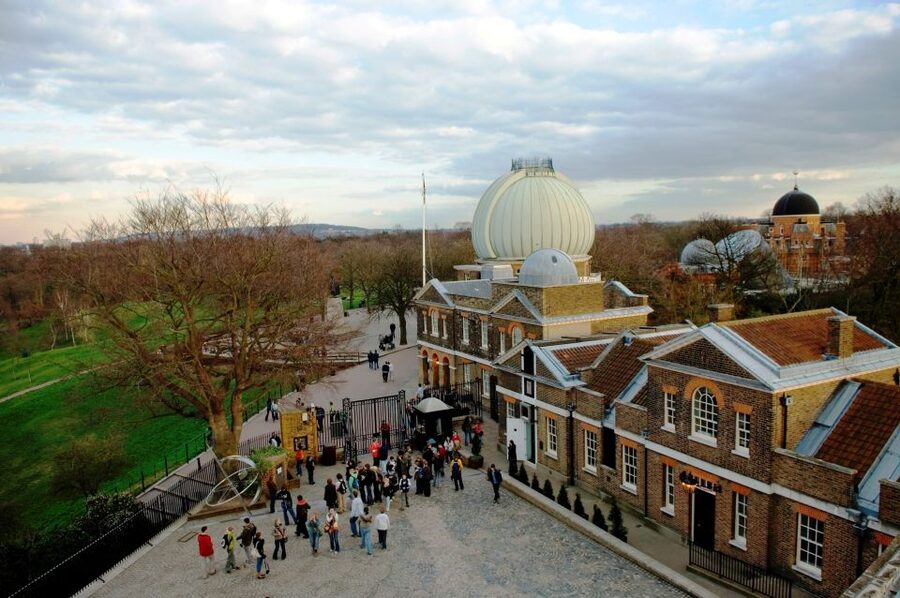
Your day begins at the Royal Observatory in Greenwich Royal Park. The setting is part of the appeal. As you walk up Blackheath Avenue, you get broad views across the park toward the River Thames and London, including the City of London.
That walk also creates the first practical issue. The observatory sits uphill, and several people have found the climb more demanding than expected. If you have limited mobility, plan your pace carefully. The experience is wheelchair accessible, but the route and slope still matter, so allow extra time rather than arriving in a rush.
The view rewards the effort. You are not entering an isolated science museum. You are reaching the place from which British astronomers helped establish a global system of time and navigation. The park gives the observatory a spacious setting, while the city skyline and river help you understand why this location mattered.
Once inside, collect the downloadable multilingual interactive guide. It supports eight languages: English, Spanish, Chinese, French, German, Italian, Portuguese, and Korean. The guide helps explain the buildings and objects, though the phone connection can be unreliable in this area. Download what you need before arrival if possible, and bring headphones if you prefer to listen privately.
The Prime Meridian and the birthplace of GMT
The Meridian Courtyard supplies the most recognizable moment of the visit. Here, you can stand astride the Prime Meridian Line with one foot in the east and one in the west.
It is a simple idea, but it works well as an introduction to Greenwich. The line marks longitude zero, the reference point used for measuring distances east and west around the globe. Greenwich Mean Time grew from this system and became a standard for clocks, navigation, and international communication.
You will probably spend only a few minutes taking photographs, but the courtyard gives context to the rest of the observatory. This is not just a photo stop. It is the point where abstract ideas about longitude, time zones, and navigation become physical and easy to understand.
The line can be busy, so visit early if the photograph matters to you. The image is most effective when you can see the marker clearly and position both feet without rushing.
Flamsteed House and the Astronomers Royal
From the courtyard, move into Flamsteed House, the oldest part of the observatory. You follow the route associated with the Astronomers Royal and see how astronomy was practiced before modern instruments made the work easier.
The Octagon Room is a highlight. Designed by Sir Christopher Wren, it is one of the best preserved Wren interiors in London. Its value is not only architectural. The room helps you picture astronomers working in a formal setting where careful observation, record keeping, and long hours were central to the job.
The observatory links its displays to scientists and inventors including John Harrison, Isaac Newton, Edmond Halley, James Bradley, Annie Maunder, George Airy, and Albert Einstein. The names can feel dense if you try to read every panel, so I suggest choosing the objects that interest you most and using the guide to fill in the story.
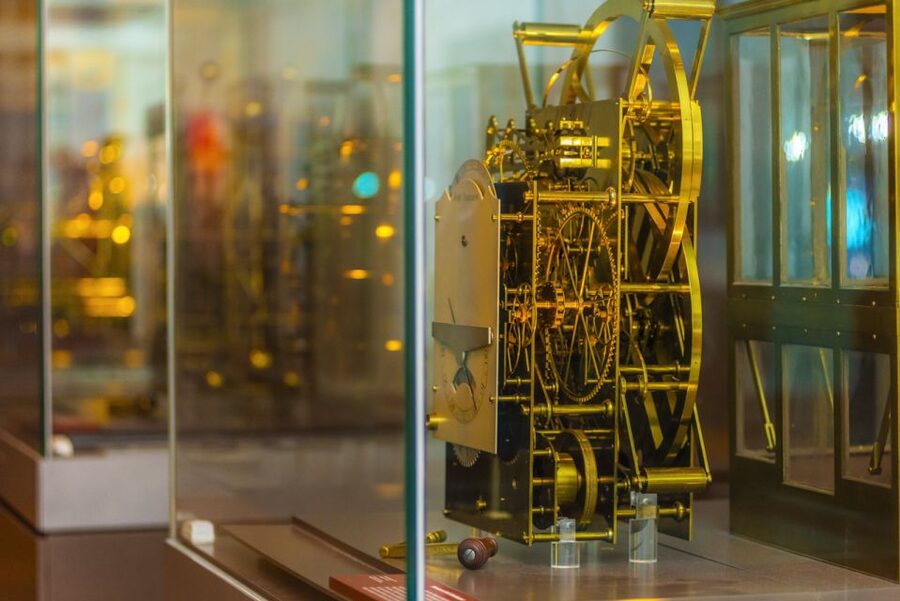
John Harrison’s clocks deserve a proper pause. His inventions changed the way sailors measured time at sea and helped solve one of navigation’s hardest problems. The displays are especially useful if you enjoy engineering, practical science, or the connection between a small mechanical device and global travel.
Outside, look for the Shepherd Gate Clock. Mounted on the observatory wall, it was the first clock to show Greenwich Mean Time to the public. It is a modest object, but it makes the spread of standardized time feel surprisingly modern and practical.
More museums and galleries in London:
- London: British Museum Guided Tour
★ 4.3 · 1,182 reviews - Official tickets: Moco Modern & Contemporary Art Museum
★ 4.5 · 1,157 reviews - British Museum London Guided Tour Semi-Private 8ppl Max
★ 5.0 · 984 reviews - London: Jack the Ripper Museum Tickets
★ 4.2 · 894 reviews
Time balls, telescopes, and the view from the hill
The bright red Time Ball on top of Flamsteed House is easy to spot. First used in 1833, it remains in operation today and is one of the earliest public time signals in the world.
Before widespread personal clocks and dependable public timepieces, a visible signal could help ships and residents set their watches. The ball is a good reminder that the observatory served working people, not only academic astronomers.
Do not skip the Great Equatorial Telescope. It sits under the observatory’s large onion-shaped dome and gave astronomers new views of the universe more than a century ago. The scale of the dome and the instrument creates a strong finish to the observatory visit, especially after the smaller clocks and instruments inside Flamsteed House.
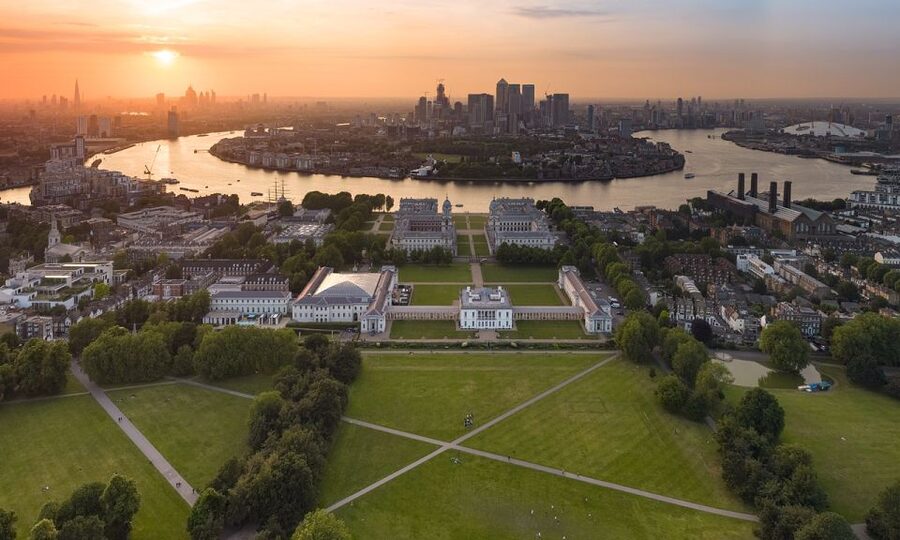
The views from the observatory are another major reward. You look down across Greenwich, the Thames, and London from a position that makes the city feel unusually open. The climb is the price of admission in physical terms, but the view gives you a clear reason to make the effort.
Families should know that the observatory leans more toward displays, instruments, and explanation than hands-on play. Younger children may find Cutty Sark more immediately exciting, while older children and adults can get more from the astronomy and timekeeping exhibits.
Walking downhill to Cutty Sark
After the observatory, head downhill through Greenwich toward Cutty Sark. This route passes through a pleasant part of the district and gives you a chance to reset before the ship visit.
The practical lesson is to protect your Cutty Sark entry time. The observatory can hold your attention for several hours, especially if you stop at every display. One visitor spent so long there and at the Queen’s House that the Cutty Sark had stopped admitting people by the time they arrived. If boarding the ship is a priority, visit it first or leave the observatory with a firm departure time.
The walk itself is manageable for many people, but it adds to the day’s total distance. Wear comfortable shoes and do not assume that four attractions close together means little walking.
Cutty Sark, from sailors’ quarters to the main deck
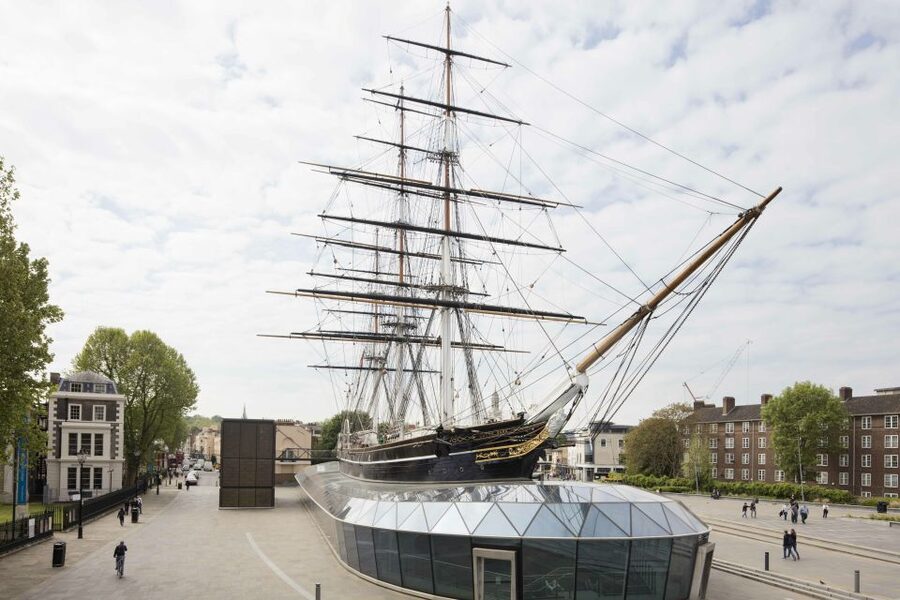
Cutty Sark is the paid attraction most likely to appeal to the widest range of ages. Launched in 1869 for the China tea trade, she is the world’s sole surviving tea clipper. Her record-breaking passages help explain why speed mattered so much in the era before modern cargo ships and air transport.
The ship’s original wooden planks and iron frames have been carefully conserved. You can see the design from several angles, including from below, because the vessel was raised more than three meters during a six-year conservation project.
That view underneath the hull is one of the most unusual parts of the visit. You can study the long, elegant lines that helped Cutty Sark move quickly through the water. It turns a ship from a static object into a piece of engineering.
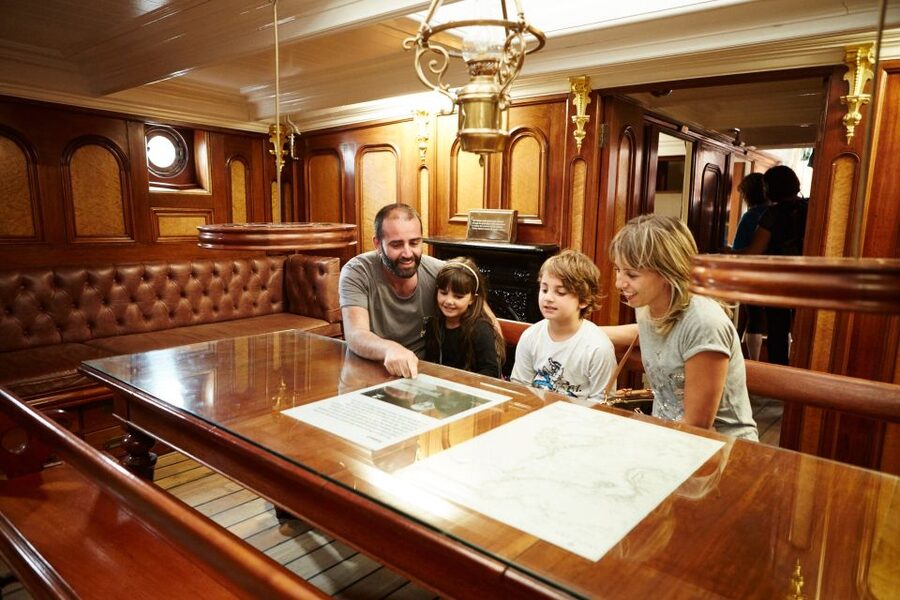
Inside, explore the sailors’ quarters and picture the cramped conditions of life aboard a working vessel. The ship is not just a polished national symbol. It also shows the routines, limited space, and practical demands of long-distance sailing.
On deck, look up. Cutty Sark’s masts and 11 miles of rigging give the ship its drama. The scale becomes clearer when you stand beneath the rigging rather than viewing the vessel from the riverbank.
You can also take the helm at the ship’s wheel. It is a small interactive moment, but it helps families and first-time ship visitors connect with the mechanics of sailing. The deck provides fine views toward the Thames, adding a useful link between the preserved ship and the working river outside.
If you can visit only one of the paid sites, Cutty Sark is the easier choice for a short attention span or a family group. The route feels varied, the ship has strong visual impact, and you move through cabins, decks, and the space beneath the hull rather than spending the entire visit reading labels.
The Queen’s House and its Inigo Jones design
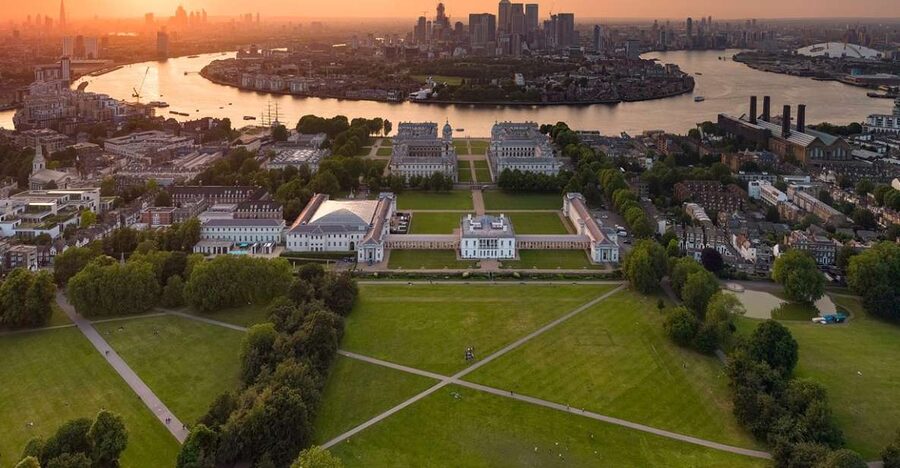
The Queen’s House sits between the observatory and Cutty Sark, making it an easy stop during the walk. Built in the 17th century and designed by Inigo Jones, it introduced a new style of royal architecture to England.
The building itself is the main reason to enter, but the art collection gives you another reason to stay. You will find paintings and other works connected with royal, naval, and British history. The famous architectural features and elegant rooms offer a sharp contrast to the practical instruments at the observatory and the working quarters aboard Cutty Sark.
Entry is free, though special exhibitions and guided tours may cost extra. I would give the Queen’s House at least a short visit even on a packed schedule, then return for longer only if art and architecture are a priority.
It may not suit every group equally. If your children are eager to reach the ship, a long gallery visit can feel like a delay. If you enjoy paintings, design, and quiet historic interiors, it can be one of the most rewarding free additions to the pass.
The National Maritime Museum and the bigger story
The National Maritime Museum is the largest museum of its type in the world, and its scale can work for or against you. It offers far more material than you can absorb in one afternoon, so do not try to see every room.
Instead, use it to extend the themes introduced at the observatory and Cutty Sark. The museum tells stories of exploration and endeavour that helped shape the world, placing ships, sailors, science, trade, and empire into a larger frame.
I suggest treating it as a focused final stop. Pick the galleries or subjects that appeal to you, rather than racing through the entire building before closing time. Entry is free apart from special exhibitions and guided tours, so you lose little by returning on another day if your London schedule allows.
The museum is also a useful fallback if weather turns poor. The observatory viewpoint and park walk are exposed, while the museum and Queen’s House offer substantial indoor time.
How to plan six hours without rushing
A six-hour visit is possible, but you need to decide what matters most.
If you want all four sites, start at 10 AM and keep moving. Begin at the observatory, limit the time spent in Flamsteed House, then head downhill to Cutty Sark before visiting the free museums. This plan gives you coverage, but not a close look at every display.
If Cutty Sark is your main goal, visit it first. It is a shorter, more focused experience, and you avoid the risk of spending too long at the observatory. You can then walk uphill to the observatory and use the remaining time for the free sites.
If you care most about science and astronomy, give the observatory priority. Harrison’s clocks, the Octagon Room, Shepherd Gate Clock, Time Ball, and Great Equatorial Telescope deserve more than a quick glance.
The pass is less useful if you dislike walking, prefer a guided group, or want to see special exhibitions. It includes audio guides and entry, not food, drinks, or guided tours. Greenwich has cafés, shops, and restaurants nearby, but eating during the day will reduce your museum time.
For flexibility, you can cancel up to 24 hours before the activity for a full refund, and you can reserve now and pay later. Those policies help if your London plans are still changing, though they do not solve the main issue here, which is fitting four sites into one opening day.
Who should book this Greenwich pass?
I would recommend it to first-time London visitors who want a full day outside central London, families with school-age children, and anyone interested in ships, navigation, architecture, or the practical science of time.
It also suits independent visitors who prefer to set their own pace. You are not locked into a guide’s timing, and the multilingual audio material lets you explore in a language that works for you.
I would be more cautious if you have only a few hours, do not enjoy hills, or want a slow museum day. In that case, buy access for the observatory and Cutty Sark only if those are your priorities, then use the free museums selectively.
FAQ
What does the Royal Museums Greenwich day pass include?
It includes entry to the Royal Observatory and Cutty Sark, plus access to the National Maritime Museum and Queen’s House. Special exhibitions and guided tours at the two free museums are not included.
How long does the experience last?
The stated duration is six hours. All four sites open at 10 AM and close at 5 PM, with last entry at 4 PM.
Is an audio guide included?
Yes. A downloadable multilingual interactive guide is available in English, Spanish, Chinese, French, German, Italian, Portuguese, and Korean.
Where does the visit begin?
The Royal Observatory is at Blackheath Avenue, London, SE10 8XJ. Cutty Sark is at King William Walk, London, SE10 9HT.
Is the experience wheelchair accessible?
Yes, the activity is listed as wheelchair accessible. The walk up to the Royal Observatory is uphill, so plan your route and pace with that in mind.
Are food and drinks included?
No. Food and drinks are not included. Greenwich has cafés, shops, and restaurants where you can stop during the day.
Should you book it?
Book this pass if you want a full Greenwich day built around the Prime Meridian and Cutty Sark, and if you are comfortable walking between sites. The strongest value comes from combining the two paid attractions with the free Queen’s House and National Maritime Museum.
My practical advice is simple: start early, protect your Cutty Sark time, and do not try to read every label. If you allow the observatory to take the whole morning, you may miss the ship. Plan the order around your top priority, and this $40 pass gives you a rewarding mix of London views, scientific invention, royal architecture, and one remarkable old sailing ship.
Just added in London
- 3-Day Stonehenge*, Glastonbury, Bath & the South West Coast Tour from London★ 4.5 · 32 reviews
- Private Guided Tour of Harry Potter Locations – English/ Italian★ 5.0 · 33 reviews
- Private Tour London Highlights, entries Westminster Abbey, The Tower of London★ 5.0 · 93 reviews
- 2 Hour Walking Tour from Buckingham Palace to Big Ben★ 5.0 · 32 reviews
- 30 Major London Attractions Walking Tour With Photos★ 4.5 · 51 reviews
- 007 Shadow Of Spectre★ 5.0 · 135 reviews
- Private Guided Tour of the British Museum – Tickets Included★ 5.0 · 193 reviews
- Bath, Avebury and Lacock Village Small-Group Day Tour from London★ 4.5 · 121 reviews
Museums, compared.

Liverpool Football Club Museum and Stadium Tour
Read our review →
Tower of London and Crown Jewels Exhibition Ticket
Read our review →
Chelsea Football Club Stadium and Museum Tour
Read our review →

Browse the lists this tour appears in