
Reviewed · MUSEUMS
London: Natural History Museum Entry Ticket and Guided Tour
London’s Natural History Museum is at its best when you know where to look. In one hour, this guided visit takes you from the great dinosaur skeletons and the 82-foot blue whale to volcanoes, minerals, evolution, and the museum’s Wildlife Garden. It is a brisk introduction to a huge collection.
I like the expert route through the museum, especially for a first visit, and I like the chance to use the guide’s tips for a longer self-guided stay afterward. Guide Paul receives repeated praise for his clear explanations, friendly manner, and ability to keep both adults and children involved. The main drawback is time: one hour is enough for highlights, not a full museum visit, and $76 per person is a serious price for a short tour.
Key points to know before you book
- The 82-foot blue whale hangs in Hintze Hall, one of the museum’s most memorable sights.
- The Diplodocus skeleton and dinosaur displays give children and adults an immediate reason to look up.
- Paul is the guide most often named in the feedback, with a reputation for answering questions and adapting to families.
- The Volcanoes and Earthquakes Gallery adds useful context about how our planet formed and changed.
- The Wildlife Garden offers a quieter look at living creatures, including birds, bees, and other animals.
- Express security and a reserved ticket can save time at the entrance, though the tour itself lasts only one hour.
Why a one-hour tour helps inside this huge museum
The Natural History Museum is not a small stop you can understand by wandering through one grand hall. Its galleries cover dinosaurs, geology, minerals, evolution, animals, and the workings of the Earth. If you arrive without a plan, you can spend a fair amount of time finding your way before reaching the displays you most want to see.
That is where this tour earns its keep. Your guide gives you a framework for the museum instead of sending you off with a map and a vague suggestion to see everything. You move through major highlights, hear the story behind selected objects, and learn which galleries deserve a longer return visit.
The one-hour format also forces a useful discipline. You will not stop at every case, read every label, or explore each room at length. Instead, you get an introduction to the museum’s main themes. I see this as a good first step for a short London visit, particularly if you want an informed overview before exploring independently.
The trade-off is simple: this is a highlights tour, not a slow museum day. If you already know the building well, or if you want to spend half an hour studying one fossil, you may prefer a standard entry visit on your own. If you are unsure where to begin, the guide can help you get your bearings fast.
More Museum Tours in London:
- Tower of London and Crown Jewels Exhibition Ticket
★ 4.5 · 6,677 reviews - London: Chelsea Football Club Stadium and Museum Tour
★ 4.8 · 4,576 reviews - Chelsea FC Stadium Tours and Museum
★ 5.0 · 1,908 reviews
Meeting your guide near South Kensington
The meeting point is outside South Kensington station. Take the Natural History Museum Ismaili Centre exit, then meet your guide on Exhibition Road, near the metal plate marked The Royal Borough of Kensington and Chelsea.
Read this information carefully before leaving the station. One of the few practical complaints about the experience concerns the meeting-point description, so allow extra time to find the correct exit and sign. The station area can feel confusing if you come out at the wrong side.
Your reservation ticket is included, along with a guide and headsets when needed. The headsets matter in a large museum, where voices can disappear under the echo of the grand halls and the sound of other groups. Transportation, food, and drinks are not included, so plan those separately.
The experience is wheelchair accessible. The tour is offered in English, and availability depends on the starting time you select. You can cancel up to 24 hours ahead for a full refund, and the reserve-now, pay-later option lets you hold a place without paying immediately.
The grand halls and the Diplodocus skeleton
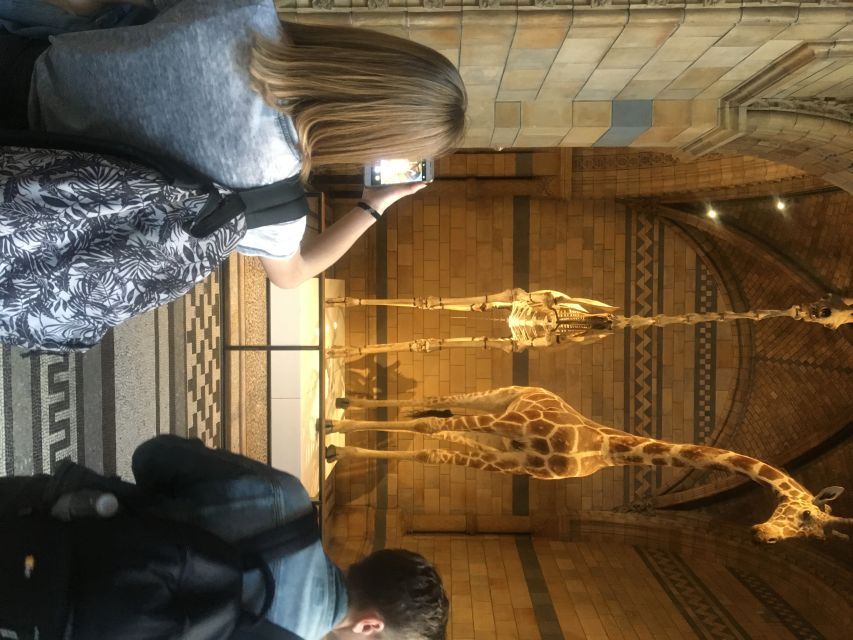
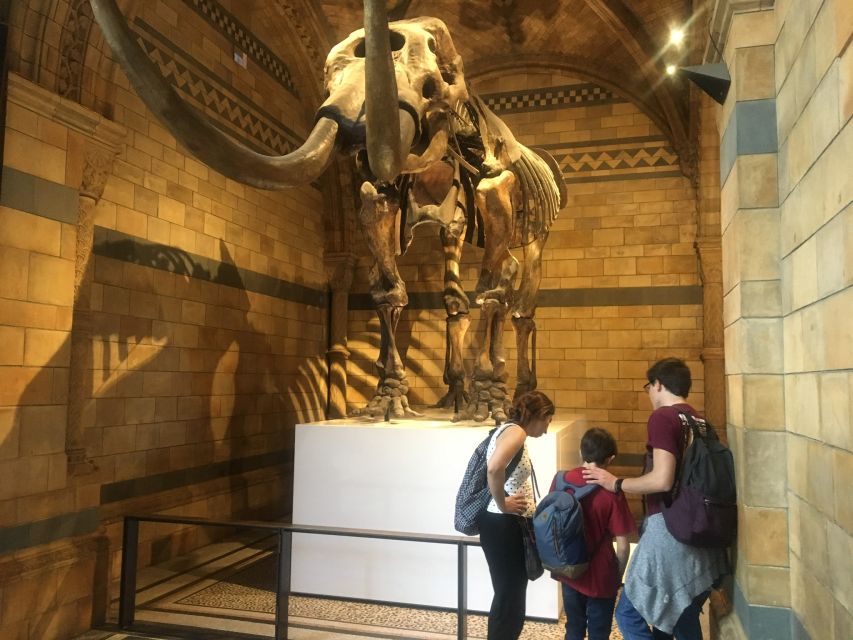
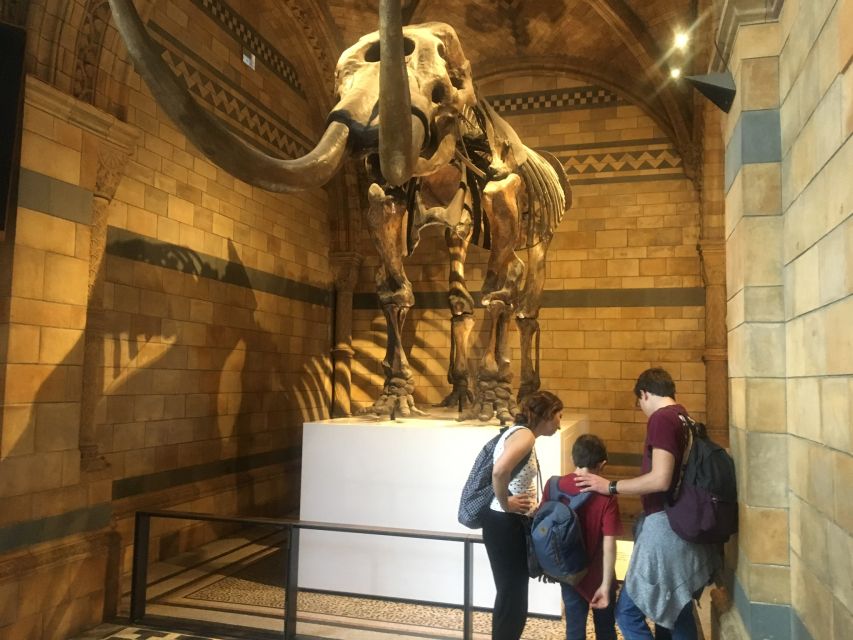
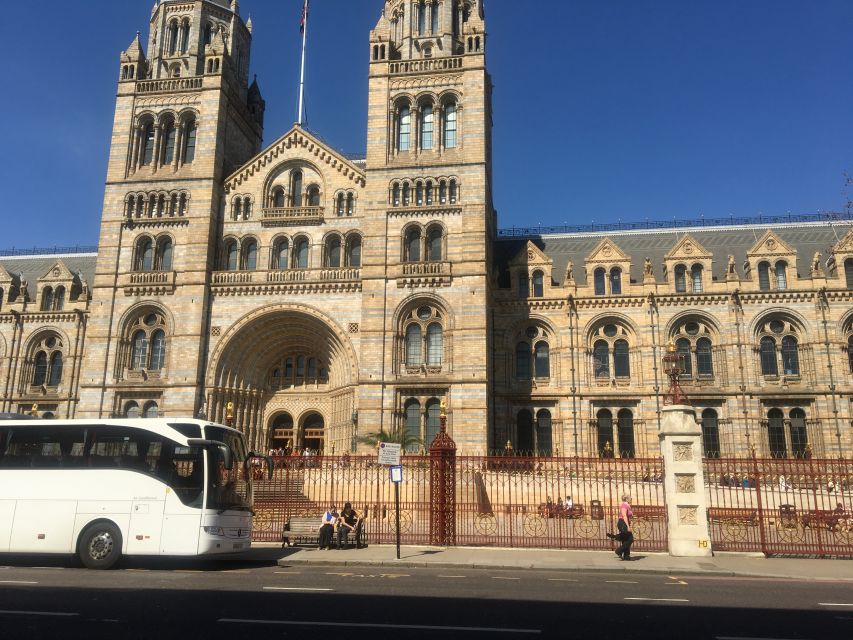
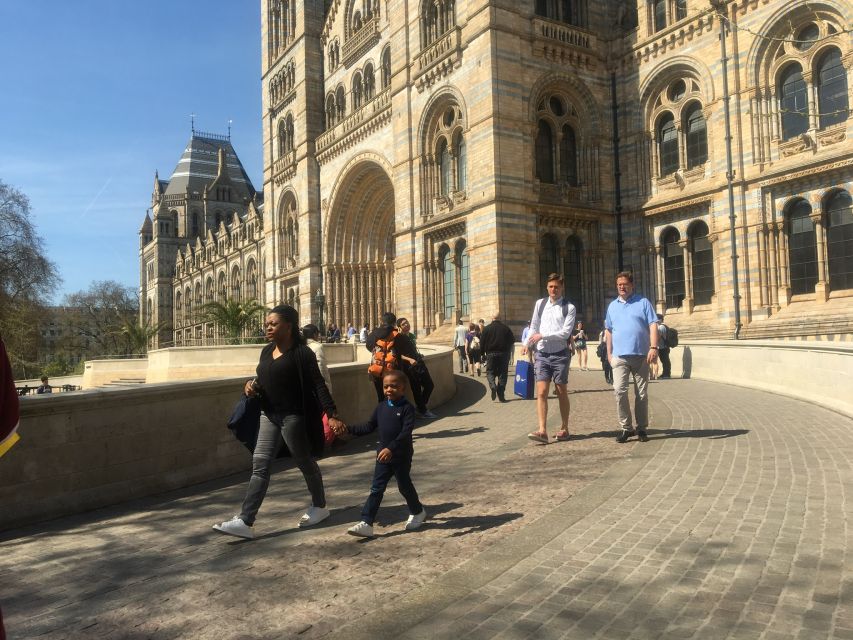
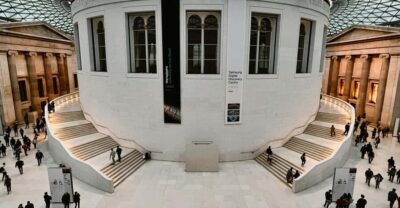
The museum’s architecture sets the tone before the guide says much at all. Inside, you are surrounded by elaborate stonework and tall halls designed to make the natural world feel suitably grand. The scale is not a minor detail: it gives the dinosaur skeletons and enormous specimens room to make an impression.
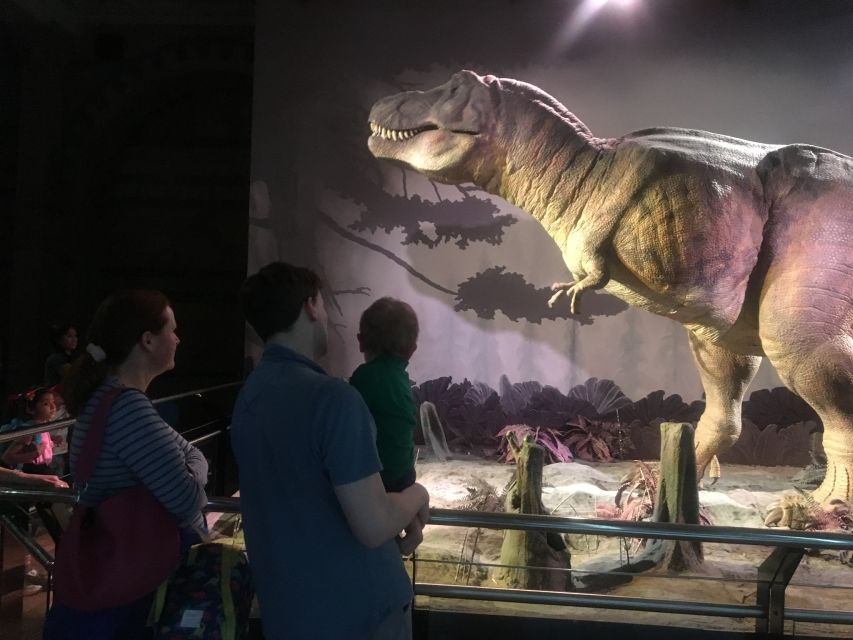
The Diplodocus skeleton in the Central Hall is an early highlight. Its long body and tail make it easy to understand the sheer size of these animals, even if you know little about dinosaur science. A guide can turn the skeleton from a dramatic object into a starting point for questions about fossils, anatomy, extinction, and how scientists reconstruct creatures from incomplete evidence.
This is also a useful stop for families. Children often respond to size first, then begin asking how the animal lived or moved. Paul has been praised for keeping children involved while still giving adults enough substance to make the tour worthwhile. That balance is important because a dry lecture can lose younger children quickly, while a tour aimed only at children can feel thin for parents.
Expect crowds around the most famous displays. The guide’s value is not only the information, but the ability to keep the visit moving when the hall is busy. You may not get a long, quiet look at every object, but you should leave with a clear sense of what to revisit.
Hintze Hall and the blue whale
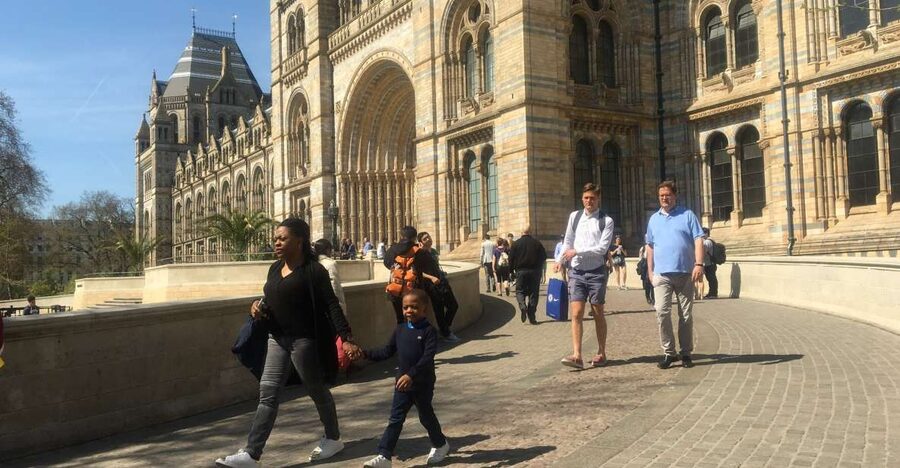
Hintze Hall is home to the museum’s enormous blue whale skeleton, which measures about 82 feet, or 25 meters, from end to end. It is one of the clearest examples of how the museum uses scale to make science memorable. You do not need specialist knowledge to understand that this animal was immense.
The blue whale also changes the tone of the visit. The dinosaur skeletons point toward vanished life, while the whale connects the museum’s displays to animals that still exist today. That contrast helps place extinction, evolution, and the variety of life on Earth into a wider picture.
Your guide can explain the story behind the specimen and the work required to preserve and study such objects. This is one of the more valuable parts of a guided visit. A display case gives you the finished object, but the guide can explain the research, care, and scientific questions that sit behind it.
You should expect to look up often in this hall. The museum was designed for big sights, and the whale rewards a few moments spent simply taking in its full length. Still, the stop is likely to be brief because the tour has several other galleries to cover.
More museums and galleries in London:
- London: British Museum Guided Tour
★ 4.3 · 1,182 reviews - Official tickets: Moco Modern & Contemporary Art Museum
★ 4.5 · 1,157 reviews - British Museum London Guided Tour Semi-Private 8ppl Max
★ 5.0 · 984 reviews - London: Jack the Ripper Museum Tickets
★ 4.2 · 894 reviews
Volcanoes, earthquakes, and the making of Earth
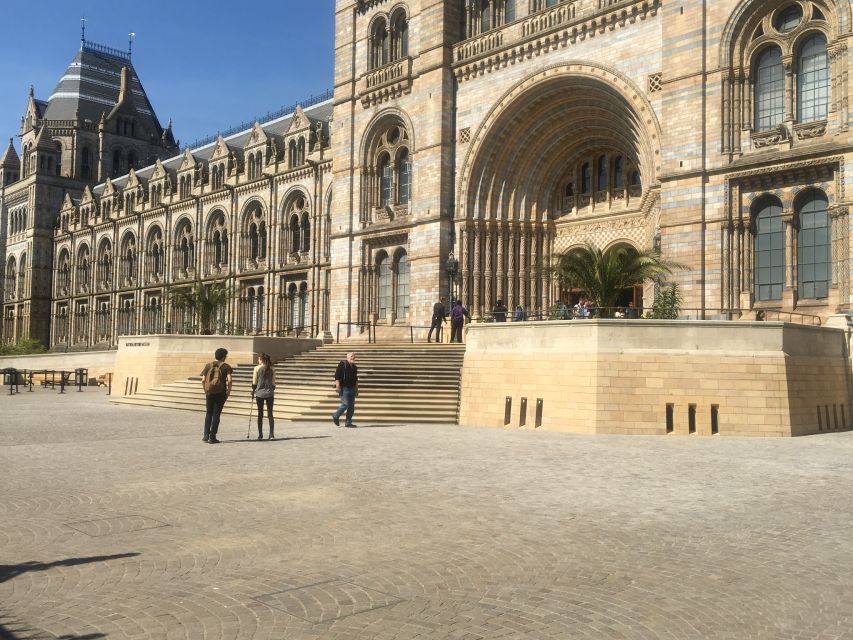
The Volcanoes and Earthquakes Gallery shifts the focus from animals to the planet itself. Here, you explore questions about Earth’s formation, volcanic activity, earthquakes, and the forces that keep changing the surface beneath us.
This gallery is especially useful if you want more than a parade of spectacular specimens. It shows how the museum connects objects to larger scientific ideas. Fossils tell part of the story of life, but geology explains the physical setting in which life develops and changes.
A guide can make this section easier to follow by linking separate displays into one narrative. You may find that the gallery raises questions rather than answering everything in detail, which is appropriate for a one-hour introduction. If earthquakes or volcanoes are a particular interest, ask your guide where to return after the tour.
The practical limitation is pace. Earth science can take time to explain, and a quick stop may leave you wanting more. I would treat this gallery as a preview. Note the parts that catch your attention, then return to them after the guided portion ends.
Minerals, gems, and the details you can miss
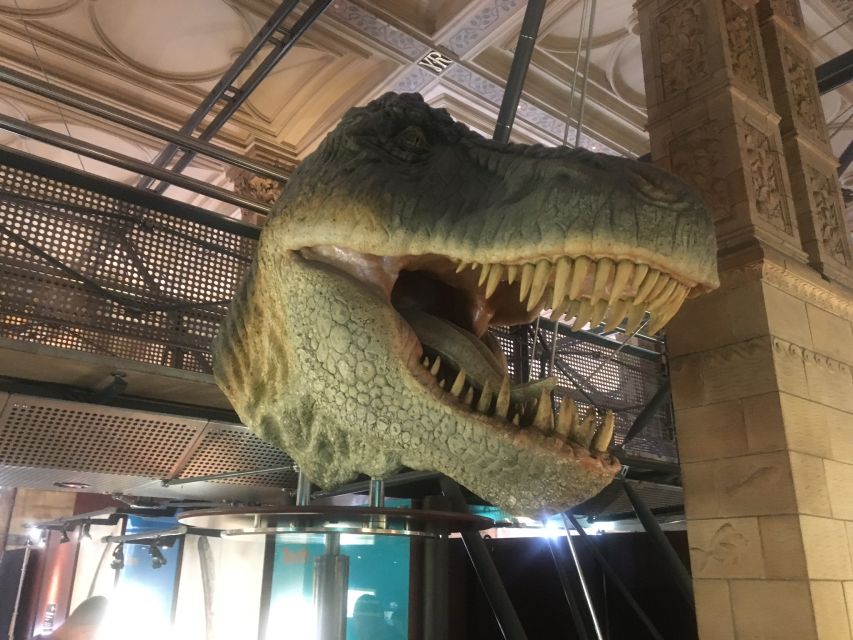
The minerals and gems displays offer a different kind of appeal. Instead of huge bones or whale-sized specimens, you get intricate forms, colors, and structures that reward close viewing. They show that the natural world can be dramatic at a small scale, too.
A guide is helpful here because many mineral displays can look like beautiful objects without much explanation. You can learn how they formed, why they have particular shapes, and what they reveal about Earth’s materials. The point is not simply that a stone is attractive. It is that its structure records a natural process.
This section may appeal most to adults and older children who enjoy looking closely. Younger children may prefer the dinosaurs or whale, so families should expect different levels of interest from one gallery to the next. Paul’s reported willingness to answer questions is useful if someone in your group wants to linger on a particular specimen.
The tour cannot give every mineral the attention it deserves. Use the guide’s comments to decide what you want to see later. That is a recurring strength of this experience: it helps you spend your limited museum time with more purpose.
Evolution and the diversity of life
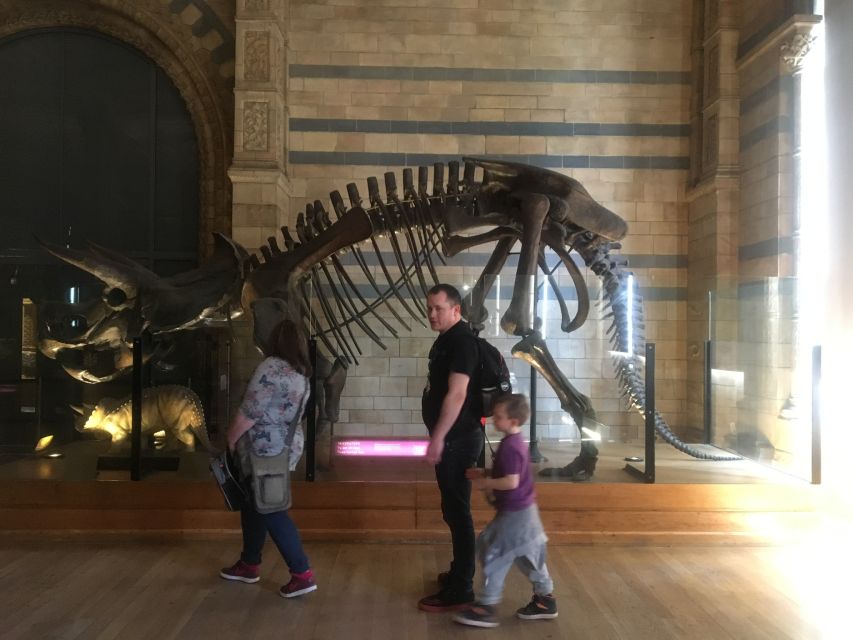
The Evolution Gallery brings the museum’s subjects together. Here, you look at how life changes over time and how the variety of living things fits into the larger story of Earth.
This is where the tour can move beyond isolated curiosities. The Diplodocus, blue whale, minerals, and geological displays begin to feel related rather than random. The guide can explain how scientists use specimens to study life, its changes, and its connections.
You should not expect a full course in evolution during this stop. The guide has only a short period to cover a large building, so the focus is on clear examples and useful context. If you have children with you, this can be a good point to invite questions instead of trying to absorb every label.
Several families have found the tour workable for children around seven to nine years old. One particularly useful detail is that the guide has been able to involve a child who did not speak English, though you should not assume the same arrangement for every group. The tour is conducted in English, so older children and adults with some English will get the most from the explanations.
The butterfly collection and the Wildlife Garden
The butterfly collection adds fine detail after the museum’s giant specimens. Intricately displayed butterflies show color, pattern, and variety on a scale that encourages you to slow down and look closely.
The Wildlife Garden offers a different experience again. It is described as a haven for birds, bees, and other animals, giving you a chance to think about living wildlife rather than only preserved specimens and fossils. This outdoor element can be a welcome change after time in the museum’s grand interior.
Because the tour lasts one hour, ask your guide how much time is available for these areas on your specific departure. The listed highlights include the Wildlife Garden, but the main route also covers several major indoor galleries. You may need to return after the formal tour if you want a leisurely look.
The garden is also a good reason to leave some extra time around your booking. The guided portion is an introduction, not a complete visit to every part of the museum. If you like birds, insects, or urban wildlife, do not assume the tour alone will let you inspect everything at your own pace.
What the guide adds, especially for families
The guide is the main reason to pay for this experience instead of simply entering and wandering. Paul is the guide most often praised, and the descriptions of his approach are consistent: friendly, clear, responsive to questions, and able to explain displays to both adults and children.
That does not mean the guide will provide a private tour. Group size is not specified, so you should not book expecting an individual visit. The use of headsets when necessary suggests that the guide may need to speak to a group in busy halls.
The best use of the guide is to ask questions. If you want to know how scientists preserve specimens, why one fossil matters, or where to return afterward, speak up. Several experiences have been especially positive because the guide responded well to questions rather than delivering a fixed speech.
The guide can also help if someone in your party has mobility concerns. One group received thoughtful help for a person wearing a knee brace, with attention to enjoying the galleries without making the visit unnecessarily difficult. Since the tour is wheelchair accessible, it is a workable option for many people, though you should still raise any specific needs when booking.
Is $76 good value for one hour?
At $76 per person, this is not a cheap museum add-on. The price makes sense only if you value a reserved ticket, express security, a live guide, and a clear route through a very large museum.
For a first-time visitor with limited time, the value is easier to see. You get a quick introduction to the most famous displays and practical suggestions for what to see next. A good guide can prevent an hour of aimless wandering, which matters when London sightseeing time is tight.
For a museum enthusiast, the calculation is different. You may want to spend hours reading labels and returning to specialist galleries. In that case, the one-hour format may feel too compressed for the price. You are paying for direction and interpretation, not for enough time to explore the whole collection.
Families should also think about energy levels. A focused hour can work better than a long unstructured visit, especially for children who need movement and variety. The tour is not recommended as a toddler-focused activity, and the subject matter is likely to suit older children better.
Who should book this guided visit?
I would choose this tour if you have never been to the Natural History Museum, want to see the major highlights, and prefer a guide to provide context. It also suits families with school-age children, adults who enjoy asking questions, and anyone with only a short window in London.
I would be more cautious if you want a slow, detailed study of fossils, minerals, butterflies, or geology. The tour moves quickly because it covers so much. You may get more from a regular visit if you already have a firm plan and feel comfortable finding your own way.
The English-only format matters, too. You can still admire the displays without following every explanation, but the main value comes from the spoken commentary. If your group has limited English, consider whether the guide’s explanations will be accessible enough for everyone.
Should you book the Natural History Museum tour?
Book it if you want a fast, guided introduction and are happy to continue exploring on your own. Paul’s strong track record, the express security entrance, and the route through the Diplodocus, blue whale, Earth, minerals, and evolution displays make this a useful first look.
Skip it if you want a full museum day at your own pace or feel $76 is too much for one hour. The smartest plan is to reserve the tour early in your day, use the guide to identify your priorities, then stay on for the galleries and Wildlife Garden that deserve more time.
FAQ
Where is the meeting point?
Meet your guide near South Kensington station. Take the Natural History Museum Ismaili Centre exit and go to Exhibition Road, near the metal plate marked The Royal Borough of Kensington and Chelsea.
How long does the guided tour last?
The tour lasts one hour. Starting times vary, so check availability when selecting your booking.
What language is the tour in?
The live tour guide speaks English.
Is the Natural History Museum tour wheelchair accessible?
Yes, the activity is listed as wheelchair accessible.
Does the price include museum entry?
The reservation ticket and guide are included. Transportation, food, and drinks are not included.
Can I cancel for a refund?
Yes. You can cancel up to 24 hours in advance for a full refund.
Can I reserve now and pay later?
Yes. The reserve-now, pay-later option allows you to book your place without paying immediately.
More Historical Tours in London
- London Small Group Tour of Historical Pubs
★ 5.0 · 10,422 reviews - Soho Music & Historic Pubs Tour
★ 5.0 · 1,993 reviews - London: Historic Pubs of Central London Walking Tour
★ 4.9 · 1,065 reviews - London: Soho Music and Historic Pubs Walking Tour
★ 4.9 · 836 reviews
Just added in London
- 3-Day Stonehenge*, Glastonbury, Bath & the South West Coast Tour from London★ 4.5 · 32 reviews
- Private Guided Tour of Harry Potter Locations – English/ Italian★ 5.0 · 33 reviews
- Private Tour London Highlights, entries Westminster Abbey, The Tower of London★ 5.0 · 93 reviews
- 2 Hour Walking Tour from Buckingham Palace to Big Ben★ 5.0 · 32 reviews
- 30 Major London Attractions Walking Tour With Photos★ 4.5 · 51 reviews
- 007 Shadow Of Spectre★ 5.0 · 135 reviews
- Private Guided Tour of the British Museum – Tickets Included★ 5.0 · 193 reviews
- Bath, Avebury and Lacock Village Small-Group Day Tour from London★ 4.5 · 121 reviews
Museums, compared.

Liverpool Football Club Museum and Stadium Tour
Read our review →
Tower of London and Crown Jewels Exhibition Ticket
Read our review →
Chelsea Football Club Stadium and Museum Tour
Read our review →

Browse the lists this tour appears in