
Reviewed · MUSEUMS
London: Paradox Museum Entry Ticket
London’s Paradox Museum turns optical illusions into a hands-on photo session. You can walk across a Tube station ceiling, appear tiny on a throne, and try to keep your balance in a tunnel that seems to twist beneath your feet. It is part science lesson, part playful set of camera tricks.
I like the mix of interactive experiments and easy photo opportunities. I also like the friendly staff, who can help take family pictures when you need more than an arm’s-length selfie. The main catch is time: although the stated duration is 1.5 hours, many people finish the exhibits in 30 to 40 minutes.
The optional Zero Gravity Room costs extra and may sell out, so do not assume it is part of your ticket. If that room is the main reason you are going, ask about availability before paying or arriving.
Key points at a glance
- Opposite Harrods: The museum is at 90 Brompton Road in Knightsbridge, an easy stop while you are in the area.
- More than 50 interactive exhibits: You will use sight, touch, balance, and camera angles rather than simply read display panels.
- Best for photos: The Tube station ceiling, Camouflage Room, Castle Room, and Throne Room give you playful settings for group pictures.
- Allow flexible time: The advertised visit is 1.5 hours, but some people complete the main route in about 30 to 40 minutes.
- Zero Gravity costs extra: The optional add-on is not included in the entry ticket and can be full on the day.
- Good for mixed ages: Children, adults, and grandparents can all take part, though busy periods may mean queuing for popular illusions.
A museum where your eyes cannot be trusted
The basic idea is simple: your brain tries to make sense of what your senses report, and the museum keeps feeding it awkward evidence. Floors tilt, rooms change scale, and familiar spaces behave in ways they should not.
That makes this a very different stop from a traditional museum. You are not moving quietly from case to case. You are stepping onto platforms, looking through unusual spaces, trying poses, and checking the camera screen to see why the effect works.
I like that the exhibits do not require a science background. You can enjoy the strange result first, then think about the visual or tactile trick behind it. For children, that turns a photo opportunity into a lesson about perception. For adults, it gives you a reason to put the phone down for a moment and test the illusion with your own senses.
The museum describes the experience as having more than 50 exhibits. That sounds like a large number, but the size of each display varies. Some are quick photo setups, while others invite more experimenting. The overall visit feels active, but it is not a full afternoon attraction.
More Museum Tours in London:
- Tower of London and Crown Jewels Exhibition Ticket
★ 4.5 · 6,677 reviews - London: Chelsea Football Club Stadium and Museum Tour
★ 4.8 · 4,576 reviews - Chelsea FC Stadium Tours and Museum
★ 5.0 · 1,908 reviews
Starting in Knightsbridge, opposite Harrods
You will find Paradox Museum London at 90 Brompton Road, directly opposite Harrods. That location makes the museum easy to add to a Knightsbridge outing, particularly if the weather is poor or your group needs a break from shopping and sightseeing.
The setting also helps with planning. You do not need to build a separate day around the museum. It works as a short indoor activity between other London stops, provided you accept that the visit may be shorter than the advertised 1.5 hours.
Your ticket is for entry only. There is no guide leading a formal tour, and the host or greeter speaks English. Staff provide instructions and can help you understand how to use the displays. At some exhibits, you may need to read the directions carefully or watch how another person uses the setup before the trick becomes clear.
That lack of a guide is not necessarily a problem. The museum is designed for self-directed play. Still, if you want a detailed explanation of every optical principle, this is not the format. You will get more from it if you are happy to experiment.
The Camouflage Room and the art of disappearing
The Camouflage Room offers one of the clearest examples of the museum’s approach. You can try to blend into the setting and then use the camera to see how well the illusion works.
This is a good early stop because it shows you how to think about the exhibits. The goal is not just to look at a strange room. It is to find the right position, pose, and camera angle. A small adjustment can change the image quite a lot.
If you are visiting with children, this room gives them an immediate task. If you are with adults, it can be a useful warm-up before the more elaborate spaces. You will probably spend more time taking pictures than reading about the science, so keep your phone ready.
The quality of the experience depends partly on whether the equipment is working. A few displays have needed repair or refurbishment at times, so not every exhibit is guaranteed to be available on every visit. That is worth remembering if you are booking mainly for one particular room.
The Castle Room and the Paradox Sofa

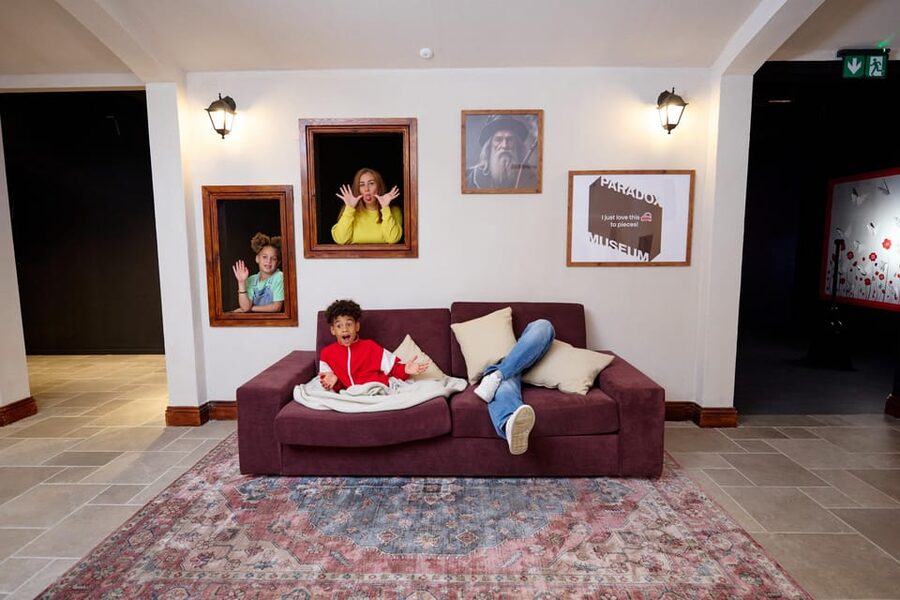
The Castle Room plays with hallways, scale, and the way a familiar building can become confusing. Its Paradox Sofa is one of the named features, and the room is designed to make ordinary furniture and architecture feel unreliable.
This type of exhibit is most effective when you look at it from the intended position. Walk in too quickly and you may miss the point. Take a moment to follow the instructions, then check the result through your camera. The photo often makes the illusion easier to understand than your first glance does.
I like displays like this because they reward both curiosity and patience. You are not simply handed an effect. You need to work out where to stand and what to do. That small amount of problem-solving is what keeps the museum from feeling like a row of decorated photo booths.
The downside is that popular displays can create queues. At busy times, you may have to wait for a turn, and some areas can feel crowded. Give yourself room to enjoy the exhibit rather than rushing through it because people are waiting behind you.
More museums and galleries in London:
- London: British Museum Guided Tour
★ 4.3 · 1,182 reviews - Official tickets: Moco Modern & Contemporary Art Museum
★ 4.5 · 1,157 reviews - British Museum London Guided Tour Semi-Private 8ppl Max
★ 5.0 · 984 reviews - London: Jack the Ripper Museum Tickets
★ 4.2 · 894 reviews
The Throne Room and changing your sense of scale
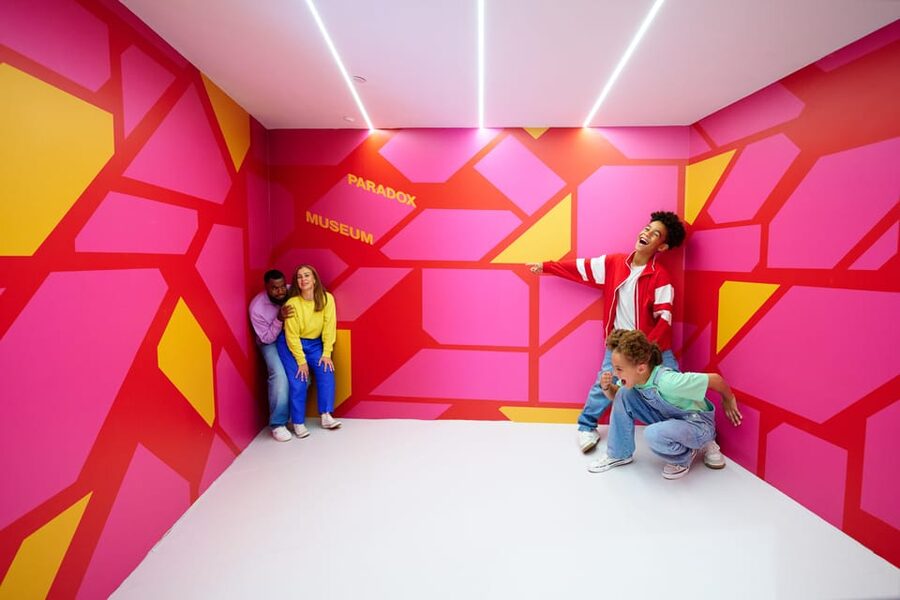
The Throne Room lets you pose as a giant monarch. It uses perspective to make people appear much larger or smaller than they really are, depending on where they stand.
This is a strong choice for family pictures because the effect works best when people cooperate. One person can pose in the throne while another takes the photograph from the marked position. Staff may help with photos, which is useful when the whole group wants to appear in the frame.
The room also shows why these attractions can appeal across generations. Younger children enjoy the pretend play. Adults can focus on the mechanics of the image. Older family members can take part without needing to move quickly or manage a difficult physical challenge.
The museum is wheelchair accessible, which makes the attraction easier to include in a mixed-ability day. The information provided does not describe the access arrangements for every single exhibit, so you may want to ask staff for help when you arrive.
London’s Tube tricks and the best photo moments

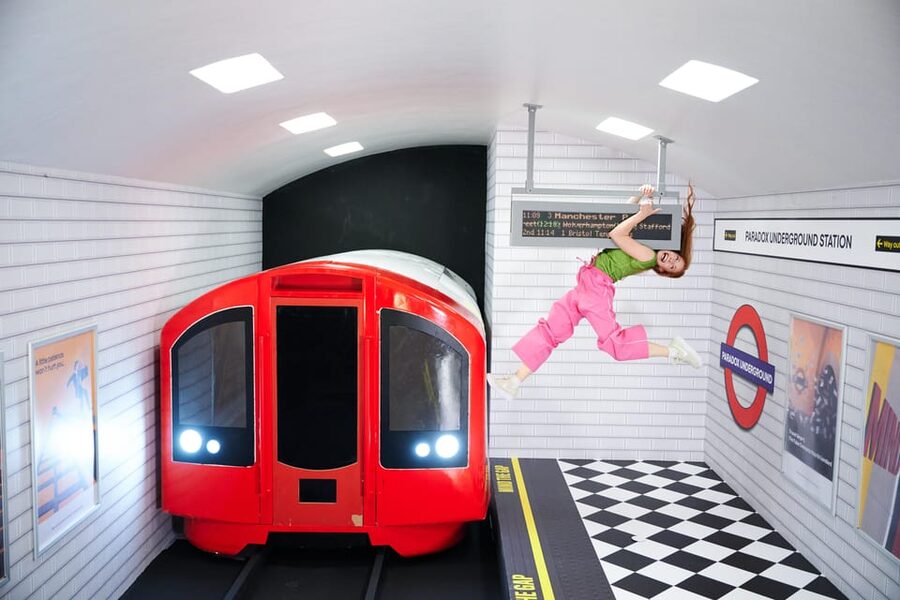
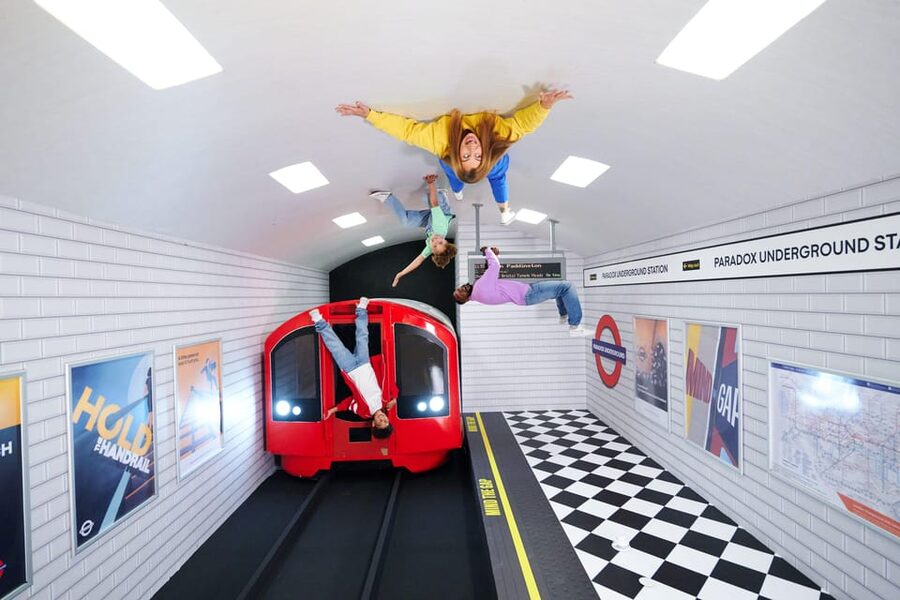
The London details give this museum a local flavor. You can appear to walk across the ceiling of a Tube station, then enter a Tube tunnel where walking straight becomes difficult.
These displays are among the most useful if you want a picture that immediately says London without relying on a standard postcard view. They also connect the museum to a familiar part of daily life. You know what a Tube station should feel like, which makes the distorted version more effective.
The ceiling scene is likely to be popular, so do not expect to move through it without waiting at a busy time. Follow the marked positions and let staff explain the camera angle. A badly placed photograph can make a clever illusion look like an ordinary room.
The tunnel is more about your senses than the final picture. Your eyes tell you the space is behaving strangely, while your body tries to correct itself. Move carefully and give yourself time to adjust. The effect is playful, but it can be disorienting for some people.
What the 1.5-hour duration really means

The official duration is 1.5 hours, but you should treat that as the maximum suggested visit rather than a promise that you will spend the full time inside. Several people have completed the route in roughly 30 to 40 minutes, while others may take longer if they stop for many photographs or wait for busy exhibits.
Your pace will depend on three things:
- How many pictures you want to take
- Whether you visit during a crowded period
- How long you spend testing each illusion rather than moving on
If you are traveling with children, the museum may hold attention well because each room offers something to do. If your group moves quickly, it may feel brief for the price. I would plan it as a focused indoor activity, not as the central attraction for an entire day.
The short length can also be an advantage. London sightseeing often involves long walks, crowded transport, and a lot of standing. A compact, interactive stop gives you something different without demanding a major time commitment.
Staff help, queues, and the practical experience
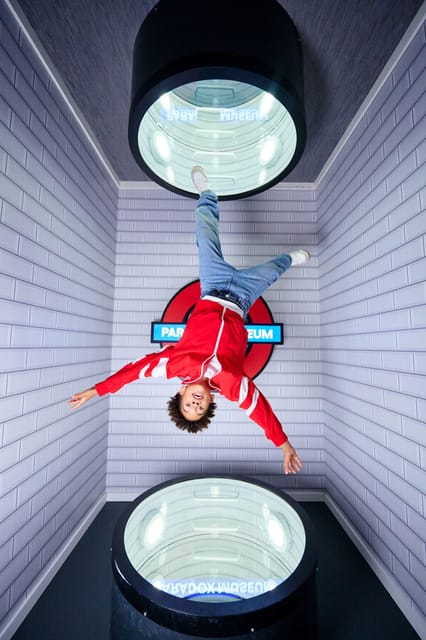
The staff are an important part of the visit because some illusions are not immediately obvious. Friendly team members can explain the correct position, tell you where to stand, and help with family photos.
That photo help matters. Many of the best effects require a person to stand at a specific point while someone else takes the picture. If you are traveling alone or want the whole family in the frame, staff assistance can make the difference between a useful photo and a confusing one.
The main operational weakness is crowd control at the popular stations. At busy times, you may encounter queues and unclear movement between displays. More staff in those spots would make the visit easier, especially for families trying to keep children engaged.
A few exhibits may be closed for repair or refurbishment. The museum can still provide a good visit when that happens, but your expectations should be flexible. Do not buy the ticket solely because one named room or illusion is the only thing you want to see.
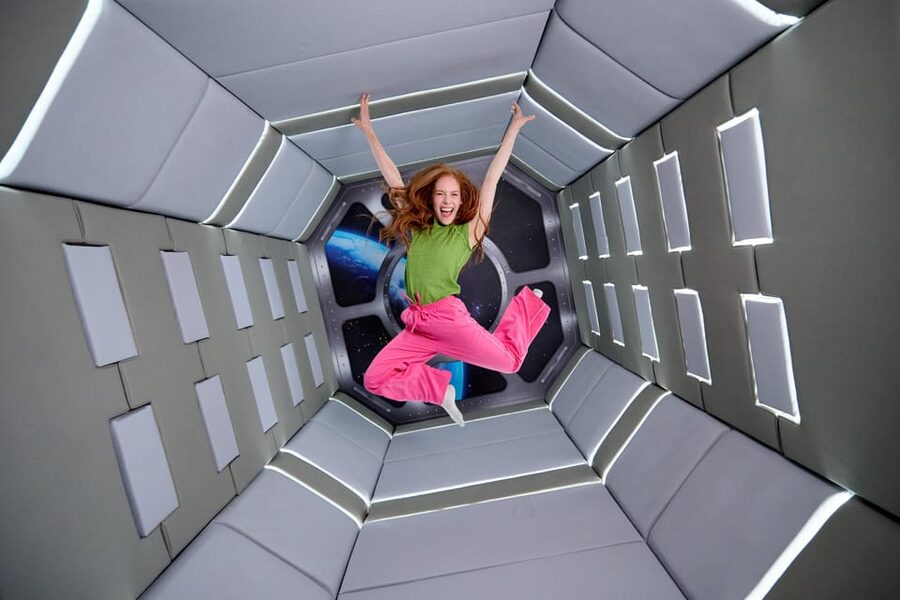
Is the optional Zero Gravity Room worth it?
The Zero Gravity Room is an add-on, not part of the standard entry ticket. The extra charge has been listed as £3.50, and the experience may be full on the day.
That creates two practical issues. First, you need to budget separately. At a standard entry price of about $36 per person, an unexpected extra can affect the value calculation, particularly for a family. Second, availability is not guaranteed. You may arrive expecting to use it and find that no spaces remain.
If Zero Gravity is your top priority, check its availability before committing to the museum visit. Do not assume the main ticket includes it, and do not rely on being able to add it later. If it is unavailable, you can still enjoy the main rooms, but the visit may not match the plan you had in mind.
The extra cost may feel reasonable to someone who wants one more physical illusion. It may feel poor value if you already think the main museum is short. I would treat it as an optional bonus, not a necessary part of the ticket.
Does $36 represent good value?
At around $36 per person, this is not a bargain attraction if you measure value by time alone. A 30 to 40 minute visit makes the cost feel high, particularly when some displays are closed or when queues limit how much you can try.
The calculation changes if you spend close to the full 1.5 hours, take plenty of family photos, and enjoy the science behind the tricks. You are paying for an interactive activity in a central London location, not simply for a room full of static displays.
I see the value as strongest for:
- Families who want a playful indoor stop
- Groups who enjoy taking creative photographs
- Adults looking for something lighter than a standard museum
- People visiting Knightsbridge who want a short activity near Harrods
- Anyone interested in how sight, balance, and camera perspective can disagree
The value is weaker for anyone seeking a long educational museum visit, a guided explanation, or a major London landmark. You may also feel disappointed if your main goal is Zero Gravity and the add-on is sold out.
Who should book the Paradox Museum?
This experience suits mixed-age groups particularly well. Children can play with scale and perspective, adults can work out the visual tricks, and grandparents can join the photo setups without needing to keep up with a walking tour.
It is also useful for a rainy London day. The attraction is indoors, wheelchair accessible, and compact enough to fit between other plans. English is the only language specified, so you should be comfortable following English instructions.
I would be more cautious about booking it for a group that dislikes posing for pictures or waiting for turns. The museum’s best moments depend on participation. If you only want to look at exhibits, much of the value will be lost.
Book it when you want an unusual, hands-on break near Harrods and you are happy with a visit that may last less than an hour. Skip it when you need a full half-day attraction, when a detailed guide is important, or when the extra Zero Gravity room is the main reason you are going.
You can cancel up to 24 hours before the visit for a full refund, and reserve now while paying later, which helps if your London plans are still shifting. The entry is wheelchair accessible, and the activity is hosted in English.
FAQ
Where is Paradox Museum London located?
Paradox Museum London is at 90 Brompton Road in Knightsbridge, opposite Harrods.
How long does the museum visit take?
The stated duration is 1.5 hours. Your actual visit may be shorter, with some people completing the main exhibits in about 30 to 40 minutes.
Is the Zero Gravity Room included?
No. Zero Gravity is an optional add-on and is not included in the standard entry ticket.
How much does the Zero Gravity add-on cost?
The add-on has been listed at £3.50. Availability can be limited, and it may be full on the day.
Is the museum wheelchair accessible?
Yes, the museum is wheelchair accessible.
Is a guide included?
No guide is included. An English-speaking host or greeter is available, and staff can provide instructions and help with photographs.
Can I cancel my booking?
Yes. You can cancel up to 24 hours in advance for a full refund. You can also reserve now and pay later.
Just added in London
- 3-Day Stonehenge*, Glastonbury, Bath & the South West Coast Tour from London★ 4.5 · 32 reviews
- Private Guided Tour of Harry Potter Locations – English/ Italian★ 5.0 · 33 reviews
- Private Tour London Highlights, entries Westminster Abbey, The Tower of London★ 5.0 · 93 reviews
- 2 Hour Walking Tour from Buckingham Palace to Big Ben★ 5.0 · 32 reviews
- 30 Major London Attractions Walking Tour With Photos★ 4.5 · 51 reviews
- 007 Shadow Of Spectre★ 5.0 · 135 reviews
- Private Guided Tour of the British Museum – Tickets Included★ 5.0 · 193 reviews
- Bath, Avebury and Lacock Village Small-Group Day Tour from London★ 4.5 · 121 reviews
Museums, compared.

Liverpool Football Club Museum and Stadium Tour
Read our review →
Tower of London and Crown Jewels Exhibition Ticket
Read our review →
Chelsea Football Club Stadium and Museum Tour
Read our review →

Browse the lists this tour appears in