

Reviewed · MUSEUMS
London: National Gallery of London Masterpieces Guided Tour
London’s National Gallery is packed with famous paintings, but its scale can make a first visit feel like a march through names and dates. This 2.5-hour guided tour gives you a clear route from 1300s devotional art to Seurat, with major stops including Da Vinci’s The Virgin of the Rocks and Van Gogh’s Sunflowers.
I like the small maximum group of eight, which gives you a better chance to hear the guide and ask questions. I also like the way the tour links paintings across centuries instead of treating each picture as an isolated masterpiece. The main drawback is that the Gallery can be noisy, and no audio headsets are specified, so hearing every word may take effort at busy times.
Key points
- A compact art history route: Move from early religious paintings through Botticelli, Raphael, Rembrandt, Velázquez, Vermeer, Monet, Van Gogh, and Seurat.
- Small groups or private guiding: Shared groups have no more than eight people, while private tours offer a more personal format.
- Strong guide roster: Jake, Stephanie, Matilda, Becky, and Alex have earned praise for clear explanations, energy, and an engaging approach.
- Major works with useful context: Expect more than a quick look at famous canvases, with attention to symbols, technique, rivalries, and changing styles.
- Good for first-time visitors: The route helps you get your bearings in one of London’s largest art collections.
- Allow for museum noise: One past participant found Bluetooth headsets would have helped, so stay close to the guide.
Why a guided route helps at the National Gallery

The National Gallery holds paintings from the 1300s onward, and that broad span is both its strength and its challenge. You can walk through several centuries in one building, but without a plan, it is easy to see a famous title and miss why it matters.
This tour gives you a storyline. Instead of simply ticking off Botticelli, Da Vinci, Van Gogh, and Monet, you follow changes in religious painting, portraiture, light, composition, and modern life. I find that approach more useful than a list of famous names because each painting helps explain the next one.
The guide also gives you a person to follow in a crowded room. Jake has been praised for his clear English, professional delivery, and ability to keep the subject accessible. Stephanie is known for bringing the whole group into the discussion, while Matilda has been singled out for explaining the wider development of art. Those qualities matter here. A painting can look impressive in silence, but a good explanation helps you notice what your eyes might otherwise skip.
More museums and galleries in Britain:
- Liverpool: Liverpool Football Club Museum and Stadium Tour
★ 4.8 · 10,764 reviews - Tower of London and Crown Jewels Exhibition Ticket
★ 4.5 · 6,677 reviews - London: Chelsea Football Club Stadium and Museum Tour
★ 4.8 · 4,576 reviews
The opening centuries: devotional art and Botticelli
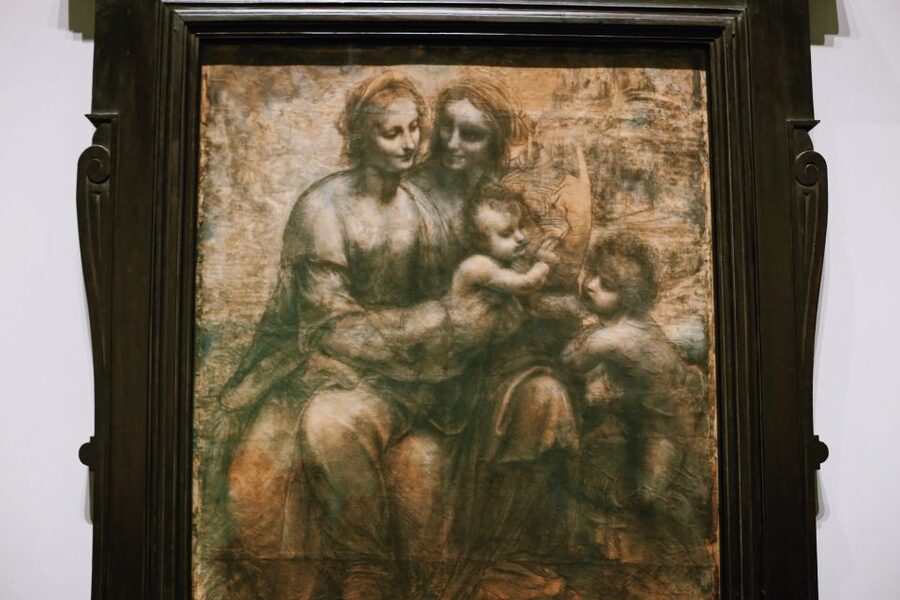
The tour begins with early works from the 1300s and later religious paintings, including works connected with Raphael. These pictures offer a useful starting point because early European art was not made only for decoration. It often served devotional purposes, and details such as gestures, colors, objects, and expressions carried meaning for the viewer.
You can expect the guide to explain how artists handled sacred subjects and how their methods changed over time. This part may appeal most to you if you enjoy symbols and technique, but it can feel slower if your only goal is to reach Van Gogh. Give it room. The early works provide the foundation for understanding why later painters made such different choices.
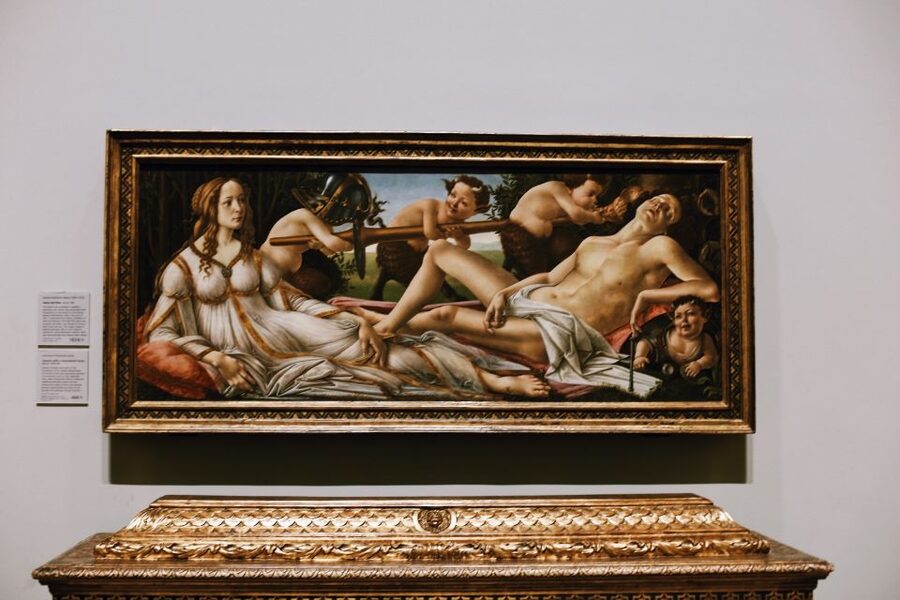
Botticelli’s Venus and Mars brings a shift toward classical mythology and human emotion. The panel shows Venus beside the sleeping Mars, surrounded by playful satyrs. A guide can point out how the picture balances beauty, military power, love, and vulnerability without turning the painting into a dry lecture.
This is one of the tour’s useful qualities: you are encouraged to look closely at what appears in the scene, not just memorize the artist’s name. The painting becomes a story with visual clues. That kind of discussion also suits families with older children and teenagers, especially if they respond better to questions and puzzles than to a long speech.
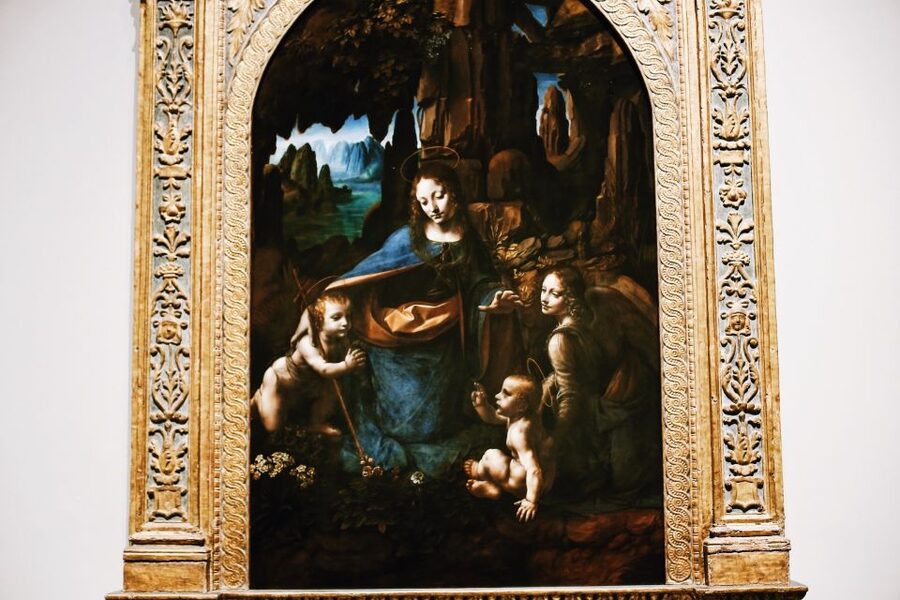
Da Vinci’s The Virgin of the Rocks
Leonardo da Vinci’s The Virgin of the Rocks is one of the major reasons to choose this route. It offers a chance to look at Leonardo’s handling of figures, atmosphere, and soft transitions rather than simply admiring the famous name.
The guide can help you follow the arrangement of the figures and the mood created by the rocky setting. Da Vinci’s work rewards time, and a short explanation can make the subtle parts easier to see. You might notice how the scene feels both carefully arranged and strangely natural, with figures connected by looks and gestures.
This is also a good point in the chronology to consider the movement away from flatter, more symbolic medieval forms toward greater attention to human bodies, space, and observation. You are not asked to become an art scholar. You are given enough context to understand why this work mattered and what made Da Vinci different.
Velázquez, Vermeer, and the art of quiet observation
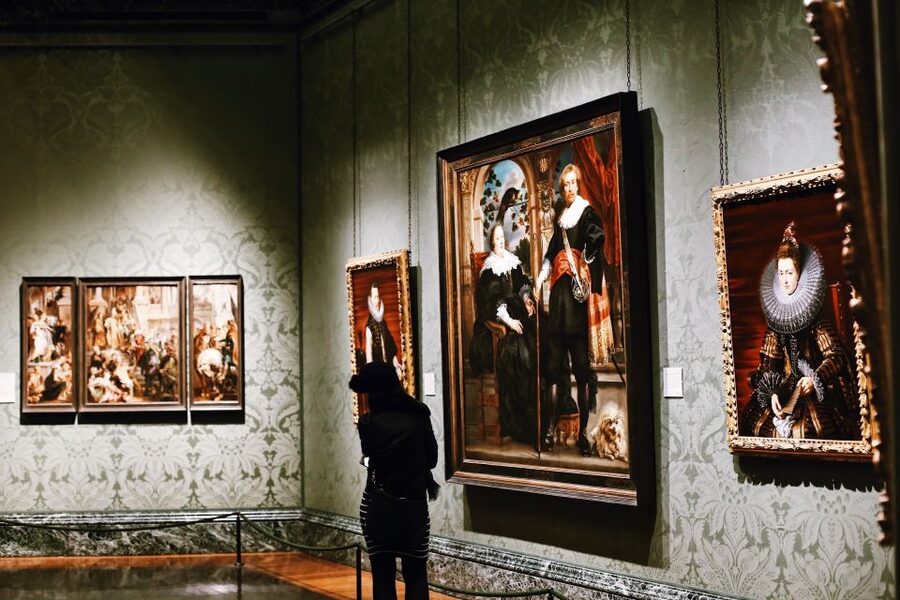
The tour includes Velázquez’s Rokeby Venus, a painting that gives you a different kind of experience. The subject is mythological, but the composition turns the viewer’s attention toward the figure seen through a mirror. That arrangement creates a question about looking, reflection, and the relationship between the subject and the person viewing the painting.
The guide’s role here is important. At a busy museum, you might glance at the work and move on. A few well-chosen observations can slow you down and make the composition easier to understand. The tour does not promise a long stop at every painting, so expect a selection of works rather than an exhaustive room-by-room visit.
Vermeer’s Lady Standing at a Virginal brings a quieter mood. Vermeer is famous for intimate interiors, controlled light, and scenes that seem simple until you study them. A guide can draw your attention to the room, the musical instrument, and the way light shapes the scene.
This pairing works well because Velázquez and Vermeer ask you to think about looking in different ways. One painting plays with the mirror and the viewer’s position. The other draws you into a calm domestic interior. You get a sense of how artists can create drama without crowds, battles, or grand gestures.
A few more things to do in Britain worth a look
- Magical London: Harry Potter Guided Walking Tour
★ 4.7 · 22,044 reviews - Oxford University Walking Tour With University Alumni Guide
★ 5.0 · 6,905 reviews - Edinburgh Castle: Guided Walking Tour with Entry Ticket
★ 5.0 · 5,540 reviews - London: Emirates Stadium Entry Ticket and Audio Guide
★ 4.7 · 5,513 reviews
Rembrandt, Monet, and the changing use of light
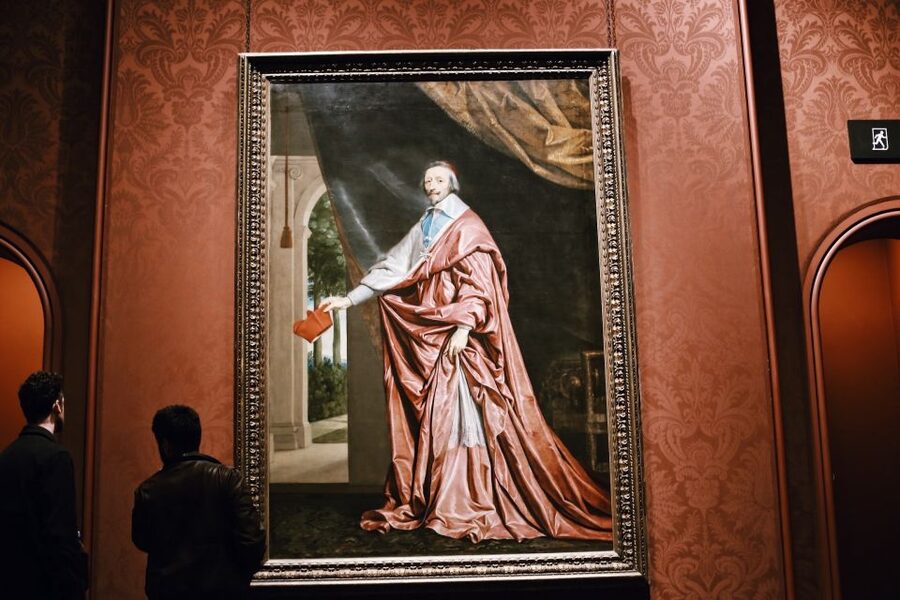
Rembrandt adds another important step in the story. His work gives the guide a chance to discuss character, emotion, and the force of light. The National Gallery’s collection spans many periods, so the tour can show you how light moves from a tool for modeling faces and directing attention to a subject in itself.
Monet takes that idea in another direction. His paintings are less concerned with crisp outlines and more interested in the changing effects of light and atmosphere. The tour places artists in a wider sequence, helping you see that the shift toward Impressionism did not happen without earlier experiments.
You may not spend equal time with every artist named in the description. That is normal for a 2.5-hour highlights tour. The benefit is range. You leave with a strong sample of the collection and a better idea of where you would like to return for a longer look.
Van Gogh’s Sunflowers and the power of a familiar painting
Van Gogh’s Sunflowers is an obvious highlight, but familiar does not mean fully understood. You have probably seen reproductions of the painting many times. Seeing it in the Gallery gives the guide a chance to talk about color, brushwork, surface, and the way a still life can carry mood.
The best part of this stop is learning to look beyond the subject. The flowers are easy to recognize, but the paint itself does much of the work. Strong marks and intense color give the picture energy. You can compare that directness with the more controlled surfaces of earlier painters seen on the route.
The guide may also connect Van Gogh to the larger changes in art that lead toward modern painting. That connection is valuable because the tour is not just a sequence of famous images. It shows how artists gradually challenged older ideas about finish, realism, and the purpose of a painting.
Guides such as Jake and Stephanie have been praised for enthusiasm without making the subject feel stiff. That balance is especially useful at Sunflowers. You want enough explanation to sharpen your view, but not so much that the painting becomes a classroom assignment.
Seurat’s Bathers at Asnières and the move toward modern art
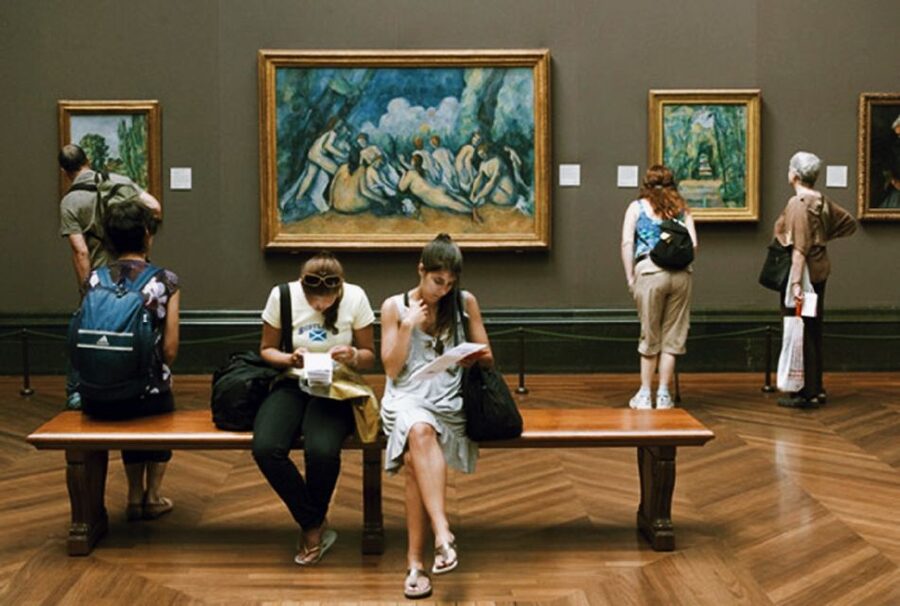
Seurat’s Bathers at Asnières brings the tour close to the early modern period. It gives you a chance to compare the large-scale scene with the earlier works in the collection and to think about how artists were presenting ordinary life, color, and modern leisure.
The painting is a strong endpoint for a chronological route because it shows how far European art had moved from the devotional pictures of the 1300s. The subject is no longer primarily a biblical or mythological story. Everyday people and contemporary life have become worthy subjects on a grand scale.
The guide can also explain how Seurat’s approach to color and dots differs from the looser brushwork associated with Impressionism. If you are new to art history, that comparison gives the tour a satisfying finish. You have seen styles change, and you have concrete paintings to connect to each stage.
What the guides do best
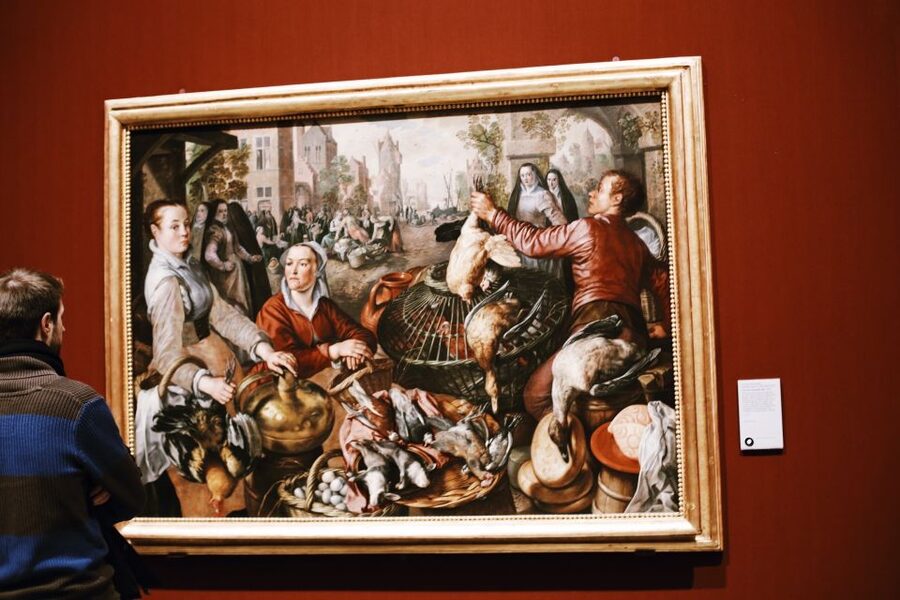
The strongest part of this experience is the human element. The guide determines whether the tour feels like a useful conversation or a rushed recital of facts.
Jake has received repeated praise for making art understandable and keeping the pace moving. Stephanie is described as easy to understand, enthusiastic, and good at engaging the entire group. Matilda has been praised for connecting individual paintings to the broader development of art. Becky and Alex have also been described as engaging, friendly, and energetic.
That range matters because the tour is offered in English. Several people who do not speak English as their first language found Jake easy to follow. If you use hearing aids, clear delivery also matters, and one person specifically found Stephanie easy to understand even in a crowded room.
The experience is designed to be interactive, not just a monologue. You can ask questions, and the guide may invite you to observe details before explaining them. Still, the exact personality and route may vary by guide and date. A private booking gives you a more personal setting, while a small shared group keeps the price lower and still limits the number of people to eight.
Price, group size, and the value of two and a half hours
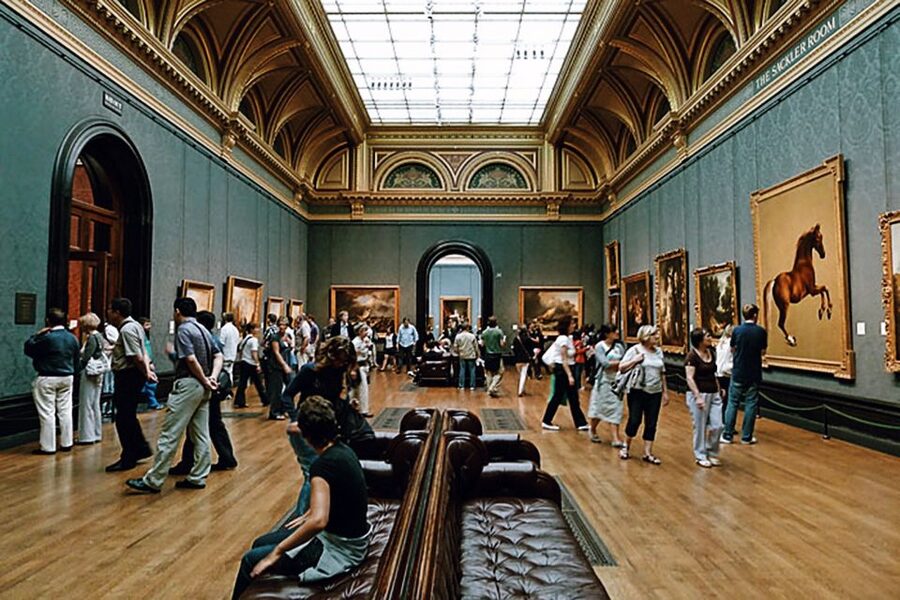
At $112 per person, this is not the cheapest way to enter an art museum. The value depends on how much direction you want and how much time you have.
I think the price makes the most sense for a first visit, a short London stay, or anyone who feels unsure how to read European paintings. You receive 2.5 hours with a professional guide and a planned sequence through major works. That can save you from wandering without a plan and then leaving with only a few famous images in mind.
The shared option is the better value if you are comfortable meeting other people. The group has a maximum of eight, which is much more manageable than a large coach tour. A private option costs more in most tour settings, but it can suit a family or a small party that wants to ask more questions and set its own pace within the available format.
The tour runs daily and lasts two to 2.5 hours, depending on the option. Starting times vary, so check the schedule before building the rest of your day around it. Food, drinks, hotel pickup, hotel drop-off, and temporary exhibitions are not included.
Practical details before you book
The meeting point can vary by the option you choose, so check your confirmation carefully. Bring a passport or ID card, and leave luggage and large bags elsewhere because they are not allowed on the tour.
Only a small amount of walking is involved, but you will be on your feet in gallery spaces. Wheelchair-friendly tours are available only on request, and the general information says the activity is not suitable for wheelchair users. If accessibility is important, ask before booking rather than assuming the standard departure will work.
Stay close to the guide. The Gallery can be noisy, and one person felt Bluetooth headsets would have improved communication. If you have hearing concerns, mention them when arranging the tour and consider choosing a private format if available.
Cancellation is flexible up to 24 hours before the start for a full refund. You can also reserve now and pay later, which helps if your London plans are still changing.
Who should choose this National Gallery tour?
I would choose this tour if you want the major paintings explained in a clear sequence rather than seen at random. It suits first-time National Gallery visitors, couples who want more context, families with teenagers, and anyone who likes stories about symbols, technique, artists, and changing styles.
It also works well if English is not your first language, provided you are comfortable with an English-language tour. The clear delivery praised for Jake and Stephanie is a real advantage.
I would skip it if you prefer to wander alone, spend twenty minutes with one painting, or cover every room at your own pace. A highlights tour has to make choices. You will see important works, but you will not receive an exhaustive account of the entire collection or temporary exhibitions.
Should you book it?
Book this National Gallery tour if you want a focused introduction to European painting and value a lively guide who can turn famous pictures into connected stories. The small group limit, strong guide record, and chronological route make the $112 price easier to justify than a simple unguided visit.
Before booking, confirm the meeting point, group type, starting time, and accessibility arrangements. Stay near the guide in crowded rooms, and choose the private option if personal questions and a quieter format matter more to you than keeping costs down.
FAQ
How long does the National Gallery masterpieces tour last?
The tour lasts about 2.5 hours. Some departures are listed as lasting between two and 2.5 hours.
What language is the tour offered in?
The live tour guide speaks English, and English is the listed tour language.
How many people are in the shared group?
Small group tours have a maximum of eight people. They run with a minimum of two participants.
Is a private tour available?
Yes. You can choose between a private tour and a small shared group, depending on the option selected.
Which artists and paintings are included?
The route can include Botticelli, Da Vinci, Monet, Rembrandt, Vermeer, Velázquez, Van Gogh, Raphael, and Seurat. Featured works include The Virgin of the Rocks, Sunflowers, Venus and Mars, Lady Standing at a Virginal, Rokeby Venus, and Bathers at Asnières.
Is hotel pickup included?
No. Hotel pickup and drop-off are not included.
Are food and drinks included?
No. Food and drinks are not included unless specifically stated for your chosen option.
Are temporary exhibitions included?
No. Temporary exhibitions are excluded from the tour.
What should I bring?
Bring a passport or ID card. Do not bring luggage or large bags.
Can wheelchair users join the tour?
Wheelchair-friendly tours are available only upon request. The standard activity information says the tour is not suitable for wheelchair users, so you should contact the provider before booking if you need an accessible option.
Just added in Britain
- 3-Day Stonehenge*, Glastonbury, Bath & the South West Coast Tour from London★ 4.5 · 32 reviews
- Private Guided Tour of Harry Potter Locations – English/ Italian★ 5.0 · 33 reviews
- Private Tour London Highlights, entries Westminster Abbey, The Tower of London★ 5.0 · 93 reviews
- 2 Hour Walking Tour from Buckingham Palace to Big Ben★ 5.0 · 32 reviews
- 30 Major London Attractions Walking Tour With Photos★ 4.5 · 51 reviews
- City Sightseeing Llandudno Hop-On Hop-Off Bus Tour★ 4.0 · 109 reviews
- 007 Shadow Of Spectre★ 5.0 · 135 reviews
- Private Guided Tour of the British Museum – Tickets Included★ 5.0 · 193 reviews
Museums, compared.
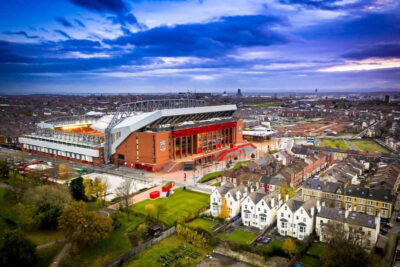
Liverpool Football Club Museum and Stadium Tour
Read our review →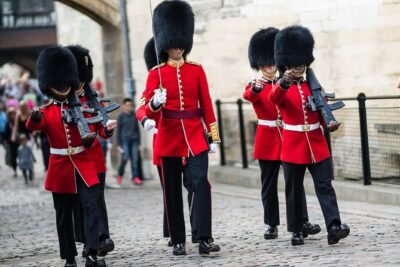
Tower of London and Crown Jewels Exhibition Ticket
Read our review →
Chelsea Football Club Stadium and Museum Tour
Read our review →

Browse the lists this tour appears in