
Reviewed · BRITAIN
The Mary Rose: Day Admission Ticket
The Mary Rose is not just an old ship behind glass. It is a preserved slice of Tudor life, complete with cooking gear, weapons, tools, personal belongings, and the remains of a working crew. The ship’s hull is the star, but the small objects tell the more surprising story. A comb, bowl, shoe, or surgical tool can make Henry VIII’s navy feel suddenly close.
I especially like the way the museum lets you see genuine Tudor objects up close, then connects them to the people who used them. The new 4D film also gives the recovery story real drama. The main drawback is price: at about $43.10 per person, this is a serious ticket for a museum visit, so check whether your Portsmouth Historic Dockyard ticket already includes the Mary Rose before paying twice.
Key points to know before you go

- A 500-year-old warship: See the Mary Rose, Henry VIII’s flagship, raised from the seabed in 1982.
- 9,000 Tudor objects: Weapons, tools, clothing, food containers, and personal items help explain daily life aboard ship.
- Two powerful presentations: The 1545 sinking experience recreates the final moments, while the 4D film follows the recovery of the wreck.
- A self-guided museum: You walk through the displays at your own pace, with a free multilingual audio guide available through the Mary Rose app.
- Allow at least 1.5 to 2 hours: You can move quickly, but the museum rewards careful reading and repeat visits.
- Easy to pair with other sights: The museum sits inside Portsmouth Historic Dockyard, near Portsmouth Harbour station and other naval attractions.
Seeing the Mary Rose for the first time

The Mary Rose sank during the Battle of the Solent on 19 July 1545, while fighting for Henry VIII. For centuries, the ship rested on the seabed. It was raised in 1982, a huge engineering and conservation project that became one of Britain’s best-known archaeological stories.
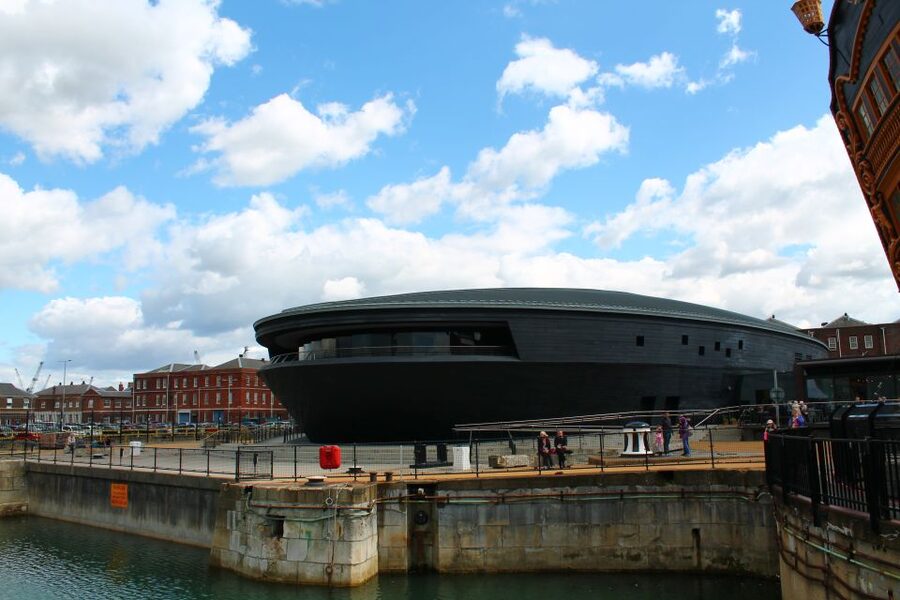
Today, the museum is built around the surviving section of the ship. You do not simply look at a model or a reconstructed deck. You see the actual hull, preserved and displayed upright, with the museum arranged across three levels beside it.
That layout matters. From each level, you gain a different view of the ship and its construction. You also get a sense of scale. The Mary Rose was not an abstract royal possession. It was a working warship filled with sailors, officers, craftsmen, weapons, food, clothing, and equipment.
The atmosphere is intentionally subdued. Low lighting protects the collection and gives the galleries a solemn, almost underwater feel. It can make reading labels slightly harder, so bring your time and avoid rushing through the first rooms.
A few more things to do in Britain worth a look
- London: The London Eye Entry Ticket
★ 4.6 · 35,875 reviews - London: Tower Bridge Entry Ticket
★ 4.7 · 15,560 reviews - London: Westminster Abbey Entrance Ticket
★ 4.6 · 11,254 reviews
The objects that turn history into daily life
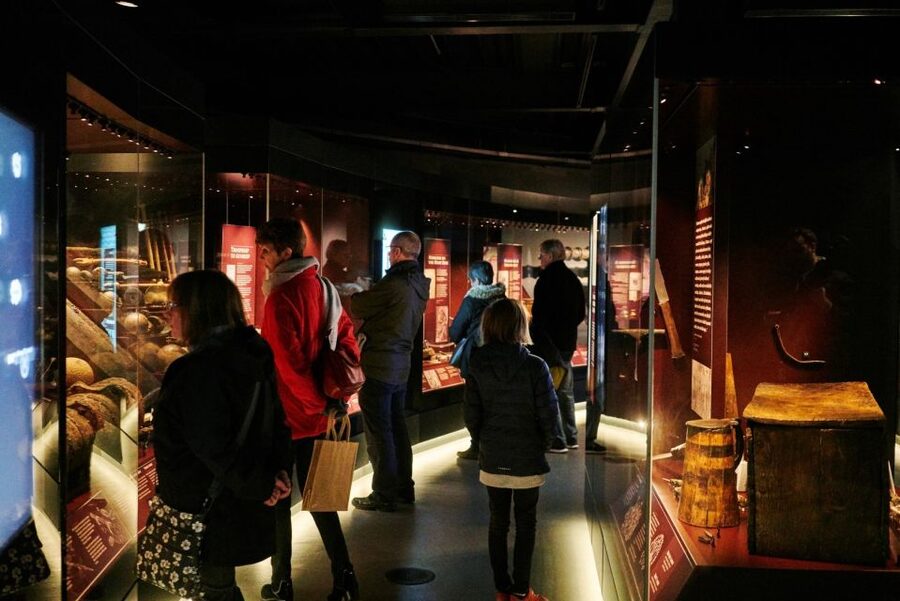
The museum’s biggest strength is its collection of roughly 9,000 Tudor objects recovered from the seabed. The ship itself is astonishing, but the objects explain how people lived aboard it.
You might see items connected with cooking, work, clothing, medicine, navigation, religion, and combat. Personal possessions are especially effective. They remind you that the Mary Rose carried ordinary men as well as officers serving the king.
The displays are designed to show how each item fitted into life aboard ship. A weapon is not just a weapon. A tool suggests a job. A food container raises questions about meals, storage, and the cramped conditions of a naval vessel. Together, these objects provide a detailed picture of a Tudor community at sea.
One feature families often appreciate is the chance to touch selected genuine artifacts and use interactive displays. This is not a museum where everything is presented as untouchable treasure. The hands-on elements help younger visitors stay involved, while the original objects give the experience weight.
The museum also does a good job of showing that the Mary Rose was not only about Henry VIII. The king’s role matters, but the focus keeps returning to the crew and their working lives. That balance makes the visit useful for anyone interested in social history, not just royal history.
The 1545 experience and the ship’s final moments
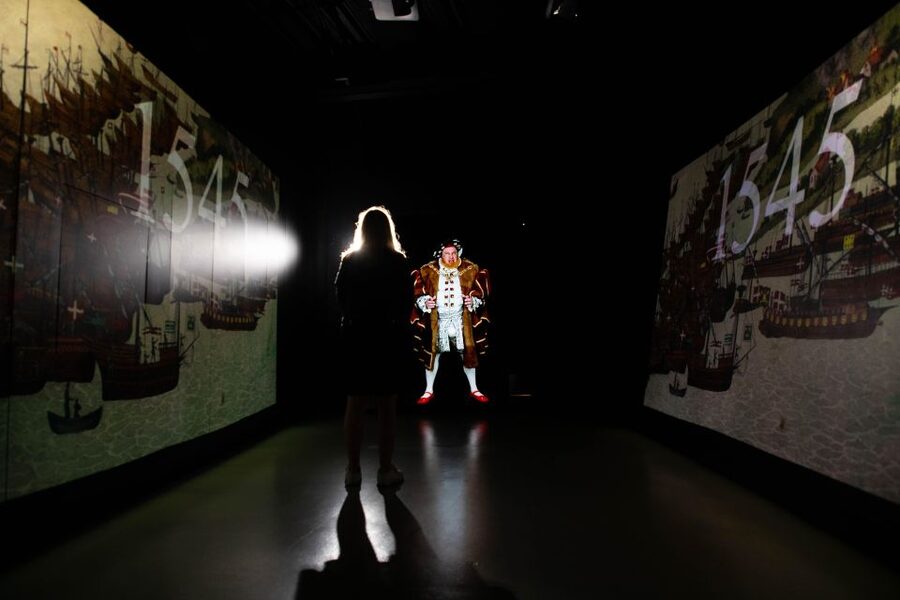
One of the museum’s major sections is the 1545 presentation, which takes you back to 19 July 1545. It recreates the last moments aboard the Mary Rose as the ship went down during the Battle of the Solent.
This part is designed as an atmospheric presentation rather than a conventional collection of labels. You hear from Henry VIII and members of the crew, giving the disaster a human voice. The effect is strongest after you have already seen the objects, because you can connect the sounds and scenes with the real belongings displayed nearby.
The presentation may be intense for very young children, particularly because the subject is a sudden wartime sinking. Still, it gives useful context. Without it, the Mary Rose could feel like a static archaeological display. With it, you understand that this was a real emergency that ended hundreds of lives and preserved an extraordinary time capsule.
Take a moment afterward to return to the nearby objects. A display label is easier to understand when you have just seen the ship’s final scene brought to life.
The new 4D film about recovery
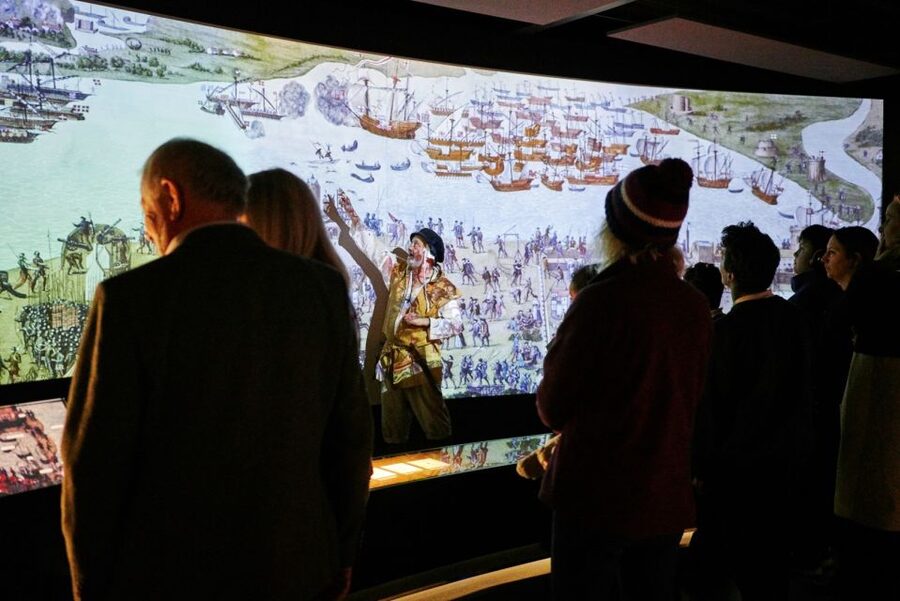
The 4D film tells the story of exploring the wreck site and raising the Mary Rose in 1982. It adds a second drama to the museum: first, the ship’s sinking in 1545, and then the modern effort to bring it back to the surface.
This is a good addition for families and for anyone who remembers the television coverage of the recovery. The film explains the work of the divers and the scale of the operation without requiring you to understand every technical detail beforehand.
The presentation won a 2024 Museums and Heritage award for its use of technology in heritage. That does not mean you should treat it as a stand-alone attraction, but it does make the recovery story easier to grasp. The film gives emotional shape to an event that might otherwise be reduced to dates, machinery, and conservation terms.
I would plan to watch it even if you usually skip museum films. It helps explain why the Mary Rose can be seen today and why preserving the ship has taken so much care.
Same city, a very different afternoon:
- From London: Harry Potter Warner Bros Studio Tour
★ 4.7 · 26,588 reviews - Magical London: Harry Potter Guided Walking Tour
★ 4.7 · 22,044 reviews - London: Madame Tussauds London
★ 4.6 · 20,915 reviews - Stonehenge, Windsor Castle, and Bath from London
★ 4.5 · 18,662 reviews
A self-guided visit, not a guided tour
This ticket gives you entry to the museum, not a scheduled walking tour with a named guide. You make your own way through the galleries, reading the information and using the displays as you go.
That arrangement suits many people. You can linger over the weapons, move quickly through sections that interest you less, or pause at a personal object that catches your attention. There is no pressure to keep up with a group.
A free multilingual audio guide is available through the Mary Rose app. Bring headphones, as they are listed among the recommended items. Downloading the app before you arrive may save time, especially if you want to start listening as soon as you enter.
Staff members are available around the museum to explain displays and answer questions. The experience remains self-guided, so do not book this expecting a traditional guided tour. The strength is freedom, not a fixed script.
How long to allow, and how to plan the day
The recommended visit time is 1.5 to 2 hours. That is enough for a solid first visit if you keep moving, watch the main presentations, and read the most important labels.
I would allow more time if you enjoy museums or want to examine the objects closely. Some people spend several hours here, and repeat visits make sense because there is a great deal of information packed into the displays. The museum has changed its presentation over time, so returning visitors may notice new material or a fresh way of explaining familiar objects.
The Mary Rose is part of Portsmouth Historic Dockyard, which also has other naval attractions. Portsmouth Harbour station is nearby, and the museum is about a five-minute walk from the Mary Rose entrance once you are inside the dockyard area.
If you want to see HMS Victory or other dockyard attractions on the same day, plan your time before arriving. One ticket option may already cover more than one dockyard attraction, so check carefully before buying a separate Mary Rose admission. This is the most important money-saving tip for the visit.
You can enter any time during the day after the museum opens at 10:00. Last admission is 45 minutes before closing. Since opening and closing times can vary, check the current schedule before setting out.
Is the $43.10 ticket good value?
At roughly $43.10 per person, the Mary Rose is not a cheap quick stop. The value depends on how much time you give it and whether your admission is already included in a wider Portsmouth Historic Dockyard ticket.
For a short visit focused only on the ship, the cost may feel high. The museum is compact enough to see in a couple of hours, and there is no meal included. On the other hand, you are paying to see an exceptionally rare object, along with thousands of original items from the same wreck. Few museums can offer that combination.
The ticket becomes better value when you treat the museum as a serious part of a full Portsmouth day. Pairing it with the dockyard’s other attractions gives you more from the journey and helps justify the price.
I would not rush through this museum simply because the ticket is expensive. The displays are carefully presented, and the personal objects reward attention. If you are interested in Tudor England, naval warfare, archaeology, or the lives of ordinary workers, you are likely to find enough material to occupy several hours.
Access, bags, and practical details
The museum is fully accessible across all three levels, with lifts available. Baby-changing facilities are provided, and wheelchairs can be used throughout the museum.
The lighting is kept low, both for atmosphere and to help protect the collection. Anyone with poor vision may want extra time with the labels or prefer to use the audio guide.
There is a 100 percent bag search policy. Large bags and luggage are not allowed, and all bags, buggies, and scooters must remain with you at all times. Avoid arriving with more belongings than you need.
Pets are not allowed, and smoking is prohibited. Food and drinks are not included with admission, so plan a break elsewhere within the wider dockyard area if you need one.
The meeting point is the Mary Rose Museum entrance at Portsmouth Historic Dockyard, Main Road, Portsmouth, PO1 3PY. Once through the Mary Rose entrance, it is about a five-minute walk to the museum.
If the Mary Rose is unexpectedly closed, the ticket can be used for another attraction of your choice. That offers some protection, but you should still check the museum’s status before making a special trip.
Who will enjoy the Mary Rose most?
I would recommend this museum to anyone with an interest in Tudor England, Henry VIII, naval battles, archaeology, or ordinary life in the past. It also works well for families because the interactive displays and 4D film break up the reading.
You do not need to be a serious museum person to enjoy it. The ship provides a clear central story, and the personal objects give the visit an accessible human angle. If you usually lose interest in long galleries, focus on the hull, the 1545 presentation, the 4D film, and the most personal artifacts.
The museum is less suitable if you want a short, guided activity with a fixed start and finish. You will be walking through a museum at your own pace, and much of the experience depends on how carefully you read and watch.
Should you book the Mary Rose?
Book it if you want to see a genuine Tudor warship and understand the people who lived and worked aboard it. The hull is extraordinary, but the ordinary objects are what make the visit stay with you.
Before paying, check the details of any Portsmouth Historic Dockyard pass you may already have. If the Mary Rose is included, do not buy this admission separately.
For everyone else, the ticket is worthwhile when you can allow at least two hours and combine the visit with other dockyard sights. Bring headphones, expect a bag search, and take your time. This is not a quick photo stop. It is a thoughtful, atmospheric look at a lost ship and the Tudor world preserved inside it.
FAQ
Where is the Mary Rose Museum?
The museum is at Portsmouth Historic Dockyard, Main Road, Portsmouth, PO1 3PY, United Kingdom.
How far is the museum from the entrance?
Once you arrive at Portsmouth Historic Dockyard and pass through the Mary Rose entrance, the museum is about a five-minute walk away.
How long should I spend at the museum?
The recommended visit time is 1.5 to 2 hours. You may want longer if you plan to read the displays closely or watch all the presentations.
Can I visit at any time during the day?
Yes. The museum opens at 10:00, and you can visit at any time during the day with your ticket. Last admission is 45 minutes before closing.
Is this a guided tour?
No. This is a self-guided museum visit. You can explore at your own pace, and a free multilingual audio guide is available through the Mary Rose app.
Do I need headphones?
Headphones are recommended, especially if you plan to use the audio guide in the app.
Is the museum wheelchair accessible?
Yes. All three levels are accessible, and lifts are available.
Can I bring luggage or large bags?
No. Luggage and large bags are not allowed. The museum operates a 100 percent bag search policy, and bags, buggies, and scooters must stay with you.
Is food included?
No. Food and drinks are not included in the admission ticket.
Can I cancel the ticket?
Yes. You can cancel up to 24 hours in advance for a full refund. A reserve-now, pay-later option is also available.
Just added in Britain
- 3-Day Stonehenge*, Glastonbury, Bath & the South West Coast Tour from London★ 4.5 · 32 reviews
- Private Guided Tour of Harry Potter Locations – English/ Italian★ 5.0 · 33 reviews
- Private Tour London Highlights, entries Westminster Abbey, The Tower of London★ 5.0 · 93 reviews
- 2 Hour Walking Tour from Buckingham Palace to Big Ben★ 5.0 · 32 reviews
- 30 Major London Attractions Walking Tour With Photos★ 4.5 · 51 reviews
- City Sightseeing Llandudno Hop-On Hop-Off Bus Tour★ 4.0 · 109 reviews
- 007 Shadow Of Spectre★ 5.0 · 135 reviews
- Private Guided Tour of the British Museum – Tickets Included★ 5.0 · 193 reviews