
Reviewed · BRITAIN
Royal Observatory Greenwich & Prime Meridian Entrance Ticket
Standing with one foot in the eastern hemisphere and one in the western is the star moment here, but the Royal Observatory Greenwich offers more than a good photo. You’ll see the historic rooms where British astronomers mapped the sky, learn how sailors solved the problem of longitude, and look across Greenwich Park toward London.
I especially like the Octagon Room, one of Christopher Wren’s best-preserved London interiors, and the story of John Harrison’s marine clocks. The hilltop view is another strong reason to come. The catch is the climb: Greenwich Park rises steeply to the observatory, and the walk may be hard if you have limited mobility.
Key points to know before you go
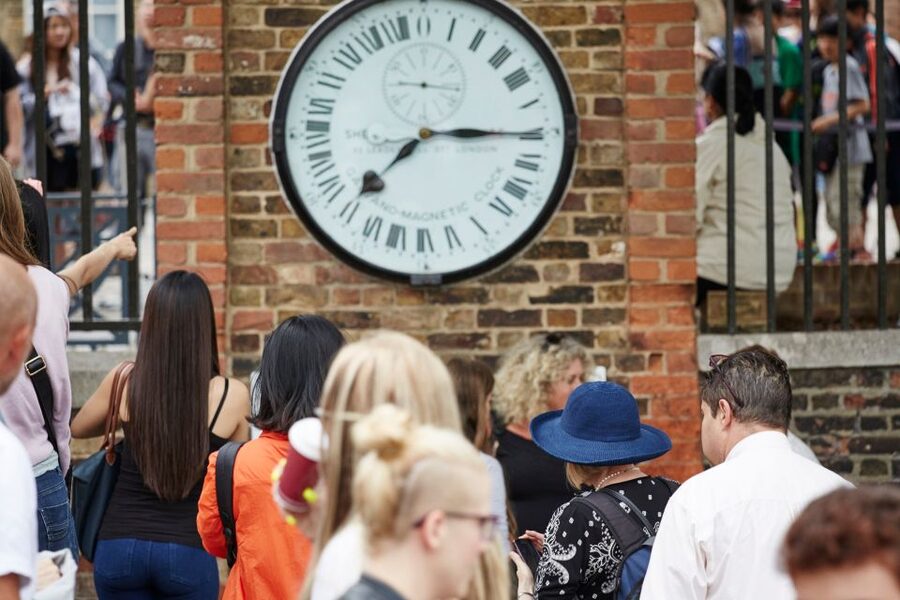
- The Prime Meridian is the main event: Put one foot at 0 degrees longitude and one in each hemisphere.
- The hilltop setting matters: You get broad views over Greenwich Park, the River Thames, Canary Wharf, and the City of London.
- The history is practical, not just astronomical: The exhibits explain timekeeping, navigation, latitude, and longitude.
- Flamsteed House feels unusually personal: See the Octagon Room and spaces linked to royal astronomers.
- The planetarium costs extra: Your admission includes the observatory and Meridian Line, but not a planetarium show.
- Plan for a self-guided visit: A downloadable audio guide is available in English, Spanish, Chinese, French, German, Italian, Korean, and Portuguese.
Why the Greenwich Meridian still matters
The line at Greenwich is not merely a painted stripe for photographs. It marks 0 degrees longitude, the starting point from which east and west are measured around the globe. In 1884, the Greenwich Meridian was chosen as the world’s Prime Meridian, giving this London hill a permanent place in geography and timekeeping.
You can straddle that line with one foot in each hemisphere. It is a simple act, but it makes an abstract idea easy to understand, especially for children and teenagers. You can see longitude as something physical beneath your shoes rather than a number on a map.
The Meridian Line is also the quickest part of the visit. If you come only for the photo, you can be done quickly. I recommend staying longer, since the observatory explains why the line was placed here and how precise time became essential to navigation.
A few more things to do in Britain worth a look
- London: The London Eye Entry Ticket
★ 4.6 · 35,875 reviews - London: Tower Bridge Entry Ticket
★ 4.7 · 15,560 reviews - London: Westminster Abbey Entrance Ticket
★ 4.6 · 11,254 reviews
Reaching the observatory through Greenwich Park
The Royal Observatory sits at the top of a hill inside Greenwich Park. That setting is one of the pleasures of the visit, but the approach takes effort. The walk from the park gates is uphill, and the slope can feel particularly demanding after a long journey across London.
If you arrive from the Greenwich waterfront or pier, expect another steep climb. You’ll pass through a beautiful park, and the calm surroundings make the walk pleasant when your legs are willing. If you have mobility concerns, plan this part carefully. The attraction itself is wheelchair accessible, but the approach up the hill may still be difficult.
Allow time to find the entrance rather than treating the observatory as a quick stop between other sights. Directions around Greenwich can be confusing, and signs from Cutty Sark Station have caused some visitors to lose time. The observatory is near the National Maritime Museum and Greenwich’s shopping area, so you can combine the visit with other attractions, but the park’s slope remains the key practical issue.
Entering Flamsteed House and the Octagon Room
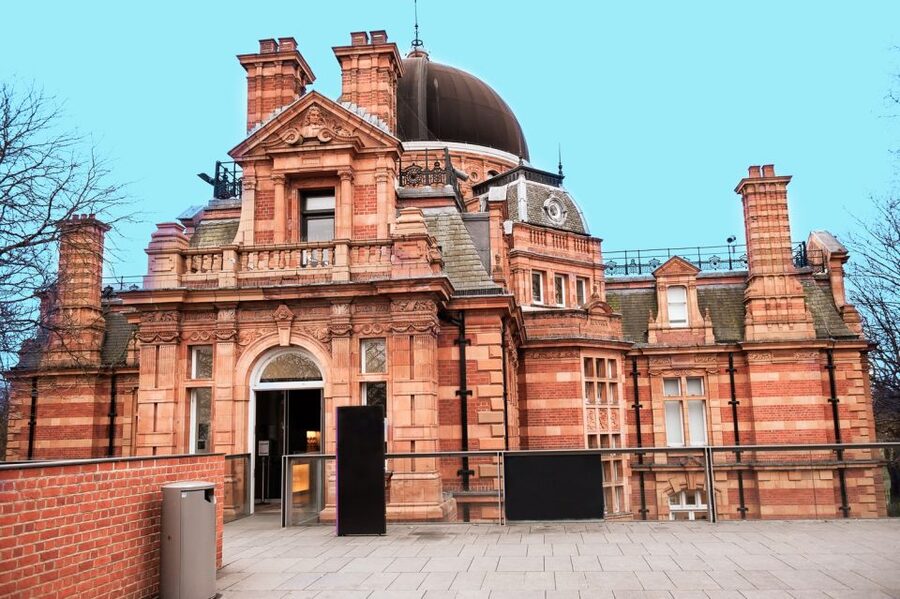
Your ticket takes you into the historic home of British astronomy. The Royal Observatory was established in the 17th century to improve astronomical observation and help ships navigate at sea. The work done here shaped the way the world measured position and time.
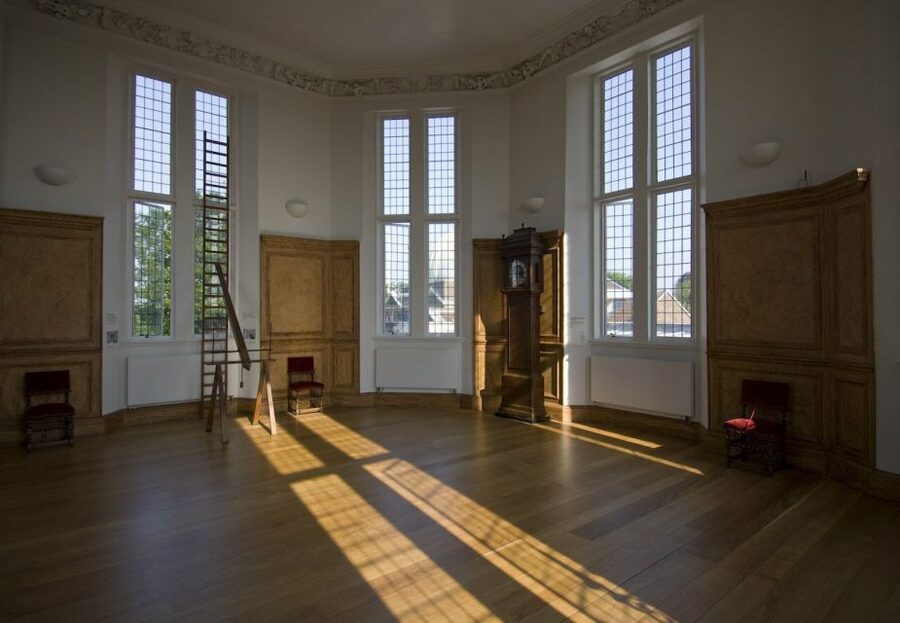
Flamsteed House is the oldest part of the observatory complex and was designed by Sir Christopher Wren. The Octagon Room is its architectural centerpiece. Look up and around rather than rushing toward the next display. This room has survived with much of its character intact, giving you a better sense of the observatory as a working institution.
The house also helps put the astronomers into human scale. You are not only reading about distant stars. You are seeing the rooms where astronomers worked and lived, and where observations had direct consequences for sailors, mapmakers, and the British Navy.
The stories connected with figures such as Newton, Halley, Bradley, and Airy add scientific weight, but John Harrison’s story often provides the clearest thread for first-time visitors.
John Harrison and the problem of longitude
Latitude was relatively easy for sailors to calculate. Longitude was the harder problem. A ship needed an accurate comparison between local time and a reference time to work out how far east or west it had sailed.
John Harrison’s marine clocks helped solve that problem. The clocks had to keep steady time despite movement, changes in temperature, and conditions at sea. The displays make this technical challenge understandable, even if you do not usually seek out scientific exhibits.
I like this section because it shows science being used for a clear purpose. You see how a question about clocks became a question about survival, trade, maps, and empire. The Harrison marine clocks also give the visit a mechanical focus that balances the more abstract material about stars and planets.
If a talk or explanation is available during your visit, it can add useful detail to the displays. Some sessions have focused on Harrison’s clocks and the people who lived at the observatory. Since this is a self-guided admission, do not assume a live guide is included. The downloadable guide lets you move at your own pace instead.
Same city, a very different afternoon:
- From London: Harry Potter Warner Bros Studio Tour
★ 4.7 · 26,588 reviews - Magical London: Harry Potter Guided Walking Tour
★ 4.7 · 22,044 reviews - London: Madame Tussauds London
★ 4.6 · 20,915 reviews - Stonehenge, Windsor Castle, and Bath from London
★ 4.5 · 18,662 reviews
Timekeeping, the timing ball, and a useful viewing tip

The observatory is strongly tied to public time signals. A practical tip is to try to be there for the dropping of the timing ball at 1 p.m. This signal marked precise time and gives you a small but memorable connection to the observatory’s working past.
Check the schedule when you arrive, since the supplied information does not promise that the timing ball event will take place during every visit. Even if you miss it, the timekeeping displays explain why an accurate standard was so important before modern communication made time signals easy to share.
The visit is especially worthwhile if you enjoy clocks, geography, navigation, or the history of science. If your main interest is only modern astronomy and images of distant galaxies, you may find that the emphasis here is more on longitude and time than on stars alone.
The Astronomy Centre and the meteorite
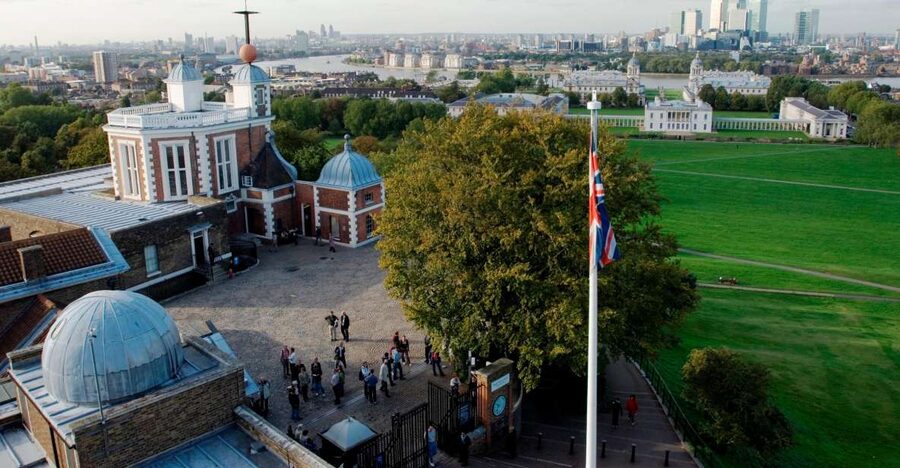
The modern Astronomy Centre gives the historic observatory a more contemporary counterpoint. Here you can learn about space and, according to the attraction information, touch a meteorite estimated to be 4.5 billion years old.
That tactile feature works well for families and younger visitors. A meteorite can make the age of the solar system feel less remote. You are not simply looking at a picture or reading a date. You are connecting the story of space with an actual object from beyond Earth.
The balance between the old rooms and the modern displays is useful. Flamsteed House shows how astronomy was done centuries ago. The Astronomy Centre shifts your attention to the wider universe. I would give yourself enough time for both rather than treating the meteorite as a quick add-on after the Meridian Line.
The planetarium is a separate choice
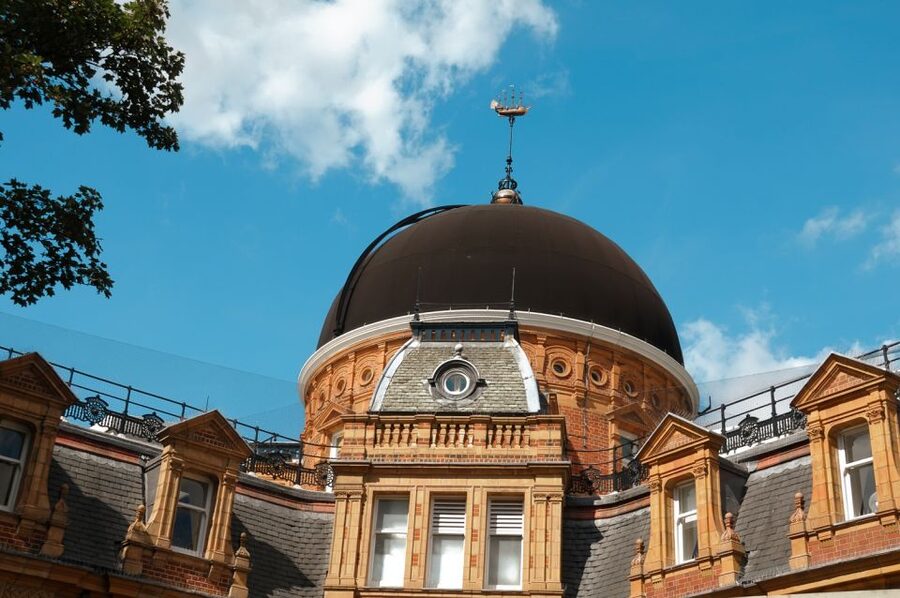
The Peter Harrison Planetarium offers a journey through space, but a show is not included in this admission. You need to buy a separate ticket if you want to add one.
That extra cost may be worthwhile if you are visiting with children or if a planetarium presentation is central to your interests. If you mainly want the Prime Meridian, historic rooms, navigation displays, and views, the regular admission already gives you a full visit.
Because the planetarium is separate, check availability before building your day around it. The observatory ticket itself is valid for one day, but the planetarium is not part of the included package.
The view from the top of Greenwich Park
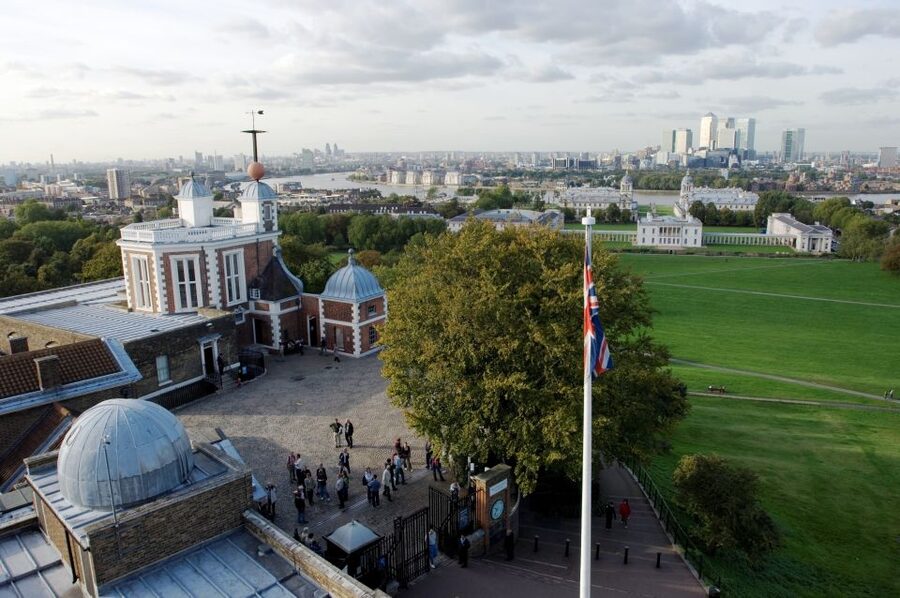
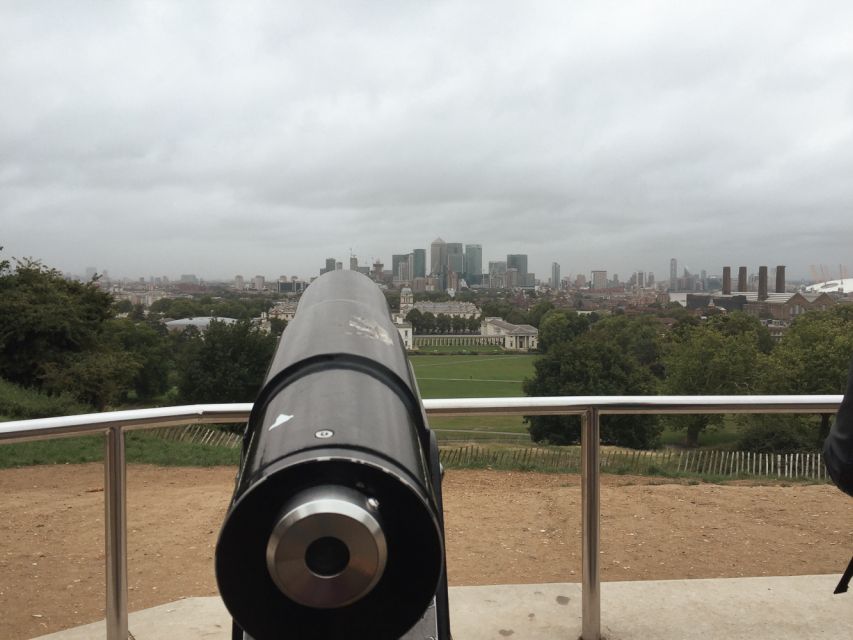
The view is one of the strongest reasons to make the climb. From the observatory, you can look over the park toward the River Thames, Canary Wharf, the City of London, and the eastern side of the capital.
The view changes the scale of the visit. Inside, you are focused on clocks, instruments, and rooms. Outside, you see how Greenwich fits into London today. The park below provides a broad green foreground, while the skyline and river give you clear urban bearings.
Bring a little patience for the viewpoint. On a busy day, the Meridian Line may attract the most attention, but the panorama deserves time of its own. It is also a good place to pause after the uphill walk.
How the self-guided format works
This is a self-guided visit, not a tour led from room to room by a named guide. The downloadable audio guide is available in English, Spanish, Chinese, French, German, Italian, Korean, and Portuguese.
That format gives you control. You can move quickly through displays that do not interest you, then spend longer with Harrison’s clocks, the astronomy exhibits, or the historic rooms. Families may appreciate being able to set their own pace rather than keeping up with a group.
The downside is that you need to manage your own visit. One audio player has reportedly failed to work properly, although the visit remained worthwhile without it. Download the guide before you begin if possible, and bring charged phones and headphones if you plan to use your own device.
The written displays and layout still make the observatory accessible without relying entirely on audio. Staff are available around the site, and the attraction information describes the venue as wheelchair accessible. Still, the hill and park approach deserve more attention than the building itself.
Is $32.33 good value?
At $32.33 per person, this is not the cheapest London attraction. The value depends on what you want from the visit.
You get entry to the Royal Observatory and the Prime Meridian, access to the historic observatory spaces, astronomy exhibits, the park viewpoint, and a multilingual downloadable guide. For someone interested in navigation, clocks, geography, or the history of science, that is a solid half-day-style attraction, especially when combined with nearby Greenwich sights.
The ticket is less compelling if you plan to spend only a few minutes taking a Meridian Line photograph. In that case, the price feels high for the photo alone. The best value comes when you explore Flamsteed House, study the Harrison clocks, visit the Astronomy Centre, and take time with the view.
The planetarium is extra, so include that in your budget if it is important to you. The ability to reserve now and pay later, along with free cancellation up to 24 hours before the visit, adds flexibility when your London plans are still changing.
Who will enjoy this visit most?
I would recommend the Royal Observatory to:
- Families with older children and teenagers who enjoy hands-on science
- Anyone fascinated by clocks, navigation, geography, or astronomy
- Visitors who want a historic London attraction with a strong view
- People already planning to visit Greenwich Park and the National Maritime Museum
- Anyone who likes self-guided sightseeing and moving at a personal pace
I would think twice if you have trouble walking uphill and cannot arrange a comfortable approach. The building is wheelchair accessible, but the route through the park can be steep. I would also choose another attraction if your only interest is modern space imagery, since much of the focus here is on time, longitude, and navigation.
Practical plan for your day
Give yourself time for the walk through Greenwich Park and do not arrive at the last minute. The climb is part of the setting, but it is still a climb.
Start with the Meridian Line, then explore Flamsteed House and the Octagon Room. Follow with the displays on longitude and Harrison’s marine clocks, and finish with the Astronomy Centre and the view if your energy allows.
Try to check the timing ball schedule for 1 p.m. If you want a planetarium show, arrange that separately. Afterward, you can continue through Greenwich Park or visit the nearby National Maritime Museum and shopping area.
The ticket is valid for one day, so you have room to build a broader Greenwich outing rather than racing through the observatory.
Should you book the Royal Observatory Greenwich?
Book it if you want more than a landmark photo. The Meridian Line is fun, but the real value lies in the connection between astronomy, accurate clocks, sea navigation, and the measurement of the world.
I especially recommend it for families with teenagers, science-minded visitors, and anyone who enjoys historic interiors with a practical story behind them. The view adds a strong bonus.
Skip it if the steep hill will make the visit stressful or if you only want a quick stop at 0 degrees longitude. For most people who can manage the climb and spend several hours exploring, the $32.33 admission gives you a thoughtful, memorable Greenwich experience.
FAQ
What does the Royal Observatory Greenwich ticket include?
It includes entry to the Royal Observatory Greenwich and the Prime Meridian, along with a downloadable multilingual guide.
Is the Prime Meridian included?
Yes. The ticket includes access to the Prime Meridian, where you can stand with one foot in the eastern hemisphere and one in the western hemisphere.
Is the visit guided?
No. This is a self-guided visit. A downloadable audio guide is available in English, Spanish, Chinese, French, German, Italian, Korean, and Portuguese.
Is a planetarium show included?
No. A show at the Peter Harrison Planetarium is not included and requires a separate ticket.
How long is the ticket valid?
The ticket is valid for one day. Check availability for the applicable starting times when booking.
Is the Royal Observatory wheelchair accessible?
Yes, the activity is listed as wheelchair accessible. However, the approach through Greenwich Park includes a steep hill, which may be difficult for some visitors.
What can I see inside the observatory?
You can see the historic Flamsteed House, the Octagon Room, exhibits about astronomy and navigation, and displays connected with scientists and inventors including Harrison, Newton, Halley, Bradley, and Airy.
Can I see John Harrison’s marine clocks?
The visit includes displays about Harrison and his marine clocks, which explain how accurate timekeeping helped solve the problem of longitude at sea.
Can I cancel the ticket?
You can cancel up to 24 hours in advance for a full refund. Reserve now and pay later is also available.
Just added in Britain
- Cornwall: Guided Seal Safari by Boat★ 4.7 · 63 reviews
- Chester: City Sightseeing Hop-On Hop-Off Bus Tour★ 4.6 · 274 reviews
- The Wandering Bard’s Valley Tour or the Swansea Bay Tour.★ 5.0 · 394 reviews
- 1-Hour and a Half Walking Guided Tour in Medieval Newcastle★ 5.0 · 87 reviews
- Bristol: Air Raid Shelter & St. Nicholas Market Walking Tour★ 4.8 · 320 reviews
- Admission Ticket to Sick To Death in Chester★ 4.5 · 384 reviews
- Guided City Walking Tour of Newcastle★ 5.0 · 548 reviews
- Cambridge: Alumni-Led Walking & Punting Tour w/Kings College★ 4.6 · 418 reviews