
Reviewed · CASTLE TOURS
Isle of Wight: Carisbrooke Castle Entry Ticket
Carisbrooke Castle is not just a set of old walls. It is the place where Charles I was held prisoner, where he tried to escape and became stuck in window bars, and where donkeys still turn a centuries-old water wheel. That mix of royal drama, working history, and open grounds gives the visit real character.
I like the views from the Norman keep and the chance to walk the battlements at your own pace. I also like the well-kept garden, the museum displays, and the easygoing feel of the grounds. The main drawback is physical: steep stone steps and uneven walking make the upper levels unsuitable for wheelchair users and difficult for anyone with limited mobility.
Key things to know before you go

- Charles I’s escape room: See the small room and window linked to the king’s failed attempt to get free.
- Donkeys at the water wheel: The castle’s donkeys work for about six minutes each day, showing how water was once lifted from the well.
- Norman keep views: Climb the steep steps for broad views across the Isle of Wight.
- Warrior the war horse: See the statue of Warrior, displayed as part of the First World War centenary commemoration.
- Princess Beatrice Garden: Take a quieter break among Edwardian-style planting and the royal colors.
- Good value for a small group: The listed price is $28 for up to four people, with one full day to explore.
Why Carisbrooke Castle feels different from a normal castle visit
I find Carisbrooke Castle most appealing because it combines several kinds of history in one compact visit. You get a defensive fortress, royal apartments, a prison story, domestic ruins, gardens, museum displays, and a working water system. None of these needs to carry the whole visit on its own.
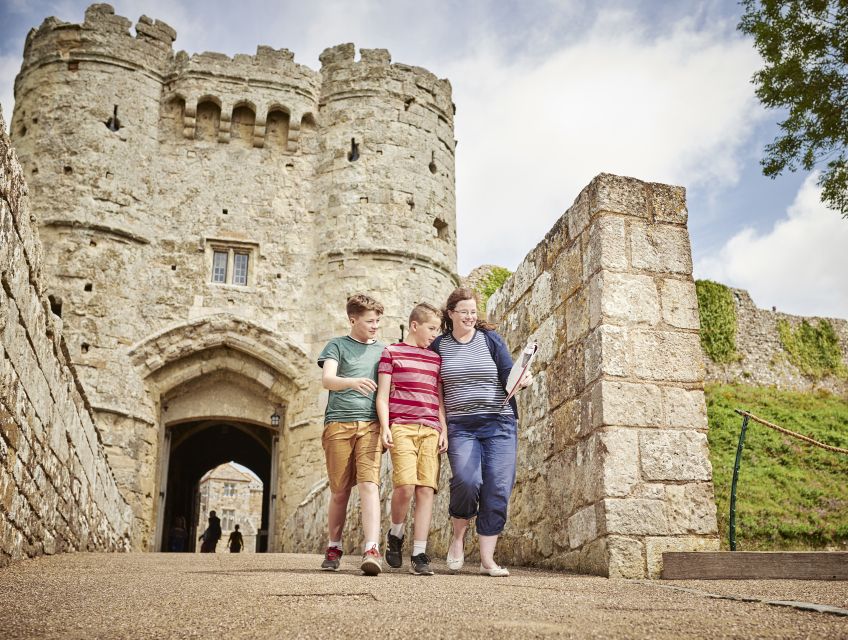
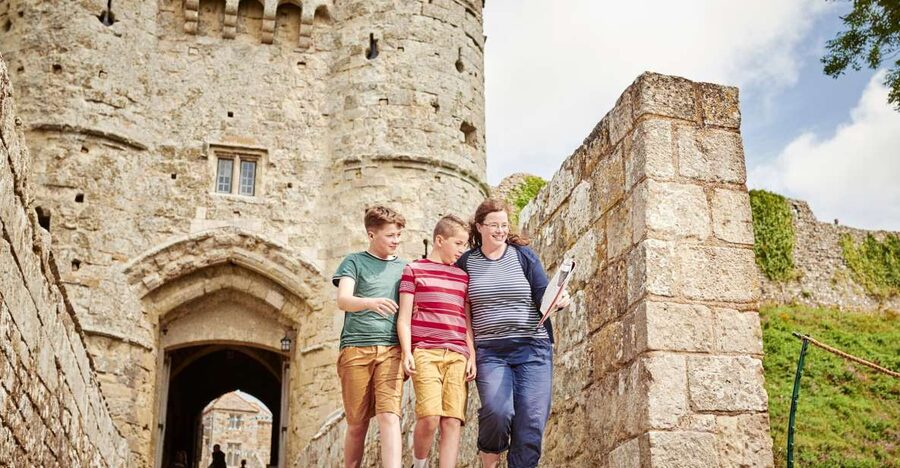
The castle began around 1100 and helped defend the Isle of Wight for more than nine centuries. That long service is easier to understand when you move through the gatehouse, climb the walls, and look at the thick mound supporting the Norman keep. You are not simply viewing a preserved building. You are seeing how people defended, governed, lived in, and maintained a major stronghold.
The visit is self-guided rather than a scheduled tour with a named guide. That gives you freedom to linger in the Charles I displays, pause in the garden, or spend extra time on the ramparts if the weather is clear. An introductory film helps you get your bearings before you set off.
I would allow most of a day if you want to see the castle properly, use the grounds at a relaxed pace, and stop for food. A quicker visit is possible, but rushing would work against the place. The castle rewards moving slowly and noticing how one part connects to another.
Other castles within reach of Britain:
- Stonehenge, Windsor Castle, and Bath from London
★ 4.5 · 18,662 reviews - Stonehenge, Windsor Castle and Bath with Pub Lunch in Lacock
★ 4.5 · 7,402 reviews - Windsor Castle Admission Ticket
★ 4.7 · 7,032 reviews
Start with the film, then follow the fortress story
The introductory film is a sensible first stop. It provides a basic outline of the people and events connected with Carisbrooke, which makes the later rooms easier to understand. If you go straight into the walls without that background, some of the royal and military details may feel disconnected.
From there, you can explore the powerful medieval gatehouse and the original domestic buildings. Later residents adapted these spaces, so the castle does not present a single frozen period. You see layers of use, from defensive stronghold to royal residence and prison.
The remains of Carey’s Mansion add another dimension. These ruins help show that Carisbrooke was once a place where people lived day to day, not only a military post. Look for the contrast between the hard defensive structures and the more comfortable domestic areas.
The museum displays are particularly useful for visitors interested in Charles I. One reviewer specifically praised the collection of his personal items, and I can see why this section would appeal to anyone who wants more than a general royal anecdote. Objects make the story more direct. They help you picture the imprisoned king as a person rather than only a name in a history book.
Charles I’s failed escape is the castle’s sharpest story
The room from which Charles I tried to escape is one of the most memorable stops. The king attempted to get through a window, but the bars trapped him. It is a small, awkward detail, and that is exactly why it works so well as a historical story.
You can imagine the tension without needing a grand reconstruction. The room gives the political drama a physical setting, and the failed escape feels almost painfully human. It is also a useful reminder that royal status did not make Charles I free once he was held at Carisbrooke.
The Charles I material is worth taking your time with. This is the part of the castle most likely to interest adults who enjoy English political history, while younger children may connect more quickly with the walls, donkeys, and battle-themed spaces. A mixed-age group can split its attention without anyone running out of things to see.
Walk the battlements and climb the Norman keep
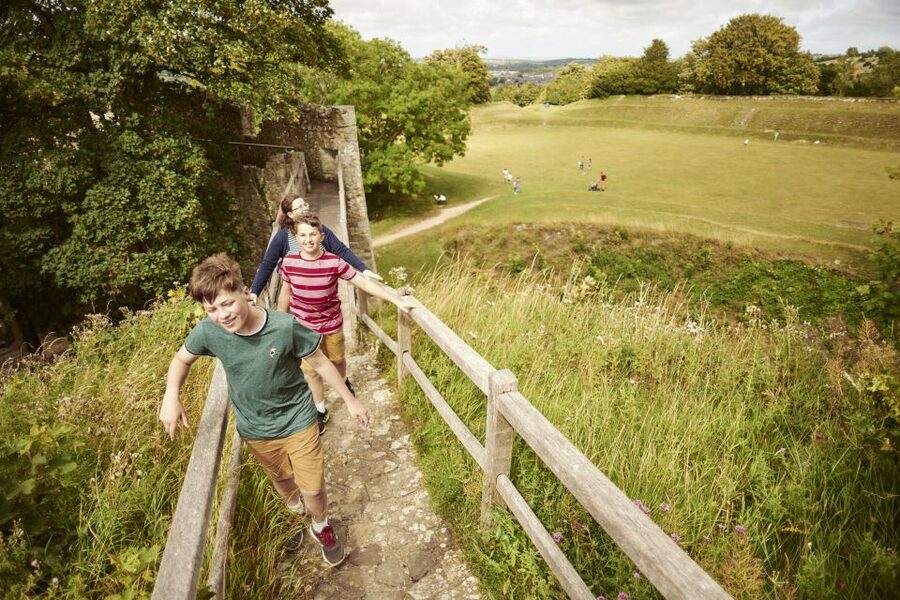
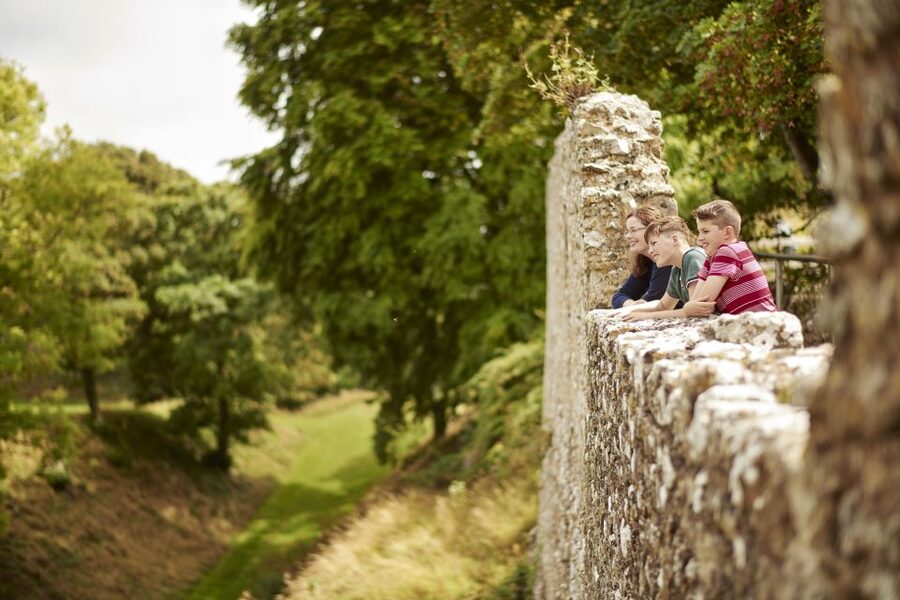
The battlement walk is the main physical challenge. You will encounter steep stone steps, and the climb up to the castle mound takes effort. Wear comfortable shoes with a firm sole. Trainers may be enough for some people, but sturdy walking shoes are a better choice.
The payoff is the view from the Norman keep. From the high point, you get broad views around the Isle of Wight and a clearer sense of the castle’s defensive position. The view is not a separate attraction added to the visit. It explains why this site mattered.
I like the way the climb turns the castle into an active experience. You are not only reading about defense. You are walking the routes used to watch the surrounding area and seeing the height and thickness of the fortifications for yourself.
Still, you should be honest about your fitness and balance before booking. The wall walk is not suitable for wheelchair users or people with mobility impairments, and the stone stairs may be hard for older visitors who struggle with steps. One visitor advised sturdy trainers or walking boots, and that is practical advice.
If someone in your group cannot manage the upper levels, the lower grounds, museum, garden, and domestic remains may still provide a worthwhile visit, but the full castle experience depends on being able to climb. The attraction does not offer a fully accessible version of the battlement route.
A few more things to do in Britain worth a look
- London: The London Eye Entry Ticket
★ 4.6 · 35,875 reviews - London: Tower Bridge Entry Ticket
★ 4.7 · 15,560 reviews - London: Westminster Abbey Entrance Ticket
★ 4.6 · 11,254 reviews - London: St Paul’s Cathedral Entry Ticket
★ 4.7 · 9,813 reviews
The donkeys bring the old well system to life
The donkeys are one of Carisbrooke’s most unusual features. Each day, they spend about six minutes treading the water wheel in the well house. Their work demonstrates how the castle once drew water from its deep well.
This is a small demonstration, not a long animal show, so timing matters. You may need to check when the daily stint takes place rather than assuming the donkeys will be working whenever you enter the well house. Even if you miss the wheel in motion, the well house remains an important part of understanding how the fortress functioned.
I especially like this detail because it connects a large medieval site with an ordinary practical need. Walls and royal rooms can feel remote. Water is immediate. A castle could not survive without it, and the wheel shows the work required to supply the people inside.
The donkeys are also likely to be a highlight for children. Families can turn the visit into a gentle history lesson: how did people get water before modern pumps, and why did the castle need such a large system? The six-minute working period is brief, but it gives the old machinery a clear purpose.
Princess Beatrice Garden offers a quieter pause
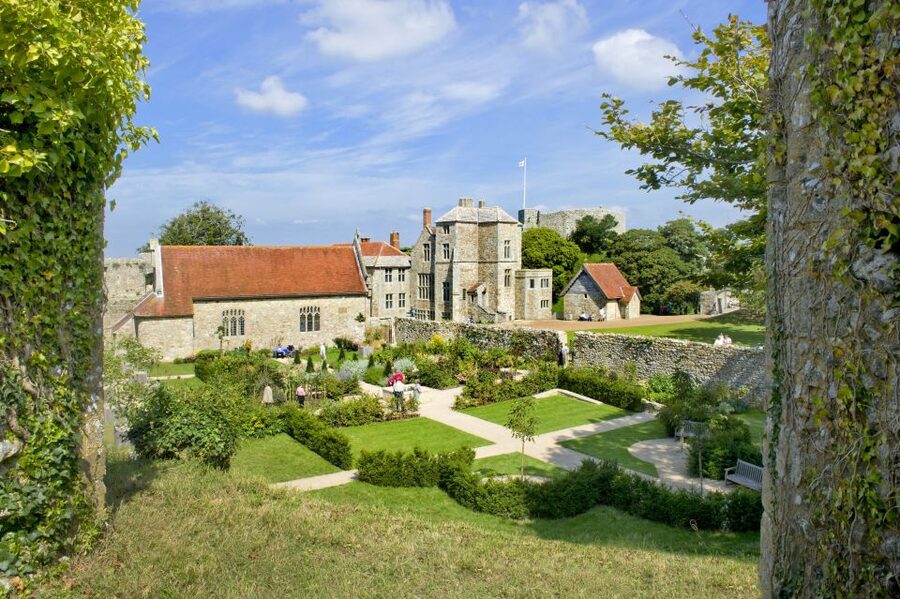
The Princess Beatrice Garden provides a change of pace after the hard stone and steep climbs. It has an Edwardian style, a fountain, and plantings in the strong colors associated with the royal arms.
You can use this part of the grounds as a breathing space between the keep and the historic rooms. It is also a good place to slow down if your group includes people who prefer gardens to fortifications. The garden helps explain that Carisbrooke continued as a lived-in royal and domestic setting after its main defensive role had faded.
The grounds are well maintained, with open grass areas that suit a picnic or an unhurried rest. One family group spanning ages from one to seventy found enough to enjoy across the site, and that age range makes sense. Young children can move around the open spaces, adults can focus on the history, and older family members can choose the lower-level areas rather than attempt every stair.
Do not treat the garden as a major formal-garden destination on the scale of a large country estate. Its value is in the contrast it provides. After a climb through a medieval fortress, a fountain and careful planting make a welcome pause.
Meet Warrior and consider the castle’s later memory
The statue of Warrior adds a modern commemorative layer to the visit. The war horse is displayed as part of the remembrance of the First World War centenary.
This stop may not be the first thing you expect at a medieval castle, but it shows how historic sites collect different stories over time. Carisbrooke is linked to medieval defense and the English Civil War, yet it also carries later national memories.
I would not plan the visit around the statue alone. It is best understood as one stop among many, especially after you have seen the older buildings and displays. For visitors interested in military history, it gives the castle a wider frame beyond the medieval period and Charles I.
Food, rest, and the pace of the day
You can make Carisbrooke Castle a relaxed outing rather than a nonstop climb. The site has a tea room, and the grounds provide space to pause. A cheese roll was singled out as a welcome part of one visit, so you can expect simple refreshment rather than a reason to come for a full dining experience.
There is also ample car parking, according to the practical information available for the site. That matters on an island day out, since an easy arrival gives you more time for the castle itself. The meeting point is the main entrance, where you exchange your electronic voucher for an entry ticket.
Because the ticket is valid for one day, you do not need to race through the castle. Check the current opening times before setting off, since availability and starting times can vary. Last admission is two hours before closing, which is important if you are arriving later in the day.
The advertised price is $28 for a group of up to four. That can be strong value for a family or small party, since the same booking covers a full day and several different types of activity. Check the exact ticket category when booking, as the family ticket allows up to two adults and up to three children aged five to seventeen.
The value is less obvious for one person visiting alone, especially if you only want a short look at the walls. For a group, however, the combination of royal history, views, gardens, working donkeys, and open grounds makes the cost easier to justify.
Who should book Carisbrooke Castle
I would recommend this visit to families, history fans, and anyone who enjoys exploring at their own pace. Children have the donkeys, open grass, steep walls, and battle-related details, while adults can spend more time with Charles I and the museum displays.
It also suits visitors who like a mixture of indoor and outdoor sights. If rain or wind arrives, you can move into the museum, gatehouse, and historic rooms. In better weather, the ramparts, keep, garden, and grounds become the main draw.
I would be more cautious if you have difficulty with stairs, use a wheelchair, or want a fully guided experience. The site is not suitable for wheelchair users or people with mobility impairments, and there is no named guide or scheduled live tour included. You receive entry and can explore independently.
Bring comfortable shoes, allow time for the climbs, and check the donkey demonstration schedule when you arrive. If the weather is clear, save time for the Norman keep because the views help make sense of the castle’s defensive purpose.
Should you book Carisbrooke Castle?
Book it if you want a substantial Isle of Wight attraction rather than a quick photo stop. The strongest reasons are the Charles I escape room, the battlement walk, the Norman keep views, and the donkeys working the old water wheel.
The $28 group price is most attractive for up to four people, especially families who can use the full day. Skip it if steep stone steps would prevent you from seeing the upper castle, or if you prefer a guided tour with a fixed commentary. For everyone else, Carisbrooke offers a well-rounded day of English history, working heritage, gardens, and fresh island views.
FAQ
How long is the Carisbrooke Castle ticket valid?
The entry ticket is valid for one day. Check availability for the relevant opening times before booking.
How much does entry cost?
The listed price is $28 per group of up to four participants.
What is included with the ticket?
The ticket includes entry to Carisbrooke Castle.
Where do I exchange my electronic voucher?
Go to the main entrance and exchange your electronic voucher for an entrance ticket.
Can I see Charles I’s escape room?
Yes. You can see the room from which Charles I tried to escape and became stuck in the window bars.
How often do the donkeys work the water wheel?
The donkeys have a daily stint of about six minutes, demonstrating how the castle once drew water from its well.
Is Carisbrooke Castle suitable for wheelchair users?
No. The experience is not suitable for wheelchair users or people with mobility impairments.
What should I wear?
Wear comfortable shoes. Sturdy trainers or walking boots are useful because the castle has many steep stone steps.
Does the family ticket cover children?
Yes. The family ticket allows entry for up to two adults and up to three children aged five to seventeen.
Just added in Britain
- Best of Liverpool Sightseeing Tour by Private Taxi★ 5.0 · 41 reviews
- Liverpool Music Icons Tour with Nasher from Frankie Goes to Hollywood★ 5.0 · 39 reviews
- Liverpool: River Cruise & Sightseeing Bus Tour★ 4.5 · 495 reviews
- Reel Tours: Liverpool Film Location Walking Tour★ 5.0 · 188 reviews
- Best Of Liverpool Heritage, History & Culture Guided Walking Tour★ 5.0 · 539 reviews
- LIverpool beer or prosecco bike tour★ 5.0 · 146 reviews
- Liverpool with a Local: Walking Tour (10:30am)★ 5.0 · 80 reviews
- History Guided Tour of Liverpool and the Beatles★ 5.0 · 408 reviews
Castle Tours, compared.

Stonehenge, Windsor Castle, and Bath from London
Read our review →
Stonehenge, Windsor Castle and Bath with Pub Lunch in Lacock
Read our review →

Edinburgh Castle: Guided Walking Tour with Entry Ticket
Read our review →
Stonehenge, Windsor Castle and Bath Full Day Guided Tour
Read our review →
Windsor Castle, Stonehenge, and Oxford Day Trip from London
Read our review →
Edinburgh Castle Guided Walking Tour in English
Read our review →
Isle of Skye and Eilean Donan Castle Day Trip
Read our review →Browse the lists this tour appears in