
Reviewed · TOURS IN ENGLAND
Exceptional Bath tour guide making your visit splendidly memorable.
Bath is easiest to understand from the pavement, where Roman foundations, medieval lanes, Georgian squares, and grand terraces appear within a short walk. This tour with Paul Elliott connects those layers in one route, moving from the Roman Baths and Bath Abbey to Pulteney Bridge, Queen Square, The Circus, and the Royal Crescent.
I like the way the walk gives you both the famous sights and the city’s smaller connecting streets. I also like the mix of architecture, local stories, famous 18th-century figures, and Paul’s dry humor. The main consideration is pace: the walk covers more than a mile and can run beyond two hours, especially if the group asks questions or moves slowly.
Key points to know before you book
- Paul Elliott leads the walk: Expect a local guide with a strong command of Bath’s architecture, history, and colorful characters.
- The route covers Bath’s main sights: You see the Roman Baths, Bath Abbey, Pulteney Bridge, Queen Square, The Circus, Royal Crescent, and Thermae Bath Spa.
- It is a history and architecture tour: The Georgian buildings receive as much attention as the Roman and medieval past.
- It stays outside paid attractions: The Roman Baths, Bath Abbey, No. 1 Royal Crescent, and Thermae Bath Spa require separate admission if you want to enter.
- Allow up to two and a half hours: The advertised duration is about 90 minutes to two hours, but the walk may take longer.
- The group can reach 20 people: It is small enough to follow a guide on city streets, though not always as intimate as a private walk.
Why this Bath walk works so well
The appeal here is the range. In a short city walk, you move from the Roman spa complex to a medieval street, then into the carefully planned Georgian city built for fashionable 18th-century society. That gives you a useful framework for exploring Bath on your own afterward.
Paul does not simply point out buildings and give dates. His approach includes anecdotes, humor, personal observations, and stories about the people who passed through Bath. The tour also links Bath with wider British and overseas history, including connections to America, Canada, and Australia.
The tone is not formal. Paul’s style can be witty, sarcastic, and opinionated. Many people will enjoy that direct approach, especially if they prefer a guide who adds personality rather than reciting prepared facts. If you want a quiet walk with a strictly polished presentation, this may feel less comfortable.
The tour has a rating of 4.7 from 69 reviews, with 94 percent of bookers recommending it. The strongest praise centers on Paul’s humor, his command of Bath’s buildings, and his ability to add lesser-known stories to familiar sights.
A few more things to do in Bath worth a look
- Walking Tour of Bath with Blue Badge Tourist Guide
★ 5.0 · 1,877 reviews - Bath: Guided Walking Tour
★ 4.9 · 1,198 reviews - Bath: Guided Ghost Tour
★ 4.8 · 1,036 reviews
Starting beside Bath Abbey and the Roman Baths
The walk begins outside The Abbey Hotel near the old city wall. This is a practical starting point because you are immediately in the center of Bath, close to the Abbey, Roman Baths, Pump Room, and main shopping streets.
The Roman Baths receive a full explanation from outside, but admission is not included. Paul’s talk is useful even if you plan to return later, since you get a clear introduction before deciding how much time to spend inside. If you have already visited the complex, the outdoor explanation still helps place the site within the wider city.
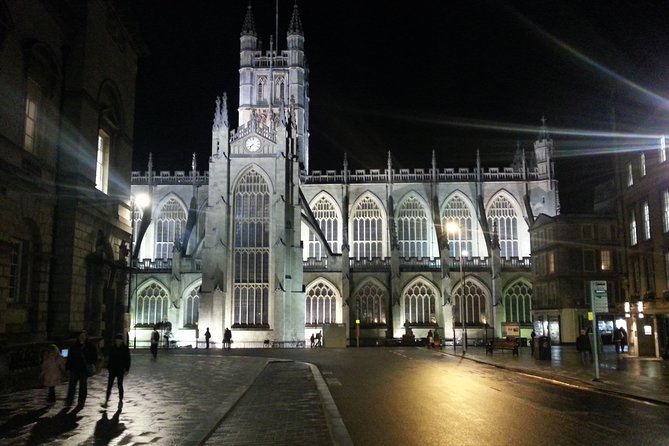
Next comes Bath Abbey. The short stop covers the building’s story from its Saxon beginnings through Norman and Tudor changes to the present church. Five minutes is not enough for an architectural tour of the interior, and entrance is not part of the walk, but the stop gives you a useful outline before you choose to go inside independently.
You also pass Sally Lunn’s, known as Bath’s oldest house and tea shop. This is one of the small details that makes the route feel more like a city walk than a sequence of major attractions. The building gives you a glimpse of Bath’s older street pattern before the tour moves toward the river.
Pulteney Bridge and the River Avon
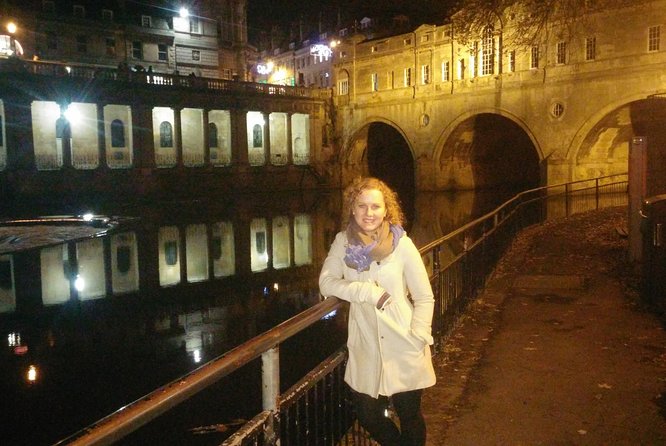
Pulteney Bridge is one of the most photogenic stops in Bath. The bridge crosses the River Avon and is lined with shops, making it more than a simple crossing. Paul explains the river, nearby locations for boat trips, and film connections associated with the area.
This is a good place to keep your camera ready. The bridge, river, and surrounding buildings create one of Bath’s clearest views, and the guide points out useful photo angles along the route. The stop itself is brief, so you will not have a long free period here during the formal tour.
The walk then turns through old medieval alleys and toward the former city wall. This change of setting matters. Bath can seem almost entirely Georgian if you stay near the grand squares, but these lanes show that an older city survives underneath the later redevelopment.
Queen Square introduces Georgian Bath
Queen Square marks the beginning of the Georgian part of the tour. Here Paul explains how Bath changed as fashionable society arrived and the city developed a more ordered architectural style.
This section is valuable because it prepares you for The Circus and Royal Crescent. Instead of seeing each building as an isolated attraction, you learn to look for the planning ideas, proportions, and repeated details that shape Georgian Bath.
The tour also brings in famous 18th-century residents and visitors. Bath was a social center during that period, and the people connected with it influenced politics, literature, empire, and later life in countries such as the United States, Canada, and Australia. Paul uses these figures to connect the city’s local story with events far beyond Somerset.
Same city, a very different afternoon:
- Bath: City Walking Tour with Optional Roman Baths Entry
★ 4.7 · 1,401 reviews - Stonehenge, Avebury & the Cotswolds from Bath (Small group)
★ 5.0 · 798 reviews - Roman Baths and Bath City Walking Tour
★ 4.5 · 762 reviews - From Bath: Stonehenge & the Cotswolds Day Tour with Entry
★ 4.8 · 543 reviews
The Circus, Bath’s great architectural moment
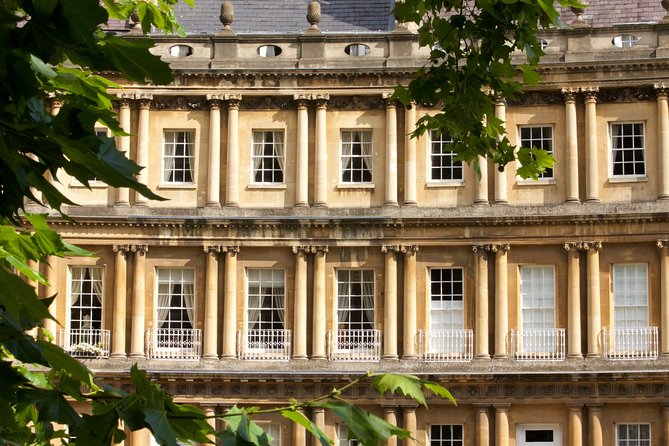
The Circus is one of the walk’s highlights. Designed by John Wood, it is a circular arrangement of grand townhouses with classical details and a strong sense of balance.
You stop for about ten minutes, giving Paul time to explain why the design matters. This is where the tour’s focus on architecture pays off. The Circus is not just a pretty place to photograph. Its layout reflects Georgian ideas about order, status, and the way an urban space should present itself.
The stop is free to view from the street, although individual building access is not included. You can expect a clear exterior explanation rather than an indoor house tour.
Royal Crescent and the best photo opportunities
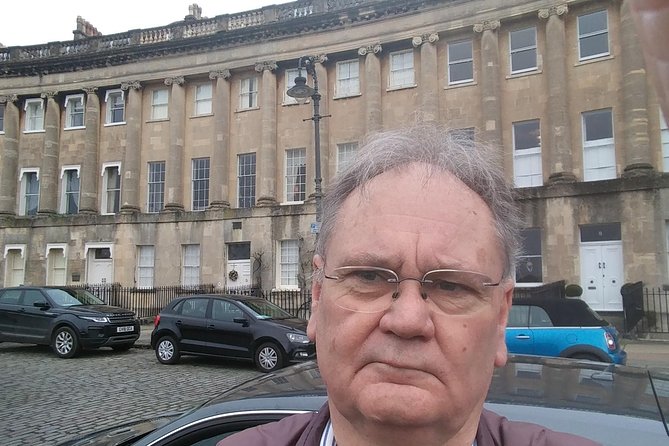
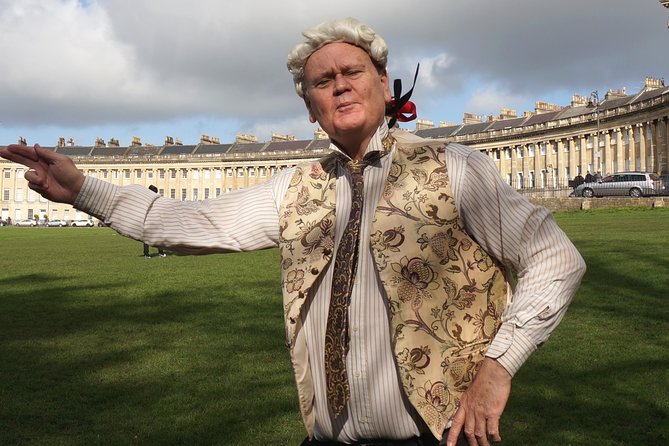
From The Circus, the route continues to No. 1 Royal Crescent. This is Bath’s most famous address and one of the clearest examples of Georgian town planning.
The crescent curves across the hillside in a long sweep of stone-fronted homes. Paul explains the importance of the address and points out views for photographs. The stop lasts about ten minutes, but the setting rewards a slower look. Notice how the uniform front hides the fact that the buildings were separate private homes rather than one single residence.
No. 1 Royal Crescent is a paid attraction, so admission is not part of this experience. The outdoor stop is still worthwhile if you do not want to enter, since the crescent itself is the main visual attraction.
The location also makes the walking direction important. The tour reaches the Royal Crescent after moving uphill through the city, then begins a downhill return. That gives the walk a natural high point before the final section.
The downhill return through modern Bath
The return route passes the Jane Austen Centre and Thermae Bath Spa. These stops help show how Bath continues to use its past while remaining a working city with modern attractions.
The Jane Austen Centre connects with the author’s time in Bath and the city’s role in her life and writing. The tour points it out from the street, but entry is not included.
Thermae Bath Spa represents Bath’s modern bathing tradition. Paul also points out the Cross Bath next door. The tour ends in this area or returns toward the Abbey meeting point, depending on the route taken with the group. The supplied meeting information gives the Abbey Hotel as both the start and end point, so confirm the exact finish instructions when booking.
This final stretch is useful because it brings the story into the present. Bath is not only a museum of Roman and Georgian buildings. It still trades on its spa identity, now through contemporary bathing facilities.
What Paul Elliott adds to the experience

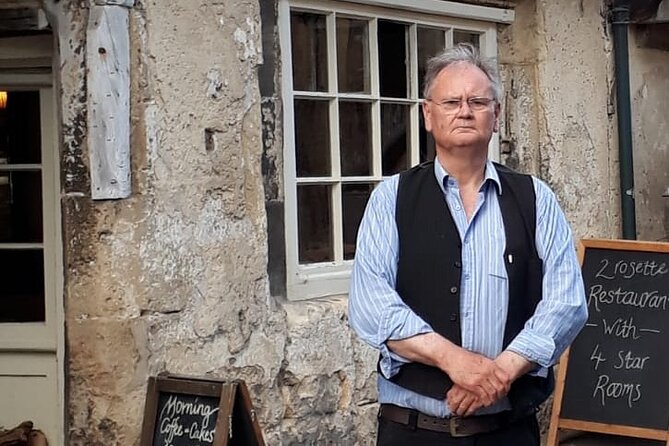
Paul’s strongest quality is his ability to make architecture feel personal. He has lived in the area for many years and brings local familiarity to the route. His explanations include lesser-known facts, personal stories, and the occasional sharp aside.
You should expect a guide who enjoys questions, but also one whose humor may not suit every group. Most of the feedback praises his wit and lively delivery. A small amount of criticism points to moments when his sarcasm felt too pointed or when a question did not receive the warmth the listener wanted.
That is worth taking seriously. Paul’s style is part of the attraction, not a minor detail. If you like a guide who speaks plainly and adds a little bite, you may find the walk memorable. If you prefer a gentle, neutral tone, you may want a more conventional guide.
One useful tip is to ask for extra stories if you enjoy Paul’s waffling style. The route already covers the main sights, but the extra anecdotes are where his personality comes through most strongly.
Timing, walking, and group size
The listed duration is about one hour and 30 minutes to two hours. In practice, allow up to two and a half hours. The pace depends on the slowest person in the group, the number of questions, and how long Paul spends on each building.
The walk covers just over a mile and includes more than 15 stops or points of interest along the wider route. It is not a long-distance hike, but you should be ready to walk continuously through central Bath, including an uphill section before the Royal Crescent and a downhill return.
The group limit is 20 people. That keeps the walk manageable on narrow streets, though a group of that size may not feel personal at every stop. Smaller departures can be especially pleasant because Paul can respond more directly to individual interests.
The tour is offered in English and uses a mobile ticket. It is near public transportation, and most people can take part. Wear sensible walking shoes, especially if you want to stay comfortable through the older lanes and sloping streets.
Is the $30.53 price good value?
At $30.53 per person, this is a reasonable price for a guided introduction to Bath. You are paying for the guide’s time, route planning, local interpretation, and two hours of walking, not for attraction admission.
The value is strongest if Bath is new to you. In one outing, you get the city’s main visual landmarks, a basic timeline, architectural context, and suggestions for places to revisit. That can save you time during a short stay.
The price is less attractive if you want to enter the Roman Baths, Bath Abbey, No. 1 Royal Crescent, or Thermae Bath Spa as part of the same booking. Those admissions must be paid separately, and the tour only explains the sites from outside.
I would book this near the start of a Bath visit. It gives you a working map of the center and helps you decide which interiors deserve your remaining time. The tour is also a good fit for a late afternoon overview, as long as you check the start time and leave room for the walk to run long.
Free cancellation is available if you cancel at least 24 hours before the start time. Changes or cancellations made later are not accepted for a refund.
Who should book this walk?
I would choose this tour if you enjoy:
- Architecture, especially Georgian town planning
- Local anecdotes and famous historical characters
- A guide with humor and a distinct point of view
- Seeing major Bath sights without entering every attraction
- A compact introduction before independent sightseeing
- Photo stops at Pulteney Bridge and the Royal Crescent
I would think twice if you want a fully indoor experience, a very short walk, or a guide who avoids sarcasm and personal opinion. The tour is also less suitable for anyone who wants long, unhurried visits inside the Roman Baths or Abbey, since those admissions are separate.
Should you book Paul Elliott’s Bath walking tour?
Book it if you want Bath explained as a connected city rather than a checklist of attractions. Paul Elliott brings together Roman remains, medieval lanes, Georgian design, spa culture, famous residents, and modern Bath in a way that gives the city shape.
The best reason to choose it is the combination of architecture and personality. The main caution is the same: Paul’s humor can be direct, and the walk may last longer than advertised.
For a first look at Bath, I consider it a strong-value choice. You will leave with a better sense of how the city fits together, which buildings deserve a closer look, and where to return after the tour.
FAQ
Where does the Bath walking tour start?
It starts outside The Abbey Hotel Bath, near the old city wall, at N Parade, Bath BA1 1LF, United Kingdom.
Where does the tour end?
The activity information gives the Abbey Hotel meeting point as the end point. The route also describes the final section near Thermae Bath Spa before returning toward the Abbey area.
How long does the tour last?
The listed duration is approximately one hour and 30 minutes to two hours. It may run to about two and a half hours depending on the pace of the group.
What language is the tour offered in?
The tour is offered in English.
Are attraction admission fees included?
No. Admission is not included for the Roman Baths, Bath Abbey, No. 1 Royal Crescent, or Thermae Bath Spa. The tour explains these places from outside.
What sights are included on the route?
The route includes the Roman Baths, Bath Abbey, Sally Lunn’s, Pulteney Bridge, the River Avon, medieval alleys, Queen Square, The Circus, No. 1 Royal Crescent, the Jane Austen Centre, Thermae Bath Spa, and the Cross Bath area.
How many people can join the tour?
The maximum group size is 20 people.
Can I cancel for a full refund?
Yes, if you cancel at least 24 hours before the experience start time. Cancellations or changes made less than 24 hours before the start time are not eligible for a refund.
Just added in Bath
- Bath Tootbus Hop-on Hop-off Sightseeing Bus Tour★ 4.5 · 247 reviews
- Fun, Flexible Treasure Hunt Around Bath with Cryptic Clues & Hidden Gems★ 5.0 · 208 reviews
- ‘Stonehenge & Secret England’ from Bath for 2-8 curious adventurers★ 5.0 · 54 reviews
- BATH: 2-Hour Bath Walking Tour of Bridgerton Filming Locations★ 5.0 · 99 reviews
- Jane Austen’s Bath And History Trail★ 5.0 · 77 reviews
- Private Day Tour from Bath to the Captivating Cotswolds★ 5.0 · 51 reviews
- Stonehenge and Bath City Tour – Private tour from Bath★ 5.0 · 33 reviews
- The ‘Hidden Cotswolds’ Shared Tour from Bath for 2-8 people★ 5.0 · 83 reviews
Tours in England, compared.
Stonehenge, Windsor Castle, and Bath from London
Read our review →
Stonehenge, Windsor Castle and Bath with Pub Lunch in Lacock
Read our review →
Oxford University Walking Tour With University Alumni Guide
Read our review →
Tower of London and Crown Jewels Exhibition Ticket
Read our review →
Browse the lists this tour appears in