
Reviewed · ROMAN BATHS TOURS
Roman Baths and Bath City Walking Tour
Bath’s best stories are packed into a small area, and this tour connects them neatly. You’ll walk from Bath Abbey and Pulteney Bridge to the Roman Baths, then continue through the Georgian center to the Pump Rooms, Circus, and Royal Crescent. The result is a useful first look at a city that can otherwise feel like a pretty maze of honey-colored stone.
I like the small maximum group of 15, which gives you a fair chance to hear the guide and ask questions. I also like the choice of morning or afternoon departures, plus the option to include Roman Baths admission. The main drawback is that the meeting point can be hard to spot in the crowd around the Abbey, so arrive early and look for the tour’s white and green umbrellas.
Key points at a glance
- Roman and Georgian Bath in one walk: Connect ancient spa culture with the 18th-century city built above it.
- A compact two-hour route: See the main central sights without spending a whole day on your feet.
- Roman Baths admission is optional: Check your selected option carefully, since the basic tour does not include entry.
- Guides make the difference: Jamie, George, John, William, Will H, Oscar, Rhys, and others have led tours praised for humor, clear explanations, and good pacing.
- Groups are limited to 15: This is more personal than a large street tour and makes questions easier.
- Comfortable shoes matter: The route is manageable, but you will be walking and standing outdoors in changing English weather.
Why this walk is a smart introduction to Bath
Bath rewards a bit of context. Its grand buildings are attractive enough to photograph without explanation, but the city makes much more sense when you understand how Roman bathing, Georgian fashion, property development, and social status fit together.
This tour gives you that framework in roughly two hours. You are not simply pointed toward a famous terrace and told its name. You hear how Bath grew from a Roman thermal spa into an 18th-century resort town, then see the buildings that made it fashionable.
The walking route also helps with orientation. You begin near Bath Abbey and finish back in the city center, so you can use the tour to plan the rest of your day. It is especially useful on your first morning in Bath. One guide-led introduction can show you where the major sights sit, allowing you to return later to the places that deserve more time.
The experience has earned a 4.6 rating from 762 reviews, with 90 percent of participants recommending it. That high score is not a guarantee of a perfect outing, but it fits the strongest pattern here: guides are usually praised for being warm, funny, well informed, and good at setting a comfortable pace.
More Walking Tours in Bath:
- Walking Tour of Bath with Blue Badge Tourist Guide
★ 5.0 · 1,877 reviews - Bath: City Walking Tour with Optional Roman Baths Entry
★ 4.7 · 1,401 reviews - Bath: Guided Walking Tour
★ 4.9 · 1,198 reviews
Starting beside Bath Abbey
The official meeting point is Bath Abbey, BA1 1LT. This is central and easy to reach by public transport, but the area can be crowded with several tour groups gathering at once.
The meeting instructions are the weakest practical part of the experience. Bath Abbey is a large building, and a vague meeting point can leave you scanning faces and umbrellas while the start time approaches. Look for the provider’s white and green umbrellas with its logo, and allow extra time rather than arriving at the exact minute.
Once the group is together, expect a walking tour rather than a lecture. Guides such as Jamie, George, John, William, Will H, Oscar, and Rhys have all been praised for bringing in stories, answering questions, and keeping the mood relaxed. The quality of the day depends partly on who leads your departure, but the repeated praise for different guides suggests that the company has a solid bench of storytellers.
The group limit of 15 matters here. Bath’s streets can be busy, and a very large group would make it harder to stay close and hear. A smaller group also makes the tour feel less like being marched from one photo stop to the next.
Bath Abbey and Pulteney Bridge
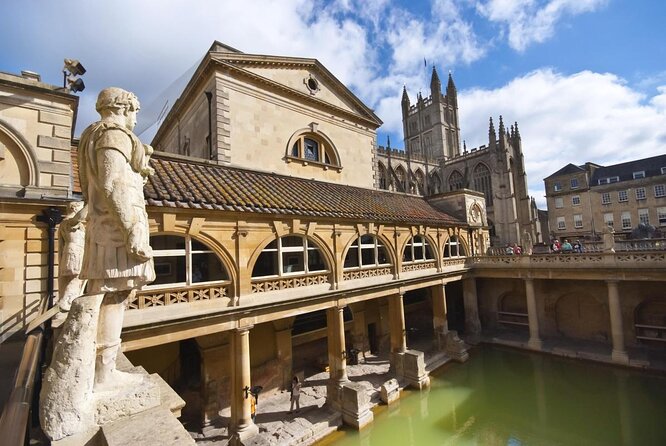
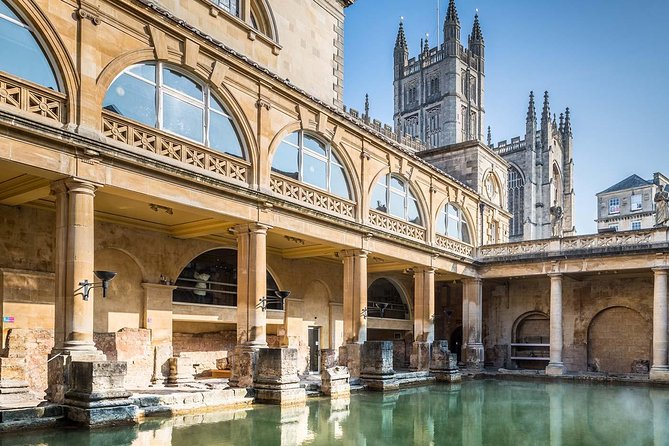
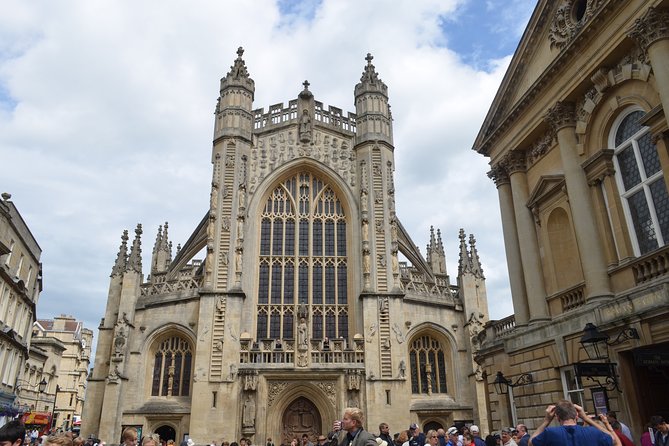
Bath Abbey is one of the city’s essential landmarks, and it gives the walk a strong beginning. The building is Gothic, while the city around it is filled with classical Georgian architecture. That contrast helps you see that Bath is not one period frozen in stone. It is a place built and rebuilt over many centuries.
The Abbey is also tied to an important royal event. England’s first king was crowned here in 973. The tour does not treat the building as an isolated church, but places it within Bath’s wider story of religion, royalty, tourism, and civic pride.
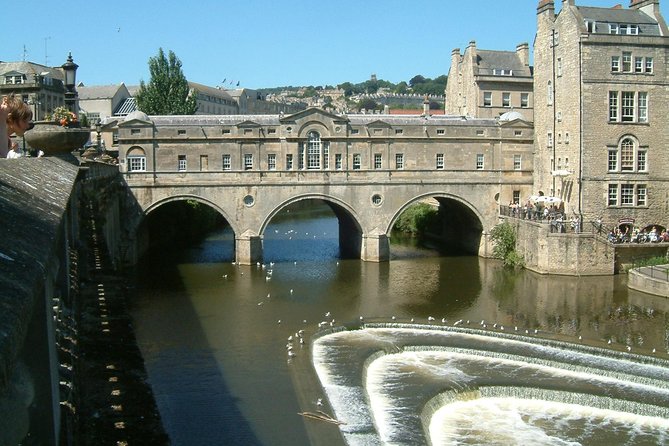
From here, the route takes in Pulteney Bridge. Its position over the River Avon makes it one of Bath’s most recognizable views. The bridge helps you understand the city’s layout and gives the walking portion a change of scene before the Roman Baths and Georgian streets.
Do not expect a long stop at each attraction. The purpose is to explain how the sights relate to one another, not to provide a full interior visit at every building. If you want a detailed look inside Bath Abbey, you may need separate time before or after the tour.
Entering the Roman Baths
The Roman Baths are the central historical attraction, but admission depends on the option you book. The basic walking tour does not include the entrance fee. The upgraded option adds access, so read the booking choice carefully before paying.
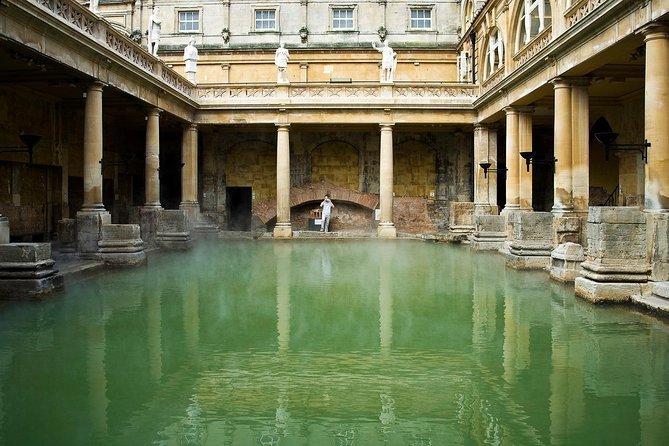
When admission is included, the tour leads you to the Roman Baths after the outdoor walk. You can see the Great Bath, lined with columns, along with the changing rooms, hot pools, and other facilities once used for bathing, relaxation, and social life.
The hot springs are what made Roman Bath possible. The site is not just a collection of old walls. It shows how bathing worked as a public activity, with rooms, pools, decoration, and a social rhythm built around naturally heated water.
The museum adds another layer. Among the main objects are the famous head of Minerva and inscribed stone tablets. These artifacts help connect the grand remains to individual beliefs, requests, and daily life.
Allow for one important difference between the tour options. The outdoor walk is guided, but the Roman Baths visit may be largely self-guided, with an audio guide included with the admission ticket. That arrangement can work well if you like to move at your own speed. It can also feel less like a continuous guided visit, especially if you expected the guide to stay with you through every room.
If you have already visited the Roman Baths, the walking-only choice can be good value. One participant described the 90-minute city walk as a useful overview without repeating the museum visit. If this is your first time in Bath, including the baths usually makes more sense, since it is the site that gives the city its name and purpose.
Other Roman history near England:
- Stonehenge and Bath Day Trip from London with Optional Roman Baths Visit
★ 5.0 · 2,028 reviews - London: Windsor, Stonehenge, Bath, and Roman Baths Day Trip
★ 4.5 · 5,131 reviews - From London: Stonehenge & Roman Baths Full-Day Trip
★ 4.8 · 1,323 reviews
The Pump Rooms and Bath’s Georgian makeover
After the Roman section, the walk turns toward the Georgian center. The Pump Rooms sit beside the Roman Baths and reflect the period when Bath became a fashionable place for health cures, social events, and polite company.
This is where the city’s two main eras meet most clearly. Roman visitors came for thermal bathing. Georgian visitors came to see and be seen, attend assemblies, meet acquaintances, and take part in the rituals of a fashionable resort.
The tour also points out the Upper Assembly Rooms. These spaces were built for formal social life, including dances and gatherings. You do not need to attend a ball to understand their importance. The buildings show how architecture can reveal the habits and ambitions of the people who used it.
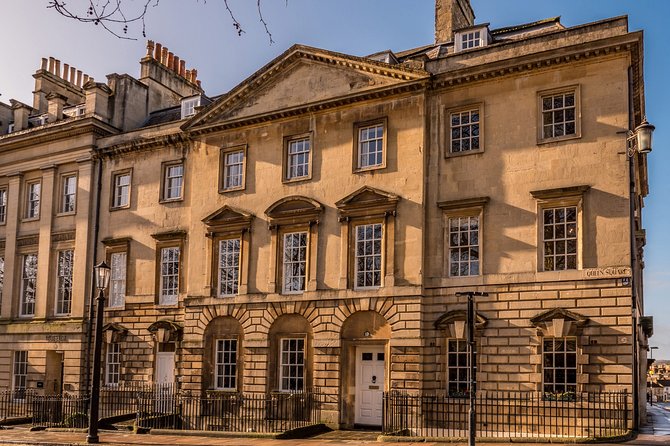
The guide’s commentary is especially useful in this part of the route because Bath’s Georgian architecture can look repetitive at first. Repeated façades, matching stone, and formal proportions create the city’s polished appearance. A good explanation helps you notice the planning and social order behind the beauty.
Several participants praised the guides for explaining the town’s buildings, stores, and development rather than reciting dates. That is the right approach in Bath. You want to know not only when a terrace was built, but why this kind of architecture mattered to the city’s growth.
The Circus and Royal Crescent
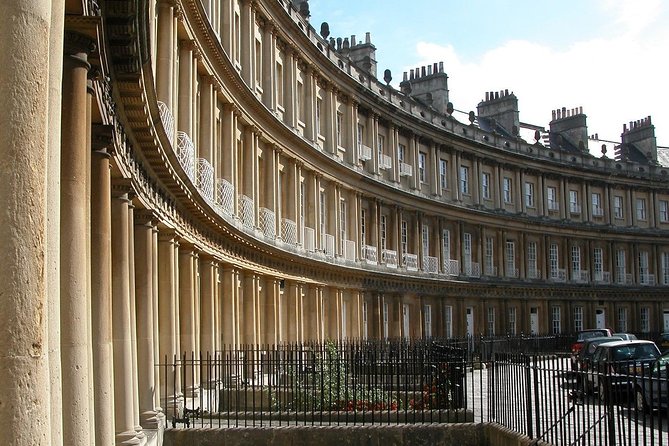
The route continues to two of Bath’s most famous Georgian achievements: the Circus and the Royal Crescent.
The Circus is a circular terrace made from curving segments. Its design is formal and ambitious, but the individual homes were not built as one enormous private palace. The arrangement creates a unified public face from separate residences, a useful clue to how Georgian developers shaped the city.
The Royal Crescent is the showpiece. Its long sweep of honey-colored stone is one of Bath’s defining views. From the open area in front, you can appreciate the scale and regularity of the terrace. The guide helps turn a photo stop into an explanation of architecture, status, and urban planning.
This is also one of the more exposed parts of the walk. You may be standing outdoors while the guide talks, so clothing matters. One practical note from the experience is simple: wear comfortable shoes and bring warm gloves in cold weather. The walk is not described as strenuous, but it includes enough standing and pavement walking that poor footwear can sour the afternoon.
The Royal Crescent and Circus are better understood slowly than rushed. The tour gives you the essentials, but you may want to return later for photographs or a quieter look. That is not a failure of the tour. Two hours can provide a strong introduction, but it cannot replace a full day of exploring Bath’s museums, interiors, and side streets.
Timing, pace, and group comfort
The advertised duration is about two hours, though one walking-only version is described as roughly 90 minutes. The Roman Baths portion can extend your visit depending on how you use the audio guide and museum exhibits.
Morning and afternoon departures make it easy to fit the tour into a day trip or longer stay. I would choose the morning if Bath is new to you, since the route can help you plan the rest of the day. An afternoon start works well if you want to visit another attraction first or are arriving in Bath later.
The pace has generally been described as easy and well balanced. Guides wait for the group before speaking, which matters on city streets. The route combines short walks with stops for explanation, rather than keeping you in motion for two straight hours.
Still, you need a moderate level of fitness. There is no hotel pickup or drop-off, and you must make your own way to central Bath. Children must be accompanied by an adult. The tour is offered in English and uses a mobile ticket.
One complaint points to a real issue: a soft-spoken guide can be difficult to hear outdoors. If you are at the back, move closer during stops and say something if the group has spread out. The small group helps, but a crowded street can still swallow quiet commentary.
Is the $35.37 price good value?

At $35.37 per person, the walking-only option is fairly priced if you want a guide to explain Bath’s major sights. You are paying for structure, local interpretation, and an efficient route, not simply access to public streets.
The value changes if you assume Roman Baths admission is automatically included. It is not included in every option. Some people have been disappointed after discovering that the walking ticket did not cover the museum, then having to buy a separate admission. Check the exact package before booking.
If you have never visited the Roman Baths, the upgrade is the more practical choice. It combines the outdoor introduction with the city’s main paid attraction and saves you from treating the baths as an afterthought. If you have already seen the baths, choose the walking tour without admission and focus on Bath’s architecture and layout.
The tour is also good value for a short stay because it covers several headline sights in one route: Bath Abbey, Pulteney Bridge, the Roman Baths area, the Pump Rooms, Upper Assembly Rooms, Circus, and Royal Crescent. You will still need separate time for interiors and museums, but you will know what deserves attention.
Who should book this Bath walk?
I would recommend it to first-time visitors who want a clear introduction before exploring alone. It suits people who enjoy history but do not want a full-day tour, and it works well for solo visitors because the smaller group makes it easier to ask questions and meet other people.
It is also a good choice for architecture fans. The Roman Baths are the headline attraction, but the Georgian portion is just as important. You get to compare Roman engineering with the ordered terraces and social spaces of 18th-century Bath.
Families can join, provided children are accompanied by an adult. The route is not presented as a specialist children’s tour, so younger children may find the historical explanations long if they are not interested in buildings and stories.
I would be more cautious if you need a fully guided Roman Baths visit, guaranteed amplification, or precise meeting-point assistance. The experience can work very well, but you should arrive early, carry the provider’s contact details, and confirm exactly what your ticket includes.
FAQ
Where does the Bath walking tour start?
It starts at Bath Abbey, Bath BA1 1LT, in central Bath.
Where does the tour finish?
The activity ends back at the meeting point in the city center.
Is admission to the Roman Baths included?
Only if you select the option that includes the entrance fee. The basic option does not include admission.
How long does the experience last?
The tour lasts approximately two hours. A walking-only version has been described as about 90 minutes, while the Roman Baths visit may continue afterward with the included audio guide.
Is the tour offered in English?
Yes. The tour is offered in English.
How large is the group?
The maximum group size is 15 people.
More walking tours in England
- Oxford University Walking Tour With University Alumni Guide
★ 5.0 · 6,905 reviews - Tour for Muggles The Ultimate Harry Potter Walking Tour in London
★ 5.0 · 4,684 reviews - London Jack The Ripper Guided Walking Tour
★ 5.0 · 3,131 reviews - Cambridge University Walking Tour by Alumni™ Kings College Option
★ 5.0 · 2,336 reviews
Just added in England
- Afternoon Tea Cruise in North Yorkshire★ 5.0 · 388 reviews
- Journey Through Winchester’s Past★ 5.0 · 341 reviews
- 2 Hour Leeds Highlights Walking Tour★ 5.0 · 206 reviews
- 1-Hour Public Cruise★ 4.5 · 307 reviews
- Harrogate Walking Food Tour★ 5.0 · 286 reviews
- Downtown Liverpool Walking Tour – In Spanish★ 5.0 · 591 reviews
- Four hour walking wine tasting tour of Manchester’s best bars★ 5.0 · 136 reviews
- Rock and Goal Manchester Walking Tour★ 5.0 · 587 reviews
Roman Baths Tours, compared.
Windsor, Stonehenge, Bath, and Roman Baths Day Trip
Read our review →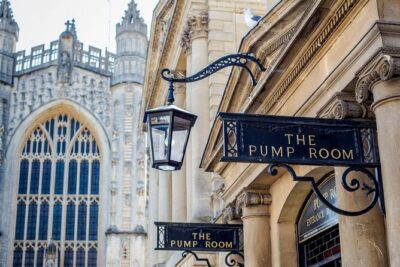
Stonehenge and Bath Day Trip from London with Optional Roman Baths Visit
Read our review →
City Walking Tour with Optional Roman Baths Entry
Read our review →
Browse the lists this tour appears in