
Reviewed · TOURS IN BIRMINGHAM
Birmingham: Victorian Canals and Modern-Day Birmingham Tour
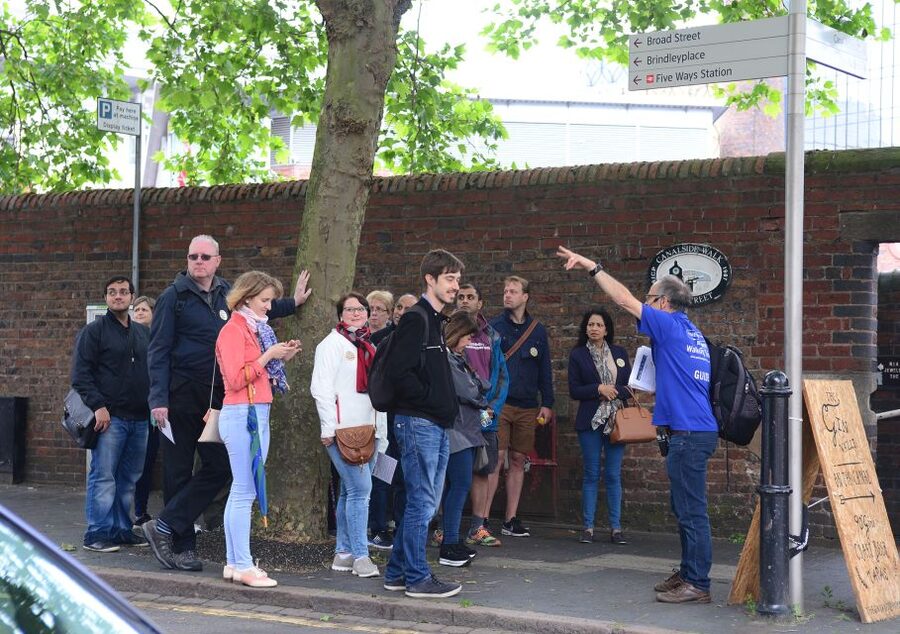
Birmingham’s canals tell the story of how an inland town became an industrial powerhouse, and this two-hour walk uses them as a thread through the modern city. You begin at the Library of Birmingham, pass Symphony Hall and Brindleyplace, then move through several central squares where Victorian ambition meets bold new design.
I like the clear link between Birmingham’s waterways and its social history. I also like the live commentary through a loaned audio receiver, which helps you hear guides such as Jonathan and Michael Harrison even when the city is noisy. The main drawback is exposure to cold, wind, and rain. One group completed the walk in chilly conditions, so bring a coat even in mild weather.
Key points to know before you book
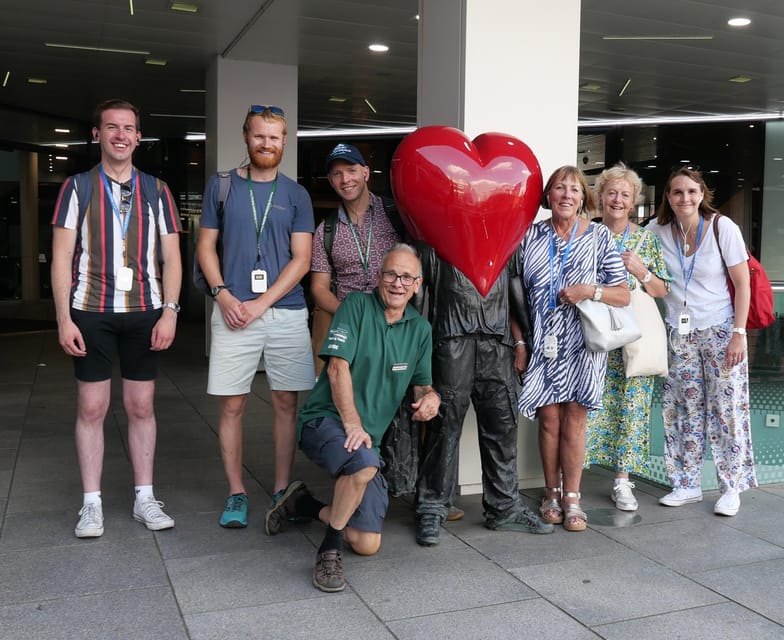
- A 3-kilometer route in two hours: The pace includes regular stops for stories, buildings, public art, and questions.
- Canals with a purpose: You learn why James Brindley’s canal connection in the 1770s helped Birmingham grow.
- Four central squares: Centenary, Oozells, Victoria, and Chamberlain Squares show how the city has changed over time.
- Modern buildings are part of the story: The Library of Birmingham, International Convention Centre, Symphony Hall, and newer developments receive attention alongside Victorian landmarks.
- Audio equipment improves the walk: A receiver is loaned to you, and you should bring headphones.
- Strong guide-led experience: Jonathan is often praised for humor and energy, while Michael Harrison brings a background in architectural history.
Starting at the Library of Birmingham
The tour begins outside the Library of Birmingham, usually beside a pop-up stand at the front entrance. This is a practical meeting point because the library is easy to identify and puts you directly in Centenary Square, one of the city center’s key public spaces.
You do not simply begin with a list of dates. The opening section uses the square’s public art and surrounding buildings to explain how Birmingham presents itself today. That is useful because the city’s story is not confined to old factories or canals. Art, education, music, commerce, and civic pride all appear in the first few minutes.
The library itself gives you an immediate contrast between old and new. Its bold exterior is part of a modern civic center, while the square around it points toward Birmingham’s long effort to build public institutions for ordinary residents. Your guide uses the setting to connect present-day architecture with earlier ideas about education and public improvement.
This is also where the guide’s style matters most. Jonathan is known for adding humor and inviting questions as he walks. Michael Harrison, described as a former history of architecture lecturer, brings a more formal interest in buildings and urban design. The guide on your date may vary, but the format favors conversation rather than a nonstop speech.
Other tours people book in Birmingham:
- Entry ticket to Hoo Zoo and Dinosaur World in Telford
★ 5.0 · 591 reviews - Cadbury World Entry Ticket
★ 3.0 · 524 reviews - Birmingham Walking Tour: Canals, Victorians & Today (1:30pm)
★ 5.0 · 346 reviews
Centenary Square and the modern civic center
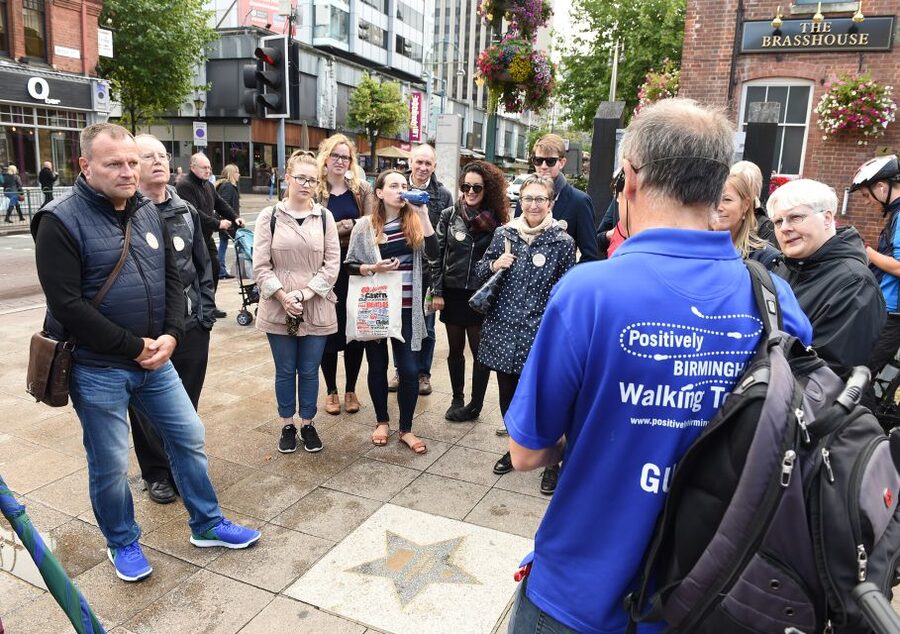
Centenary Square helps set the tour’s main theme: Birmingham is a city that keeps rebuilding itself. You see public art and modern buildings, but the guide also points out how this central area reflects older hopes for a better, more educated, and more orderly city.
The stop works well for first-time visitors because it gives you a frame for the rest of the walk. Instead of viewing Birmingham as a collection of unrelated buildings, you begin to see the city as a place shaped by industry, municipal planning, culture, and constant change.
You should expect to pause in open public areas, so the weather can affect your comfort. The square has little protection from wind, and one cold, windy day did not make the walk easy. Still, the guide’s use of an audio receiver helps keep the commentary clear when the group spreads out or traffic noise rises.
The equipment is simple. A receiver is loaned to you, and you need to bring headphones. This small detail matters more than it might seem. You can look at the buildings while walking instead of staying shoulder to shoulder with the guide, and you are less likely to miss a point at busy street crossings or open squares.
Symphony Hall and Birmingham’s culture of public improvement
The route continues through the International Convention Centre toward Symphony Hall. The hall is known for its excellent concert acoustics, and the tour uses it to show that Birmingham’s modern identity includes serious music and the performing arts.
This part gives the walk a welcome change of pace. The canals explain trade and industry. Symphony Hall explains how the city now invests in culture, public events, and large civic institutions. You are not only looking at architecture. You are considering what a city chooses to build and who those buildings are meant to serve.
The International Convention Centre also reinforces the link between business and culture. Birmingham has long depended on commerce, but the center’s modern role shows how that economic life continues in a different form. The guide places these buildings within the wider story instead of treating them as isolated attractions.
You may not enter every building on the route, so think of this as an outside-looking-in tour. The value comes from the explanation, the views, and the connections between places. If you want a long interior visit to Symphony Hall or the library, you will need to plan that separately.
Reaching the canals and James Brindley’s turning point
The canals are the heart of the experience. In the 1770s, James Brindley’s canal connection reached Birmingham, a major change for a town that needed better ways to move goods. Your guide explains why water transport mattered so much to the development of the industrial city.
This is where Birmingham’s geography begins to make sense. The waterways were not added as decoration. They supported trade, manufacturing, and the movement of materials at a time when roads were slower and less reliable. Walking beside the rejuvenated canals lets you see how an old working system has found new uses in a modern center.
The tour does not present the canals as frozen museum pieces. You see how the waterside areas have been cleaned up and adapted for present-day city life. The contrast is important. The same channels that once served industry now sit beside cultural buildings, restaurants, offices, and public walkways.
I like this section because it gives you a practical way to understand Birmingham’s growth. A short explanation beside the water can make the city’s industrial past easier to picture than a general lecture in a museum. You are standing in the setting where transport, trade, and urban expansion came together.
The canal paths are also among the calmer parts of the walk, but they do not turn the tour into a countryside stroll. This remains a city route, with paved streets, buildings, traffic, and regular changes in direction. Wear comfortable shoes, since the full distance is about 3 kilometers.
Same city, a very different afternoon:
- Discovering Birmingham 2 hour Walking Tour to the Jewellery Quarter
★ 5.0 · 333 reviews - Birmingham Slogging Gangs Walking Tour with Edward Shelby
★ 4.5 · 306 reviews - Birmingham City Centre Daily Walking Tour (10:30am & 2pm)
★ 5.0 · 265 reviews - Birmingham: Cadbury World Entry Ticket
★ 4.4 · 230 reviews
Brindleyplace and the Victorian civic mission
At Brindleyplace, the tour turns from transport to the social problems created by rapid growth. Birmingham expanded quickly, and the Victorians faced questions about housing, sanitation, water, education, and public order.
This is where you hear about the Civic Gospel and the Municipal Revolution. These ideas describe efforts to make the growing city cleaner, healthier, and better organized. The walk shows that Victorian reform was not only about grand town halls and impressive streets. It also involved basic services that shaped daily life.
The discussion of clean water and poor-quality housing adds useful balance. Birmingham’s industrial success created wealth, but it also created crowded and unhealthy conditions. A good city tour should show both sides, and this one links civic pride with the hard work required to improve living conditions.
Brindleyplace itself helps make the point. The area has been given new uses, and your guide uses its present appearance to explain how parts of Birmingham have been renewed. You can see the city’s habit of adapting old spaces rather than treating the past as untouchable.
The guide may pause often here, which helps you follow the story without rushing. Questions are welcome during the walk, and the best parts of the experience come when you connect the guide’s explanation to the buildings around you.
Oozells Square and the value of smaller spaces
Oozells Square provides a change from the larger civic spaces. The route includes it as part of the city’s waterside redevelopment and architectural mix, giving you a closer look at how older structures and newer buildings share the center.
Smaller squares can be easy to miss when you explore alone. You may pass through on your way to a restaurant or office without considering why the space was designed that way. With a guide, you get a chance to notice public art, building materials, street layout, and the relationship between the square and the nearby canal.
The tour’s focus on public art is useful here. Birmingham’s newer city center is not presented as a plain collection of offices. Art and open spaces help shape how people use the area, and the guide points out details that do not always appear in standard guidebooks.
This is also a good example of the tour’s limits. You will not spend a long time at every square, and the experience is not designed as a specialist architecture study. Instead, you get selected highlights within a moving overview. That suits you if you want an introduction, but a dedicated architecture fan may want a longer, more focused walk afterward.
Victoria Square and Birmingham’s changing face
Victoria Square brings you into one of the city’s best-known central areas. Here, older civic architecture and newer interventions sit close together, making it a useful place to consider how Birmingham has changed its public image.
The guide explains how the city has blended historic buildings with modern projects. You get a sense of the choices involved: preserve some elements, replace others, add new public art, and keep the center useful for present-day work and culture.
This part is especially good for visitors who have previously thought of Birmingham as a place to pass through by motorway or train. One person who had driven through the city, changed trains, and attended conferences there finally found time to walk around the center and discovered a more interesting city than expected. That is exactly the kind of first impression this tour can provide.
The route is also short enough to fit into a wider day in Birmingham. You finish back at the library, so you can continue exploring from the same central area. The two-hour length gives you a useful overview without taking over your entire schedule.
Chamberlain Square and the final return
Chamberlain Square brings the walk back toward the library and completes the movement from Victorian Birmingham to the present day. The square helps you compare different architectural periods in one compact area.
By this point, the route’s main themes have had time to connect. Canals explain industrial growth. Victorian civic reform explains public services and urban improvement. Modern cultural buildings and public art show how Birmingham continues to reshape its center.
The return to the Library of Birmingham is convenient. You do not need to arrange a separate pickup or navigate back from an unfamiliar neighborhood. The guide finishes where the tour began, making it easy to continue with your own plans.
The pace is generally comfortable, with stops that break up the 3-kilometer walk. Still, you should not expect a slow museum-style outing. You are on your feet for two hours, and some commentary takes place outdoors in open squares and beside the canal. Good shoes and weather protection make a real difference.
How the guides shape the experience
The strongest feature is the guide-led storytelling. Jonathan is frequently praised for being funny, friendly, energetic, and willing to answer questions. He also points out places to eat and other landmarks, which is helpful early in a Birmingham stay.
Michael Harrison offers a different strength. His background as a history of architecture lecturer suits a tour that pays close attention to buildings, city planning, and the relationship between old and new design.
You should not assume a particular guide will lead every departure. But the repeated emphasis on clear explanations, humor, enthusiasm, and local detail suggests that the human element is central to this walk.
The audio receiver makes the format work better. Birmingham’s streets can be noisy, and groups naturally spread out while looking at buildings. Headphones let you keep walking without losing the guide’s commentary. Bring your own headphones, as they are listed as something you need.
Is $20 a fair price?
At $20 per person, this is a good-value introduction to central Birmingham. You receive two hours of live guiding, audio equipment, and a tourist guide book. The route covers several major themes and keeps you moving between canals, squares, public buildings, and modern developments.
The value is strongest if you are new to Birmingham or want a clear orientation at the beginning of your stay. You get context that would take time to piece together alone, especially the connection between the canals, industrial growth, Victorian reform, and present-day redevelopment.
It is less useful if you want long interior visits or a narrow specialist subject. The tour is an overview, not a full architectural survey, canal history course, or museum visit. You are paying for the guide’s interpretation and the way the stops fit together.
The activity also offers reserve-now, pay-later booking and free cancellation up to 24 hours before the start time. Those terms give you some flexibility when planning around changeable British weather.
Who should book this Birmingham walk?
I would choose this tour if you want to understand Birmingham quickly rather than simply photograph its best-known buildings. It suits first-time visitors, couples, families with older children, architecture fans, and locals who have postponed exploring their own city.
It is also a good choice for anyone who thinks Birmingham is mainly a transport stop or conference destination. The route gives you reasons to slow down and look at the city center properly.
You may want another option if you dislike outdoor walks, have difficulty walking 3 kilometers in two hours, or want extensive time inside Symphony Hall, the library, or other buildings. The route is accessible in the ordinary sense of a central walking tour, but the supplied details do not promise special accessibility arrangements.
Should you book it?
Book it if you want a lively, fact-filled introduction to Birmingham’s canals, civic buildings, public art, and changing center. The strongest reasons are the sensible two-hour route, the clear audio system, and guides who connect industrial growth with everyday city life.
Plan for the weather and bring headphones. If you do that, the $20 price buys a useful first look at Birmingham and a better understanding of why its old waterways and new architecture belong in the same story.
FAQ
Where does the Birmingham walking tour start?
The tour starts at the front entrance of the Library of Birmingham in Centenary Square. A pop-up stand usually marks the meeting point.
How long is the tour?
The guided walk lasts two hours and covers about 3 kilometers. It returns to the Library of Birmingham.
What places does the tour visit?
The route includes Centenary Square, Oozells Square, Victoria Square, Chamberlain Square, the International Convention Centre, Symphony Hall, Brindleyplace, and sections of Birmingham’s canals.
Is the tour conducted in English?
Yes. The live tour guide commentary is in English.
Do I need to bring headphones?
Yes. An audio receiver is loaned to you, and you should bring headphones so you can hear the guide above city noise.
What happens if I need to cancel?
You can cancel up to 24 hours before the activity for a full refund. You can also reserve now and pay later.
Just added in Birmingham
- Birmingham Gangs Nighttime Historical Walking Tour with Pub Stops★ 5.0 · 53 reviews
- Birmingham Slogging Gangs Walking Tour with Edward Shelby★ 4.5 · 306 reviews
- Cotswolds Full-Day Tour From Birmingham★ 4.5 · 30 reviews
- SEA LIFE Birmingham Admission Ticket★ 3.0 · 218 reviews
- Fun, Flexible Treasure Hunt Around Birmingham with Cryptic Clues & Hidden Gems★ 5.0 · 167 reviews
- From Birmingham Stonehenge and Bath Day Tour★ 4.5 · 33 reviews
- Birmingham Ghost Hunt: Haunted Self-Guide Tour & Quest★ 4.5 · 37 reviews
- Digbeth, Public Art & Peaky Film★ 5.0 · 91 reviews
Tours in Birmingham, compared.

Entry ticket to Hoo Zoo and Dinosaur World in Telford
Read our review →
Birmingham Walking Tour: Canals, Victorians & Today (1:30pm)
Read our review →
Discovering Birmingham 2 hour Walking Tour to the Jewellery Quarter
Read our review →
Birmingham Slogging Gangs Walking Tour with Edward Shelby
Read our review →
Birmingham City Centre Daily Walking Tour (10:30am & 2pm)
Read our review →
Browse the lists this tour appears in