
Reviewed · WALKING TOURS
Birmingham City Centre Daily Walking Tour (10:30am & 2pm)
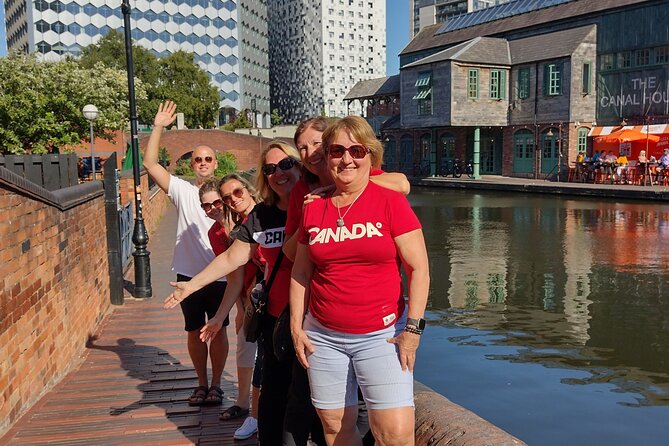
Birmingham’s story is written in its public squares, canals, grand civic buildings, and reminders of its industrial past. This 90-minute city-centre walk links those pieces in a sensible route from Birmingham Cathedral to the Ikon Gallery, so you can get your bearings without wrestling with a map.
I like the relaxed pace and the way the tour mixes famous sights with smaller details, such as John Baskerville’s connection to Baskerville House and the local music history along Broad Street. I also like the guides’ local touch. Dee, Phil, Peter, Richard, and Carlos are all praised for making the walk friendly, clear, and entertaining.
The main limitation is simple: you see the buildings from outside and have only about five minutes at each stop. A cold or wet day can also make the outdoor commentary less comfortable, and one French-speaking group found the English pace too quick.
Key points to know before you book
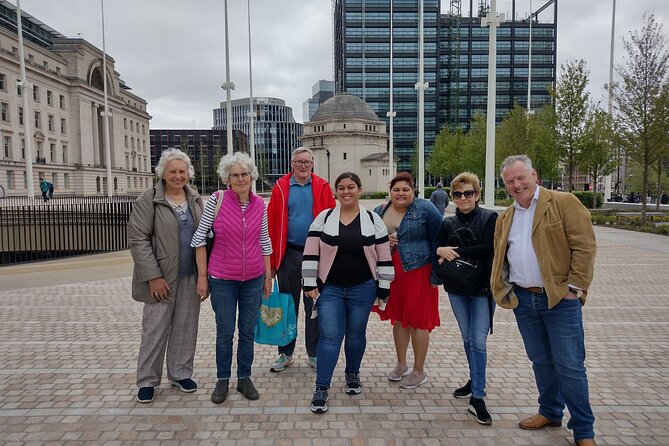
- A smart first look at Birmingham: The route covers the cathedral, civic centre, war memorials, canal quarter, Broad Street, and Ikon Gallery.
- Local guides make the difference: Dee, Phil, Peter, Richard, and Carlos are singled out for their humour, care, and local insight.
- Small group format: The tour accepts a maximum of 20 people, with some departures feeling almost private when numbers are low.
- Easy route, useful finish: You walk from Cathedral Square to Brindleyplace, ending near the canals and Ikon Gallery.
- Outdoor sightseeing only: Admission to the main interiors is not included, so plan a separate visit if you want to enter the cathedral, museum, or Town Hall.
- Good value at $19.41: You pay for a guided introduction rather than entry tickets, transport, or a full historical lecture.
Start beneath Birmingham Cathedral at 10:30am or 2pm
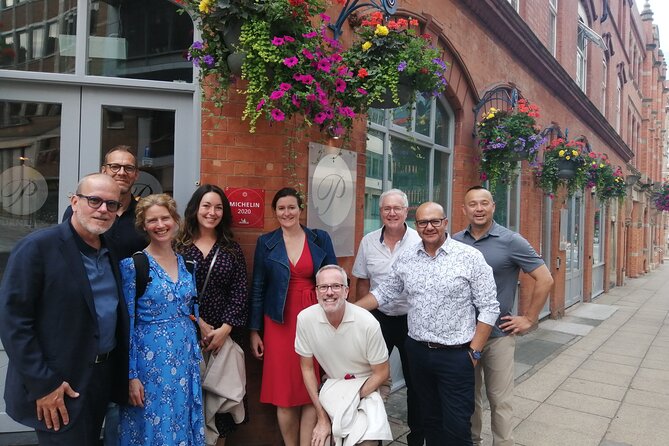
The walk begins at Birmingham Cathedral in Cathedral Square, on Colmore Row. The published meeting point is the cathedral area, but the old flagpole is no longer there. Look for the wheel in Cathedral Square instead, and watch for the guide’s bright orange jacket if that is being used on the day.
You can choose a 10:30am or 2pm departure. The morning slot is useful if you want to spend the afternoon visiting museums or shopping, while the later walk can work well after arriving in the city. Either way, arrive ready to walk outdoors for around an hour and a half.
The group limit of 20 is a practical advantage. It is small enough for a guide to keep people together and answer questions, but not so small that the tour depends on a private booking. Some departures have had only a handful of people, which can make the experience feel close to a private walk.
Your guide begins with Birmingham’s growth from a market town into a major industrial city. That opening gives the rest of the route a purpose. You are not just ticking off buildings. You are watching the city shift from church and civic power to industry, war, culture, canals, and modern redevelopment.
More walks around Birmingham:
- Birmingham Walking Tour: Canals, Victorians & Today (1:30pm)
★ 5.0 · 346 reviews - Discovering Birmingham 2 hour Walking Tour to the Jewellery Quarter
★ 5.0 · 333 reviews - Birmingham Slogging Gangs Walking Tour with Edward Shelby
★ 4.5 · 306 reviews
St Philip’s Cathedral and the first look at old Birmingham
The opening stop is Cathedral Square, followed by the garden of St Philip’s Cathedral. The cathedral was built during the Industrial Revolution and is described as one of Britain’s smallest cathedrals. Its position in the city centre makes it a useful starting point, since the tour can discuss Birmingham’s past while you are surrounded by present-day office streets and traffic.
The garden gives the guide a calm place to explain the cathedral’s role and the city’s early growth. You should not expect a long interior visit here. The stop is brief, around five minutes, so the value comes from the explanation and the setting rather than from detailed architectural inspection.
This is a good example of what the tour does best. It gives you enough context to make a later visit more rewarding. If the cathedral catches your eye, note it as a place to return to rather than expecting to explore it fully during the walk.
Victoria Square brings Victorian Birmingham into focus
From the cathedral, the route moves toward Victoria Square, where the guide turns the clock back to nineteenth-century Birmingham. The square helps explain the civic confidence of a city growing in wealth and importance.
The next stop is Birmingham Town Hall. Built to reflect the city’s rising status, it has hosted famous figures from Charles Dickens and Emmeline Pankhurst to Bob Dylan, the Rolling Stones, and the Beatles. That mix gives you a quick sense of the building’s long public life, from lectures and political appearances to music and popular culture.
The stop is mostly an outside look. Admission is not included, and the short schedule does not allow for an interior tour. That is not a serious flaw at this price, but you should know what you are buying. The guide provides the story, then moves on.
Nearby, Birmingham Museum and Art Gallery gives the group another look at the city’s civic architecture and artistic connections. The guide explains artists associated with Birmingham and points out the building itself. Again, the museum is viewed from outside during the walk, with no admission included.
I see this as a strength for first-time visitors. You can mark the museum and Town Hall for a later visit rather than spending your limited sightseeing time wandering past them without context.
Chamberlain Square and the city’s wartime memory
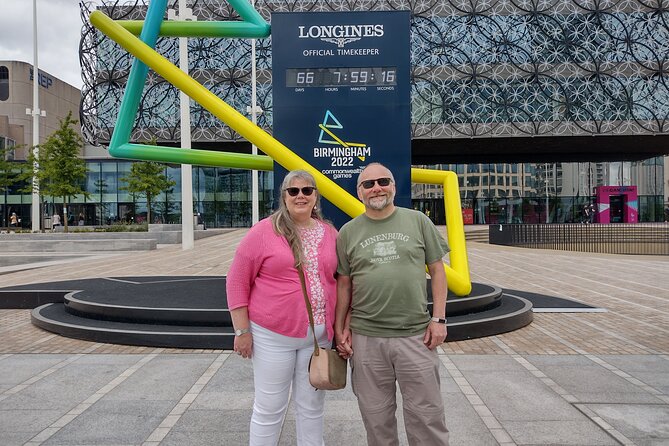
Chamberlain Square shifts the subject from Victorian ambition to Birmingham’s role in the two World Wars. The guide discusses the city’s contribution and the sacrifices made by its people.
This section adds needed weight to the walk. Birmingham is not presented only as an industrial success story or a modern shopping city. Public squares and memorial spaces also show the cost of national conflict and the way civic identity was shaped by it.
Centenary Square then brings you into the modern city. The contrast between older buildings and newer architecture is part of the point. Birmingham has changed sharply over time, and this stop lets you look at current city life alongside the older civic centre.
The Hall of Memory continues the memorial theme. It commemorates those who lost their lives for Birmingham and Britain. The building is another exterior stop, and admission is not included, but the guide’s explanation helps you understand why it belongs on this route.
You may find the sequence more useful than any single building. The walk keeps showing how Birmingham’s public spaces carry several layers at once: civic pride, wartime remembrance, modern redevelopment, and daily city life.
Other city tours around Birmingham:
- Birmingham: Guided City Center Walking Tour (10:30am & 2pm)
★ 4.8 · 147 reviews - Liverpool: “Blue Route” – City & Beatles Tour
★ 5.0 · 8,562 reviews - London: City Sights Hop-On Hop-Off Bus & Bookable Extras
★ 4.4 · 6,579 reviews - Liverpool: City & Beatles Tour with Live Guide & Live Music
★ 4.8 · 5,249 reviews
Baskerville House and the city’s connection to printing
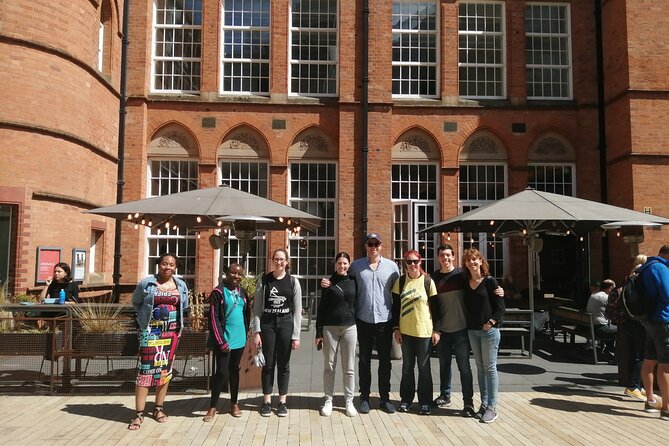
At Baskerville House, the guide introduces John Baskerville. The stop is short, but it adds a different kind of local story. Instead of focusing on government, war, or architecture, it points to Birmingham’s role in printing and design.
Details like this are easy to miss when walking alone. You might pass the building without knowing why the name matters. A guide can turn a plain-looking stop into a reminder that Birmingham’s influence was not limited to factories and engineering.
This is also where the walk’s format works well. You get a series of brief stories rather than one long talk in a single square. If you enjoy collecting small facts to follow up later, Baskerville House may be one of the more memorable stops.
Broad Street, music, and a canal-side finish
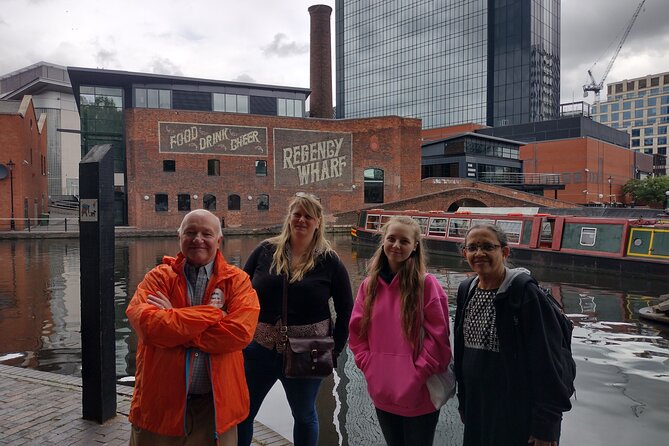
Broad Street is described as Birmingham’s own walk of fame. The guide connects the area with local entertainment and music history, adding a lighter change of pace after the war memorials and civic buildings.
The walk then reaches Symphony Hall and the industrial canals. This is one of the route’s most appealing changes of scene. Birmingham’s canals help explain the city’s industrial past, but the waterside setting also shows how the centre has been reused for modern leisure, culture, and business.
The guide takes you along the canal near Symphony Hall, giving you a chance to slow down and notice details that vehicles cannot reach. This is exactly the sort of stretch where a walking tour earns its fee. You can move through the city at street level, with time to see the links between old industry and present-day development.
The final stop is Ikon Gallery in Oozells Square. Its Neo-Gothic exterior gives the tour a fitting ending, combining an older architectural style with a contemporary art purpose. The end point at 1 Brindleyplace is practical too. You finish in the canal quarter, where you can continue exploring on foot or make your way to nearby transport.
Do not expect to tour the gallery as part of the experience. Admission is not included, and the walk ends outside. Still, it is a useful place to finish because it leaves you with a clear next option: continue with art and culture, or explore the canals and surrounding streets.
What the guides add to the route
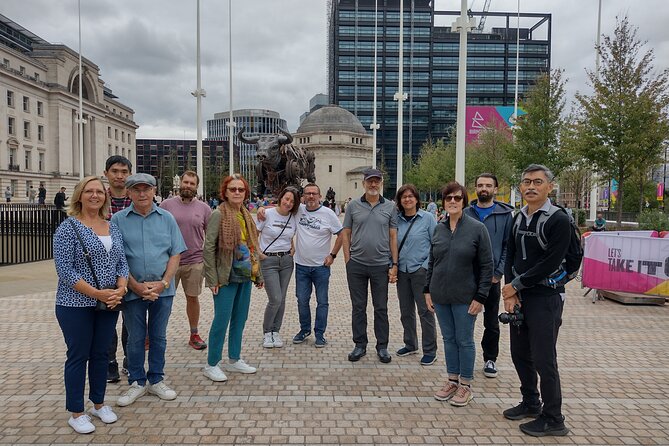
The strongest part of this experience is the guide. Dee is repeatedly praised for her local knowledge, warmth, and ability to make the walk fun. Phil is noted for giving clear historical detail and even taking one group to a favourite city viewpoint. Peter is described as informed and engaging, while Richard adds suggestions for other parts of Birmingham to explore.
Carlos is also praised for helping create a new appreciation of the city. The wider pattern is clear: the quality depends on having a guide who can turn a list of stops into a connected story.
You should expect a friendly and conversational style rather than a formal academic lecture. The tour includes humour, local colour, and historical explanation. One guide was especially attentive to older members of a group, checking that everyone was comfortable with the walking pace.
That said, the experience is not guaranteed to feel identical every day. One cold-weather outing was made less enjoyable by lengthy stops in exposed, chilly corners, and one group found the guide’s English too fast. If you are not fluent in English, say so clearly at the start and ask the guide to slow down. The tour is offered in English only.
Is $19.41 fair value for 90 minutes?
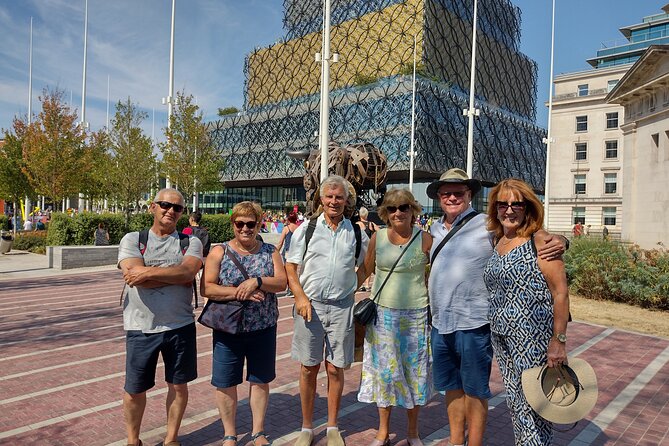
At $19.41 per person, I consider this a good introductory purchase, particularly if Birmingham is new to you. You are paying for a local guide, a planned route, historical context, and the time saved by not having to work out the city centre yourself.
The price does not include entry to Birmingham Town Hall, Birmingham Museum and Art Gallery, Hall of Memory, Baskerville House, Symphony Hall, or Ikon Gallery. In practice, most of these are viewed from outside anyway. The tour is best treated as an orientation walk, not as a collection of museum visits.
The value improves if you use the route to plan the rest of your stay. You can return to the cathedral, museum, Town Hall, or Ikon Gallery when you have more time. You also finish near the canals, which makes it easy to continue exploring without retracing the route.
The tour is booked around 11 days in advance on average, so I would reserve ahead if your schedule is tight. The rating is 4.9 from 265 reviews, with 97 percent recommending it, but those numbers should not hide the practical limits: it is outdoors, short, English-only, and dependent on the guide and weather.
Who should book this Birmingham walk?
I would choose this tour if you are visiting Birmingham for the first time, have a short stay, or want a clear introduction before exploring alone. It also suits people who live nearby but have never looked at the city as sightseers. One participant who was born in Birmingham found the walk a useful way to notice the city anew.
Families can benefit too. A 10-year-old joined one successful outing, and the mix of buildings, local stories, music, memorials, and canals gives children more variety than a long indoor lecture. The short stops also help keep the route manageable.
It is less suitable if you want to enter several attractions, avoid outdoor walking, or receive a highly detailed specialist tour of one subject. It may also be a poor choice in bad weather. Wear sensible shoes and check the forecast, since the experience requires good weather.
Service animals are allowed, the route is near public transport, and most people can participate. Free cancellation is available up to 24 hours before the start time. If poor weather or a failure to reach the minimum number causes cancellation, you are offered another date or a full refund.
Should you book it?
Book this walk if you want a friendly, low-cost introduction to Birmingham with the main civic sights, local stories, wartime memorials, music connections, and canal quarter in one route. The guides appear to be the biggest asset, especially Dee, Phil, Peter, Richard, and Carlos.
Skip it if you need interior access or a tour in another language. Otherwise, the $19.41 price buys a useful first map of the city in your head. Use the walk to choose where to return, and Birmingham will reward the extra time.
FAQ
How long is the Birmingham City Centre Daily Walking Tour?
The tour lasts approximately 1 hour and 30 minutes.
What time does the tour start?
You can choose between a 10:30am departure and a 2pm departure.
Where does the tour begin and end?
It begins at Birmingham Cathedral in Cathedral Square, Colmore Row, Birmingham B3 2QB. It ends at Ikon Gallery, 1 Brindley Place, Oozells Square, Birmingham B1 2HS.
Is admission to the attractions included?
No. The walk mainly covers the sights from outside, and admission is not included for places such as Birmingham Town Hall, Birmingham Museum and Art Gallery, Hall of Memory, Baskerville House, Symphony Hall, and Ikon Gallery.
How many people can join the tour?
The tour has a maximum group size of 20 people.
What happens if I need to cancel?
You can cancel up to 24 hours before the start time for a full refund. Cancellations or changes made less than 24 hours before the start time are not refunded or accepted.
Just added in Birmingham
- Birmingham Gangs Nighttime Historical Walking Tour with Pub Stops★ 5.0 · 53 reviews
- Birmingham Slogging Gangs Walking Tour with Edward Shelby★ 4.5 · 306 reviews
- Cotswolds Full-Day Tour From Birmingham★ 4.5 · 30 reviews
- SEA LIFE Birmingham Admission Ticket★ 3.0 · 218 reviews
- Fun, Flexible Treasure Hunt Around Birmingham with Cryptic Clues & Hidden Gems★ 5.0 · 167 reviews
- From Birmingham Stonehenge and Bath Day Tour★ 4.5 · 33 reviews
- Birmingham Ghost Hunt: Haunted Self-Guide Tour & Quest★ 4.5 · 37 reviews
- 2.5-Hours Walking Tour of Birmingham into Black Heritage Madiba★ 5.0 · 49 reviews
Walking Tours, compared.

Magical London: Harry Potter Guided Walking Tour
Read our review →
Underground Vaults Walking Tour in Edinburgh Old Town
Read our review →
Oxford University Walking Tour With University Alumni Guide
Read our review →
Edinburgh Castle: Guided Walking Tour with Entry Ticket
Read our review →
Edinburgh Castle Guided Walking Tour in English
Read our review →
Tour for Muggles The Ultimate Harry Potter Walking Tour in London
Read our review →
University and City Walking Tour with Alumni Guide
Read our review →Browse the lists this tour appears in