

Reviewed · WALKING TOURS
Rock and Goal Manchester Walking Tour
Manchester’s music story is the heart of this walk. From the Free Trade Hall and its Bob Dylan connection to rehearsal rooms linked with The Smiths, The Stone Roses, and 808 State, you get a city tour told through the people and places that made Manchester famous. Football, films, street art, and the city’s industrial past fill out the picture.
I like the local storytelling and the way Joe mixes music with buildings, football, and small city details. I also like the finish at Afflecks, where the tour ends inside one of Manchester’s most distinctive shopping arcades. The main drawback is the pace: some people found the walk tiring and counted close to 18,000 steps, so good shoes and rain protection matter.
Key points to know before booking
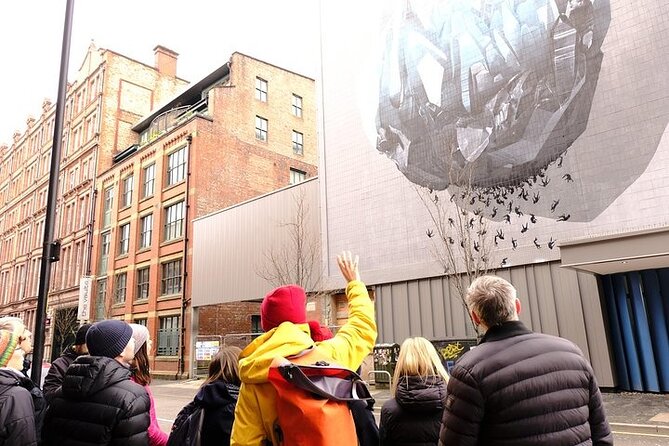
- Music is the main thread: Expect Oasis, The Smiths, The Stone Roses, Joy Division, Happy Mondays, Elbow, and 808 State.
- The route crosses central Manchester: You start at the Free Trade Hall and finish at Afflecks, rather than returning to the starting point.
- Joe is the guide most often named: He is especially strong on Manchester music and football, with a fondness for corny jokes.
- The walk can be brisk: Allow 2 to 3 hours and wear supportive shoes.
- The tour mixes major sights with less obvious stops: You’ll see libraries, police history, filming locations, former music venues, Chinatown, and the Northern Quarter.
- Small groups may be possible, but the maximum is 30: The experience is offered in English and costs $20.79 per person.
Manchester told through music, football, and local stories
This is not a standard sightseeing circuit focused only on grand buildings. It uses Manchester’s music scene as the main route into the city, then adds football, social history, architecture, television, and daily life.
That approach works well because Manchester’s identity is spread across ordinary streets and old buildings. A hotel, a former chip shop, a rehearsal room, or a pub can carry as much interest as a formal monument when the guide explains who used it and why it mattered.
Joe is the guide most frequently named in the feedback, though Dave also leads some departures. Joe brings strong knowledge of the local music scene and a personal, humorous delivery. Expect anecdotes about Oasis, The Smiths, Joy Division, Happy Mondays, Elbow, and The Stone Roses, along with football stories and plenty of Manchester detail.
The tone is informal. You can ask your guide about the city, its bands, football clubs, or places you pass along the route. That makes this a good first activity in Manchester because you can pick up ideas for the rest of your stay.
More Walking Tours in Manchester:
- Manchester Afternoon Walking Tour
★ 5.0 · 1,033 reviews - Manchester: Media City & The Quays Guided Walking Tour
★ 5.0 · 165 reviews - Four hour walking wine tasting tour of Manchester’s best bars
★ 5.0 · 136 reviews
Starting at the Free Trade Hall
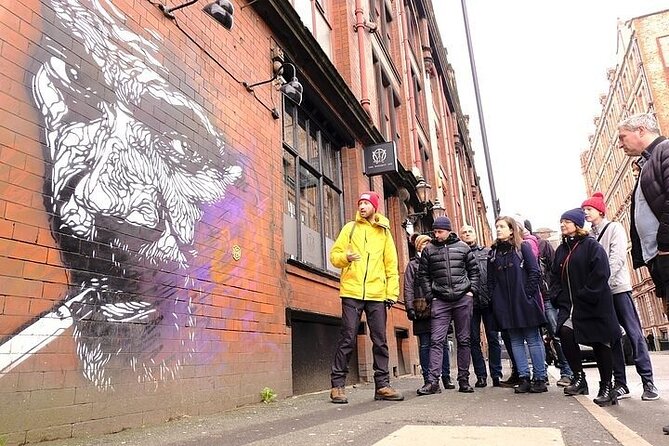
The tour begins at the Edwardian Manchester Hotel, beside the Free Trade Hall on Peter Street, at 1:00 pm. The Free Trade Hall gives the walk an immediate musical hook, since the guide explains Bob Dylan’s infamous encounter with the Manchester crowd.
You’ll spend about 10 minutes here, which is enough for the story and some photographs without turning the opening into a long lecture. The building also helps place Manchester in its wider cultural setting, since the tour begins with a venue known for public life as well as music.
From here, the group moves through the city center on foot. This is a walking tour in the proper sense, not a series of short hops between attractions. You should be ready to keep moving while listening.
Central Library and the shape of the city center
Manchester Central Library is the next stop. Its circular form was based on Rome’s Pantheon, and the guide explains its place in British public life as what was once the country’s largest public library.
The stop lasts around 10 minutes and gives you a chance to look beyond the music theme. Manchester’s public buildings reflect its civic ambition, and the library provides useful architectural contrast with the commercial streets and former industrial spaces elsewhere on the route.
The tour does not include a long scheduled visit inside every building. Think of these stops as focused introductions, with time for photographs and questions. If you want to explore Central Library at length, save that for another visit.
Chinatown and Manchester’s changing communities
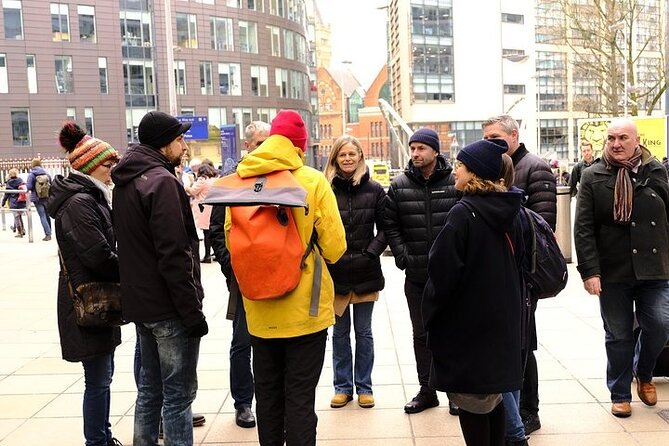
The Chinatown stop adds a social and cultural layer to the walk. Manchester’s Chinatown is presented as the second largest in the United Kingdom and the third largest in Europe.
Your guide explains why Chinese migrants came to Manchester, what many did when they first arrived, and the story of an individual member of the city’s Chinese community. This is useful because it moves the tour away from a simple band-by-band timeline and shows how Manchester was shaped by different communities.
You’ll spend about 10 minutes here. The stop is more about context than a full food or shopping visit, so do not expect a dedicated meal break. There are refreshments along the route, but the supplied details do not promise a specific café or food tasting.
More walks around Manchester:
- Magical London: Harry Potter Guided Walking Tour
★ 4.7 · 22,044 reviews - Underground Vaults Walking Tour in Edinburgh Old Town
★ 4.5 · 8,506 reviews - London: The Original Jack the Ripper Walking Tour
★ 4.7 · 7,833 reviews - Oxford University Walking Tour With University Alumni Guide
★ 5.0 · 6,905 reviews
Portland Street and the Stone Roses connection
Portland Street brings together wartime Manchester and the city’s music business. You’ll hear how a hotel survived the Blitz during the Second World War, then visit the place where the Stone Roses signed their first record contract.
That pairing is typical of the tour. A building is not treated as a detached architectural object. Instead, the guide links it to a crisis, a band, or a turning point in the city’s development.
The stop is listed at around 10 minutes. If you are mainly interested in the Stone Roses, this may be one of the most useful points on the route. It also shows why you should not judge a music tour only by whether it visits famous concert halls. Record deals, rehearsals, and early business decisions often happened in less obvious places.
Newton Street, film locations, and early band venues
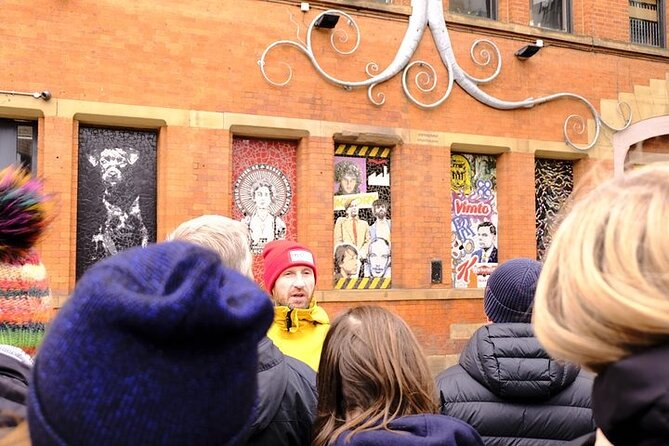
On Newton Street, the tour shifts toward Manchester’s screen and music connections. You’ll see locations used for BBC and Netflix productions, as well as Hollywood films. The guide also points out venues where well-known bands began.
This section should appeal to anyone who enjoys seeing how a city doubles for other places on screen. It also keeps the music theme moving beyond the biggest names. Early venues matter because they show how bands built a following before becoming part of Manchester’s national and international story.
The route involves exterior viewing and street walking. If a particular television series is your main reason for booking, keep expectations measured. The experience includes filming locations, but it is not presented as a dedicated television tour.
The Whiskey Jar and Manchester’s rehearsal culture
The Whiskey Jar is one of the more distinctive stops. The venue has more than 300 whiskies from around the world, and the building is linked with rehearsals by The Smiths, The Stone Roses, and 808 State.
This is a good example of the tour’s appeal. You are not simply told that Manchester produced famous bands. You are shown places connected with the practical work of making music, including rehearsal spaces and venues.
The tour allows about 10 minutes here. The stop does not promise a whisky tasting, so treat the drinks selection as part of the setting rather than a scheduled tasting session. If you want to return for a drink later, note the location for your own evening plans.
The Greater Manchester Police Museum
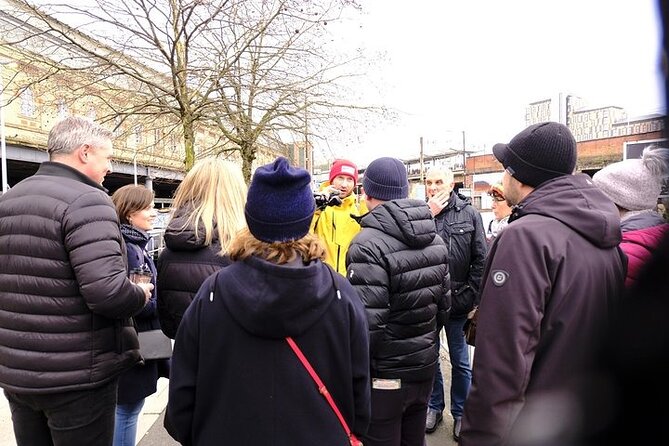
The police museum provides a welcome change of subject. Here, the guide explains how police officers caught criminals before mobile phones, CCTV, and even walkie talkies.
This stop gives the walk a bit of social history and practical detail. It also helps break up the music-heavy sections for people in the group who may not know Oasis from 808 State.
The museum itself is listed as a stop, but the tour information does not promise a full museum admission visit. You should expect an explanation connected to the site rather than a long indoor museum session. Ask your guide how much time is available on the day.
Stevenson Square and the beginnings of the Northern Quarter
Stevenson Square introduces the Northern Quarter, one of central Manchester’s best-known creative areas. The guide explains how the district began and shares the story of a man who became famous almost by accident.
This is the point where the route begins to feel especially useful for exploring after the tour. You’ll be near independent shops, bars, cafés, street art, and music-related places, so you can return later with a better sense of direction.
The Northern Quarter is also where the tour’s mixture of old and new becomes clear. The guide connects the area’s earlier development with its later music and fashion identity, rather than presenting it as a simple nightlife district.
Oldham Street, Elbow, and city-center change
Oldham Street brings another unusual music story. A former chip shop helped bands such as Elbow become better known, and the guide explains how the area is adapting as more people live in the city center.
That last point matters. Manchester is not treated as a fixed museum piece. The route acknowledges that old music spaces close, former commercial areas change use, and rising city-center living affects the character of the streets.
You’ll also hear how the location appeared in the Netflix series Safe. Film and television references are woven into the walk rather than given their own separate section, which keeps the route varied.
Mosley Street and the rise of the Premier League
Mosley Street supplies the main football stop. The guide explains where the football league began and how it developed into the Premier League, now broadcast around the world to more than 4 billion people each year.
This is a useful stop for both Manchester United and Manchester City supporters because it deals with the wider story of football, not just one club. The tour does not visit either club’s stadium, so you should not book it as a substitute for a stadium tour.
Still, it gives football fans a central Manchester connection and helps explain why the city is famous for more than music. The football material is one part of a broader city walk, not the whole experience.
Afflecks and the Madchester finish
The final stop is Afflecks on Church Street, a boutique shopping arcade and one of Manchester’s most recognizable independent retail spaces. You’ll learn about the mosaics on the building and the fashion linked with the Madchester music scene of the 1980s and 1990s.
This is a fitting ending because Afflecks brings music, youth culture, fashion, and independent business together. It is also practical: after the tour, you can explore the arcade at your own pace and continue through the Northern Quarter.
Admission to Afflecks is included. The tour ends here, not back at the Free Trade Hall, so plan your onward route from Church Street. The finish is close to public transportation and central city streets.
Pace, group size, and weather
The advertised duration is about 2 to 3 hours, and the actual length can depend on the guide, group, weather, and questions. One departure lasted close to three hours, while another account described a very large walking total of roughly 18,000 steps.
That is the most important practical warning. Wear comfortable walking shoes, and do not schedule this immediately before a long evening event if you dislike walking at speed. One account found the guide moved too fast, while others appreciated covering a lot of ground in a short time.
The tour runs outdoors and needs good weather. Manchester rain and wind can make the walk harder, though the experience can still continue with umbrellas and proper clothing. If conditions are poor enough for cancellation, you are offered another date or a full refund.
The group can hold up to 30 people. Smaller departures may feel more personal, and Joe has tailored parts of the route to specific interests when groups were small. Still, you should be prepared for a group walk rather than a private tour.
Service animals are allowed, and most people can participate. The information does not promise a fully step-free route, so anyone with mobility concerns should ask before booking, especially given the walking distance and pace.
Is $20.79 good value?
At $20.79 per person, this is a reasonable price for a 2 to 3 hour guided introduction to central Manchester. Most stops are free, and the main thing you pay for is the guide’s local stories, route planning, and ability to connect scattered places into one clear narrative.
The value is strongest if you care about Manchester music, football, or urban history. You get a broad overview rather than admission to a major attraction, so someone seeking formal museum interiors may find the price less compelling.
The route also saves you the work of finding music-related locations on your own. Some places have changed, closed, or become ordinary-looking buildings, and a guide adds the meaning that a map cannot provide.
The tour is commonly booked around 23 days ahead. That suggests planning early if your Manchester dates are fixed, though availability can vary. You receive confirmation at booking, and free cancellation is available up to 24 hours before the start time. Cancellations inside that window are not refunded.
Who will enjoy this walk most?
I would recommend it to first-time visitors who want to understand why Manchester is linked with music and football. It is also a good fit for returning visitors who want stories about the city’s lesser-known venues, former music spaces, and Northern Quarter culture.
Music fans should get the most from it, especially if you like Oasis, The Smiths, The Stone Roses, Joy Division, Happy Mondays, Elbow, or 808 State. You do not need to arrive with detailed band knowledge. One part of the experience is learning the basics from scratch.
It also works for people who prefer local anecdotes to formal dates and long architectural explanations. Joe’s humor, including some deliberately corny dad jokes, is part of the tone.
I would hesitate if you want a slow stroll, frequent indoor breaks, or a focused stadium visit. The route is long for its duration, and one less favorable experience found it tiring and too fast. Check the forecast, wear shoes made for several hours on pavement, and leave room in your schedule.
Should you book the Rock and Goal Manchester Walking Tour?
Book it if you want Manchester explained through music, football, and the places where ordinary city life met creative ambition. The strongest feature is the guide’s local storytelling, especially Joe’s personal feel for the Manchester music scene and his ability to add humor to the facts.
The tour is less suitable if you want a relaxed architectural walk or a deep visit inside museums and historic buildings. It is an active, outdoor route with a brisk pace and a broad mix of subjects.
For $20.79, I think it is a good first-day choice for music fans and curious newcomers. Bring walking shoes, check the weather, and ask before departure if the route has been adjusted around a special music event or current interest. That last point matters because the emphasis can sometimes shift, such as a departure focused more heavily on Oasis than the published route suggests.
FAQ
How long does the Rock and Goal Manchester Walking Tour last?
The tour lasts approximately 2 to 3 hours. Some departures may run close to three hours, depending on the guide, questions, and conditions.
Where does the tour begin?
It begins at the Edwardian Manchester Hotel, beside the Free Trade Hall on Peter Street, Manchester M2 5GP.
What time does the tour start?
The scheduled start time is 1:00 pm.
Where does the tour end?
The tour ends at Afflecks, 52 Church Street, Manchester M4 1PW.
What language is the tour offered in?
The tour is offered in English.
How much does the tour cost?
The listed price is $20.79 per person.
What music acts are covered?
The tour can include stories about Oasis, The Smiths, The Stone Roses, Joy Division, Happy Mondays, Elbow, and 808 State, among other Manchester music connections.
Does the tour include football history?
Yes. The Mosley Street stop covers the start of the football league and its development into the Premier League.
How many people can join the tour?
The maximum group size is 30 people.
Can I cancel for a refund?
You can cancel at least 24 hours before the start time for a full refund. Changes or cancellations made less than 24 hours before the start time are not accepted for a refund. If poor weather or an insufficient number of participants causes cancellation, you are offered another date or a full refund.
Just added in Manchester
- Manchester: Media City & The Quays Guided Walking Tour★ 5.0 · 165 reviews
- Four hour walking wine tasting tour of Manchester’s best bars★ 5.0 · 136 reviews
- From Manchester: Lake District Bus Tour & Windermere Cruise★ 4.8 · 927 reviews
- LEGOLAND Discovery Centre Manchester★ 4.0 · 1,049 reviews
- Manchester Afternoon Walking Tour★ 5.0 · 1,033 reviews
- SEA LIFE Manchester Admission Ticket★ 4.0 · 1,007 reviews
- Manchester: Sightseeing Bus Tour★ 4.1 · 1,204 reviews
- Alcotraz Prison Cocktail Experience in Manchester★ 5.0 · 1,216 reviews
Walking Tours, compared.

Magical London: Harry Potter Guided Walking Tour
Read our review →
Underground Vaults Walking Tour in Edinburgh Old Town
Read our review →
Oxford University Walking Tour With University Alumni Guide
Read our review →
Edinburgh Castle: Guided Walking Tour with Entry Ticket
Read our review →
Edinburgh Castle Guided Walking Tour in English
Read our review →
Tour for Muggles The Ultimate Harry Potter Walking Tour in London
Read our review →
University and City Walking Tour with Alumni Guide
Read our review →Browse the lists this tour appears in