
Reviewed · WALKING TOURS
Manchester Afternoon Walking Tour
Manchester’s story comes together on foot, from the city’s industrial canals and Victorian buildings to Alan Turing, the suffrage movement, Chinatown, the Gay Village, and football. This 2.5-hour walk covers a surprising amount of central Manchester without wasting time on transport.
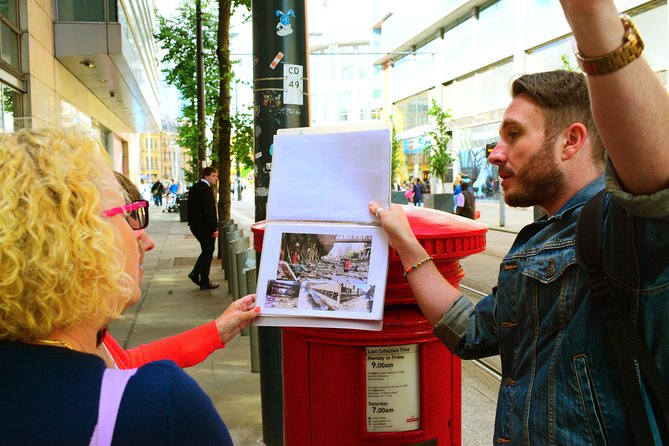
I like the clear route from Manchester Central Library to the Cathedral, and I like that guides such as Gareth connect landmarks to larger stories rather than simply naming buildings. You also get useful tips for pubs, food, and places to visit later.
The trade-off is simple: this is a non-stop walking and standing tour. The pace is easy, but the itinerary is ambitious, and a few places may receive only a quick look from outside. Wear good shoes and bring waterproof clothing.
Key points of the Manchester afternoon walk
- A broad city-centre route: Cover major sights from Central Library to Manchester Cathedral in about two and a half hours.
- History with a human face: Hear about Emmeline Pankhurst, Alan Turing, the city’s canal network, the First World War, and Manchester’s social communities.
- Small-group format: The group can include up to 25 people, with many departures operating at a smaller size.
- Useful first-day orientation: The route helps you understand where the central sights are before exploring on your own.
- Mostly outdoor sightseeing: You see many buildings and memorials, but entry into major attractions is not the main purpose.
- Practical local advice: Guides can point you toward food, drinks, pubs, and other places worth visiting after the walk.
Why this route works for a first afternoon in Manchester
Manchester can feel scattered at first. The city centre mixes grand Victorian buildings, former industrial sites, theatres, modern arenas, memorials, and compact neighborhoods. This walk gives you a map in your head.
The route starts at Manchester Central Library at 2 pm and ends near Manchester Cathedral on Cathedral Street. That direction matters. You begin among civic buildings and finish in the older northern part of the centre, close to Chetham’s Library, the National Football Museum, and AO Arena.
I especially like the way the walk joins public history with everyday city life. You are not only looking at monuments. You move through the Gay Village, Chinatown, old retail streets, theatre districts, and former industrial spaces. That mix gives you a better sense of present-day Manchester than a route devoted only to grand architecture.
The group limit is 25 people. That is small enough for a guide to answer questions, though the experience will feel more personal when the actual group is closer to the dozen-person groups described in the feedback. Gareth is singled out by name in the feedback and appears to be a regular guide. He is noted for humor, clear storytelling, practical suggestions, and strong knowledge of Manchester’s past and present.
More Walking Tours in Manchester:
- Rock and Goal Manchester Walking Tour
★ 5.0 · 587 reviews - Manchester: Media City & The Quays Guided Walking Tour
★ 5.0 · 165 reviews - Four hour walking wine tasting tour of Manchester’s best bars
★ 5.0 · 136 reviews
Central Library, Pankhurst, and the civic centre
Manchester Central Library is an easy starting point. The building itself is one of the city’s recognizable civic landmarks, and it gives the tour a useful opening point in the heart of town. The stop lasts about 10 minutes, with no admission charge.
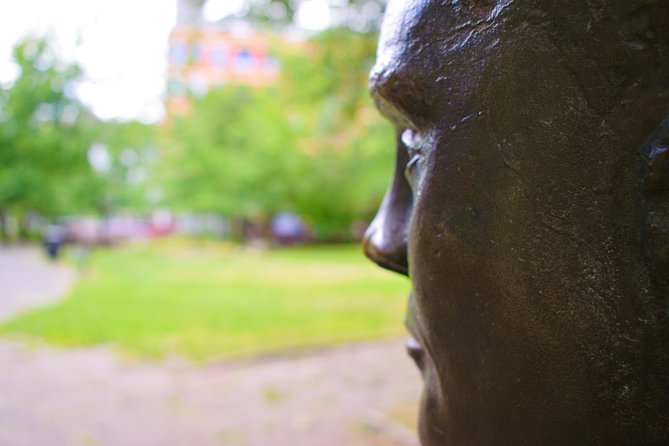
From there, the walk goes to the statue of Emmeline Pankhurst. This is one of the route’s most meaningful early stops because it shifts the focus from architecture to political change. You learn about suffragism and Pankhurst’s connection to Manchester. The short stop works best as a compact introduction rather than a full lecture on the movement.
The Bridgewater Hall follows. It is home to the Hallé Orchestra, and the stop lasts about five minutes. This is a quick exterior visit, not a concert or performance. If music matters to you, the building adds another strand to Manchester’s identity, but you should not expect time inside.
Manchester Central comes next, with about 10 minutes to consider the former railway station and its present civic role. The route then reaches the Manchester Ship Canal, described as one of the first man-made canals of its kind. The canal stop helps explain why Manchester became such an important industrial centre. It also breaks up the sequence of formal buildings with a piece of working infrastructure.
Theatres, Vimto, and Manchester’s social history
The Palace Theatre is another short stop. The guide presents it as one of Manchester’s notable theatres, but admission is not included. You should treat this as an outside look and a story about the city’s entertainment life, not a theatre visit.
At 39 Sackville Street, the route turns to a more unusual part of Manchester’s story: a place dedicated to a drink. This leads to the Vimto Sculpture, where you may try the city-associated drink. The stop adds a light, local detail to a walk otherwise filled with politics, war, industry, and architecture.
Sackville Gardens brings the group into the Gay Village. The gardens are described as the green heart of the area, and the route then continues to the Alan Turing Memorial. This is one of the strongest sections of the afternoon because it combines Manchester’s social history, scientific achievement, and public memory.
Turing is presented as a pioneer of computing who helped break the Enigma code. The memorial is a free stop, and the guide’s commentary gives context to his place in Manchester’s story. You also pass an area filled with color and rainbows, making this more than a quick statue photograph. It is a chance to understand how the city marks identity, community, and remembrance.
The walking order is helpful here. The Vimto stop brings a bit of local character, the Gay Village shows the city’s living communities, and the Turing Memorial adds a major historical figure. Each stop feels different from the last.
Chinatown, the Art Gallery, and Albert Square
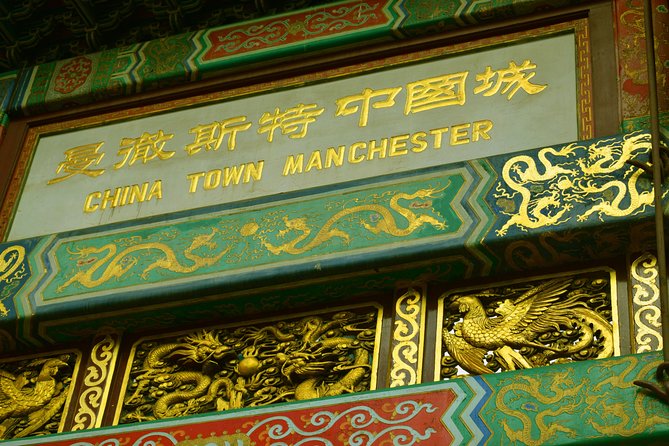
The route then reaches Chinatown, described as the second-largest Chinatown in the United Kingdom. The stop itself is short, about five minutes, so do not expect a meal or extended time to browse. Instead, you get a quick introduction to the area and its place in Manchester’s city centre.
Manchester Art Gallery receives about 15 minutes, the longest stop in this central sequence. Admission is listed as included, but the tour does not promise a full gallery visit. The timing may allow for an introduction or a brief look, depending on the guide and the group. If you want to study the collection properly, plan a separate visit.
The Manchester Cenotaph follows. This war memorial honors soldiers who died in the First World War. The stop is only about five minutes, but it adds a quiet note to a route that otherwise moves at a steady pace.
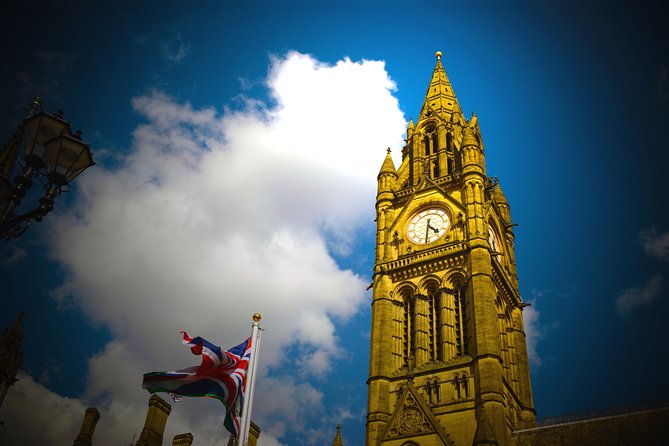
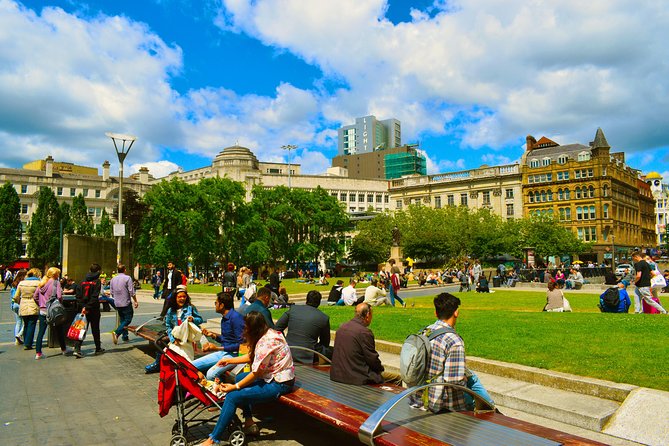
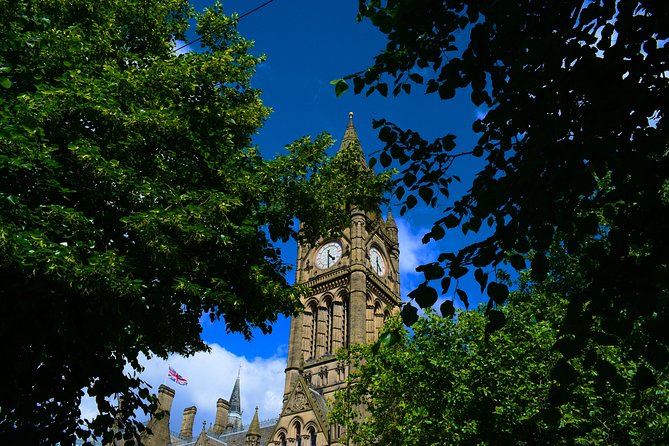
Albert Square is next, with around 10 minutes. It is the setting for many of Manchester’s main events and is surrounded by some of the city’s most recognizable civic architecture. You then see the Albert Memorial and Manchester Town Hall. These stops are listed at about 10 minutes each, but admission to the buildings is not included.
The important point is that this section is about orientation and explanation. You learn how the square, memorials, gallery, cenotaph, and town hall fit together. You are not buying a guided interior tour of Manchester Town Hall. The building’s exterior and its place in the civic centre are the focus.
More walks around Manchester:
- Magical London: Harry Potter Guided Walking Tour
★ 4.7 · 22,044 reviews - Underground Vaults Walking Tour in Edinburgh Old Town
★ 4.5 · 8,506 reviews - London: The Original Jack the Ripper Walking Tour
★ 4.7 · 7,833 reviews - Oxford University Walking Tour With University Alumni Guide
★ 5.0 · 6,905 reviews
St Anne’s Square, the Royal Exchange, and The Shambles
The walk continues through older retail streets and boutiques to St Anne’s Roman Catholic Church. The church receives about five minutes, enough for the guide to explain its distinctive history and point out its role in the city centre.
St Anne’s Square follows, with about 10 minutes. This is one of the historic parts of central Manchester, and it helps you see the change from formal civic spaces to older commercial streets. The route then reaches the Royal Exchange Theatre.
The Royal Exchange is another stop where the building and its history matter more than admission. The theatre is listed as included, but the overall itinerary does not promise a performance or an extended interior visit. The guide may explain how the former commercial district gained a modern cultural use, linking Manchester’s trading past with its current arts scene.
The Shambles is one of the most anticipated stops. The route presents it as home to some of the oldest buildings in Manchester’s city centre. It is a short stop, around 10 minutes, and admission is not included. The name may remind you of York, but here the point is Manchester’s own surviving old buildings and the contrast they create with later Victorian and modern construction.
This part of the walk is particularly useful if you want to understand how much of Manchester has changed. The route moves from older streets to modern uses, with the guide explaining how the city developed rather than treating every building as an isolated sight.
Corn Exchange, Manchester Cathedral, and Chetham’s Library
The Corn Exchange is described as completely remade, with the stop lasting around 10 minutes. You also pass the site of an old newspaper factory. These details make the route more than a parade of landmarks. They show how former commercial and industrial buildings have been reused or replaced.
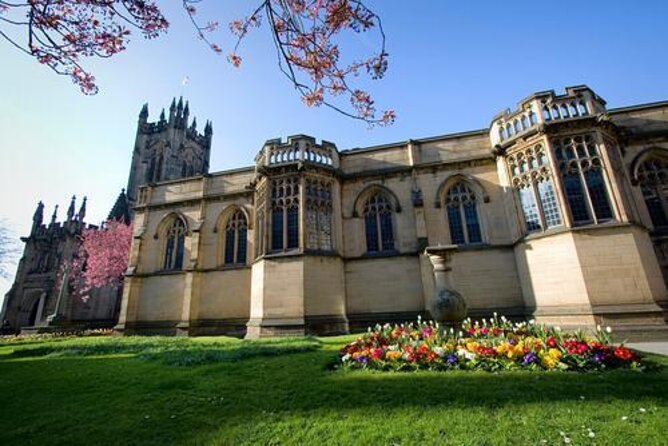
Manchester Cathedral follows. Admission is listed as free, and the stop lasts about 10 minutes. This is a major point in the route because the cathedral belongs to the older part of the city and gives the final section a different mood from the civic centre around Albert Square.
The last major historic stop is Chetham’s Library, described as the oldest public library in the English-speaking world. The stop lasts about 10 minutes and admission is listed as free. You should not assume that the tour includes a full library tour, but the guide can place the building in Manchester’s wider intellectual and civic story.
The route finishes near Cathedral Street, close to Manchester Cathedral. That ending is practical. From here, you are well placed for the National Football Museum, the AO Arena, and further exploration around the northern city centre.
Football, the AO Arena, and what you will not see inside
The National Football Museum receives about five minutes. Football fans will recognize the importance of the stop, but the tour does not include museum admission. Think of it as a useful marker and a chance to hear about Manchester’s football identity, not a substitute for visiting the museum.
The AO Arena is also a brief stop. The itinerary refers to the Manchester Arena and the experience of witnessing its history. The guide’s role here is to explain the place and its significance, not to provide an arena event or backstage visit. Admission is not included.
The list of stops is long, but the walking time at each one is short. Some locations receive 10 or 15 minutes, while others receive only five. That is how the tour covers so much ground in one afternoon. You gain a wide overview, but you will need to return independently if a particular building, museum, theatre, or memorial catches your interest.
Price, pace, and practical value
At $24.27 per person, the tour is priced as an affordable introduction rather than a full attraction package. I think the value is strongest if Manchester is new to you, your stay is short, or you want a guide to connect places that might otherwise seem unrelated.
You are paying for route planning, commentary, and local orientation. You are not paying for a series of long indoor visits. Several stops list no admission charge, while other places, including the Palace Theatre, Manchester Town Hall, The Shambles, the National Football Museum, and the AO Arena, do not include admission.
The walking pace is generally easy, according to the supplied feedback, but the tour is continuous. There are a few steps, and you stand while the guide talks. This may not suit young children, older people who tire quickly, or anyone who needs frequent seated breaks.
Comfortable shoes matter more than speed. Manchester weather can change quickly, and the walk operates outdoors, so bring an umbrella and warm layers in colder months. One January visitor specifically advised carrying enough warm clothing and an umbrella. Even in mild weather, a waterproof jacket is sensible.
The tour is offered in English and uses a mobile ticket. Most people can participate, and service animals are allowed. It runs close to public transport, begins at Manchester Central Library, and ends at Cathedral Street.
Who should book this Manchester walk?
I would choose this tour on the first day of a Manchester stay, especially if you have only one or two days in the city. The route gives you a strong sense of direction and leaves you with a list of places to revisit.
It also suits people who enjoy history told through streets and buildings. You get the suffrage movement, industry, music, theatre, computing, war memorials, immigration, LGBTQ+ history, football, and religion in one route.
The guide’s style matters here. Gareth is repeatedly praised in the supplied feedback for being funny, engaging, easy to understand, and good at answering questions. He also gives food and drink suggestions, which can be valuable after a long afternoon on foot.
I would hesitate if your main aim is to enter museums, spend time inside churches, or examine architecture at length. The schedule is too full for that. You will see many places, hear their stories, and then keep moving.
The tour has a 99 percent recommendation rate and a 4.9 rating from 1,033 reviews, which supports its reputation as a reliable introduction. Still, the route can change in practice. One piece of feedback notes that a couple of advertised places were skipped, so treat the stop list as a broad plan rather than a guarantee of equal time at every location.
Should you book it?
Book this Manchester walking tour if you want a fast, friendly orientation with plenty of history and practical advice. It is especially useful at the start of a short visit, when knowing where the Cathedral, Chinatown, Gay Village, theatres, galleries, and museums are can save you time later.
Skip it if you want a slow architectural walk or long interior visits. For most first-time visitors who can manage steady walking and outdoor standing, the $24.27 price buys a useful overview, a thoughtful route, and a much clearer sense of how Manchester fits together.
FAQ
Where does the Manchester Afternoon Walking Tour start?
It starts at Manchester Central Library, Manchester M2 5PD, United Kingdom.
What time does the tour begin?
The tour begins at 2:00 pm.
Where does the tour finish?
It ends on Cathedral Street near Manchester Cathedral, Manchester M3 1SW.
How long does the walking tour last?
The tour lasts approximately two hours and 30 minutes.
What language is the tour offered in?
The tour is offered in English.
How many people can join the tour?
The maximum group size is 25 people.
Is admission to the attractions included?
Admission varies by stop. Several locations are free or listed as included, but admission is not included for places such as the Palace Theatre, Manchester Town Hall, The Shambles, the National Football Museum, and the AO Arena.
Is the tour suitable for most people?
Most people can participate, but the experience involves continuous walking and standing, with a few steps. It may not suit young children or older people who need regular breaks.
Are service animals allowed?
Yes, service animals are allowed.
Can I cancel for a full refund?
Yes. You can cancel at least 24 hours before the local start time for a full refund. Changes or cancellations made less than 24 hours before the start are not accepted for a refund.
What happens if poor weather cancels the tour?
If poor weather causes cancellation, you will be offered another date or a full refund. The same applies if the minimum number of participants is not reached.
Just added in Manchester
- Four hour walking wine tasting tour of Manchester’s best bars★ 5.0 · 136 reviews
- Rock and Goal Manchester Walking Tour★ 5.0 · 587 reviews
- Manchester: Media City & The Quays Guided Walking Tour★ 5.0 · 165 reviews
- LEGOLAND Discovery Centre Manchester★ 4.0 · 1,049 reviews
- SEA LIFE Manchester Admission Ticket★ 4.0 · 1,007 reviews
- From Manchester: Lake District Bus Tour & Windermere Cruise★ 4.8 · 927 reviews
- Manchester: Sightseeing Bus Tour★ 4.1 · 1,204 reviews
- Alcotraz Prison Cocktail Experience in Manchester★ 5.0 · 1,216 reviews
Walking Tours, compared.

Magical London: Harry Potter Guided Walking Tour
Read our review →
Underground Vaults Walking Tour in Edinburgh Old Town
Read our review →
Oxford University Walking Tour With University Alumni Guide
Read our review →
Edinburgh Castle: Guided Walking Tour with Entry Ticket
Read our review →
Edinburgh Castle Guided Walking Tour in English
Read our review →
Tour for Muggles The Ultimate Harry Potter Walking Tour in London
Read our review →
University and City Walking Tour with Alumni Guide
Read our review →Browse the lists this tour appears in