
Reviewed · BRITAIN
Portsmouth: The D-Day Story Entry Ticket
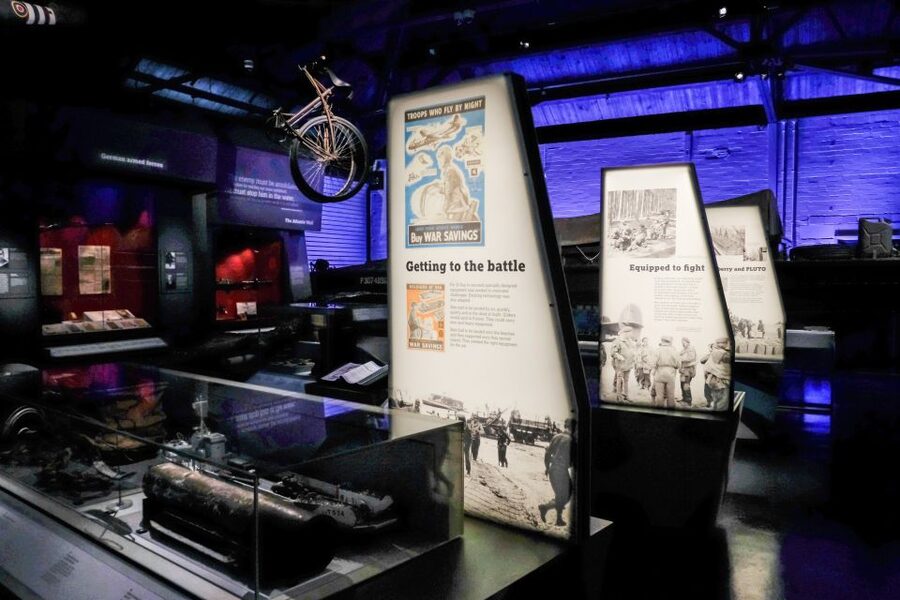
The most striking part of Portsmouth’s D-Day Story is the chance to connect a huge military operation with the people caught up in it. The museum moves from secret planning rooms and invasion maps to personal possessions, film interviews, and the cramped interior of LCT 7074, the last surviving landing craft tank to carry vehicles to Normandy on D-Day.
I like the way the visit joins military facts with human stories, and I like that the Overlord Embroidery gives the campaign a clear visual ending. Allow at least two to three hours, and more if you read every panel and watch the films. The only real drawback is that some display cases can feel repetitive, while low lighting around the embroidery makes close viewing harder.
Key points to know before you go
- Step aboard LCT 7074: See the last surviving landing craft tank and the Sherman and Churchill tanks carried inside it.
- Follow the invasion plan: Learn how commanders chose when and where to cross the Channel, and how secrecy and deception protected the operation.
- Hear firsthand accounts: Film clips and personal possessions bring the experiences of soldiers, civilians, resistance members, women, and children into the story.
- Allow two to three hours: The museum is easy to underestimate, especially if you stop for the films and detailed displays.
- See the 34-panel Overlord Embroidery: This remarkable hand-stitched work tells the story of D-Day and the Battle of Normandy.
- Book with flexibility: Admission costs about $19 per person, and cancellation is allowed up to 24 hours before the visit for a full refund.
Why Portsmouth’s D-Day museum feels different
Portsmouth is a fitting place for a museum about D-Day. The city was closely linked with the preparations for the Normandy landings, and the museum focuses tightly on 6 June 1944 rather than trying to cover the whole of World War Two.
That focus helps you understand the invasion as a chain of decisions, risks, and ordinary tasks. You do not simply walk past tanks and uniforms. You follow the path from planning and deception to the crossing, the landings, and the battle that followed.
I like this approach because D-Day can easily become a collection of familiar photographs and famous names. Here, the displays keep returning to the people involved. Personal items, recorded memories, and film clips show what the operation meant beyond the headquarters and maps.
The museum also works well for visitors with different levels of military knowledge. You can come with a strong interest in the war and spend hours studying details, or arrive with only a basic idea of D-Day and still follow the story.
A few more things to do in Britain worth a look
- London: The London Eye Entry Ticket
★ 4.6 · 35,875 reviews - London: Tower Bridge Entry Ticket
★ 4.7 · 15,560 reviews - London: Westminster Abbey Entrance Ticket
★ 4.6 · 11,254 reviews
Start with the plan behind 6 June 1944
One of the most useful sections explains The Plan. This is where you learn how Allied leaders decided when and where to cross the Channel, how they prepared a huge force, and why secrecy mattered so much.
The displays show that success depended on far more than courage on the beaches. Commanders had to weigh timing, weather, tides, geography, shipping, aircraft, tanks, and the movement of thousands of people and vehicles.
The section on deception is especially important. The Allies had to persuade German forces that the main invasion might come somewhere else. That part of the story gives you a better sense of how carefully the operation was designed before the first landing craft reached Normandy.
You will find maps, objects, and explanatory displays rather than a simple chronological parade. Take your time here. It is tempting to hurry toward the film and vehicles, but understanding the planning makes the later sections more meaningful.
For families and school-age children, this can be the most educational part of the visit. Younger children may not read every label, but the questions of secrecy, timing, and decision-making offer clear ways to discuss how the invasion worked.
Personal possessions make the war feel close
The museum holds more than 10,000 objects, artifacts, and personal possessions. That number sounds large, but the useful point is the variety. You see the physical evidence of a campaign through items connected with the people who planned, fought, supported, and endured it.
The exhibits also give attention to men, women, and children. That wider view matters. D-Day was a military operation, but it affected families, communities, resistance networks, and civilians in both Britain and France.
The film clips of veterans are among the strongest parts of the visit. Hearing people describe what they experienced adds a human voice to the equipment and maps. The footage can be moving, so this is not a light entertainment stop. Give yourself time to pause rather than trying to race through every screen.
The museum’s objects are generally presented with clear explanations. One minor issue is that visitors who prefer large, dramatic displays may find the repeated display cabinets tiring after a while. If you read every label, the amount of information can feel dense.
My advice is to choose your level. Read the opening text in each section, stop for the objects that catch your attention, and watch the film clips that help fill in the human side. You do not need to read every numbered item to understand the story.
Step inside LCT 7074 with its Sherman and Churchill tanks
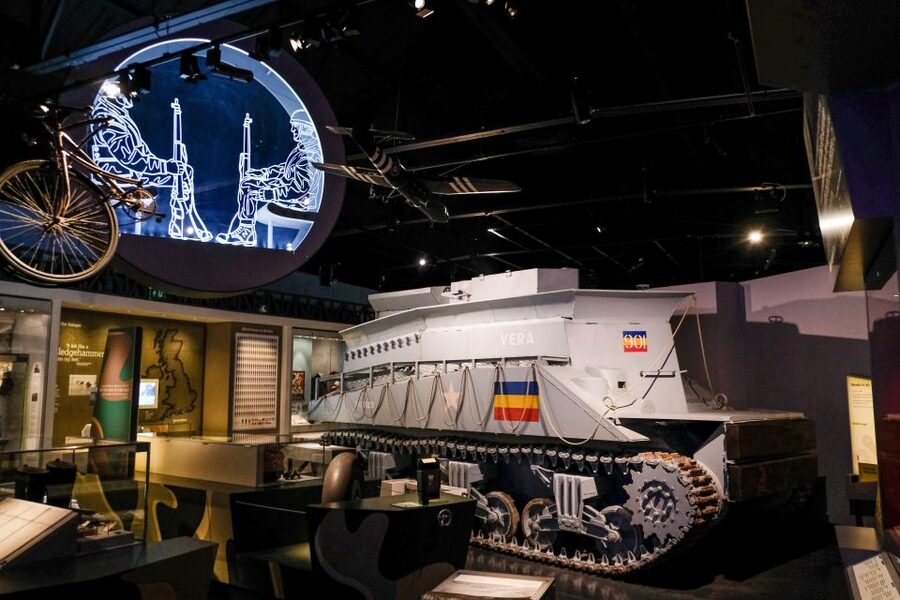
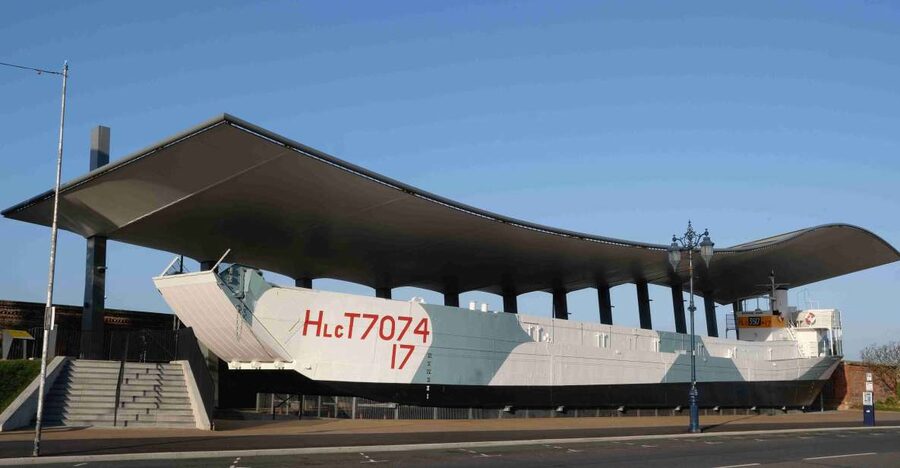
The visit includes access to LCT 7074, the last surviving landing craft tank that carried ten tanks to Normandy on D-Day. This is more than a vehicle displayed outside the museum. You can go aboard and see how the space worked with a Sherman tank and a Churchill tank inside.
The landing craft gives you a physical sense of the crossing. The vehicles occupy much of the interior, helping you picture what it would have been like for troops and equipment packed into the craft before the front doors opened.
This is one of the clearest moments in the visit. A tank on its own can feel like a static object. A tank inside a landing craft shows the practical problem the Allies had to solve: move heavy machinery across the Channel, bring it close to shore, and get it out quickly enough to support the assault.
Staff and volunteer guides may add useful details while you are aboard. Take time to ask questions if someone is available. Several parts of the craft are easier to understand when a guide explains what you are looking at.
The LCT has its own timing rules. From April through September, last entry aboard is at 4pm. From October through March, the final entry is at 3:30pm. If seeing the landing craft is important to you, make it an early or mid-visit stop rather than leaving it until the end.
Same city, a very different afternoon:
- From London: Harry Potter Warner Bros Studio Tour
★ 4.7 · 26,588 reviews - Magical London: Harry Potter Guided Walking Tour
★ 4.7 · 22,044 reviews - London: Madame Tussauds London
★ 4.6 · 20,915 reviews - Stonehenge, Windsor Castle, and Bath from London
★ 4.5 · 18,662 reviews
Finish with the Overlord Embroidery

The Overlord Embroidery is made up of 34 hand-stitched panels covering D-Day and the Battle of Normandy. It was commissioned to remember those who took part, and it gives the museum a memorable final section.
This is technically an appliqué work rather than a conventional woven tapestry, but its scale and detail make it one of the visit’s main highlights. The panels tell the story in a different way from the military equipment and film footage. You can study scenes, figures, and events at your own pace.
I would not rush this section. The embroidery rewards close attention, especially after you have learned about the plan and seen the vehicles. Its location at the end also gives you a quiet place to think about the people behind the operation.
The lighting is deliberately low, which protects the work and sets a reflective mood. It can also make some details difficult to see. If you have trouble reading or viewing the panels, allow extra time and move slowly along the display.
How long should you allow?
The ticket is valid for one day, but you probably do not need a full day unless you are determined to read everything. Two hours is enough for a brisk visit, but it is not enough for a careful one.
I would plan on two to three hours as a practical minimum. Add time if you want to watch the films, ask questions aboard the landing craft, study the Overlord Embroidery, or visit the cafe.
The museum is easy to underestimate because the entrance does not prepare you for the amount of material inside. A short visit can still be worthwhile, but you may leave feeling that you skipped important sections.
The opening hours are 10am to 5:30pm from 1 April to 30 September, and 10am to 5pm from 1 October to 31 March. Last entry to the museum galleries is 4:30pm in the warmer months and 4pm in the colder months.
Because the landing craft closes earlier than the galleries, plan around that difference. Arriving late in the day could leave you enough time for the museum but not for LCT 7074.
Price, access, and practical value
At about $19 per person, this is a reasonable admission price for a focused museum visit that includes both the galleries and the landing craft. The value improves if you stay for two or three hours rather than treating it as a quick stop.
You are paying for more than a collection of objects. The ticket covers the planning displays, personal accounts, films, interactive material, the Overlord Embroidery, and access to a rare surviving landing craft with two major tanks inside.
A free audio guide is available and can add useful background. I would use it if you want more detail without reading every label. Staff are also friendly and willing to help, particularly around the landing craft.
The museum is wheelchair accessible. The address is The D-Day Story, Clarence Esplanade, Southsea, Portsmouth PO5 3NT. A cafe and gift shop are available, which makes it easier to turn the visit into a longer stop.
The museum provides free cancellation up to 24 hours before the scheduled visit, and you can reserve now and pay later. Those options are useful if your Portsmouth plans depend on weather or changing transport arrangements.
Who will appreciate this visit most?
This is an obvious choice for anyone interested in World War Two, military planning, naval history, or personal wartime stories. The clear layout also suits first-time visitors who want an understandable introduction to D-Day.
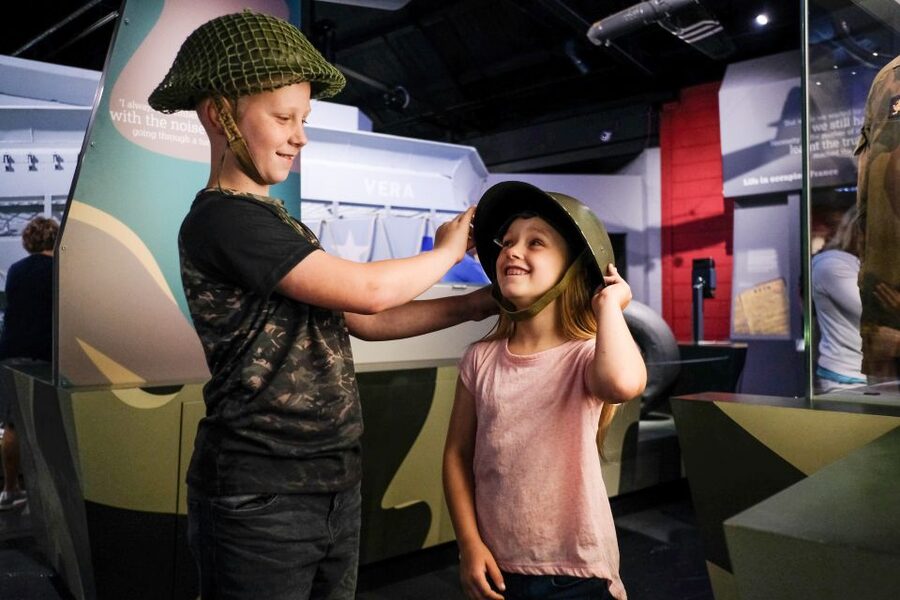
Families can get a lot from it, although very young children may not have the patience for the amount of reading and serious subject matter. The tanks and landing craft offer visual interest, while the films and personal accounts give older children something to discuss.
I would also recommend it to visitors with a family connection to the war. The personal possessions and recorded memories can make the visit feel especially direct.
If you prefer museums with large numbers of physical objects, you may find parts of the galleries more text-heavy than expected. One section can feel repetitive after the first several display cases. The landing craft, tanks, films, and Overlord Embroidery help break up that rhythm.
A simple way to plan your visit
Start early enough to visit LCT 7074 before the final boarding time. Then work through the main museum in order, beginning with the planning and deception displays.
Next, spend time with the objects, personal accounts, and film clips. Do not skip the sections about civilians and families, since they widen the story beyond the battlefield.
Finish with the Overlord Embroidery. Its position at the end works well, but only if you have enough time left to study it without watching the clock.
If you want food or a drink, the cafe makes the museum suitable for a longer visit. You can also use the gift shop to browse books about D-Day and World War Two, which may be useful if you want to continue reading after Portsmouth.
Should you book The D-Day Story?
Yes, if you want a focused and thoughtful account of D-Day rather than a general military museum. The combination of personal stories, planning displays, film, LCT 7074, tanks, and the Overlord Embroidery gives you several ways to understand the invasion.
Book it if you can allow at least two hours, and aim to arrive well before the landing craft’s last entry time. Skip it only if you have very little time in Portsmouth or prefer museums with almost no reading.
For about $19, it offers solid value, especially for history enthusiasts, families with older children, and anyone who wants to connect the famous invasion with the people who planned it, carried it out, and lived through it.
FAQ
Where is The D-Day Story located?
The museum is at The D-Day Story, Clarence Esplanade, Southsea, Portsmouth PO5 3NT.
What does the admission ticket include?
The ticket includes admission to The D-Day Story, including the museum galleries and access aboard LCT 7074.
How much does admission cost?
The listed price is about $19 per person.
How long is the ticket valid?
The ticket is valid for one day.
What are the opening hours?
From 1 April to 30 September, the museum is open from 10am to 5:30pm. From 1 October to 31 March, it is open from 10am to 5pm.
What time is the last entry to LCT 7074?
From April through September, last entry aboard LCT 7074 is at 4pm. From October through March, last entry is at 3:30pm.
Is the museum wheelchair accessible?
Yes, The D-Day Story is wheelchair accessible.
Can I cancel my booking?
Yes. You can cancel up to 24 hours in advance for a full refund. You can also reserve now and pay later.
Just added in Britain
- 3-Day Stonehenge*, Glastonbury, Bath & the South West Coast Tour from London★ 4.5 · 32 reviews
- Private Guided Tour of Harry Potter Locations – English/ Italian★ 5.0 · 33 reviews
- Private Tour London Highlights, entries Westminster Abbey, The Tower of London★ 5.0 · 93 reviews
- 2 Hour Walking Tour from Buckingham Palace to Big Ben★ 5.0 · 32 reviews
- 30 Major London Attractions Walking Tour With Photos★ 4.5 · 51 reviews
- City Sightseeing Llandudno Hop-On Hop-Off Bus Tour★ 4.0 · 109 reviews
- 007 Shadow Of Spectre★ 5.0 · 135 reviews
- Private Guided Tour of the British Museum – Tickets Included★ 5.0 · 193 reviews