
Reviewed · WALKING TOURS
Bath: Guided Walking Tour
Bath’s story comes alive on foot, moving from Roman foundations and medieval lanes to the grand Georgian streets shaped by John Wood and Ralph Allen. This two-hour walking tour gives you a broad introduction without asking you to spend the day in a museum.
I like the route’s variety, especially the shift from Sally Lunn’s and Bath Abbey to the elegant Circus and Royal Crescent. I also like that guide Paul Elliott adds historical explanation and practical tips rather than simply pointing at buildings. The main drawback is the brisk scope: you see many places, but you do not enter the Roman Baths or other paid attractions.
Key points at a glance
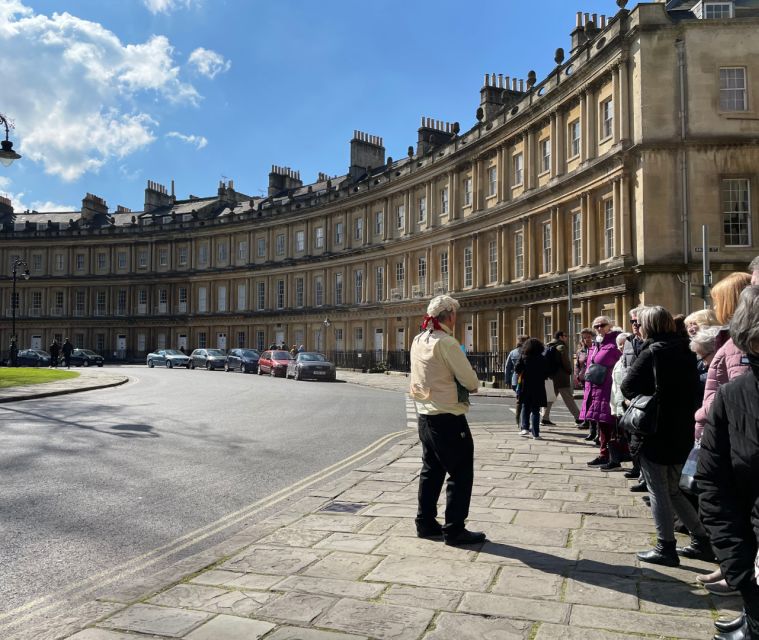
- Bath’s oldest house: Begin near Sally Lunn’s and Abbey Green, including the old London Plane tree and former monastery site.
- Roman and medieval Bath: Hear about the Roman Baths, Prince Bladud, the old East Gate, and the route toward the River Avon.
- Georgian masterpieces: Walk through Queen Square, the Assembly Rooms, the Circus, and Royal Crescent.
- A clear two-hour route: The tour covers a lot of ground, with frequent stops for explanation and photographs.
- English-speaking local guide: Paul Elliott leads the experience and brings the city’s Georgian period into focus.
- Important limits: Admission fees are separate, and the walk is unsuitable for pushchairs, wheelchair users, babies, and children under five.
From Abbey Hotel to Bath’s oldest house
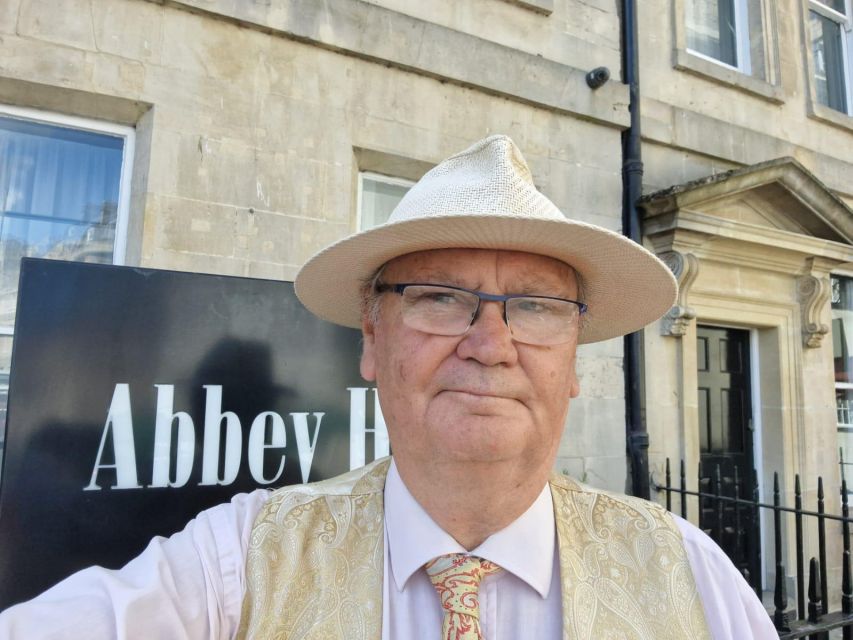
The tour starts at The Abbey Hotel North Parade, in the central Bath area, with a short meeting and introduction to Paul. The meeting point is listed as BA1 1LF, and the walk ends on Hot Bath Street, BA1 1SJ, near Thermae Bath Spa.
The opening section quickly gives you a sense of Bath’s layered past. Sally Lunn’s is presented as Bath’s oldest house, making it a useful first stop for understanding how old parts of the city survive among later streets and grander buildings. You do not need to visit the interior as part of this tour, so treat the stop as a chance to learn and take photographs.
From there, the route reaches Abbey Green. The old London Plane tree gives the square a strong visual marker, while the site of the former monastery helps explain why this part of Bath became so important. I like this early contrast: you are not looking only at polished Georgian architecture. You are also seeing traces of the religious and medieval city that came before it.
The walk is designed as an easy two-hour stroll with many stops. That matters because Bath’s centre is compact but packed with details. You can listen, look around, and take pictures instead of rushing from one address to the next. Still, easy does not mean fully accessible. The route includes alleyways, slopes, and a climb toward the upper part of the city, so it is not suitable for wheelchair users or pushchairs.
More Walking Tours in Bath:
- Walking Tour of Bath with Blue Badge Tourist Guide
★ 5.0 · 1,877 reviews - Bath: City Walking Tour with Optional Roman Baths Entry
★ 4.7 · 1,401 reviews - Bath: Guided Walking Tour
★ 4.9 · 1,198 reviews
Roman Bath explained without an admission ticket
Bath’s Roman past is one of the city’s main draws, and the tour gives you an explanation of the Roman Baths from outside rather than taking you inside. The guide discusses the founding of the site during the era of Prince Bladud, the legendary figure linked to Bath’s early story.
This is a useful orientation if you plan to visit the Roman Baths separately. You get the setting and the basic story first, then can return with a clearer idea of what you are seeing. The tradeoff is simple: no admission costs are included, and the tour does not replace a full visit to the Roman Baths.
That arrangement keeps the price at $26 per person, which is fair for a guided introduction to so many central sights. If you want detailed archaeological displays, original Roman objects, and time inside the baths, budget for a separate ticket. If your aim is to understand Bath’s layout and choose which sites deserve your own time, the outside explanation can be enough.
The route continues to the original East Gate of Bath. From here, the old city connected down toward the River Avon. This is a good point to picture Bath as a walled settlement, rather than the open collection of squares and crescents you see today.
Pulteney Bridge and the River Avon
Pulteney Bridge is one of Bath’s most recognizable landmarks. The bridge crosses the River Avon and is notable for its shops built into the structure. The tour takes you to the original East Gate area and explains the connection between the old city and the river.
You will not get a long river cruise or a separate architectural lecture here. Instead, this stop forms part of the wider story: Bath grew around water, movement, trade, and the natural setting of the Avon. It is also one of the route’s best photo stops, especially if you want a clear image of the bridge and surrounding city.
The stop at Pulteney Bridge also helps break up the historical explanation. After hearing about Roman and medieval Bath, you get a strong visual landmark that is easy to remember. I find that useful on a first visit. Once you know where the bridge sits, Bath’s central streets become easier to navigate.
Bath Abbey and the churches beneath it
Bath Abbey receives a full explanation, including the churches that stood on or near the site before the present building. The guide’s role here is especially valuable because the exterior alone can hide the long sequence of religious buildings connected with this spot.
You should not expect entry to Bath Abbey as part of the tour. The experience is a walking tour, and paid admissions are separate. If you want to see the interior, stained glass, stonework, or memorials, plan that visit independently.
The Abbey stop also gives you a chance to pause in the heart of Bath. The surrounding streets can be busy, and the building is easy to photograph from different angles. Listen for the way the guide connects the Abbey with the earlier monastery site at Abbey Green. Those links make the city feel like a place rebuilt and reshaped over many centuries, not a town designed in one period.
More walks around Bath:
- Roman Baths and Bath City Walking Tour
★ 4.5 · 762 reviews - Best of Bath Walking Tours – Georgian Tour
★ 5.0 · 449 reviews - Bath: Bridgerton Filming Locations Walking Tour with Music
★ 4.7 · 416 reviews - Bad of Bath fun Walking Tour of Bath
★ 5.0 · 402 reviews
Alleyways leading up to Georgian Bath
After the Abbey area, the route heads through Bath’s alleyways and climbs toward the upper wall of the city. This part of the walk is less about one famous building and more about seeing how the city changes as you move uphill.
At the top, the focus shifts firmly to Georgian Bath. The guide explains the vision of John Wood and the use of stone from Ralph Allen’s quarries. This is the point where Bath’s grand plan begins to make sense. The honey-colored stone, broad squares, repeated façades, and formal curves were not random additions. They were part of an ambitious attempt to create an elegant city for Georgian society.
I particularly like this section because it connects design with people and money. You are not just looking at pretty buildings. You are learning who shaped them and how local stone helped give Bath its unified appearance.
The climb is worth noting before you book. The tour is described as an easy stroll, but the route still includes an uphill section and later descends through Royal Victoria Park. Wear comfortable shoes and expect to be on your feet for the full two hours.
Queen Square and the Jane Austen Centre
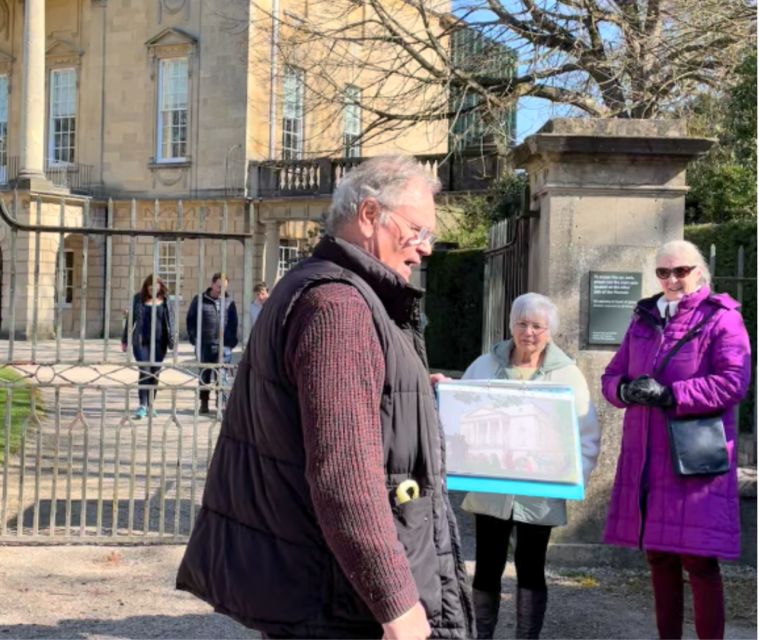
Queen Square marks the formal beginning of the Georgian section. Its planned shape gives you a strong example of the order and balance that became central to Bath’s image.
The route passes the Jane Austen Centre on the way toward the Assembly Rooms. The stop is external, so you do not receive a museum visit or admission to the centre. Still, the location adds literary context to the Georgian city. Jane Austen lived in Bath, and her connection with the city helps explain why these streets remain so closely tied to novels, manners, and the social world of the period.
You can use this part of the tour to decide if the Jane Austen Centre deserves a separate visit. That is one of the practical strengths of a walking introduction. It gives you a quick look at several attractions, then leaves you free to return to the ones that match your interests.
The Assembly Rooms and the Circus
The Assembly Rooms offer another look at Georgian social life. These rooms were connected with dancing, music, conversation, and the public rituals of fashionable Bath. The guide explains the setting from the outside, but admission is not part of the walk.
From the Assembly Rooms, the route continues to the Circus. The Circus is one of John Wood’s best-known achievements, with a circular arrangement of buildings that rewards a slow look upward. The repeating stone façades can appear similar at first, but the details are worth your attention.
This is a good place to stop listening for a moment and study the architecture. Notice the curve of the buildings and the way the design creates a complete urban space rather than a simple row of houses. The guide’s explanation gives the structure a human story, while the pause lets you appreciate its form.
The tour does not offer extensive time inside any one site. That is the price of covering so much ground in two hours. You gain a useful citywide picture, but anyone who wants close architectural study should return later on their own.
Royal Crescent and Royal Victoria Park
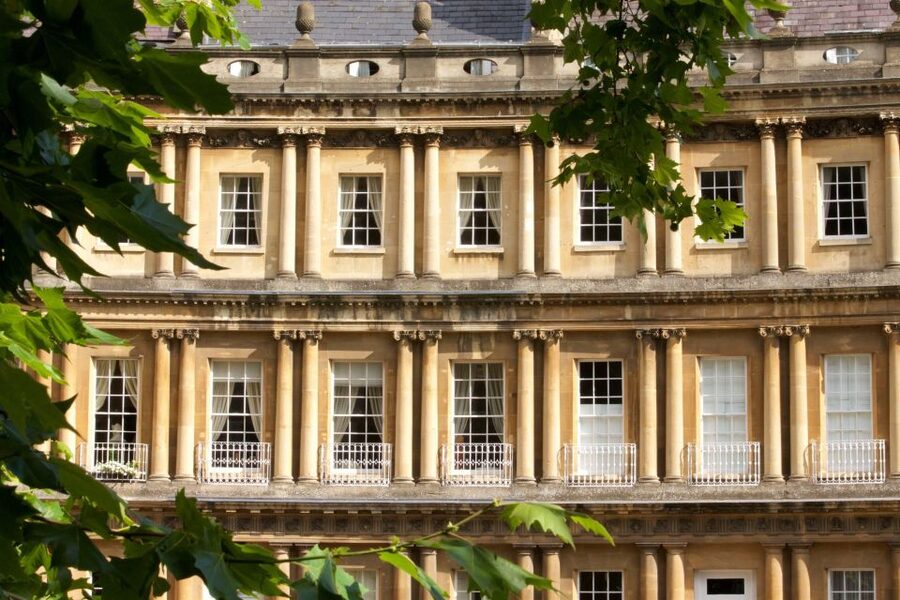
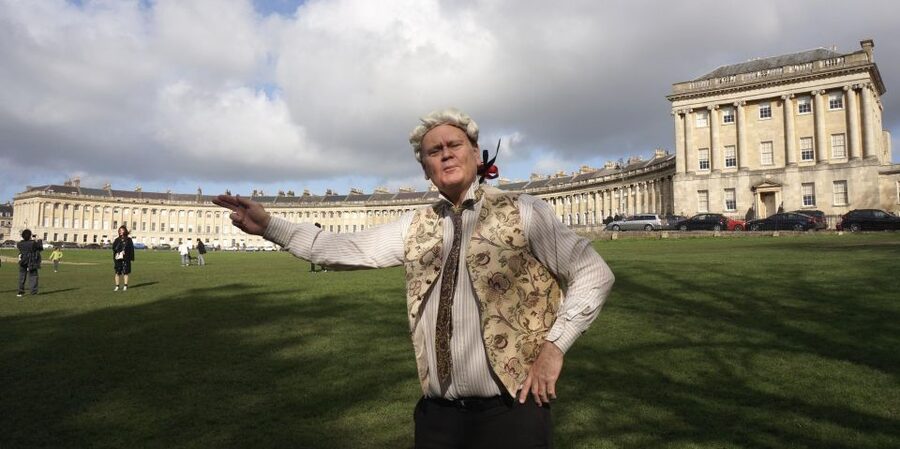
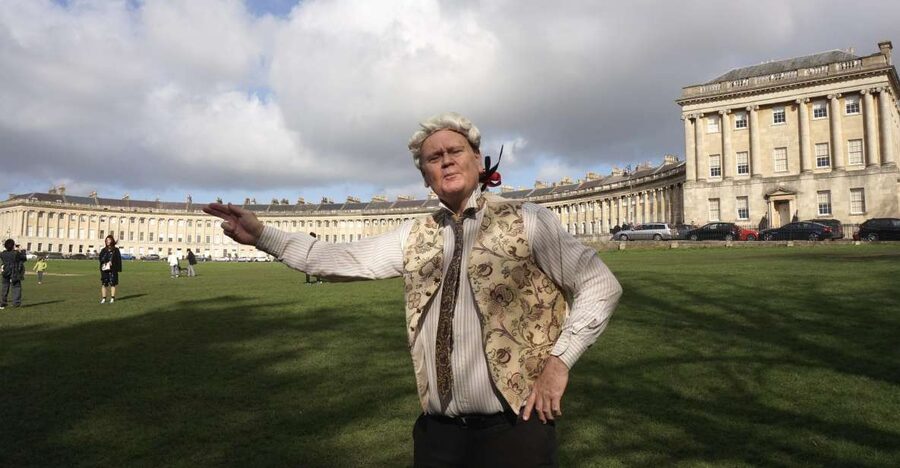
Royal Crescent is the grand visual payoff of the Georgian section. Its long curved façade is one of Bath’s defining views, and the open space in front gives you room to take it in. The guide presents it as a masterpiece of the city’s Georgian design.
This stop works well after Queen Square and the Circus because you can compare three different forms of planned architecture: the square, the circle, and the crescent. You also see how Bath’s architects used repetition, stone, and carefully shaped public spaces to create a sense of order.
The route then heads downhill through Royal Victoria Park toward the Theatre Royal. The downhill walk offers a change of pace after the climb through the alleyways. It also adds greenery to an itinerary otherwise focused on streets, buildings, and urban history.
Because the tour includes many photo opportunities, have your camera ready before reaching Royal Crescent. The stop can be brief, and you will want to use the time for both the wide view and closer details of the stonework.
Theatre Royal and Thermae Bath Spa
The final section leads toward the Theatre Royal. The theatre adds another piece to Bath’s cultural story and fits naturally with the earlier discussion of Georgian leisure, social life, and public entertainment.
The tour finishes at Thermae Bath Spa on Hot Bath Street. This is Bath’s modern bathing facility, and its inclusion creates a neat link between the ancient Roman use of the city’s hot springs and the present-day bathing tradition. You do not receive entry to Thermae Bath Spa, so plan a separate visit if you want to use the pools.
Ending here is practical. You finish close to a major attraction, in the central area of Bath, with a clear idea of what to explore next. The final stop also gives the whole walk a pleasing arc, from Roman bathing to modern bathing.
What $26 buys you in Bath
At $26 per person, the tour offers a reasonably priced introduction to the city. You are paying for Paul’s live commentary and a carefully planned route, not for admission to the Roman Baths, Bath Abbey, the Assembly Rooms, the Jane Austen Centre, or Thermae Bath Spa.
I see the value in booking this at the start of a Bath visit. A guide can help you understand the city’s layout in two hours, then you can spend the rest of your day on the attractions that interest you most. The route includes enough major landmarks to make the price feel sensible, especially if you value historical context and want to avoid wandering without a plan.
The cost is less convincing if you want long stops, interior visits, or a slow architectural study. In that case, you may prefer to explore independently and pay for only the attractions you enter. This tour works best as an orientation, not as a complete Bath sightseeing day.
You also get flexible booking terms: cancellation is allowed up to 24 hours before the start for a full refund, and you can reserve now and pay later. Starting times depend on availability.
Who should book this walking tour
I would recommend it to first-time visitors who want the city’s main story in a short window. It suits adults and older children who can keep walking, listen during several stops, and manage the uphill section.
It is also a good fit if you enjoy architecture but want more than a list of building names. The explanation of John Wood, Ralph Allen’s stone, Georgian Bath, the earlier churches, and the Roman site gives you useful context before you explore further alone.
I would think twice if you are visiting with a baby or very young child. Children under five are not accepted, and the route is not suitable for babies under one. Pushchairs, baby carriages, and pets are not allowed, although assistance dogs are permitted.
The accessibility limits are firm. Wheelchair users should not book this route, and families should not assume that a scooter is treated like a pushchair. One December 2024 booking account describes a distressing exchange involving children and a scooter, with the guide’s manner reported as rude. That is a serious concern, even though the overall listed rating is 4.4 from 26 bookings and other accounts praise Paul’s information, helpful tips, and friendly presentation.
Should you book the Bath guided walking tour?
Book this tour if you want a compact history lesson with real city views, especially at the start of your stay. Paul’s route covers Roman, medieval, Georgian, literary, theatrical, and modern Bath in two hours, with plenty of places to photograph.
Skip it if you need step-free access, a pushchair-friendly route, or admission to the city’s main interiors. For most able-bodied adults and older children, $26 is a fair price for getting your bearings and understanding why Bath looks the way it does. Just arrive ready to walk, bring comfortable shoes, and plan separate visits to the Roman Baths, Bath Abbey, the Assembly Rooms, or Thermae Bath Spa.
FAQ
Where does the Bath walking tour start?
The tour starts at The Abbey Hotel North Parade in Bath. The listed starting location is BA1 1LF.
Where does the tour finish?
The walk finishes on Hot Bath Street, Bath BA1 1SJ, near Thermae Bath Spa.
How long does the guided walk last?
The tour lasts two hours. The route includes many stops for explanations and photographs.
Who guides the walking tour?
The experience is led in English by local guide Paul Elliott.
Does the tour include entry to the Roman Baths?
No. The guide explains the Roman Baths from outside, but admission is not included and must be arranged separately.
Are other attraction admission fees included?
No. The walking tour includes the guide and the walking route only. Admission to sites such as Bath Abbey, the Assembly Rooms, the Jane Austen Centre, and Thermae Bath Spa is separate.
Is the tour suitable for wheelchair users?
No. The tour is not suitable for wheelchair users and includes alleyways, an uphill section, and a downhill walk.
Can I bring a pushchair or baby carriage?
No. Baby strollers and baby carriages are not allowed. The tour is also not suitable for babies under one or children under five.
Can I cancel the booking?
Yes. You can cancel up to 24 hours before the tour for a full refund. You can also reserve now and pay later, subject to the booking terms.
Just added in Bath
- Bath Tootbus Hop-on Hop-off Sightseeing Bus Tour★ 4.5 · 247 reviews
- Fun, Flexible Treasure Hunt Around Bath with Cryptic Clues & Hidden Gems★ 5.0 · 208 reviews
- ‘Stonehenge & Secret England’ from Bath for 2-8 curious adventurers★ 5.0 · 54 reviews
- BATH: 2-Hour Bath Walking Tour of Bridgerton Filming Locations★ 5.0 · 99 reviews
- Jane Austen’s Bath And History Trail★ 5.0 · 77 reviews
- Private Day Tour from Bath to the Captivating Cotswolds★ 5.0 · 51 reviews
- Stonehenge and Bath City Tour – Private tour from Bath★ 5.0 · 33 reviews
- The ‘Hidden Cotswolds’ Shared Tour from Bath for 2-8 people★ 5.0 · 83 reviews
Walking Tours, compared.

Magical London: Harry Potter Guided Walking Tour
Read our review →
Underground Vaults Walking Tour in Edinburgh Old Town
Read our review →
Oxford University Walking Tour With University Alumni Guide
Read our review →
Edinburgh Castle: Guided Walking Tour with Entry Ticket
Read our review →
Edinburgh Castle Guided Walking Tour in English
Read our review →
Tour for Muggles The Ultimate Harry Potter Walking Tour in London
Read our review →
University and City Walking Tour with Alumni Guide
Read our review →Browse the lists this tour appears in