
Reviewed · WALKING TOURS
Secret Old London Walking Tour
London’s modern towers hide a darker, older city beneath them. On this 1.5-hour walk from Barbican, you move through plague grounds, execution sites, medieval churchyards, a bombed church, and the footprint of a Roman amphitheatre. It is London history with the polite cover pulled off.
I like the route for two reasons. First, it takes you away from the standard royal sights and into corners many Londoners pass without noticing. Second, the guides bring range: Rosie has covered politics, architecture, language, and monastic life, while Jess, Pepe, and Jeremy are praised for lively storytelling and a strong feel for the area. The main drawback is that the walk packs in a lot, so you may wish for more time at some stops.
Key points to know before booking
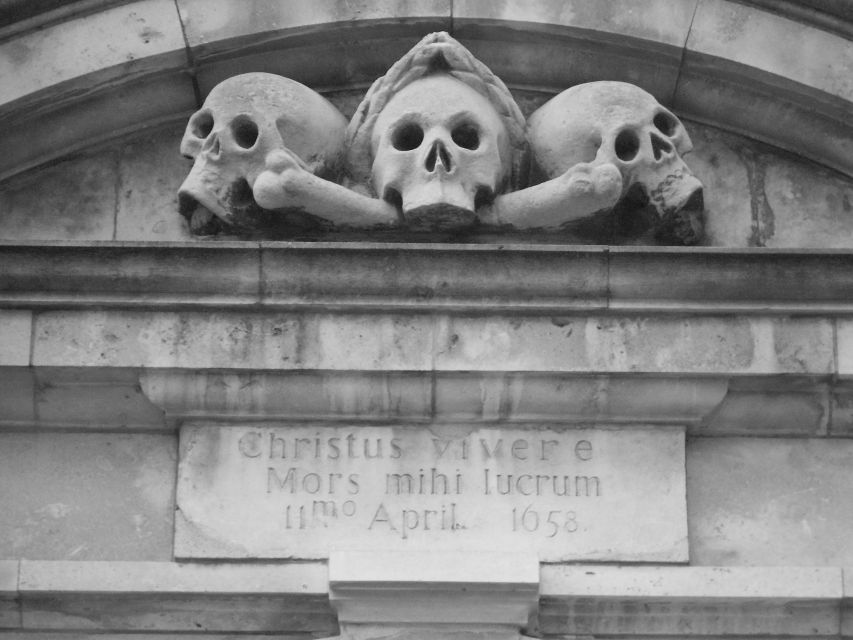
- Charterhouse Square begins the darker story: This peaceful green space was linked to one of London’s worst plague burial grounds during the Black Death.
- Smithfield brings the grim medieval edge: Jousts, executions, and the memory of William Wallace give this open space a heavy past.
- St Bartholomew the Great adds beauty and film appeal: This exceptional medieval church has appeared in Four Weddings & a Funeral and Sherlock Holmes.
- The route mixes tragedy with quiet spaces: Parks, gardens, churchyards, and memorials keep the walk from becoming a nonstop catalogue of gore.
- The guides are the main strength: Jess, Rosie, Pepe, and Jeremy have all been praised for warmth, humor, strong research, and clear storytelling.
- The practical setup is simple: Meet outside Barbican Underground Station, wear comfortable shoes, leave large bags and pets behind, and bring no expectation of refreshments.
Why this corner of London works so well
The City of London can feel like a forest of office towers on a weekday. Look down a side street, however, and the modern city gives way to fragments of older London. A church wall survives between newer buildings. A small square carries the memory of plague. A broad market area recalls public punishment and medieval spectacle.
This tour makes those fragments easier to read. You are not simply shown old buildings. You are given the events that make them matter. A quiet churchyard becomes a place shaped by death. A pleasant park takes on a more serious meaning after you learn what its memorial remembers.
The tone is not all horror. That matters. The route includes beautiful churches, peaceful green spaces, architecture, and small details about how London developed. The strongest guides use humor to keep the subject human rather than turning the walk into a grim parade.
Guides have included Jess, also referred to as Jesse in one account, along with Rosie, Pepe, and Jeremy. Their styles vary, but the repeated strength is clear: you get stories, not just dates. Rosie in particular has been praised for moving beyond history into politics, architecture, language, and the story of London’s monasteries and gardens.
More Walking Tours in London:
- Magical London: Harry Potter Guided Walking Tour
★ 4.7 · 22,044 reviews - London: The Original Jack the Ripper Walking Tour
★ 4.7 · 7,833 reviews - Tour for Muggles The Ultimate Harry Potter Walking Tour in London
★ 5.0 · 4,684 reviews
Starting at Barbican and entering older London
The meeting point is outside Barbican Underground Station. That makes the start easy to reach, though you should allow a little time to find the correct exit and gather before the walk begins.
From here, the tour heads toward Charterhouse Square. The first section helps you switch gears from present-day London to the city of centuries ago. You are walking through streets that retain much of their old pattern, even where later buildings have changed the skyline.
This is a good route for anyone who has visited London before. You do not need another explanation of Big Ben or Buckingham Palace. Instead, you get a sense of the City as a place where Roman, medieval, Tudor, Victorian, and modern London sit close together.
The guides are particularly important here. The streets themselves do not always announce their past. A confident guide can point out what you would otherwise walk past, then explain why that small detail matters.
Charterhouse Square and the memory of plague
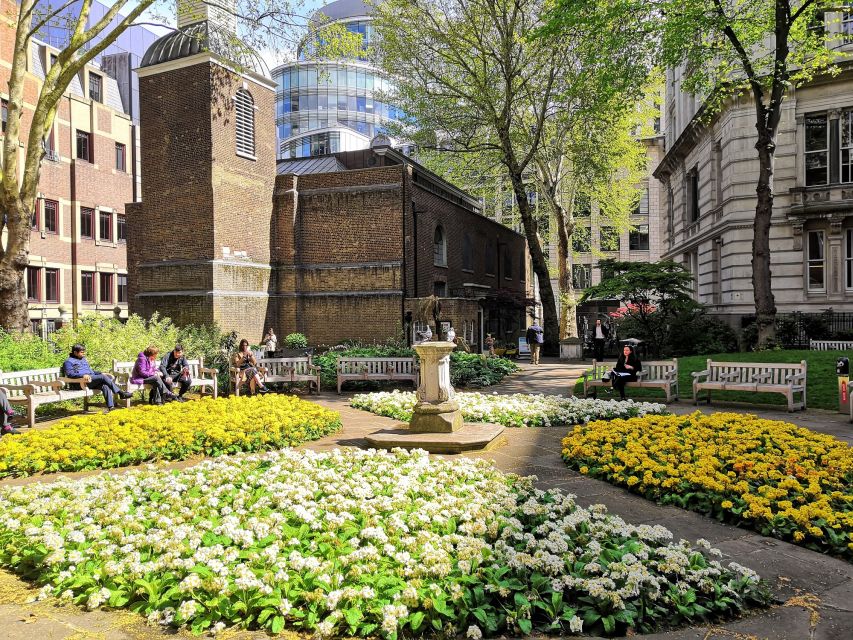
Charterhouse Square looks calm today. Its quiet atmosphere makes the earlier story more unsettling: around 600 years ago, the area was associated with the disposal of victims of the Black Death, one of London’s worst plague outbreaks.
That contrast is one of the tour’s best features. You are not taken to a theatrical horror set. You are shown a normal-looking urban space and asked to picture the pressure placed on medieval London by disease, fear, and mass death.
The stop also shows why walking works better than a quick bus tour for this subject. You can pause in the space, look at the buildings around it, and feel how close the old burial ground is to the working City. The story lands through the physical setting.
If you prefer light sightseeing with little discussion of death, this part may feel heavy. The tour’s theme is clear from the beginning: London’s past includes courage and beauty, but also plague, punishment, and sacrifice.
Smithfield, jousts, and public executions
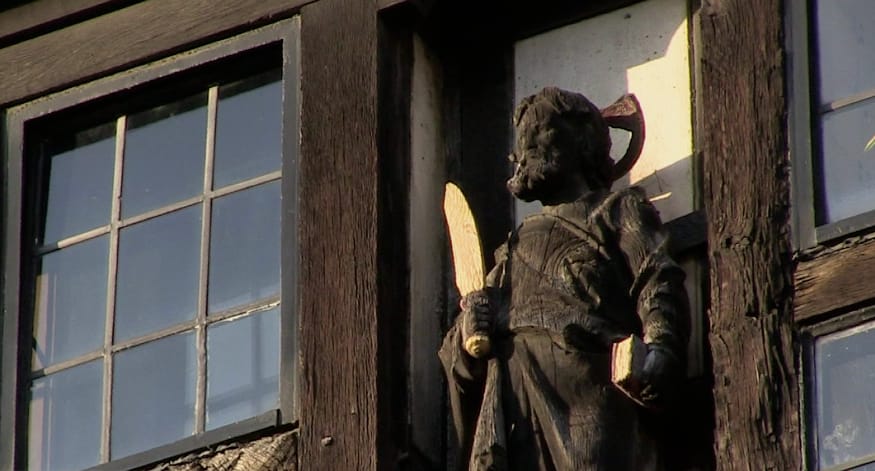
The route continues to Smithfield, one of the most powerful stops on the walk. In the medieval period, this open area was used for jousts as well as executions. The same public space could host spectacle, celebration, punishment, and fear.
The tour information specifically highlights William Wallace, the Scottish resistance leader remembered by many through the film Braveheart. His execution is part of the Smithfield story. One important point for your expectations: an attendee noted that William Wallace was not discussed on their particular outing. That suggests the exact emphasis can vary with the guide, so book this tour for the wider Smithfield story rather than one guaranteed anecdote.
Smithfield works because it is not presented as a sealed historic site. It remains part of London’s everyday city, which makes the old events feel closer. You stand in a place that has changed in function but still carries the memory of public gatherings and punishment.
The guide’s delivery matters most here. A list of executions would quickly become dull or unpleasant. The better approach, reflected in comments about Jess, Rosie, Pepe, and Jeremy, is to explain the setting with humor and context while allowing the darker facts to speak for themselves.
More walks around London:
- London Jack The Ripper Guided Walking Tour
★ 5.0 · 3,131 reviews - London: Harry Potter Movies Walking Tour (Kids Go Free)
★ 4.7 · 3,071 reviews - Changing of the Guard Guided Walking Tour in London
★ 5.0 · 1,793 reviews - London: The Great British Rock and Roll Music Walking Tour
★ 4.9 · 1,783 reviews
St Bartholomew the Great and medieval atmosphere
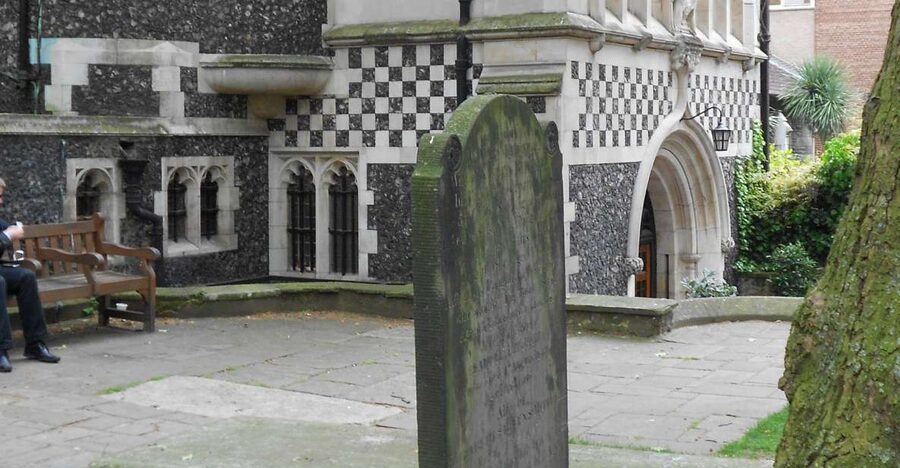
Between Charterhouse Square and Smithfield is St Bartholomew the Great, one of London’s finest medieval churches. It is also one of the route’s visual rewards, giving the walk a welcome change from stories of plague and execution.
The church has appeared in Four Weddings & a Funeral and Sherlock Holmes, which may help you recognize parts of it. Still, its film connections are only a small piece of its appeal. The important point is that you are seeing a surviving medieval religious building in a part of London where later construction could easily have erased it.
The church and its surroundings create the medieval atmosphere promised by the tour. You can imagine the area before office blocks and traffic reshaped the City. You also get a better sense of how religious institutions once shaped daily life, land ownership, charity, burial, and local power.
Several guides have brought in stories about monasteries and religious foundations. That wider context is valuable because it stops the church from becoming just another old building. You learn how it fitted into the city around it.
A bombed church and the scars of the Blitz
Later, the route passes through the shell of a church destroyed during the Blitz. This is where the tour moves from medieval violence to the more recent damage of wartime London.
A roofless or damaged church can be more affecting than a restored building. You see what survived and what did not. The absence becomes part of the story, and the contrast with the nearby medieval remains is striking: London has repeatedly been damaged, rebuilt, and adapted without fully losing its earlier layers.
This stop broadens the tour beyond medieval gore. You are not only learning where people were executed. You are also seeing how the city remembers destruction in the twentieth century.
The route’s mixture of periods is one of its main strengths. You may begin with the Black Death, move through medieval punishment, look at an ancient church, and then confront wartime ruin. London’s past is not one neat chapter. It is a stack of stories occupying the same streets.
Memorials, sacrifice, and the quieter side of the walk
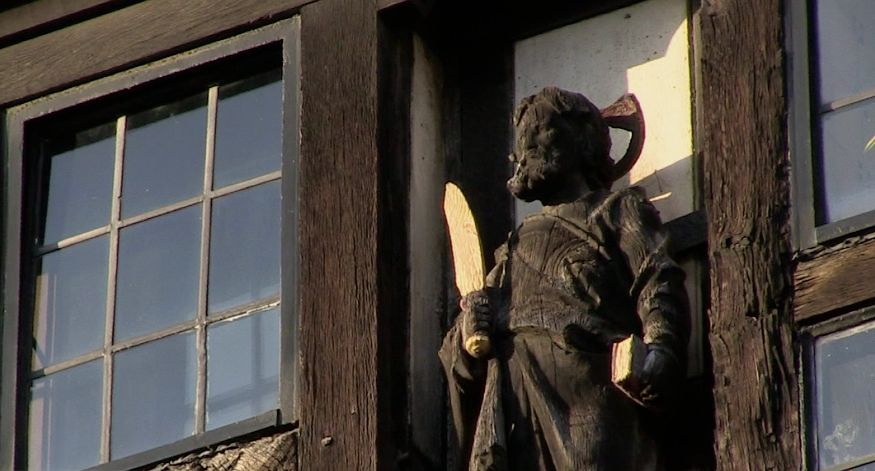
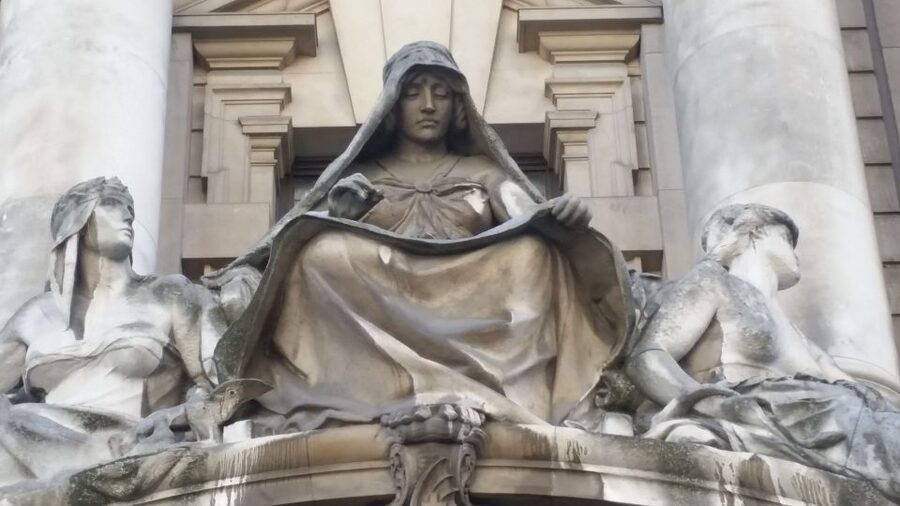
The tour also reaches a moving memorial connected with heroic self-sacrifice. The information provided does not name the memorial, so you should expect the guide to explain its story on site rather than arrive with a fixed landmark in mind.
This is likely to be one of the walk’s emotional turning points. The subject matter shifts from people suffering under plague or punishment to an individual act of courage. It gives the tour a more personal note and prevents the experience from focusing only on crowds, institutions, and spectacle.
The route also includes parks and tucked-away gardens. These spaces are useful breathing room between heavier stops. They show that the City is not only stone, traffic, and office life. Small green areas can preserve a sense of place even when the surrounding streets have changed.
One guide described the balance as relaxed but full of information. That is the right way to approach this tour. You are expected to pay attention, but not to march from one fact to the next without a pause.
Finding the Roman amphitheatre
The walk ends or passes near the location of London’s long-lost Roman amphitheatre, where you can locate its perimeter. The remains are not presented as a grand, fully intact arena. The interest comes from understanding where it was and how the Roman city once occupied this ground.
For many people, this will be the point when London’s age becomes most obvious. The city is not merely medieval with a Roman attraction added later. Roman London formed part of the foundation on which later streets and buildings developed.
The stop rewards visitors who like maps and layers. You may not get the spectacle of a complete amphitheatre, but you do gain a better sense of scale and position. A guide can turn an apparently ordinary patch of the City into evidence of a much older settlement.
This is also a good example of why the tour is best for curious walkers rather than checklist sightseeing. The pleasure comes from knowing what you are looking at, even when very little is visible at first glance.
How the guide shapes the experience
The tour has received a 4.8 rating from 154 reviews, and the most consistent praise is directed at the guides. People repeatedly describe the walks as informative, entertaining, passionate, and well paced.
That pattern matters more than any single landmark. Much of the route depends on explanation. A churchyard, damaged wall, or open square cannot tell its full story without someone connecting the place to plague, politics, language, architecture, or religion.
Jess has been praised for a fun presentation and a strong grasp of the area. Rosie has been described as lively and able to add stories from several fields. Pepe has made a strong impression through his command of London history, while Jeremy has been praised for being approachable and entertaining.
You should still allow for variation. One person may tell more stories at a stop, while another may spend longer on pictures or context. On a cold day, that can matter. One attendee felt that a little less time looking at images and a little more walking would have helped them stay warm.
Pace, comfort, and what to bring
The walk lasts 90 minutes, which is long enough to create a clear story without taking up half your day. Several comments describe the pace as comfortable, though one person found that the amount of information was difficult to remember all at once.
Wear comfortable shoes. You will be walking through central London, and the tour is built around moving between several sites rather than remaining in one museum or church.
The activity is listed as wheelchair accessible. Dogs are not allowed, except guide dogs, and large bags and luggage are not permitted. Video recording is also not allowed. Refreshments are not included, so plan to eat or get a drink before or after the walk rather than expecting a café stop as part of the tour.
The tour is suitable for people over 12. That age limit makes sense given the subjects. The stories involve plague, executions, and death, even though the presentation also includes architecture, gardens, and lighter anecdotes.
Is $26 good value for 90 minutes?
At $26 per person, this is not the cheapest way to spend an hour and a half in London. You are paying for a live guide rather than entry to a major attraction, and no refreshments are included.
I think the price is fair if you value interpretation. The route includes several places you could visit independently, but the meaning of those places would be harder to grasp without a guide. You are paying to connect Charterhouse Square, Smithfield, St Bartholomew the Great, the Blitz-damaged church, the memorial, and the Roman amphitheatre into one readable story.
The value is especially good for repeat visitors and London residents. Several people who already lived or worked in the area learned new details and saw familiar streets differently. That is a useful test: if the tour can make a local feel like a first-time visitor, it offers more than a basic orientation walk.
Free cancellation up to 24 hours before the start and the option to reserve now and pay later add flexibility. They do not change the tour itself, but they make it easier to fit into an uncertain London schedule.
Who should book this walk?
I would choose this tour if you enjoy city history, old churches, unusual memorials, and stories with a darker edge. It is also a strong pick if you have already seen London’s headline sights and want a route that feels less familiar.
It suits adults, older children over 12, history fans, architecture lovers, film fans, and London residents looking for a different afternoon. It can also work well for a small team outing because the pace is social and the subject matter gives people plenty to discuss.
I would think twice if you dislike walking, want a polished indoor attraction, or prefer a gentle sightseeing tour without executions and plague. I would also avoid booking it with large luggage, pets, or an expectation of filming the entire walk.
Should you book the Secret Old London Walking Tour?
Book it if you want London explained through its overlooked places rather than its famous postcard views. The strongest reasons are the unusual route, the mix of Roman, medieval, Tudor, and wartime stories, and the guides’ ability to make a quiet square or church shell feel important.
Go in ready for a lot of information. The route covers plenty in 90 minutes, and the emphasis may shift depending on whether your guide is Jess, Rosie, Pepe, Jeremy, or another member of the team. If you like atmospheric streets, difficult stories, and the pleasure of noticing what other people walk past, this is a very good use of an afternoon.
FAQ
Where does the Secret Old London Walking Tour meet?
The meeting point is outside Barbican Underground Station.
How long does the tour last?
The walking tour lasts 1.5 hours.
What language is the tour in?
The tour is conducted in English with a live English-speaking guide.
What places does the walk visit?
The route includes Charterhouse Square, Smithfield, St Bartholomew the Great, the shell of a church destroyed in the Blitz, a memorial connected with heroic self-sacrifice, and the perimeter of London’s lost Roman amphitheatre.
Is the tour suitable for children?
The tour is suitable for people over 12.
Is the tour wheelchair accessible?
Yes, the activity is listed as wheelchair accessible.
Are dogs allowed?
Dogs are not permitted, except for guide dogs.
What should I bring, and what is not allowed?
Bring comfortable shoes. Pets, luggage or large bags, and video recording are not allowed. Refreshments are not included.
Just added in London
- 3-Day Stonehenge*, Glastonbury, Bath & the South West Coast Tour from London★ 4.5 · 32 reviews
- Private Guided Tour of Harry Potter Locations – English/ Italian★ 5.0 · 33 reviews
- Private Tour London Highlights, entries Westminster Abbey, The Tower of London★ 5.0 · 93 reviews
- 2 Hour Walking Tour from Buckingham Palace to Big Ben★ 5.0 · 32 reviews
- 30 Major London Attractions Walking Tour With Photos★ 4.5 · 51 reviews
- Private Guided Tour of the British Museum – Tickets Included★ 5.0 · 193 reviews
- 007 Shadow Of Spectre★ 5.0 · 135 reviews
- Bath, Avebury and Lacock Village Small-Group Day Tour from London★ 4.5 · 121 reviews
Walking Tours, compared.

Magical London: Harry Potter Guided Walking Tour
Read our review →
Underground Vaults Walking Tour in Edinburgh Old Town
Read our review →
Oxford University Walking Tour With University Alumni Guide
Read our review →
Edinburgh Castle: Guided Walking Tour with Entry Ticket
Read our review →
Edinburgh Castle Guided Walking Tour in English
Read our review →
Tour for Muggles The Ultimate Harry Potter Walking Tour in London
Read our review →
University and City Walking Tour with Alumni Guide
Read our review →Browse the lists this tour appears in