
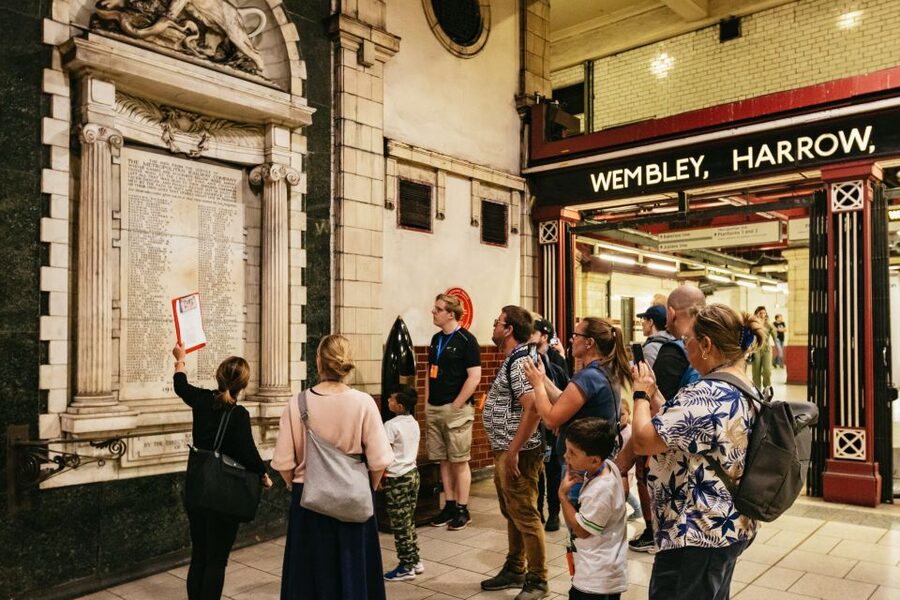
Reviewed · WALKING TOURS
London: Secrets of the London Underground Walking Tour
The most surprising thing about this tour is how much of London’s story sits beneath your feet. From Baker Street, one of the original 1863 stations, you follow the Tube’s change from steam power to electric trains, then hear how its tunnels served as shelters, storage rooms, and even an aircraft factory. I like the real station setting and the way guides such as John, Aaron, Angela, and Peter connect small details to the city above. The tour also gives you a useful look at stations you might otherwise rush through.
I especially like the audio headsets, which help you hear over trains and station noise, and the mix of transport, wartime, architecture, and ghost stories. The main drawback is that the tour does not promise entry into a disused station. You may see or discuss abandoned platforms, but this is a guided history walk through working stations, not a restricted-access underground expedition.
- Baker Street begins the story: Start at a station opened in 1863, part of the world’s first underground railway.
- The Tube had many lives: Learn how it carried passengers, sheltered Londoners during the Blitz, stored British Museum treasures, and supported wartime manufacturing.
- Ghost stories come with context: Hear about a Pharaoh’s daughter, a nun, and other reputed spirits linked to Underground stations.
- You ride the system as part of the tour: Bring a Zone 1 to 2 travel card or Oyster card because transport is not included.
- The London Transport Museum adds another layer: The route ends near Westminster after a visit to this transport-focused museum.
- Expect stairs and steady walking: The tour is not suitable for wheelchair users or people with reduced mobility.
Baker Street and the first Underground railway
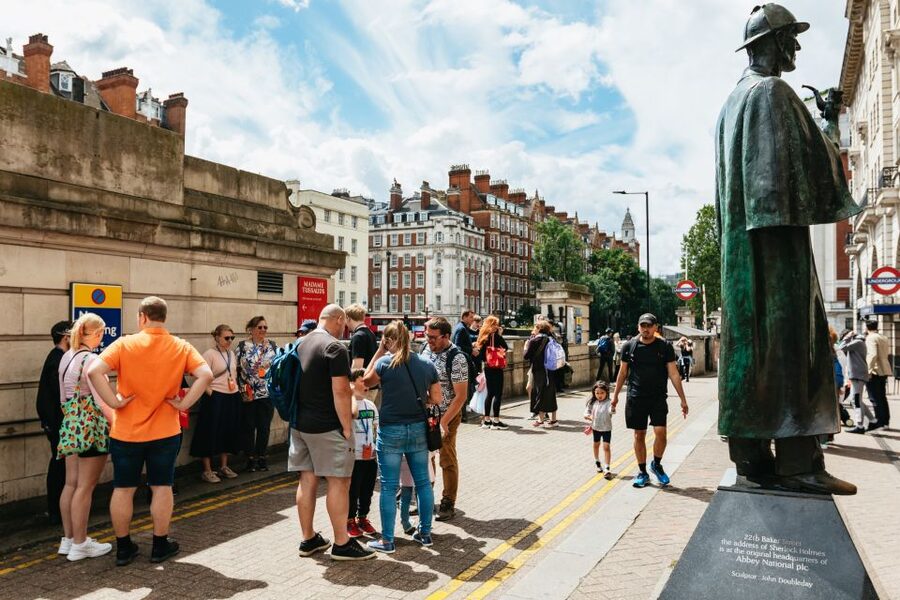
Meet your guide beside the Sherlock Holmes statue outside Baker Street Station. This is a sensible starting point, since Baker Street is not just a convenient central address. It was one of the original stops on the Metropolitan Railway, which opened in 1863 as the world’s first underground railway.
The opening stop gives the tour a strong sense of place. You are not beginning with a general talk about London transport in a hotel lobby. You are standing at one of the locations where the idea of underground rail travel took shape.
Your guide explains how the earliest tunnels were built and why the first Underground lines did not look or operate like the modern Tube. The story moves from steam-powered trains, which filled enclosed spaces with smoke and heat, to electrified rails that made a larger network possible.
This is where a good guide makes the difference. John is often praised for his clear, amusing delivery, while Aaron has a reputation for bringing the technical side of construction and the surrounding streets into the story. Angela and Peter have also led tours that balance facts with questions from the group.
The audio headset matters here. Baker Street is a busy station, and spoken explanations can easily disappear beneath arriving trains and general noise. The equipment has been described as especially useful underground, although one report noted crackling when using a headset above ground. Keep the volume at a comfortable level and stay close to the guide.
What the early tunnels reveal about London
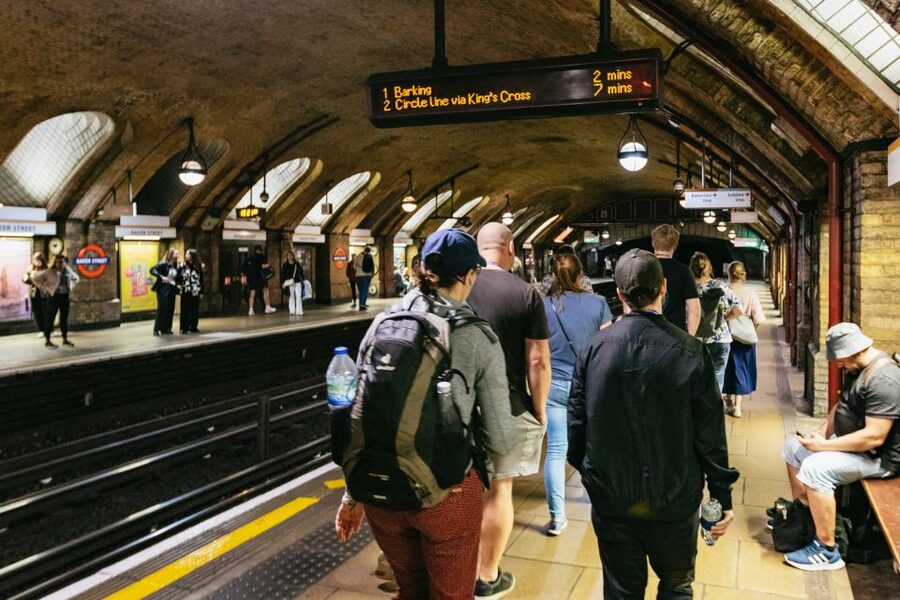
The Underground was built in stages, and its design reflects the tools and limits of each period. Your guide explains how the first sections were constructed, how the railway expanded, and how the word Tube came to describe a system that includes several different types of tunnel and line.
You will hear about the shift from cut-and-cover construction to deeper tube tunnels. The early method involved digging a trench, building the railway, and covering it again. Later lines could run farther below the streets, changing the shape of the network and allowing routes to pass beneath built-up parts of London.
The tour also looks at details that are easy to miss. Station architecture, old signs, leftover features, and parts of the famous roundel become clues to the system’s past. The red and blue symbol is now one of London’s most familiar marks, but its development reflects the need to make stations easy to identify in a crowded city.
This is a good tour for you if you already use the Tube but have never stopped to ask why stations look different from one another. It is also useful for first-time visitors, since the tour gives you a working understanding of the network rather than treating it as background scenery.
Do not expect a technical engineering lecture from start to finish. The route mixes construction with stories about people, war, design, transport policy, and the oddities of daily travel. That variety keeps the two and a half hours moving.
More Walking Tours in London:
- Magical London: Harry Potter Guided Walking Tour
★ 4.7 · 22,044 reviews - London: The Original Jack the Ripper Walking Tour
★ 4.7 · 7,833 reviews - Tour for Muggles The Ultimate Harry Potter Walking Tour in London
★ 5.0 · 4,684 reviews
Working stations, abandoned platforms, and what you can actually see
The tour includes discussion of more than 40 stations that have been abandoned or left out of regular service. These stations are part of the Tube’s character. Some closed because routes changed, some because nearby stations made them unnecessary, and others because passenger patterns shifted.
This is also the point where you should set your expectations. The tour does not promise that you will walk inside a disused station. Some people book it hoping for a behind-the-scenes visit to an abandoned platform and feel disappointed when the experience remains in public areas.
You may see a ghost station from the working network, hear where closed platforms once stood, or learn what remains hidden in plain sight. The value is in understanding how the system changed over time, not in gaining access to every sealed tunnel.
The guides make the most of ordinary stations. Angela has been praised for pointing out things long-time London residents had never noticed, while Aaron has added information about buildings and landmarks above ground. That is a useful feature of the walk: the Tube is treated as part of London, not as an isolated maze below it.
You will use public transport during the tour, with one listed transfer taking about 10 minutes. Service delays can affect the route. One tour had to change its plan because of train delays and closed lines, with the guide leading the group on foot to another station. That is worth remembering if you have a tight appointment afterward.
Ghosts, bodies, and the stranger side of the Tube
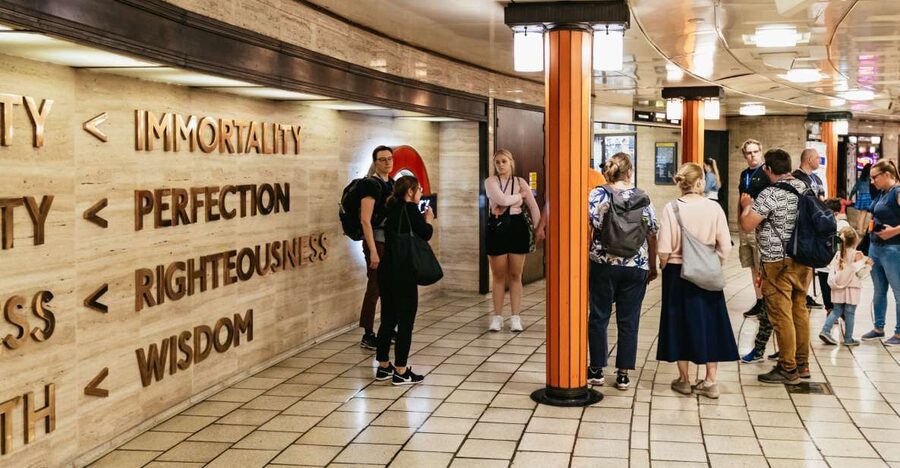
The Underground has no shortage of eerie stories, and this tour uses them as part of a broader history rather than letting them take over.
You hear about a station above the remains of 1,000 bodies, along with stations said to be haunted by the ghost of a Pharaoh’s daughter and by a nun. The stories are entertaining, but they also show how the Tube often encountered older layers of London during construction.
These tales work best when placed beside the practical history. Building railway lines meant cutting through old streets, burial grounds, buildings, and earlier infrastructure. The Underground did not replace London’s past. It often ran directly through it.
There is also a connection to Jack the Ripper in the wider route and storytelling. If you enjoy London’s darker history, you will find this part appealing. If ghost stories are not your thing, they make up only one part of the tour, alongside engineering, wartime use, station design, and transport history.
The tone depends on your guide. John is known for a humorous presentation, and several guides have been praised for making a large amount of information easy to follow. The best moments come when the guide can answer questions without losing the group or letting one subject drag on too long.
The Tube during the Blitz and the Second World War
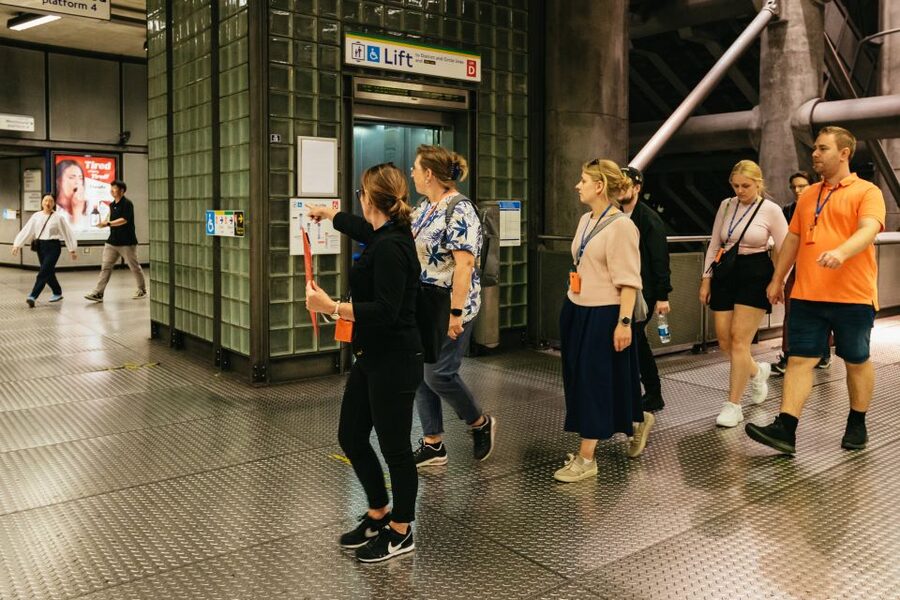
The Underground became much more than a railway during wartime. Your guide explains how stations were used as refuges during the Blitz, when Londoners sought protection from air raids.
That history is important because it changes the way you see crowded platforms. The Tube was not only a way to get across town. For many people, it became a place to sleep, wait, organize, and endure a dangerous night.
You also hear about other wartime uses, including an aircraft factory and storage for treasures from the British Museum. These details show how valuable the Underground’s enclosed spaces were. Tunnels and stations offered protection, secrecy, and room away from the surface.
The wartime section gives the tour emotional weight without requiring a separate museum visit. You are still moving through the network, but the ordinary signs and platforms take on a different meaning when you understand what happened there.
I find this part especially useful for visitors who have already seen London’s main war museums. It gives you a more specific link between national events and the places you are walking through. The information is also accessible to international visitors, and one non-native English speaker found the guide easy to understand.
More walks around London:
- London Jack The Ripper Guided Walking Tour
★ 5.0 · 3,131 reviews - London: Harry Potter Movies Walking Tour (Kids Go Free)
★ 4.7 · 3,071 reviews - Changing of the Guard Guided Walking Tour in London
★ 5.0 · 1,793 reviews - London: The Great British Rock and Roll Music Walking Tour
★ 4.9 · 1,783 reviews
Riding to the London Transport Museum
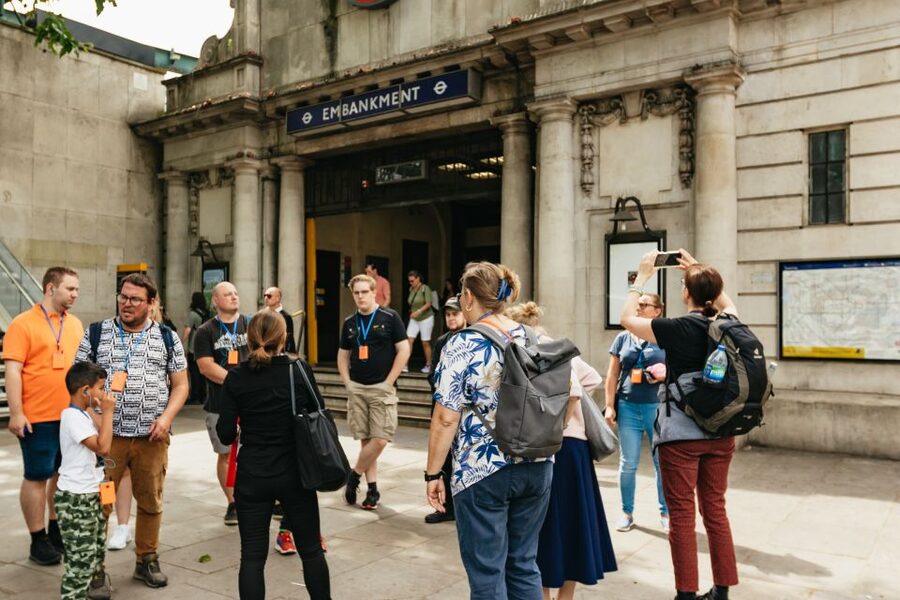
The route includes a short public transport ride and a visit to the London Transport Museum. Bring your own travel card or Oyster card. The tour price does not cover Underground fares, and a Zone 1 to 2 day travel card is recommended in the instructions.
You can also use another valid form of public transport payment, but do not assume your tour booking includes the ride. One participant was surprised by extra transport costs, and another found that using a bank card resulted in a much higher charge than using a proper travel pass.
The museum visit gives you a chance to see the Tube’s story presented through transport objects and displays rather than only through the guide’s narration. The experience listing specifies a visit, but it does not state separately whether museum admission is included in the $40 price, so check the booking details before you pay.
The visit also breaks up the walking. By this stage, you will have spent much of the tour moving through stations and streets, so the museum provides a change of pace. The final destination is 10B Bridge Street in Westminster, close to the London Transport Museum area and central sights.
You should not plan a major timed attraction immediately after the tour. The listed duration is two and a half hours, but train delays, questions, or a change of route can affect the finish.
Walking, stairs, and the practical pace
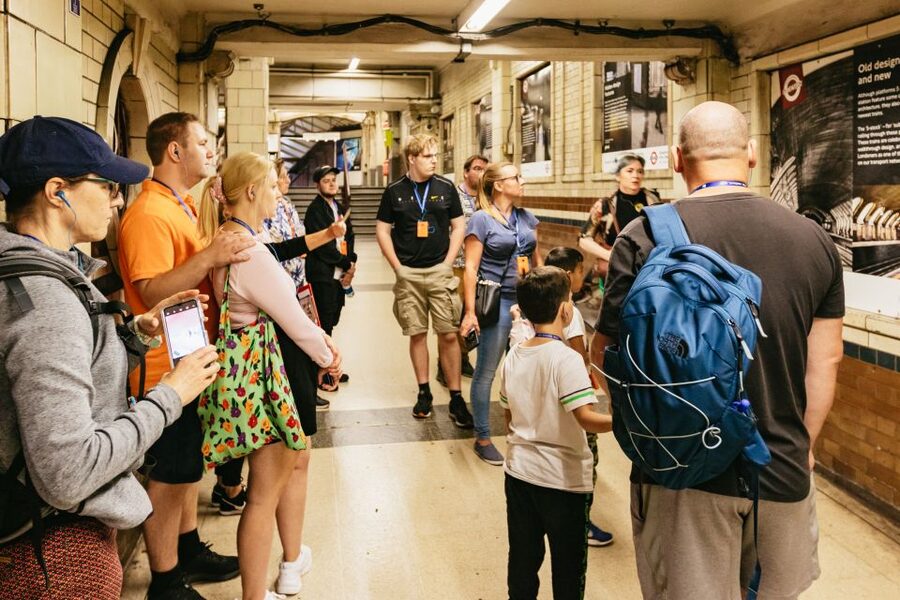
This is an active tour. You walk through stations, move between platforms, use public transport, and climb stairs. The description calls for a moderate amount of walking, and the Underground’s many steps make the experience unsuitable for wheelchair users and people with reduced mobility.
Leave large luggage and baby strollers behind. They are not allowed on the tour, and crowded stations make them awkward even if they were permitted.
The pace appears to be steady rather than athletic. One participant described the tour as well paced, while another thought it ran a little long. That difference makes sense: if you enjoy walking and asking questions, two and a half hours will pass quickly. If you prefer a short sightseeing stop, the amount of movement may feel demanding.
Wear comfortable shoes and bring water if you need it. Food and drinks are not included. London weather can also change quickly, and some of the route takes place above ground, so a light rain layer is sensible.
Group management is another quiet strength. Guides have been praised for keeping people together, waiting when someone needed a toilet, and answering questions from children and older participants. Still, you should remain alert around platforms and follow the guide’s instructions.
Is $40 a fair price?
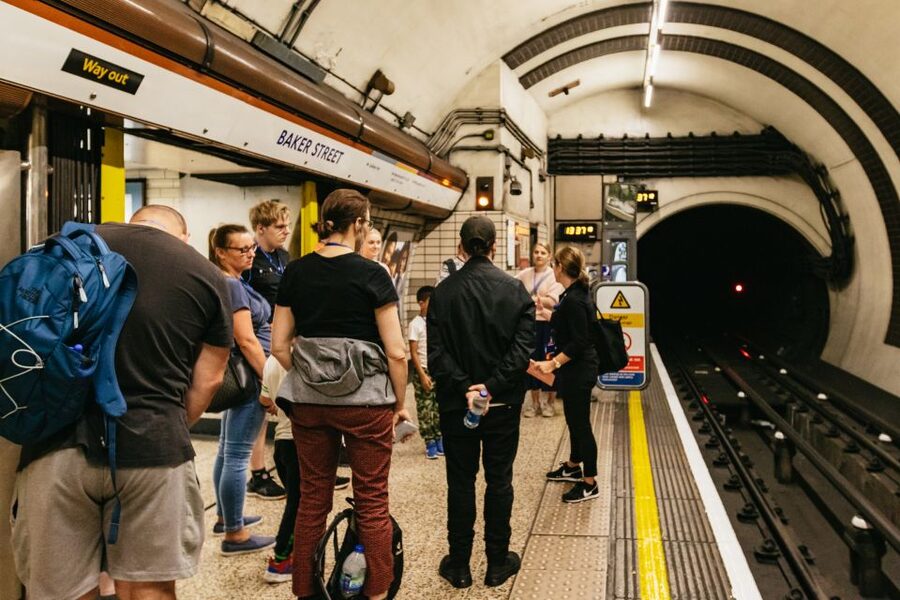
At $40 per person, this is not the cheapest way to ride the Tube. You still need to pay for public transport, and food and drinks are extra. The value depends on how much you want the interpretation, rather than simply the transport.
If you used the Underground on your own, you would see the same stations but miss the connections between them. You might notice the roundel, old signs, or a sealed platform, but you would not necessarily know why they are there. The guide turns a routine journey into a focused history lesson.
The audio headset adds practical value, especially in noisy stations. The strongest guides, including John and Aaron, are praised for being clear, funny, and able to answer questions. That can make the difference between a string of facts and a tour that stays with you.
The price is easier to justify if you care about London’s infrastructure, wartime history, architecture, ghost stories, or city planning. It is less convincing if your main goal is to enter restricted areas. This is not a secret tunnel access tour, and the disappointment about not entering a disused station is the clearest limitation.
The booking terms are flexible, with cancellation up to 24 hours before the start for a full refund and an option to reserve now and pay later. Check the available start times when booking, since the tour runs in English only.
Who should book this Underground walk?
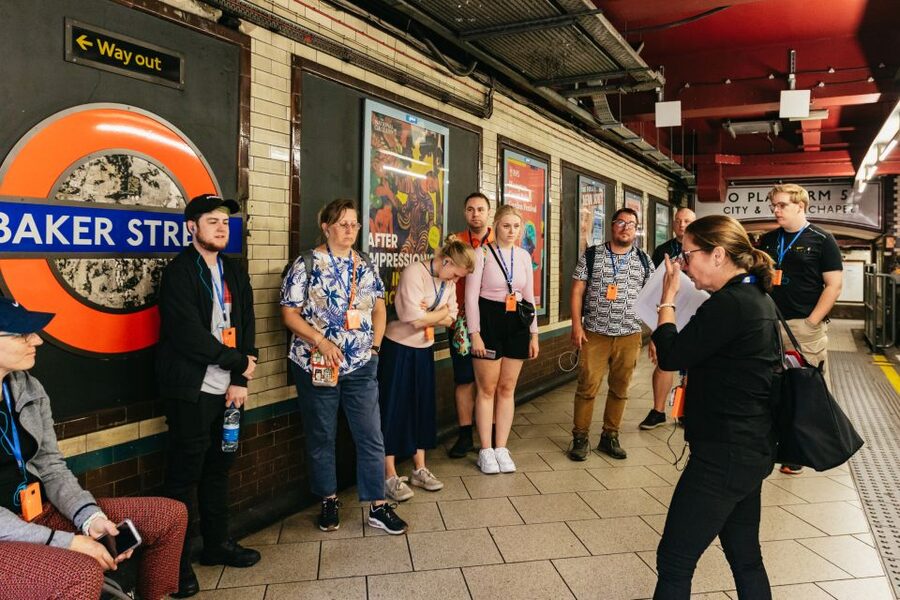
I would recommend it to first-time visitors who want something beyond the standard palace and museum circuit. It is also a good choice for London residents, frequent Tube users, and families with older children who enjoy machinery, puzzles, ghosts, or unusual city stories.
The tour suits you especially well if you like learning while walking. You will not sit through a long indoor lecture. You will look at actual stations, ride the network, hear stories in the places connected to them, and finish with a museum visit.
It may not suit you if you have reduced mobility, dislike stairs, need a guaranteed schedule, or expect access to sealed stations. It is also not the right pick for someone who wants a quiet, slow museum experience.
Should you book the Secrets of the London Underground tour?

Book it if you want to understand the Tube as part of London’s social and wartime story, not just as a way to get from one sight to another. The strongest reasons are the Baker Street start, the expert storytelling, the audio headsets, the unusual wartime details, and the chance to notice station features you would normally pass without a thought.
Bring a Zone 1 to 2 travel card or Oyster card, wear good shoes, leave luggage behind, and expect stairs. Most important, book with the right expectation: you are getting a lively, informed walking tour through working stations and connected museum exhibits, not guaranteed entry into abandoned tunnels.
FAQ
Where does the tour start?
Meet the guide beside the Sherlock Holmes statue outside Baker Street Station.
Where does the tour finish?
The tour finishes at 10B Bridge Street, Westminster, London SW1A 2JR.
How long does the tour last?
The stated duration is two and a half hours.
What language is the tour conducted in?
The live tour guide speaks English.
Is public transport included in the price?
No. You need to bring a public transport ticket, Zone 1 to 2 day travel card, or Oyster card. Public transport fares are not included.
Does the tour enter a disused Underground station?
Entry into a disused station is not guaranteed. The tour discusses abandoned stations and may show parts of the former network from public areas.
Is the tour suitable for wheelchair users?
No. The tour involves Underground stairs and moderate walking, and it is not suitable for wheelchair users or people with reduced mobility.
What is included in the booking?
A tour guide and an audio headset are included. Hotel pickup, hotel drop-off, food, drinks, and public transport are not included.
Just added in London
- 3-Day Stonehenge*, Glastonbury, Bath & the South West Coast Tour from London★ 4.5 · 32 reviews
- Private Guided Tour of Harry Potter Locations – English/ Italian★ 5.0 · 33 reviews
- Private Tour London Highlights, entries Westminster Abbey, The Tower of London★ 5.0 · 93 reviews
- 2 Hour Walking Tour from Buckingham Palace to Big Ben★ 5.0 · 32 reviews
- 30 Major London Attractions Walking Tour With Photos★ 4.5 · 51 reviews
- 007 Shadow Of Spectre★ 5.0 · 135 reviews
- Private Guided Tour of the British Museum – Tickets Included★ 5.0 · 193 reviews
- Bath, Avebury and Lacock Village Small-Group Day Tour from London★ 4.5 · 121 reviews
Walking Tours, compared.

Magical London: Harry Potter Guided Walking Tour
Read our review →
Underground Vaults Walking Tour in Edinburgh Old Town
Read our review →

Oxford University Walking Tour With University Alumni Guide
Read our review →
Edinburgh Castle: Guided Walking Tour with Entry Ticket
Read our review →
Edinburgh Castle Guided Walking Tour in English
Read our review →
Tour for Muggles The Ultimate Harry Potter Walking Tour in London
Read our review →
University and City Walking Tour with Alumni Guide
Read our review →Browse the lists this tour appears in