Reviewed · TOURS IN BRIGHTON
Brighton: Royal Pavilion Admission Ticket
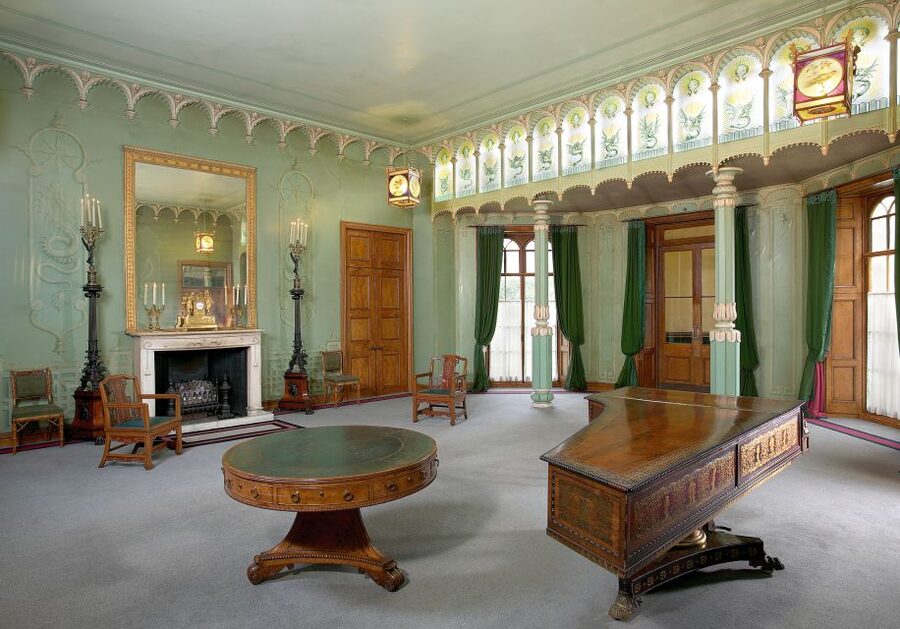
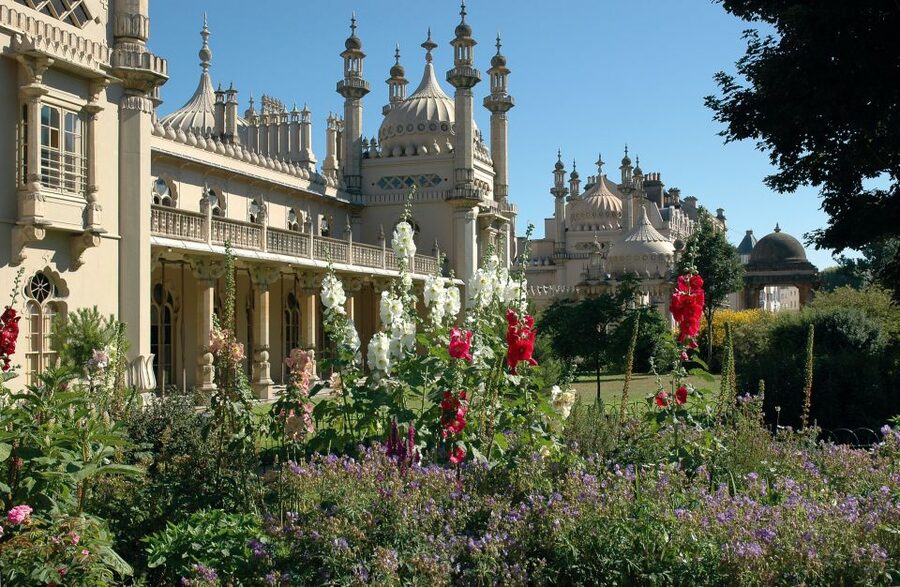
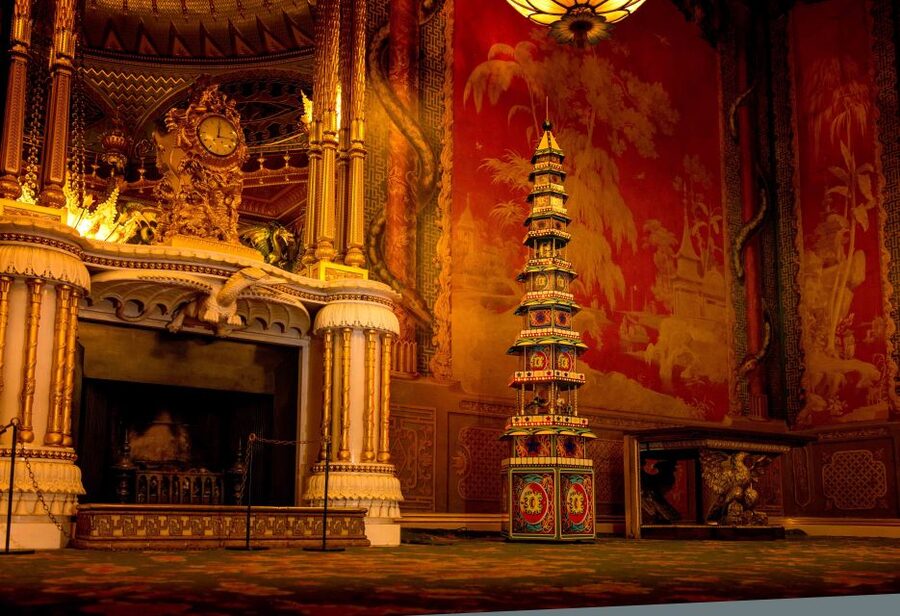
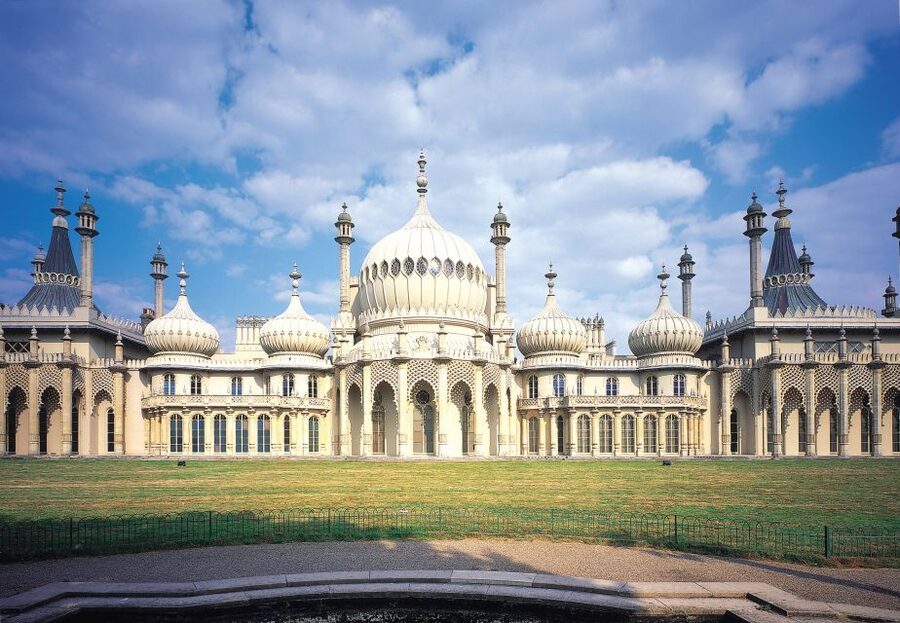
The Royal Pavilion is the sort of palace that makes you stop at the doorway. Its exterior is already unusual, but inside you find Chinese-inspired decoration, Indian-style forms, dragons, chandeliers, and color on a grand scale. This was George IV’s Brighton retreat, completed by architect John Nash and restored to its 1823 appearance.
I like the freedom of a one-day ticket, since you can move at your own pace, and I like the staff stationed in the rooms. They add useful detail about the furniture, royal routines, and the punishing heat of the old kitchen. The main drawback is practical: there is no passenger lift, so the upper floor requires stairs.
Key points
- A palace unlike any other in Britain: The Royal Pavilion combines Chinese-inspired interiors with Indian-style domes and a striking exterior.
- The Banqueting Room and Saloon: These are the visual high points, with lavish decoration, restored detail, and dramatic chandeliers.
- A working royal kitchen: The Great Kitchen shows how food preparation worked in difficult, hot conditions.
- More than a royal residence: The building later became a hospital for Indian soldiers during the First World War.
- A flexible day pass: You can explore the rooms, gardens, and exhibits without being tied to a guided group.
- Useful access warning: Stairs lead to the first floor, and mobility scooters and non-folding wheelchairs cannot enter.
Why Brighton’s Royal Pavilion feels so different
Many British royal residences aim for order, restraint, and inherited grandeur. The Royal Pavilion takes another route. George IV wanted a seaside retreat that felt exotic, theatrical, and far removed from ordinary Brighton.
The result is deliberately excessive. You move from a palace exterior with domes and minarets into rooms filled with Chinese-inspired decoration, carved dragons, painted surfaces, rich fabrics, and elaborate lighting. It is not a quiet building. Even visitors who know little about Georgian royal life can understand the appeal quickly: the rooms make their point before the audio commentary begins.
That unusual design is the main reason to visit. You are not simply ticking off another historic house. You are seeing a royal building shaped by fashion, fantasy, and a monarch who wanted his private retreat to look unlike the official palaces of London.
The pavilion also rewards a slower visit. At first, the colors and patterns compete for your attention. After a few minutes, you begin to notice smaller details in the ceilings, furniture, chandeliers, and wall decoration. Give yourself time to look up. Some of the best work is above eye level.
A few more things to do in Britain worth a look
- London: The London Eye Entry Ticket
★ 4.6 · 35,875 reviews - London: Tower Bridge Entry Ticket
★ 4.7 · 15,560 reviews - London: Westminster Abbey Entrance Ticket
★ 4.6 · 11,254 reviews
Entering through the Royal Pavilion Garden
The entrance is through the Royal Pavilion Garden, reached from Pavilion Buildings, New Road, or Church Street. This is a useful location in central Brighton, and the garden gives you a brief change of pace before the interior begins.
The garden is not the main event, but do not hurry through it. It helps you see the pavilion as a complete royal setting rather than just a collection of rooms. The open space also gives you a chance to study the building from outside and understand how unexpected it looks beside the surrounding city.
Once inside, the visit follows a planned route through the principal rooms and upper-floor spaces. You are free to stop, read, listen, and ask questions. This works well for mixed groups because one person can spend time with the architecture while another focuses on royal objects or social history.
A one-day admission ticket is particularly useful here. You do not need to rush through every room in one pass. If you want a closer look at the Banqueting Room or Saloon, you can take your time rather than follow the pace of a formal tour.
The Banqueting Room makes the strongest first impression
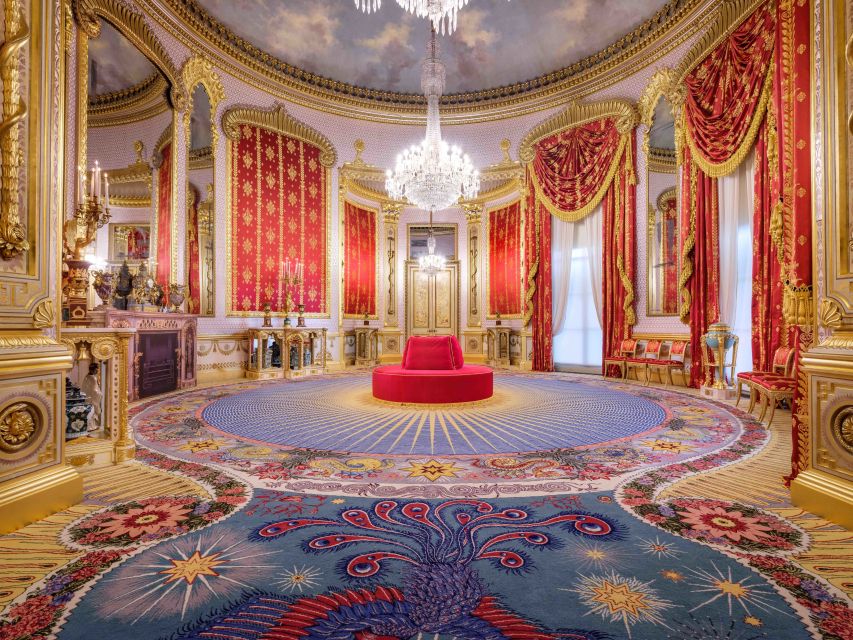
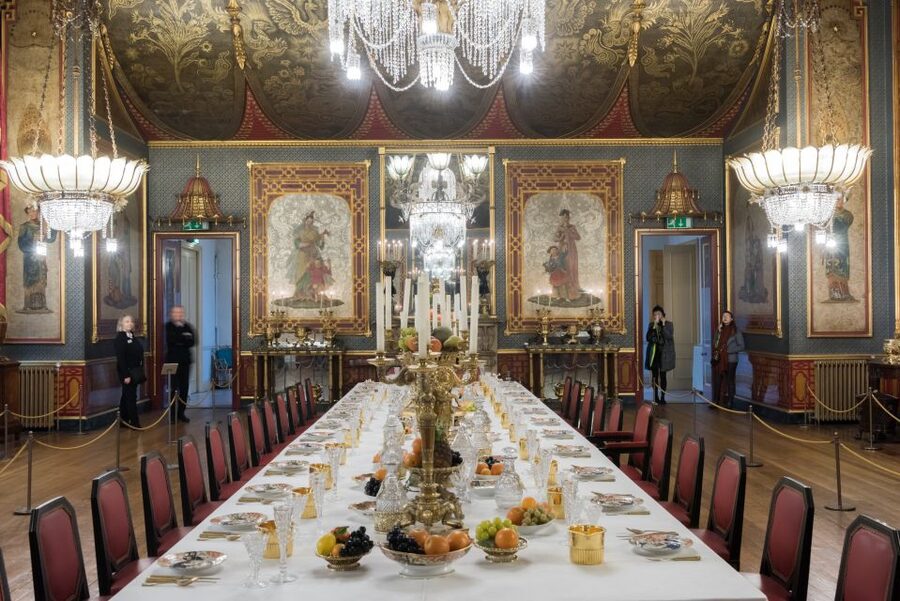
The ground-floor staterooms contain the visual center of the visit. The Banqueting Room is the room that tends to stop people in their tracks, and it earns that reaction through scale and decoration rather than subtlety.
Look at the ceiling, the lighting, and the repeated animal motifs. The room was designed to impress royal diners and their company, not to make anyone feel at home. That distinction matters. The pavilion was a display of power and taste, and the Banqueting Room shows how far that display could go.
The room is also a good place to use the audio guide or speak with a room steward. The objects make an immediate impression, but the historical explanation helps you understand how the room functioned. You learn more by asking about the furniture and ceremonial use than by simply taking in the colors.
Cameras are not allowed inside, so plan to enjoy this part without taking photographs. That may disappoint anyone hoping to document the decoration, but it does encourage you to look carefully rather than view the rooms through a phone screen.
The Music Room and Saloon reward a slow look
The Music Room continues the pavilion’s love of spectacle. Its decoration is especially effective when you look at the room as a whole, then examine the smaller details. Chandeliers, ceilings, furniture, and wall surfaces all contribute to the effect.
The recently restored Saloon is another major highlight. Restoration work gives you a clearer sense of what the rooms were intended to look like in the 1820s. The work is not just cosmetic. It helps recover the relationship between color, light, furniture, and architectural detail.
You may notice that restoration is still ongoing in parts of the building. That is not a serious problem, and it provides a reminder that historic interiors require constant care. The pavilion’s appearance depends on specialists maintaining surfaces and objects that are easily damaged by time, visitors, and changing conditions.
The room stewards are valuable here. Staff members are available to answer questions, and one named Pav has been especially helpful with the building’s past. If you enjoy asking how a room was used or how a particular object was restored, make use of the staff rather than relying only on written labels.
Same city, a very different afternoon:
- From London: Harry Potter Warner Bros Studio Tour
★ 4.7 · 26,588 reviews - Magical London: Harry Potter Guided Walking Tour
★ 4.7 · 22,044 reviews - London: Madame Tussauds London
★ 4.6 · 20,915 reviews - Stonehenge, Windsor Castle, and Bath from London
★ 4.5 · 18,662 reviews
The Great Kitchen shows the hard work behind royal display
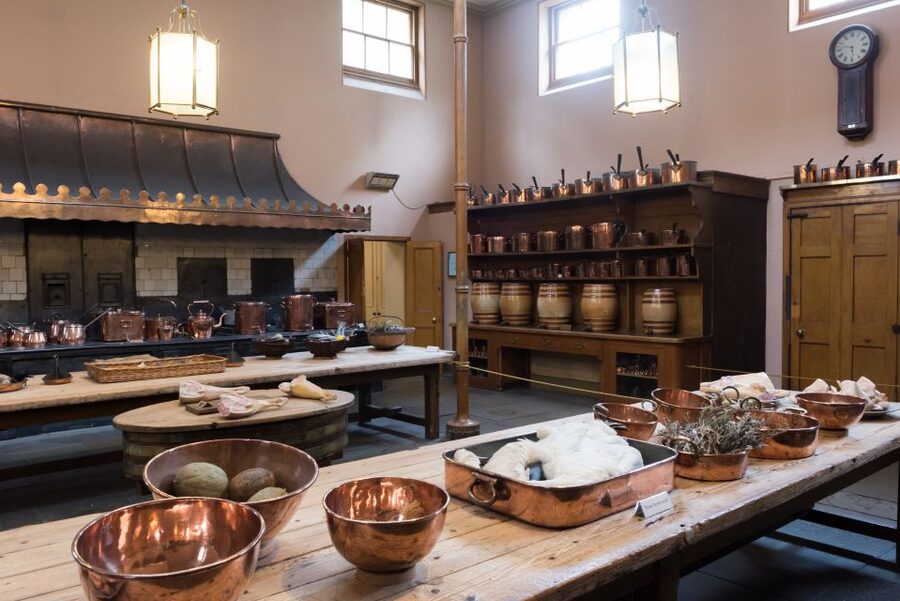
The Great Kitchen offers a welcome change from the polished staterooms. Here, the focus shifts from royal spectacle to the people who made royal meals possible.
The kitchen also helps explain the working conditions behind the palace’s formal dinners. Heat was a serious issue, especially for the staff who had to prepare food in extreme conditions. A room steward can explain how the kitchen operated and how demanding the work was.
I like this part of the visit because it gives the pavilion a human scale. The Banqueting Room tells you how the royal household wanted to be seen. The kitchen shows the labor required to support that image. You get a better understanding of the building when you see both ends of the process.
Do not assume the kitchen is a minor stop. It is one of the places where a short conversation with staff can add the most value. The architecture may be less theatrical than the Saloon, but the practical details are memorable.
Queen Victoria’s bedroom and the upper rooms
The route continues upstairs to rooms including Queen Victoria’s bedroom. These spaces add another layer to the building because they show how royal use changed over time.
George IV’s taste dominates the pavilion, but Queen Victoria’s connection to the building was different. Seeing her bedroom helps you move beyond the palace as a single royal fantasy and consider how later members of the royal family used, viewed, or altered it.
The upper floor is reached by stairs. There is no passenger lift, so this part may not be possible for anyone unable to climb stairs. An audiovisual presentation in the AV room shows the first floor for visitors who cannot reach it, which is a useful alternative, though it is not the same as seeing the rooms in person.
Manual wheelchairs may be available on arrival, but they cannot be reserved in advance. Mobility scooters are not permitted inside, and non-folding wheelchairs are also excluded. If access is important to your visit, check these limits before booking and speak with staff when you arrive.
The pavilion’s life as a First World War hospital
The Royal Pavilion has a later history that can be easy to miss if you focus only on the royal interiors. During the First World War, it served as a military hospital for Indian soldiers.
This chapter changes the meaning of the building. A palace created for royal pleasure became a place of medical care during wartime. The contrast is striking, and it reminds you that historic buildings often survive because they adapt to new needs.
Look for the information about this period as you follow the route. It adds depth without turning the visit into a military museum. You still see the royal rooms, but you also understand that the pavilion continued to serve the city long after its original royal purpose had faded.
For many people, this is the most important historical context beyond the decoration. The pavilion is not only an extravagant residence. It has also been a civic building, a hospital, and a place tied closely to Brighton’s public life.
Audio guidance and room stewards
You can use an audio guide to make sense of the rooms and furniture. It explains the design, the objects, and aspects of George IV’s lifestyle. This is helpful because the building’s appearance can overwhelm the historical details.
The audio guide also lets you control the pace. You can listen closely in one room and move more quickly through another. If you are visiting with children or friends who have different interests, that flexibility is useful.
Room stewards provide a more personal source of information. They are positioned in the rooms and can answer questions about the building’s use, restoration, and objects. Several people find the conversations as useful as the formal audio material, especially in the kitchen and the main staterooms.
The best approach is to use both. Start with the audio guide for structure, then ask staff about anything that catches your attention. You will get more from the visit than you would by reading every label in isolation.
How much time and money should you allow?
Admission costs about $26 per person, with a one-day pass. I consider that fair value if you care about architecture, royal history, interiors, or restoration. The pavilion offers more than a quick photo stop, and the ticket covers the building’s major rooms, exhibits, and garden access.
The value improves if you take your time. A hurried visit focused only on the Banqueting Room and Saloon will still be memorable, but it leaves out the kitchen, upper rooms, hospital history, and smaller details that make the pavilion more than a decorative oddity.
You are not buying a guided group tour with a fixed script. You are buying access to a building where you can set your own pace, use the audio guide, and speak with staff. That makes the ticket a good match for independent visitors.
The attraction can become harder to navigate when large school groups are moving through the same rooms. If you prefer a quieter visit, choose a less crowded time if your schedule allows. The one-day validity gives you some flexibility, but availability and starting times should still be checked when booking.
Free cancellation is available up to 24 hours in advance, and you can reserve now and pay later. Those terms help if your Brighton plans are not fully fixed.
Who will enjoy the Royal Pavilion most?
I would recommend this visit to anyone who likes unusual architecture and interior design. The building is also a strong choice for first-time visitors to Brighton because it is distinctive, central, and closely tied to the city’s identity.
Families can enjoy it too, especially children who respond to dragons, unusual ceilings, bright colors, and stories of royal life. Children under 14 must be accompanied by someone over 16, so plan your group accordingly.
History fans will appreciate the building’s several lives: royal retreat, civic building, military hospital, and preserved historic site. Art and design enthusiasts may find the interiors more rewarding than the palace’s political history.
It is less suitable for anyone who dislikes stairs, cannot manage a non-folding wheelchair restriction, or wants to take photographs inside. The no-camera rule is firm in the supplied visitor information, so bring your eyes rather than your camera.
Should you book the Royal Pavilion ticket?
Yes, if you want to see a Brighton landmark from the inside rather than admire its unusual outline from the street. The Banqueting Room, Music Room, restored Saloon, Great Kitchen, and Queen Victoria’s bedroom give you a full visit, while the First World War hospital story prevents the palace from feeling like a frozen display.
Book it if you enjoy bold design, royal residences, restoration, or local history. Allow enough time to listen, ask questions, and study the ceilings. If stairs are a concern, check the access arrangements first and plan to use the AV presentation for the upper floor.
At around $26, this is a sensible Brighton admission for a building you will not confuse with any other palace in Britain. It is wonderfully strange, carefully maintained, and best appreciated at a relaxed pace.
FAQ
Where is the entrance to the Royal Pavilion?
The entrance is through the Royal Pavilion Garden. You can access the garden from Pavilion Buildings, New Road, or Church Street.
How long is the Royal Pavilion ticket valid?
The admission ticket is valid for one day. Starting times and availability should be checked when booking.
What rooms can I see inside?
The route includes ground-floor rooms such as the Banqueting Room, Music Room, recently restored Saloon, and Great Kitchen. Upstairs, you can see rooms including Queen Victoria’s bedroom.
Is the Royal Pavilion wheelchair accessible?
The building has access limits. There is no passenger lift, and visitors unable to climb stairs can watch a video of the first floor in the AV room. Some manual wheelchairs may be available on arrival, but they cannot be pre-booked.
Are mobility scooters allowed inside?
No. Mobility scooters are not allowed inside the building, and non-folding wheelchairs are also not permitted.
Can I take photographs inside?
No cameras are allowed according to the visitor information.
Can I bring food, drinks, luggage, or pets?
Food and drinks, luggage or large bags, and pets are not allowed. Assistance dogs are permitted.
Can children visit without an adult?
Children under 14 must be accompanied by a person over 16.
Just added in Britain
- Cornwall: Guided Seal Safari by Boat★ 4.7 · 63 reviews
- Best of Belfast Walking Tour★ 5.0 · 399 reviews
- Gothic Glasgow Walking Tour★ 5.0 · 448 reviews
- Walk the Secrets of the Titanic★ 5.0 · 391 reviews
- Belfast Political Tour-Conflicting Stories Walking Tour★ 4.5 · 459 reviews
- Afternoon Tea Cruise in North Yorkshire★ 5.0 · 388 reviews
- Journey Through Winchester’s Past★ 5.0 · 341 reviews
- Show Tickets for Viva Decades Rewind! Music of the 80s, 90s & Now★ 4.5 · 386 reviews
Tours in Brighton, compared.