
Reviewed · FOOTBALL STADIUM TOURS
London: Wembley Stadium Guided Tour
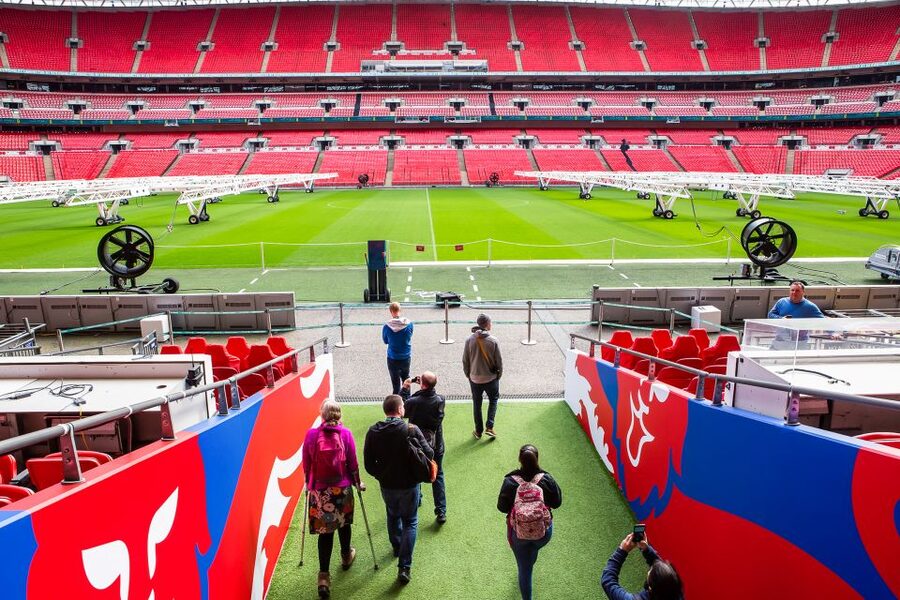
Wembley Stadium is at its best when it is empty. You can hear the scale of the place, take in the full sweep of the 90,000 seats, and walk the same route used by players before major matches. The players’ tunnel and trophy winners steps are the emotional high points, while the Crossbar Exhibition adds a fine piece of football history: the bar from England’s 1966 World Cup final.
I like the tour for two clear reasons. First, it gets you into working areas that a normal stadium visit cannot show, including the dressing rooms, press room, royal seats, and pitchside. Second, the guides give the building a human voice. Daniel, Jason, Paul, Richard, and others have been praised for mixing facts with jokes and questions. The main consideration is that the guided talk lasts about 75 minutes, though you should allow two hours overall, and routes can change or be cancelled at short notice.
Key points before you book
- The 1966 crossbar: See an actual piece of Wembley football history in the Crossbar Exhibition.
- A proper behind-the-scenes route: Visit the dressing rooms, press conference room, players’ tunnel, pitchside, and trophy presentation steps.
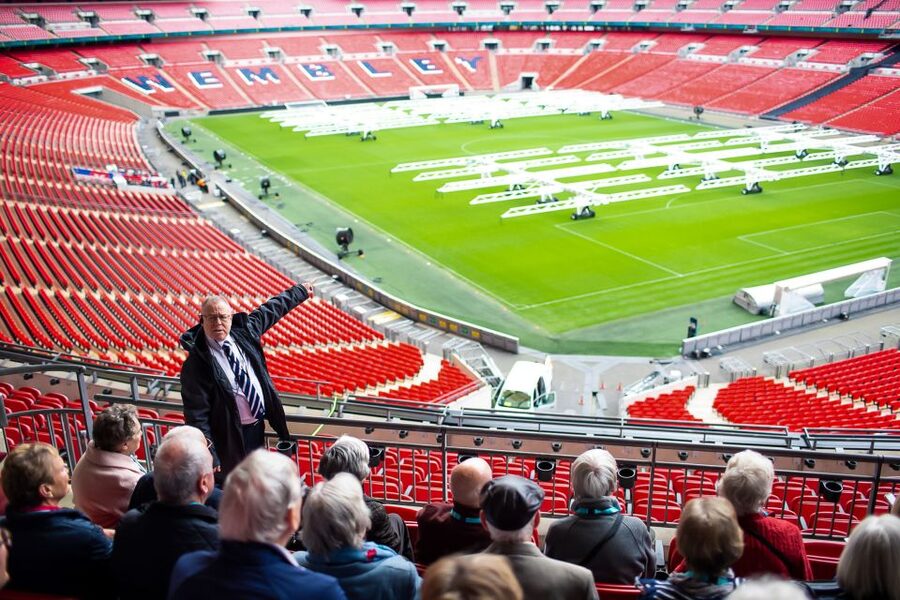
- Great empty-stadium views: Sit at different levels and see the full size of the 90,000-seat arena without a match-day crowd.
- A guide-led experience: English-speaking guides such as Daniel, Jason, Paul, and Richard bring stories, trivia, and good humor.
- Easy public transport: Reach the stadium from Wembley Park, Wembley Stadium, or Wembley Central stations.
- Good family value: Children can take part in questions, and football fans are not the only people who enjoy the tour.
Why Wembley feels different when the seats are empty

A stadium tour can be a thin experience if it amounts to a few corridors and a quick photograph. Wembley gives you more to work with. This is the United Kingdom’s largest sports and music venue, with room for 90,000 people and a history that reaches from the British Empire Exhibition of 1924 to modern football finals and sell-out concerts.
The empty arena is the first surprise. On match day, the noise and crowd hide the physical scale. During this tour, you can sit in the stands, look across the entire bowl, and understand how far the opposite side is from you. The silence gives you time to take photographs and notice the design rather than simply follow the crowd.
You also get a useful contrast between old and new Wembley. The historic Twin Towers are part of the stadium’s story, while today’s giant arch gives the current building its unmistakable outline. The tour explains the stadium’s origins and rebirth without turning the whole visit into a lecture.
More football in London:
- London: Emirates Stadium Entry Ticket and Audio Guide
★ 4.7 · 5,513 reviews - London: Chelsea Football Club Stadium and Museum Tour
★ 4.8 · 4,576 reviews - Chelsea FC Stadium Tours and Museum
★ 5.0 · 1,908 reviews
Meeting Bobby Moore before entering the stadium
The meeting point is on level 1, directly behind the statue of Bobby Moore. Bring your voucher to the ticket desk at the entrance, exchange it for your tickets, and then make your way to the tour meeting point.
You can reach level 1 by walking up two flights of stairs. An external lift is available to the left of the Club Wembley entrance, which makes the visit wheelchair accessible. If you have mobility concerns, allow a little extra time to find the lift rather than assuming the main staircase is your only route.
The Bobby Moore statue is a fitting place to begin. Moore captained England during the 1966 World Cup win, one of the central moments covered during the tour. Starting beside him gives the visit a clear sense of place before you even enter the main route.
The stadium has three useful rail connections:
- Wembley Park on the Jubilee and Metropolitan lines
- Wembley Stadium on the Chiltern line
- Wembley Central on the Bakerloo line and London Overground
There are more than 3,000 car parking spaces across several car parks, but public transport is the simpler choice for most people visiting London.
Dressing rooms, corridors, and the press room

The first major part of the route takes you away from public seating and into the areas normally used by teams and officials. The dressing rooms are a favorite stop because they turn a huge public venue into a working football building. You can picture the quiet before a final, the last instructions from a manager, and the change from ordinary visitor to match-day player.
The exact dressing-room setup can vary with stadium use and availability, so do not expect every visit to look identical. Still, the chance to enter this restricted area is one of the main reasons to choose a guided stadium tour instead of simply visiting Wembley for a match or concert.
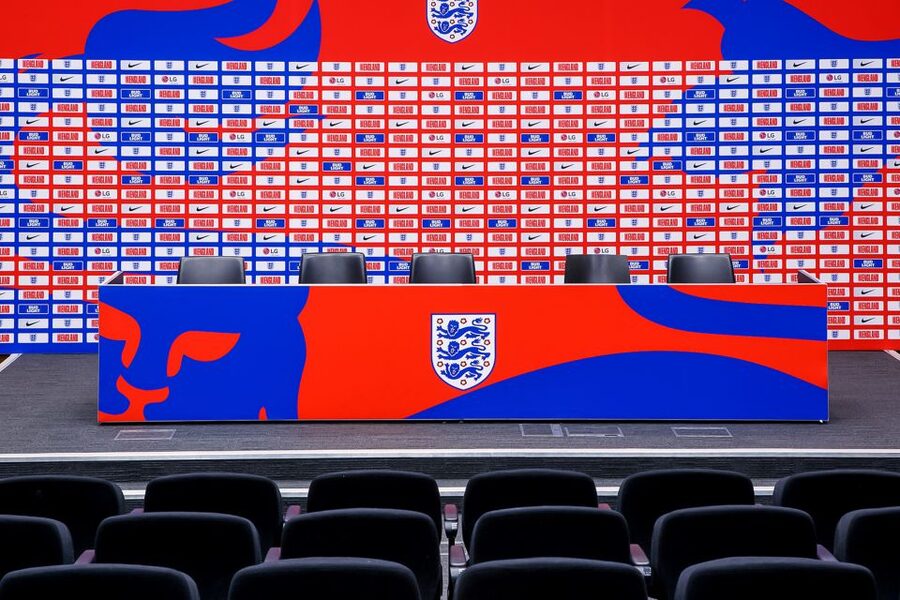
The press conference room adds another angle. Here, managers and players face questions after the biggest wins and hardest defeats. You can see the space where sporting moments are explained to the public, rather than only watching them unfold from the stands.
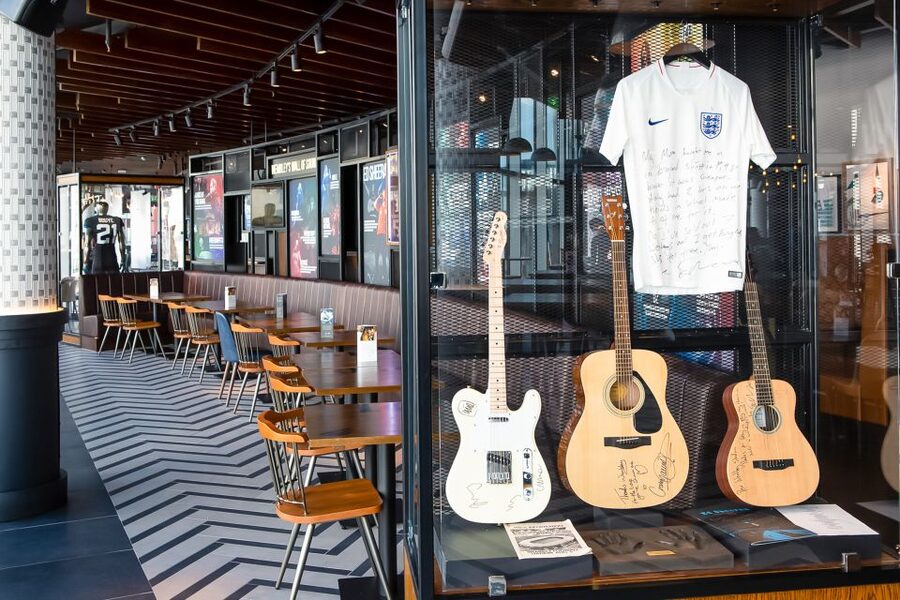
The route also includes corridors decorated with photographs and memories from Wembley’s past. These displays help connect the building to real events: England’s 1966 victory, UEFA Champions League triumphs, the annual Emirates FA Cup Final, and major concerts. The photographs are not just decoration. They give you a quick visual guide to the stadium’s role in British sport and entertainment.
Walking the players’ tunnel to pitchside
The players’ tunnel is the tour’s most natural dramatic moment. You walk the same short route that players use before reaching the field, then emerge at pitchside with the seats rising around you.
The route does not turn you into a footballer, but it gives you a better sense of the ritual surrounding a match. The tunnel is enclosed and serious. Pitchside is open, bright, and enormous. That change in space is what makes the stop work.
You will have time for photographs, though the tour remains guided rather than completely free-form. Several guides have been praised for involving children and inviting questions, which helps keep the tunnel and pitchside stops from becoming silent photo queues.
One point to keep in mind: access and route details can change. Stadium operations, events, or other bookings may affect which areas are open. The tour is built around the main Wembley spaces, but no stadium can promise every room on every day.
A few more things to do in London worth a look
- Magical London: Harry Potter Guided Walking Tour
★ 4.7 · 22,044 reviews - Stonehenge, Windsor Castle and Bath Full Day Guided Tour
★ 4.5 · 5,346 reviews - London Jack the Ripper Guided Tour with Ripper-Vision
★ 4.5 · 4,840 reviews - Original Harry Potter Locations Tour – Guided Tour of London
★ 5.0 · 4,117 reviews
The trophy steps and royal seats
The famous trophy winners steps offer one of the best photo opportunities on the route. These are the steps used when winners receive trophies and medals, so the stop connects directly to the ceremony that follows a major final.
You can also see the royal seats and Club Wembley areas. This gives you a look at how different parts of the stadium serve different audiences. From the royal seating and box views, the field takes on a different character than it does from the ordinary stands or from pitch level.
I like this part because it moves beyond football nostalgia. You are not only seeing where players change and walk out. You are also seeing how Wembley accommodates ceremonies, dignitaries, corporate groups, and huge public events within one building.
The tour has enough pauses for photographs, but you should not expect unlimited time at every location. If you have a long shot list, choose your priorities early: the tunnel, pitchside, trophy steps, and wide stadium view are the most valuable stops.
The Crossbar Exhibition and Walk of Legends
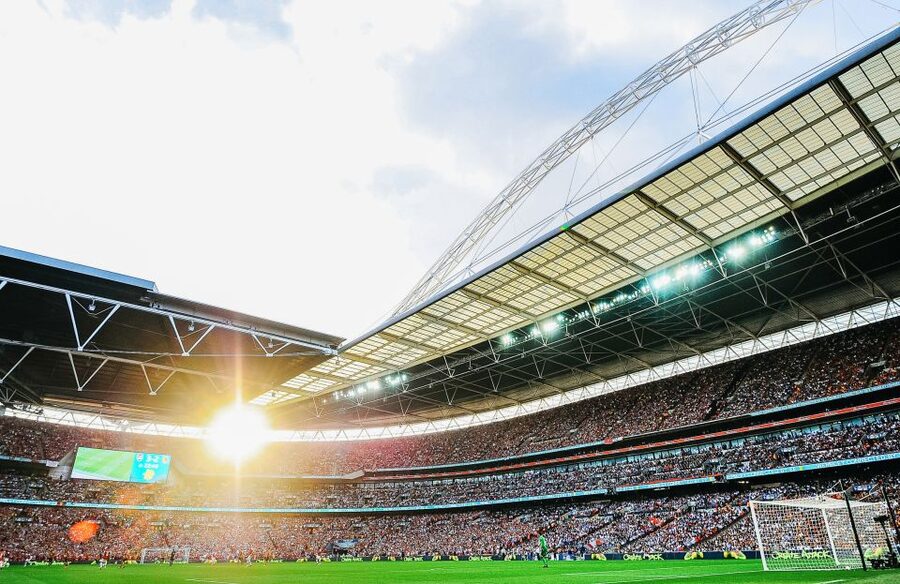
The Crossbar Exhibition holds the crossbar associated with the 1966 World Cup final. It is a small object with an outsized place in football memory, and it gives the tour a physical link to the match rather than another wall of photographs.
The Walk of Legends adds names, images, and moments from the stadium’s past. Together, these exhibits explain how Wembley grew from its early twentieth-century beginnings into the modern venue you see today.
This is also where the tour works for people who are not serious football fans. The building has hosted music as well as sport, and the stories include famous concerts and other cultural events. If you are visiting with a partner, parent, or child who does not follow football closely, these parts offer a wider entry point.
The history is presented through objects, displays, and stories rather than a long museum-style visit. That keeps the pace moving, but anyone wanting a full archive of Wembley memorabilia may find the tour selective.
The guide makes or breaks the pace
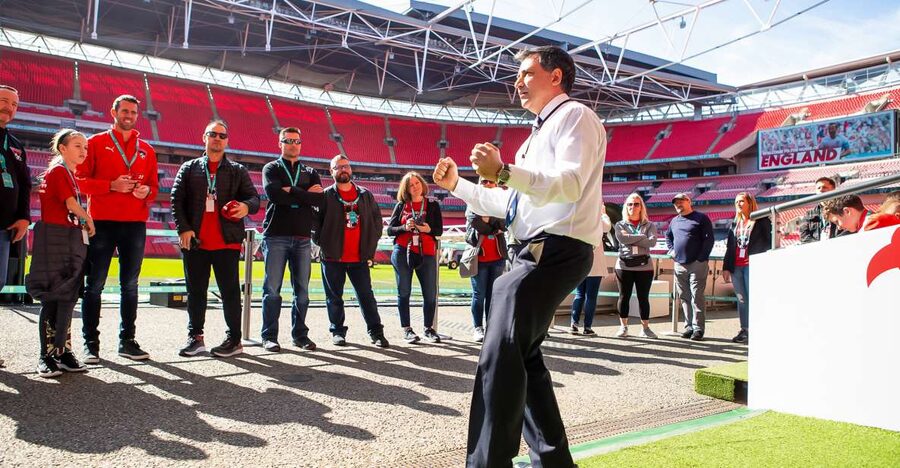
The tour is conducted in English by a live guide. The best guides turn a large group into a shared experience, and this is where names such as Daniel, Jason, Paul, Richard, Dominic, Jonathan, and Rob come up often in praise from visitors. Their reported strengths are clear: strong facts, easy humor, questions for children, and a willingness to answer things beyond a fixed script.
You should not book expecting a single named guide, since guide assignments can change. But the format gives you something an audio guide cannot: a person who can adjust the pace, explain a detail again, and respond when someone asks about a particular team or event.
A downloadable app-based guide in English is also available. Scan the QR code with your own device for extra digital content and facts. It is useful if you want more information after the live tour, but remember to bring a charged phone and headphones if you prefer listening privately.
The guided section lasts about 75 minutes. Allow two hours for the complete visit, including meeting, movement between areas, photographs, and time with the stadium displays. That makes this a manageable half-day addition to a London itinerary rather than a full-day commitment.
Is $33 good value for two hours?
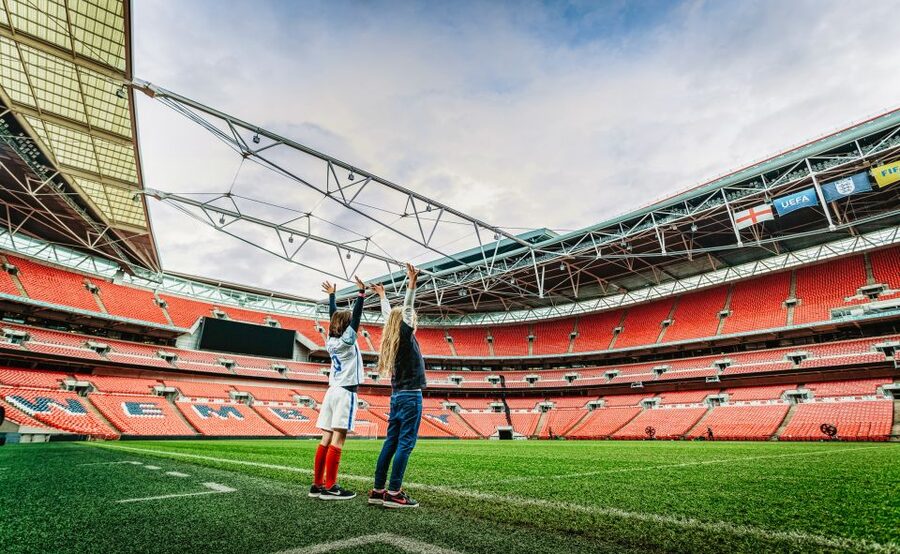
At about $33 per person, the tour is not a bargain-basement attraction, but it offers more than a basic stadium look. You are paying for a live guide, restricted areas, exhibits, several viewing points, and access to the story behind one of England’s most famous venues.
The value is strongest if you care about football, major concerts, stadium design, or British sporting history. It is also good for a family visit, especially if your child wants to see the dressing rooms and walk through the tunnel. A football fan may consider the 1966 material and trophy steps worth the price alone.
The value is less certain if you only want a quick photograph outside Wembley or if your London schedule is already crowded. The tour takes two hours, and the stadium lies outside central London’s main sightseeing cluster. You will need to budget travel time to Wembley as well as the ticket price.
There are no food or drink inclusions, so plan to eat before or after. Extra photo products may also be sold separately. One visitor reported being quoted one price for a photo and later charged more, so check the cost carefully before ordering optional prints.
Practical details that make the visit smoother
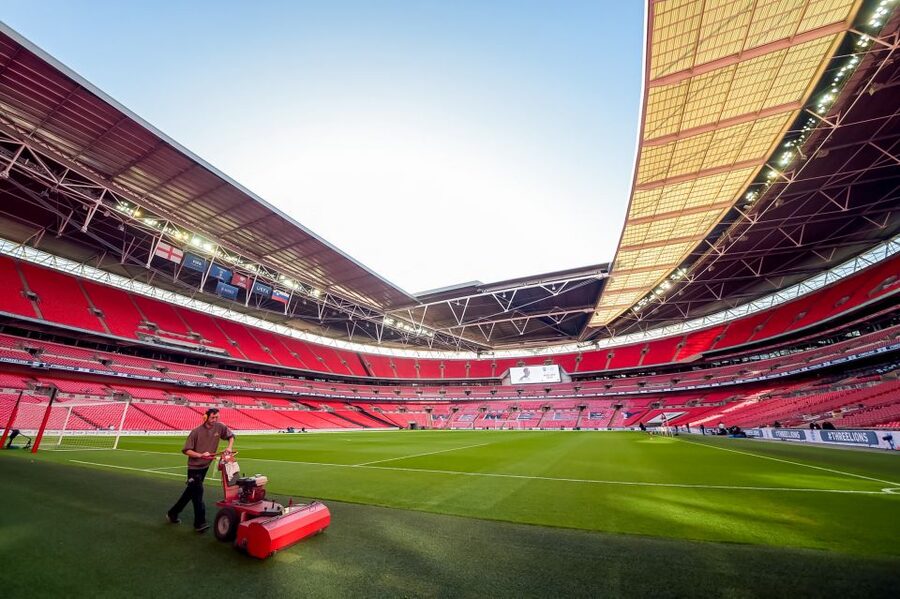
Bring your passport or ID card. You will need your voucher at the ticket desk, where it is exchanged for entry tickets.
Book a starting time that leaves room for transport delays. The tour is subject to availability, and tours can be altered or cancelled at short notice. Free cancellation is available up to 24 hours before the visit, and you can reserve now and pay later if you want to keep your plans flexible.
The route is wheelchair accessible through the external lift. The meeting point is behind the Bobby Moore statue on level 1, so do not wait at a different stadium entrance once you arrive.
Wembley is easy to reach by rail, but the three stations are served by different lines. Check your route carefully before leaving central London. If you are driving, the stadium has more than 3,000 parking spaces spread across several car parks.
Who will enjoy this most?
You should book this if you want the parts of Wembley that a match ticket does not show. Football fans will get the most emotional value from the tunnel, dressing rooms, trophy steps, 1966 display, and stories about the FA Cup and Champions League.
Families are also well served. Children can take part in questions, and the tour does not rely on technical football knowledge. The guides’ humor helps keep the pace lively, especially for younger visitors.
You do not need to be a devoted football supporter. The concert history, stadium design, royal seating, and empty-arena views give non-fans plenty to notice. One of the strengths of the visit is that a person accompanying a football fan can still find a reason to enjoy it.
I would skip it only if you dislike guided tours, have very little time in London, or mainly want to see a match. If you prefer to set your own pace, the group format may feel restrictive in places, even though there is time for photographs.
Should you book the Wembley Stadium Tour?
I would book this tour if Wembley is part of your London plans or if you have a football-loving child, partner, or parent with you. The combination of restricted areas, the empty 90,000-seat arena, the 1966 crossbar, and an entertaining English-speaking guide gives you a fuller sense of the place than an outside visit can provide.
Choose your date with some flexibility because routes can change. Once inside, focus on the players’ tunnel, pitchside view, trophy steps, and Crossbar Exhibition. At about $33, it is a fair price for a two-hour visit that works for serious football fans and curious first-time visitors alike.
FAQ
How long does the Wembley Stadium Tour last?
You should allow two hours for the complete visit. The guided portion lasts approximately 75 minutes.
What language is the tour conducted in?
The live tour guide speaks English. An English-language app-based guide is also available through a QR code.
What areas can I visit inside Wembley Stadium?
The route includes the dressing rooms, press conference room, players’ tunnel, pitchside area, trophy winners steps, royal seats, and selected stadium viewing areas. It also includes the Crossbar Exhibition and Walk of Legends.
Where does the tour meet?
The meeting point is on level 1, directly behind the Bobby Moore statue. Bring your voucher to the ticket desk at the entrance to exchange it for tickets.
How do I reach Wembley Stadium by public transport?
You can use Wembley Park Station on the Jubilee and Metropolitan lines, Wembley Stadium Station on the Chiltern line, or Wembley Central Station on the Bakerloo line and London Overground.
Is the stadium tour wheelchair accessible?
Yes. You can use the external lift to reach the meeting point. The lift is to the left of the Club Wembley entrance.
Do I need to bring identification?
Yes. Bring your passport or ID card.
Are food and drinks included?
No. Food and drinks are not included in the tour.
Can I cancel the tour for a refund?
You can cancel up to 24 hours before the scheduled visit for a full refund.
Can I reserve now and pay later?
Yes. The booking option allows you to reserve your place and pay later, helping you keep your London plans flexible.
Just added in London
- James Bond Shooting Locations 2-Hour Walking Tour of London★ 4.7 · 332 reviews
- Camden Pub Crawl in London★ 5.0 · 238 reviews
- Eating London: Twilight Soho VIP Food & Drinks Tour★ 5.0 · 590 reviews
- Heathrow Airport to Central London Private Transfers★ 4.5 · 402 reviews
- London Pub Crawl★ 5.0 · 247 reviews
- Highlights of Royal London Bike Tour including Hyde Park★ 5.0 · 543 reviews
- Shared Arrival Transfer London Airport to Hotel Accommodation★ 4.0 · 446 reviews
- Sherlock: The Official Live Game★ 4.5 · 460 reviews
Football Stadium Tours, compared.
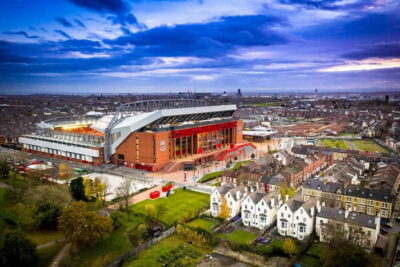
Liverpool Football Club Museum and Stadium Tour
Read our review →
Emirates Stadium Entry Ticket and Audio Guide
Read our review →
Chelsea Football Club Stadium and Museum Tour
Read our review →


Browse the lists this tour appears in