
Reviewed · WALKING TOURS
Gander Walking Tours in Glasgow
Glasgow reveals itself best through its odd details: a traffic-cone tradition mocking the Duke of Wellington, a rooftop ship that seems to move, a tiny blue building linked to inter-dimensional travel, and street art hiding in plain sight. Gander Walking Tours connects these quirks to the bigger story of Glasgow’s rise, decline, and renewal.
I like the small group, capped at 15, and the way Johnny remembers names, checks the route before entering local businesses, and uses photographs and props to bring old Glasgow into view. I also like the practical follow-up advice, including pubs, restaurants, museums, and sights you may not find on a standard city checklist.
The main drawback is the length and the weather exposure. Three hours on foot can feel long on a cold, wet day, and the city-centre streets can be noisy, so you need comfortable shoes, suitable clothing, and a willingness to listen closely.
Key points at a glance
- The Duke of Wellington’s cone: Learn how one of Glasgow’s funniest traditions grew around the statue of the famous commander.
- A small-group route: With no more than 15 people, Johnny can speak with the group rather than simply deliver a speech.
- Glasgow beyond the postcard: The walk includes street art, old entertainment stories, unusual buildings, and overlooked corners.
- A clear city story: You’ll connect medieval Glasgow with its commercial growth, industrial power, decline, and modern revival.
- A strong finish: Glasgow Cathedral and the Necropolis provide an impressive final setting.
- Useful advice after the walk: Johnny sends suggestions for food, drink, museums, and further things to do.
Why this Glasgow walk works so well
This is not just a march past famous buildings. Johnny uses small stories to explain how Glasgow became Glasgow. You hear about trade, industry, civic pride, ordinary city life, entertainment, and the people who shaped the place.
That approach matters because central Glasgow can first seem like a collection of impressive facades and busy streets. A guide helps you notice what the buildings were for, why the streets meet where they do, and how Glasgow’s past still affects its character.
Johnny is the owner and guide, and the personal approach is a major part of the experience. He makes an effort to learn everyone’s name and where they come from. He also checks with places along the route before taking the group inside, which shows respect for local businesses and keeps the walk from feeling intrusive.
The tone is warm and lively. Johnny brings photographs and other props, and the walk includes a chance to try Irn-Bru, Scotland’s famous soft drink. These touches help break up the longer historical explanations and give you something tangible to remember.
More Walking Tours in Glasgow:
- Glasgow City Centre Walking Tour with Local Guide
★ 5.0 · 1,326 reviews - Glasgow Street Art Daily Walking Tour: 2pm
★ 5.0 · 648 reviews - Gothic Glasgow Walking Tour
★ 5.0 · 448 reviews
Starting at Royal Exchange Square
The tour begins at 10:30 a.m. at 8 to 10 Royal Exchange Square, in central Glasgow. This is a useful starting point because the walk begins with the city’s public face, then gradually moves toward older Glasgow and the cathedral quarter.
The opening introduction places Glasgow in the role of Mother Glasgow, a nickname that reflects the city’s proud, forceful personality. You’ll hear about the city as a commercial and industrial power, its later decline, and its renewal.
I like this broad frame because it keeps the tour from becoming a string of unrelated anecdotes. The stories have a purpose: they explain why Glasgow looks and feels the way it does today.
Royal Exchange Square also gives the guide a good place to orient the group before setting off. Since the tour is offered in English, you’ll need enough English to follow spoken stories in an outdoor city setting.
Duke of Wellington and the famous traffic cone

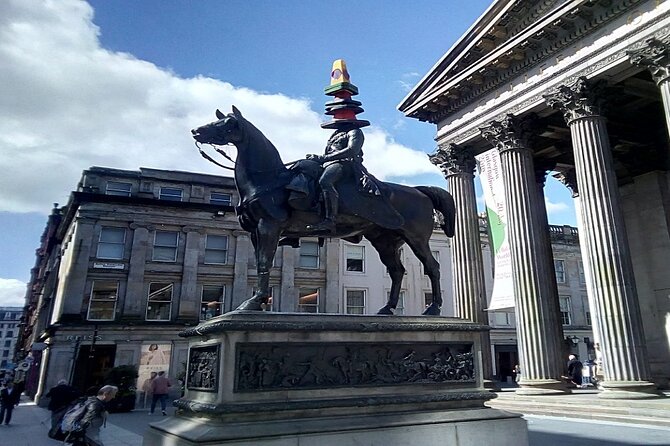
The first named stop is the Duke of Wellington statue. The statue shows the original cone-wearing commander, and Johnny explains the long-running Glasgow tradition of placing a traffic cone on the duke’s head.
It is an easy joke, but the story also says something about Glasgow’s humor and attitude toward authority. The stop lasts about five minutes, so it does not take over the tour. You get the laugh, the local background, and a quick lesson in how city traditions can become part of a place’s identity.
This is also a good reminder to look up. Glasgow rewards attention to upper floors, rooftops, statues, and small details that are easy to miss when you are focused on getting from one major sight to another.
George Square and the civic heart of Glasgow
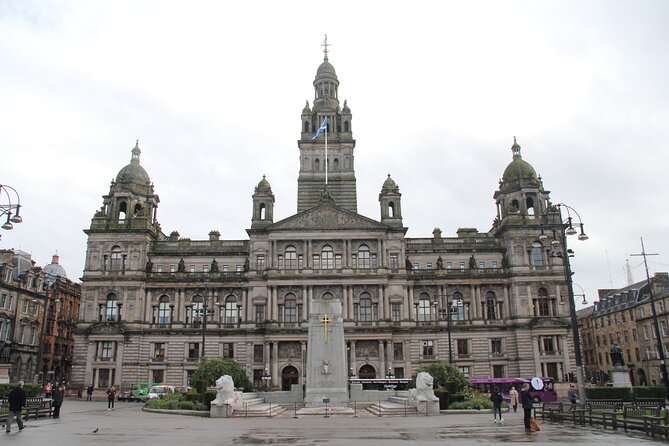
At George Square, Johnny guides you around one of Glasgow’s main public spaces. The stop lasts about 10 minutes and includes Glasgow City Chambers, one of northern Europe’s finest civic buildings.
You’ll also hear about the unpredictable movement of a ship on a rooftop. That unusual detail fits the tone of the tour: Glasgow’s grand civic setting comes with a streak of mischief and surprise.
George Square is a useful place to understand Glasgow’s public ambitions. The architecture and monuments show how the city wanted to present itself during its years of commercial and industrial strength. Johnny’s explanations give the square more meaning than a quick photograph would.
The square can be exposed and busy, so stay close enough to hear. If the group is at the full 15-person limit, your position near the guide will matter, especially when traffic and city noise rise around you.
More walks around Glasgow:
- Magical London: Harry Potter Guided Walking Tour
★ 4.7 · 22,044 reviews - Underground Vaults Walking Tour in Edinburgh Old Town
★ 4.5 · 8,506 reviews - London: The Original Jack the Ripper Walking Tour
★ 4.7 · 7,833 reviews - Oxford University Walking Tour With University Alumni Guide
★ 5.0 · 6,905 reviews
Georgian Glasgow and the stories between the landmarks
The route also introduces an often-overlooked Georgian building and a club where pig-like gluttony was encouraged. This is exactly the sort of stop that separates a local walk from a standard highlights tour.
You may not remember every name or date, but you will get a sense of how people once socialized, ate, competed, and amused themselves. Glasgow’s story is not only about merchants, engineers, churches, and grand civic buildings. It also includes eccentric clubs and strange social customs.
Johnny’s use of props and photographs helps here. Historical detail can be hard to picture when you are standing on a modern street, but a visual aid gives the story a sharper edge.
Trongate and the city’s rougher entertainment past
Trongate follows, near the 16th-century Tron Kirk Steeple. This ancient thoroughfare carries the tour into a less polished side of old Glasgow, including the story of an entertainment venue with plenty of glory and grottiness.
The stop lasts about 10 minutes. Expect a story about how people spent their free time, not just an architectural description. That balance is valuable because it makes the city feel lived in rather than preserved only as a collection of monuments.
Trongate also shows how much Glasgow has changed. Modern shops and traffic now occupy a street with centuries of movement behind it. Johnny’s job here is to help you picture what the route once meant to residents, workers, and visitors.
Glasgow Cross and the Tolbooth Steeple
At the Tolbooth Steeple, the route reaches Glasgow Cross, where the Trongate, Saltmarket, London Road, Gallowgate, and High Street meet. This is the old centre of Glasgow, and Johnny uses the meeting point to explain the city’s earlier life.
The 17th-century steeple gives the stop a strong visual anchor. Around it, you encounter the epicentre of old Glasgow, with its crowded routes and long civic memory.
This part is especially useful if you plan to explore the East End on your own later. Once you understand the importance of Glasgow Cross, streets that might otherwise seem like ordinary thoroughfares become easier to read.
The route covers a lot of ground, but it is not presented as a race. The reported pace is manageable, and the group pauses often. Still, three hours is a serious walk, so wear shoes that can handle uneven city pavement and keep your phone, water, and rain gear easy to reach.
St. Mungo street art on High Street

At St. Mungo on High Street, you see Glasgow’s most famous son represented in street art. The stop takes only about two minutes, but it packs a different kind of punch.
This is one of the tour’s strongest examples of old and new Glasgow sharing the same street. St. Mungo is tied to the city’s religious origins, while the artwork belongs to the modern visual culture of the city.
I like this short stop because it shows that sightseeing does not always require a ticket, a grand interior, or a long explanation. Sometimes the best discoveries are painted on a wall and passed by without a second look.
Provand’s Lordship and four unusual buildings
Across from Provand’s Lordship, Glasgow’s oldest house, Johnny points out four notable buildings. One is a small blue building sometimes used for inter-dimensional travel.
The playful wording signals the kind of storytelling you can expect. Johnny does not treat Glasgow as a museum display. He leaves room for mystery, local humor, and the odd detail that makes a walking tour memorable.
This stop also adds architectural variety. Instead of focusing only on the largest and most famous structures, you look at a group of smaller buildings and consider how they fit together. That helps train your eye for the city’s less obvious details.
Glasgow Cathedral and the Necropolis finale
The final stop is Glasgow Cathedral, the city’s medieval Scottish Gothic centerpiece. Behind it rises the Necropolis, the Victorian city of the dead, creating one of Glasgow’s most striking views.
The cathedral is a fitting end because it brings together several threads from the walk: religious beginnings, medieval Glasgow, civic development, architecture, and the later Victorian city. The setting also gives you a chance to continue exploring after the tour ends.
The tour is scheduled to finish at Glasgow Cathedral, Castle Street, Glasgow G4 0QZ. Depending on current restrictions affecting group size or mask-wearing, the guide may finish outside rather than take the group into the church.
That possibility matters if entering the cathedral is your main goal. The exterior and surrounding view remain part of the route, but interior access can change with operating rules.
The value of a $16.64 city tour
At $16.64 per person, this is priced as an affordable introduction rather than a premium private tour. The value comes from the amount of city context packed into roughly three hours, plus the personal recommendations that arrive afterward.
A self-guided walk can cover some of the same streets, but it will not easily provide Johnny’s connected explanation of Glasgow’s growth, decline, and renewal. You would also need to research the statue traditions, local characters, unusual buildings, and historical setting yourself.
The small group improves the value. A maximum of 15 people gives you a better chance to hear the guide, ask questions, and receive direct attention. It is not a private tour, so the experience still depends on group size and street noise, but it is more personal than a large coach-style outing.
I would book it early if your dates are fixed. The tour is booked an average of 36 days in advance, which suggests that planning ahead is sensible, especially during busy periods.
Who should take this walk
This tour suits a first visit to Glasgow, particularly if you want a clear orientation before choosing what to visit on your own. It also works well for people who prefer stories and local character over a list of ticketed attractions.
Families can take part, and one parent specifically found the walk workable with a four-month-old baby and stroller. Service animals are allowed, and most people can participate, but you should still consider the three-hour duration and the need to stay attentive in a city-centre group.
The tour also suits repeat visitors. A long-term Glasgow resident found that Johnny pointed out details and local oddities they had never noticed. That is a good sign for anyone who already knows the main streets but wants more context.
Cruise passengers and visitors with only a day or two in Glasgow can make especially good use of it. The route gives you a practical sense of the centre, while Johnny’s list of pubs, restaurants, museums, and other sights helps you plan the rest of your stay.
Practical advice before you go
Wear comfortable shoes and prepare for rain and cold. Glasgow weather can change quickly, and the tour takes place outdoors for much of its length.
Arrive at Royal Exchange Square before the 10:30 a.m. start. Keep your ears open near busy roads because city noise can make parts of the commentary harder to catch.
Bring a notebook if you enjoy collecting recommendations. Johnny covers a lot of information and sends an extensive follow-up list, but writing down a pub, museum, or restaurant while you are still nearby can help you remember it later.
The route ends at Glasgow Cathedral, not back at the starting point. Plan your next move from Castle Street, and use the cathedral and Necropolis area as a chance to continue exploring.
Free cancellation is available when you cancel at least 24 hours before the start time. Cancellations or changes made inside that window are not refunded or accepted.
Should you book Gander Walking Tours?
I would book this walk if you want Glasgow explained by someone who takes clear pride in the city. Johnny’s enthusiasm, personal attention, props, local drink sample, and useful follow-up suggestions add more than a standard set of sightseeing facts.
Skip it if you dislike long outdoor walks, prefer silent self-guided exploring, or need guaranteed cathedral interior access. For most first-time visitors, though, the $16.64 price, small group, unusual stops, and strong sense of place make this a smart first morning in Glasgow.
FAQ
How long does Gander Walking Tours in Glasgow last?
The tour lasts approximately three hours.
Where does the tour start?
It starts at 8 to 10 Royal Exchange Square, Glasgow G1 3AB, UK.
Where does the tour finish?
The scheduled endpoint is Glasgow Cathedral on Castle Street, Glasgow G4 0QZ, inside Glasgow Cathedral on the north-west side of Glasgow city centre.
What time does the tour start?
The tour starts at 10:30 a.m.
How many people can join the tour?
The maximum group size is 15 travelers.
Is the tour available in English?
Yes. The tour is offered in English and includes a mobile ticket.
Just added in Glasgow
- Glasgow Street Art Daily Walking Tour: 2pm★ 5.0 · 648 reviews
- Gothic Glasgow Walking Tour★ 5.0 · 448 reviews
- Stirling Castle, Loch Lomond and Cruise Day Tour from Glasgow★ 5.0 · 566 reviews
- Glasgow Afternoon Tea Experience★ 4.5 · 735 reviews
- The Clydeside Tour★ 5.0 · 740 reviews
- Glasgow: Loch Ness, Glencoe, and the Highlands Day Tour★ 4.5 · 806 reviews
- Celtic Park Tour & Dine Package★ 5.0 · 998 reviews
- Loch Ness & the Highlands Day Tour from Glasgow Including Cruise★ 5.0 · 1,211 reviews
Walking Tours, compared.

Magical London: Harry Potter Guided Walking Tour
Read our review →
Underground Vaults Walking Tour in Edinburgh Old Town
Read our review →
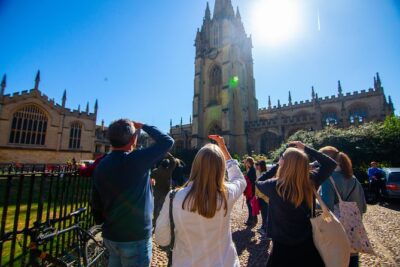
Oxford University Walking Tour With University Alumni Guide
Read our review →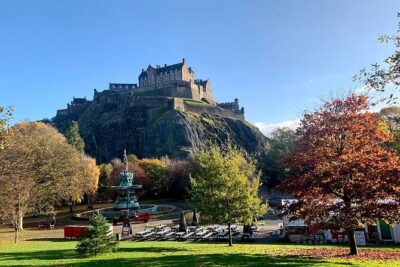
Edinburgh Castle: Guided Walking Tour with Entry Ticket
Read our review →
Edinburgh Castle Guided Walking Tour in English
Read our review →
Tour for Muggles The Ultimate Harry Potter Walking Tour in London
Read our review →
University and City Walking Tour with Alumni Guide
Read our review →Browse the lists this tour appears in