Reviewed · TOURS IN ENGLAND
The Canterbury Classic Tour
Canterbury’s best stories are often tucked beside ordinary streets, and this small walking tour knows where to look. In about 90 minutes, Sam connects Chaucer, Christopher Marlowe, Thomas Becket, Roman Canterbury, medieval defenses, and odd details such as a dove flying toward Pope Gregory’s ear. I like the small maximum of 10 people, which gives you room to ask questions, and I like the mix of famous sights and easy-to-miss details.
The main consideration is simple: this is an outdoor walking tour, not a cathedral visit. You see Canterbury Cathedral from the surrounding streets, but admission to paid attractions is not included, and the tour can feel brisk if you want long time inside each place.
Key points to know before booking
- The route begins at the Beaney House: Meet outside this central art and knowledge center, with facilities available before the walk.
- Sam is the named guide: His style combines clear historical context, humor, architecture, art, legends, and strange local details.
- Westgate Towers gets a quick introduction: You learn why this medieval gate mattered, but museum admission costs extra.
- Thomas Becket anchors the story: The walk explains how a man from outside Canterbury became the city’s defining figure.
- The group is capped at 10: That is a real advantage for questions and conversation, especially with children.
- The tour costs $19.44 per person: For a compact introduction to Canterbury, the price is strong value, provided you do not expect attraction admissions.
Why this 90-minute walk works so well
I like this tour because it gives you a framework for Canterbury before you start exploring on your own. The city can seem to be mainly about the cathedral, but the route adds Roman foundations, medieval walls, literature, theater, wartime rediscovery, religious conflict, and modern city life.
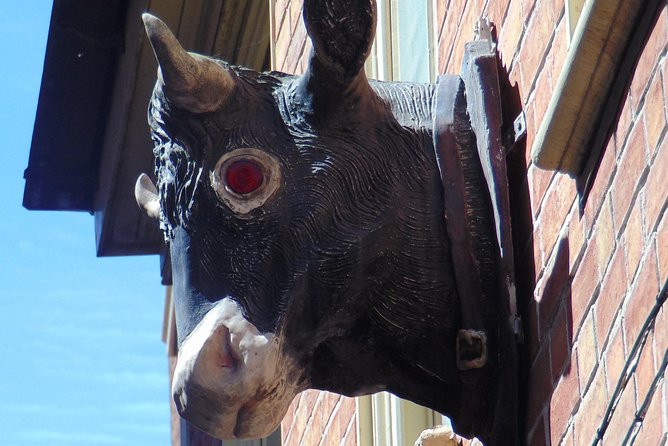
Sam’s approach is especially useful if you enjoy stories rather than a list of dates. You may hear about a playwright who was also involved in spying, a city gate used as a prison, a bull’s head in an unexpected place, and a church tower that now acts as a reminder of an older Canterbury beneath today’s shopping streets.
The group size matters. With no more than 10 people, you can normally hear the guide without standing in a crowd, and you have a better chance to ask about a building or detail that catches your eye. Several families found the format worked for children, including children aged 6, 10, 11, and teenagers. That does not make this a children’s tour, but the stories and odd details give younger walkers something to latch onto.
The walk is also gentle in scope. Canterbury is compact and fairly flat, and the route covers a manageable section of the center. You should still wear sensible shoes and dress for changing weather. One tour went ahead on a freezing morning, and another took place in unpredictable weather, so the guide can make the experience enjoyable, but he cannot control the sky.
Other tours people book in England:
- Stonehenge, Windsor Castle, and Bath from London
★ 4.5 · 18,662 reviews - London Big Bus Hop-On Hop-Off Tour with Optional River Cruise
★ 3.5 · 10,803 reviews - London Small Group Tour of Historical Pubs
★ 5.0 · 10,422 reviews
Starting at the Beaney House of Art and Knowledge
The meeting point is outside the Beaney House of Art and Knowledge at 18 High Street. This is a practical start because it puts you in the center of Canterbury and gives you access to facilities before the tour begins.
The building also sets the tone for the walk. Canterbury is not only medieval stone and religious history. Art, literature, museums, and modern cultural life matter here too. The route uses that wider view, so you get more than a march between old gates and churches.
I would book this early in your stay if you plan to spend more time in Canterbury. The walk can help you decide what deserves a longer visit later, including the Beaney itself, the cathedral area, gardens, and the city walls. It is also a good choice when you have only a short visit and want the city to make sense quickly.
Chaucer’s Canterbury at the statue of Geoffrey Chaucer
The first stop is the statue of Geoffrey Chaucer, author of The Canterbury Tales. This is an obvious place to begin, since Chaucer made the city famous through a group of pilgrims traveling toward Canterbury Cathedral.
The value here is not simply identifying the statue. Sam uses Chaucer to open a conversation about how Canterbury has been presented through literature, storytelling, pilgrimage, and popular imagination. The stop is scheduled for about five minutes, so expect a focused explanation rather than a long literary lecture.
If you have read The Canterbury Tales, you will have a little extra context. If you have not, the stop still works because the city’s identity is closely tied to the book. You can also use this moment to ask about Canterbury’s connection to pilgrimage and how the city’s public image developed over time.
Westgate Towers and Canterbury’s defenses
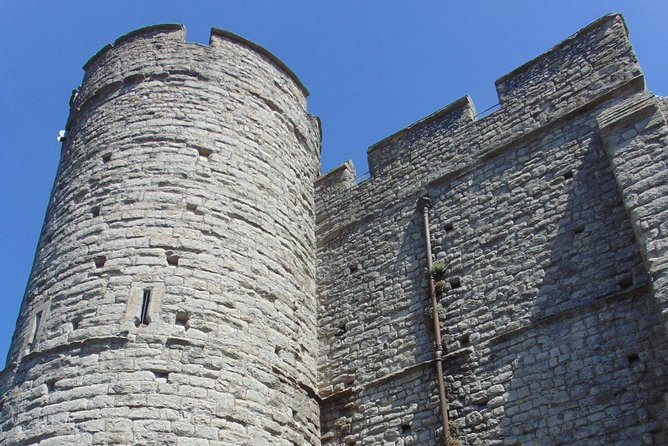
Westgate Towers is one of the strongest visual stops on the route. It is described as the largest surviving medieval city gate in the United Kingdom, and its size makes the defensive purpose easy to understand.
Sam explains how the gate was built during a turbulent period and how different methods of attack and defense shaped its design. You get the practical side of medieval warfare rather than only a date and a name. The stop also includes a dramatic story connected with the gate, one that could almost work as a short film.
The tour pauses outside for around five minutes. Admission to the Westgate Towers Museum and viewpoint is not included, so you need to decide if you want to return later and pay for entry. That is not a flaw in the walking tour, but it is important to know if you hoped to climb the tower during the 90-minute route.
I see this as a useful preview. You learn why the gate matters, then you can choose to visit inside with a better sense of what you are looking at. If you are short on time, the exterior explanation still gives you one of Canterbury’s key landmarks without adding another admission fee.
Same city, a very different afternoon:
- Beatles Magical Mystery Tour
★ 5.0 · 9,266 reviews - Liverpool: “Blue Route” – City & Beatles Tour
★ 5.0 · 8,562 reviews - Stonehenge, Windsor Castle and Bath with Pub Lunch in Lacock
★ 4.5 · 7,402 reviews - Oxford University Walking Tour With University Alumni Guide
★ 5.0 · 6,905 reviews
Christopher Marlowe beside the modern Marlowe Theatre
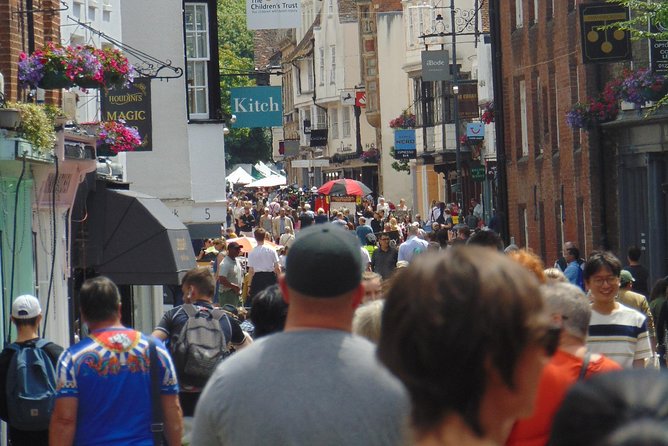
The next stop shifts from medieval defenses to a modern theater building and the turbulent life of Christopher Marlowe. Marlowe was a playwright, but his life also involved spying, political danger, and a hard-partying reputation.
That contrast is one of the tour’s pleasures. Canterbury is not frozen in the age of pilgrims and stone walls. The city also produced writers and performers whose lives were full of risk and drama. Sam connects Marlowe with the influence of the written word on Canterbury, giving the modern theater a link to the city’s older cultural identity.
The stop lasts about five minutes and takes place outside the Marlowe Theatre. Admission is not included, and the theater is treated as a landmark rather than a performance visit. I would pay attention to the guide’s storytelling here, since this is likely to be one of the more entertaining sections of the walk.
Christ Church Gate and a surprising Tudor connection
Christ Church Gate leads you toward the cathedral area, but the story is not quite the one you may expect. The gate was completed to commemorate a Tudor prince and his Spanish bride, though not the prince most people initially have in mind.
Sam explains the gate’s changing appearance and purpose over time. That is useful because old buildings are easy to misread. A structure may look as if it has always served the same role, but Canterbury’s gates and religious spaces have been repaired, altered, and reinterpreted through different periods.
The stop is brief and takes place from outside. You do not enter the cathedral as part of this tour, and cathedral admission is not included. If seeing the cathedral interior is a priority, plan a separate visit and allow enough time for it.
Roman Canterbury beneath Butchery Lane
Outside the Canterbury Roman Museum, the tour turns to the Roman city and the way its remains were rediscovered after the Second World War. This is a valuable piece of context because ancient remains do not always survive in plain sight. They can be buried, damaged, or revealed only when modern rebuilding takes place.
The museum itself is not included, but the exterior discussion helps you understand why the site matters. You get a short introduction to Roman Canterbury without spending time inside, which keeps the walk moving.
Butchery Lane adds several smaller details. You may hear about the cathedral’s Bell Harry Tower, the city coat of arms, and the unexpected bull’s head. This is exactly the kind of section that makes the tour feel more observant than a standard landmark checklist. Sam points out details you might walk past while concentrating on the larger buildings.
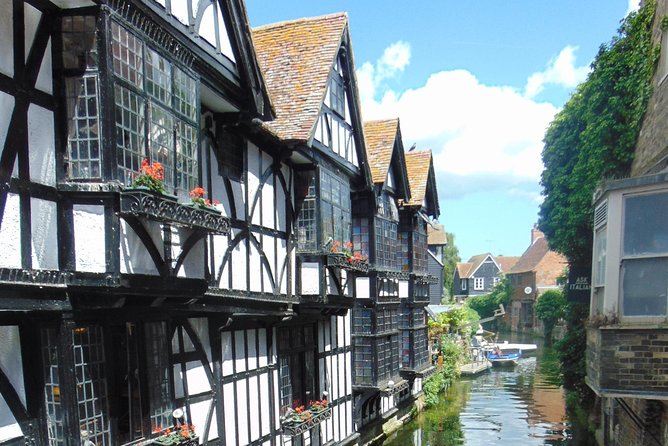
The route also touches on less polished parts of old city life, including the use of the river as a sewer. That kind of information is not glamorous, but it helps you picture how Canterbury functioned in the past rather than treating its history as a collection of pretty facades.
Thomas Becket, the city’s defining figure
At St Thomas of Canterbury Roman Catholic Church, the tour takes up Thomas Becket. His murder transformed Canterbury into one of Europe’s major pilgrimage destinations and shaped the city’s identity for centuries.
Sam tells the full story of Becket and explains why a man who was not born in Canterbury became the city’s most famous figure. The subject carries politics, religion, power, and violence, but the stop is kept within the wider flow of the walk.
This is also where the tour can connect several places you have already passed. Gates, cathedral approaches, pilgrimage routes, and the city’s stories become part of one larger account. You may also hear about the place where the knights stayed before killing Becket, another detail that gives the event a physical setting.
A particularly odd detail concerns Pope Gregory the Great and a dove flying toward his ear. It sounds like a small curiosity, but that is the point. Canterbury’s public art and religious symbols often reward close attention, and Sam uses these details to keep the subject lively.
Saint George’s Tower and the city’s changing face
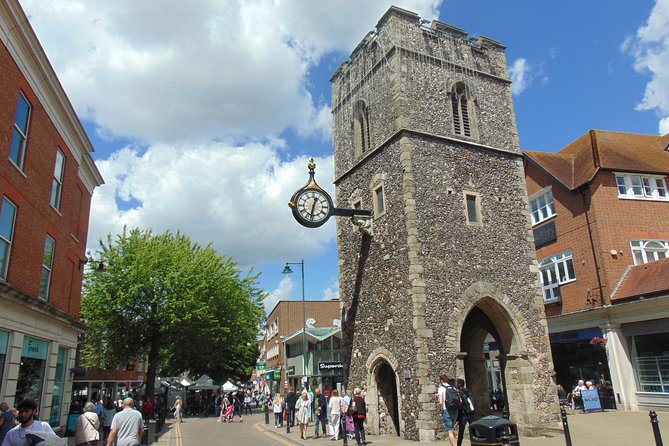
The walk ends beneath Saint George’s Tower at 27 St George’s Street. This curious clock tower belonged to the former St George’s Church and now sits in a busy shopping area.
The ending works because it brings old Canterbury into the present. You are not finishing at an isolated ruin. You are standing beneath a surviving piece of the past while modern shops and daily city life continue around it.
Sam explains how the tower became a reminder of the former church and the changing shape of Canterbury. The end point is central and practical, so you can continue exploring, find food, or return to another site without arranging transport.
What the price includes, and what it does not
At $19.44 per person, this is a strong-value introduction to Canterbury. You are paying for about 90 minutes with a guide, a small group, and a route that covers literary, Roman, medieval, religious, and modern cultural subjects.
The price does not include admission to the Westgate Towers Museum and Viewpoint, Canterbury Roman Museum, the Marlowe Theatre, or the cathedral. That is worth factoring into your budget. Still, the walking tour can help you choose which paid attractions deserve your time instead of paying for everything at random.
I especially like the value for a first visit. You get an overview before committing to longer museum visits, and you can ask questions that help you plan the rest of your day. The tour also costs less than many larger guided walks while limiting the group to 10 people.
Timing, meeting point, and practical details
The tour is offered in English and uses a mobile ticket. Confirmation arrives at booking, and free cancellation is available if you cancel at least 24 hours before the start time. Changes or cancellations inside that window are not accepted for a refund.
The start is outside the Beaney House, and the finish is beneath Saint George’s Tower. You do not need to arrange transport between them. The route is near public transportation, and service animals are allowed.
Most people can take part, but this remains a walking activity. Expect to stand outdoors at each stop, and plan for weather rather than assuming Canterbury will be dry. The route is compact and generally easy to manage, but anyone who needs a slower pace should contact the operator before booking.
Who should book this Canterbury walking tour?
I would choose it for a first visit, especially if you want the city to make sense before exploring on your own. It suits couples, families, solo visitors, and anyone who likes local stories more than a formal lecture.
It is also a good fit for families with older children. The unusual details, spies, prisons, doves, clocks, and odd animal symbols can hold attention better than a long sequence of dates. The small group lets Sam adjust to questions and keep children involved.
You may want something else if your main goal is cathedral access, museum interiors, or a long specialist talk about one period. This route samples many subjects and keeps moving. Its strength is range and personality, not extended time inside a single attraction.
Should you book the Canterbury Classic Tour?
Yes, if you want an affordable first look at Canterbury with a guide who brings the city’s odd corners into the story. Sam’s approach appears especially suited to people who enjoy history, architecture, literature, legends, and a little humor in the same walk.
Book it early in your visit if possible. Use the route to decide what you want to revisit, then return to the cathedral, Westgate Towers, Roman Museum, Beaney House, or city walls with better context. Skip it only if you already know Canterbury well or need a tour built around interior admissions.
FAQ
How long is the Canterbury Classic Tour?
The tour lasts approximately 1 hour and 30 minutes.
Where does the tour begin?
It begins outside the Beaney House of Art and Knowledge at 18 High Street, Canterbury CT1 2RA.
Where does the tour end?
It ends beneath Saint George’s Tower at 27 St George’s Street, Canterbury CT1 2LE.
Who leads the tour?
The named guide is Sam.
How many people can join the tour?
The group is limited to a maximum of 10 travelers.
Is the tour offered in English?
Yes, the tour is offered in English.
Are attraction admission fees included?
No. Admission to places such as Westgate Towers Museum and Viewpoint and Canterbury Roman Museum is not included.
Can I cancel for a full refund?
Yes, you can cancel for a full refund at least 24 hours before the experience start time. Cancellations or changes made less than 24 hours before the start time are not accepted for a refund.
Just added in England
- 3-Day Stonehenge*, Glastonbury, Bath & the South West Coast Tour from London★ 4.5 · 32 reviews
- Private Guided Tour of Harry Potter Locations – English/ Italian★ 5.0 · 33 reviews
- 2 Hour Walking Tour from Buckingham Palace to Big Ben★ 5.0 · 32 reviews
- 30 Major London Attractions Walking Tour With Photos★ 4.5 · 51 reviews
- Private Tour London Highlights, entries Westminster Abbey, The Tower of London★ 5.0 · 93 reviews
- 007 Shadow Of Spectre★ 5.0 · 135 reviews
- Private Guided Tour of the British Museum – Tickets Included★ 5.0 · 193 reviews
- Bath, Avebury and Lacock Village Small-Group Day Tour from London★ 4.5 · 121 reviews
Tours in England, compared.
Stonehenge, Windsor Castle, and Bath from London
Read our review →
Stonehenge, Windsor Castle and Bath with Pub Lunch in Lacock
Read our review →
Oxford University Walking Tour With University Alumni Guide
Read our review →
Tower of London and Crown Jewels Exhibition Ticket
Read our review →