
Reviewed · WALKING TOURS
Bristol: Air Raid Shelter & St. Nicholas Market Walking Tour
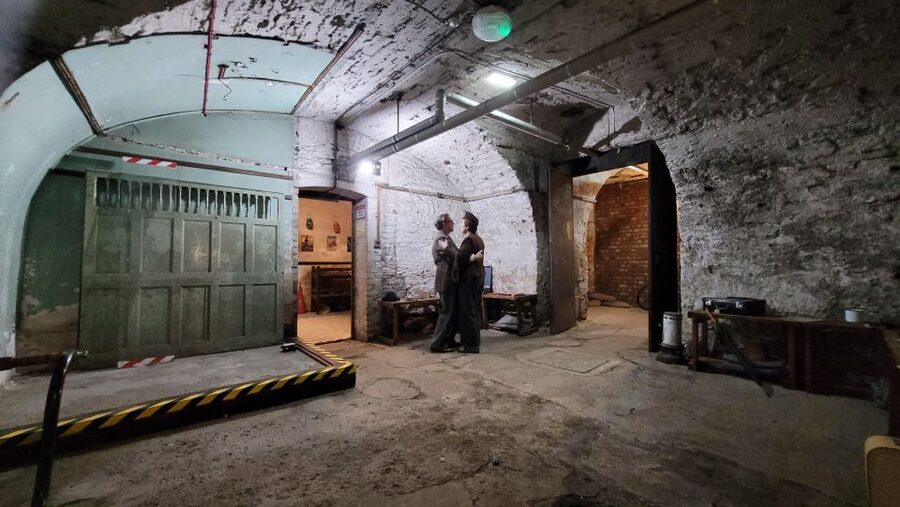
Beneath Bristol’s Corn Exchange is a wartime shelter that most people would walk over without ever knowing it was there. This tour brings you below street level, then links that unusual site to Bristol’s old streets, Blitz damage, trading past, and St. Nicholas Market.
I like the authentic underground setting and the way guides such as Owen and Duncan turn wartime facts into human stories. I also like the useful finish at the market, where you can buy lunch or a snack instead of being marched to a fixed restaurant. The shelter is still being developed as a museum, so expect a preserved, rough-edged place rather than a polished exhibition.
Key points to know before booking
- A real air raid shelter beneath the Corn Exchange: Walk through Bristol’s largest public WWII shelter, a place normally closed to casual passersby.
- Old City history before the underground visit: See Blitz damage, old trading routes, Temple Church, Wine Street, and Corn Street areas.
- Guides who make the past personal: Owen, Duncan, and Theresa are praised for clear delivery, humor, enthusiasm, and strong storytelling.
- 1960s music history in the Corn Exchange: Visit rooms linked with major bands, including the Rolling Stones.
- St. Nicholas Market at the finish: Buy sweet or savory food and browse souvenirs after the guided portion.
- Practical limits: Wear comfortable shoes, and avoid this tour if you have claustrophobia or serious mobility limitations.
Why the shelter is the main event
Bristol has plenty of attractive streets and old buildings, but the air raid shelter gives this walk its purpose. You do not simply hear that the city was bombed during the Second World War. You go below the streets and see the kind of enclosed public space where people sought safety.
The shelter remains largely untouched. That matters because its worn, unfinished quality helps you picture wartime use better than a newly built display might. It is not presented as a glossy museum with every object behind glass. Instead, the guide supplies much of the interpretation, connecting the rooms and surviving details to the conditions people faced during the Bristol Blitz.
The shelter is described as Bristol’s largest public air raid shelter, and the visit is the only subterranean part of this experience. You may also meet Margaret, the friendly ghost associated with the site. Treat that as a bit of local atmosphere rather than the reason to book, but it adds a playful note to a serious subject.
I especially like the fact that the attraction is still taking shape. A small museum area is being developed, with WWII objects and articles for you to examine. The trade-off is clear: there may be more material than time allows, and the museum space is not yet extensive. Several people have wanted extra time to read the displays and ask questions.
More Walking Tours in Bristol:
- Blackbeard to Banksy – The Ultimate Walking Tour of Bristol
★ 5.0 · 1,961 reviews - Air Raid Shelter + St. Nicholas Market Walking Tour
★ 5.0 · 1,950 reviews - Bristol: Blackbeard to Banksy Guided Walking Tour
★ 4.9 · 1,422 reviews
Starting at Bristol’s Corn Exchange
Meet at the main entrance of the Corn Exchange. This is a sensible starting point because the building connects several strands of the tour: Bristol’s commercial past, the underground shelter, and the music rooms associated with the 1960s.
Your guide may wear WWII costume, which helps establish the period without turning the whole walk into a theatrical show. Owen, Duncan, and Theresa have each led tours, and their styles appear to combine facts with jokes, personal delivery, and clear storytelling. Owen is especially good at setting the scene, while Duncan is associated with developing the shelter project and explaining its future plans.
The Corn Exchange itself is part of the story. This was a place tied to trade and public life, and the tour uses it to introduce Bristol’s long connection with buying, selling, shipping, and market culture. You also see areas that once hosted major 1960s bands, including the Rolling Stones. That is an unexpected change of mood, moving from wartime shelter life to the building’s later musical past.
You will not spend the entire tour indoors. The first section takes you into the Old City, so wear shoes that are comfortable for walking over historic streets and spending time on your feet.
Walking through the Old City and the Blitz
The street portion gives the shelter a useful setting. Rather than dropping straight underground with no context, the guide walks you through Bristol’s older core and points out where the war altered the city.
The route includes views of Blitz damage and discussion of areas around Temple Church, Wine Street, and Corn Street. These names are more than map references. They help you connect the surviving street plan with places that were damaged or changed during the air raids.
This is also where the tour expands beyond WWII. You hear about roughly 1,000 years of Bristol’s trading story, from the city’s earlier origins to its present life. The result is not a full survey of Bristol, but a useful introduction if you are new to the city. If you live in Bristol, the same route may still surprise you. Local participants have discovered details about familiar streets that they had never noticed.
The balance here is one of the tour’s strengths. You get architecture, commerce, wartime damage, and current city issues rather than a single narrow lecture. The guide’s performance matters a great deal, since much of what you learn comes through spoken explanation rather than large signs.
Some visitors may prefer a longer street walk with more time at each building. This tour is designed to lead toward the shelter, so the Old City section works as context and orientation rather than a complete architectural tour.
Going below street level
The transition underground is the moment to pay attention. The shelter is not an ordinary museum room where you glance at a few objects and move on. You enter a place built for emergency use, and the enclosed setting gives the wartime section a physical weight that photographs cannot provide.
Your guide explains how Bristol was affected by German air raids and what it meant for civilians to use public shelters. Owen is praised for bringing the experience of shelter life into focus, while Duncan’s delivery has been described as passionate and entertaining. That combination helps keep the subject accessible without making light of it.
Expect a site with character rather than perfect restoration. The shelter needs more work and financial support, and the museum area is still growing. I see that as both a weakness and a reason to visit now. You are seeing an active local preservation effort, not a finished attraction designed from scratch.
The limitations deserve plain mention. Narrow, underground spaces are not suitable for people with claustrophobia. The tour is also not suitable for people with mobility impairments, and the operator lists a maximum weight of 300 pounds, or 136 kilograms, along with an upper age limit of 95. These rules are unusually specific, so check them honestly before booking.
The shelter can be moving, but it is not an ideal stop for someone who wants a quiet, self-guided museum visit. The guide keeps the group moving and talking. If you want time with every artifact, save a question for the end, and allow for the possibility that you will not read everything on display.
More walks around Britain:
- Magical London: Harry Potter Guided Walking Tour
★ 4.7 · 22,044 reviews - Underground Vaults Walking Tour in Edinburgh Old Town
★ 4.5 · 8,506 reviews - London: The Original Jack the Ripper Walking Tour
★ 4.7 · 7,833 reviews - Oxford University Walking Tour With University Alumni Guide
★ 5.0 · 6,905 reviews
St. Nicholas Market for food and local color
The tour finishes at St. Nicholas Market, one of the best reasons to schedule this experience before lunch. Food is not included, but that is a benefit here. You can choose what suits you, from sweet treats to savory street food, and you are not locked into a group meal.
The market adds a present-day counterpoint to the shelter. The tour begins with old commerce, passes through wartime Bristol, and ends in a covered market where people still meet to eat, browse, and shop. You can also pick up souvenirs.
The market visit is guided, but you should think of it as a useful introduction rather than a food tasting. Bring money for anything you want to buy. The tour price does not include food or drink.
There is a practical timing point here. The stated length ranges from 75 minutes to two hours, while the route details describe substantial guided sections in the Old City and market. In practice, allow around two hours so you are not rushing away from the final market stop. Some participants have found the tour closer to an hour and 15 minutes, while others have spent about two hours on it.
That variation may depend on the guide, group pace, questions, and how much time is spent around the developing museum displays. If you have a fixed lunch reservation, check the available start time carefully.
Price and value at $16
At $16 per person, this is a strong value if you want an unusual Bristol experience rather than a standard sightseeing circuit. The price covers the guide, entry to the WWII shelter, and access to exclusive Corn Exchange areas. It does not cover food or drink at St. Nicholas Market.
The value comes from combining several short experiences that would be hard to arrange independently. You get a guided Old City walk, wartime interpretation, entry to a normally unavailable underground site, Corn Exchange history, and a market finish.
A cheaper self-guided walk could cover some streets, but it would not get you into the shelter or explain the site in the same way. A conventional museum may have more labels and objects, but it would not give you the same physical sense of being below Bristol’s streets.
The main question is what kind of value you want. If you need a fully restored museum with a large collection and plenty of reading time, the shelter may feel unfinished. If you like places with a strong sense of place and a guide who supplies the missing context, $16 is reasonable.
The tour has a 4.8 rating from 320 reviews, and the praise is unusually consistent around the guides’ delivery. The repeated strengths are enthusiasm, clear speaking, humor, and the ability to make both local history and wartime events understandable. That is important because the site itself carries less explanatory material than a major museum.
Which guide might you get?
The guide changes, so you should not book on the assumption that one specific person will lead every departure. Owen, Duncan, and Theresa are among the guides associated with the experience.
Owen is repeatedly praised for clear explanations, strong historical detail, and an energetic performance. Duncan is closely connected with the shelter project and is noted for passion, humor, and plans for expanding the attraction. Theresa is also described as bringing the stories to life.
The common thread is a talk-led experience. You are not simply following a route with occasional commentary. The guide is central to how the shelter, Blitz, and market fit together.
That also creates the main variable. A tour like this depends heavily on delivery. The high score suggests a reliable standard, but your experience will still reflect the guide’s pace and your group’s questions. I would choose it for the subject and access first, then regard the guide’s personality as part of the bonus.
Who should book this Bristol walk?
I would recommend it to first-time visitors who want a Bristol introduction with more character than a basic city stroll. It is also a good pick for locals. Several long-time Bristol residents have learned new facts about familiar streets, especially the wartime damage and shelter network.
History fans will get the most from it, but you do not need a specialist background. The guide explains the material in an engaging way, and the market provides an easy, informal finish for mixed-age groups.
Families with older children may enjoy the costume, ghost story, underground setting, and music connections. The subject includes wartime hardship, so parents should decide if that tone suits younger children.
I would be cautious if you dislike enclosed spaces, need step-free access, weigh more than the stated limit, or want a calm museum visit with lots of time for independent reading. The site is also not suitable for people over 95 according to the supplied restrictions.
Wear comfortable shoes. You will walk through the Old City, stand underground, and likely spend time in the market. English is the only listed tour language.
Should you book it?
Book this tour if the idea of entering an untouched WWII shelter beneath a working market sounds more appealing than another view from a church tower. The underground access is rare, the price is modest, and the guides give the place the context it needs.
I would not book it solely for the market, since you can visit St. Nicholas Market separately and food costs extra. I would also avoid expecting a finished museum. What you get is more personal: a preserved site, a developing exhibition, and a guide who turns the rooms into a story.
For most visitors interested in Bristol’s wartime past, local trade, or less obvious city sights, this is a worthwhile 75 minutes to two hours. Schedule it before lunch, leave room for market food afterward, and arrive ready for a site that is fascinating partly because it still feels unfinished.
FAQ
Where does the tour meet?
Meet at the main entrance of the Corn Exchange in Bristol.
Where does the tour finish?
The listed drop-off points are St. Nicholas Market and the Corn Exchange.
How long does the experience last?
The duration is listed as 75 minutes to two hours. Allow up to two hours, since the timing can vary.
What language is the tour in?
The live guided tour is in English.
Is entry to the air raid shelter included?
Yes. Entry to the WWII air raid shelter is included in the tour price.
Is food included?
No. Food and drinks are available to purchase at St. Nicholas Market.
What else is included?
The guided tour and entry to exclusive areas of the Corn Exchange are included.
What should I wear or bring?
Bring comfortable shoes for walking through the Old City and the underground shelter.
Is the tour suitable for someone with claustrophobia?
No. The experience is listed as unsuitable for people with claustrophobia because part of the tour takes place underground.
Can I cancel the booking?
You can cancel up to 24 hours in advance for a full refund. A reserve-now, pay-later option is also available.
More market tours in Britain
- London Bridge & Borough Market Food Tour with 7 Authentic Dishes
★ 5.0 · 1,972 reviews
Just added in Britain
- Cornwall: Guided Seal Safari by Boat★ 4.7 · 63 reviews
- SEA LIFE Brighton Admission Ticket★ 4.0 · 468 reviews
- Harrogate Walking Food Tour★ 5.0 · 286 reviews
- Alcotraz Prison Cocktail Experience in Cardiff★ 5.0 · 139 reviews
- Downtown Liverpool Walking Tour – In Spanish★ 5.0 · 591 reviews
- Cardiff Bay Boat Tour★ 4.0 · 384 reviews
- Four hour walking wine tasting tour of Manchester’s best bars★ 5.0 · 136 reviews
- The Wandering Bard’s Mythical West Wales Tour★ 5.0 · 129 reviews
Walking Tours, compared.

Magical London: Harry Potter Guided Walking Tour
Read our review →
Underground Vaults Walking Tour in Edinburgh Old Town
Read our review →
Oxford University Walking Tour With University Alumni Guide
Read our review →
Edinburgh Castle: Guided Walking Tour with Entry Ticket
Read our review →
Edinburgh Castle Guided Walking Tour in English
Read our review →
Tour for Muggles The Ultimate Harry Potter Walking Tour in London
Read our review →
University and City Walking Tour with Alumni Guide
Read our review →Browse the lists this tour appears in