
Reviewed · AFTERNOON TEA EXPERIENCES
London: Royal Hampton Court Guided Tour with Afternoon Tea
Hampton Court Palace gives you two royal worlds in one visit: Henry VIII’s crowded Tudor court and the grand Baroque palace built for William III and Mary II. This tour makes sense because a guide helps you read the rooms and stories, then afternoon tea gives you a proper break before you continue alone.
I like the full-day ticket, which lets you return to the palace after tea, and I like the human touch from guides such as Tom, Julie, Thomas, Geraint, and Suzanne. Their storytelling, patience, and eye for small details have made a strong impression. The main drawback is that the guided portion covers only part of a very large palace, and the tea has not been equally good for everyone.
- Start at Hampton Court Station: Your guide meets you at the station entrance, a handy arrival point from London.
- See Tudor and Baroque Hampton Court: The route links Henry VIII’s kitchens and courtyards with Wren’s Fountain Court.
- Hear the palace brought to life: Guides point out hidden passageways, painted faux marble, royal meeting rooms, and useful photo spots.
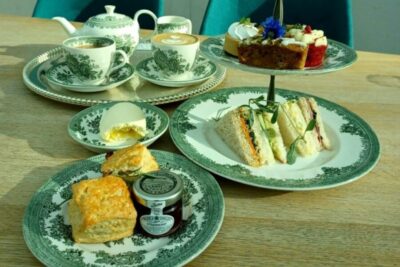
- Take a full afternoon tea: Expect finger sandwiches, scones, pastries, and a choice of premium teas in a period setting.
- Keep exploring afterward: Your ticket allows access for the rest of the day, including the palace, gardens, and outdoor spaces.
- Use an audio guide too: Audio commentary is available in Spanish, Chinese, Dutch, French, German, Japanese, Kannada, Korean, and Russian.
Why Hampton Court Makes a Fine Half-Day Trip
Hampton Court is about 30 minutes from London, yet it feels far removed from the city. You arrive at a palace shaped by several rulers, not a single frozen Tudor set. Henry VIII’s medieval-looking court sits beside the lighter, more formal Baroque work created for William III and Mary II.
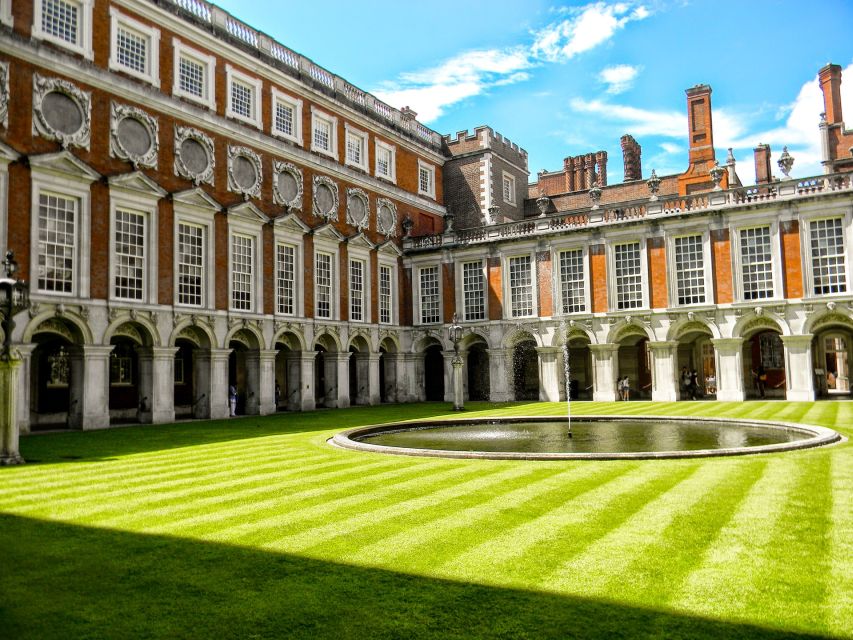
That contrast gives the visit its rhythm. One minute you are thinking about Henry VIII, Cardinal Wolsey, and Anne Boleyn. Soon after, you are standing in Fountain Court, designed by Sir Christopher Wren, with a very different sense of royal taste and power.
The booking costs $206 per person, so this is not a bargain admission ticket. You are paying for a guided visit, a full-day palace entry, and afternoon tea. The value depends on how much you want someone to explain the place for you. If you would happily read signs and explore alone, the price may feel high. If you want a well-organized day with transport access, storytelling, food, and time to wander, the package is easier to justify.
Meeting Your Guide at Hampton Court Station

The meeting point is the entrance to Hampton Court Railway Station. That is simpler than meeting somewhere in central London, but you still need to allow time to reach the station before the tour begins. The guide meets you there and walks with you toward the palace.
This arrangement gives you a clean start. You do not have to hunt for a particular palace gate or search through a crowded ticket area. It also places the guide with you before the main visit begins, which can help if you have questions about timing or the day’s plan.
The tour is conducted in English. An audio guide is also included, with several language choices for independent listening. A private group option is available, and the activity is wheelchair accessible. Pets and oversized luggage are not allowed, so pack lightly and leave large bags elsewhere.
More places to sit down and eat in London:
- London: Afternoon Tea Bus Tour – 1960s Routemaster Bus
★ 4.5 · 2,032 reviews - London: Afternoon Tea Bus with a Glass of Prosecco
★ 4.4 · 1,853 reviews - Afternoon Tea River Cruise on the Thames
★ 4.0 · 884 reviews
Tudor Courtyards and Anne Boleyn’s Gatehouse
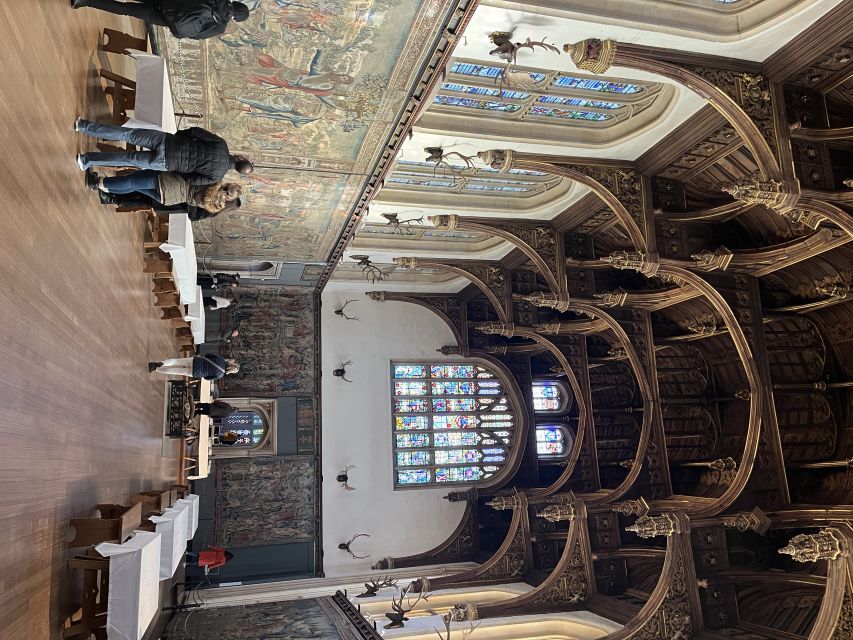
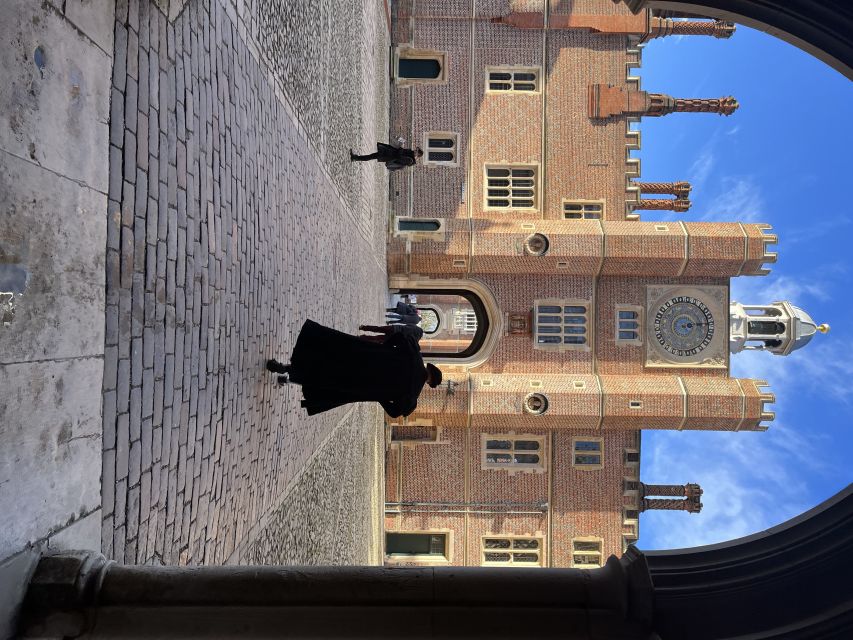
The guided walk begins with Cardinal Wolsey’s creation, which he gave to Henry VIII in 1528. That gift tells you something about the palace before you even enter: Hampton Court was not originally Henry’s idea, but he quickly claimed it after Wolsey fell from favor.
You pass through courtyards that witnessed royal ceremonies, political pressure, and personal drama. The setting helps put familiar names into a real place. Henry VIII’s marriages can sound like a list in a guidebook, but the courtyards and gatehouse make the story more immediate.
The route passes under Anne Boleyn’s Gatehouse, linked with the period when she lived at Hampton Court before her execution. Your guide can connect the royal household to the buildings around you, rather than leaving you with only dates and names.
This is where the quality of the guide matters most. Tom, Thomas, Julie, Geraint, Suzanne, and other guides have been praised for warmth, clear speech, humor, and patience. That last point is important in a palace. You need time to look up, ask a question, take a photograph, or catch a detail you missed.
One guide, Geraint, has been especially good at pointing out details such as hidden passageways and painted faux marble. Those are easy to miss if you simply walk from room to room. Another guide, Julie, has been appreciated for answering questions carefully and making the palace feel personal without rushing the group.
Fountain Court and the Baroque Royal Rooms

The next major contrast is Fountain Court, created by Christopher Wren for William III and Mary II. Here the palace shifts away from Henry’s Tudor world and toward formal Baroque design.
That change is one of the best reasons to take a guided route. Without context, Hampton Court can feel like a collection of grand rooms from different centuries. With explanation, the building becomes a record of royal priorities. Henry wanted a huge court and a fitting stage for Tudor power. William and Mary wanted a palace suited to a later style of monarchy.
The guided portion lasts about two hours. That is enough time to build a clear picture of the palace, but not enough to inspect every room and corridor. Hampton Court is vast, and several people have wished the guided walk continued longer. I would treat that as a sign to use the guide for orientation, then save your favorite sections for a second look later in the day.
The tour may also help you locate good spots for photographs. One guide was specifically praised for knowing where to take pictures. In a large palace, this practical sense is useful because you can otherwise spend a lot of time wandering without a plan.
The Sunken Gardens and Henry VIII’s Kitchens
The route continues to the restored sunken gardens, then to the enormous Tudor kitchens built for Henry VIII. These kitchens are more than a quick stop. They help you understand the scale of the royal household and the work required to feed it.
The palace story is often told through kings, queens, marriages, and political decisions. The kitchens add the daily machinery behind that story. Food had to be prepared, carried, served, and cleared for a court that was far larger than a modern household.
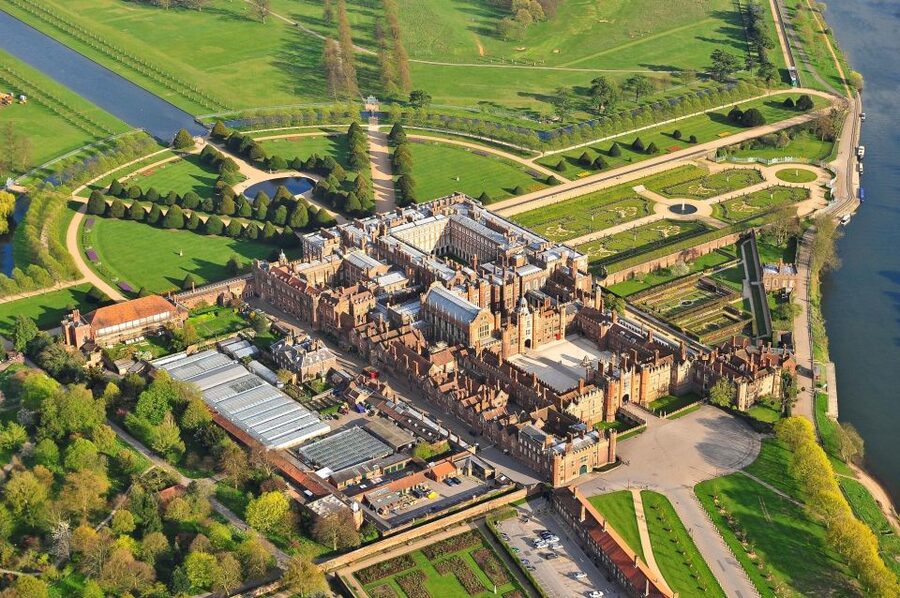
The outdoor spaces also give you a change of pace after the rooms and courtyards. If the weather is pleasant, the gardens can make the visit feel less crowded and more spacious. You receive access to the palace grounds and 60 acres of gardens for the rest of the day, so do not assume the guided route is your only chance to see them.
The chapel may be another reason to continue exploring alone. One booking party found it closed during the guided visit because of a private service, then appreciated being able to return to the palace later. That is a good example of why the full-day entry matters. A temporary closure or a busy room does not have to end your chance to see it.
A few more things to do in London worth a look
- Magical London: Harry Potter Guided Walking Tour
★ 4.7 · 22,044 reviews - London: Emirates Stadium Entry Ticket and Audio Guide
★ 4.7 · 5,513 reviews - Stonehenge, Windsor Castle and Bath Full Day Guided Tour
★ 4.5 · 5,346 reviews - London Jack the Ripper Guided Tour with Ripper-Vision
★ 4.5 · 4,840 reviews
Afternoon Tea in a Royal Setting
Afternoon tea follows the palace walk. The planned setting is the Tiltyard, originally used for jousting, while several accounts place the tea at The Mitre hotel, including a table overlooking the river. Because the supplied details describe both locations, confirm the exact tea venue and arrangement before you book.
The tea itself is a full service, not simply a drink and a biscuit. You can expect delicate finger sandwiches, freshly baked scones, pastries, and a selection of premium teas. One particularly detailed serving included five types of sandwiches, two scones per person, five desserts, and several teas.
That is substantial food. You may not finish everything, and you do not need to feel awkward about it. The Mitre has provided takeaway boxes in at least one case, which is a practical touch if the portions run beyond what you can eat.
The tea is also a useful pause. Hampton Court can be tiring because there is so much to see, and sitting down gives you time to sort through the stories before returning to the palace. You can discuss the royal family, the history of tea, and the ceremony that grew around afternoon tea.
Still, I would not treat the tea as the main reason to pay $206. Most accounts describe it as enjoyable or excellent, with especially strong comments about the sandwiches and setting. One person found it underwhelming and suggested that the provider should be changed. That mixed result is worth noting. The palace guiding appears more dependable than the food portion.
Your Afternoon to Explore Hampton Court Alone
After tea, you are free to return to the palace and gardens using the same full-day ticket. This is one of the package’s best features. The guided route gives you structure, but the afternoon lets you slow down.
You might revisit a room that went by quickly, spend longer in the gardens, or see an area that was busy during the morning. You can also use the included audio guide if you prefer a second layer of explanation in your own language.
Do not plan the day as if the two-hour tour covers the whole palace. It introduces the major themes and gives you a route through important places. The independent time is part of the design, not an extra afterthought.
I would particularly recommend using the later hours for anything you could not absorb while listening. A guide may explain a room brilliantly, but you still need time to study its decoration. The chance to return also helps families and mixed-age groups, since not everyone needs to move at the same speed.
What the Guides Add
The strongest part of this experience is the guide. Tom and Thomas have been praised for clear explanations, humor, patience, and a strong grasp of the palace’s architecture and royal families. Julie has been described as attentive and easy to understand. Geraint has brought local knowledge and a playful touch to the tour. Suzanne has been singled out for making the visit feel like a royal escape.
These details matter because Hampton Court can overwhelm you. A guide who speaks too quickly or gives only a string of dates would make the palace harder to enjoy. The best guides here appear to answer questions, repeat points when needed, keep a group together, and notice things you might walk past.
Group size can vary. One couple had a particularly personal experience because they were the only two people on their tour. A private group is also available if you want more control over the pace and conversation.
The guide is not a substitute for seeing everything. Think of this as a strong introduction followed by self-guided time. If you want a room-by-room scholarly tour of the entire palace, this format may leave you wanting more. If you want the main story told clearly, with time to explore on your own, it fits well.
Is $206 Good Value?
At $206 per person, this is a premium outing. The cost includes a two-hour guided experience, a full-day palace ticket, afternoon tea, and an audio guide. It does not include children’s food, and transport to Hampton Court is not stated as part of the price.
The value improves if you planned to visit Hampton Court anyway and would otherwise pay separately for admission and tea. It also improves if you want the convenience of meeting a guide at the station and having the palace’s complicated story explained in a sensible order.
The value drops if you only want a short palace visit, do not care for afternoon tea, or prefer to explore alone. You might also feel disappointed if your main aim is a full guided tour of every part of Hampton Court, since the guided segment lasts about two hours.
For a special day outside London, I can see the appeal. You get history, architecture, gardens, food, and free time without having to build the schedule yourself. Just make sure the tea venue and menu matter to you before paying the premium.
Who Should Book This Hampton Court Experience?
I would choose this tour for a first visit to Hampton Court, especially if you enjoy royal history but do not want to decode the palace alone. It suits couples, families with older children, and anyone who likes a planned morning followed by free time.
It is also a good choice for visitors who value a friendly guide more than a formal lecture. The strongest guide accounts describe a relaxed style, clear communication, personal attention, and plenty of small observations.
I would hesitate if you have limited mobility and need a very precise route plan, although the activity is wheelchair accessible. I would also hesitate if afternoon tea is the central reason for booking, since the tea experience has received less consistent praise than the guiding.
Free cancellation is available up to 24 hours before the start, and you can reserve now and pay later. Those terms help if your London plans are still shifting.
Final Verdict: A Strong Palace Introduction with Tea
Book this if you want Hampton Court explained by a real person, followed by a traditional tea and several hours to explore alone. The guiding is the safest reason to choose it, especially when you are matched with someone like Tom, Julie, Thomas, Geraint, or Suzanne.
The tea adds comfort and ceremony, but I would confirm the venue before booking and keep expectations measured. With the full-day ticket, the experience is more than a two-hour walk. It is a structured introduction to Hampton Court, a generous break, and a chance to return to the palace at your own pace.
FAQ
Where does the tour begin?
Your guide meets you at the entrance to Hampton Court Railway Station.
How long does the experience last?
The stated duration is about 2.5 to 3 hours. The guided palace portion lasts about two hours, and your full-day entry allows you to continue exploring afterward.
What language is the live tour in?
The live tour is conducted in English.
Is an audio guide included?
Yes. Audio guide options are available in Spanish, Chinese, Dutch, French, German, Japanese, Kannada, Korean, and Russian.
What does the afternoon tea include?
The tea includes finger sandwiches, freshly baked scones, pastries, and a selection of premium teas.
Can I keep exploring Hampton Court after afternoon tea?
Yes. Your full-day entry ticket allows you to return to the palace and explore the outdoor spaces and 60 acres of gardens for the remainder of the day.
Is the activity wheelchair accessible?
Yes, the activity is listed as wheelchair accessible. Pets and oversized luggage are not allowed.
Just added in London
- 3-Day Stonehenge*, Glastonbury, Bath & the South West Coast Tour from London★ 4.5 · 32 reviews
- Private Guided Tour of Harry Potter Locations – English/ Italian★ 5.0 · 33 reviews
- Private Tour London Highlights, entries Westminster Abbey, The Tower of London★ 5.0 · 93 reviews
- 2 Hour Walking Tour from Buckingham Palace to Big Ben★ 5.0 · 32 reviews
- 30 Major London Attractions Walking Tour With Photos★ 4.5 · 51 reviews
- 007 Shadow Of Spectre★ 5.0 · 135 reviews
- Private Guided Tour of the British Museum – Tickets Included★ 5.0 · 193 reviews
- Bath, Avebury and Lacock Village Small-Group Day Tour from London★ 4.5 · 121 reviews
Afternoon Tea Experiences, compared.

Afternoon Tea Bus Tour – 1960s Routemaster Bus
Read our review →



Browse the lists this tour appears in