

Reviewed · HISTORICAL TOURS
Chatham: The Historic Dockyard Chatham Annual Ticket
Chatham’s great strength is that it lets you walk through a real dockyard, not just a museum filled with objects. You can peer through a Cold War submarine periscope, take the bridge of a Second World War destroyer, then follow the long ropewalk where rope has been made since 1618. I like the variety, and I like that the working buildings give the place a sturdy, authentic feel. The main drawback is simple: there is so much to see that four hours may leave you rushing.
I especially like the 365-day ticket, which turns a single visit into a year of return trips. The staff are also a major asset, with guides positioned around the site to explain the ships and exhibits. Allow extra time for the rope-making demonstration, and check the weather before you go, since much of the experience takes place outdoors.
Key things to know before you go
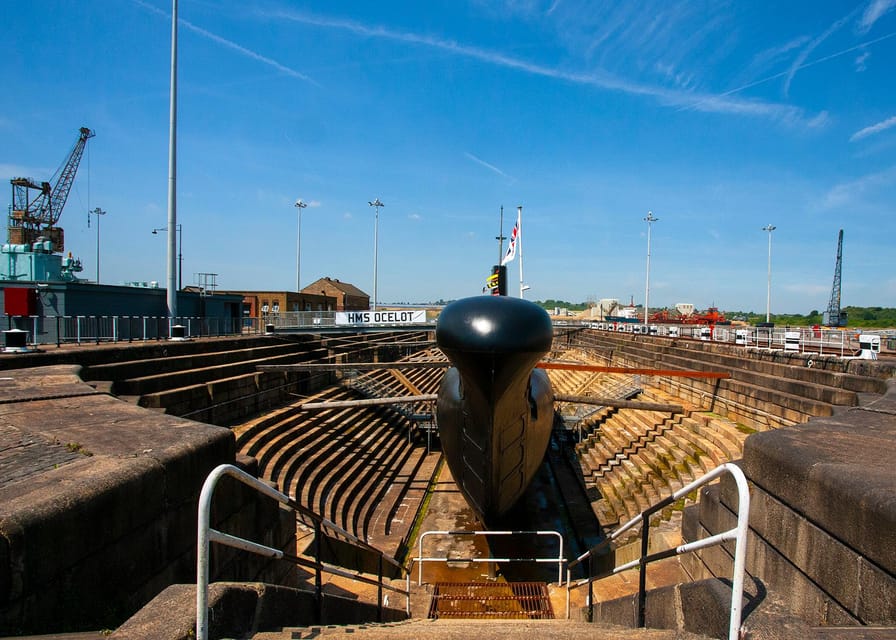
- Three historic vessels: Explore a Cold War submarine, a Second World War destroyer, and a Victorian sloop.
- The ropewalk is a must-see: The quarter-mile ropery has been producing rope for ships since 1618.
- A full-day site: Four hours can feel short, especially if you stop for exhibitions and guided explanations.
- The annual ticket adds real value: Your first admission remains valid for repeated visits over 365 days.
- Excellent family range: Ships, lifeboats, interactive displays, school holiday activities, and a children’s play area give different ages something to do.
- Parking costs extra: The entrance ticket covers the dockyard and exhibitions, but not parking.
Entering the dockyard and its Age of Sail story
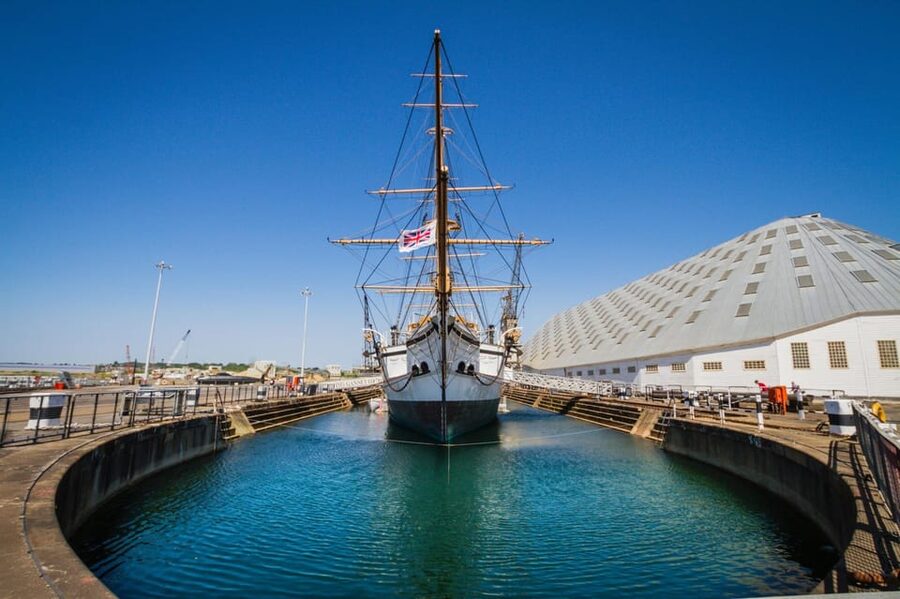
The Historic Dockyard Chatham tells its story through the place where the work happened. You walk among old dockyard buildings, working spaces, ships, and displays connected to Britain’s naval past. That physical setting matters. Instead of seeing a ship in isolation, you get a sense of the wider operation that built, repaired, supplied, and maintained vessels.
The central story reaches back to the Age of Sail, when Chatham built large wooden warships for a navy competing for control of the world’s oceans. The site’s buildings have been restored and maintained, but the experience is not polished into a theme park. The old industrial character remains visible, and that gives the visit its weight.
I would begin by picking up a map or asking staff how to plan the day. The site covers several separate attractions, and it is easy to spend longer than expected in the first ship or gallery. You can enjoy the dockyard as a relaxed wander, but a little planning helps you avoid missing the ropewalk or Command of the Oceans.
English is the language used by the host and guides. Staff are present around the site, and their explanations add useful context to the displays. One especially strong feature is the willingness of guides to engage with visitors who already know ships. A former submariner visiting with an ex-Army friend found the civilian guide’s knowledge of HMS Ocelot impressive, while the guide also welcomed personal stories about life aboard that class of submarine. That kind of exchange can make the vessels feel less like static exhibits.
A few more things to do in Britain worth a look
- London Small Group Tour of Historical Pubs
★ 5.0 · 10,422 reviews - A History of Terror – Belfast City Centre Walking Tour
★ 5.0 · 2,883 reviews - Old Town Walking Tour History and Tales in Edinburgh
★ 5.0 · 2,168 reviews
Three vessels, three very different experiences
The ships are the heart of the visit. Each one gives you a different view of naval life, and together they make the ticket much more than a collection of galleries.
HMS Ocelot and the Cold War submarine
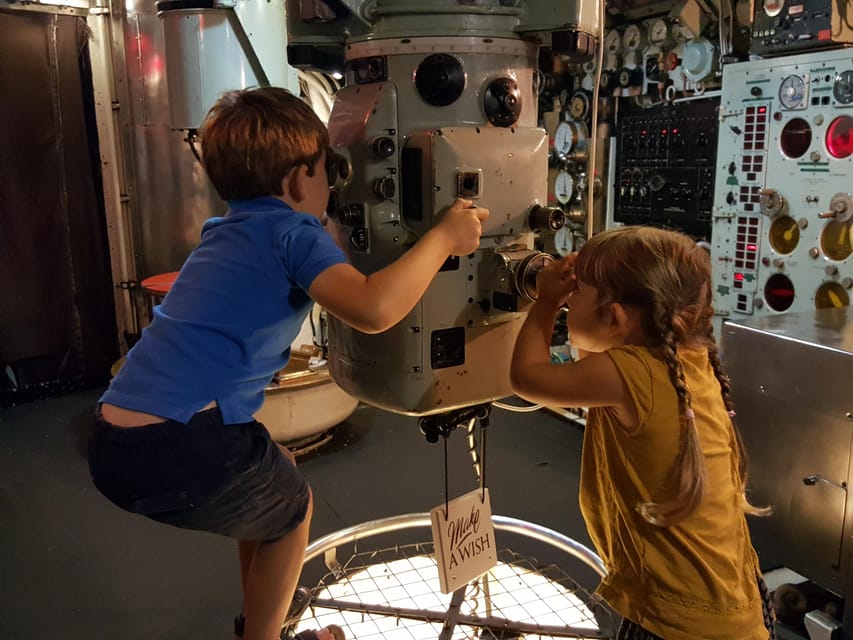
The submarine is the most immediately memorable vessel for many people. You can look through the periscope and explore the cramped interior of a Cold War submarine. The confined passageways and tightly packed equipment show how little private space existed aboard.
You should take your time here. The submarine is not just a place to pose for a photograph. It gives you a practical sense of how sailors moved, worked, and lived in a narrow metal vessel. The experience may be less comfortable for anyone who dislikes tight spaces, and some sections can feel physically demanding to navigate.
The guide’s explanations are particularly useful because the submarine’s machinery and layout can be difficult to understand at a glance. If you have a family member or friend with naval experience, this is a good place to swap stories and ask questions. If you know little about submarines, the vessel still works as a powerful introduction to the subject.
The Second World War destroyer
On the destroyer, you can take your place on the bridge and imagine the ship under way. The bridge gives you a clear sense of command, but the ship also helps you think about the hundreds of people needed to keep a warship operating.
The destroyer is a good stop for families because it offers an obvious role-play element without reducing the history to a game. Children can picture themselves at the controls, while adults can focus on the structure, equipment, and wartime purpose of the ship. The ship is best enjoyed slowly, with time to look at the spaces beyond the bridge.
Same city, a very different afternoon:
- London: The London Eye Entry Ticket
★ 4.6 · 35,875 reviews - From London: Harry Potter Warner Bros Studio Tour
★ 4.7 · 26,588 reviews - Magical London: Harry Potter Guided Walking Tour
★ 4.7 · 22,044 reviews - London: Madame Tussauds London
★ 4.6 · 20,915 reviews
The Victorian sloop
The Victorian sloop offers a different mood. You can ring the ship’s bell on deck and see how naval vessels changed during the nineteenth century. The sloop is smaller and more intimate than the destroyer, making it a useful comparison after the larger ships.
I like this part of the visit because the vessels do not all tell the same story. The submarine focuses on Cold War technology and confinement. The destroyer points to twentieth-century warfare and command. The sloop connects you with the earlier naval world of sail and steam-era transition.
The ropewalk, where the dockyard still feels alive
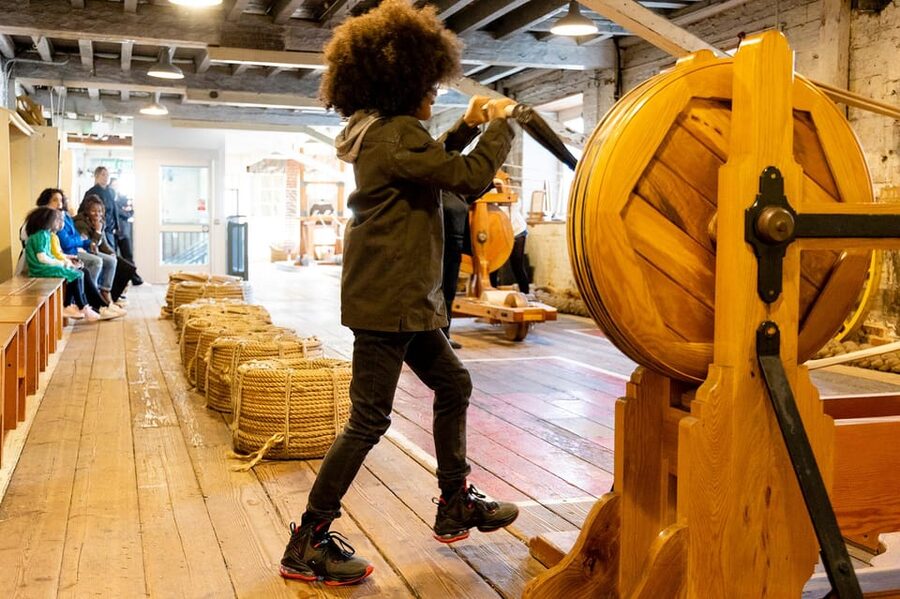
The quarter-mile-long ropery is one of the strongest parts of Chatham. Rope has been made here since 1618, and the length of the building tells you why the process needed so much room. It is easy to read about rope-making, but watching the operation makes the work clear.
Set aside proper time for the demonstration. This is not a quick stop to tick off between ships. The machinery, materials, and long working space show the skill required to produce rope for large vessels. The process also helps explain the dockyard as a workplace, not simply as a naval monument.
The rope-making operation is often the part people most want to revisit, and I can understand why. It has movement, sound, and a direct link between raw material and finished product. It also suits visitors who are less interested in military hardware. You do not need to be a naval enthusiast to appreciate a skilled industrial process carried out in a historic setting.
Command of the Oceans and the hidden ship below
Command of the Oceans is the dockyard’s interactive exhibition. Its clever feature is the ancient ship beneath the floor, which you can discover as part of the display. That arrangement gives the exhibition a useful physical surprise and helps connect the dockyard’s modern galleries with the vessels built here centuries ago.
This is a good place to spend time if the weather turns poor, or if you need a change from climbing aboard ships. Interactive elements can also help younger visitors understand how naval power depended on design, materials, shipbuilding, and supply. The exhibition gives the wider story behind the individual vessels outside.
The dockyard works best when you combine this exhibit with the ships. Command of the Oceans explains the larger system, while the vessels show you the results in full scale. Taken together, they make the history easier to grasp.
RNLI lifeboats and No. 1 Smithery
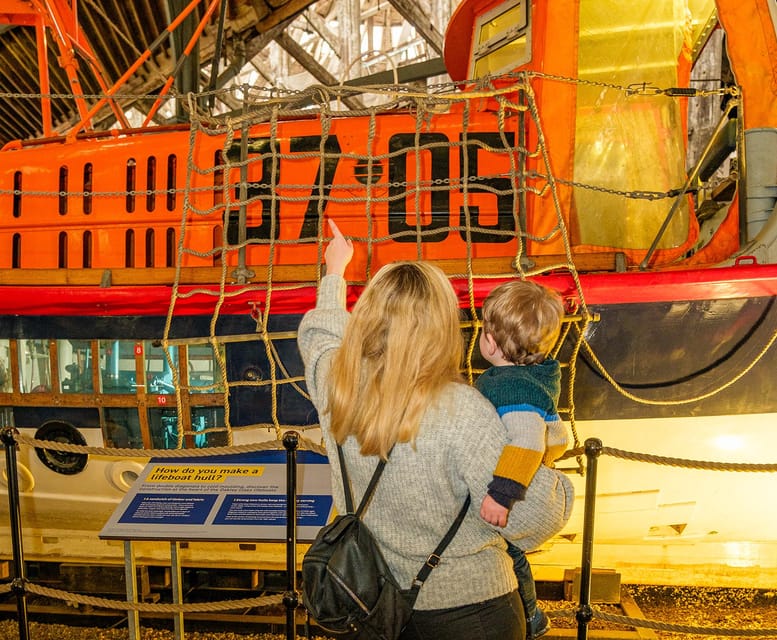
The dockyard houses the UK’s biggest collection of RNLI Historic Lifeboats. The collection broadens the visit beyond warships and naval command. These boats reflect rescue work and the practical danger faced by people at sea, giving the dockyard a strong human side.
You can hear the waves as you move through the lifeboat collection, which adds atmosphere to the display. The boats are also useful for comparing different designs and working conditions. They show that maritime history is not only about battles and national power. It is also about rescue, service, and the equipment used in difficult conditions.
No. 1 Smithery is another major indoor stop. It presents collections from Royal Museums Greenwich and Imperial War Museums, creating a wider display of maritime and military material. If you want more than the large vessels, allow enough time here. It is easy to underbudget your time because the ships are so attention-grabbing.
How long should you allow?
The ticket lasts for 365 days after first activation, but you should still plan your first visit as a full day. Four hours can be enjoyable, yet it may not be enough to see every ship, exhibition, lifeboat, and rope-making display without hurrying.
I would allow at least several hours and treat the first visit as an orientation to the site. If you have children, you will need extra time for the interactive displays and play area. If you read labels carefully or enjoy talking with guides, the visit can easily stretch beyond a half day.
The annual validity changes the calculation. At $37 per person, the ticket is reasonable for a single substantial day, especially given the number of included attractions. It becomes much better value if you live within reach of Chatham or are spending several days in South East England. A second visit lets you return to the submarine, finish No. 1 Smithery, or watch the rope-making demonstration without trying to fit everything into one schedule.
The value is less clear if you are passing through the area and cannot return. Even then, the ticket includes permanent and temporary exhibitions, three vessels, the lifeboat collection, and the historic dockyard itself. You are paying for a large site rather than one short guided activity.
Families, access, food, and practical comfort
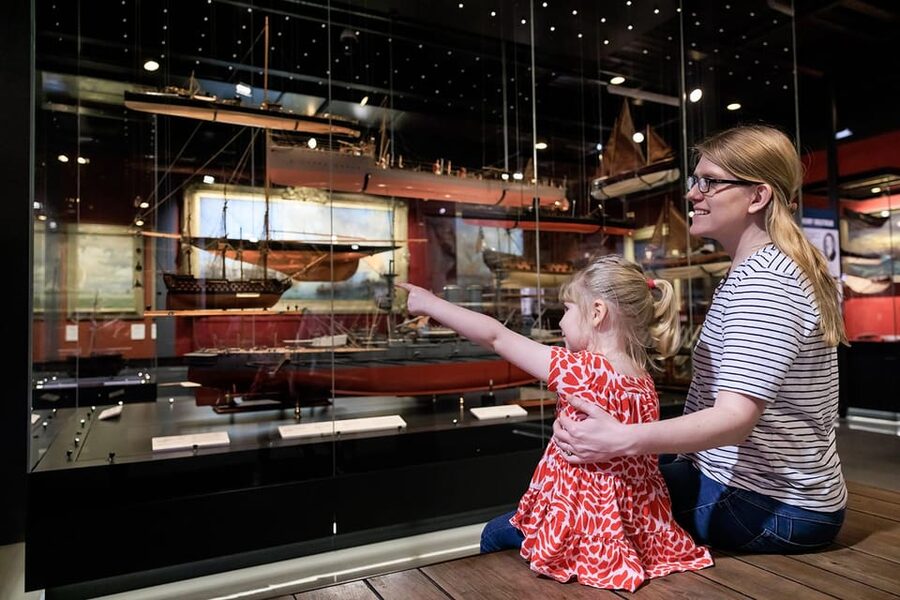
The dockyard suits mixed-age groups because the attractions vary so much. One person can focus on naval history, another on industrial craft, and children can move between ships, interactive displays, school holiday activities, and the play area.
The play area gives parents a useful pause, especially during a longer visit. The site also has food and drink facilities, and one visit included a good meal, music, and a saxophone performance. Entertainment may vary, so treat that as a possible extra rather than a guaranteed part of the day.
The experience is wheelchair accessible. Still, the ships are historic vessels with different internal layouts, so you should ask staff for practical guidance on the parts you plan to visit. The ticket includes access to temporary and permanent exhibitions, but parking is not included.
Weather affects the day. Several attractions are indoors, yet you will spend time walking between buildings and ships. Wear comfortable shoes and bring suitable clothing. On a cold day, the staff can still make the visit welcoming, but you will appreciate warm drinks and indoor stops.
Booking flexibility and the small admission snag
You can cancel up to 24 hours in advance for a full refund, and you can reserve now while paying later. Those terms help if your South East England plans are still changing.
The ticket is hosted in English, and the available language is English. At the entrance, the voucher exchange may take longer than expected. One admission process required staff to enter details manually even though the ticket displayed a barcode, causing a short delay. It is not a serious problem, but do not assume the entrance will be instant if you arrive at a busy time.
The annual validity begins with first activation. Keep that in mind when planning a return visit, since the 365-day period runs from the first use rather than from an unspecified future date.
Who will enjoy Chatham most?
I would recommend Chatham to anyone interested in ships, engineering, military history, working museums, or industrial craft. It is especially strong for families because the site offers real vessels and hands-on elements rather than relying on one type of display.
It also suits adults who want a full day with room to wander. The restored buildings, guides, ropewalk, lifeboats, and exhibitions give the visit enough variety for two adult couples or a group with different interests.
You may want to think twice if you dislike confined spaces, have limited time, or expect a constantly changing attraction. One long-time visitor felt the ships needed more new additions, so the site may feel familiar if you have been several times already. The annual ticket solves that problem only if you enjoy returning to the existing collection and seasonal activities.
Should you book the annual ticket?
Book it if you can give Chatham a full day, or if you are likely to return within the next year. The strongest reasons are the three accessible historic vessels, the outstanding ropewalk, and the chance to spread the visit over multiple trips.
For a one-time stop, it still offers solid value at $37, but arrive early enough to avoid rushing. Make the rope-making demonstration a priority, allow time for the lifeboats and No. 1 Smithery, and use Command of the Oceans to connect the individual exhibits into one story.
I would choose this ticket for an authentic, hands-on dockyard experience rather than a quick museum visit. It rewards curiosity, patience, and comfortable shoes. If that sounds like your kind of day, Chatham is a strong choice.
FAQ
How long is the Chatham Historic Dockyard ticket valid?
The ticket is valid for 365 days from the date you first activate it.
What does the $37 ticket include?
It includes entry to The Historic Dockyard Chatham, access to temporary and permanent exhibitions, and school holiday activities.
Can I return after my first visit?
Yes. The ticket remains valid for repeated visits during the 365-day period after first activation.
Which historic vessels can I visit?
You can visit a Cold War submarine, a Second World War destroyer, and a Victorian sloop.
Can I enter a submarine?
Yes. The experience includes access to a Cold War submarine, including the chance to look through its periscope.
Is the rope-making demonstration included?
Yes. The historic dockyard ticket includes access to the rope-making museum and the dockyard’s rope-making operation.
Does the experience include RNLI lifeboats?
Yes. You can explore the UK’s biggest collection of RNLI Historic Lifeboats.
Is parking included?
No. Parking is not included in the admission ticket.
Is the dockyard wheelchair accessible?
Yes. The activity is listed as wheelchair accessible.
Can I cancel my booking?
You can cancel up to 24 hours in advance for a full refund. You can also reserve now and pay later.
Just added in Britain
- 3-Day Stonehenge*, Glastonbury, Bath & the South West Coast Tour from London★ 4.5 · 32 reviews
- Private Guided Tour of Harry Potter Locations – English/ Italian★ 5.0 · 33 reviews
- 30 Major London Attractions Walking Tour With Photos★ 4.5 · 51 reviews
- Private Tour London Highlights, entries Westminster Abbey, The Tower of London★ 5.0 · 93 reviews
- 2 Hour Walking Tour from Buckingham Palace to Big Ben★ 5.0 · 32 reviews
- City Sightseeing Llandudno Hop-On Hop-Off Bus Tour★ 4.0 · 109 reviews
- 007 Shadow Of Spectre★ 5.0 · 135 reviews
- Private Guided Tour of the British Museum – Tickets Included★ 5.0 · 193 reviews
Historical Tours, compared.
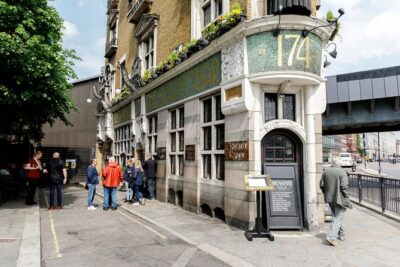

A History of Terror – Belfast City Centre Walking Tour
Read our review →
Old Town Walking Tour History and Tales in Edinburgh
Read our review →


Shadows of York: Ghost Walk and Horrible History.
Read our review →
Multi-Sensory Small-Group Historic Vaults Tour in Edinburgh
Read our review →
Browse the lists this tour appears in