
Reviewed · WALKING TOURS
Birmingham: Discovering Birmingham Guided Walking Tour
Birmingham’s story comes into focus along its canals and Jewellery Quarter, where industrial ambition, clever engineering, and hard social realities sit close together. This two-hour walk links the city’s Georgian and Victorian growth with its post-war rebuilding and present-day revival.
I like the way the route combines industrial history with city planning, rather than stopping at old buildings. I also like the practical audio receiver, which helps you hear Jonathan’s live commentary clearly as you walk.
The main consideration is pace: 3 km in two hours is easy for most people, but comfortable shoes still matter. The tour is in English, and you should bring earphones with a 3.5 mm jack or make a small charity donation for a pair.
Key points at a glance
- Follow Birmingham’s canals: See how waterways helped the city grow into a major industrial center.
- Walk through the Jewellery Quarter: Georgian beginnings and Victorian factory production give this district its character.
- Hear Jonathan’s local enthusiasm: His clear, energetic delivery is a major part of the experience.
- See post-war planning up close: The route explains the serious problems caused by large-scale redevelopment.
- End at St. Philip’s Cathedral: English Baroque architecture and a churchyard full of difficult city history provide a thoughtful finish.
- Get useful extras: The tour includes an audio receiver and a tourist guide book for further exploring.
Starting beside the Library of Birmingham
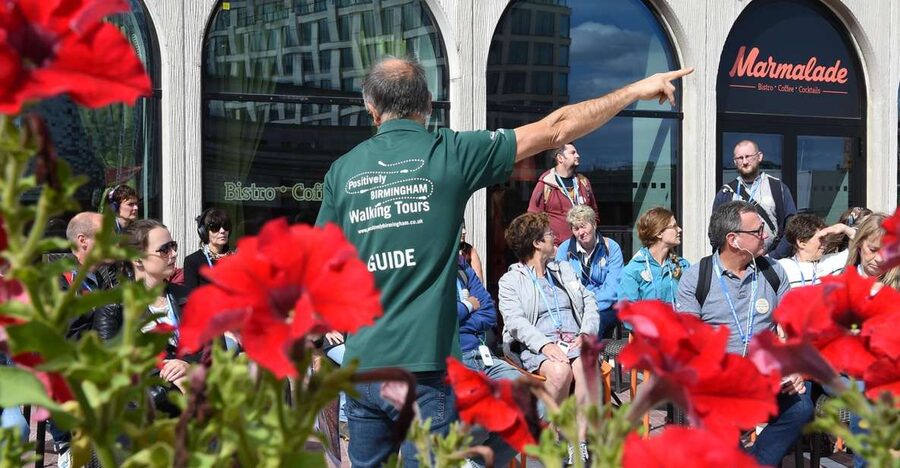
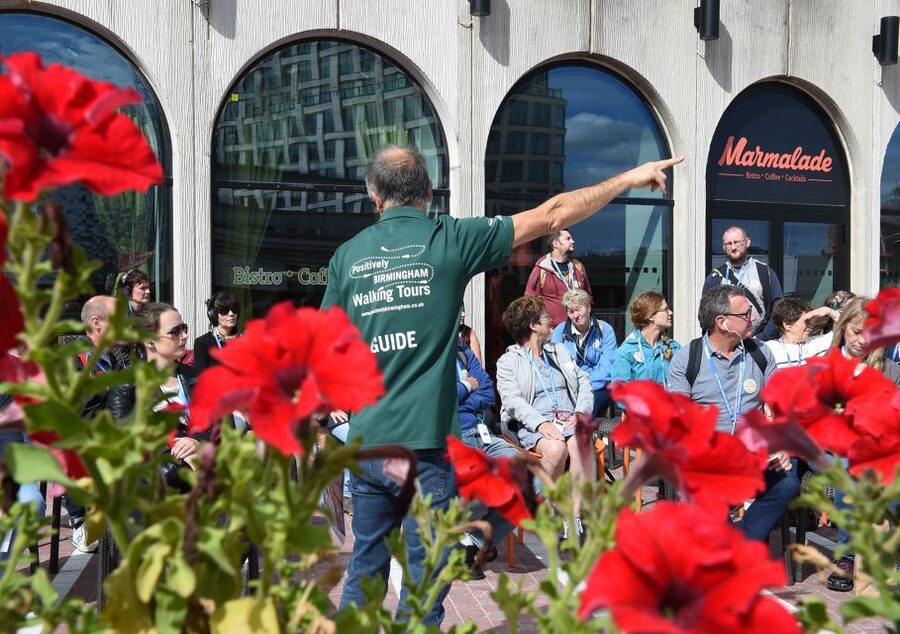
The meeting point is at the front entrance of the Library of Birmingham, normally beside a pop-up stand. That is a sensible place to begin: you are in the city center, easy to find, and close to the contrast this tour explores.
The library itself represents modern Birmingham, while the route soon leads you toward older industrial spaces. You will not spend the walk simply admiring attractive façades. The point is to understand why Birmingham grew, what its growth demanded, and why later attempts to modernize the city caused fresh problems.
Your guide is Jonathan, whose strong local interest shapes the walk. His delivery is described as factual but light-hearted, which matters on a history tour. Birmingham’s story includes industry, poverty, ambitious redevelopment, and social difficulty. A guide who can explain hard subjects without turning the afternoon into a lecture makes the material easier to follow.
An audio receiver lets you hear the live commentary without crowding around the guide. Bring your own earphones with a 3.5 mm jack. If you do not have them, you can receive a pair in exchange for a small donation to a charity supporting homelessness in Birmingham.
More walks around Birmingham:
- Birmingham Walking Tour: Canals, Victorians & Today (1:30pm)
★ 5.0 · 346 reviews - Discovering Birmingham 2 hour Walking Tour to the Jewellery Quarter
★ 5.0 · 333 reviews - Birmingham Slogging Gangs Walking Tour with Edward Shelby
★ 4.5 · 306 reviews
Following the canals that powered growth
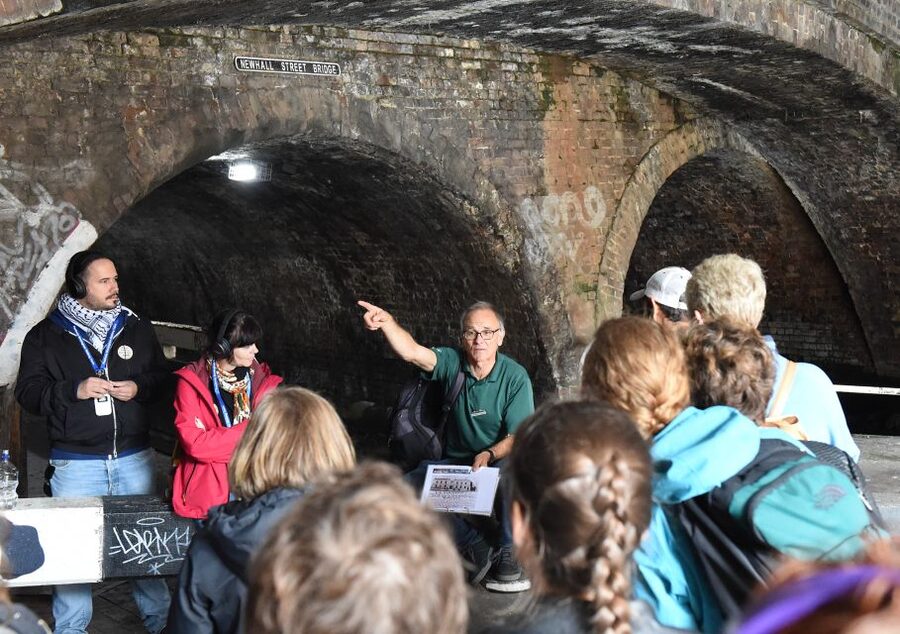
The first major theme is Birmingham’s canal system. You learn how the waterways developed and the origins of the original canal, then follow a quieter section toward the Jewellery Quarter.
This is one of the strongest parts of the walk because canals make industrial growth easier to picture. Instead of hearing only that Birmingham became a manufacturing center, you see the transport network that helped materials and finished goods move through the city.
The route includes a secret canal, a phrase that hints at the quieter character of this stretch rather than a hidden attraction requiring special access. The waterway gives the walk a change of mood. City-center streets give way to a more atmospheric setting, and the canal becomes a thread connecting Birmingham’s past with the modern city around it.
You also get a useful explanation of how old ways of working shaped later business and production. The tour treats history as a chain of practical decisions. Canals mattered because they solved transport problems. Workshops expanded because inventors and business owners saw ways to turn ideas into products. Birmingham’s identity grew from that habit of making and adapting.
Entering the Jewellery Quarter
The Jewellery Quarter is the heart of the route. It developed as an important industrial district from Georgian times and expanded through the Victorian period, when Birmingham became known for invention, enterprise, and large-scale production.
The walk explains how quickly an idea could move from a clever design to factory output. That is a useful distinction. You are not only looking at historic buildings and imagining old workshops. You are learning how entrepreneurs and inventors seized new opportunities and built production systems around them.
The Quarter also gives the tour a good visual rhythm. Industrial buildings, canals, streets, and newer city projects sit within the same walk. You might find the area more interesting than a standard monument-to-monument route because the setting itself helps explain Birmingham’s work ethic.
There are a few surprises along the way, though the experience does not spell them all out in advance. That is best left to the guide. The surprises add some fun to a walk that deals with serious economic and social themes.
Jonathan’s role is especially important here. The information is detailed, but the tour is designed to stay lively. You will get context rather than a long list of dates. If you are visiting Birmingham for the first time, this is the point where the city’s industrial importance should begin to make sense.
Seeing Birmingham’s industrial character
Birmingham is often called the workshop of the world, and this walk shows why that label took hold. The city’s importance came from more than one famous invention. It grew through a wider culture of practical problem-solving, production, and enterprise.
You will hear how Georgian and Victorian businesses turned ideas into goods at impressive speed. That helps you read the Jewellery Quarter with sharper eyes. A plain industrial structure is no longer just an old building. It becomes part of a network of workshops, transport links, workers, and commercial decisions.
The tour also avoids treating industrial growth as an entirely cheerful success story. The churchyard near St. Philip’s Cathedral later brings difficult issues into view, but the earlier sections prepare you for that shift. A city that expands rapidly creates wealth and opportunity, yet it also creates demanding working and living conditions.
That balance is one reason the experience suits visitors who want more than attractive photographs. You will hear about invention and ambition, but also about the pressures produced by a city that became a major center of work. The subject has weight, but the guide’s light touch keeps it accessible.
A few more things to do in Birmingham worth a look
- Birmingham: Slogging Gangs Guided Walking Tour
★ 4.2 · 216 reviews - Birmingham: Guided City Center Walking Tour (10:30am & 2pm)
★ 4.8 · 147 reviews - Birmingham Ghost Hunt: Haunted Self-Guide Tour & Quest
★ 4.5 · 37 reviews - Magical London: Harry Potter Guided Walking Tour
★ 4.7 · 22,044 reviews
Understanding post-war redevelopment
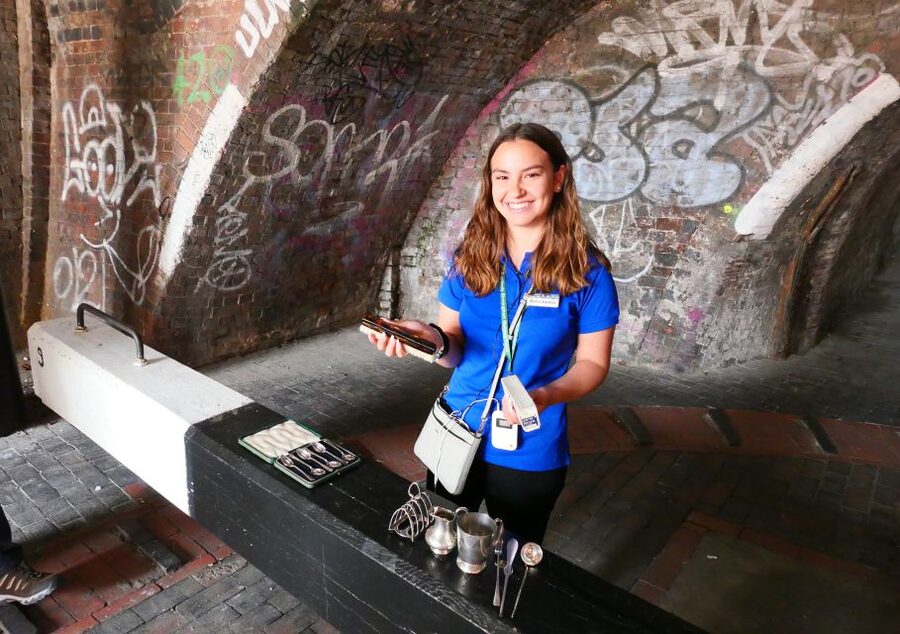
The most thought-provoking section concerns Birmingham after the Second World War. The tour shows how post-war redevelopment changed the city and explains the serious issues that followed.
This part gives the walk a useful modern edge. Many city tours focus on medieval remains or Victorian landmarks, then stop before the difficult recent decades. Here, the redevelopment itself becomes part of the story. You see how efforts to create a modern city can damage older connections, alter the feel of neighborhoods, and leave problems that later generations must address.
The experience does not present modern Birmingham as a finished success. Instead, you see a city trying to repair and rethink parts of itself. The route makes the contrast between post-war planning and current renewal clear, helping you understand why some areas feel very different from others.
You should expect interpretation rather than a long stop at one grand monument. This section works because the guide connects what you see around you to decisions made in the recent past. If you are interested in architecture, planning, or how cities change, this may be the most valuable part of the afternoon.
Returning toward St. Philip’s Cathedral
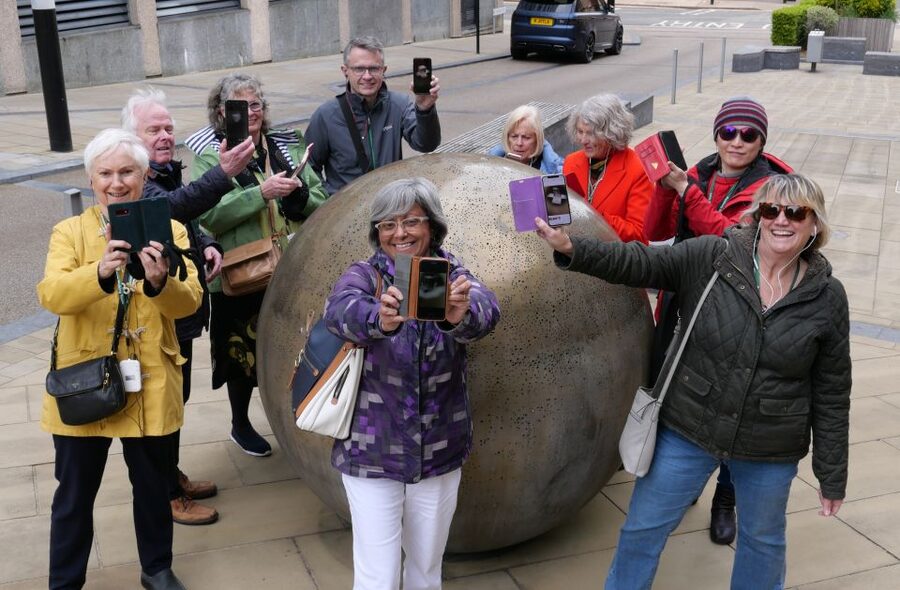
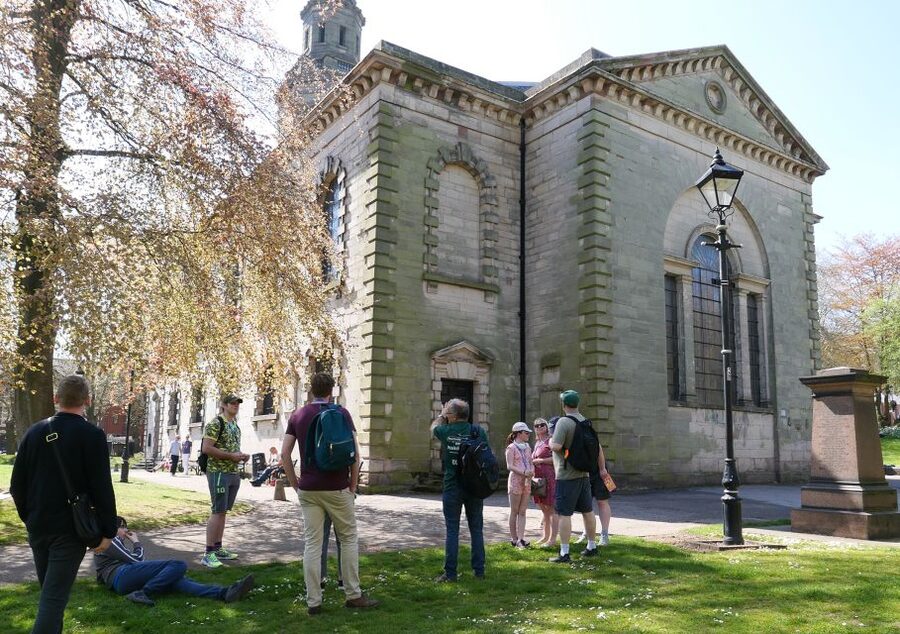
The walk returns to the city center and reaches St. Philip’s Cathedral, an English Baroque landmark. Its architecture provides a graceful visual change after the canals and industrial streets.
The cathedral is not used merely as a pretty ending. Its churchyard helps reveal some of the difficult problems Birmingham faced as it became an industrial powerhouse. That makes the final stop more than a quick look at a historic church.
The pairing of architecture and social history is effective. St. Philip’s Cathedral reflects an older Birmingham, while the surrounding city shows later growth, redevelopment, and renewal. You get a compact lesson in how one city can contain several different eras within a short walk.
I would pay attention here even if grand churches are not your main interest. The building gives the tour a strong closing image, while the churchyard adds human and civic context. The finish also brings the story back to the center, making it easy to continue exploring on your own afterward.
What the two-hour format feels like
The total distance is about 3 km, or 2 miles, over two hours. That is a comfortable distance for most visitors, but the time is filled with explanation, stops, and discussion rather than nonstop walking.
You should wear comfortable shoes. The route includes canal-side paths and city streets, and the appeal comes from stopping to look and listen. This is not a speed tour designed to cover every major attraction in Birmingham.
Two hours is long enough to build a clear picture of the city without taking up your whole day. You can schedule it early in a Birmingham visit, then use the context to explore the Jewellery Quarter, canals, or city center again later.
The audio receiver is a practical touch. Live commentary can be hard to follow on a street, beside water, or in a group. With the receiver, you can keep a little distance from Jonathan and still hear the explanation. Just remember the 3.5 mm earphones.
Is the $20 price good value?
At $20 per person, the walk is fairly priced if you want interpretation rather than a self-guided stroll. You are paying for two hours with a live English-speaking guide, an audio receiver, and a tourist guide book.
The book adds value after the tour. It gives you something useful to keep as you continue around Birmingham, rather than leaving you with only a few photographs and vague memories. The receiver also solves a small but real problem: clear commentary can make a walking tour far more enjoyable.
The strongest value comes from the route’s range. In two hours, you cover canals, the Jewellery Quarter, post-war redevelopment, the modern city, and St. Philip’s Cathedral. You do not get a full history of Birmingham, but you get a focused explanation of how the city developed and why it looks the way it does today.
I would not book this if you only want a quick list of landmarks or free time to wander. The price makes sense for visitors who want a guide to connect the sights and explain the city’s changes.
Who should book this walk?
This tour suits a first-time visitor who wants context on the first day in Birmingham. It is also a good choice if you have already seen the central sights but still do not understand how the canals, industrial districts, and modern developments fit together.
History fans will appreciate the Georgian and Victorian material, while architecture and urban-planning enthusiasts should value the post-war section. The tour also works for curious walkers who prefer real city life to a parade of famous monuments.
Jonathan’s style appears best suited to people who enjoy detail without a stiff classroom tone. The walk is factual, but it also aims to be friendly and fun. That balance is useful when the subject moves from invention and factory production to hardship and redevelopment mistakes.
The tour is less suitable if you need commentary in another language, since the live guide speaks English only. It may also disappoint you if you want to enter many attractions. The emphasis is on streets, canals, public spaces, explanation, and the city’s visible layers.
Practical details before you reserve
Meet at the front entrance of the Library of Birmingham, usually by the pop-up stand. Check the available starting time when booking because the tour runs for two hours and specific departure times can vary.
Cancellation is free up to 24 hours in advance for a full refund. You can also reserve now and pay later, which helps if your Birmingham plans are not settled.
The tour has a current rating of 4.9 from 26 reviews, with particularly strong praise for Jonathan’s delivery, detailed explanations, and enthusiasm for Birmingham. One visitor who had never been to the city used the walk to gain the context missing from an initial solo wander, then planned to return for another tour offered by the same provider.
That is a useful clue about the experience: it is not just a pleasant walk. It aims to give you a working understanding of Birmingham so the rest of your visit makes more sense.
Should you book the Discovering Birmingham walk?
Book it if you want Birmingham explained through its canals, industrial past, Jewellery Quarter, post-war rebuilding, and current renewal. The route is compact, the price is reasonable, and Jonathan’s energetic presentation appears to be a major strength.
Skip it if you want a silent stroll, a museum visit, or commentary in a language other than English. For most first-time visitors who want to understand why Birmingham developed as it did, this is a smart two-hour introduction. Wear good shoes, bring the right earphones, and let the city’s working past guide the walk.
FAQ
Where does the Birmingham walking tour meet?
The group meets at the front entrance of the Library of Birmingham. There is normally a pop-up stand at the meeting point.
How long is the tour?
The tour lasts two hours and covers about 3 km, or 2 miles.
What language is the tour in?
The live tour guide commentary is in English.
What should I bring?
Bring comfortable shoes and earphones with a 3.5 mm jack for the audio receiver. If you do not have suitable earphones, you can receive a pair in exchange for a small donation to a charity supporting homelessness in Birmingham.
What places does the walk cover?
The route includes Birmingham’s canal system, the Jewellery Quarter, areas affected by post-war redevelopment, the modern city center, and St. Philip’s Cathedral and its churchyard.
What is included in the price?
The experience includes the guided walking tour, an audio receiver for the live commentary, and a tourist guide book.
Just added in Birmingham
- Birmingham Gangs Nighttime Historical Walking Tour with Pub Stops★ 5.0 · 53 reviews
- Birmingham Slogging Gangs Walking Tour with Edward Shelby★ 4.5 · 306 reviews
- Cotswolds Full-Day Tour From Birmingham★ 4.5 · 30 reviews
- SEA LIFE Birmingham Admission Ticket★ 3.0 · 218 reviews
- Fun, Flexible Treasure Hunt Around Birmingham with Cryptic Clues & Hidden Gems★ 5.0 · 167 reviews
- From Birmingham Stonehenge and Bath Day Tour★ 4.5 · 33 reviews
- Birmingham Ghost Hunt: Haunted Self-Guide Tour & Quest★ 4.5 · 37 reviews
- 2.5-Hours Walking Tour of Birmingham into Black Heritage Madiba★ 5.0 · 49 reviews
Walking Tours, compared.

Magical London: Harry Potter Guided Walking Tour
Read our review →
Underground Vaults Walking Tour in Edinburgh Old Town
Read our review →
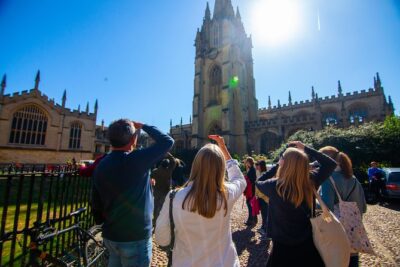
Oxford University Walking Tour With University Alumni Guide
Read our review →
Edinburgh Castle: Guided Walking Tour with Entry Ticket
Read our review →
Edinburgh Castle Guided Walking Tour in English
Read our review →
Tour for Muggles The Ultimate Harry Potter Walking Tour in London
Read our review →
University and City Walking Tour with Alumni Guide
Read our review →Browse the lists this tour appears in